Unknown's avatar

Posts by Michael

I am a husband, father, minister, and writer.

Marilynne Robinson’s Advice to Her Students

But all we really know about what we are is what we do.  There is a tendency to fit a tight and awkward carapace of definition over humankind, and to try to trim the living creature to fit the dead shell.  The advice I give my students is the same advice I give myself–forget definition, forget assumption, watch.

From “Freedom of Thought” in When I Was A Child, I Read Books

David Swanson posts this quote and insightful comments worth considering after the President’s visit to the neighborhood last week.

David Swanson's avatarDavid W. Swanson

Now, this is what I had a chance to talk about when I met with some young men from Hyde Park Academy who were participating in this B.A.M. program. Where are the guys I talked to? Stand up you all, so we can all see you guys. (Applause.) So these are some — these are all some exceptional young men, and I couldn’t be prouder of them. And the reason I’m proud of them is because a lot of them have had some issues. That’s part of the reason why you guys are in the program. (Laughter.)

But what I explained to them was I had issues too when I was their age. I just had an environment that was a little more forgiving. So when I screwed up, the consequences weren’t as high as when kids on the South Side screw up. (Applause.) So I had more of a…

View original post 240 more words

Bryce, Some Who’ve Loved You…

…since before you were.

Cousin Debbie, extraordinary at all things, and Cousin Rob, her equally convincing brother.

Aunt Carmen dishing food, feeding friends like Deacon.

Grannie and Aunt Agnes planning to run things.

Uncle EJ before he said too much.

Auntie Maggie

Aunt Maggie hoping you’re not like me…

Mama Regina

Mama Regina “layin it down”

Uncle David

Uncle David Coming Close to Revealing Secrets

Aunt Chevon

Aunt Chevon Enjoying the Moment

For Ash Wednesday, For Awaiting Souls

A Tree Waiting For SpringIn the out of the way places of the heart,

Where your thoughts never think to wander,

this beginning has been quietly forming,

Waiting until you were ready to emerge.

Though your destination is not yet clear

You can trust the promise of this opening;

Unfurl yourself into the grace of beginning

That is at one with your life’s desire.

Awaken your spirit to adventure;

Hold nothing back, learn to find ease in risk;

Soon you will be home in a new rhythm,

For your soul senses the world that awaits you.

From John O’Donohue’s  To Bless the Space Between Us: A Book of Blessings

“…complete these necessary endings.”

When I heard of Pope Benedict’s resignation, after I got over that popes actually could resign, I thought of Henry Cloud’s book, Necessary Endings.

The pope’s historic decision is a surprise to many.  I am prayerful for the church that Benedict leads, that it may be pastored by its Good Shepherd.  Whatever the implications of the pope’s choice, the differences between him and previous bishops of Rome as they’ve faced physical decline and increasing responsibility, I hope it also turns into a model of courage, an example of how catholics discern.  May it be that for us non-catholics, too.

Here’s a quote from Dr. Cloud; may it be helpful as we pray for our catholic brothers and sisters and for the entire church community:

Something about the leaders’ personal makeup gets in their way.  Leaders are people, and people have issues that get in the way of the best-made ideas, plans, and realities.  And when it comes to endings, there is no shortage of issues that keep people stuck.

Somewhere along the line, we have not been equipped with the discernment, courage, and skills needed to initiate, follow through, and complete these necessary endings.  We are not prepared to go where we need to go.  So we do not clearly see the need to end something, or we maintain false hope, or we just are not able to do it.  As a result, we stay stuck in what should now be in our past.

One Reason To Be Grateful

The conversation–dreaded for all the unknowns hidden underneath your specific need–with that person you know only by what wrong you’re seeking to speak to them about, when, in the small space of eight minutes, you will explain how they’ve mistreated you and when you will tell them without telling them that they need to change, and they will accept what you’ve said like a gift, and you’ll really see grace and splendor because it could have gone in a dozen wrong directions.DSCF1355

Parenting & Violence That’s Not Really Violence

Among the many responses I’m having to my father’s death is a sneaky desire to be less violent.  I’m using the word broadly, but literally, and theologically and ambiguously.  Mostly because I don’t know where the springs of the desire are headed.

This is interesting to me because my father was never violent.  He was a most mild-mannered man.  I have one memory of him raising his voice in anger, one.  And I have a good memory for those kinds of things.  It was a couple months ago; that day he was slipping into frustration, complaining about a soreness that he had mentioned several times before.  He was irritated that I always asked him the same questions like how are you feeling, especially since he felt the same way from one question to the next time I asked it.  Otherwise, he was even, cool, and mild.  Maybe it’s the simple connection I’m making, that I wish to be like him.  It could be.

Perhaps all of life after a significant other’s death is learning how to notice.  I could, simply, be noticing.  For instance, I’ve noticed in my relationship with the boy—a relationship that is everything from surely loving to overwhelmingly unfair—I’ve had a moving emotion to make him do less.  I can’t get away from my imagination which makes persistent the question: what is he thinking about what I’m doing and that I’m making, i.e., forcing, him?  There is a kind of violence to the whole thing.  Somewhere I’m hoping that I’m doing the right thing, telling him when I need to, coming alongside him when he’s going at it on his own when I need to.

To be clear, the answer to that question isn’t ultimately important.  My son is nearly three.  And while he is a smart, even brilliant, boy, he doesn’t have that much happening in the way of complex cognitive processes, if all my psychology professors are to be accepted.  Much of my interactions are about convincing him to my view, will, or path.  I am his father, and he is, well, nearly three.  We’ll get to independent and critical thinking soon enough, if it’s not under the covers of these instructions I’m giving.

But I am aware that he has these desires, that they are different from my own, and that the clash of those emotions can make me more spicy, less mild, and that they will create what we call our “relationship.”  This is where I practice holding things less tightly, even when it comes to actual parenting, which is, in part, a lot of telling a child what to do.

The Problem With Commandments

I’m reading a book about the 10 commandments.  The book is old by many people’s standards, published in way back in 1999, by Hauerwas & Willimon.

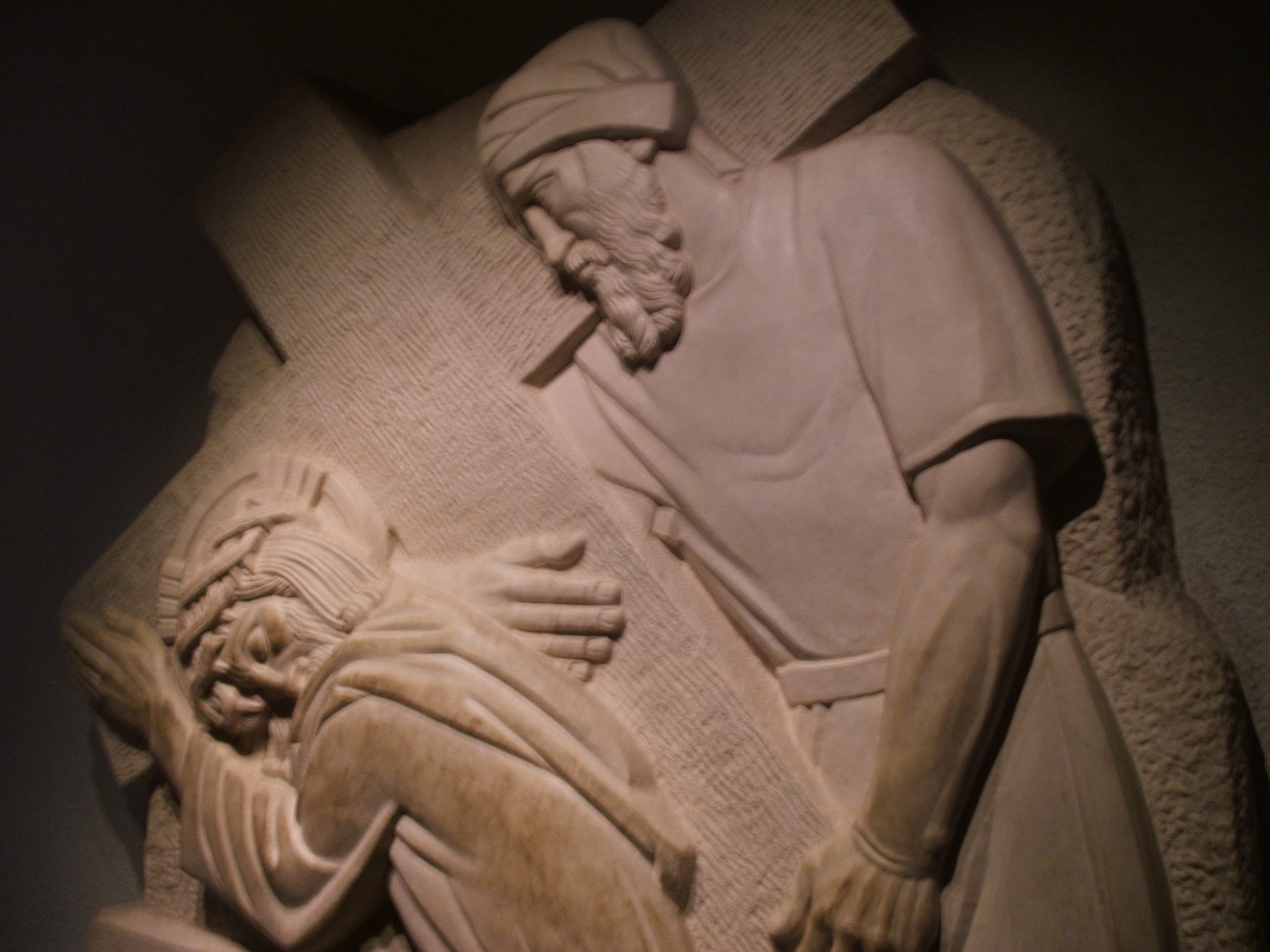
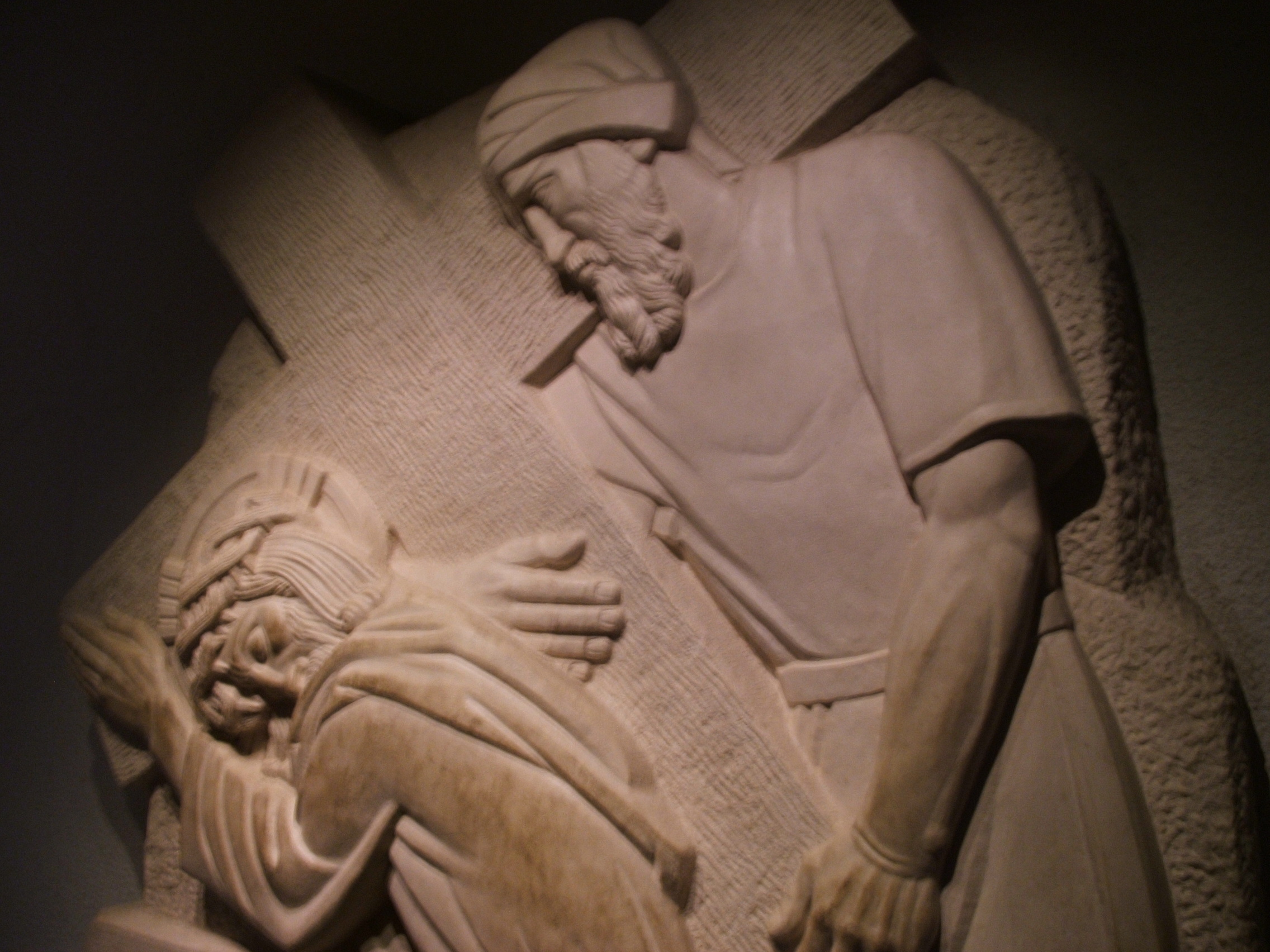
I think I’m starting a journey to reading everything Hauerwas has written.  I started with his memoir last year at David Swanson’s suggestion.  Hauerwas makes Christianity seem both accessible and incredible for it’s simplicity.  He and Will Willimon often get together, join literary powers, and paint this faith beautifully.Station of the Cross

This slim volume on the commands is just as intriguing.  Their premise, or one of them, is that the commandments only make sense if we have as a background the vocation of worshipping God.  God is not to be helpful or responsive to us but worshipped.  God is, and creation worships.  In their own words:

The commandments are not guidelines for humanity in general.  They are a countercultural way of life for those who know who they are and whose they are.  Their function is not to keep American culture running smoothly, but rather to produce a people who are, in our daily lives, a sign, a signal, a witness that God has not left the world to its own devices.

You may disagree, but those sentences clarify the ten words (another way of talking about the commands is by using the earlier phrase “ten words”), but they also make them that much more dubious in that clarity.  They are both sensible and nonsensical, which is how they come to the language of these acts being countercultural.

This quote below is actually about an early theologian, Thomas Aquinas, and their summary of something Aquinas said.  But the quote is searching me right up through here.  It is in the chapter on the fifth commandment not to murder.  By this point in the chapter, they’ve hinted at how murder is a term that captures all kinds of killing and that they scripture’s intent is both external and internal.  So think about behaviors and thoughts:

Aquinas does not mean that we are not to feel righteous indignation against injustice, but rather that we are to develop among ourselves those virtues that free us from temptation to envy and self-importance, which so often lead to presumptions that we have been grievously wronged.

I’m thinking about this in relation to being a father, thinking about this as a leader, as a husband, as an opinionated person.  And the less the commandments are about the external only (i.e., murdering a person), the more challenging they become.  I’m pretty sure I’ll see coming the whole me-murdering-somebody-thing.  It’s external.  But the internal killing is taken up into this commandment, too, and when I believe that, when I believe that God who is concerned for thoughts from afar or “lust” as Jesus has so said, I have an existing problem with the commandments.  I feel both inspired to live into this vocation as a person before God and knocked to my knees.  At some point, I get really thankful that grace is both fulfilling and inspiring.  At some point.  For now, I taste that problem on my tongue.

The Problem With Commandments

I’m reading a book about the 10 commandments.  The book is old by many people’s standards, published in way back in 1999, by Hauerwas & Willimon.

I think I’m starting a journey to reading everything Hauerwas has written.  I started with his memoir last year at David Swanson’s suggestion.  Hauerwas makes Christianity seem both accessible and incredible for it’s simplicity.  He and Will Willimon often get together, join literary powers, and paint this faith beautifully.Station of the Cross

This slim volume on the commands is just as intriguing.  Their premise, or one of them, is that the commandments only make sense if we have as a background the vocation of worshipping God.  God is not to be helpful or responsive to us but worshipped.  God is, and creation worships.  In their own words:

The commandments are not guidelines for humanity in general.  They are a countercultural way of life for those who know who they are and whose they are.  Their function is not to keep American culture running smoothly, but rather to produce a people who are, in our daily lives, a sign, a signal, a witness that God has not left the world to its own devices.

You may disagree, but those sentences clarify the ten words (another way of talking about the commands is by using the earlier phrase “ten words”), but they also make them that much more dubious in that clarity.  They are both sensible and nonsensical, which is how they come to the language of these acts being countercultural.

This quote below is actually about an early theologian, Thomas Aquinas, and their summary of something Aquinas said.  But the quote is searching me right up through here.  It is in the chapter on the fifth commandment not to murder.  By this point in the chapter, they’ve hinted at how murder is a term that captures all kinds of killing and that they scripture’s intent is both external and internal.  So think about behaviors and thoughts:

Aquinas does not mean that we are not to feel righteous indignation against injustice, but rather that we are to develop among ourselves those virtues that free us from temptation to envy and self-importance, which so often lead to presumptions that we have been grievously wronged.

I’m thinking about this in relation to being a father, thinking about this as a leader, as a husband, as an opinionated person.  And the less the commandments are about the external only (i.e., murdering a person), the more challenging they become.  I’m pretty sure I’ll see coming the whole me-murdering-somebody-thing.  It’s external.  But the internal killing is taken up into this commandment, too, and when I believe that, when I believe that God who is concerned for thoughts from afar or “lust” as Jesus has so said, I have an existing problem with the commandments.  I feel both inspired to live into this vocation as a person before God and knocked to my knees.  At some point, I get really thankful that grace is both fulfilling and inspiring.  At some point.  For now, I taste that problem on my tongue.

Wouldn’t Quite Call This A Reflection

It is debilitating to read or hear about another murdered child, another known and unknown murderer, another set of families who have forever been changed by tragedy, another lukewarm, if present, response by various onlookers, be they leaders or church people or neighbors or strangers.A School Playlot

There are surely words to say, aches to verbalize, phrases to pray.  And then there is the throat-grabbing shock of violence, that first, almost innocent, feeling that’s snatched away a little at a time when a child’s life is taken.  Every life matters.  Every person is honorable.  And yet there is something gross and unshapely when a child’s life is taken.  Whether or not we stop and pay attention.  Whether the story goes unreported or shared.  Whether people come near those families and remind them how real it is that things, in a way, will never get better for them.

The fantastic, appalling nature of the murder of a child sinks in deeper and deeper, and it makes you question substantial things.

I don’t intend this to be trite at all.  If anything, I’m contextualizing my question with the above-mentioned call for silence.  Still, my question for you: Does your faith or faith tradition say anything about such things?

“…a study of this baffling geography…”

James Baldwin, a grossly talented, truthful, and penetrating writer, is at his best in some of the reviews, speeches, and essays in the edited collection The Cross of Redemption.  This is the first part of his review of The Arrangement, a novel by Elia Kazan:

Memory, especially as one grows older, can do strange and disquieting things.  Though we would like to live without regrets, and sometimes proudly insist that we have none, this is not really possible, if only because we are mortal.  When more time stretches behind than stretches before one, some assessments, however reluctantly and incompletely, begin to be made.  Between what one wished to become and what one has become there is a momentous gap, which will now never be closed.  And this gap seems to operate as one’s final margin, one’s last opportunity, for creation.  And between the self as it is and the self as one sees it, there is also a distance, even harder to gauge.  Some of us are compelled, around the middle of our lives, to make  a study of this baffling geography, less in the hope of conquering these distances than in the determination that the distances shall not become any greater.  Chasms are necessary, but they can also, notoriously, be fatal.  At this point, one is attempting nothing less than the re-creation of oneself out of the rubble which has become one’s life…