Prepared For Manhood

I saw this post by Earl Hipp.  I think you’ll be interested in the work he’s discussing, in the film and follow up.  It may help you think of creative ways to heal your hurts or the wounds of folks you touch.

An engaged and loving father is the most powerful man-making force on the planet. The opposite is also true. When fathers are absent, physically or emotionally, the wound that results is profound. It touches a man to his core and forever leaves him with the question, “Am I good enough as a person and a man?” All men long to hear the biblical pronouncement from a father, “This is my beloved son, in whom I am well pleased.” The truth is that too many men and young males did not and do not hear it, and we are all paying the price as a result.

In my research for the Man-Making book, countless men offered up clear statements of their sense of masculine insufficiency as one of the barriers keeping them from being involved with and supporting young males. Too many men said they had been poorly prepared for manhood, their fathers had been unavailable, and as a result, they felt, as men, they didn’t have anything to offer boys. In the most tragic stories, some men felt such low masculine-esteem they believed their involvement with a boy would be damaging or hurtful to the young man. You can be certain that behind many of those stories is an invisible but still-open father wound.

In the Rite of Passage and group-mentoring work men are now doing with young males, an all too common story is about pathologically disengaged or abusive fathers or dads who were simply never part of a boy’s life. In the emotionally safe and supportive place that’s created, if it’s time, young males have the emotional room and permission to give up their deeply shielded and buried grief about their father wound. Often this shows up as powerful anger or deep sobbing. The tears in the eyes of so many of the men who hear these boy-stories are damp testimony to the pervasiveness of this father wound, and the core emptiness of the men that carry it. I have my own story about a present, but unavailable, shaming and emotionally terrorizing, alcoholic father.

To finish reading, click here.

A Long Choosing

I am reading Wendell Berry’s Remembering.  A friend quotes some of Berry’s stuff from time to time.  A writer suggested him to me a few years ago in a complimentary way.  This passage from the novel strikes me.  I’m mulling it over; it’s from page 50 of this slim beautifully poetic story.  It connects with something I’ve been considering, the choices made before me which, in some ways, made choices for me.

I’ve been thinking of my abilities as a father, as a husband, as a man, and as a son.  The abilities and the work, toil, and prayer behind them.  I often feel like I’m making it up as I go along, fumbling through a mist, and looking for the best route through these roles.  I envy my brothers and friends who wear the wraps of these worlds with apparent comfort or ease, and that’s knowing that the apparent is not always the truth.  I love and hate the complexity of my own choices, even the good ones, because those are just as hard as the poor ones.  Berry is helping me love and hate with poetry.  He’s a skilled writer.

On the verge of his journey, he is thinking about choice and chance, about the disappearance of change into choice, though the choice be as blind as chance.  That he is who he is and no one else is the result of a long choosing, chosen and chosen again.  He thinks of the long dance of men and women behind him, most of whom he never knew, some he knew, two he yet knows, who, choosing one another, chose him.  He thinks of the choices, too, by which he chose himself as he now is.  How many choices, how much chance, how much error, how much hope have made that place and people that, in turn, made him?  He does not know.  He knows that some who might have left chose to stay, and that some who did leave chose to return, and he is one of them.  Those choices have formed in time and place the pattern of a membership that chose him, yet left him free until he should choose it, which he did once, and now has done again.

Father Wounds

The following post, written by Sylvia Klauser,  is a profound and elegant reminder about the impact of fathers, and I pulled it from the Mennonite Weekly Review.

I read about Whitney Houston’s death while at a conference in Washington, D.C. A friend and I had been at dinner and heard that famous I wanna dance with somebody. Today I have the time to sit and watch the tribute morning shows, listening to song after favorite song. I will always love you stands out for its message of a love that transcends racial boundaries and fears of the others. Even more tragic is that Whitney Houston died on the eve of the Grammy awards — a singer’s celebration of their greatest achievement.

Born with an incredible talent, she came to fame by way of the church. An instant, well-meaning audience provided her with a training ground for that incredible voice. It certainly helps to have the Godmother of soul as your real Godmother. However, talent is a free gift that can easily be squandered.

It is so sad to hear about Whitney’s struggle with drugs and alcohol. Is it a result of the fame, or a cause of it? While I listen to song after song, it seems that they all have a common theme. Who will love me? How will I know that you are honest? I will always love you. I’m every woman. Can I trust you, and so on. The themes are the same: Whitney felt empty without love. She, like every woman (and man) in this world, feels incomplete without the other. But what kind of love are we looking for? And what happens to us when that hole is not filled?

In his book From Wild Man to Wise Man, Richard Rohr writes about the “father hunger” that becomes a “father wound” for those of us who have never been touched and trusted by our fathers. It seems that the father wound oozes from each of Whitney’s songs. Rohr writes, “we lack self-confidence, the ability to do, to carry through, to trust ourselves, because we were never trusted and touched by him.” Whitney’s life is marked by “earned worth,” a constant striving to get more in order to fill this hole where Dad’s trust and touch is missing.

What fills the hole? Well, the story is out all over the tabloids now. It’s not only Whitney or other famous folk who died of this father wound lately. Drugs, alcohol, mind and sense numbing substances only increase feelings of worthlessness and loneliness when the high wears off. I am saddened by Whitney’s line where she names herself the devil in a 2002 Dianne Sawyer interview; but she is dead-on with her assessment. It is our own responsibility to figure out the father wound and then work on fixing it — whether we can meet with our fathers and attempt reconciliation, or whether we have to learn to live with the hole for the rest of our lives.

To heal the father wound is our most intimate, personal and spiritual work, maybe the only work of our lifetimes. No one can do it for us, not fame or drugs or even world-class therapists. We must reconcile with the fact that even our fathers have father wounds. They tried the best they knew how, but the lack of trust and touch is an evil root that stealthily hurts us until we root it out. May peace be with Whitney.

I was born in the same year as Whitney, and I too, sang in church. I was touched deeply by her songs of searching, wanting and needing. I also have to do my own father work so that the rest of my life is not a running after all the things that fall short of that primal need to be loved and trusted and touched.

Sylvia Klauser works in the education and spiritual care department of The Methodist Hospital System in Houston.

The Story I Want To Tell

I’ve snatched the following from a recent post by Rachel Held Evans.  It’s by a father named Justin Bowers, whom I don’t know but whose words I enjoy.

Justin is responding to a question Rachel poses on her blog about a particular topic.  I’m taking part of his response, not to fall into that comment stream as much as to share his perspective raising daughters.  I think Justin is a pastor, if I read the earlier part of this comment correctly.  Whether you can relate to his faith-filled words, I imagine you have a story you want to tell the daughters and sons in your lives.

The story I want my daughters to live is the one that begins in Genesis.

The story where it is “not good” for the man to be alone.

The story where Eve is taken from Adam’s side–a place of companionship and equality, not to walk behind.

The story where, prior to sin entering the world, the relationship of the man and woman was a mirror of the unity of the Triune Creator–equal and submissive to each other because of love.

The story where the gospels open on amazingly godly women, Mary and Elizabeth, through whom the Kingdom invasion began.

The story where Paul writes, ‘There is neither Jew nor Gentile, slave nor free, male nor female, for you are all one in Christ Jesus.’

The story where the body of Christ–the Church–is at its fullest breathing capacity when its members function in their fullest giftedness regardless of any barrier.

Richard Westley on Why He Loves Having a Daughter

I was introduced to this pastor through a friend, and he has a splendid post about why he loves having a daughter.

I have just a few months before my youngest child and daughter turns two.  Cora Mae Nicole Johnson is a bright soul in my life.  Her smile is gorgeous and she’s becoming quite an entertainer.  I wish you could see her dance and hear her sing and watch her act as if all eyes are not on her.  Because I just had the inspiration to write about her, I thought I’d share what I am learning from “missy”.  My dreams for her are rooted in my theology that God equally calls and equips women for vocational ministry and service in the church.  Although I don’t necessarily see call of God for Cora to serve in a vocational ministry space, I certainly don’t want our culture nor the church to limit her opportunities to reach any potential the Spirit imparts to her.  So without further adue…my list for why I am thankful to have a daughter.

  1. Cora Mae teaches me to pay attention to gender differences.  I rough house with my boys and I muyst be mindful that Cora is not like that.  I can’t give a skowl to her (in jest) and expect her to playfully skowl back at me.  Her feelings can not be played with…and must be nurtured and protected.  One look could just about ruin a day for her and me.
  2. A daughter truly gives me a love that is different from my boys.  Just listening to her say, “daddy” is enough to make my day. I don’t feel called into competition nor do I feel as if need to coach with Cora.  Strangely, I am more relaxed around her.  Think about #1 on this list and you might assume I’d be on pins and needles around her.  On the contrary, I feel more at ease with Cora…playful.  With my boys I feel a sense of responsibility to prepare them for a harsh world.

Click here to finish reading Richard’s post.

LZ Granderson Says Raising Boys Isn’t Easier

This article is from cnn.com and it’s by LZ Granderson.

My son had barely taken his first breath when the people in the hospital started telling me how lucky I was.

Not because he was healthy, mind you, but because he was a he.

“It’s easier to raise boys,” I was told.

And for a while I actually believed them.

Then I started paying attention.

Did you know boys are more likely to drop out of high school than girls? Or that there are more female college students than male? And did you know the imprisonment rate for men is roughly 15 times higher than the rate for women?

If this is what boys being easier to raise than girls looks like, coul`d you imagine how many men would be in jail if raising girls got any harder? We worry so much about girls getting hurt — and justifiably so — but interestingly enough, the stats show it’s our boys who are more likely to get robbed, attacked or even murdered. We see girls as fragile orchids and boys as plastic plants. But let’s face it: At the core of this line of thinking isn’t safety — it’s sex.

When someone offers this piece of advice, it’s with the thinking that girls have to be protected from boys who will say and do just about anything to get in their pants. What’s typically missing from this discussion is the challenge to parents — particularly fathers — not to raise a liar and a cheat.

True, parents of boys do not  have to worry about them coming home pregnant, but does that mean an unplanned pregnancy can be considered “the girl’s problem”? After all, a boy’s girlfriend did not get pregnant asexually. That’s why I’m Tebowing day and night, hoping my 15-year-old has the will to stay away from sex — even though the world all around him tells him there’s something wrong with him if he does.

Easier? Ha. Try different.

Click here to read the rest.

Looking To Move?

I saw this article in the printed January 2012 issue of Chicago Magazine.  It highlights Ed Marszewski, an artist and entrepreneur in Chicago’s Bridgeport neighborhood.  Ed is also a father.  He and his wife, Rachael, are raising a daughter, and he talks about his daughter being the motivation for the spread of business, community, and artistic activities he’s involved with.  I was glad to read it given Bridgeport’s history and its meaning, particularly for black folks in Chicago though that history isn’t the subject of the piece.  The article is also online here thankfully:

There’s a new mayor in Bridgeport, and his name is Ed Marszewski. Yes, the Daley legacy still hangs over this South Side stomping ground, an area known in the 1800s as Hardscrabble for its blue-collar residents and in later decades as the home of Richards J. and M. and the Sox. But Marszewski—owner of the contemporary art gallery Co-Prosperity Sphere; publisher of the art magazines Proximity and Matériel, the left-leaning Lumpen, and the newsletter Bridgeport International; coorganizer of the art fairs MDW and Version; and owner, with his mother and brother, of the bar Maria’s—has his own vision for the neighborhood. He calls it the Community of the Future. And he has blueprints for how to make it happen, beginning with a new brainstorming session Sundays at Maria’s—just don’t call it a salon. This is Bridgeport. It’s a bar night.

Though he’s worked off and on at the tap since his mom, Maria, took over the place in 1986, Marszewski, 43, an Evergreen Park native, first moved to Bridgeport in 1998. He’s had his finger in a bunch of pies since, but he has recently ratcheted up his involvement in economic and cultural development—beginning with the 2010 overhaul of the bar, from an old-timers’ dive to an all-welcoming craft beer destination, and lately with efforts to match budding entrepreneurs to empty storefronts.

Why the flurry? Marszewski has an ulterior motive: “All of this activity stems from the fact that I have a baby girl.” That would be Ruby Dean, not quite two, his daughter with his wife, Rachael, an artist Marszewski met when she moved in next door to the bar. “It’s very selfish. We want to increase business here because we want people to have jobs here. We want people to know this isn’t scary old Bridgeport,” he says, citing reduced gang presence, better infrastructure, and a more inclusive attitude from the local government. “I’ll work on any possible project to make this neighborhood awesome.”

To read the rest of the article, click here.

Rushing Through Parenting And Everything Else

We were eating breakfast yesterday when I noticed something Dawn told me a couple weeks ago.  I said to her back then that I was trying to get the boy’s breakfast done.  She asked if I was going somewhere.  I wasn’t.

That small exchange reminded me of something that came back yesterday morning.  The boy teaches me, in small and big ways, to slow down, to resist rushing.

We were eating again.  There’s something about eating that speeds me up or, in this case, slows me down.  The morning routine is routine.  We get up.  I complain and grumble and mutter for an hour or so until I can find my words.  At the same time, the boy runs around.  He sings.  He runs one of his trucks down the small hallway.  He pushes that mower thing and I say stop.  Then we get dressed.  Sometimes that means the boy showers with me.  Most times he’s already been bathed the night before and simply needs to change clothes.  He’ll run to me when my shower stops.  We’ll finish our father and son routine.  After we’re dressed, he’ll ask for breakfast.  I’ll get things together, explaining how much quicker things would go if he were able to help.  He looks at me in that confusing-but-knowing way.

Breakfast is on the table.  I start with helping him pick up his spoon.  We transition to him eating himself.  I’m eating my food; he’s eating his.  His spoons are filled with smaller heaps of oatmeal.  I’m almost done with mine.  At one point I thought about my wife’s comment.  Where are you going?  What do you have to do?

I read Parker Palmer last summer.  I think it was The Active Life.  It may have been Hidden Wholeness.  I read both of them in preparation for a class, and I bleed the memory together of both books.  But there was a part where he was describing contemplation.  If memory’s right, contemplation has to do with being present.  With living in the present.  Often you get at contemplation by solitude or by practicing something like silence—which no parent can conceivably do.  He said that contemplation could be anything, that it could be any activity, not just sitting.  It wasn’t a particular type of activity or inactivity.  Living contemplatively looked differently and it looked like a lot of things potentially.

I’ve thought about being a contemplative parent.  I’ve thought about living with an awareness of myself and my son and my family.  I don’t want to rush through life or through the stages of life with the boy.  And then there’s breakfast.

Breakfast pulls me into the routine and the schedule.  It pushes me to the familiar, and the familiar isn’t contemplation.  I can learn contemplation and practice it, but it’s work.  It’s hard to not rush through breakfast.  It’s hard to not rush through everything else.  It’s tempting to move through it all without being aware or being present.  But yesterday when I thought about Dawn’s question, I slowed down.  I gave the boy back his spoon.  I took a deep breath and watched him eat.  I watched him turn his head and talk about nothing I could understand.  I let the boy rule that part of the meal.  And it was slow.  And it was everything I needed, even if I didn’t want it.

Questions You Should Ask Fathers

A trend started when we brought the boy home from the hospital, after his birth.  I noticed it right away.  The first couple who saw us coming off the elevator in our building asked us.  They are a lovely couple and always have been.  I respect them and admire them.  But they started this trend in my mind, launching me into an experience that’s left me motivated to change how the world asks questions when interacting with parents, particularly fathers.

Their question—and everyone else’s question—was something like, “How are you?”  They were looking at my wife.  They never looked at me.  And it started.

When people would ask me, after the birth or after the three weeks I took off from the church, they would always want to know about the boy and about Dawn.  Now, I appreciated this.  I did.  But it’s always left me wondering if people have the curious tools to ask about me, about the father in the picture.  That would be me.  Before you think I’m completely self-serving and needy, consider how important it is to ask the how you’re doing question to a mother.  Why wouldn’t it be so valuable to raise with a father?  Would a person really think a newborn is needy right before asking about that baby?

So, here goes:

  1. How are you?  This is basic.  This opens up many possibilities.  It takes little effort.  Most people have already asked it, as I mentioned, and only need to modify it so that the guy feels included.
  2. Have you slept?  This, again, is basic, but it’s one of the most caring questions you can ask a father.  He’ll think you love you, even if you’re meeting him for the second time.  He’ll walk away with good thoughts of you.
  3. How do you do it?  More people, more non-parents should ask this.  It’ll make them appear empathetic.  Or smart.  Parenting is difficult.  I can’t understand how single moms do it.  I can’t wrap my brain around how a single dad would either.  It takes too many people to screw up at this.  I can’t imagine how I could mess up all by myself at parenting.  A variation of the question above is, how do you all do it?  How do you make it happen is also a variant.
  4. How is your marriage?  How is your relationship with the child’s mother?  This question takes some history with the father to raise.  But since parenting, no, since children change everything, we need help paying attention to everything outside of the kid(s).  We miss the essentials of life outside of the kid during those early years.  And sometimes that leads to erosion in our relationships as a couple.
  5. Who are you talking to?  Dads need therapy or spiritual direction or great, life-giving habits or really good friends or a combination of all of these.  We need people we can tell what our experiences are, good or bad.  They shouldn’t just be spouses, if you have a spouse.  Get a friend.  Use that friend.  The way you would a prescription from your favorite doctor, faithfully and consistently.  It’s good for you.
  6. Are you spending time with the kid?  Fathers need to spend time with their children.  We need more time than most of us are practically able to give.  This question pushes us to think about where the time goes, whether the kid is a newborn or a teenager or a full-grown adult.  This looks different for me and my father.  Our time is spent mostly on the phone.  I don’t rush him, though he’s too sensitive to time when he calls me.  With my son, it may look like refusing to overlook him.  It may mean sitting in the floor and rolling the wheel on that dump truck.  And doing it again and again and again.
  7. Are you getting time away?  Sometimes I feel like my kid gets tired of me.  I get tired of him.  Uh, all the time.  Then I leave.  I do something else.  It’s not selfish.  In fact, the most helpful thing I can do for that boy is leave my house.  Now, I’m coming back; that’s probably the second most helpful thing I can do for him and for his mother.  But for a guy like me—who needs to get away from people in order to replenish, to re-engage, etc—leaving is vital.  And it pushes me raise how much I am there when I’m there.  Am I with him?  Am I thinking about him?  Do I notice the way he rolls his eyes and laughs during breakfast every morning?  Did I see him raising his arms to me as I washed those dishes before one of the grandmothers arrived in the morning?  Or was I spending my thought time elsewhere?  Leaving enables me to return well.
  8. Can I help?  Be forewarned that this question may lead to kissing and hugging and undying thanks from the father.  We need help and if it’s offered, there’s very little to prevent us from heartily accepting that help.  Of course, we aren’t going to leave our kids in the care of people we (father and mother) don’t trust.  But beyond that, we’d love to have you!
  9. Taking care of yourself?  Most people assume this is a mom question.  And that’s true.  But dads need this.  My schedule has generally been more flexible than my wife’s since the boy.  So, I’ve done the things that needed to be done around the fringes.  But I work full time in a church as a pastor, teach a class at a seminary, write curricula when contracted to do so, and like to take a drink of water every now and then.  All of these things that I do are my decisions to make.  But I love that people tell me to care for me.  I need that.  Or I’m no good to the wife, the child, or anyone else.  This relates to question 7, but it’s an expanded question because the answer includes whether we’re attending to physical health, emotional health, spiritual health and mental health.
  10. What are you learning?  Fathers learn all kinds of things.  We don’t notice it most times, but when we’re asked, it makes us consider.  Along with that, I think we should keep some record of what we’re learning.  My blogging is part of that for me.  My periodic posts about what my boy is teaching me or how I see things differently are ways for me to capture those answers.  A variation of this question is, are you growing?  Or, how are you growing?  How are you different?
Would you add any questions?

Guest Post: Dreams For My Father

I asked Aja Carr, a colleague and editor of mine, to write a post for the blog.  She’s a faithful coach and encourager in my own life, though the best word that describes her is friend.  I’m glad to offer you this post, and I think you’ll enjoy it.

Dreams For My Father

When I was a kid, I dreaded those days when the teacher asked everyone in the class to stand up and talk about their parents’ occupation. I was proud of my mom, a nurse who’d worked long hours and double shifts to cover our mortgage and private school tuition. But, I was in no ways proud of my father, a man who’d been only a few points away from the intellectual label of, “genius”—when he was forced to undergo that sort of testing prior to his incarceration.

Everyone knew my father was smart. So smart, in fact, that he’d earned a Bachelor’s degree in English from Columbia College and nearly finished a Master’s degree prior to leaving the penitentiary. As a child, I had no frame of reference for his intellectual abilities. Up until the age of twelve, I’d only known him through letters and occasional phone calls. I’d seen him maybe 4 or 5 times before I went to high school…that was it.

I rarely received gifts from my father. The very first thing he’d ever given me was a copy of Strunk and White’s Elements of Style. It had no value to me back then. But, when I weigh it’s worth in the life of someone who has since spent 11 years in publishing—its value is tremendous. Sometimes, I think of what it must have cost him—how he might have had to barter or save in order to buy a book and then mail it from prison, and what the gesture predicted about who I’d become.

When my father left prison, I had hoped it would mean that my parents would get back together. My hopes daunted, my mother re-married (my step-father is the most remarkable man you’ll ever meet). However, what I would learn (later in life) was that my father had beat my mother in times past. Armed with this knowledge, I was a little embarrassed to have hope for their reconciliation.

My father was released from prison in 1995. It was a bittersweet reunion. Bitter, because I had no desire to know him. Sweet, because the little I had come to know about him answered so many questions I had about myself. His love for books. his love for desserts, his genuine need to be in charge—all things I’d mimicked—even without fully knowing him.

I will never forget sitting at my desk, preparing to work on some pressing project, when I received a call that my father was in the hospital. That was a Monday night.  By the next Sunday, I had watched him lay in bed unable to breathe on his own.  He was unconscious, unaware, unmoved.

This was last November, and by that time, we’d become friends. By that time, I knew that he loved me, and he knew that I loved him. Still, it didn’t hurt any less. The most I’d ever done for my father happened in the 7 days leading up to his death. I was his next of kin (his wife had taken ill the same day he was admitted to the hospital). In those moments, I began to dream about all the things my father could have been and could have done—things he will now never be and never do. I’d come to learn that he was a high-ranking member of the Masonic Order in our city (something I knew nothing about). Watching those Masons keep a vigil at his bedside—one after the other— I knew he had been well loved by them.

My dreams for my father involved being loved in that way by his own children. We loved him, but not the way they loved him. We’d experienced too many absences on his part, too many lost moments, and too many missed birthdays to love him the way that they loved him.

I can’t remember what pressing matters had captured my attention the day I received the call to come to Roseland Hospital. But, I do remember how my father looked in that hospital bed. I remember all the things I wanted to say.  I remember the things that went unsaid.  I remember the things that would have likely gone unheard even if they had been spoken.

When I was a kid, I dreaded those days when other kids would talk about their parents’ occupation. My father went on to become an adjunct English instructor at several city colleges. He even received awards for excellence in the classroom. These awards and his recognition were good for him and for me.

In my dreams, my father was a real father—one who came home everyday. One who wondered what we might be having for dinner and how he could juggle his work assignments so he could be at my dance recitals.

I still dream about him. I still stop in my tracks when someone mentions the Elements of Style. I still brace myself before passing the hospital where he died. I’m still challenged by the thought of his passing. Now, I’ve come to realize that I love him they way they loved him. I just realized it too late.

Fathers Know Best, Interview #4

FF: Describe your family.

EJ: the diaspora of the Johnsons.  We are spread out.  My oldest son (Josiah, 13) primarily lives with his mother now in the Western Suburban area.  My youngest two, (Alexandria, 5) and (Franklin, 2) from my marriage also primarily live with their mother.  I would have to say that we are a righteous family.  A family where all the members are interested in doing good for themselves, for one another and others.  And I mean everybody.

Josiah the oldest of my three children is great. I can go on and on about this guy.  I remember when I used to worry about him. And I mean really worry.  I would say to myself “Lord, why would you send me a child like this?”  With him it was problems in school.  Problems in church at Sunday school.  Problems in extracurricular sports. Almost every area, this guy was kicking up dust.  What amazes me to say is that he is a phenomenal son and has always been.  In all those challenging areas that I’ve mentioned, through it all, he has always been a good person.  Adults marvel at how mature he has always been.  He is interested in trying everything, every sport, and every instrument.  He is littered with ambition and insight.  Overall, he is careful.  I’m relieved because I understand him now.  He’s me.

Alexandria, the middle child is the one that really introduced me to fatherhood.  I remember so well, she started coming down the birth canal at 12:00 A.M. on the dot on her due date.  She is still the same way.  She means what she says, and will do what she says.  Miss consistent, honest, innovator, beautiful, family leader.  She has always been special to me because when I was younger I could always envision myself with a daughter.  Even at the age of five she is the ideal daughter.  I am blessed because I understand her  like I understand my son.

The newest guy, Franklin is of the same flavor as the other two.  He is independent and vocal about his independence.  It’s amazing because he looks like my oldest son’s identical twin at his age.  I realize with Franklin the style of parenting I have used with Josiah and Alexandria will not get through.  He has a completely different set of motivations.
FF: How has fatherhood changed you?

EJ: I was 21 when I became a father.  At that time, I wasn’t used to depending on people or using people for help.  I had always been helpful to others, but had managed my life up to that point trying not to need help from others.   At that time, considering my proud personality, I had to learn to depend on others.  I had to be the one asking for advice.  I had to be the one who needed resources.  I was the one who didn’t know what to do, or say.  I began to live a new life.  Or I added a new “wing” to my existing life structure.

Fatherhood has inspired new relationships with people, places and things I ordinarily wouldn’t have any relation.  For example, I’ve been a member of the Chicago’s kids museum.  I’ve been to the zoo agazillion times.  There is no way in the world I would know who Dora the Explorer is.

FF: Have you made any mistakes as a dad? If you’re not a liar, name one and talk about what it meant to you.

EJ: I will mention probably the most benign or, at least, something where I won’t implicate myself by mentioning.  Without dwelling on buying diapers at the last minute from Walgreens (too expensive), or bringing home the wrong formula (in trouble with the wife).  I would say one of the mistakes worth talking about that I constantly keep making is being impatient.  Sometimes I forget that my children are children.  That they need some room to make mistakes.  A strong feature in my character is the ability to improve things.  On the downside of that feature is fault-finding.  I am sometimes driven to crave perfection.

FF: What’s the most helpful advice you heard when you were becoming a father or as you’ve been a father?

EJ: While living in South Holland, I was to fortunate to have made the acquaintance of several middle-aged adult fathers.  Fathers with whom I share common frames of references.  I was having difficulty getting through to my son on a lot of concerns.  Being able to watch these older gentlemen talk to their children, interact with their children, etc. provided a good template for me.  More importantly, the best piece of advice that one of the father’s shared with me was “share stories about yourself when you were a child.”  This really worked!  Instead of telling my son what to do all the time, I would just share my stories that were similar to his experience.  I could tell this would really make him contemplate how  alike we are.  I could also see that he was generally more at ease knowing that he wasn’t alone.

FF: How do you attend to your relationship with your children’s mother? Has it changed over time. How so?

EJ:  Literally having to work/walk together with a person you don’t see everyday is a character challenge.  What tools I usually use are respect, understanding, and patience.  The ladies like respect and definitely being understood.  At first, it wasn’t always like this.  I remember wanting what I wanted when I wanted it.  That had to change.

FF: You move back and forth to see your children, to maintain relationships with them. What has that meant to you as a dad and how you’ve gone about planning and living your life?

EJ: It mostly sucks.  Honestly!  To be with them or to pick them up it’s a long drive.  A tenacious drive.  When things go awry, I have a long way to travel to get to them.  After the divorce, I was picking up everyone from their various locations and it three hours to pick up everyone.  This is the downside of it though.  On the upside, the drive gives me a lot of time to plan and think of new projects, etc.  And when everyone is in the car we have a lot time to spend in each others space without it being overbearing.

I know every other Friday and Sunday for the last past 13 years have been reserved for transporting children.  Now after the divorce, it is every other Friday & Sunday, along with every Monday and Wednesday that are set aside for transporting kids.

It means not only setting aside time to be with my children but also making time for traveling to get to them to be able to spend time with them.

FF: What surprises are there along the way for parents? What do you wish you were told to expect?

EJ:  I’m surprised at how serious of job this is.  How much thought needs to be put into each day, each word, each meal, each everything.  Fathering requires a lot of attention and planning.  Initially, I thought all I had to do was feed em, cloth em and tell em what to do.  In this age, love means so much more children.  The amount of sacrifices that need to be made to communicate love to my children is beyond what I ever would have imagined.

FF: What is one recent memory you made with your children?
 EJ:  Franklin, the youngest, has recently learned how to ride his bike.  That was really amazing.  He also enjoys it because he can’t stop riding the bike.  Even in the house.  He wakes up in the morning and that is his priority, to get on the bike and ride around the basement.

Sweet Insanity

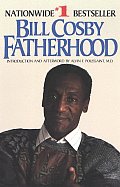
This is a passage from Bill Cosby’s Fatherhood, under the chapter entitled “Sweet Insanity.”

Yes, having a child is surely the most beautifully irrational act that two people in love can commit.  Having had five qualifies me to write this book but not to give you any absolute rules because there are none.  Screenwriter William Goldman has said that, in spite of all the experience that Hollywood people have in making movies, “Nobody knows anything.”  I sometimes think the same statement is true of raising children.  In spite of the six thousand manuals on child raising in the bookstores, child raising is still a dark continent and no one really knows anything.  You just need a lot of love and luck—and, of course, courage because you’ll be spending many years in fear of your kids…

It seems to me that two people have a baby just to see what they can make, like a kind of erotic arts and crafts.  And some people have several children because they know there are going to be failures.  They figure that if they have a dozen, maybe one or two will work out, for having children is certainly defying the odds.  The great sports writer Ring Lardner once said that all life is eight-to-five against.  Well, trying to raise a child to come out right is like trying to hit the daily double—which my father used to do when he whacked my brother and me.

Raising children is an incredibly hard and risky business in which no cumulative wisdom is gained: each generation repeats the mistakes the previous one made.  When England’s literary giant Dr. Samuel Johnson saw a dog walking on its hind legs, he said, “The wonder is not that it be done well but that it be done at all.”  The same thing is true of raising children, who have trouble walking straight until they’re nineteen or twenty.

We parents so often blow the business of raising kids, but not because we violate any philosophy of child raising.  I doubt there can be a philosophy about something so difficult, something so downright mystical, as raising kids.  A baseball manager has learned a lot about his job from having played the game, but a parent has not learned a thing from having once been a child.  What can you learn about a business in which the child’s favorite response is “I don’t know”?

A father enters his son’s room and sees that the boy is missing his hair.

“What happened to your head?” the father says, beholding his skin-headed son.  “Did you get a haircut?”

“I don’t know,” the boy replies.

“You don’t know if you got a haircut?  Well, tell me this: Was your head with you all day?”

“I don’t know,” says the boy.