Glimpses

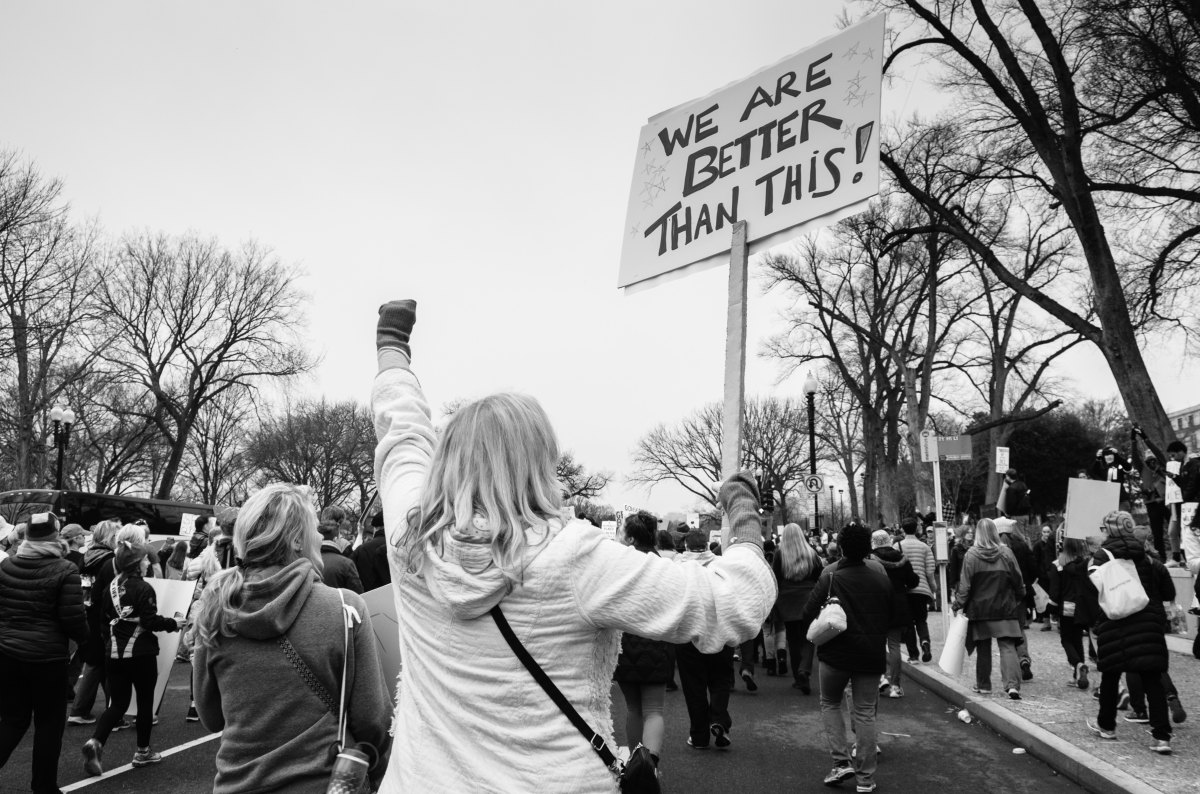
I was traveling when I heard of Erica Garner’s death. I wasn’t home and her death reminded me of how hard it is to find a home in our country. It’s hard to find a home in the world when a freedom fighter leaves after birthing a child and raising two that she, now, can’t care for up close. It’s difficult to see glimpses of joy in the midst of such homegoings.

It’s hard to face the truth of who I am in the world when a young Erica Garner dies of heart trouble or cardiac arrest or any of the related and potential exact causes of her death. When I read the news of her death, all I could think of in the moment was about the power of pain, the ripping potency of anguish. Brokenness carries weight.

I have thought of her children and her family. I have thought of people who I don’t know, whose names and faces I wouldn’t recognize. And yet there is something I do recognize, something I can’t fully make out in words or deliver to another person.

Ms. Garner’s death means much and it’s impossible for me to distance her death from her father’s death. They were two different people and if I can find one common line between them, it is, for me, that neither of them should have died when they died. Her death, like her father’s to some extent, is another reminder of what it means to embody and to carry in the body the full experience of being Black in the United States.

There is immense pleasure in being Black and there is a corresponding shadow side that is inexplicable despite the best linguistic tools. Death comes for everyone, and it seems that death comes so soon for those whose skin is along that gorgeous spectrum from cream to vanilla bean. The hands of those who are sworn to serve and protect or the low-lying pervasive threats of asthma and “high blood and sugar” as they were known in my childhood–the line of angels of death is long.

Ms. Garner’s end makes me remember how hard it is to be Black and makes me imagine how hard it is to be a Black woman and how inestimably difficult it must be to be a Black woman whose father is dead and how unutterably painful it must be to be a Black woman whose father is dead because his voice wasn’t heard and how unbearable the weight must be to be a Black woman whose father is dead because his own voice was unheard by the law enforcement officers who killed him.

It feels right to consider the meaning of a sister’s death. And not only Ms. Garner’s. Indeed, the consideration of a person’s death means that life will keep a certain melancholia. Of course, that melancholic feeling borders the derivative feelings which come when we consider death, feelings of life, of interest, of resilience, of purpose. Can we ever really live well and joyfully and not consider the alternative to life? Is it possible to appreciate the images of justice-coming-close and not pause to bow the heart to a justice-seeker’s early demise?

I am not as sad as the people who cherish Ms. Garner. I’m clear about that. I know that she has a tribe of loved ones and significant others who speak her name with complete tenderness. I am not a part of that loving circle. I’m a distant member of the broader tribe. I have prayed for her, thought of her, and grieved with her from my perch as she’s gotten through hours and days and weeks without a father.

I’ll turn my prayers to Ms. Garner’s children. I’ll still think of the ones who have gone on, who have left this misshaped world. I’ll think of Erica Garner, and I’ll try to be a good spiritual caregiver. Like her, I’ll work for the generations to come. And I’ll pray and work, from all my edges, for as much good and grace and love as possible. May we see what Ms. Garner must have seen glimpses of in her depths: a completing picture of justice and love on display.


For Belonging from O’Donohue

I read this earlier in the year to a group of people I have spent years loving:

May you listen to your longing to be free.

May the frames of your belonging be generous enough for your dreams.

May you arise each day with a voice of blessing whispering in your heart.

May you find a harmony between your soul and your life.

May the sanctuary of your soul never become haunted.

May you know the eternal longing that lives at the heart of time.

May there be kindness in your gaze when you look within.

May you never place walls between the light and yourself.

May you allow the wild beauty of the invisible world to gather you, mind you, and embrace you in belonging.

“For Belonging” from John O’Donohue’s To Bless the Space Between Us

Appeal

I had two experiences recently where the word appeal came up. One was a committee experience where I had essentially prepared for two years in order to get to a particular point in my process as a pastoral educator. The other was a smaller process but part of my current continuing education as a pastoral theologian.

In the first experience, the committee passed me. The approval for this other part of my continuing education was denied. As a standard part of the rejection, I was given the chance to appeal. I’m in that strange waiting period where my appeal is heard based upon what I submitted. It may be granted. It may not.

At the end of my committee where I passed – and I think they do this for their own fun or to get another smile or because the process requires it – the chair said that I could appeal their decision. He said other things while I was already telling him and them that there was no way I was appealing their grant of my becoming certified. He said what he said. I said what I said.

The thing is, if you win, you need not appeal. It makes no sense to appeal a yes. But if you don’t win; if you lose; if what you want doesn’t come; if your preparation doesn’t pay off; if the decision isn’t in your favor; if you spend and don’t recover; if any of those kinds of things happen, appeal.

An appeal could involve filling out forms. It could include writing letters or gathering materials to re-present your case. An appeal could mean setting your face like flint. It could mean making the decision to try (again). It could mean, simply, not stopping. If you don’t get the thing this time, appeal.

I learned this in a personal way as these other experiences were and have been taking shape. I learned from something that others have done and said to me that appealing is available. It takes grit to do it. It costs emotionally. It is hard.

Suffer through it and appeal. Cry over the pain and appeal. Keep cultivating in you what at Thousand Waves we call a non-quitting spirit. You actually don’t have to quit. Even with whatever you were told. You can decide. You can actually keep going. You can appeal.

Soul Stuff: Entrusting Yourself

I shared this quote as part of a presentation I led last week with physician-fellows in palliative care. They are finishing up a year with their fellowship; they’ve come to palliative care from a variety of disciplines. For three years I’ve been shadowed by different fellows, working side to side to care, to listen, and to participate in the sacred sendings of patients.

Palliative care doctors are a good group of people, and our work as chaplains borders a neighboring region if I can put it that way. Unfortunately palliative docs are often thought of as last resorts and though that view is changing, their import is only beginning to emerge for addressing pain, discomfort, and the large matter of the unanswered. The affinity between their work and ours in spiritual care makes me think of the word integration.

My talk was on cultivating patience in the medical intensive care unit. The MICU is my primary pastoral context these days outside of my supervision of ministry students, and I pulled materials together for a similar group last year. Toward the end of our discussion, I was reflecting upon the wonderful work of Rachel Naomi Remen, whom I’ve quoted before on the blog.

Dr. Remen is among a small circle of life sustainers for me, especially from this last calendar year. She works with caregivers, teaches physicians of the body and physicians of the soul. And she helps me see better some of the portions of what’s ahead in my own future. That said, this quote was toward the end of my presentation with the staff from My Grandfather’s Blessings:

An oyster is soft, tender, and vulnerable. Without the sanctuary of its shell it could not survive. But oysters must open their shells in order to “breathe” water. Sometimes while an oyster is breathing, a grain of sand will enter its shell and become a part of its life from then on. Such grains of sand cause pain, but an oyster does not alter its soft nature because of this. It does not become hard and leathery in order not to feel. It continues to entrust itself to the ocean, to open and breathe in order to live. But it does respond. Slowly and patiently, the oyster wraps the grain of sand in thin translucent layers until, over time, it has created something of great value in the place where it was most vulnerable to its pain. A pearl might be thought of as an oyster’s response to its suffering…Sand is a way of life for an oyster. If you are soft and tender and must live on the sandy floor of the ocean, making pearls becomes a necessity if you are to live well.

I hope these words and anybody’s words which sit in your ears give you an anchor in the oceans of your life. Being an oyster, being a giver of hope, being a caregiver can irritate you until you release your own soft nature. Remen doesn’t likely mean by soft nature anything but a positive description of the best part of you and me.

When my training supervisor wrote my evaluation from February to September, he remarked upon my growth that he’d seen from two years, though he’s only supervised six months of that time. He gave a high compliment when he said that he’d seen me soften over these months, over these years. I had read these words but forgot about them until the other week. In working on this presentation, I reread that the oyster softened, too.

May your nature only soften. May it never harden. May you be as soft as you need to be to produce the pearls that await the context of your own soul. May every sand grain get used to your softness rather than your softness falling into hard, gritty sharpness. Don’t clamp your shell. Don’t give up. Don’t harden.

Men We Reaped

One of my favorite people saying things that matter at an event I couldn’t attend some time back. I come to her memoir each year in a different way since I’ve gotten it.

Jesmyn Ward possesses a joy that doesn’t come through in this, but so much does come through this. Her new book is out; she’s being celebrated having gotten a genius grant! Many blessings to Jesmyn. May the deep truths she discusses in this memoir, even as she launches into every next thing, abide with us.

May her tomorrows be blessed with all she needs to stay strong.

Embedded and Inscribed Processes

Students are typically not taught about the complex nature of interpretation and the assumptions embedded in and power imprinted on all knowledge. Many political and educational leaders deem such profoundly important dimensions of learning unimportant. Indeed, many power wielders view such insights as downright frightening, as critical teachers begin to uncover the slippery base on which school knowledge rests. Knowledge production and curriculum development are always and forever historically embedded and culturally inscribed processes.

From Critical Pedagogy

Wisdom, Major Deaths & Transformation

I was reading Fr. Rohr’s meditation the other day. I should say that when I read it, I was thinking about grief already, thinking about loss. It was the week prior to my final goodbye at New Community where I served for a touch over eleven years. Even though I made the change for good reasons, it was still a change.

That change was laced with loss and that loss meant grief. I am grieving that loss, grieving that change. Of course, there are other changes and losses, too. I, like you, am grieving more than one thing at a time. I try to stay in some touch with those losses to respect them, to hear them, and to learn from them.

Fr. Rohr was discussing Walter Brueggemann’s observation that the Torah, the Prophets, and the Wisdom Literature (three scriptural categories in the first testament of the Christian scriptures and the three parts of revelation making up the Hebrew Bible) represent the development of human consciousness. These three parts of biblical witness present what it means for humans to be, to become. Fr. Rohr was underlining the importance of these three types of witness in life.

We need to be reminded of our original createdness in God’s community (Torah is our instruction in that very truth). We need to live close to those voices that help us look beyond ourselves, our egos, and our small commitments (Prophets do that). We require for living well criticality that helps us see honestly how to live toward the self and others (Wisdom offers those guides).

It was in this brief reflection that Fr. Rohr said,

Wisdom literature reveals an ability to be patient with mystery and contradictions—and the soul itself. Wise people have always passed through a major death to their egocentricity. This is the core meaning of transformation.

I find it taxing, staying true to transformation. It’s hard to be faithful to transformation because in being faithful to that change, I’m signing up for continued self-noticing and continued self-growth. I’m setting myself in places where I plan to notice others and plan to grow others. I plan not to die in one sense. In another sense, this is absolute death. This is surrender. It’s scary. It’s major.

If you’re feeling your own grief, passing through a death (whether it’s minor or major to you), name it as a part of your transformation. The contradictions that scar your soul, the mystery that leaves your heart hungry for more than what’s in front of you, name them as sources of revelation about not only your death but your life. Your steps, your paths, and your journey are leading somewhere, and it’s called transformation.

Try your best to trust. Even the attempt is a death. It is also the emergence of life.

An Upward Cycle

I was reading Seth Godin’s post the other week and he was, as usual, encouraging me to look through a longer lens. He said that there is “an upward cycle, a slow one, a journey worth going on.” And in that comment, he captured so many things.

An image that came to mind was of bicycling. I used to do it. Haven’t for years because being a parent of small children meant, among other things, having some facility to arrive to the neighborhood more quickly than a 1.5 hour cycle commute allowed.

Chicago is flat but there is a hill or two on Lake Shore Drive’s bike path. I thought about that hill every time I headed to the path. I anticipated it, dreaded it. I looked forward to moving down that hill because it brought wind and speed. I hated the, for me, slow climb of going upward.

Consider the areas of your life. Where have you succeeded? And as importantly, where have you failed? Think about what you’re up to currently. Which journeys proved to be the ones worth going on? They were probably the slow ones, the ones that built your strength even when they didn’t seem to build your patience.

I think that the moments in life that build strength inevitably build patience. And it is cyclic. It’s upward and cyclic. Keep going upward, even if you’re moving slowly.

Read Seth’s post here.

Accompanied

I left my building hearing my sons saying goodbye through the window. One does this daily because my sister hoists him to the window so he can wave. He’s adding sounds, some of which I can actually make out. He’s saying what I’m sure is “See you later” at this point. The other, older boy is home for the week doing nothing but play after spending the summer leaving in the mornings with me.

When I walked to the gate, I saw one of our known political servants who stays in the neighborhood. We greeted each other, reacquainted for the twelfth time, and started walking in the same direction. I was going to my car. She was heading to her daughter’s to walk her dogs. She herself is a dogs person, and me and Bryce have seen her a lot with her own dogs. I knew my car was near her daughter’s building and I said that so she wouldn’t think I was following her.

We walked together. I’m sure she thought she’d get around the block without being noticed. Or, at least, without being attached to another person. I thought the same thing. I like that block walk in the morning, when I don’t have to say anything meaningful, capture a summary of something someone’s said. Everyone needs space to be quiet. It’s freeing to walk alone sometimes.

And then, there are those moments like this morning where you think you’ll walk by yourself and the unexpected happens. Someone comes along and make the short journey with you.

I asked her how she had been holding up lately. She mentioned some things. She pointed out my badge, asked if I was a doctor, which made me smile. People can make worse assumptions.

I told her I was a chaplain. And that’s how the day continued.

What Was This Like For You?

What was this like for you? I ask this question all the time.

I ask this to lift up what’s been said in the presence of a person, to hear it, and to notice it. This question is one way I process my process when I spend time with people.

It’s come up in how I think about ending meetings where someone has said things they wouldn’t generally say. It’s my way of spending a few minutes before a class, group, session ends to review and re-see what’s happened. I find myself asking, “What was this like for you?”

There are other versions of this question. There are a few reasons why I ask this, reasons underneath my comments above. It’s important for me to walk away knowing how this conversation, this meeting, or this moment was from your perspective. It’s important for me to change and adapt so the next one can be more hospitable.

Long Loving Looks

The other week I was at the ACPE ‘s national conference. Among the many highlights were seeing my previous training supervisor, Peter Strening, one of the best people I know, hearing and meeting Parker Palmer and Carrie Newcomer, and experiencing Greg Ellison.

Dr. Ellison’s time with us was a critical, illuminating display. Among the many things we did during his discussion of the non-profit he created with his colleagues in connection, Fearless Dialogues, was what he called the long loving look. It takes him to explain it. I haven’t found Dr. Ellison’s explanation of this part of his presentation, but I have found this important summary of the context for the brother-scholar’s book. It’s as good because it contextualizes what I experienced in this professor’s time with us at the conference. Attend to what he says, please.

What he offers is a summary of his first book that also names and underlines the particular part of his presentation. If I find more on the loving look, I’ll post it at another time. Of course, you can also bring Dr. Ellison and his crew to your church, school, or business for a quality, hard and heartfelt discussion about something that matters.