Letter of Intent

Photo Thanks to Jon Ottosson

Photo Thanks to Jon Ottosson

I have to send a letter of intent to sit before a committee soon. The template is on one of my desks. I see it everyday since I printed it out as a reminder that sending the letter is an important step in one of my growth processes.

It’s a simple form, but it’s a staple in my process and in the batch of materials which it indicates will follow. My committee is tied to it. My conversation happens after it. My effort in between is also linked.

I haven’t had time to blog the last couple weeks but I’m thinking about writing a letter of intent for myself for the new year. People write resolutions. I don’t. But here are some of my intentions in the random order I think of them.

I intend:

  1. To see something beautiful and memorable with my wife at my side
  2. To love the church, the class, and every context in which I serve others
  3. To write something that other people will use
  4. To keep that monthly meal with the Swansons for 3rd/4th year
  5. To become a supervisory candidate this spring
  6. To be accepted and to accept myself
  7. To create, to lead, to stay close to myself
  8. To be a better father with both my sons
  9. To watch Dawn cry when our second is born–ha
  10. To be a great son and brother
  11. To share and be generous while being more patient
  12. To help creative people become/stay grounded
  13. To be the friend who shows up when needed
  14. To cook more
  15. To advance in my physical care/exercise/training
  16. To be undoubtedly and unmistakably relentless, especially while loving
  17. To update my advance directives
  18. To revise my blogs
  19. To locate resources for a writing project
  20. To start something new

What about you?

Supervision Helps

She needed to turn aside and name what was unexamined and unfinished in her own life story as she continued in ministry to this woman. Were she simply to react to her as she had to her mother, she would have seen clearly neither her own story nor that of the patient, who was different from her mother in important ways. These parallels can be named and examined or referred for therapeutic work. Particular themes of grief or abandonment or abuse may provoke anxiety in the minister who has these themes as parts of his or her own history. Supervision helps the minister to learn to walk between the perils of overidentification and detached aloofness. Ministry in depth will always raise themes for the sensitive and reflective minister that are in need of attention in his or her own story. Recognizing these themes and remaining responsible in pastoral relationship are the goals of supervision that looks at life stories of parishioner and pastor.

(From Steere’s The Supervision of Pastoral Care, pg. 122)

Prayer As Protest (4 of 4)

As I’ve mentioned in the previous three posts, I asked my church Sunday morning to participate in a time public witness and my reasons why are in this last post.

Photo Thanks to Jeff Sheldon

Photo Thanks to Jeff Sheldon

First, my brother asked me to. David Swanson serves as the lead pastor of our sister church, and he asked us to publicize what he and other leaders were doing. I have a rule in my life–one that has yet to be abused–and that rule is this: when David tells me to do something, I don’t question it. There is probably one other person who gets that treatment. It’s another way of saying that when David asks for something, I’ve already answered him.

Second, New Community is multiethnic, and I know that one specific way that people from different ethnicities do mission together is by our being invited to something specific. We have so many nuanced experiences that it becomes impossible to know when to show up. There are people in my church who would never be inclined to even consider it appropriate to come to a protest. And they’d have their good reasons. But a specific invitation would change that for them.

Third, I told the church that “some of my cousins” would be at the vigil. There would be a few Black folks. And then I said that I wanted my other family members to be there as well. I was certainly looking at particular people in the room. I even gave everyone a way out so as to soften my tone. I was feeling “very close to myself” as I spoke. But my spiritual relatives–and not just my spiritual friends–were sitting there. And before I preached the sermon, I had to bare my honesty. I wanted them to show up. My congregation is a part of me, and I wanted them to know that I valued our relationship enough to invite them into what is making a difference in my life right now.

Fourth, I know that a congregation in Logan Square, a neighborhood with about 4 Black residents, could consist without getting into things on the south side. I didn’t want that. We have people in our church who live as far south as Will County frankly. Beyond that acknowledgment, I want us to be a church that responds to the realities of a few because those realities reflect the experiences of the few. In a city where the dominant narrative and dominant culture–which tends to be the white narrative and culture–is always accepted, the church has these slight chances to underline another story, another’s story. The church that follows Jesus is always listening for the story of the crucified one, the busted one, the marginalized and misunderstood one. That search makes us followers of the splendid and maligned Christ. That search makes us Christian.

Fifth, I’ve been inviting the church for 2 years now into experiences like this. It felt good and terrible to get up Sunday wearing these same clothes and saying these same lines. To have the church attend another experience, to pray about this same type of tragedy, was heartbreaking. I’m tired of it. I was tired of it. But in that soul exhaustion was the blessing that the church had heard this before. They heard me leading in worship and sermonic form as we dialogued the day after Zimmerman further experienced the distortion of his injustice and crime. They heard me ask for their prayers the Sunday before my family joined with David’s family to travel to St. Louis County and as we prepared to participate in similar public witness as clergy. It felt good to know that I didn’t have to explain it all.

Sixth, I value presence as an outgrowth our church’s life. In general, I suspect churches that proclaim things without practicing the same. I question leaders who say one thing and do another. I question that tendency in myself. So when I have chances to pair my action with my words, I gesture toward integrity and authenticity by living the words. As one of the pastors in our church, when I exercise my gifts in the congregation, I’m offering the church an opportunity to move toward the same integrity and authenticity which I’m moving toward personally. In other words, for us to claim our mission weekly that “We exist to be a city within a city, an alternate Chicago…” leaves us open to any opportunity to go and live into that mission. That’s why we remind people of those opportunities at the benediction. Go and live it. Monday was about our corporate life living into the mission. It wasn’t the only way but it was one good way.

Seventh, the final reason behind my invitation was my personal need to, at that time, identify with a need in my life and in the lives of the Black people in our church. I (and I’ll see we) needed to ask for evidence from our multiethnic congregation that Black life, indeed, mattered to them. I knew Sunday that Blackness mattered to me. I continue to need the general, regular reassurance that what matters to me matters to the faith community. That’s part of the unfortunate reality of living in exilic conditions: you need the people of faith to remind you of what truth is. The church on Monday–from all over the city–got together to remind Black people that the persistent and sinful actions against Black kids is unjust. I invited my church into the stream of grace-filled evidence that God is working now in the midst of this present darkness. And they showed up. My small group on Sunday discussed it. Those who couldn’t come committed to praying from afar. I was emailed or texted by a few people. New Community people greeted and hugged me at the vigil. The church stepped up. May God grant us the total grace to keep at it.

Prayer As Protest (3 of 4)

I said to my church Sunday, in advance of a public witness Monday, that the church was gathering to pray. I emphasized prayer and said that our focus wasn’t protest but prayer. Even while saying it, I was questioning my cadence, my precision, and my intent.

I was using an approach in the brief appeal, one I’ve heard the preacher use in the church of my upbringing. I was italicizing the word I chose. And I said it because the focus of the time Monday was to be public witness generally and prayer specifically.

But the more accurate reflection of my thought and, I think, the biblical material from which I draw is that prayer is protest. The people of the book protest through the particular form of prayer. Protestations as we understand them now are foreign in the world of scripture. It would be anachronistic and arrogant, unfair and unreasonable to say that the bible includes protest unless that protest takes the form of a kind of prayer, on one hand, or prophetic utterance, on the other.

In other words, the way that we see protest occurring in the scriptures is through prayers and prophecies–prophecies of the forth-telling flavor, not the foretelling kind. I’d call these two gestures really good metrics for gauging our contemporary public witness. If there is no prayer and if there is no prophecy in public places, there is no public witness. If there is no public witness, what role does the (local or gathered) church have in that civic arena?

Monday NightIn thinking since about prayer as an act of protest, I’m holding onto the following truths I see in the scriptures. And I’m correcting my own use from Sunday. I didn’t take as much time to enrich my invitation, because Sunday was very full, but I would edit myself to clarify a bit to involve the following.

Biblical people call God out. The bible is about a people who are a noisy folk. There is quiet in our text but not a lot. When the people of God needed God, they did not shrivel in a corner. Rather, they called upon their God, even during long days and nights when they felt unheard and disinherited. The Hebrew people cried out while enslaved, and you can’t tell a slave to hush. You can’t convince an unpaid laborer that calling out for “one more day” is reasonable, particularly when the audience of his pain is the Divine Audience. But the people called out nonetheless.

Biblical people name harsh, right-now reality. The content of lament is real life. The guts of the people’s prayer is what happens now. People who know the Black faith tradition know that this has always been a part of the common religious stream of beautiful Black folk. We have been unrestrained in our proclaimed expectation for life now to mirror life wherever else God dwells. If life in the white neighborhood is good–replace that with “suburb” or heaven if you please–life in Englewood and Auburn-Greshem and Washington Heights should be good. When reality is harsh, the prayerful protest calls for another reality.

Biblical people state interior experience unequivocally. There is a false sense that we carry and that is that we cannot be honest with God. It’s wrong. God desires truth in the inner parts says the songwriter. The truth is that God wants you and your interior reality, your vulnerability, and your honesty because those things combine to equal who you really are. God isn’t concerned about your front or my social self. God cares less for that because it’s a grand mask. God’s people state what is real: their pain when they’re in pain and their joy when they’re in joy. Wouldn’t your life be better if you told the simple truth? Wouldn’t you feel freer with your God if you were honest? That’s the God-offered requirement anyway.

Biblical people assume that prayer changes everything. Ms. Virginia used to sing in the choir at Sweet Holy Spirit that she knew that prayer changed things. Oh, can she sing it! She was informed by her life and her reading of scripture. Even when the church and Israel before her lived in the exact opposite condition; even when Babylonian exile seemed to be the only gift the Jews could hold; even when the crucifixion was the longest reality during those dark days from Friday to Sunday; people gathered to pray. They knew that faith would collect them and inspire them to acknowledge fear but to acknowledge that fear wasn’t the only feeling in the room. In faith, they prayed because prayer moves and changes and turns and performs. Prayer is a means of grace, and where grace is change is.

Biblical people start from a corporate location. I could flip the order of these points in my post. Surely, it’s fine to start with this point. Biblical people aren’t individualistic. They are individuals, for sure, but their orientation and the orientation of all the words of God are that God is up to wide, massive, increasingly participatory redemption of the entirety of creation. The writings of scripture have personal application but that isn’t the starting place. God’s people and God’s words to that people involve a regular communal nature that is very different from me and mine.

May we pray better. May the Lord teach us to pray.

Prayer As Protest (2 of 4)

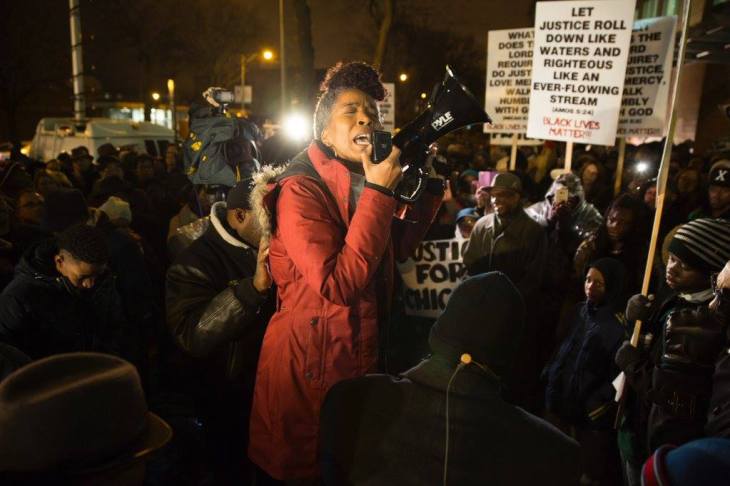
On Monday night my friend David Swanson organized a prayer vigil at the Chicago Police Department’s administrative headquarters. There were a few hundred people present, including dozens of clergy.

When David told me about the planning of the event, I was delighted in the way that a pastor is delighted when the church looks forward to a specific way to respond to crisis and social unrest. Having been bruised by the consequences leading up to the needs for our prayers, I was glad we’d be able to pray.

When I mentioned to our church that they should come, I told them that we’d be praying, not protesting. Of course, I’ve thought better of how I put it last Sunday. Still, here are my reasons why I’m grateful for the act of prayerful education in front of the police headquarters.

Photo Thanks to Geoffery Stellfox

Photo Thanks to Geoffery Stellfox

Prayer was an education in what the church’s first role in society is. I remember taking a course in seminary on the church and community. I have a very specific appreciation for that class because it’s where I met Michelle Dodson, one New Community’s pastors. Beyond that, I recall the course introducing me to the language of organizing in faith terms. I remember that what we discussed in the graduate course was a reflection of what I lived at Sweet Holy Spirit when as a boy I built memories boycotting and chanting against something Daley did or didn’t do. What I don’t recall from our class discussions is how much we talked about prayer. I think we assumed it, but I don’t know if eleven plus years ago that prayer was explicit in the academic work we did. Now, I find myself saying in the midst of all the poverty of character, poverty of leadership, poverty of political will, and poverty of explicit justice for Black people in Chicago–and I’m hardly talking about the narrow and deep anguish of this latest moment–I find myself saying that prayer is our first response. There are certainly other things to be done. But at the bottom of those important next acts is the usually unseen gesture of regular prayer. We rehearse the happenings of this world in the ear of a God who expects to hear us. It’s what we do: the church prays.

Prayer was an opening to the wideness of an agenda unformed by our best plans. Pastor Swanson was caring in his planning, a post I’ll leave for the book he and I will write together one day. His manner in this circumstance will be its own chapter. What I will say is that he took care to plan to include a set of prayers from repentance to triumph. We were led in praying about apathy and action. And we were given time to pray as a people, not just being led in prayer by leaders. And there were enough reminders in the vigil that all his orchestration and prayer still had to be humble in the moment, open to the wide possibility of hundreds of people doing other things. There was a secondary protest that kicked off. There was a sister in the crowd with stated opinions and how we ought to pray. It was messy and lovely. Because what the gathered church did was become more open to what the Spirit was doing. And doing in the moment. The Spirit was taking what was done before, enriching it in the moment, and enlivening it for witness. We weren’t closed to those spontaneous expressions of grace. We were open because the church is open. The church invites.

Prayer was the connective tissue between people from varied social locations and ecclesial circles. People came from south suburbs and far north neighborhoods. I saw a sister pastor from Evanston. I met a guy from Humboldt Park. I have a new pastor friend who offered a prayer that moved us, and his church is near North Park. More than who I expected arrived. Their were people who I knew were Baptist and people who were from the Episcopal community. And we were all praying together. The vigil was diverse. Now, a lot of Black people were there. But a lot of non-Black people were there. Together, we held banners about Black life mattering. We chanted and prayed and lamented and declared the name of Jesus for sixteen minutes and beyond as we thought about the sixteen times a teenager was shot, killed over and over if a child can be killed more than once. We prayed for the officers in the CPD, knowing they “are our sisters and brothers and wives and husbands.” In that prayer vigil we weren’t from our different places, split from the whole. We were one. We showed that the church unites.

Prayer was the story, filled with the backgrounds, moments, and shifts of all our plot points. Pastor Harris encouraged the media to take their photos of a united church, a peaceful church, a justice-seeking church. He said that what was happening was the story. That the people doing what we were was the message worth sharing. All our stories converged at the moment. All our pasts and all our backgrounds, good and bad, with the police came to the fore. Present with us was the beautiful and the horrible, the joy and the sorrow. We stood and we prayed out of a collective consciousness that justice keeps at it because that’s the only response God would engender. We were in the moment with all those many moments, and we were there to call forth the basic goodness that springs out of our spiritual history. We were there to tell and to show that our story demands for a just end, a hope in the midst of death, a lovely treatment of Black bodies like they’re filled with the content of God’s splendor like any other body. We prayed in the name of the one who took embodied form to prove such prayers were expected. We prayed and in our praying we were telling that story because the church proclaims.

Prayer As Protest (1 of 4)

On Monday night my friend, David Swanson, pastor of New Community in Bronzeville, organized a prayer time that included dozens of clergy and hundreds of participants. It was a time of prayer at the Chicago Police Department’s administrative headquarters, prayer specifically and protest generally, insofar as prayer is a particular protestation.

I wanted to follow up to reflect on the action in a few posts. This one is meant to guide my thinking and stepping forward, perhaps, the first being an attempt to sit with and pray with the scriptures informing such prayerful acts.

I invite you to join me in holding some of these heavy words as you pray around some of the sad realities happening in Chicago these days. Where I’ve included only single verses, feel urged to visit the contextual addresses so as to pray more fully.

by Dariusz Sankowski

God said, “I’ve taken a good, long look at the affliction of my people in Egypt. I’ve heard their cries for deliverance from their slave masters; I know all about their pain. And now I have come down to help them, pry them loose from the grip…” (Exodus 3:17, MSG)

Whenever the Lord raised up judges for them, the Lord was with the judge, and he delivered them from the hand of their enemies all the days of the judge; for the Lord would be moved to pity by their groaning because of those who persecuted and oppressed them (Judges 2:18, NRSV)

In the day of my trouble I seek the Lord; in the night my hand is stretched out without wearying; my soul refuses to be comforted (Psalm 77:2, NRSV)

This is what the Lord says: “At just the right time, I will respond to you. On the day of salvation I will help you. I will protect you and give you to the people as my covenant with them. Through you I will reestablish the land of Israel and assign it to its own people again (Isaiah 49:8, NLT)

The steadfast love of the Lord never ceases; his mercies never come to an end (Lamentations 3:22, NRSV)

Even though the destroyer has destroyed Judah, the Lord will restore its honor. Israel’s vine has been stripped of branches, but he will restore its splendor (Nahum 2:2, NLT)

And I will deal severely with all who have oppressed you. I will save the weak and helpless ones; I will bring together those who were chased away. I will give glory and fame to my former exiles, wherever they have been mocked and shamed.(Zephaniah 3:19, NLT)

…for your Father knows what you need before you ask him (Matthew 6, NRSV)

But whenever you enter a town and they do not welcome you, go out into its streets and say, ‘Even the dust of your town that clings to our feet, we wipe off in protest against you. Yet know this: the kingdom of God has come near.’ (Luke 10:10-11, NRSV)

I pray that the God of our Lord Jesus Christ, the Father of glory, may give you a spirit of wisdom and revelation as you come to know him (Ephesians 1:17, NRSV)

So be truly glad. There is wonderful joy ahead, even though you must endure many trials for a little while.(1 Peter 1:6, NLT)


Living the Intersection

I appreciate that my training in clinical pastoral education is giving me reason to enter into a beautiful reading list. I’m covering by necessity pastoral arts, theology, history, and supervision. I’m spending my time becoming a better minister, a slower thinker, a deeper educator of servants, and hopefully a person more responsive to these gifts in a clinical encounter, whatever form it takes.

As I’ve mentioned on my blog, I’m reading, and in an effort to “keep more of what I’m reading,” this review is, in part, in order for me to see again some of the words of the writers I’m encountering. This book, Living the Intersection: Womanism and Afrocentrism in Theology is a book on theology, particularly womanist theology in contradistinction to afrocentricism.

The contributors draw upon their reading of Molefi Asante’s use of Afrocentrism. His conceptualization is widely read and has been a persistent critique to Christianity and Islam with regard to black people. The description of the concept is in the book, so I won’t completely summarize their rendering of Asante. Still, one of Asante’s basic assertions according to the editor of Living the Intersection is the mistaken notion that Christianity is a historically acceptable religious option for African Americans. His basic critique is the mismatchedness of the Christian faith and the better natural fit of, presumably, African Traditional Religions. His notion of Afrocentrism is in conversation in this book with thinkers from the womanist theological posture.

Womanist is a term from Alice Walker who in the novel The Temple of My Familiar “has taken some of her womanist ideas and tried to run them through narratively.” As Gilkes says in the collection, Walker gives writers a rich term to capture her own artistic attempts to debate humanity and reject racism in order to push “for a larger, relational, humanist vision.” Walker used a word (i.e., womanist) started something. Note that she was moving toward a vision. I think that’s an evocative theological motive: vision.

Photo Thanks to Esther Kang

Photo Thanks to Esther Kang

To be fair, most will tie Alice Walker’s literary genius to the conceptual offerings of others before her. Living the Intersection does the same. Deborah E. McDowell does this in her chapter on “Slavery as a Sacred Text.” McDowell reminds us of the tenuous relationship between black people and already-determined-and-already-decided-principles-of-somebody-else’s-interpretation, saying, that “Scripture is not sacred as an untamperable given; it is rather a set of texts to be questioned, negotiated with, and variously interpreted” (p. 82). Womanist interpretation is tied to the experience of a slave being told what to think and how long to think it relative to being “free in Christ.”

Youtha C. Hardman-Cromwell connects womanism to the wealth of poetic contributions written by black women. She decorates her chapter with pieces from Alice Walker, Gwendolyn Brooks, and Maya Angelou among others. She’s doing what the biblical psalmists did: pointing to the poetic, musical expression of a sister in order to underline some truth about life and God. Womanist theology comes out of poetry.

Given their nod to the historical connections leading to womanism, the contributors in Living the Intersection give much respect to Walker for snatching up the spirit of such fruitful work in Walker’s careful word choice. Edited by Cheryl J. Sanders, these writers are connecting language with spirituality and theological reflection in order to pursue a vision of beauty and wholeness. “We are here because we believe we have a story to tell to the nation, and our experience has something special to say to the world.” (p. 22) I wish that was on a t-shirt worn by all the people I love: I have something special to say to the world.

Living the Intersection is an anchoring text for those interested in listening to tones and songs of black women teaching foundational theology for the purpose of telling a story of faith which changes lives and builds people. This book, among those I’m reading as I study in CPE supervisory education, is about how we understand God, how we understand the lived experience of black women, and how we take cues from those two understandings for life.

Theology is God talk, language we use to express who we think God to be. It is necessarily risky. After all, theology is language about God. It relates to us, to those God has made, but it starts in relation to the One for whom words could forever be written and read. Eventually that linguistic effort ends in wholeness. Kelly Brown Douglas in the book delineates that wholeness is about triumph over oppression “so that the individual is whole even as she or he struggles for the community’s wholeness.” And “wholeness for a community indicates that it is not divided against itself and that is free, liberated from oppression.” (p. 68)
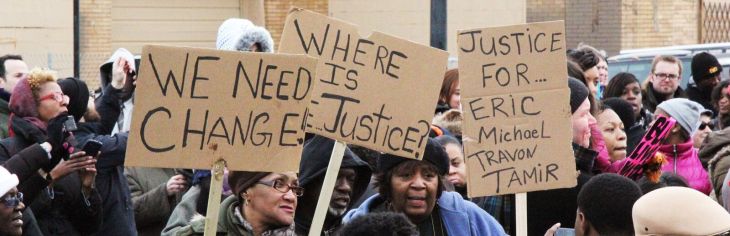
Photo Thanks to Esther Kang

Photo Thanks to Esther Kang

As students, we draw from our various sources to unearth, examine, and interrogate the ingredients of faith, to critique forms of faith, to inspire better uses and practices of faith. In the language of Sanders, our work is about the “survival and wholeness of an entire people” and about the “affirmation, assertiveness, and actualization of women.” The book says enough times for the reader to get that the affirmation of women is never akin to the diminution of men. There is a holistic vision that womanist theologians are pushing us toward, one that names the general and boldly wrong unnamededness of women. Encouraging the regular procurement of black women’s identity from themselves (Hardman-Cromwell), we are “moving the black community toward wholeness” (Douglas).

In this book, womanism stands next to afrocentrism, and the sister theologians–from a decidedly black, feminist, ethical, theological, and literary sphere–offer us an introduction to the foundational elements of womanism as a way of doing theology.

Doing theology is important. I can’t recall what I first meant when I started using that phrase, just after my seminary days. When I use the phrase now, I intend to mean that theology is immediately and always practiced. It is reflection with a purpose. It is considered and expressed language that is Spirit-empowered, generative, constructive, and prophetic. Theology is ethical because it meets the practice of our lives; it tutors us, trains us to be. We don’t simply write theology. We do it. We live it.

This beautiful book is full of my sisters and aunts and mothers, and they are all writing me into becoming…

Quotes & Small Group

My Monday night group is discussing Kelly Brown Douglas’s Stand Your Ground: Black Bodies and the Justice of God. The book is an indispensable theological response to black people’s corporate experience of violence and brutality, while also offering a historical narrative out of which such injustices emerge.

Our small group discussion has so far taken us through United States of American history as it relates to race, strong and illuminating conversations about how easy it is to be black and to not see one’s self spoken of or spoken to in the scriptures, detailed discussions about education and youth and poverty, and quiet but pronounced conversion happening among us.

Photo Thanks to Aaron Burden

Photo Thanks to Aaron Burden

Today’s chapter is “A Father’s Faith” and here are some of the quotes that I’m turning over in anticipation of seeing my friends this evening:

Faith is a response to God. Faith is possible only if God has acted and has initiated a relationship with human beings. Faith is the human response to God’s invitation to be in a relationship. Black faith represents a resounding yes to God’s offer. (p. 139)

Spirituals, essentially, reveal the foundation for a faith that will sustain black people through the paradox of being faithful in a society defined by the Anglo-Saxon myth. (p. 141)

According to the enslaved authors of the spirituals, the freedom of God concerned the very nature of God’s presence in their lives as well as God’s very nature. Theologically speaking, the freedom of God as expressed in the spirituals bore witness both to the economy of God (God’s movement in human history) and the aseity of God (who God is in God’s self). The spiritual’s testimony concerning the freedom of God suggested at least two interrelated things. First, God was by nature free, therefore, complete in God’s self and dependent on no other being or power for existence. Second, God’s movement in human history reflected God’s freedom. (p. 143)

…This African principle maintains that everything the Great High God creates has sacred value because it is intrinsically connected to God. It is the belief that undergirds an African worldview that all reality is sacred. (p. 150)

The freedom of God that the enslaved experienced became the adjudicating principle of their very faith claims. This has implications for the black faith tradition. (p. 162)

…Thus, if the norm of black faith is an understanding of a God who is freedom, then that also means there are certain stories within the Bible that cannot be given authority. If black faith means refusing to capitulate to or compromise with any situation that violates the very freedom of God, then this principle must be maintained even when it comes to the Bible. Therefore no story that compromises the freedom of God, and thus the freedom of those whom God created, can be given authority in the black faith tradition. (p. 163)

As for the black faithful, the best response is indeed a response of faith, which means being relentless in the fight to dismantle this culture of death. (p. 166)


Even Me

The other day, as I was walking through an alley from the office to the hospital, this song came up through me. I heard it in the way we used to sing it in the Soul Children. I was having trouble that morning, pressed against myself in some painful ways. I tried to pray. I needed to try since I was going to pray with and for others.

My prayers didn’t work and I took deep breath as I walked and smelled garbage and donuts and saw the hospital where I was suppose to bring grace to others. I remembered a concert where we sang this song; we sang it during my audition for the choir all those years ago. It felt in those moments like the first song I learned with a real choir.

The prayerful words stayed with me as I walked to the hospital and were my meditation as I was reaching for the One who felt too distant for what I was facing. I hope this song takes on meaning for you. Though she has back up, Yolanda Adams is her own choir with this rendition. I’m so thankful that she’s put this prayer and music to voice.


Lessons from Exile

by Leeroy2Having been outside the mainstream for years, African American churches have learned valuable lessons that have given special meaning to spiritual practices and ideas. White Christians may be familiar with them in theory, but to know them from the underside, from the outside, and from the margins is an exercise in growing in new grace.

Silence is the anchor of speech

It’s easy for Christians to speak. We fill our ears, speak truths, and proclaim the gospel. We have good reason for our proclamation. But we hear less. It’s harder to be silent.

Silence is a corrective. For black and brown people, silence is a deepening, strengthening, and centering discipline. It is a discipline that was learned as black folks were taken from West African shores, unable to communicate in their native tongues, and pushed to find a way of hearing themselves, hearing their God, and, eventually, speaking about their pain.

It is learned still when life in the United States is unfair and unjust and when the rules for black and brown people are set to maintain injustice. In her book Joy Unspeakable, Barbara Holmes says that silence and contemplation bolster the interior life of a community, and ultimately sustains it.

Silence doesn’t remove the power of speech. It anchors it. The quiet is constructive because it narrows the focus on what needs to be said. It opens us to seeing what is real. It enables us to say what is wrong and, of course, what is right.

When we’re quiet, we have an opportunity to confront the pain of another. We learn to openly and realistically face our losses. We hear, reflect, and see what has set us apart from our Christian relatives.

The black church is instructed by the presence of God through other folks and notices in the silence those who are as concerned about speaking truth as we are.

I’m thankful to the folks at Leadership Journal for publishing my piece and for David Swanson’s earlier framing and partner essay. Read the full piece here.

Thinking About Atheism

Photo Thanks to Leeroy

Photo Thanks to Leeroy

I got a phone call the other day from someone I care about. She was concerned because another person we care about said that she was “thinking about becoming an atheist.”

Now, I want to say that I’m unqualified to talk personally about atheism. But I am qualified to talk about faith. I am suited to talk about how, perhaps, a person of faith loses that faith.

When I talked with those lovely people I mentioned, it became clear that what was at stake was not the loss of faith per se but the loss of a particular kind of faith. There is faith in the sense of what community I’m a part of; faith in the sense of doctrines that I profess; faith in the sense of the meeting between me and the Divine. Faith can be understood in different ways. Securing one’s understanding by the word is vital before we even know what faith we’re talking about.

Further, sometimes faith is worth losing. Sometimes faith is worth leaving. It depends on what one’s faith is. If it the unexamined doctrine that makes me feel unloved by God, isn’t it worth leaving? If it is the way in which a text is read by one community and always used over and against another community, isn’t it worth distancing oneself from? If it is the relative ease I feel by a community when we, together, join against some other community in opposition to that people’s God-made-ness, isn’t it worth losing?

I found myself affirming this woman and how she was thinking about “atheism.” In fact, she wasn’t thinking about atheism in a philosophical sense. She was thinking about leaving the tightened faith that was handed on to her; she was, in a sense, leaving the representations of the Christianity she found death-giving. She was, to my way of thinking, considering a better faith. Not no faith. Not no God. A different God.

Of course, I think differently about these things than those who preach and teach this woman. I’m the person in the room on the edge. I’m the person considering how the underside is represented, blessed, or undone by whose being quoted in the preacher’s sermons. I’m still the kid who got kicked out of Sunday school because I knew all the teacher was saying, was bored, and was asking different unanswered questions. I’m the person who is uncomfortably comfortable on a weird psychic boundary because making a theological home has always been a work-in-progress.

Thinking about atheism may just be thinking about a deeper understanding of the me and God relationship. It may be utter contemplation. It may be worth affirming and encouraging as a person is truly on the road toward a holiness that can only be beautiful. It may be worth celebrating.