Stories of God Question Dominant Directions

This summer I’m starting a practice of quoting or reviewing most of the books I read. I want to keep more of the materials with me, remember words, and appreciate what I’m learning, so I’m putting in a bit of effort to capture things in a few hundred words.

I just finished John Shea’s Stories of God. I was introduced to John Shea (in thought and writing, not in person) by my first clinical supervisor, Sister Barbara Sheehan at Urban CPE. She told us that according to John Shea, “Our feelings are the word of God to us.” I heard that and immediately liked John Shea.

This is the first of his books I’ve read. It develops the idea that when Christian people get together, we tell stories and that our stories are our ways of making sense of the world that God has created. Stories are “inevitable companions of people bounded by birth and death.” They are not incidental to life, but essential. Stories are the inescapable ways we talk about the Mystery that is itself inescapable.

Shea says that we relate to five relational environments as human beings, the first and most baffling of which is ourselves. The second environment is family and friends, those who are continually near us and with whom we have sustained interaction. The third and fourth are institutions in society and the nonhuman universe. The last environment is the relation with God or the Transcendent (or commonly Mystery in this book), which is known by diverse “acknowledgements of its presence.”

We are made for these environments, made by them. When it comes to Mystery Shea says that there is an immediate, intense desire for communion in us. “We perceive the dimension of Mystery” through feeling, and we perceive feeling through dialogue and communion. He says on p. 25,

The human person comes to be through dialogue with others. Out of this ongoing dialogue, people develop a sense of who they are and where they are going. People speak to each other words of acceptance and love, but they also speak painful words that call for conversion and new lifestyles.

Communion means love and acceptance; it implies freedom. But human communion goes beyond humanity. It facilitates our awareness of Mystery. In other words, being in relationships of love and acceptance open us to the One who accepts and loves us into freedom. At times this is not a delightful path but a dark one, filled with disenchantment.

But “Disenchantment is an experience of Mystery reasserting itself.” In darkness God comes. In pain we are freed from an idol’s hold upon us and we reach into Mystery. Shea does a lot to describe relationships with Mystery, gives it qualities that anyone “walking with God” can meaningfully relate to.

He writes the second part of the book into three types of stories: 1) Story of Hope and Justice; 2) Story of Trust and Freedom; and 3) Story of Invitation and Decision. When he speaks of stories and, I’d suggest, language broadly, he says:

Although the only way to the unknown is through the familiar, there is a danger. Titles and stories are not the reality. They only serve the reality. They are the way into the Mystery revealed in Jesus Christ, but they are not the Mystery.

For the first story, he discusses two ways of reading the stories of Mystery regarding justice and hope: an interventionist interpretation and an intentional interpretation. The first views historical activity as chaotic and separate from the mythical activity of God. An interventionist view sees all of life from the future, the eschaton, the moment when all things will be redeemed. Justice or hope look ahead to a future which frames life now. “It is this future, always-impending moment which shapes consciousness and directs activity.” Though it leads to a privatized eschatology and, perhaps, a privatized ethic, everything hinges on an invading God who comes after we’ve waited.

Waiting happens in lament, through provocation of the reluctant God to act, and by engaging in “presumptuous activity” that looking upon our works, “Christ will recognize as his own when at last he comes.” This interpretative view of God’s story is characterized by increasing anticipation, purposive waiting, patience, and practice that’s framed by a future vision. I see a lot of this view in practice in the church of my upbringing and the church I currently serve by the way.

The second way of seeing the story of Mystery is an intentional interpretation. This approach is about God’s reasons for interacting rather than God’s ways of interacting with the world. God’s values are present and experienced.

Rather than coming from “a future act of God,” this approach is from “God’s present nature.” God moves toward justice out of a heart of love and compassion for creation. Justice is “an act of respect” and, while its demands are absolute, its forms vary.

In the chapter “The Story of Trust and Freedom,” Shea works with the “combination of stories which attempts to uncover the meaning of Mystery which was revealed in Jesus,” particularly “Creation, Fall, Incarnation, Crucifixion, Spirit, and Church.” He discusses common renderings of those moments and then offers a compelling alternative of relating the symbolic elements of the events in terms of an “inner theological logic.”

He talks about dignity, friendship, and the common aims of Christian events which intend to underline the presence and indwelling of God in the world. He does considerable biblical and theological work in the chapter, touching upon the strong above-mentioned events, quoting folks like Walter Brueggamann, Leonard Bernstein, and biblical authors. Here’s a quote that may capture a chunk of the chapter’s themes, and I love that I hear echoes of James Cone:

The cross is the grounding of the Christian community, its symbol of realism, and its ongoing principle of critique. It is often noted that ecclesiology has its roots in Christology, but it is often overlooked that Christology brings us back to theology. The foundation of the Church is the experience of God symbolized in the crucified Christ. The cross reveals God’s self-giving love which frees us from our self-serving apathy. Out of God’s total acceptance comes the freedom and power to form community, to belong to each other in a life-giving way.

God has taken into divine reality all that is worst about us and turned it toward good. The law of the cross is not that evil has been eliminated but that it has been transformed into possibility…

The last chapter is about a story of Invitation and Decision. In this chapter Shea focuses his vision on the parables of Jesus.

Underlining what it means to proclaim and live the kingdom of God, the parables (and the scriptures as Shea writes) keep God as the plot of the stories. They press forward “invitations into the life of God” and don’t stop at allegorical interpretation where we have examples or particular paths to live. ” A vision of God active in human life is the home of the parables” (pg. 142).

Shea goes through interpretative methods relative to these central teachings of Jesus and leaves us hungry for participation in life with God. We are met with an invitation from and by Mystery to make decisions to neglect or jump into life with God.

He says that the parables focus on immediacy of action, rather than contemplation or morality. Response is critical. Decision is integral. A final quote to capture the sustained thought of this chapter will close my review well (pgs. 152-153):

Put in another way, every person has a faith, a set of presuppositions which are tested out in everyday life. If this foundational structure is too conscripted or self-centered, a crippling lifestyle develops. Attitudes and behaviors become destructive of both self and community. The depth of sin, therefore, is not in the destructive activity itself but in the consciousness which encourages and validates that activity…Parables take aim at these presuppositions and dominant directions. Their goal is subversion. They are meant to penetrate to the core of what we unquestionably hold and question it. In the realm of parable, nothing is safe.
Advent Post #24

“He has helped his servant…remembering…” (Luke 1:54)

One of the most pastoral words that frame my work is remember. I snatched it from John Patton to put it as a main anchor of my ministry (see Pastoral Care: An Essential Guide for an introduction). Professor Hogue told us about Dr. Patton’s work. Later, Sister Barbara told me how loving a man her friend, John Patton, was in real life. And his language about the pastoral power of memory just kept coming back to me.

Memory is powerful. And when we remember well, we’re doing very godly work. The scriptures tell us that God remembers those who are his, that God remembers to be gracious, that God remembers God’s covenant. Mary captures this part of God’s acts toward her and toward the people of God when she says that the help of God comes in the form of God’s remembering. I think we need memory, as a community, as people, as families. I heard once, or read I’m not sure, that people are their memories. What separates us from other species is memory.

When I think of what makes me unique, what teases my life from the rest of my friends’ lives, it’s memory. It’s my recalled experience of a situation that is unique and distinct from anyone else’s. God’s interaction with me (or you) is the same. How we’ve related to God is so unique, and what maintains we who are with God is memory. And mostly God’s memory. Imagine for a moment key events that frame your life with God. There will inevitably be painful experiences. Grief and suffering will mark some of those moments. Joy inexpressible will be there too.

I wonder if you can think about how God will recast those same moments. I think Mary guides us in learning how God recalls our moments with him. When God thinks of you, of us, God remembers mercifully. That means partly that God never remembers without mercy. Memory and mercy wed in God’s recollection. And this is who God is to every generation of his own. Memory and mercy always come together.

May we recall that God helps us. As Christmas comes and goes, may we be reminded that when others have forgotten us, God keeps us in mind. May we know that the ways God’s memory works all captured by the lovely word mercy.

Name the Reality

One casualty of that frantic schedule has been the Christian practice of prayer before meals, a practice often referred to, appropriately, as “giving thanks” or “saying grace.”  Christian parents honor the vows they make at their children’s baptisms to nurture their children in Christian faith in a variety of ways.  Some try to teach their children, with at best mixed results, how they should understand themselves and their world.  But whether they recognize it or not, all parents teach their children by how they themselves live.  Surely one of the most important things Christians do is teach their children to name the reality of God’s grace in their daily lives and to express gratitude for that grace and for their life before God by praying before meals.  It is one thing for a child to grow up in a Christian home and church in which the language of Christian faith may occasionally be heard.  It is something else altogether for a child to hear and learn how to speak not just about Christian faith, but the language of faith, the language of God’s grace in reference to the realities and events of their daily lives.

From George Stroup’s Before God (pgs. 160-161), a solid book that’s hardly about parenting and very much about parenting

The Problem With Commandments

I’m reading a book about the 10 commandments.  The book is old by many people’s standards, published in way back in 1999, by Hauerwas & Willimon.

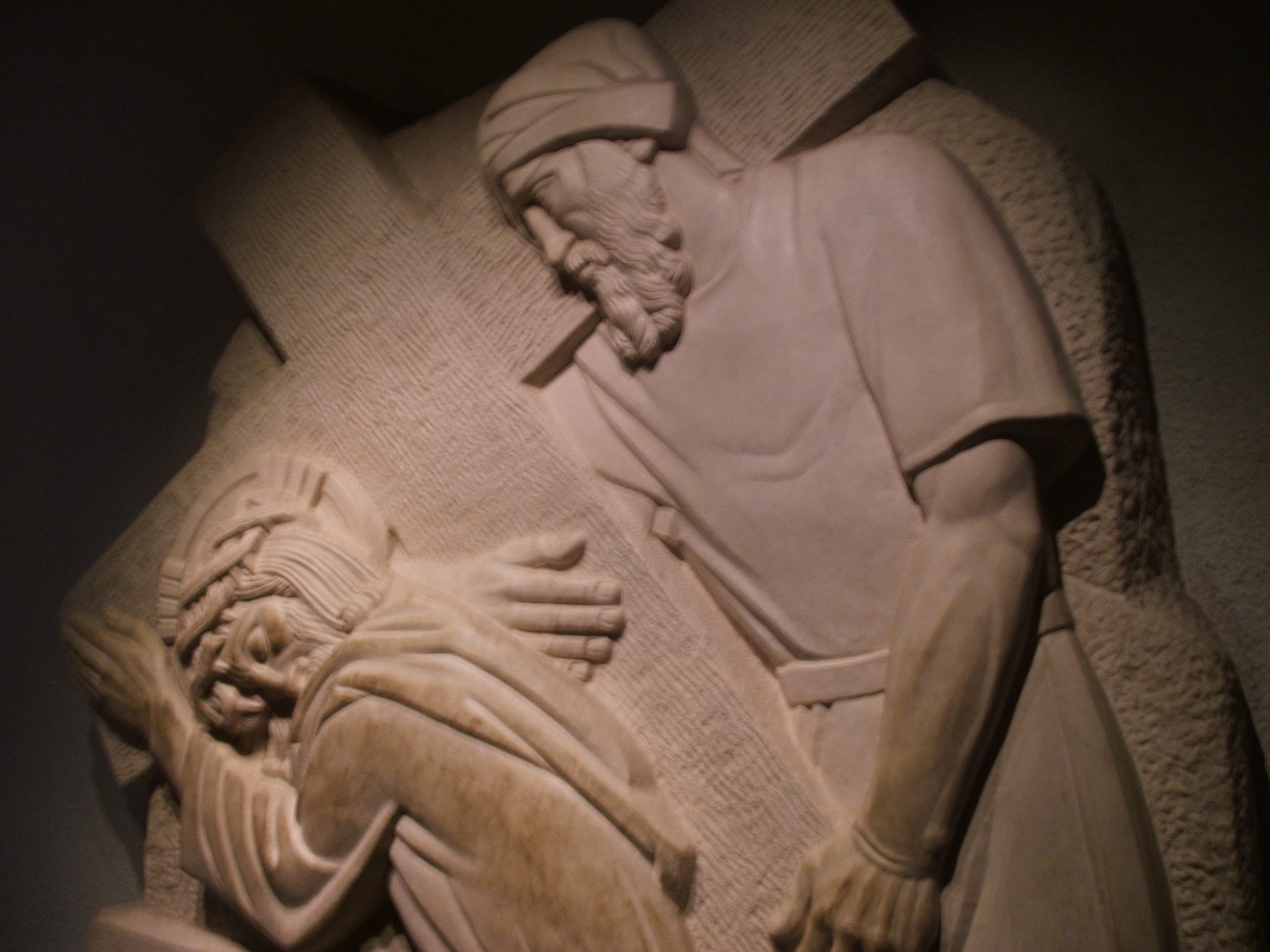
I think I’m starting a journey to reading everything Hauerwas has written.  I started with his memoir last year at David Swanson’s suggestion.  Hauerwas makes Christianity seem both accessible and incredible for it’s simplicity.  He and Will Willimon often get together, join literary powers, and paint this faith beautifully.Station of the Cross

This slim volume on the commands is just as intriguing.  Their premise, or one of them, is that the commandments only make sense if we have as a background the vocation of worshipping God.  God is not to be helpful or responsive to us but worshipped.  God is, and creation worships.  In their own words:

The commandments are not guidelines for humanity in general.  They are a countercultural way of life for those who know who they are and whose they are.  Their function is not to keep American culture running smoothly, but rather to produce a people who are, in our daily lives, a sign, a signal, a witness that God has not left the world to its own devices.

You may disagree, but those sentences clarify the ten words (another way of talking about the commands is by using the earlier phrase “ten words”), but they also make them that much more dubious in that clarity.  They are both sensible and nonsensical, which is how they come to the language of these acts being countercultural.

This quote below is actually about an early theologian, Thomas Aquinas, and their summary of something Aquinas said.  But the quote is searching me right up through here.  It is in the chapter on the fifth commandment not to murder.  By this point in the chapter, they’ve hinted at how murder is a term that captures all kinds of killing and that they scripture’s intent is both external and internal.  So think about behaviors and thoughts:

Aquinas does not mean that we are not to feel righteous indignation against injustice, but rather that we are to develop among ourselves those virtues that free us from temptation to envy and self-importance, which so often lead to presumptions that we have been grievously wronged.

I’m thinking about this in relation to being a father, thinking about this as a leader, as a husband, as an opinionated person.  And the less the commandments are about the external only (i.e., murdering a person), the more challenging they become.  I’m pretty sure I’ll see coming the whole me-murdering-somebody-thing.  It’s external.  But the internal killing is taken up into this commandment, too, and when I believe that, when I believe that God who is concerned for thoughts from afar or “lust” as Jesus has so said, I have an existing problem with the commandments.  I feel both inspired to live into this vocation as a person before God and knocked to my knees.  At some point, I get really thankful that grace is both fulfilling and inspiring.  At some point.  For now, I taste that problem on my tongue.

Perspective, Depression, and Hope

Mental illness is one of the most overlooked problems in the community from which I come and through which most of my theology has been formed.  I’m talking about the black community.  There’s probably not much difference in other communities either, especially faith communities.  I’ve learned in a multicultural church that mental illness is more understood but still less discussed.  It is accepted intellectually more quickly, but I rarely hear the community holding and loving through the rough times which decorate the lives of those struggling with illness.

When I was growing up, I heard nothing about mental illness.  I heard about people being crazy.  Met some of them too, but that’s another post.  I heard of demons and about demonic possession from time to time.  But nothing about mental illness.  I’m glad I’ve learned more.  I’m glad I’m been able to see and notice and respond to spiritual matters when appropriate and to mental and emotional matters when necessary.

Of course, I’m cut from the cloth that stitches the mental and emotional and spiritual.  I connect or integrate them.  I am not interested in slicing them apart but in seeing their interconnections.  I’m a pastor and conversationalist about divine things.  Divine things come forward in human things.  So, for me, these things overlap and interlace.

I’ve learned along the way that the complexities inside the minds, hearts, and souls of people are all reasons to be believe in the beauty of God and the pain of sin.  And I’ve come to believe that the complexities which are beautiful people are reasons to try hard to listen really well and to tell people about hope.  This is, in part, something that Paul Prusyer talks about–in my reading of him–as coming to terms with the implications of my office.  Prusyer said theology doesn’t deal with a slice of life, “a slice of reality but with all of it, always.”

A Sobering Sign in a Beautiful Place

I’m told that October is one of the awareness months where we point to depression and to mental illness.  So, here’s my quick attempt to point to it, like other days and months of my work, but to point to hope as well.

Hope is light in dimness.  It is the sparkling smile of a stranger who looks at you long enough to communicate that you matter.  It is a meal with a good friend you haven’t seen in a while, his ability to remember things with you and to turn you easily to tomorrow.

Hope is the crack of splendor in the middle of all that dreariness.  It is a plate-sized piece of pie shared with someone you love.  A walk in the cool afternoon, watching once brown leaves falling like little pieces of the sun.

Hope is the ability to notice health even when it comes as a confusing picture of someone’s yesterday.  It is the staying hand of belief when you worry that the future looks dismal.  It is the power that tells the truth that all our tomorrows can be brighter because the clouds will roll in another direction.

Hope is the enduring mercy that all of reality is wonderful even if sometimes difficult and that the next breath is miraculous.  It is the way we keep at a thing in the midst of its sharp cuts and crippling cracks.

I know you folks aren’t into making comments, so this is an invitation: How do you describe hope?

For Future Generations

Have you seen this letter?  It’s rich with words that, I imagine, you will agree and disagree with given our increasingly divisive political discourse around marriage.  It is, in part, a completely pastoral letter, written by Catholic bishops for their flock in England and Wales, where pastoral has to do with the recognized church leadership giving sound, biblical, and/or theological guidance to those members in their care, particularly, and in this case, when it comes to the issue of marriage in the UK.

These letters are worn and read into the fabric of Christians, and people familiar with Christianity, no matter whether Catholic, Orthodox, or Protestant.  A portion of the Christian Scriptures are essentially pastoral letters which address timely concerns.  Of course, the “damaging pages” of our Scriptures make a broader impact since they are canonized within the Bible.

Take a look at the letter.  It’s a touch longer than you may be accustomed.  I found it originally here.

Do you learn anything from it?  Does it widen or shrink your own views about marriage?  Does it help you see what this church in the UK is passing on to future generations?

This week the Coalition Government is expected to present its consultation paper on the proposed change in the legal definition of marriage so as to open the institution of marriage to same-sex partnerships.

Today we want to put before you the Catholic vision of marriage and the light it casts on the importance of marriage for our society.

The roots of the institution of marriage lie in our nature. Male and female we have been created, and written into our nature is this pattern of complementarity and fertility. This pattern is, of course, affirmed by many other religious traditions. Christian teaching fills out this pattern and reveals its deepest meaning, but neither the Church nor the State has the power to change this fundamental understanding of marriage itself. Nor is this simply a matter of public opinion.

Understood as a lifelong commitment between a man and a woman, and for the creation and upbringing of children, marriage is an expression of our fundamental humanity. Its status in law is the prudent fruit of experience, for the good of the spouses and the good of the family. In this way society esteems the married couple as the source and guardians of the next generation. As an institution marriage is at the foundation of our society.

There are many reasons why people get married. For most couples, there is an instinctive understanding that the stability of a marriage provides the best context for the flourishing of their relationship and for bringing up their children. Society recognises marriage as an important institution for these same reasons: to enhance stability in society and to respect and support parents in the crucial task of having children and bringing them up as well as possible.

The Church starts from this appreciation that marriage is a natural institution, and indeed the Church recognises civil marriage. The Catholic understanding of marriage, however, raises this to a new level. As the Catechism says: ‘The matrimonial covenant, by which a man and a woman establish between themselves a partnership of the whole of life, by its nature is ordered toward the good of the spouses and the procreation and education of offspring; this covenant between baptised persons has been raised by Christ the Lord to the dignity of a sacrament.’ (para.1601)

These rather abstract words are reflected however imperfectly in the experience of married couples. We know that at the heart of a good marriage is a relationship of astonishing power and richness, for the couple, their children, their wider circle of friends and relations and society. As a Sacrament, this is a place where divine grace flows. Indeed, marriage is a sharing in the mystery of God’s own life: the unending and perfect flow of love between Father, Son and Holy Spirit.

We know, too, that just as God’s love is creative, so too the love of husband and wife is creative of new life. It is open, in its essence, to welcoming new life, ready to love and nurture that life to its fullness, not only here on earth but also into eternity.

This is a high and noble vision, for marriage is a high and noble vocation. It is not easily followed. But we are sure that Christ is at the heart of marriage, for his presence is a sure gift of the God who is Love, who wants nothing more than for the love of husband and wife to find its fulfilment. So the daily effort that marriage requires, the many ways in which family living breaks and reshapes us, is a sharing in the mission of Christ, that of making visible in the world the creative and forgiving love of God.

In these ways we understand marriage to be a call to holiness for a husband and wife, with children recognised and loved as the gift of God, with fidelity and permanence as the boundaries which create its sacred space. Marriage is also a crucial witness in our society, contributing to its stability, its capacity for compassion and forgiveness and its future, in a way that no other institution can.

In putting before you these thoughts about why marriage is so important, we also want to recognise the experience of those who have suffered the pain of bereavement or relationship breakdown and their contribution to the Church and society. Many provide a remarkable example of courage and fidelity. Many strive to make the best out of difficult and complex situations. We hope that they are always welcomed and helped to feel valued members of our parish communities.

The reasons given by our government for wanting to change the definition of marriage are those of equality and discrimination. But our present law does not discriminate unjustly when it requires both a man and a woman for marriage. It simply recognises and protects the distinctive nature of marriage.

Changing the legal definition of marriage would be a profoundly radical step. Its consequences should be taken seriously now. The law helps to shape and form social and cultural values. A change in the law would gradually and inevitably transform society’s understanding of the purpose of marriage. It would reduce it just to the commitment of the two people involved. There would be no recognition of the complementarity of male and female or that marriage is intended for the procreation and education of children.

We have a duty to married people today, and to those who come after us, to do all we can to ensure that the true meaning of marriage is not lost for future generations.

With every blessing

Most Reverend V. Nichols, Most Reverend P. Smith