Granta Interview with Catherine Chung

Granta interviewed Catherine Chung, author of the novel, Forgotten Country.

Catherine Chung, author of Forgotten Country

Catherine Chung was one of Granta’s New Voices in 2010. Her first book, the novel Forgotten Country, is published this month by Riverhead.Granta’s Patrick Ryan talks with the author about the inception of her novel, and how stories from the past, a fascination with sisterhood and math came into play.

PR: What is the ‘forgotten country’ in the book? Is there more than one possible meaning in the title?

CC: I came up with this title around the time when I was doing a lot of research into the Korean War, which is also sometimes called the Forgotten War. The idea of that blew my mind – just how something as large as a war can be forgotten, and how in forgetting it you’re also forgetting the country that fought it and was divided by it – the title came from that and then seemed to resonate with the history of the particular family in Forgotten Country.

They’ve lost their homeland – not just the Korea they leave behind, but also the Korea that existed and was lost before it: before the split from the Korean War and before Japanese Occupation, when it was still a whole country. That initial loss echoes in all the others. In a similar way, I liked how the histories of the family – the national and the personal ones – are encompassed by this title, which is also – I think – about the lost unity of the family itself.

Sibling rivalry plays a large part in the novel. One of the major arcs involves the narrator and her sister and their struggle to come to terms with both their past and present. How important was it to you that this rivalry be resolved? And do you have a sister?

I don’t have a sister – I have an older brother, but I have always been really interested in sisterhood, which is filled with such complexity of emotion. There’s the possibility of so much intimacy, but also competitiveness and dependency and blame. It’s so fraught.

It was important to me that the rivalry or the issues between Janie and Hannah be engaged, that they would both be forced to face up to One day my aunt disappeared, and my family thought she’d been kidnapped by North Koreans who were raiding dorms and taking girls.their longing for closeness as well as the ways in which they’ve both made it so difficult for their family to be together – but I don’t know if I ever expected an actual resolution to come out of that, not in the sense that everything is good now between them. I don’t believe that real relationships between anyone actually work like that. I wanted there to be hope for that though, for the possibility of it to be real and clear between them.

To finish reading the interview, click here.
Bookman’s Alley Closing

I saw this on Chicago Tonight–another sad development in the literary life of the Chicago area.  Go here to see the segment on the show.

At Bookman’s Alley, the Evanston mainstay, the decorations—the top hats, the model ships, the presidential busts—are almost as important as the books. Toy airplanes are perched atop bookshelves, across the hall from a 19th century printing press.

When owner Roger Carlson opened the store more than 30 years ago, he wanted to finally open a used bookstore that didn’t have the same atmosphere as a soup kitchen.

“I was dressing the set, if you think of my shop as a presentation,” he said. “There are many fine used bookshops, but they tend to be pretty much devoted to displaying the books.”

Carlson likes to keep the decorations thematic. In the Western literature and history section, for example, “there’s a western saddle, and eight or nine hats and spurs,” Carlson said. “Everything but a cowboy sitting there, shooting at beer bottles.”

The creative decorating is part of why so many frequent the shop and why, as the store prepares to close in the news month or so, so many are interested in taking home a piece for themselves. Carlson says he’s holding on to most of it until the very end, but price tags have started popping up on gold bird figurines ($90) and black top hats ($85).

Carlson says declining sales at brick-and-mortar bookstores and recent health problems forced him to close. He’s been promising to close the store “soon” since December, but it’s taken him longer than he expected to liquidate his inventory.

To finish reading, click here.

An Exercise in Thinking Constellationally

Teju Cole wrote this essay after tweeting several statements in response to KONY 2012.  His analysis is critical, illuminating, and skillful.  His writing is pointed and worth reading and learning from as it is an exercise in thinking constellationally.

These sentences of mine, written without much premeditation, had touched a nerve. I heard back from many people who were grateful to have read them. I heard back from many others who were disappointed or furious. Many people, too many to count, called me a racist. One person likened me to the Mau Mau. The Atlantic writer who’d reproduced them, while agreeing with my broader points, described the language in which they were expressed as “resentment.”

This weekend, I listened to a radio interview given by the Pulitzer Prize-winning journalist Nicholas Kristof. Kristof is best known for his regular column in the New York Times in which he often gives accounts of his activism or that of other Westerners. When I saw the Kony 2012 video, I found it tonally similar to Kristof’s approach, and that was why I mentioned him in the first of my seven tweets.

Those tweets, though unpremeditated, were intentional in their irony and seriousness. I did not write them to score cheap points, much less to hurt anyone’s feelings. I believed that a certain kind of language is too infrequently seen in our public discourse. I am a novelist. I traffic in subtleties, and my goal in writing a novel is to leave the reader not knowing what to think. A good novel shouldn’t have a point.

But there’s a place in the political sphere for direct speech and, in the past few years in the U.S., there has been a chilling effect on a certain kind of direct speech pertaining to rights. The president is wary of being seen as the “angry black man.” People of color, women, and gays — who now have greater access to the centers of influence that ever before — are under pressure to be well-behaved when talking about their struggles. There is an expectation that we can talk about sins but no one must be identified as a sinner: newspapers love to describe words or deeds as “racially charged” even in those cases when it would be more honest to say “racist”; we agree that there is rampant misogyny, but misogynists are nowhere to be found; homophobia is a problem but no one is homophobic. One cumulative effect of this policed language is that when someone dares to point out something as obvious as white privilege, it is seen as unduly provocative. Marginalized voices in America have fewer and fewer avenues to speak plainly about what they suffer; the effect of this enforced civility is that those voices are falsified or blocked entirely from the discourse.

It’s only in the context of this neutered language that my rather tame tweets can be seen as extreme. The interviewer on the radio show I listened to asked Kristof if he had heard of me. “Of course,” he said. She asked him what he made of my criticisms. His answer was considered and genial, but what he said worried me more than an angry outburst would have:

There has been a real discomfort and backlash among middle-class educated Africans, Ugandans in particular in this case, but people more broadly, about having Africa as they see it defined by a warlord who does particularly brutal things, and about the perception that Americans are going to ride in on a white horse and resolve it. To me though, it seems even more uncomfortable to think that we as white Americans should not intervene in a humanitarian disaster because the victims are of a different skin color.

Here are some of the “middle-class educated Africans” Kristof, whether he is familiar with all of them and their work or not, chose to take issue with: Ugandan journalist Rosebell Kagumire, who covered the Lord’s Resistance Army in 2005 and made an eloquent video response to Kony 2012; Ugandan scholar Mahmood Mamdani, one of the world’s leading specialists on Uganda and the author of a thorough riposte to the political wrong-headedness of Invisible Children; and Ethiopian-American novelist Dinaw Mengestu, who sought out Joseph Kony, met his lieutenants, and recently wrote a brilliant essay about how Kony 2012 gets the issues wrong. They have a different take on what Kristof calls a “humanitarian disaster,” and this may be because they see the larger disasters behind it: militarization of poorer countries, short-sighted agricultural policies, resource extraction, the propping up of corrupt governments, and the astonishing complexity of long-running violent conflicts over a wide and varied terrain.

I want to tread carefully here: I do not accuse Kristof of racism nor do I believe he is in any way racist. I have no doubt that he has a good heart. Listening to him on the radio, I began to think we could iron the whole thing out over a couple of beers. But that, precisely, is what worries me. That is what made me compare American sentimentality to a “wounded hippo.” His good heart does not always allow him to think constellationally. He does not connect the dots or see the patterns of power behind the isolated “disasters.” All he sees are hungry mouths, and he, in his own advocacy-by-journalism way, is putting food in those mouths as fast as he can. All he sees is need, and he sees no need to reason out the need for the need.

To finish this essay, click here.

For Future Generations

Have you seen this letter?  It’s rich with words that, I imagine, you will agree and disagree with given our increasingly divisive political discourse around marriage.  It is, in part, a completely pastoral letter, written by Catholic bishops for their flock in England and Wales, where pastoral has to do with the recognized church leadership giving sound, biblical, and/or theological guidance to those members in their care, particularly, and in this case, when it comes to the issue of marriage in the UK.

These letters are worn and read into the fabric of Christians, and people familiar with Christianity, no matter whether Catholic, Orthodox, or Protestant.  A portion of the Christian Scriptures are essentially pastoral letters which address timely concerns.  Of course, the “damaging pages” of our Scriptures make a broader impact since they are canonized within the Bible.

Take a look at the letter.  It’s a touch longer than you may be accustomed.  I found it originally here.

Do you learn anything from it?  Does it widen or shrink your own views about marriage?  Does it help you see what this church in the UK is passing on to future generations?

This week the Coalition Government is expected to present its consultation paper on the proposed change in the legal definition of marriage so as to open the institution of marriage to same-sex partnerships.

Today we want to put before you the Catholic vision of marriage and the light it casts on the importance of marriage for our society.

The roots of the institution of marriage lie in our nature. Male and female we have been created, and written into our nature is this pattern of complementarity and fertility. This pattern is, of course, affirmed by many other religious traditions. Christian teaching fills out this pattern and reveals its deepest meaning, but neither the Church nor the State has the power to change this fundamental understanding of marriage itself. Nor is this simply a matter of public opinion.

Understood as a lifelong commitment between a man and a woman, and for the creation and upbringing of children, marriage is an expression of our fundamental humanity. Its status in law is the prudent fruit of experience, for the good of the spouses and the good of the family. In this way society esteems the married couple as the source and guardians of the next generation. As an institution marriage is at the foundation of our society.

There are many reasons why people get married. For most couples, there is an instinctive understanding that the stability of a marriage provides the best context for the flourishing of their relationship and for bringing up their children. Society recognises marriage as an important institution for these same reasons: to enhance stability in society and to respect and support parents in the crucial task of having children and bringing them up as well as possible.

The Church starts from this appreciation that marriage is a natural institution, and indeed the Church recognises civil marriage. The Catholic understanding of marriage, however, raises this to a new level. As the Catechism says: ‘The matrimonial covenant, by which a man and a woman establish between themselves a partnership of the whole of life, by its nature is ordered toward the good of the spouses and the procreation and education of offspring; this covenant between baptised persons has been raised by Christ the Lord to the dignity of a sacrament.’ (para.1601)

These rather abstract words are reflected however imperfectly in the experience of married couples. We know that at the heart of a good marriage is a relationship of astonishing power and richness, for the couple, their children, their wider circle of friends and relations and society. As a Sacrament, this is a place where divine grace flows. Indeed, marriage is a sharing in the mystery of God’s own life: the unending and perfect flow of love between Father, Son and Holy Spirit.

We know, too, that just as God’s love is creative, so too the love of husband and wife is creative of new life. It is open, in its essence, to welcoming new life, ready to love and nurture that life to its fullness, not only here on earth but also into eternity.

This is a high and noble vision, for marriage is a high and noble vocation. It is not easily followed. But we are sure that Christ is at the heart of marriage, for his presence is a sure gift of the God who is Love, who wants nothing more than for the love of husband and wife to find its fulfilment. So the daily effort that marriage requires, the many ways in which family living breaks and reshapes us, is a sharing in the mission of Christ, that of making visible in the world the creative and forgiving love of God.

In these ways we understand marriage to be a call to holiness for a husband and wife, with children recognised and loved as the gift of God, with fidelity and permanence as the boundaries which create its sacred space. Marriage is also a crucial witness in our society, contributing to its stability, its capacity for compassion and forgiveness and its future, in a way that no other institution can.

In putting before you these thoughts about why marriage is so important, we also want to recognise the experience of those who have suffered the pain of bereavement or relationship breakdown and their contribution to the Church and society. Many provide a remarkable example of courage and fidelity. Many strive to make the best out of difficult and complex situations. We hope that they are always welcomed and helped to feel valued members of our parish communities.

The reasons given by our government for wanting to change the definition of marriage are those of equality and discrimination. But our present law does not discriminate unjustly when it requires both a man and a woman for marriage. It simply recognises and protects the distinctive nature of marriage.

Changing the legal definition of marriage would be a profoundly radical step. Its consequences should be taken seriously now. The law helps to shape and form social and cultural values. A change in the law would gradually and inevitably transform society’s understanding of the purpose of marriage. It would reduce it just to the commitment of the two people involved. There would be no recognition of the complementarity of male and female or that marriage is intended for the procreation and education of children.

We have a duty to married people today, and to those who come after us, to do all we can to ensure that the true meaning of marriage is not lost for future generations.

With every blessing

Most Reverend V. Nichols, Most Reverend P. Smith

Five Female Writers in Chicago Literary History

Thanks to David Swanson for pointing me to this fine article at chicagoist.com in celebration of a few female writers who have contributed to Chicago and world literary history:

March is Women’s History Month; for 31 days we celebrate the women who have made our employment, the oration of our opinions, and our lifestyles possible.

When it comes to contemporary authors, there’s plenty of strong female voices in Chicago. This wasn’t always the case. Women have had to fight for their spot in society at the very least, and still are still presented with threats against their equal rights in today’s political mess. The Christine Sneeds and Audrey Niffeneggers of Chicago can thank plenty of individuals for their publications, but here are a list of five Chicago ladies who paved the way for their success.

Harriet Monroe (1860-1936)

Poets of Chicago and the world in general can thank Miss Harriet Monroe for the work championing the genre. Monroe was the founder and editor of Poetry: A Magazine of Verse. After gaining some popularity as poet and freelancer for The Tribune, she became increasingly agitated over the lack of recognition—and funding—for poets. And so, in 1912, Monroe reached out to 100 head honchos in Chicago to pay for a subscription to her new poetry magazine. With this money, Poetry was launched. Its success wascolossal in the genre: poets such as Ezra Pound, T.S. Elliot, and Carl Sandburg were all edited at one time or another by Monroe, and it was her support that ensured the longevity of their reputations.

Ida B. Wells (1862-1931)

Ida Wells is Chicago’s First Lady of Civil Rights, and a pivotal player in the the Women’s Suffrage Movement, Wells’ influence was cast through the power of journalism. She dove straight into investigation and exploitation of lynching in the U.S. with her pamphlets: Southern Horrors: Lynch Law in All Its Phases and A Red Record. In 1893 she and Frederick Douglass, among several others, organized a boycott against the World’s Columbian Exposition, arguing that the Exposition did not work with the black community to fairly display African American life. They distributed their pamphlet, Reasons Why the Colored American Is Not Like the Columbian Exposition, in protest. The list of Wells’ articles and documentation is endless, but the influence remains: she asserted herself within Chicago’s windy politics, and made it an easier place for the rest of us women to do so.

To finish reading, click here.

Read Fiction, Develop Empathy

A study by a Washington and Lee University psychology professor has demonstrated that reading a short work of fiction can lead readers to empathize with the work’s characters, to detect subtle emotional expressions more effectively and to engage in pro-social behavior.

Dan Johnson, assistant professor of psychology at Washington and Lee, published the results of his study in the November 2011 edition of the journal “Personality and Individual Differences.”

With the help of three W&L students — senior psychology majors Lauren Borden (Lake Leelanau, Mich.) and Grace Cushman (Wilton, Conn.) and sophomore Madison McCune (Nacogdoches, Texas) — Johnson had 200 subjects read a five-page fictional short story written specifically for the experiment, designed to elicit compassionate feelings for the characters and model pro-social behavior. The subjects then participated in exercises to measure the impact of the reading.

Based on the results of the post-reading exercises, Johnson concluded that the more immersed the readers were in the story, the more empathy they felt for the characters. In addition, he found that the heightened empathy led to an enhanced ability to perceive subtle emotional expressions such as fear or happiness. Individuals who experienced higher levels of empathy were also nearly twice as likely to engage in pro-social, or helpful, behavior as individuals experiencing low levels of empathy.

“An interesting component is that it really seemed to be a lot about the imagery and visualizing the face of the main character and the events they experienced,” said Johnson. “Those who experienced more inherent imagery were more likely to develop empathy for the characters and be more helpful.”

To finish reading Sarah Tschiggfrie’s article, click here.

The 11 Commandments For Writers

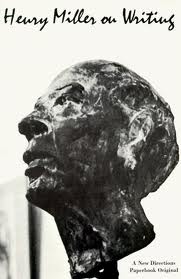
I found this list of Henry Miller’s Commandments compiled here by Gretchen Rubin, and I think they’re worth considering, keeping, struggling with.  Do you follow these in your writing?  Do you break any?  Would you change any or add something?

1. Work on one thing at a time until finished.

2. Start no more new books, add no more new material to “Black Spring.”

3. Don’t be nervous. Work calmly, joyously, recklessly on whatever is in hand.

4. Work according to Program and not according to mood. Stop at the appointed time!

5. When you can’t create you can work.

6. Cement a little every day, rather than add new fertilizers.

7. Keep human! See people, go places, drink if you feel like it.

8. Don’t be a draught-horse! Work with pleasure only.

9. Discard the Program when you feel like it–but go back to it the next day. Concentrate. Narrow down. Exclude.

10. Forget the books you want to write. Think only of the book you arewriting.

11. Write first and always. Painting, music, friends, cinema, all these come afterwards.

Blessed & Troubled

I was blessed and troubled to hear Michelle Alexander speak at Northwestern University Wednesday night.  My seminary, in collaboration with Northwestern, brought her to talk and she spoke about her book, The New Jim Crow.  She gave a similar talk as the one in this video.  I’m not sure if her talk the other night will be available yet.

Professor Alexander, last Wednesday, discussed her own early suspicions of calling what she’s investigated a caste system, before being personally changed after she, as a civil rights attorney, encountered story after story of young men being swept into the criminal justice system.  She dedicated Wednesday’s lecture to Martin Luther King, Jr, and she told us to press for a social movement against the legal system that is so historically and frequently assigning young men (most of whom are men of color) into a new racial undercaste system called incarceration.

I’ve mentioned her book on the blog before.  It’s probably the most memorable and distressing book I read last year.  It’s one of the reasons why I’m intentionally reading less this year–in order for me to digest harder readings like Alexander’s.  If you haven’t gotten The New Jim Crow, consider buying it or checking it out of your local library.  It’ll give you much to think through.  And it may change you.

Perhaps this video can appeal to your best self and whet your interest for the heavier work which is her book.

Questions on Forgiveness

I saw Nissi’s post at Plantain Periodicals the other week, where she raised questions about forgiveness after reading TD Jakes’s novel.  After reading the  book, she says one the central questions it raised was, how do we know that the change we see is forever and genuine?

However I do know in my own small way how it feels to strongly dislike someone who has massively hurt and offended me. Although I have managed to forgive (in most cases – praying that in 2012 I will see the full closure of all), I have doubted their claims that they have changed. Several times I have believed that they have not changed…and have been proved right. However I do not see it as a score board – I am right vs you are wrong: No. Instead I am now questioning if my presumptions have contributed to their seeming inability to be able to change?

How would you answer that?  Have you ever doubted whether you’ve forgiven a person?  No need to comment–I know you won’t anyway!  Read Nissi’s post, if you’re interested, by clicking here.

Former Governor Sentenced & The New Jim Crow

People are talking about our former governor’s sentencing, and I keep thinking about three things.  I think about his family and how difficult this must be for them.  I think about how this is an example, glowing or not, of our criminal justice system at work.  I think about the book The New Jim Crow by Michelle Alexander.

Professor Alexander’s book is thorough and full and dishearteningly descriptive of mass incarceration.  I learned more than I’ll tell you in that book.  I read it a couple months ago and became an immediate fan of Michelle Alexander.  I didn’t plan to write a review of her book; in fact, I wouldn’t call this post a review but an expression of gratitude.  I couldn’t arrange a blog interview with her unfortunately.  But the fingers gripping the bars on that book cover keep looking at me.  I keep thinking of what she wrote.

Professor Alexander discusses the War on Drugs primarily.  She debunks the notion of the War, and she explains, in almost loving ways, how profit fuels the drug trade in our country and how the federal government rewards local and state political systems with money when they introduce people into the criminal justice system.  If you’re interested in learning about the history of the drug trade, where police swat teams developed, and the rights you have when and if the police pull you over, those will be covered.  There is a pervasive discussion of race in the volume.  Men–and what’s happening to us–is discussed carefully and respectfully.  She ties the excessive arrest rates in communities of color with policies from the 80s and threads the effects of those policies to the huge spikes in our prison population these days.

Professor Alexander does very little opining in the book.  Instead, she tells stories.  There are facts and facts and facts, but I couldn’t walk through the book with my highlighter.  Even though I learned a lot, her book felt more like a kitchen table than it did a legal seminar.  And I mean that in the most complimentary way imaginable.  She places legal detail on an edible plate for her readers, and you can almost feel her hand on your shoulder while you swallow the truth when it gets nasty.

If you haven’t picked up this book and read it, you need to.  I realize that I say that about many books.  I realize that I interview authors on this blog and that their books have my highest recommendations.  I tell you what I’m reading and sometimes why I’m reading it, along with what I’m learning from those readings.  I get it.  And you know that I like reading almost as much as I do eating because I need both to survive.  And again, The New Jim Crow is one of those books that should be required reading.  You should get it because it will teach you about the prison system.  It will provide you a historical context for discrimination and help you speak well about justice and injustice and crime and restoration.  It will give you a hunger, and perhaps a vision, for justice.

Be clear: the book is dismal because Professor Alexander is too good at what she does.  She paints portraits and tells stories in ways that leave you sad and angry and frustrated.  But you won’t close your nightly reading without feeling a little more grateful for people who pursue justice in the wide ways that people do.  Even people who work and serve the cause of justice in ways that may not intersect with the criminal justice system.

You won’t look at a news story or listen to a conversation about jail and prison and justice in the same way.  You’ll ask different questions.  You’ll wonder why so many people who look like you continue to go overlooked when a former governor gets convicted and sentenced.  You’ll wonder who will tell those stories.  You’ll question who will raise their faces and those of their families.  And then you’ll see those fingers gripping those bars on that glossy black book jacket.  And you’ll smile and you just may write a post or an email to somebody and mention a scholar and activist and teacher named Michelle Alexander.

Visit Michelle Alexander’s website here to learn about her book.