If I speak with human eloquence and angelic ecstasy but don’t love, I’m nothing but the creaking of a rusty gate. If I speak God’s Word with power, revealing all his mysteries and making everything plain as day, and if I have faith that says to a mountain “Jump,” and it jumps, but I don’t love, I’m nothing.
If I give everything I own to the poor and even go to the stake to be burned as a martyr, but I don’t love, I’ve gotten nowhere. So, no matter what I say, what I believe, and what I do, I’m bankrupt without love.
Love never gives up.
Love cares more for others than for self.
Love doesn’t want what it doesn’t have.
Love doesn’t strut,
Doesn’t have a swelled head,
Doesn’t force itself on others,
Isn’t always “me first,”
Doesn’t fly off the handle,
Doesn’t keep score of the sins of others,
Doesn’t revel when others grovel,
Takes pleasure in the flowering of truth,
Puts up with anything,
Trusts God always,
Always looks for the best,
Never looks back,
But keeps going to the end.
Love never dies. Inspired speech will be over some day; praying in tongues will end, understanding will reach its limit. We know only a portion of the truth, and what we say about God is always incomplete. But when the Complete arrives, our incompletes will be canceled (1 Corinthians 13, Msg)
Category / Quotes
This category keeps the quotes of much smarter others, and the sayings are usually about parenting.
Strength to be Free (Thurman)
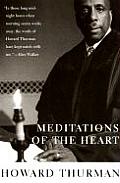
I’m reading a book of meditations by Howard Thurman. Today’s passage felt like it made a lot of sense for fathers and for those who love us.
“Give me the strength to be free.” The thought of being free comes upon us sometimes with such power that under its impact we lose the meaning that the thought implies. Often, “being free” means to be where we are not at the moment, to be relieved of a particular set of chores or responsibilities that are bearing heavily upon minds, to be surrounded by a careless rapture with no reminders of costs of any kind, to be on the open road with nothing overhead but the blue sky and whole days in which to roam. For many, “being free” means movement, change, reordering.
To be free may not mean any of these things. It may not involve a single change in a single circumstance, or it may not extend beyond one’s own gate, beyond the four walls in the midst of which all of one’s working hours and endless nights are spent. It may mean no surcease from the old familiar routine and the perennial cares which have become one’s persistent lot. Quite possibly, your days mean the deepening of your rut, the increasing of your monotony and the enlarging of the areas of your dullness. All of this, and more, may be true for you.
“Give me strength to be free.” Often, to be free means the ability to deal with the realities of one’s situation so as not to be overcome by them. It is the manifestation of a quality of being and living that that the results not only from understanding of one’s situation but also from wisdom in dealing with it. It takes no strength to give up, to accept shackles of circumstance so that they become shackles of soul, to shrug the shoulders in bland acquiescence. This is easy. But do not congratulate yourself that you have solved anything. In simple language, you have sold out, surrendered, given up. It takes strength to affirm the high prerogative of your spirit. And you will find that if you do, a host of invisible angels will wing to your defense, and the glory of the living God will envelop your surroundings because in you He has come into His own.
Learning the Spiritual Life
This is part of a letter from Nelson Mandela to Winnie Mandela and from the first page of Mr. Mandela’s Conversations With Myself.
…the cell is an ideal place to learn to know yourself, to search realistically and regularly the process of your own mind and feelings. In judging our progress as individuals we tend to concentrate on external factors such as one’s social position, influence and popularity, wealth and standard of education. These are, of course, important in measuring one’s success in material matters and it is perfectly understandable if many people exert themselves mainly to achieve all these. But internal factors may be even more crucial in assessing one’s development as a human being. Honesty, sincerity, simplicity, humility, pure generosity, absence of vanity, readiness to serve others–qualities which are within easy reach of every soul–are the foundation of one’s spiritual life. Development in matters of this nature is inconceivable without serious introspection, without knowing yourself, your weaknesses and mistakes. At least, if for nothing else, the cell gives you the opportunity to look daily into your entire conduct, to overcome the bad and develop whatever is good in you.
Guest Post: Seasons of Parenting
I believe seasons of parenting are similar to the seasons of the year in this regard: there are certain characteristics of each season we enjoy. For example, plenty of sun and heat in the summer, beautifully colored leaves of fall and the awakening of spring. However, there are also parts we’d rather avoid, such as extra heavy clothing in winter or the humidity of summer. Parenting seasons are the same.
When our children are young, we are in awe of their reactions to new discoveries. We are overjoyed when they celebrate milestones (like walking). We could display affection and relish in their cuteness forever. Along with those, we experience the frustration of sleep deprivation, adjustments to schedules, and changes to life as we know it.
 I have been blessed to experience several parenting seasons. My daughter Erica is 22 yrs old; and my son Nicolas is 16. Although they both experienced some of the same seasons—walking , talking, school, adolescence, etc—they experienced them differently. Not only were their experiences different, but my relations to them were different as well.
Erica was born 3 days shy of my 19th birthday. I was young, naive and ill-equipped. Honestly, I was so disappointed I was the mother of a girl. My navigation of life as a girl was very difficult up until that point. I was tremendously afraid that I would mess up her life because I felt I had done a poor job with my own. Instead of enjoying the early season of her life, I was distant, worried and frustrated. Erica is very strong-willed and vocal. She did not accept my demeanor quietly or passively. She asked many questions, got in my face often, and challenged me to see her. Not only look at her, but see her. In retrospect, her demand for my attention, her engaging behaviors, helped me become a better parent. The first 8 years were rough. In 1996, I developed a relationship with Christ and became part of a church that helped me begin to work through a lot of those issues. We worked through a lot, even going to counseling, I’m not ashamed to say. Today, we are very close.
When Nicolas came along at age 25, I was older, but not yet wiser. As a matter of fact, my stability emotionally, financially, spiritually and socially was probably worse off than when I was younger. I was withdrawn and depressed while carrying him. He was born Christmas Day 1994. At the time, I did not consider him to be a gift. I loved him, yes. He, like Erica, was beautiful and healthy. But as much strength in character as Erica projected in her early years, Nicolas was the opposite. He was very shy and timid, always hanging on my hip. He held my hand walking down the street until he was 9. There were days I felt like his personal spokeswoman. He didn’t talk to many people, not even my own family. My siblings sometimes joke they didn’t know what his voice sounded like…hahaha. Today, he is a flourishing athlete, well-spoken and more outgoing. To God be the glory.
While I am grateful for positive outcomes currently, I remember having to endure each season. In those early years, this seemed arduous. I’ve learned a lot, but one of the most impactful things is this: You cannot go through a season merely on how you feel. We prepare for each season yearly because we know the basic characteristics of it. We dress accordingly and prepare our homes. We plan. We must do the same with our children. You may not know everything about them…they’re still growing, learning and developing. However, prepare for what you can. Don’t only endure seasons, but enjoy them. One of the greatest things God ever did was show me the blessing that my children are to me. When I discovered the true value of parenthood, I began to invest in it.
From Son To Mother
This is a letter from Robert Murphy, brother of Paul Laurence Dunbar, to Matilda Dunbar. It’s from Letters From Black America.
Dear Mother,
One year ago you lost a son and I a brother and on this day memories make our minds bleed afresh but we can comfort ourselves this way. But a few more days and we too shall pass into that land of shadows. Will was amiable, lovable, sympathetic, and kind and very few people knew him well enough to appreciate these qualities in him but to those who did, they realize that the world was bettered by him having lived in it…
Sorrowing on this day with you is
Your Loving Son
Rob
Guest Post: Dreams For My Father
 I asked Aja Carr, a colleague and editor of mine, to write a post for the blog. She’s a faithful coach and encourager in my own life, though the best word that describes her is friend. I’m glad to offer you this post, and I think you’ll enjoy it.
Dreams For My Father
When I was a kid, I dreaded those days when the teacher asked everyone in the class to stand up and talk about their parents’ occupation. I was proud of my mom, a nurse who’d worked long hours and double shifts to cover our mortgage and private school tuition. But, I was in no ways proud of my father, a man who’d been only a few points away from the intellectual label of, “genius”—when he was forced to undergo that sort of testing prior to his incarceration.
Everyone knew my father was smart. So smart, in fact, that he’d earned a Bachelor’s degree in English from Columbia College and nearly finished a Master’s degree prior to leaving the penitentiary. As a child, I had no frame of reference for his intellectual abilities. Up until the age of twelve, I’d only known him through letters and occasional phone calls. I’d seen him maybe 4 or 5 times before I went to high school…that was it.
I rarely received gifts from my father. The very first thing he’d ever given me was a copy of Strunk and White’s Elements of Style. It had no value to me back then. But, when I weigh it’s worth in the life of someone who has since spent 11 years in publishing—its value is tremendous. Sometimes, I think of what it must have cost him—how he might have had to barter or save in order to buy a book and then mail it from prison, and what the gesture predicted about who I’d become.
When my father left prison, I had hoped it would mean that my parents would get back together. My hopes daunted, my mother re-married (my step-father is the most remarkable man you’ll ever meet). However, what I would learn (later in life) was that my father had beat my mother in times past. Armed with this knowledge, I was a little embarrassed to have hope for their reconciliation.
My father was released from prison in 1995. It was a bittersweet reunion. Bitter, because I had no desire to know him. Sweet, because the little I had come to know about him answered so many questions I had about myself. His love for books. his love for desserts, his genuine need to be in charge—all things I’d mimicked—even without fully knowing him.
I will never forget sitting at my desk, preparing to work on some pressing project, when I received a call that my father was in the hospital. That was a Monday night. By the next Sunday, I had watched him lay in bed unable to breathe on his own. He was unconscious, unaware, unmoved.
This was last November, and by that time, we’d become friends. By that time, I knew that he loved me, and he knew that I loved him. Still, it didn’t hurt any less. The most I’d ever done for my father happened in the 7 days leading up to his death. I was his next of kin (his wife had taken ill the same day he was admitted to the hospital). In those moments, I began to dream about all the things my father could have been and could have done—things he will now never be and never do. I’d come to learn that he was a high-ranking member of the Masonic Order in our city (something I knew nothing about). Watching those Masons keep a vigil at his bedside—one after the other— I knew he had been well loved by them.
My dreams for my father involved being loved in that way by his own children. We loved him, but not the way they loved him. We’d experienced too many absences on his part, too many lost moments, and too many missed birthdays to love him the way that they loved him.
I can’t remember what pressing matters had captured my attention the day I received the call to come to Roseland Hospital. But, I do remember how my father looked in that hospital bed. I remember all the things I wanted to say. I remember the things that went unsaid. I remember the things that would have likely gone unheard even if they had been spoken.
When I was a kid, I dreaded those days when other kids would talk about their parents’ occupation. My father went on to become an adjunct English instructor at several city colleges. He even received awards for excellence in the classroom. These awards and his recognition were good for him and for me.
In my dreams, my father was a real father—one who came home everyday. One who wondered what we might be having for dinner and how he could juggle his work assignments so he could be at my dance recitals.
I still dream about him. I still stop in my tracks when someone mentions the Elements of Style. I still brace myself before passing the hospital where he died. I’m still challenged by the thought of his passing. Now, I’ve come to realize that I love him they way they loved him. I just realized it too late.
Fathers Know Best, Interview #4
 FF: Describe your family.
EJ: the diaspora of the Johnsons. We are spread out. My oldest son (Josiah, 13) primarily lives with his mother now in the Western Suburban area. My youngest two, (Alexandria, 5) and (Franklin, 2) from my marriage also primarily live with their mother. I would have to say that we are a righteous family. A family where all the members are interested in doing good for themselves, for one another and others. And I mean everybody.
Josiah the oldest of my three children is great. I can go on and on about this guy. I remember when I used to worry about him. And I mean really worry. I would say to myself “Lord, why would you send me a child like this?” With him it was problems in school. Problems in church at Sunday school. Problems in extracurricular sports. Almost every area, this guy was kicking up dust. What amazes me to say is that he is a phenomenal son and has always been. In all those challenging areas that I’ve mentioned, through it all, he has always been a good person. Adults marvel at how mature he has always been. He is interested in trying everything, every sport, and every instrument. He is littered with ambition and insight. Overall, he is careful. I’m relieved because I understand him now. He’s me.
Alexandria, the middle child is the one that really introduced me to fatherhood. I remember so well, she started coming down the birth canal at 12:00 A.M. on the dot on her due date. She is still the same way. She means what she says, and will do what she says. Miss consistent, honest, innovator, beautiful, family leader. She has always been special to me because when I was younger I could always envision myself with a daughter. Even at the age of five she is the ideal daughter. I am blessed because I understand her like I understand my son.
The newest guy, Franklin is of the same flavor as the other two. He is independent and vocal about his independence. It’s amazing because he looks like my oldest son’s identical twin at his age. I realize with Franklin the style of parenting I have used with Josiah and Alexandria will not get through. He has a completely different set of motivations.
FF: How has fatherhood changed you?
EJ: I was 21 when I became a father. At that time, I wasn’t used to depending on people or using people for help. I had always been helpful to others, but had managed my life up to that point trying not to need help from others. At that time, considering my proud personality, I had to learn to depend on others. I had to be the one asking for advice. I had to be the one who needed resources. I was the one who didn’t know what to do, or say. I began to live a new life. Or I added a new “wing” to my existing life structure.
Fatherhood has inspired new relationships with people, places and things I ordinarily wouldn’t have any relation. For example, I’ve been a member of the Chicago’s kids museum. I’ve been to the zoo agazillion times. There is no way in the world I would know who Dora the Explorer is.
FF: Have you made any mistakes as a dad? If you’re not a liar, name one and talk about what it meant to you.
EJ: I will mention probably the most benign or, at least, something where I won’t implicate myself by mentioning. Without dwelling on buying diapers at the last minute from Walgreens (too expensive), or bringing home the wrong formula (in trouble with the wife). I would say one of the mistakes worth talking about that I constantly keep making is being impatient. Sometimes I forget that my children are children. That they need some room to make mistakes. A strong feature in my character is the ability to improve things. On the downside of that feature is fault-finding. I am sometimes driven to crave perfection.
FF: What’s the most helpful advice you heard when you were becoming a father or as you’ve been a father?
EJ: While living in South Holland, I was to fortunate to have made the acquaintance of several middle-aged adult fathers. Fathers with whom I share common frames of references. I was having difficulty getting through to my son on a lot of concerns. Being able to watch these older gentlemen talk to their children, interact with their children, etc. provided a good template for me. More importantly, the best piece of advice that one of the father’s shared with me was “share stories about yourself when you were a child.” This really worked! Instead of telling my son what to do all the time, I would just share my stories that were similar to his experience. I could tell this would really make him contemplate how alike we are. I could also see that he was generally more at ease knowing that he wasn’t alone.
FF: How do you attend to your relationship with your children’s mother? Has it changed over time. How so?
EJ: Literally having to work/walk together with a person you don’t see everyday is a character challenge. What tools I usually use are respect, understanding, and patience. The ladies like respect and definitely being understood. At first, it wasn’t always like this. I remember wanting what I wanted when I wanted it. That had to change.
FF: You move back and forth to see your children, to maintain relationships with them. What has that meant to you as a dad and how you’ve gone about planning and living your life?
EJ: It mostly sucks. Honestly! To be with them or to pick them up it’s a long drive. A tenacious drive. When things go awry, I have a long way to travel to get to them. After the divorce, I was picking up everyone from their various locations and it three hours to pick up everyone. This is the downside of it though. On the upside, the drive gives me a lot of time to plan and think of new projects, etc. And when everyone is in the car we have a lot time to spend in each others space without it being overbearing.
I know every other Friday and Sunday for the last past 13 years have been reserved for transporting children. Now after the divorce, it is every other Friday & Sunday, along with every Monday and Wednesday that are set aside for transporting kids.
It means not only setting aside time to be with my children but also making time for traveling to get to them to be able to spend time with them.
FF: What surprises are there along the way for parents? What do you wish you were told to expect?
EJ: I’m surprised at how serious of job this is. How much thought needs to be put into each day, each word, each meal, each everything. Fathering requires a lot of attention and planning. Initially, I thought all I had to do was feed em, cloth em and tell em what to do. In this age, love means so much more children. The amount of sacrifices that need to be made to communicate love to my children is beyond what I ever would have imagined.
FF: What is one recent memory you made with your children?
EJ: Franklin, the youngest, has recently learned how to ride his bike. That was really amazing. He also enjoys it because he can’t stop riding the bike. Even in the house. He wakes up in the morning and that is his priority, to get on the bike and ride around the basement.
Marisel Vera, Author of If I Bring You Roses, 3 of 3
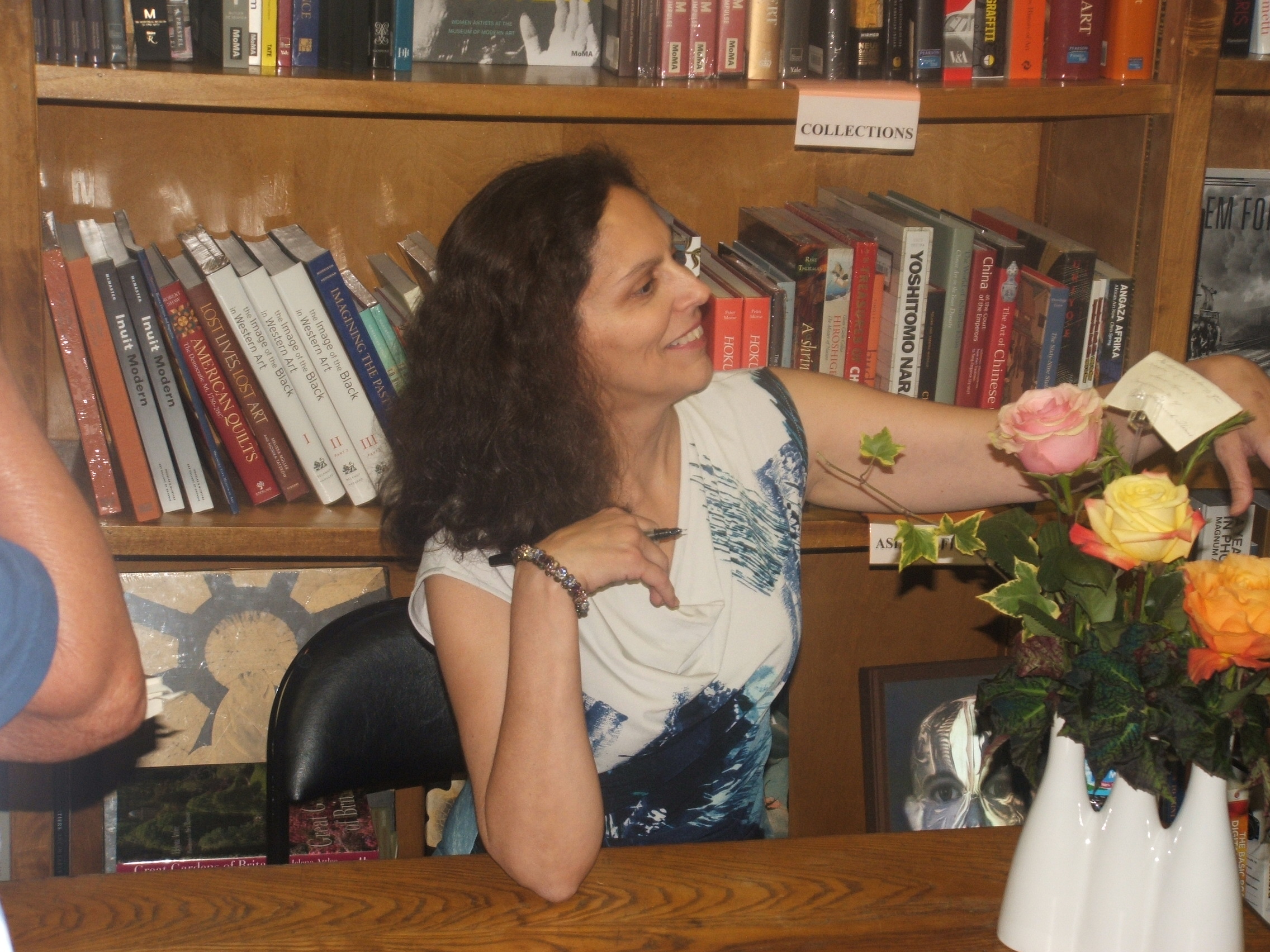
Marisel’s debut novel is available. I’ve shown you a few pictures from her first book signing, which was last weekend. I’m thankful she has given us these three posts about herself, her novel, and her experience as a writer seeking publishing. If you’re available, come out and meet Marisel with other friends, fans, and readers on August 28, 2011 at 8 pm. She’ll be at The Nervous Breakdown Reading Series co-sponsored by Sunday Salon Chicago. The location is Katerina’s, 1929 W. Irving Park Rd., Chicago, IL.
This is the last of a three-part blog series featuring Marisel, and today she discusses her experience pursuing publishing…
What a writer needs most is Faith. I had a huge crisis of faith some years ago which I wrote about in a blog post Forgive Me, For I Have Doubted. Your readers can read it on www.shewrites.com or www.mariselvera.com. It was the moment when I just had to say I am going to keep trying, even if I never get published, I am going to keep trying. From that point on, I never looked back. That same year when I sent off my manuscript to an agent, I got an encouraging letter back. That agent, Betsy Amster, is now my agent. She didn’t take on my novel then but it fortified my determination to continue. My husband has been financially and emotionally supportive throughout the whole process and our children became English geniuses so I’ve had the luxury of in-house editors for blog posts, etc. I have direct access to Puerto Ricans and especially to my mother and godmother who shared many details about growing up en el campo. I also conducted extensive research in all things Puerto Rican.
In addition to faith, I believe a writer needs to learn the craft of writing fiction. An MFA is nice but if you can’t do that—I didn’t have that opportunity—then take writing classes, a writing workshop with a writer you admire (I did that with Jonis Agee and Cristina García), get some writing books, find a few fellow writers whom you trust and critique each other’s work in a constructive way. Last but not least, the big D. Discipline. Schedule time for writing and force yourself to do it. It’s not easy in the beginning especially if you have a full-time job and/or small children. When my children were little and I was living inOklahoma without my sisters to babysit, it was so hard! One day I read about how Toni Morrison as a young writer was writing with her child on her hip and the child spit up on the page. She didn’t want to lose her thought so she wrote around the spit-up before she cleaned up the child. I found that so encouraging! I was a writer and I would write and I would do what I had to do to write and nothing would stop me.
 Michael, I’d love to hear from your readers and especially book club groups. I’m open to meeting with book clubs especially in the Chicagoland area and having video or phone chats with others. My website is www.mariselvera.com.
As I said, Marisel would enjoy meeting a few of you at the Series this Sunday. And finally, if you’d like to see a dramatic reading of a chapter from If I Bring You Roses, it’s in the link below.
Marisel Vera, Author of If I Bring You Roses, 2 of 3
As I said in my last post, I met Marisel Vera at the Printers Row Literary Festival this year, where we connected briefly over her debut novel. The book is available. I’m very thankful to put her before you on my blog and suggest that you go and get If I Bring You Roses.
In today’s post Marisel tells us a bit about who she’d like to pick the novel up along with some insights into her background and how she came to writing. Below I mention how you can see her this weekend…
It’s true that I’ve had a few friends and relatives look at me a little differently after reading If I Bring You Roses but, so far, everyone is cool even my born-again Christian relatives. A few weeks ago, I wrote about being nervous of the novel’s publication in a blog post for www.shewrites.com which I titled Taking My Clothes Off in Public. Mostly likely, the majority of my relatives won’t read my novel and if they do and make a comment, I’ll just shrug my shoulders and say, “It’s literature.”
I would love for If I Bring You Roses to be taught in Eng. Lit classes in Chicago public high schools especially Roberto Clemente High School, my alma mater. That would make me SO happy. Perhaps some of your readers are teachers and could choose it. (Hint.) It thrills me to say that it will be taught in a Latino Studies class at Vanderbilt University next Spring. This October, If I Bring You Roses will be taught in four classes at the College of Lake County in Grayslake,IL. I plan to go in one day and answer questions from students. I’d love to go to Clemente or other inner-city schools and talk to students too.
 I believe that one of the reasons that it took me so long to pursue my dream of writing a novel is that although I read voraciously since I was eight years old, I never read a book written by a Latina or Latino writer other than Down These Mean Streets so it never occurred to me to think of it as a possibility. All the books I read on my own or were assigned in my classes were written by Anglo writers. Any one who is the child of immigrants knows that while your parents might encourage education, they want you to get educated so that you can get a traditional job like a teacher or doctor or nurse. No one ever said to me, Marisel, you have talent. I think you could be a writer. I think it makes a big difference in the life of a kid from the ghetto or inner-city, for an adult to say, Marisel, you can do it!
And I want you to know that you can meet Marisel. She will be meeting friends and readers, signing books if you have them on August 28, 2011 at 8 pm at The Nervous Breakdown Reading Series co-sponsored by Sunday Salon Chicago. The location is Katerina’s, 1929 W. Irving Park Rd., Chicago, IL.
Waiting, Adopting, Beauty, & Ugliness
Leslie Beckett, a sometimes guest on this blog, talks about waiting in a recent post at Confessions from Momville. Her blog is partially dedicated to her discussing the family’s transition toward adopting a child. In the post linked below, Leslie turns us toward some of the feelings attached to waiting, some of the feelings inside the process.
Adoption is a wonderful thing. It makes sense that whenever people find out we are adopting that they are happy and excited and think it’s terrific. We are direct recipients of the greatness that it is with Mike and our future child. However, I have to admit that sometimes I wish people realized that it is so, very complex and not always so beautiful. I mean, think about it, why does adoption exist in the first place? Every addition of a child is a transition, but the factors that come with adoption can be hard, tragic, and wounding on all sides. There have been times when I feel like people hear “It’s a small world” playing in their minds as they gush over adoption and how awesome it is. I want to stop the music then.
One of the reasons I’m grateful for this post is Leslie’s ability to name the unseen. She points out what most folks miss, the complexity of adopting. There’s complexity in waiting too. And then there’s ugliness.
Toward the end of her post, Leslie says,
Adoption is beautiful. It allows for so much good. But it is more than that, too.
I’m grateful that she’s writing about more than beauty as she (and they) step toward adding to the family. If you want to read Leslie’s entire post or if you want to journey along with her and the Beckett family, click here.
Marisel Vera, Author of If I Bring You Roses, 1 of 3
I met Marisel Vera at the Printers Row Literary Festival this year. She and Tayari Jones were meeting readers after a panel discussion. We connected briefly over Marisel’s debut novel, which has now been published. I’m very thankful to put her before you on my blog and suggest that you go and get her novel, If I Bring You Roses. And I want you to know that you can meet Marisel. She will be meeting friends and readers, signing books if you have them on August 28, 2011 at 8 pm at The Nervous Breakdown Reading Series co-sponsored by Sunday Salon Chicago. The location is Katerina’s, 1929 W. Irving Park Rd., Chicago, IL.
This is a three-part blog series featuring Marisel where she’ll be telling us about her novel, her experience publishing it, as well as a bit about her life as a writer…
When I was 13-years-old there were a rash of house fires in the Pilsen neighborhood over on Chicago’s South Side. Families with children died in the fires because the victims couldn’t speak English and when they shouted “¡Ayuda!” the firefighters couldn’t understand that they meant “Help!” Community leaders called for the firefighters to learn Spanish, but that infuriated many Chicagoans. I remember an on-air editorial about how everyone should learn English. This was America! People wrote letters to the Chicago papers saying how the victims were at fault because they should have learned English like their parents and grandparents.
I was shocked and disheartened particularly because I didn’t have a voice as a young Puerto Rican girl in my own family. To my young self, what mattered most was that innocent people had died. Wasn’t it a good thing to learn a few words in another language if that would help prevent a tragedy? I determined that one day I would write something to help people see how we were all the same whatever race, whatever nationality.
 My novel If I Bring You Roses is a story about two people who marry and move to Chicago in the 1950s and how things happen and how they deal with it. That the novel is set partly in Puerto Rico and the couple is Puerto Rican is juice of the pineapple, the sauce of the beans, the ajo en mofongo. Having said that, some readers will read If I Bring You Roses as a straight story about a man and a woman and a marriage while others will notice how the United States presence and control over Puerto Rico had severe economic repercussions that resulted in events that led to the mass immigration of Puerto Ricans to the mainland. I tried to be historically accurate and also captivate the reader’s attention with my storytelling.
I wanted to tell the novel in two voices, both female and male, because the immigrant experience is different for Latin Americans depending on gender. In If I Bring You Roses, Aníbal is always wishing to be a man like his father. Aníbal comes from a culture where the man is king but in America, he is disrespected in the workplace. His feelings of powerlessness compromise his sense of manhood. In turn, the humiliation that male immigrants experience creates a cycle of privilege and subordination that ultimately disrespects women. For Felicidad, who was a second class citizen in Puerto Rico and in her own family, immigration is the best thing that ever happened to her. She can be independent and speak up for herself and for others and she is respected for doing so. The status of immigrant women from Latin American tends to rise in the U.S. while men lose their privileged status.
If I Bring You Roses is set in Chicago because I wanted to write about the first wave of Puerto Ricans who came in the 1950s like my parents and my uncles. I am a fan of multi-cultural literature and there is very little of Puerto Ricans in Chicago. The closest I had to any literature about Puerto Ricans when I was growing up was Piri Thomas’ Down These Mean Streets and that was non-fiction and set in NYC. Being Puerto Rican in NYC is not the same as being Puerto Rican in Chicago and as we Chicagoans know, New York City is not Chicago.
It was very liberating to write from Aníbal’s perspective. Loved it, loved it, loved it. I do have to admit to a slight concern about how people who know me will think of me once they read how Aníbal thinks about sex. But not for a moment did I think of silencing him. I had to be true to him and Aníbal is a very sexual guy. Sex is how he expresses how he feels. I found Felicidad’s character more difficult to write. I thought a lot about her and what made her the woman she became and that helped me to understand her and to empathize and love her.
Conflicted With The Help
 Have you read Kathryn Stockett’s The Help? I haven’t. I told my close friend, Maggie, last year when she was reading it that I had my challenges coming to the work. I asked if she was enjoying it and was happy she said that she was. She resonated with much of the novel because of her background and because of her experience growing up a white woman in the South. I celebrated the book. I loved that she could find the portrayal in it credible when gauged by her own personal story. But I was off center.
I told Maggie and David and Dawn (we were all together at the time) that my conflict with the novel was with my desire to support and celebrate books in general and fiction in particular with my learned-over-the-years suspicion that my story–that story that I own collectively with all other black folks in this country–can so readily be accepted, supported, purchased, and promoted when it’s written by non-black folks. I continue to experience that conflict as the movie is now being promoted.
I’m careful not to take these conflicts too far on this blog. But my conflict is my conflict. In fact, I’m very thankful for the humility Ms. Stockett exhibits on her website when responding to the question, “Were you nervous that some people might take affront to you…writing in the voice of two African American maids?” She says,
…I was very worried about what I’d written and the line I’d crossed. And the truth is, I’m still nervous. I’ll never know what it really felt like to be in the shoes of those black women who worked in the white homes of the South during the 1960s and I hope that no one thinks I presume to know that. But I had to try. I wanted the story to be told. I hope I got some of it right.
Having not read the novel, conflicted man that I am still, I appreciate the author’s hope. I share it. And I also hope that the success of her novel continues to grow in relation to her posture around the issue of telling someone else’s story. Indeed, novelists always tell another character’s story. I hope she’s done that well.
That said, the other day I read the comments from Rosetta Ross, a religious studies scholar at Spelman, over at Religion Dispatches. I share some of her biographical experiences, reactions to The Help, and sentiments about the acceptance of African American culture when its ushered to the wider world through the pen and hands and submission processes of white publishing professionals in this case. Now, to be clear, I love white folks. Some of you all are white, and I hope you know I love you. And I hope you have a comment or two about this, especially if you’ve read the novel or seen the screening. And still, I’m intrigued by how often and constant black authors or, more pointedly, African American authors, try to tell stories that cannot be accepted and embraced as cultural stories, as stories for the wider reading public.
Dr. Ross identifies three messages from the embrace of The Help. Three reasons she won’t see the movie. She says,
The first false message says: The real agents of the world are white….This message is false because black women, from a variety of stations in life, have voices and live and demonstrate to the world fulfilled lives every day—without the assistance or interference of white people.
The second false message is this: The really important point of all cultural production and activity is for white agency and dignity to be actualized. The overarching plot of this book presents the narrative of a young white woman finding herself and her voice amidst cliches, circumscriptions, traditions of the South during the 1960s. Against this background, the black women are instrumental in Skeeter’s journey into adulthood. Skeeter’s journey is the more prominent message of the book, and, I suspect, of the film as well. I will not go to see the movie The Help because I do not wish to view yet another production that tells me, a black woman, it is all about whiteness.
…the third, and most detrimental false message: Black persons—perhaps people of color, generally—exist primarily to serve of enhance the lives of white people….A predominant element of the Western imaginary, the idea that black persons ultimately exist as servants for white life, has long been supported by rhetorical constructions of Christianity. The most obvious examples, of course, were rituals such as catechisms about the necessity for [black] servants to obey [white] masters…
What do you think about Professor Ross’s comments? Have you noticed some of the biases and patterns she speaks of, some of the messages she’s read and heard in the buzz around the novel and the film? What experience have you had around hearing your story told through someone else’s lips?
Finally, I hope you read the novel. One day I may. I’ve read many representations of black people written under the hand of non-blacks, and this novel may join that shelf. And, again, my conflicts aside, I can support the work of an author reaching the world with a good story–and upon the great experience my good friend had of the work. I can easily separate my experience of the novel (or my perspective of the novel as I approach it from a distance) from my hearty suggestion that it should be read by others.
By the way, if you’d like to see Professor Ross’s full essay at RD, click here.
 Michael Washington