I’m Running For The Office Of Love

I’m running for the office of love

My heart is in the ring

I’m bad at making speeches

So I guess I’ll have to sing

A tune of moons and flowers

And things that go with Spring

And things that go with Spring

Love is so political

I don’t remember it this way

They’ll curse you if you play it straight

And kill you if you’re gay

They say that love is dangerous

That it’s best to do without

So somebody has to speak for love

That’s why I’m singing out

I’m running for the office of love

My heart is in the ring

I’m bad at making speeches

So I guess I’ll have to sing

A tune of moons and flowers

And things that go with Spring

And things that go with Spring
Love is like a loaded gun

A fool stand in its way

There was one man who was on the run

He was trying to get away

But love took careful aim at him

She brought him in her sights

He bought her wine and perfume

And all her favorite delights

He hadn’t been paying attention

And given love her due

She took away his peace of mind

And plagued him with the blues

I’m running for the office of love

My heart is in the ring

I’m bad at making speeches

So I guess I’ll have to sing

A tune of moons and flowers

And things that go with Spring

And things that go with Spring

They say that love is dangerous

It’s on the radio

That holding hands is fatal

A kiss can bring you low

The papers they keep shouting

That “LOVE MEANS DOOM AND GLOOM”

So love is lying low for awhile

Until her next big bloom

Until her next big bloom

I’m running for the office of love

My heart is in the ring

I’m bad at making speeches

So I guess I’ll have to sing

A tune of moons and flowers

And things that go with Spring

And things that go with Spring
Morrison On Love, Narrating, & Language

Take some time to watch this video.  It’s about 27 minutes long.  Any video with Toni Morrison is worth the time.  She’s always the writer, the architect of language, always the teacher of history.  I hope you enjoy her depth, her voice, and her articulation how her work is a work of love.  She’s discussing Love, one of her novels, but is just as much discussing love in general and how it relates to writing and telling story.

Miller and “…a great story…”

Here’s the truth about telling stories with your life.  It’s going to sound like a great idea, and you are going to get excited about it, and then when it comes time to do the work, you’re not going to want to do it.  It’s like that with writing books, and it’s like that with life.  People love to have lived a great story, but few people like the work it takes to make it happen.  But joy costs pain.

Baldwin and “the writer’s subject”

I suppose that it has always been difficult to be a writer.  Writers tell us so; and so does the history of any given time or place and what one knows of the world’s indifference.  But I doubt that there could ever have been a time which demanded more of the writer than do these present days.  The world has shrunk to the size of several ignorant armies; each of them vociferously demanding allegiance and many of them brutally imposing it.  Nor is it easy for me, when I try to examine the world in which I live, to distinguish the right side from the wrong side.  I share, for example, the ideals of the West–freedom, justice, brotherhood–but I cannot say that I have often seen these honored; and the people whose faces are set against us have never seen us honor them at all.

But finally for me the difficulty is to remain in touch with the private life.  The private life, his own and that of others, is the writer’s subject–his key and ours to his achievement.  Nothing, I submit, is more difficult than deciphering what the citizens of this time and place actually feel and think.  They do not know themselves; when they talk, they talk to the psychiatrist; on the theory, presumably, that the truth about them is ultimately unspeakable.  This thoroughly infantile delusion has its effects: it is contagious.  The writer trapped among a speechless people is in danger of becoming speechless himself.  For then he has no mirror, no corroborations of his essential reality; and this means that he has no grasp of the reality of the people around him.  What the times demand, and in an unprecedented fashion, is that one be–not seem–outrageous, independent, anarchical.  That one be thoroughly disciplined–as a means of being spontaneous.  That one resist at whatever cost the fearful pressures placed on one to lie about one’s own experience.  For in the same way that the writer scarcely ever had a more uneasy time, he has never needed more.

Sacrifice Something & Read

I made an unofficial goal to read a book a week.  That was two years ago.  I’m still building to it.  Who knew that making that goal would be incompatible with raising a child?  I thought about that goal when I read a post today.

As I’ve said before on Intersections, I read Michael Hyatt’s blog, and he consistently offers helpful posts in several areas, including leadership, publishing, and social media.  Yesterday he had a guest post by Robert Bruce who’s reading through Time magazine’s 100 top English-speaking novels.

Robert, a new father, who’s employed full-time and who trains for marathons, offers five way to make more time to read.  They are:

  1. Sacrifice something.
  2. Make a routine.
  3. Set a goal.
  4. Have fun.
  5. Mix it up.
If you’d like to see the post, and it’s a quick one–after all, Robert has little time to blog because he’s readingtake a look here.  It’ll help you see a few ways you can actually find time to read.  I’m still reading stories once a week from All Hagar’s Children, a book at the office about emotional systems called How Your Church Family Works, and daily at home The Immortal Life of Henrietta Lacks.  What about you?  Reading anything these days?

Wangerin, Writing, and “…the shape of my days.”

I’m celebrating the work of writing and revising and wrestling with words.  This is partly because of National Novel Writing Month and partly because I need to think about writing more than I allow myself.

I came across a delightful conversation between Mark Neal and Walter Wangerin.  Walter Wangerin is a retired writing teacher and pastor and author of more than thirty books, a few of which I’ve read.  His writing is wide, deep, mystical and searching.

In the conversation, Wangerin talks about the five covenants of writing.  He says of beginning a project that he starts “with something that has possibility,” something he can pursue.  He says, I’m sure for those of us learning from his long record as a writer, communicator, and teacher, “In order to see truth or reality as clearly as you possibly can, you have to empty yourself. And that means emptying yourself of any preconceived interpretive factors.”

He discusses his views of technology and how it’s impacted his own way of writing.  Then Wangerin mentions a friend, Eugene Peterson and how he has ended book writing and taken up letter writing.  Wangerin says,

And his mind is my mind. I’m sure there are authors who do consider what they are sending out, even by email, to be of literary value. But I think letter writing has been profoundly undermined by email. Letter writing used to be a genre of its own that was just a delight. You didn’t have to go back and forth and revise it; you could allow your mind to wander and be shaped by the relationship you had with the person you were writing. And I am sorry that that has been diminished. Because email simply gets deleted.

Is that true in your world?  Do you think that your communications have changed, or, more pointedly, that your writing has lost value because of technology?  When talking about how many people can’t live without devices and gadgets to get things like writing done quickly, he says that “writing shouldn’t be easy or fast.”  And he offers advice to writers and the theme, if I can call it that, is nurturing one’s soul.

When answering one of the last questions in the interview, one having to do with a recent book, Letters From the Land of Cancer, Wangerin talks about what motivates him to keep writing.

But it takes somebody who knows how to write it so the commonality can be discovered and experienced. And that always is the sweet slip of the sea along my boat, the pleasure of that. Why would I stop that? I mean that’s why I’m telling you all this. Not just because it’s a thing I can do, but larger than that, it’s my identity. There are a number of things that make up what I would call myself. I would say all of them are relational. And certainly I am defined by my family, my heritage, just as in the Old Testament, nobody was an individual. But I’m also defined by this thing I can do. This is not a profession, this is a characteristic that reveals the soul, the core. I write, I am a writer. In fact, it has become the shape of my days, which is a pleasure.

To read the full conversation with Walter Wangerin, click here.

New Meaning To “Will Eat Anything”

I thought I was the child who grew up willing to eat anything.  I wasn’t.  That was just a way my loved ones talked about my large appetite.  The other day I read an article that brought that to mind and that also made me wonder whether I should have taken my son’s eating of our boots and shoes and remote controls seriously.

That’s a little facetious on my part.  Consider it an amusing way to introduce a serious topic.  Have you heard of Pica?  It’s a rare condition—named for a bird that will eat anything.  The condition causes children to eat things that aren’t food.  “Doctors say these unusual cravings can be triggered by a lack of certain nutrients like iron or zinc. Some with Pica crave the texture of some materials in their mouths.”  It’s rare and I’m sure it’s more world-shaping than the regular adjustments which come along with parenting.

The article also says that adults are not immune by the way.

To read the full story, click here.

Mondays With My Boy #10

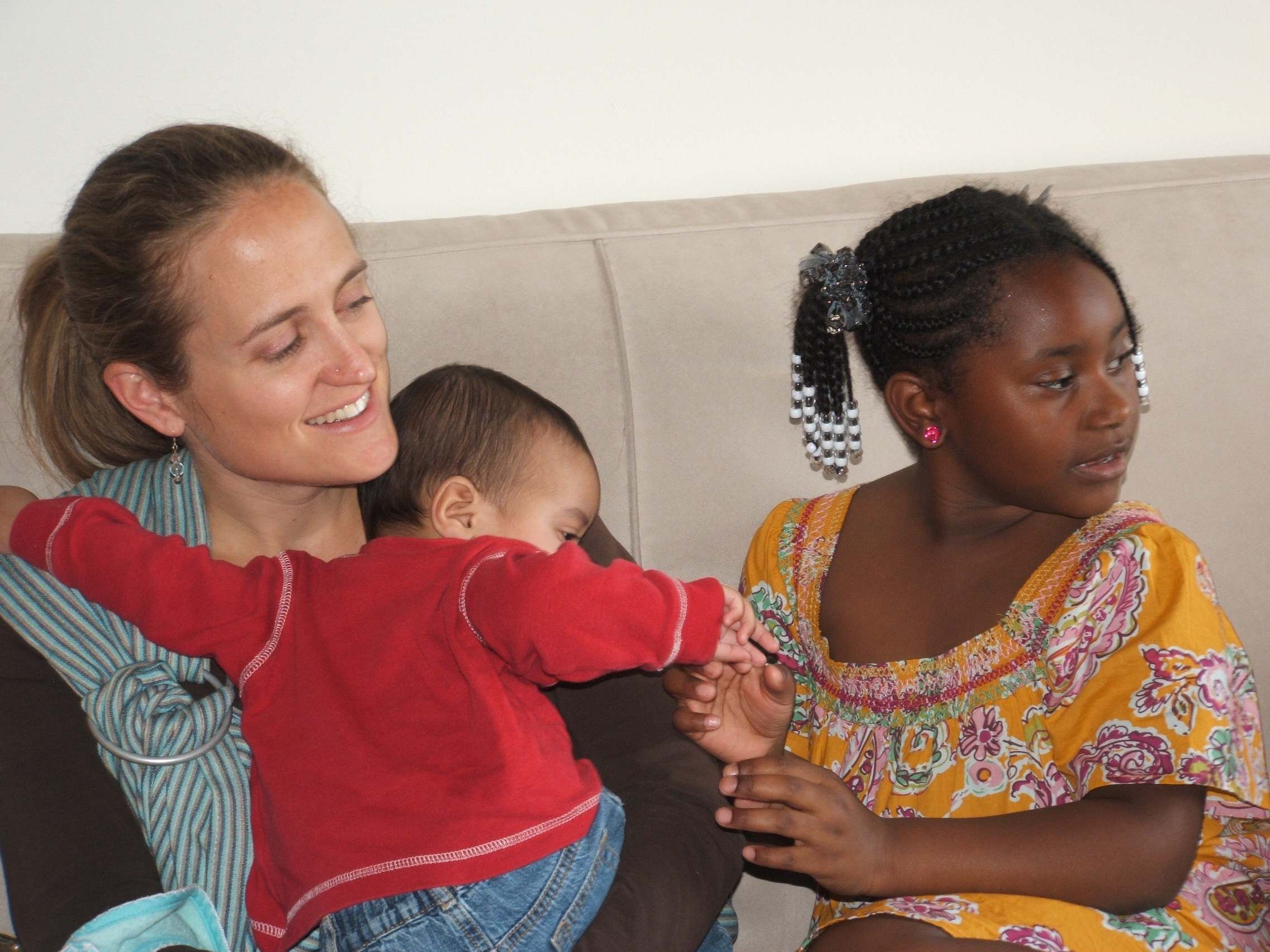
Maggie with Eliot and Laila

This is Maggie with her son Eliot and my niece Laila.  It’s an old picture, almost two years old.  I have no idea what they’re looking at.  It seems clear that Eliot is playing with my niece’s finger.  Maggie and Laila, likely amused by another image of my brother snoring while his second daughter lays across his stomach, aren’t paying attention to finger playing.

I spent time as usual with the boy the other day, but Maggie wins a picture on the blog because she did too.  Maggie and Dawn figured out last weekend how good it’d be for Eliot and Bryce to hang out more.  So, auntie Maggie offered me an hour or two break.

I dropped the boy off and walked over the Osaka garden for a while.  Later, I was told that he wailed most of the next hour and a half, before Maggie texted me.  I ended up coming back 25 minutes earlier than planned, sipping roiboos tea.  They were in the park, all of them happy and running by then.  “You can go back now,” she sang over a field of grass.  “Too late,” I told her, “I’m already here.”

Maggie wins the award for this week’s favorite father friend!

For Your Cloudy Days

This is a letter from Queen Esther Gupton Cheatham Jones to her daughter Renee Cheatham Neblett.  Renee, an artist and teacher, founded Kokrobitey Institute, an art and education center in Ghana.  The letter is from Letters From Black America, edited by Pamela Newkirk.

Dear Renee,

An institution is the lengthened shadow of one person.  Life gives nothing to mortals except earth’s great labor.  In reference to your Kokrobitey School: The test of progress is not whether we add more to the abundance of those who have much; it is whether we provide enough for those who have too little.  This is sunshine for your cloudy days.

Always,

Mother

Building vs. Being pt 2

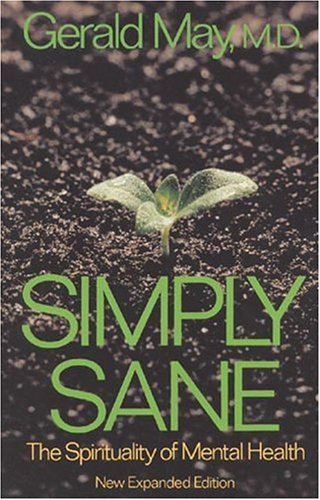
Yesterday I posted a quote from Simply Sane where Gerald May wrote about how parents become fixed on methods to build their children rather than on being with them.  It may have been helpful to contextualize the passage a bit.  Dr. May had written in the chapter about how children develop an image of themselves based upon what they do and what they control.  He explained this while also laying out how normal and natural a child’s development is.  He made the point that all their lives works doing into them.  From their beginnings, they are learning to control things about themselves, their bodies, their actions.  He says much of their self-understanding is based upon what they do.  He then goes into how parents watch their children and how we also get about doing and controlling—we watch with awe sometimes and with fear at other times.

Of all the questions I’ve been asked as a psychiatrist, the most common and disturbing ones have been about how to raise children.  It has always seemed rather strange that people can expect psychiatric training to create an authority on child-raising.  It would make much more sense to search out a grandmother whose offspring are living fully and beautifully, and ask her about it all.  But parents seem to want methods, and psychotherapy is where the methods are to be found.  Complex, sophisticated methods.  Grandmothers usually have only a few methods.  And they’re usually very simple.  Grandmothers often say things like, “Well, I just did the best I could, taught ’em right and trusted in God.  And I always made sure they washed behind their ears.”  Sane as those words may be, they’re just too simple to satisfy most modern parents’ appetite for techniques.  Grandmothers like to see children grow.  Method-hungry parents want to see children built.

The more methods we get, the more we feel like we are building our children.  And the more we feel like builders, the more methods we want.  Even if we use words like “raising” or “growing” rather than “building,” we still feel we are doing the raising.  Persisting in the belief that we are growing or raising our children, we shall continue to feel separate from them.  They will remain objects for our manipulation.  We will be managing their growth process rather than participating in it.

…The natural growth process in children will occur.  It will occur, in most cases, in spite of us.  Almost no matter what we do, it will happen.  We seldom kill our children by trying to grow them.  What we do kill is our simple awareness of the natural growth process.  Being so interested in taking credit for the growth and carrying the burden of it, we fail to see its wonder.

Building vs. Being, pt 1

I think Gerald May is one of the brightest, most compelling writers I’ve read.  I was introduced to him by a professor in seminary.  May was a psychiatrist and teacher of spirituality.  He’s got some fascinating and penetrating material in the area of contemplation, for example.  In one of his books, his first one, he talks about parents building children with methods and the importance of being with children.  Here’s a quote from Simply Sane.  I’ll post another tomorrow to round out parts of his thought.

Sometimes parents watch with fear, unable to know what to give their children, how to direct them.  Not realizing the possibility of fully, freely being with their children, parents wonder how to be with their children.  What is the proper technique?  What is the best method?  Caught in this dilemma, it is not unusual for parents to turn to psychotherapy for help.  For guidance in the proper methods of raising children.  And psychotherapy, it seems, always has something to say.

In its many forms, psychotherapy has offered a veritable smorgasbord of guidelines as to how children should be raised.  A host of suggestions, almost all of which take the form of methods and techniques.

There was a time when psychotherapists advocated strictness, hard work, and solid rules.  Then, in an almost universal misinterpretation of Freud, permissiveness became the way.  More recently, parents have been told that the best child-raising involves listening to feelings and straight communication.  All are methods.  Whether a specific method works well or not is unimportant.  What is important is that parents have an insatiable hunger for methods, and psychotherapists have an unending supply.  When the method is what counts, the child is lost.  For methods are not used for being.  Methods are used for building.