Things That Strengthen Us, pt 1 of 2

From Christman Wiman’s meditation, in My Bright Abyss, undoubtedly written first to the close loves of his life (pg. 161):

My loves, I will be with you, even if I am not with you.  Every day I feel a little more the impress of eternity, learn a little more “the discipline of suffering which leads to peace of the spirit,” as T. S. Eliot said, writing of the seventeenth-century poet and priest George Herbert (read him!), who died when he was thirty-nine and had only recently found true happiness with his new wife and new commitment to God.  My loves, I love you with all the volatility and expansiveness of spirit that you have taught me to feel, and I feel your futures opening out from you, and in those futures I know my own.  I will be with you.  I will comfort you in your despair and I will share in your joy.  They need not be only grief, only pain, these black holes in our lives.  If we can learn to live not merely with them but by means of them, if we can let them be part of the works of sacred art that we in fact are, then these apparent weaknesses can be the very things that strengthen us.

Until We Can’t Feel Them Anymore

I read these strategies over at the Crunk Feminist Collective, and while they’re especially written for Black women, I think all women and all men who love women and want to love women well should ingest them.  We need to know how to live, how to address the stressors in our lives, how to stop pushing away our “needs and desires down until we can’t feel them anymore.”

I think mothers, fathers, and friends of mothers and fathers need to be aware these strategies for staying alive.  I think of this list, and lists like them, as little love points for the people I care about.  I think these are some of the ways we ought to push each other live and thrive and flourish.

Read the full post here.  Because there’s a steeped personal introduction to the tips, a poem you really need to sip, a lot words I’ve left, and a few other things that are worth seeing over in the Collective.

  1. Take some time to/for yourself and be unapologetic about it.  At least one hour a day should be yours.
  2. Say no!  Be impolite.  Say no (without an explanation/reason).
  3. Reject negativity.  …we don’t have to take on other people’s baggage.
  4. Pay attention to your body.  When your body speaks, listen!  And do something about it.
  5. Have a bi-annual or annual check-up.  While sometimes our family histories can be mysteries, it is important to know what hereditary diseases or ailments you may be at risk for.
  6. Do a regular inventory and purge anything toxic in your life.  This includes people, relationships, thoughts, habits, and hobbies.
  7. Let people go.  If someone fails to treat you like the queen you are…on to the next one.
  8. Don’t be a people pleaser.  Living your life for yourself and not for other people makes a world of difference.
  9. Have a confidante.  We should all have someone in our life we don’t have to “put on” for.
  10. Celebrate yourself and your accomplishments even if/when you have to do it (by/for) yourself.  Don’t miss an opportunity to acknowledge all of what/who you are and where you come from.
  11. Take care of yourself mentally, physically and spiritually.  Figure out how best to take care of yourself.
  12. Kick it, regularly, with your homegirls.  This can be magic.
  13. Let people do things for you.  When someone offers to do something for you, let them!

If I didn’t suggest this already, read the full post here.

What We Desire to Find

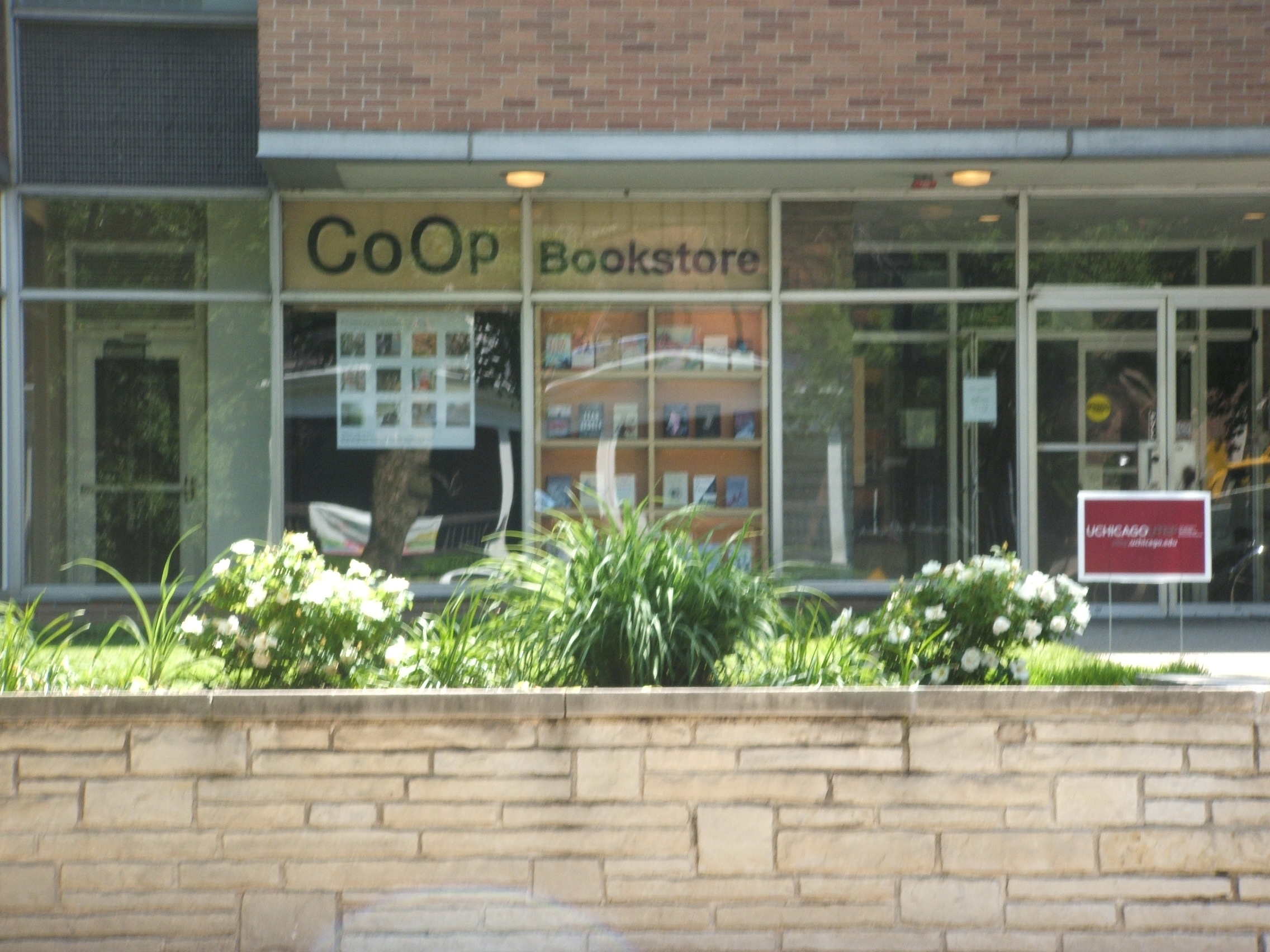
If you love books and stores selling them, you should meet the Seminary Co-op Bookstore, a place I’m pretty sure Ernest Johnson introduced me to when we were in high school.  That was back when we’d eat at the now defunct Cafe Florian and do other things I’ll leave unmentioned.

The Seminary Co-op held our futures in a curious way, pressing in me and in EJ a thirst for learning, a love for the mind, and an appeal to practice what we think we know.  And it held our presents because that basement was another world entirely, a place where time fell to the side of a stone step or ran through an alcove or up to a chapel and waited like an answer to prayer.

Here is a quote from an exchange of two friends talking about a visit to the new Co-op.  Newly owned by the University of Chicago, the old dark one is being gutted.  All our current affections must train to this new light-filled room, which is very worth savoring.Old Co-op

With books, too, we seek out what we desire to find, and soon enough we reflect what we have sought. The contrast between old and new Seminary Co-Ops could not be more apt— the old store with its nooks, corners, pipes, and warren of aisles did indeed exhibit the “disordered glory” of the first collection you described, while the new store, well, if it was not carefully color-coded and alphabetized – all professionalism and spacious tidiness – then it was surely close to that.

Like you, I’m not exactly complaining about the new setting. It’s just different, and will take some getting used to. I suspect it will be a pleasant enough adjustment as older memories give way to more recent ones, spaced out across multiple visits. Then, when we think of “Seminary Co-Op,” this new, big-windowed building with its lighter woods and airy spaces will happily come to mind. And let’s be grateful that the Seminary Co-Op, during these turbulent times for booksellers, has managed to keep its doors, or different doors, open.

–From the exchange of letters between Wesley Hill and Brett Foster, where Brett responds to Wes’s letter about the new Seminary Co-op bookstore in Hyde Park.  Read both full letters here.New Co-op

Milestones That Matter Most

It’s not surprising that well-intentioned parents cultivate cognitive intelligence and individual achievements as assiduously as we do. These are, after all, such important markers of success in modern-day America. But our focus on outcomes is leading us to look at milestones all wrong — as a series of boxes and achievements to check off a list on our way to a goal. We focus on our kids’ ability to read when they are at an age when we should be focusing on their kindness and character. We worry about overburdening them with chores because they have to do their homework, when we should be cultivating self-help skills that will make them self-reliant, and sending them a clear, unambiguous message: yes, academic achievement is important, but becoming kind and responsible is, too. These are all milestones we don’t want to miss.

See Christine Gross-Loh’s full piece here.

My Fear of Losing You

Beneath our enduring friendship

the unspoken, latent fear

I never mentioned to you,

that I would lose you

to work, to poor health,

to a faraway move

or something unforeseen.

And then one day I did lose you.

Death sliced you from me

with a condor’s swiftness,

ripped you out of

my fearful grasp without

a moment’s hesitation.

Always death wins

in who gets to keep.

You are gone now

and so is my old fear,

leaving plenty of room

for loneliness and sorrow

but also sufficient space

for the savoring of love,

the one thing Death

could not take from me.

From Joyce Rupp’s My Soul Feels Lean

How to Read a Non-Fiction Book

Michael Hyatt, a communications and leadership specialist, offers ten ways to read a book.  Stop by Michael’s site to see the full post and to keep up with his wisdom.Reading Materials

  1. Don’t feel that you need to finish.
  2. Start with the author bio.
  3. Read the table of contents.
  4. Quickly scan the whole book.
  5. Highlight important passages.
  6. Take notes in front or in the margin.
  7. Use a set of note-taking symbols.
  8. Dog-ear (or bookmark) pages you want to revisit.
  9. Review the book and transfer actions to a to-do list.
  10. Share the book’s message.

Spiritual & Writing Advice

A lot of what I do in my ministry job (and in teaching too) is the slow work of deconstructing things people have spent years building.  People, myself included, spend time and energy and themselves creating notions and living from those notions.  When they’re asked or told to change, they should be told to change with grace and patience because egos are hard things.

I read this and thought how appropriate it is an advice of various sorts.  It’s from Randy Susan Meyers and is primarily about writing workshops, which are places of grief and feedback for creative writers.  Randy is continuing the conversation around these and other quotes at this weekend’s Muse & the Marketplace, a helpful and memorable place where writers and readers gather in Boston, and for the record, a place I have good memories of:

Beware of hardening yourself to protect your ego. Even the smartest critique stings. It is common to hate, really hate, someone who points out that five backflashes in a row might leave the reader confused. I make a deal with myself when I’m ‘up’ in my writer’s group. I am allowed to think everyone is stupid for 10 minutes. Then I have to consider their ideas. I don’t have to buy them, but I must rent them.

To read the rest of Randy’s post, go here.