If I speak with human eloquence and angelic ecstasy but don’t love, I’m nothing but the creaking of a rusty gate. If I speak God’s Word with power, revealing all his mysteries and making everything plain as day, and if I have faith that says to a mountain “Jump,” and it jumps, but I don’t love, I’m nothing.
If I give everything I own to the poor and even go to the stake to be burned as a martyr, but I don’t love, I’ve gotten nowhere. So, no matter what I say, what I believe, and what I do, I’m bankrupt without love.
Love never gives up.
Love cares more for others than for self.
Love doesn’t want what it doesn’t have.
Love doesn’t strut,
Doesn’t have a swelled head,
Doesn’t force itself on others,
Isn’t always “me first,”
Doesn’t fly off the handle,
Doesn’t keep score of the sins of others,
Doesn’t revel when others grovel,
Takes pleasure in the flowering of truth,
Puts up with anything,
Trusts God always,
Always looks for the best,
Never looks back,
But keeps going to the end.
Love never dies. Inspired speech will be over some day; praying in tongues will end, understanding will reach its limit. We know only a portion of the truth, and what we say about God is always incomplete. But when the Complete arrives, our incompletes will be canceled (1 Corinthians 13, Msg)
Category / Interior Life
This category includes all the interior stuff that will decorate our lives, things we’ll show outside because they’re inside.
Mondays With My Boy #7
Monday was good. Mostly.
I won’t tell you about the shadow parts—that strange time in the late afternoon that I’m sure I’ve alluded to in previous posts. Me and my son melting down from exhaustion and sleepiness and boredom with each other. Me and him wishing for someone to come between us, to save us from the other, to help us take refuge from the other while being away from the other. Me and the boy crumbling under the weight of all that good time that a father spends with his son, even though that father is sleep-deprived and growing sharp and impatient as 5pm drags until 5:53pm when my wife came through with a refreshed lightness which could only be heard as God’s song in the early evening. You don’t want to read about that.
So I’ll tell you about something else. Something more exciting. Something that will surely capture your interest. What did me and the boy do last Monday? We walked to an art museum to find that the gallery had changed its hours and that they were, on Mondays, closed. I muttered to Bryce that this was becoming a little trend between us, places being closed. I told him that I needed a different off day, and he didn’t appreciate the thickness of the statement. He didn’t even catch the joke that I hardly had an off day. He, instead, looked down Greenwood like he was figuring out where we’d go next.
We turned down 55th and walked to the store. I can go to the store three times a week and will still need something. So we headed shopping to grab items. He looked and pointed to squirrels. I looked ahead and rambled about nothing to no one the way people who talk to themselves normally do, being shielded by the perception that I was speaking to my son who really didn’t understand much and which revealed that I was, in fact, talking to myself.
We strolled through the aisles of an unnamed store over on Lake Park at the corner of 55th Street, and when I refused to pay $2 extra for the same thing I could get at a cheaper store, we went to that other store. I walked slowly, saddened that we weren’t stationing ourselves in front of some beautiful splash of orange or green or purple.
I wanted to see art. I had imagined it that morning. All these years in the neighborhood and I was finally going to the Smart Museum. I had been to the Hyde Park Art Center. I spend most of my waking hours at Little Black Pearl. And I was going to accompany my boy to see the neighborhood’s other storehouse of artistic expression. I wore a Wheaton sweatshirt. And when we walked into the museum, three things happened. The smell of coffee wafted in invisible circles around my nose. A nice and smiling man answered the question I raised, You’re not open?, with “I hope you didn’t drive from Wheaton. And we turned around, waving goodbye to the man and the coffee and the museum.
I hate it when my plans splinter. I said this to my son. During my scattered ramblings while he was pointing out birds and calling squirrels dogs. Everything that isn’t a bird is a woof woof. Or whoof whoof. Why should I be concerned to spell correctly what my son says?
So Monday was boring in a sentimental way. It was boring in the same that one thousand weeks are boring when you spend your days and nights doing nothing spectacular right before you wake up and realize that you’ve spent a life walking around a neighborhood and never noticing. It was boring the way all early days of parenting are boring. Boring because nothing—absolutely nothing—about poop is exciting when you’ve cleaned it from the same bottom, talked about it with your wife and with the grands and with people who never wanted to know about your son’s poop.
Regular days are boring, end of sentence. And somehow it’s the regular days, the walks, the meltdowns, the off days that aren’t exactly off days that combine to form our lives. I’m not quite okay with that. I want to reach for something a bit more glorious, not quite so earthy, on days with my son. I want us to make memories that he in his little 18-month mind will remember even though his memory structures aren’t fully formed. I want to live things that are fun and laughable and which cramp my fingers to write about there’s so much detail.
I started blogging these Monday memories because I didn’t have breaks (much less what my colleagues call Sabbath) as a new parent with such a full life. And I didn’t like it. I still don’t.
I’ve given a lot away since the boy came along. And unbeknownst to me, I will give up more. I will give it all up—if I do this thing right—because that’s what my life, which is a Christian experience, is about. I won’t leave all my countless Mondays with any of it. Boring or not. And Monday was a reminder of that, which is what I mean when I say that it was mostly good. There was no art in front of me, not the splashy, thrilling kind at least. But there was a piece being constructed. There was a project being chipped at. The more I think about these days, and all the other ones, the more I see that the project is me.
Strength to be Free (Thurman)
I’m reading a book of meditations by Howard Thurman. Today’s passage felt like it made a lot of sense for fathers and for those who love us.
“Give me the strength to be free.” The thought of being free comes upon us sometimes with such power that under its impact we lose the meaning that the thought implies. Often, “being free” means to be where we are not at the moment, to be relieved of a particular set of chores or responsibilities that are bearing heavily upon minds, to be surrounded by a careless rapture with no reminders of costs of any kind, to be on the open road with nothing overhead but the blue sky and whole days in which to roam. For many, “being free” means movement, change, reordering.
To be free may not mean any of these things. It may not involve a single change in a single circumstance, or it may not extend beyond one’s own gate, beyond the four walls in the midst of which all of one’s working hours and endless nights are spent. It may mean no surcease from the old familiar routine and the perennial cares which have become one’s persistent lot. Quite possibly, your days mean the deepening of your rut, the increasing of your monotony and the enlarging of the areas of your dullness. All of this, and more, may be true for you.
“Give me strength to be free.” Often, to be free means the ability to deal with the realities of one’s situation so as not to be overcome by them. It is the manifestation of a quality of being and living that that the results not only from understanding of one’s situation but also from wisdom in dealing with it. It takes no strength to give up, to accept shackles of circumstance so that they become shackles of soul, to shrug the shoulders in bland acquiescence. This is easy. But do not congratulate yourself that you have solved anything. In simple language, you have sold out, surrendered, given up. It takes strength to affirm the high prerogative of your spirit. And you will find that if you do, a host of invisible angels will wing to your defense, and the glory of the living God will envelop your surroundings because in you He has come into His own.

Questions You Should Ask Fathers
A trend started when we brought the boy home from the hospital, after his birth. I noticed it right away. The first couple who saw us coming off the elevator in our building asked us. They are a lovely couple and always have been. I respect them and admire them. But they started this trend in my mind, launching me into an experience that’s left me motivated to change how the world asks questions when interacting with parents, particularly fathers.
Their question—and everyone else’s question—was something like, “How are you?” They were looking at my wife. They never looked at me. And it started.
When people would ask me, after the birth or after the three weeks I took off from the church, they would always want to know about the boy and about Dawn. Now, I appreciated this. I did. But it’s always left me wondering if people have the curious tools to ask about me, about the father in the picture. That would be me. Before you think I’m completely self-serving and needy, consider how important it is to ask the how you’re doing question to a mother. Why wouldn’t it be so valuable to raise with a father? Would a person really think a newborn is needy right before asking about that baby?
So, here goes:
- How are you? This is basic. This opens up many possibilities. It takes little effort. Most people have already asked it, as I mentioned, and only need to modify it so that the guy feels included.
- Have you slept? This, again, is basic, but it’s one of the most caring questions you can ask a father. He’ll think you love you, even if you’re meeting him for the second time. He’ll walk away with good thoughts of you.
- How do you do it? More people, more non-parents should ask this. It’ll make them appear empathetic. Or smart. Parenting is difficult. I can’t understand how single moms do it. I can’t wrap my brain around how a single dad would either. It takes too many people to screw up at this. I can’t imagine how I could mess up all by myself at parenting. A variation of the question above is, how do you all do it? How do you make it happen is also a variant.
- How is your marriage? How is your relationship with the child’s mother? This question takes some history with the father to raise. But since parenting, no, since children change everything, we need help paying attention to everything outside of the kid(s). We miss the essentials of life outside of the kid during those early years. And sometimes that leads to erosion in our relationships as a couple.
- Who are you talking to? Dads need therapy or spiritual direction or great, life-giving habits or really good friends or a combination of all of these. We need people we can tell what our experiences are, good or bad. They shouldn’t just be spouses, if you have a spouse. Get a friend. Use that friend. The way you would a prescription from your favorite doctor, faithfully and consistently. It’s good for you.
- Are you spending time with the kid? Fathers need to spend time with their children. We need more time than most of us are practically able to give. This question pushes us to think about where the time goes, whether the kid is a newborn or a teenager or a full-grown adult. This looks different for me and my father. Our time is spent mostly on the phone. I don’t rush him, though he’s too sensitive to time when he calls me. With my son, it may look like refusing to overlook him. It may mean sitting in the floor and rolling the wheel on that dump truck. And doing it again and again and again.
- Are you getting time away? Sometimes I feel like my kid gets tired of me. I get tired of him. Uh, all the time. Then I leave. I do something else. It’s not selfish. In fact, the most helpful thing I can do for that boy is leave my house. Now, I’m coming back; that’s probably the second most helpful thing I can do for him and for his mother. But for a guy like me—who needs to get away from people in order to replenish, to re-engage, etc—leaving is vital. And it pushes me raise how much I am there when I’m there. Am I with him? Am I thinking about him? Do I notice the way he rolls his eyes and laughs during breakfast every morning? Did I see him raising his arms to me as I washed those dishes before one of the grandmothers arrived in the morning? Or was I spending my thought time elsewhere? Leaving enables me to return well.
- Can I help? Be forewarned that this question may lead to kissing and hugging and undying thanks from the father. We need help and if it’s offered, there’s very little to prevent us from heartily accepting that help. Of course, we aren’t going to leave our kids in the care of people we (father and mother) don’t trust. But beyond that, we’d love to have you!
- Taking care of yourself? Most people assume this is a mom question. And that’s true. But dads need this. My schedule has generally been more flexible than my wife’s since the boy. So, I’ve done the things that needed to be done around the fringes. But I work full time in a church as a pastor, teach a class at a seminary, write curricula when contracted to do so, and like to take a drink of water every now and then. All of these things that I do are my decisions to make. But I love that people tell me to care for me. I need that. Or I’m no good to the wife, the child, or anyone else. This relates to question 7, but it’s an expanded question because the answer includes whether we’re attending to physical health, emotional health, spiritual health and mental health.
- What are you learning? Fathers learn all kinds of things. We don’t notice it most times, but when we’re asked, it makes us consider. Along with that, I think we should keep some record of what we’re learning. My blogging is part of that for me. My periodic posts about what my boy is teaching me or how I see things differently are ways for me to capture those answers. A variation of this question is, are you growing? Or, how are you growing? How are you different?
Would you add any questions?
Mondays With My Boy #3
Monday morning I opened my eyes with an ache stretching around my forehead and dancing over my eyes. It felt like a pulse or a beat, something musical, that was only magnified when I pulled Bryce out of his crib and he went for that blasted guitar. It was the red one. He would wait until later to give me the yellow one. When he finished the first guitar solo, he grabbed those other noisemakers, the toddler rattlers with tiny beads inside them. Every shake was a reminder that I was in pain. Not sharp pain but dull, sinking, bulging pain.
I didn’t know my throat was sore until I swallowed my first drink of water and almost stopped drinking. I started my trusted tea pot, the helpful kettle that keeps water warm after boiling. I would drink the entire pot over those next two hours. My strategy when colds come is to drown them with my arsenal of teas, relieved only by water. I knew I needed to sleep but that was a dream I wouldn’t have. I looked at Bryce, explained that I wasn’t feeling well. I don’t think he responded. Maybe he said something. Maybe he turned his head the way he does when he has no clue what you’re saying. I told him my throat was sore, that my head was hurt. He wanted breakfast.
I fed him, moving so slow that he took my hand and pulled it to his mouth. He’s mastered feeding himself with spoons as long as your fingers are pulling the spoons. He can guide your hand to his lips but he can’t guide the food on the spoon to his lips as well. Who can understand it? I had no appetite. I ate anyway. I alternated his food with my food. As a said, I wasn’t hungry. When we finished feeding, I remember wishing that nap time, two and a half hours later, would magically appear. I remember feeling tired but not sleepy. I remember going to the cabinet and pulling out a few teas. I would drink Egyptian Licorice. Not sure why. I had a few Traditional Medicinals, which were the obvious choices, but who likes to do the obvious thing when you have a 17th-month old son singing songs so that the neighbors on the ground floor can hear him at 7:15AM?
I drank my tea. My boy watched me. He gave me some grace, but it was short-lived. He turned into a terror as the morning went on. He wouldn’t listen. He would stare at me. He was quite the independent child. He was sitting, standing, kneeling and leaping on my nerves. I told him to go away, to go to his room, to give me some space. He stood there. I reminded him that I was sick, that I needed him to do something other than bother me. He, you guessed, stood there. Nap time came. I couldn’t fall asleep until 20 minutes before he woke up. It was terrible because my head bounced all that day. It became the primary soundtrack of my time with the boy.
When his mother came home, he ran to her as he does when she returns home. I was stirring risotto. They gathered into their embrace, the boy yaying and mommying, his mother soaking it up like dry sponge. I shook my head, thankful that I could share the boy’s last hour or so with another adult. I was glad to see Dawn. She pitied me and asked if I was okay. I looked at Bryce. He wouldn’t tell his mom that I was sick. After all those explanations, he was silent. I told her of in a sentence of my headache, sore throat, and sourness. I looked at him—he was smiling and starting into some song about hunger—and wondered what the next week would bring.
Mondays With My Boy #2
I knew it would be a slow Monday. The last few have been slow, trudging along the way I do most Monday mornings because my body needed more sleep than I got to recover from a long end to another week.
I woke up mumbling, grumbling that my wife was leaving. Her foot heels clicked and capped over our floor. I heard her rummaging through the fridge, finding food for her lunch. I heard my boy move in his crib.
Her departure each morning sends a switch to my son. Whenever one of us leaves, and he’s in his bed awake, we must say goodbye. If we don’t, it’s a sign of bad things to come for the person left behind. So the switch gets turned and Dawn greets him. From time to time, she’ll change him or give him that sippy cup. If she doesn’t have time, I’m limping or crawling or fumbling out of bed to do whatever. Then Dawn leaves.
Sometimes the boy turns the switch off and returns to sleep without a sound. Sometimes—read, on Mondays—he doesn’t. He knows it’s my day off. He’s knows once I’m awake, grasping for darkness and wrapping my fingers around the air hoping that sleep will return, that I cannot return to sleep. We don’t share the same switch. He’ll happily find an hour plus nap when late morning comes and I give him back to the bed. But me, well, I’ll sit up, unable to meet sleep, unable to sink back into that weird dream about being on some new Blue Line stop that I’ve never seen before. No, I’ll stay awake and be mad at him because he’ll fall right to sleep. He’ll grab that fuzzy blue or green blanket and breathe deeply until the sleep fairy comes and takes him away.
Before his nap, before he became my little enemy on Monday, we cooked breakfast. First, we put up the clean dishes from the washer. Second, I washed the stray dishes that were perching over the sink and along the countertop. I have a rule: I don’t cook in a dirty kitchen. Dirty is defined generally as a kitchen with crumbs anywhere; a kitchen with dishes in the sink; or a kitchen where any of the counters have things on top of them which will prevent me from doing my business. Third, I cut up cherries for the boy and placed them on his high seat. He watched me, waiting for me to put him up with the cherries. I had time. We had 2-3 more minutes until I knew he would complain about it being as late as 8:30 and his having not yet ate. This kid has been telling time by his belly for months.
I started the grits, remembering that recipe that Grammie Joseph used for shrimp and grits. I didn’t have the energy for those grits, so I improvised, thanking God for a microwave and for water and for milk and for cheese. The grits cooled while Bryce stood there, silent, questioning me in his eyes about those cherries and about that milk. I turned the fire under the skillet for the turkey. Incidentally, when you don’t eat pork, can you say ‘bacon’ if you would only be eating turkey bacon in the first place? Just a question.
The bacon crisped on the stove. I placed the kid in the chair. As always, he put too much in his mouth for me to think him safe. I lectured him on how we eat one small slice of cherry at a time, maybe two. Certainly not five. He cheeks bulged with his eyes. He was happy. I knew he was because he was quiet. He’s happy when he’s quiet and when he’s squealing.
I scrambled two eggs after the bacon finished. He started calling. He was done with his cherries which meant, impatient as he is, I was late with whatever was next. I put the grits before him. He started saying “hot” as I blew them. Then he joined me blowing the grits. They were already cool enough, but this blowing thing, this “hot” thing is a tradition between us.
I started spooning him grits. I moved back and forth from the high baby seat to the stove. “Hot” blow spoon spoon walk away. “Hot” blow spoon spoon walk away. He didn’t like this but he got over it. I brought him eggs, siding them with the rest of his grits. I pulled my bowl of grits and my saucer of bacon and eggs. He looked at my plate and then pointed to his. He thought I was moving too slowly. I felt him say, “Hey, daddy, wake up. Get it moving.” We ate. Him first mostly. When he was finished, he asked for milk. He had water. I told him to drink that.
He pointed to the sippy cup on the counter. “Wait,” I told him. “Did I rush you through your breakfast?” He looked at me, his face turning to the side. I wondered what he was thinking. It wasn’t even nine o’clock and he was already laughing at me in his little head. I got up to give him his milk after I finished. He drank and I watched.
Why Fathers Reject Affection
I read the Baby Center Bulletin the other day and the article was about why toddlers may reject affection from their parents. If you aren’t familiar with Babycenter, it’s a website that captures most, if not all, of what you need to know about babies–from pregnancy to delivery to infancy and so on. I’ve been reading weekly emails from them since I signed up after we found out we would have a baby the summer of 2009.
The article got me thinking. I have my own reasons for rejecting my boy’s affection. And since my reasons are often similar to my kid’s, I’m going to list the same reasons they gave in the Baby Center piece, and reflect on them, in a sentence or two, from a father’s perspective.
- He’s had a bad day. While grown people should handle our bad days differently than our children, we do have them. And bad days affect us in a variety of ways. One way is by us withholding ourselves. Another way is by rejecting the people we love. Acknowledge the day, bad or good, and go to sleep at night hoping that the next one won’t be a twin.
- He’s recovering from a tantrum. I don’t know that I have tantrums, but I do go off from time to time, and I need my wife or my friends to bring me back to my senses by knocking me around in whatever way works. They may need to give me space and let me roll in the floor until I notice that I look as foolish as ever. They may need to be patient as I come back to myself, recovering slowly and trying to find my pride.
- He’s upset with you and doesn’t know how to say it. I’m a father who’s new at this, and when it comes to interacting with my son, I don’t know how to express all my feelings. I tell him when I’m upset. I tell him when I’m happy. He only recognizes the changes in tone, the bass or the soprano underneath my words. He’s just now starting to realize my expressions, particularly when I’m not including the phrases, “Don’t do that,” or “Stop,” or “No.” How am I supposed to communicate with this kid?
- He may be going through an “independent” phase. I have to remind my wife that Bryce owns nothing, that he doesn’t work, that he’s entitled to nothing, and that his contributions to our household are best measured in decibels. I tell her and him that I and we had a life before the boy and that that life is sprinkled across the home that the kid is trying his best to overtake. That’s independence and that’s smart. Because it’s true. Sometimes I assert those truths better than I integrate being a father.
- He’s in a Daddy-favoring (or Mommy-favoring) phase. My son is in a permanent Daddy-favoring stage. He loves me, but I don’t always reciprocate. Don’t misunderstand me: I love the boy. I care deeply about him. But I know too well that as much as I want my love and care to be unconditional—the I’d do anything for my son kinda love—I know that’s not true. That’s because I’m too good at being selfish. Yes, parenting is working that out of me. Parenting is making me give my attention, time, money, care, ideas, and money to someone else. But selfishness is a slow beast to kill.
- He may not be the touchy-feely type. Bryce is the touchy-feely type. For people he likes that is. He loves to hug and kiss. In fact, if I ask him for a kiss, he’s subject to giving me 14 of them. I like to express my affection physically, but I don’t give 14 kisses. Each time my boy runs to me after I open the door in the evening or when I go into the room I let him live in to pick him up out of his crib, he’s grabbing and hugging and singing some song that I can’t understand. Perhaps he’s not always singing and hugging. Sometimes he just walks to me and turns in a circle as if to say, “Oh, you. You keep coming back.” I hope in all those moments that my disposition doesn’t poison him. I hope that his touchy-feelyness brings him joy, and that I don’t dampen his way of loving.
- He isn’t feeling well. When fathers don’t feel well, we need space. We need to walk or run or bike or sit or read or play or groan. Sometimes we know what we need to make us feel better. Other times, like the mothers of our children and like our children themselves, we have no idea what will heal us. And we don’t always know what sickens us either.
- He’s experiencing real anger or distress—and acting out inappropriately. I am like all fathers. I experience distress. Real distress. My kid, well, what does he have to be angry about? He doesn’t know distress. He may know impatience, but he knows nothing about distress. That said, I know that I haven’t handled my early days as a dad in the best ways. I’m glad that my wife can call me on something, that she can give me that look, and that my friends can also bring me back to my senses when I go off and stay off a little too long. I wouldn’t be able to father without them.
Why do you think fathers reject affection?
Mondays With My Boy #1
 I have lamented the loss of my weekly personal day away from work since becoming a father. It’s not been possible to have the same time I did when we didn’t have Bryce.
Last week Angela Zirk gave me a gift, a five-hour frame where she came by to sit and play and entertain—and be entertained by—the boy. She was kind enough to reply to a status update of mine the week before. I posted something about needing to find a new job on Mondays, a job that paid me to work. There was a word or two in the update about my emotional health. It was funny, I think, to people who don’t spend an entire day with a kid who can’t talk. Angela said she would come by and babysit the next Monday. Angela loves me. I knew it before she came last week, before she came a while back even. But if I had any doubt, she clarified that she still cares.
The last time Angela babysat the boy, I started a list of things I’d do if someone did what Angela did, gave me time to get away. So I consulted that list last week. I texted David Swanson when my wife wouldn’t break my tie. I wanted to do some of what I used to do on Mondays. My choices were to either exercise or to go to one of my favorite places to write for a while. When Angela said how long she would be at my home, I was actually able to do both!
I still need to figure out what it means for me to have a small child while, at the same time, having time off. I’m quickly believing that the two don’t consist, but I’m a man of faith. Maybe I can learn how to enjoy Mondays with my kid as opposed to seeing his constant presence as stopping me from something. I’ve spoken about this to people I trust, and I still hit a wall. The kid wakes me up, has his own agenda, and often what he wants is the opposite of what I want. On Mondays or on other days too.
That said, I want to find moments of enjoyment on the day-off with the boy. So here is a short summary of what memorable moments me and the kid had this past Monday. I won’t tell you everything. I can’t make the entire day that interesting. But I’ll start with him waking from his nap. He’s been down to one nap for a couple months now. He takes it around 11am and sleeps until 1pm or so. Generally, he’s ready to be changed when he rises. He’s also pretty close to needing to eat. I had already mapped out an afternoon activity for us. We’d eat and we’d visit one of my favorite places.
We didn’t have any food in the house that a baby could eat, so we went to Ms. Biscuit. I ordered him something I knew he could eat, something he liked. Of course, he wouldn’t eat anything. Anything at all. This is very unique behavior for my son. I offered him my food, which he usually has no problem eating. He took about two spoons of food. I was angry. Nonetheless, I finished my lunch. I told him he’d be hungry later, that I would refuse him food, that I’d laugh as he cried out in exasperation. None of this worked to get him to eat.
After we left the restaurant, I latched the kid in the car, and we drove to the Garfield Park Conservatory. I wanted to introduce him to something beautiful. I love botanical gardens and conservatories. This was the first time I’d been to one since Bryce’s birth, outside a brief visit to a garden in DC. Thankfully he enjoyed the place. Several of the exhibits were closed because of recent hailstorm. But we walked through four areas. We “read” the names of big leafy green things. I watched his eyes bulge when we strolled by a double coconut tree, the largest in the country according to the tag. He squealed and laughed when we walked through sensory garden and fingered a plant that curled when we touched its spines. He ambled about the place. He was afraid of a huge pod looking thing that I figured was a cross between an over-sized coffee bean and an alien. Bryce loved the small waterfall, and though I didn’t put him in it or let him walk through it, I did sprinkle water from his sippy cup on top of his head. He laughed, though he never looked up to see that I was the one tossing the water. We were both surprised at how humid it was. Well, maybe he wasn’t since he didn’t know what to expect. But I used to visit mostly in the winters and couldn’t remember not feeling a difference between August Chicago outside and the atmosphere inside. Anyway…
We left the garden and walked around for a while until I remembered how hot we were, got back to the car, and drove to the produce store before going home. At the store, we played short songs on cantaloupes, and he pointed to the pints of blueberries because he loves blueberries. He sang about bananas, again, his way of affirming his love for the food. When we were on the way home, I tickled his feet at stoplights, and we scanned radio stations, listening to Sade and Michael Jackson and jazz.
When we got home, I assembled his potty. I introduced him to it. I told him that the day was coming soon that he would get really comfortable with the toilet which turns into a step stool. He laughed. What does that mean?
I know that every Monday won’t be as much fun as the other day, but this last one is a good starting place for my remembrances. At least I can look back on more nutty Mondays and stay hopeful for another one like this one.
Fathers Know Best, Interview #2
FF: Describe your family.
PW: My family is comprised of me, my wife Vicky, and my three sons: Chris (16), Joshua (7), and Caleb (5). We are a fun loving bunch. We laugh together, go to church together and enjoy each others company doing many things. Everyone has their own personality – Josh and I are the extroverts; Vicky, Chris and Caleb are the introverts. I think all of us are temperamental at times but we have learned to give each other space when needed and to live in each other’s space with understanding.
FF: How has fatherhood changed you?
PW: First of all it has made me respect and love my parents more. It has given me a new perspective on the impact that fathers have on their children and family. It has pushed me to live carefully and cautiously. For me, parenting challenges me to know me better. I think about why I say no and yes in many situations. Even if I don’t always tell my sons why I said yes or no, I, at least, think my responses through. There have been times when my responses were based on my upbringing and I had to reevaluate them. I have enjoyed the process.
FF: Have you made any mistakes as a dad? If you’re not a liar, name one and talk about what it meant to you.
PW: Yes. I was made in an household that believed you “do as I say and not as I do.” In my house my children respond better to what I do rather than what I say. So I don’t ask them to do something that I am not willing to do. I used to just tell them to do stuff around the house but now I do it and tell them to model what I do.
FF: What’s the most helpful advice you heard when you were becoming a father or as you’ve been a father?
PW: What you do in moderation your children will do in excess. Be careful what you do; your children are watching and listening even when you think they are not. Oh how true this is!
FF: How do you attend to your relationship with your children’s mother? It’s changed over time. How so?
PW: I believe my sons take their cues in how to treat their Mother from me. I am careful to demonstrate how I want them to treat their mother. Even when we are angry with one another, I am careful with my words and careful not to argue in front of them. Our relationship has improved. I think how we handle our frustration has changed and we have some understood rules of engagement, now. Our children must see that Mom and Dad are okay. They must see that we love, respect and cherish one another so we are careful to demonstrate t in front of them.
FF: How do you pay attention to the differences, the unique characteristics, between your sons? Do you have a spreadsheet?
PW: LOL…No I do not have a spreadsheet but I am very observant. I know each of their strengths, personalities and temperaments. I listen to each one’s questions and conversations no matter how silly I may think they are. Their questions and conversations are the inroads to their possible passions. The movies, books, music, toys, etc. that they show interest in give me some clues as to how I should feed their passions. Chris loves technology, CSI and music. Josh loves math, hero cartoons, performance and movies. Caleb loves cars and singing. All of them have their likes and interests that are unique and fascinating to me. So I observe carefully.
FF: What surprises are there along the way for parents? What do you wish you were told to expect?
PW: I wished someone would have said to prepare my heart. Parenting is joyous, painful, sometimes confusing, frustrating, happy, thought-provoking and challenging. If your heart is not in the right posture you may respond erroneously. A parent’s heart is that of a servant. If you do it right, you do grow and develop a good relationship with them. Over time the relationship changes and may have to be modified to fit their station in life. There are sometimes when I look at my 16 yr old like he is still 6 and have to understand that he is becoming a man. Eventually I will have to let him go or at least change how I respond to his needs because his needs will change and what he needs from me will be different. The shifting in our relationships carries with it a host of emotions.
FF: What is one recent memory you made with your children?
PW: I took the oldest boy and his friends paint balling for his 16th birthday. I took the 7 year old and his friends along with his 5 yr old brother to Lego Land. We have gone camping, to football games, baseball games, basketball games, field trips, boating, etc. We are always trying to find something to do together.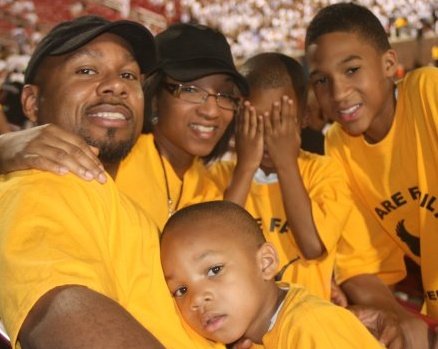
There are times when I remember all the things my 16 yr old and I did when he was younger and how I was involved, present and engaged in his world. Now, since he is becoming a man I must shift. It hurts because I have grown to love him and enjoy his company but he is growing up like we expected he would. Now I am careful to be just as present in my younger sons’ lives. The thought of doing it all over again with them is exhausting. But they need the same amount of time that I gave my oldest.
I was teacher, pastor, coach, mentor, principal and many times playmate. In the time of their lives I find myself trying to be the father that I felt my father should have been. Don’t get me wrong my father was a great provider, fun loving, outgoing, and present. But he was not a good listener, watcher and observer. I have always believed that he should have been more involved than what he was in my life. Now I understand that he was more involved than his father was in his life. His job and the demands of life – i.e.providing for a family, dictated how involved and present he could be. My career choice creates opportunities and possibilities of being actively present and involved in my sons’ lives. That is a blessing!
I recently told my son that I know he is growing up and the boundaries that we have in our house are becoming more noticeable to him. I told him we have these boundaries because as Christian men it’s good to have boundaries and accountability. I shared with him that the time is coming where he will have to set his own boundaries, I will try hard not to tell him what to do and that how I function as a father will change from life overseer to life coach. But it’s not now but soon. I would not have been able to make that statement if I had not done some soul searching to see how best to serve his ever changing needs.
Fatherhood is ironic because while I am fathering my children and helping and directing them in development and and healthy growth; the interaction is developing and growing me. I appreciate the lessons my sons give me everyday.
From Migrations of the Heart
 I’m reading Marita Golden’s autobiography, Migrations of the Heart. Her story is compelling and thoughtful and beautifully written. Can I use beautifully? It’s hard at times and yet still somehow beautiful. Her writing is striking and full and lively.
In this passage, she’s writing about a very powerful loss. Her first pregnancy ended with what her doctor called a spontaneous abortion. Ms. Golden is “taking me to school” in her writing. I’m learning. I’m listening. As she’s talked about her experiences in this autobiography of loving Femi, a Nigerian, and moving into his culture after having lived for years in the US, I’m learning, through her, of what it took for her to adjust. New expectations, new rules, spoken and unspoken. I’m learning of how manhood and womanhood was seen and expressed in her life. I’m learning about being a husband.
At home I recuperated, confined by the doctor, Femi and my own desire to bed. Almost immediately I began to write furiously, with the fervor of a long-awaited eruption. I filled page after page with an outpouring the loss of my child released. The writing affirmed me, anointed me with a sense of purpose. Most of all, it slowly began to dissipate the sense of failure that squatted, a mannerless intruder, inside my spirit. The writing redeemed my talent for creation and, as the days passed, made me whole once again.
In the evenings Bisi came to visit, and for several days under her hand I received a postpartum “native treatment.” Filling the tub with warm water and an assortment of leaves, grasses and herbs, her hands pressed and gently kneaded my stomach in a downward motion. “This will bring out the poisons,” she explained. The water was the color of strong tea and the steam rising from it made me drowsy. Drying me with a towel, she warned, “Tell uncle to let you rest. Let your body heal. Tell him to be patient.”
“I will,” I assured her, “I will.”
Mourning the loss of his child, his son, Femi inhabited the house with me but was dazed with grief. As I ate dinner from a tray in bed one evening, he said, “We lost a man.”
“No, Femi, we lost a child.”
“We lost my son,” he insisted. “And we must find out why this happened. What went wrong, so that it won’t happen again. Next time you will not drive; the roads alone could cause a miscarriage.”
“Femi, the doctor told me that sometimes a weak or defective fetus will spontaneously abort. That perhaps if the child had gone nine months, it may not have been a healthy baby anyway.”
In response he quieted me with a wave of his hand. “We will be more careful next time.”
Open During Under Construction

This is a perfect image for how fathering often feels. I saw it this morning on my way to Target to pick up diapers and milk. I missed the detail that the boy was down to four diapers. His grandmother was in route. I should have gone to the store yesterday, but yesterday had its own long list of things to do for me.
I have this expectation to be a certain kind of a father. I want my son to see me when I’m good, when I’m finished, when the construction that is my spiritual life is complete. And yet that isn’t real. What’s real is that I’m open while I’m wrecked, while I’m worked over, while I’m dusty, while I’m, at worst, even uninhabitable. But that’s what he has, a dad with brokenness. A dad with edges that are far too sharp. A dad who may well have a beautiful plan in front of him. A dad who may one day be a strong, sturdy this or that but who, these days, is a project, a work in progress, a mess on its way to something else.
Fathers Know Best, Interview #1
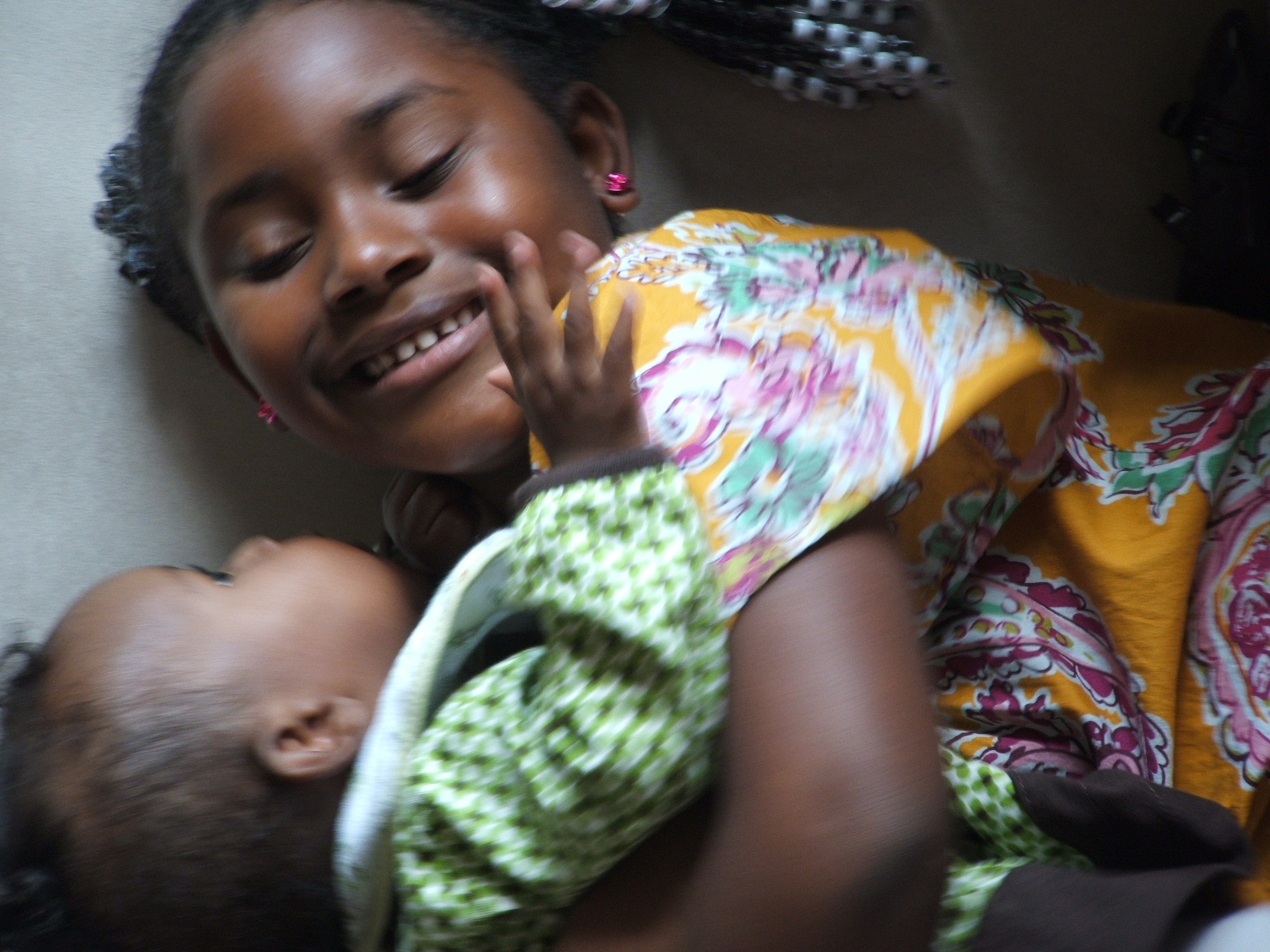 To follow is my interview with Mark Washington. Mark is my brother, and though he isn’t the first father I knew (our dad is), I thought it’d be fun to have him be my first interviewee on the blog. He’s a man of few words. Just like our father. My sense is that Mark’s interview will be the most succinct. Mark’s two daugthers, Laila and London, two out of three of my nieces, are pictured to the left.
FF: Describe your family.
MW: My family are comedians, they always keep me laughing.
FF: How has fatherhood changed you?
MW: Fatherhood has changed me where I’m more giving then I was. It has also taught me that it’s not all about me anymore. My children come first before my needs and wants.
FF: Have you made any mistakes as a dad? If you’re not a liar, name one and talk about what it meant to you.
MW: One of the biggest mistakes that I have made was to start taking Laila to the beauty shop at the age of four. Now she expects it every two weeks. LOL. No, but really sometimes I don’t choose my words carefully and, sooner or later, I hear them echoed around the house.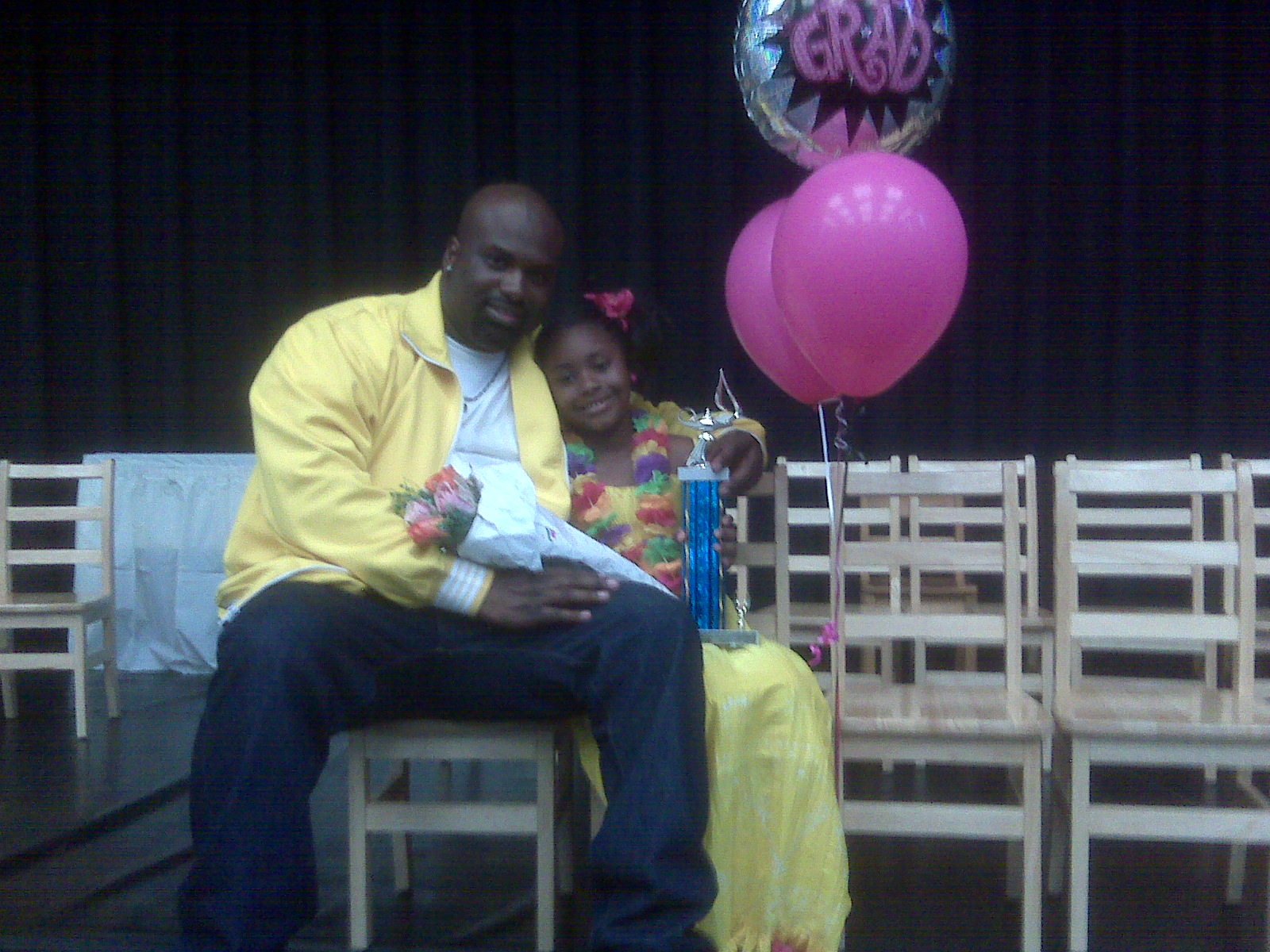
FF: What’s the most helpful advice you heard when you were becoming a father or as you’ve been a father?
MW: The best advice I’ve heard is to enjoy the younger years with them because when they become teenagers, I will start to feel the gap.
FF: How do you attend to your relationship with your children’s mother? It’s changed over time. How so?
MW: Well, we hear each other out, and then we discuss what logic will work. With any relationship it’s all about communication.
FF: What surprises are there along the way for parents? What do you wish you were told to expect?
MW: I can’t really think of one, but my children never cease to amaze me. I mean just when you thought you heard or seen it all, here’s another surprise. And part two of that question is, how expensive they can be. I mean I’ve been told that, but no one ever stressed it! LOL.
FF: What is one recent memory you made with your child?
MW: Last night I was playing shouting music off You Tube and the little one (London) came and got Laila and I. She said “I’m about to shout,” and we all started shouting while holding hands. It was too funny!
I appreciate Mark for his answers. Since this is the beginning of a series–we’ll have a couple interviews per month on the blog–I invite you to participate. If you are a father and would like to be interviewed, or if you know one who would, leave a comment with your email address.
 Michael Washington