
Category / Family
Perfect Inspiration
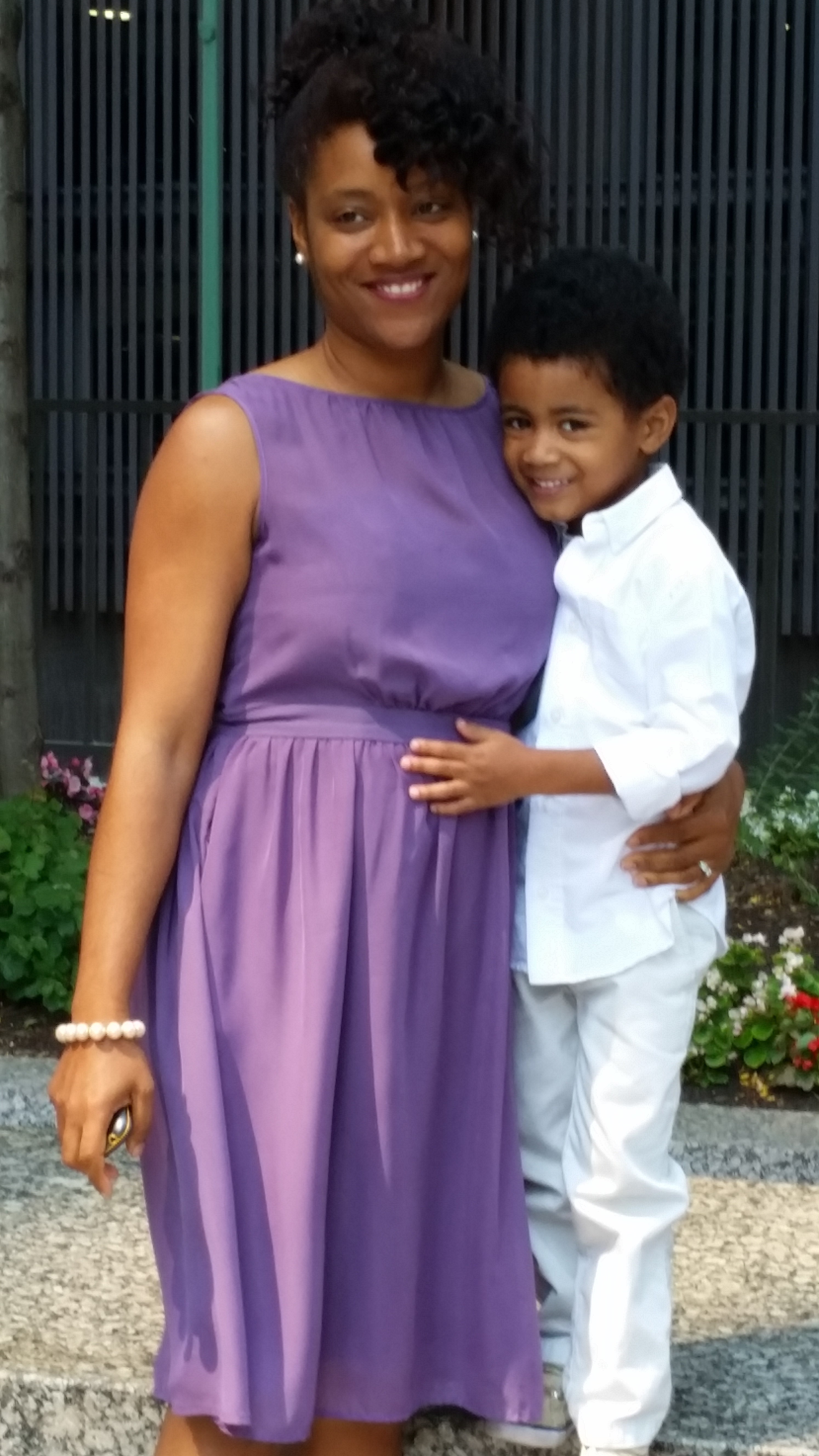
Happy Birthday Britney
My niece is too old for me to remember her age, but I do remember her birth, the only other one I was so close for, when she came through that hospital hall with those patches of blood and smeared lotion that wasn’t lotion.
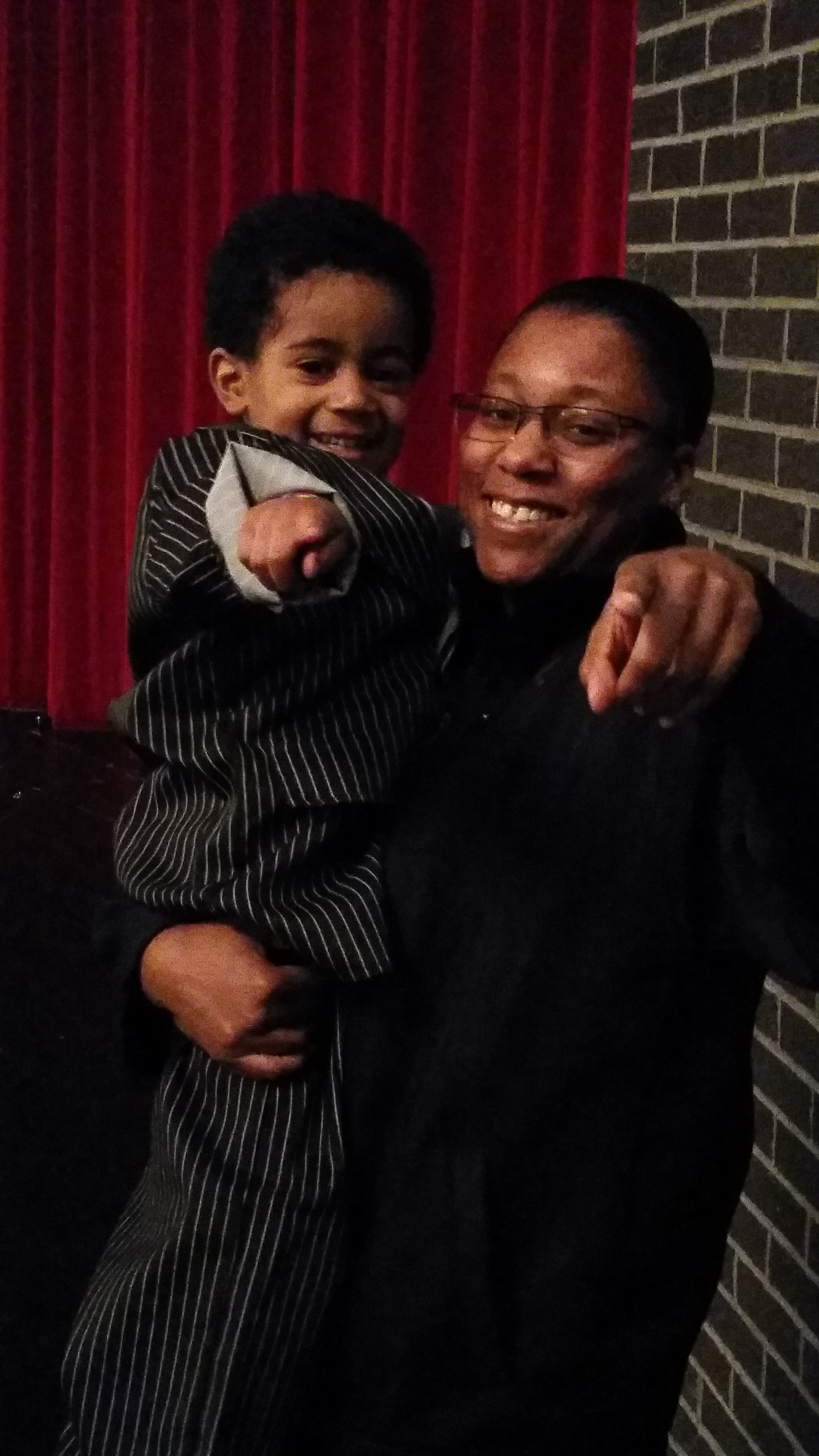
Britney and Bryce at the School Production
Bret Lott on Work, Writing, & Stories
My friend, David Swanson, sent me this video interview John Wilson conducts with Bret Lott. These men talk about work, stories, humility, Flannery O’Connor, and the things that make good writers.
A Memory I Want to Love
You came around the corner groggy and sleepy-eyed, and the image of you made me think of me, because we’re alike when we haven’t finished resting. We’re ready for nothing, especially people and noise and light and whatever else the world is doing without us. We are fine with relinquishing movement to other abnormal souls, at normal hours, as they move about while we find the fleeing dreams and the soft snores.
But there, in Mama’s kitchen, you inched over, making up your mind whether to be happy or intruded upon. I hadn’t seen you in I can’t remember how long. And you gave me a gift, and smiled. The look of it was like a long holiday season.
In front of me was the girl, and you will always fortunately and unfortunately be a girl to me, who had become my niece on an early June day so long ago. And just like that you had become a grown woman.
And you joined us in our kitchen conversation: me, Mama, and you. It was a gift that I want to keep, a memory I want to love.
My Fear of Losing You
To My Mothers In Particular
I haven’t really celebrated Mother’s Day on the Sunday everybody said I should for a few years. Even though I’ve purchased things for my son so he could learn the habit of celebrating his mother, of praising her for her sheer wonder and generosity and life. Sundays, because of my work, usually mean that my attention cannot be spent on my mom and my godmother. So I appoint time to do that around the holiday.
And, in truth, I have acknowledged the day by trying to reach them and a few of the other mothers in my life, the women who have birthed something like love in me, because they have changed me, and I call or contact or think about them because I cannot forget them. Plus, I’m one of those people who hate to do things on holidays. I’m fond of a consistent love ethic. If my mama doesn’t know I love her every month, there’s nothing unique about May.
Still, I’m thinking about women in general and about my mothers in particular. Of course, my mama stands in a class that’s lonely for the esteem I give her. As I read this week, we are all only given one. But I’ve been blessed with many mothers: The amazing women who have given me something, who have let me see their lives, who have taught me, and who have given of themselves until I realize what it means to be large and full and generous and kind.
So I want to write in memory of you, women and you, mothers of mine. You know who you are.
I write to thank you…
For visiting me those six weeks after my birth, saying things to me to make me eat even though the doctors were unconvincing and for your taking me home a day or two before Christmas and making all my childhood Christmases special.
For saving me from drowning that day in the Lake and for always being a fierce protector (and more than a sister) since then.
For making me do my homework, for expecting me to accomplish, and for being gentle while I did it, all because you knew what was ahead and because you saw a splendid future.
For reading to me until I learned to love the sound of a woman’s voice more than I loved the music down in my soul, until I knew how to learn, and so that I could become a reader and lover of learning and giver of truth and knowledge.
For teaching me to get receipts when I purchased things from the corner store because young black men couldn’t assume the privilege of walking out of those doors while drinking a pop in the city of Chicago.
For cooking for me, for washing my clothes, for wiping my head with a cool clothe or picking me up when I fainted those two times before school and that one time on the kitchen floor when I was home from college. You brought me back to life more times than I can recall; you showed me how to slow down when I moved.
For showing me how to kiss and hug and hold and stare and smile because each of those tender gestures was both an expression and an ingredient of love.
For singing to me, for letting me sing to you, and for the appreciation you created in me for doing something wonderful for God and not only for myself.
For telling me stories, yours, mine, and other peoples until I could begin to scratch at the magic of making lives out of words and images from lines that snapped.
For making it normal in my mind to be kind, normal to take care of people who had no place to live, normal to feed everybody when you had the money, and when you didn’t.
For showing me how to pray and ask God for things that I wanted and for things that other people wanted and for being a consistent, gracious instructor in the ways of Mystery. I probably can’t give a higher compliment.
For the bad choices you made, the ones you didn’t hide from me, even if we didn’t talk about them because they made me see that as musical and seamless and spotless as you appeared when you made life happen, you were still human too.
For telling me things I really needed to hear about myself, for keeping some things I thought I needed to hear to yourself, and for giving me space—even too much at times—to get it together.
For forgiving me for not writing more in this remembrance.
It’s Her Birthday

Dawn, the Birthday Girl
Wouldn’t Quite Call This A Reflection
It is debilitating to read or hear about another murdered child, another known and unknown murderer, another set of families who have forever been changed by tragedy, another lukewarm, if present, response by various onlookers, be they leaders or church people or neighbors or strangers.
There are surely words to say, aches to verbalize, phrases to pray. And then there is the throat-grabbing shock of violence, that first, almost innocent, feeling that’s snatched away a little at a time when a child’s life is taken. Every life matters. Every person is honorable. And yet there is something gross and unshapely when a child’s life is taken. Whether or not we stop and pay attention. Whether the story goes unreported or shared. Whether people come near those families and remind them how real it is that things, in a way, will never get better for them.
The fantastic, appalling nature of the murder of a child sinks in deeper and deeper, and it makes you question substantial things.
I don’t intend this to be trite at all. If anything, I’m contextualizing my question with the above-mentioned call for silence. Still, my question for you: Does your faith or faith tradition say anything about such things?
At Least 10,000 Words Are Behind This
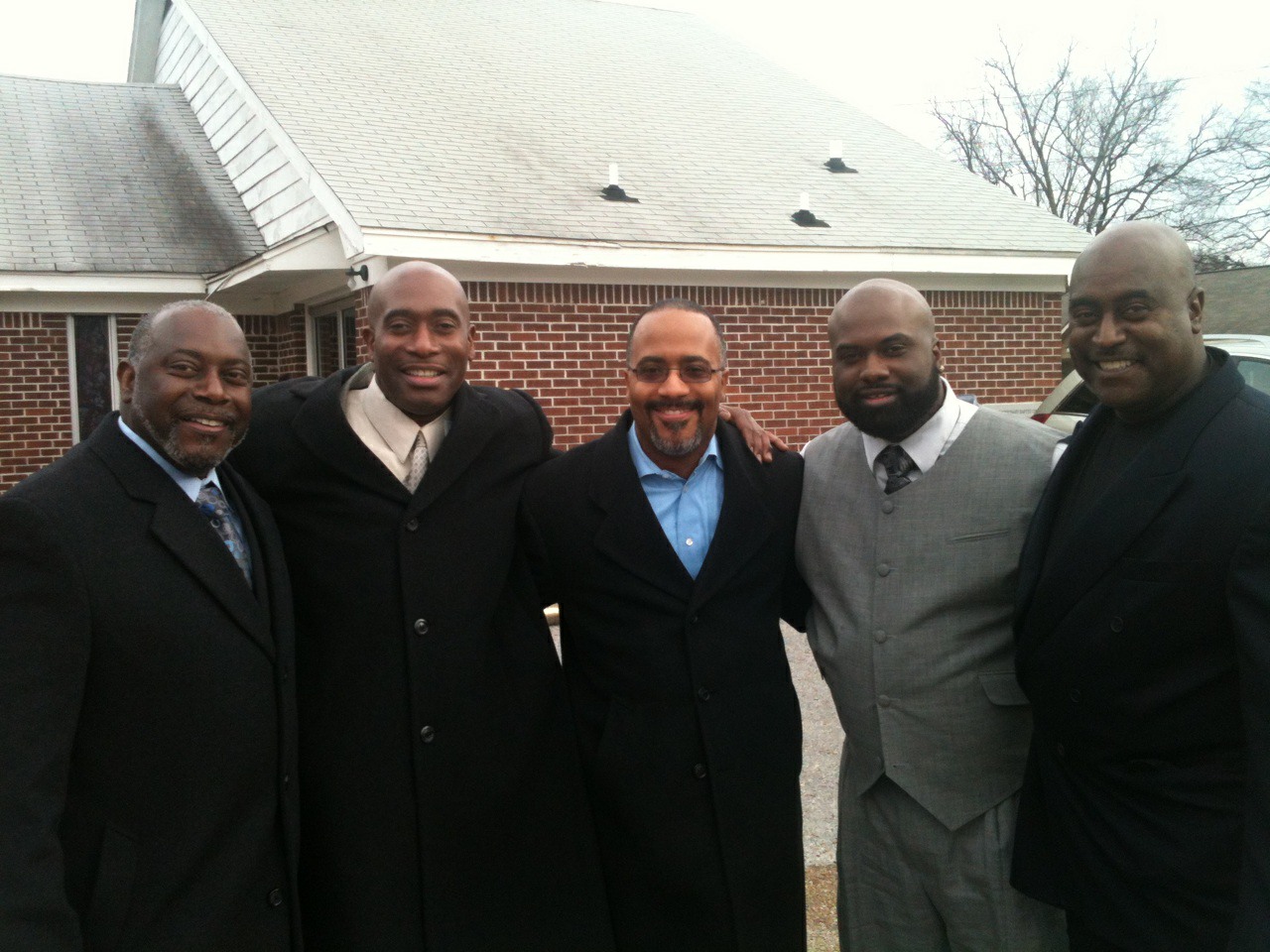
Mardell Culley’s Sons
I Didn’t Realize He Was Leaving
On Wednesday evening, December 26, I was sitting next to Dawn and in front of Bryce in the B concourse of Midway airport. We had successfully pressed through the security checkpoint, rearranged our clothes and shoes, and walked to our gate to wait for an hour before boarding a plane. Bryce was eyeing some passenger’s ice cream, whispering to me about wanting some. I told him to wait, to let me get settled. I told him I had just sat down. I told him to stop looking at the woman’s ice cream like that because he was scaring me and probably scaring her.
We were heading to Charlotte, North Carolina ultimately to complete our annual time with Grammie Joseph. It would be a week where we would see the Gant museum, walk through the botanical gardens in Belmont, eat at Captain Steve’s, talk a lot, catch up, do nothing. My aunt, Lynnie, called me while we were waiting to board. I have a rule when certain people call my phone: I always answer. I do not observe this rule for most people. I’m a pastor so I cannot. I meet with people and they say things to me, and when they say these things, it makes a lot of sense for me to stop the rest of the world as those people present their worlds to me. So I’m “present” with them as they talk. I ignore the phone. I don’t hear rings in those moments. But I make exceptions. When my aunt calls, because my father has been in the nursing home in her city, I take her call, even if I need to ask if I can call right back.
As she always does, she asked me how I was. There was static in the line. Perhaps it wasn’t static. Do cell towers allow for static? It was choppy. Whatever the interference, I couldn’t quite hear her clearly. Some voice was droning about a passenger whose flight was leaving or some gate change. There was Bryce switching to his mother and asking her for ice cream. He’s been doing that more and more: shifting to her when I don’t answer the way he thinks I should.
Aunt Lynnie asked if I had gotten her message. I pulled my phone from my ear and looked at it as if to ask it if it had rung without my hearing it. Perhaps it sang while we were in the cab with the preacher cab driver who I talked theology with on the way to the airport. “No,” I told her, “I didn’t.” Then I thought—as she let out a long “Well,”—perhaps she called the house. I heard her “Welling” and I had a flash of some indication of what was to come. It was something spiritual, like and unlike the Welling in the black church, when people sometimes rock while they hear the preacher. They say “Well” as they listen, and something about the “Well” makes what they hear stick. My aunt’s well was different; she was stalling just for a moment, and auntie, in my experience, didn’t stall. She breathed and she said it, quickly and clearly, without interference from cell towers or airport clutter. My dad had passed an hour or so before that moment.
They were just arriving to the nursing home; the snow had prevented them from getting there sooner. I knew Little Rock didn’t get snow. I imagined my three Little Rock aunts, wrapped in coats, looking as lovely as always, dressed in care and concern and love and something familiar. They were there, three of my father’s sisters, a group of faithful friends to him, and he was dead. I asked her to repeat herself. Actually, I said, “What?” I had heard her, but something in me got very cliche in that moment. Or something in me needed to hear again. Dawn heard me and she knew. She had been down a path like this one when her father was snatched over six months after his stroke two years ago. I felt Dawn turn to me. I saw her take Bryce by the hand. I was really surprised at that simple sentence from my aunt. I wanted to turn to Dawn; I wanted to turn away.
I had just seen him. This was my first thought: I had just seen him. One week ago at the hospital in Searcy. He hugged me twice. I held him, walked with him. I showed him pictures, something, I realize now, I did often on my trips to see him. My second thought was: I just talked to him. It was on Christmas Eve, two days before. His voice was bright, brighter than usual even. he talked to Bryce, asked about Dawn. I thought he was getting better. I didn’t realize he was leaving.
Dear Dementia
I didn’t believe it was you when I first saw the signs. The missed memories were small, so slight they were unnoticed. I forget. I get agitated. I make mistakes, lose things, get mixed. I was like everyone else who loved: I wanted more.
I began what is still the dismal existence of a loved one struggling with you and your fingers wrapping and stealing things from my father. I started to look at all those yesterdays, fading in my own memory, and I grabbed for them. I called them back the way a grandparent calls for their only child’s offspring when, because of intuition, they know that was the last visit. The rides in my dad’s white van and then the brown van. There was a black van too, I think. I sniffed for the smell of worms and dirt when we went fishing, when I was so small I felt nothing but incompetence because I couldn’t do what my father found so easy. I listened to the sound of his laughter, not just his laughter, but the way it sang like a Delta blues man. I looked at the crinkle that was his smile. I wanted that grin to be mine.
You pulled me from my memories. Reminded me that you hadn’t won yet. That yours was a most sinister work because no one knew, and no one knows, when your job would be done with my dad’s brain and body. You shouted in the tone that was once was my dad’s. It was his voice, and it wasn’t. And the reality of my life—the lives of my brothers, the lives of our aunts and our extended loved ones—is that you and dad are dancing. And his feet are clipping and stumbling under what was once his best song.
You gave him pain and depression at what he can no longer command. You made him mad at everybody and nobody. You snatched his ability to attend to the mundane affairs of bills and greetings and polite conversations. You made him unpredictable so that he couldn’t travel, so that he couldn’t go home and live on his own and be alone.
I hate you. You’ve taken so much and you’re not even finished. You have hardly done to me, to us, what I know you’ve done to others. But know that I’m not alone in seeing your memory-soaked hand clenching and withdrawing from the collective worlds which have been ours. I hear the prayers of my friends in my ears.
Roland and the way his hand pressed into my shoulder just yesterday, the words he prayed, the faith he had for me, even though today’s conversation with dad tried hard to erase my faith and my friend’s. Libby and her careful way of saying just enough to express a deep understanding, a selective and prophetic care, and how she brings a prayerfulness whenever she approaches. Lisa’s powerful prayers that the ground I’m on is sure and steady and the way she keeps praying, the mirror she is to people I see and don’t see. Lauren’s steady gaze when she asks me respectfully and compassionately how I’m really doing and dealing with the junk you’ve thrown at us. Byron and his admonition to take care of myself, to do what I need, to care for me so that I’m not surprised by my own breaks and broken places. Lucy and the regular ways she brings me before the Presence, keeps me there, helps me see me and see truth and prepare to live from more than pain but love. Winston, his faithfulness and his ability, through history, presentness, and vision for what’s to come, and how he keeps at the work of partnering with God to help make me good through the terror of unknown trials related to you.
Your hand is hard. But I do not envy you. Because you, partner of all that is sinful, will have a lot of giving to do. Diseases like you must hold the things you take and you must return them. So, my faith, sometimes thin as cracking leaves at autumn’s end, feels tiny. And even if it disappears to an invisible quality, it will not leave. It will not depart. You cannot take it from me. You cannot steal it the way you have my father’s best qualities. You cannot leave in faith’s place depression and sadness the way my father struggles now, even without the words to give to his interiority. I’m looking at the collective faith of an increasing cloud of witnesses, and while your reach is long, it cannot capture all my friend’s strengths. There are some things you cannot do.
 Michael Washington