Unknown's avatar

Posts by Michael

I am a husband, father, minister, and writer.

Top 10 Cities for Bookbuyers

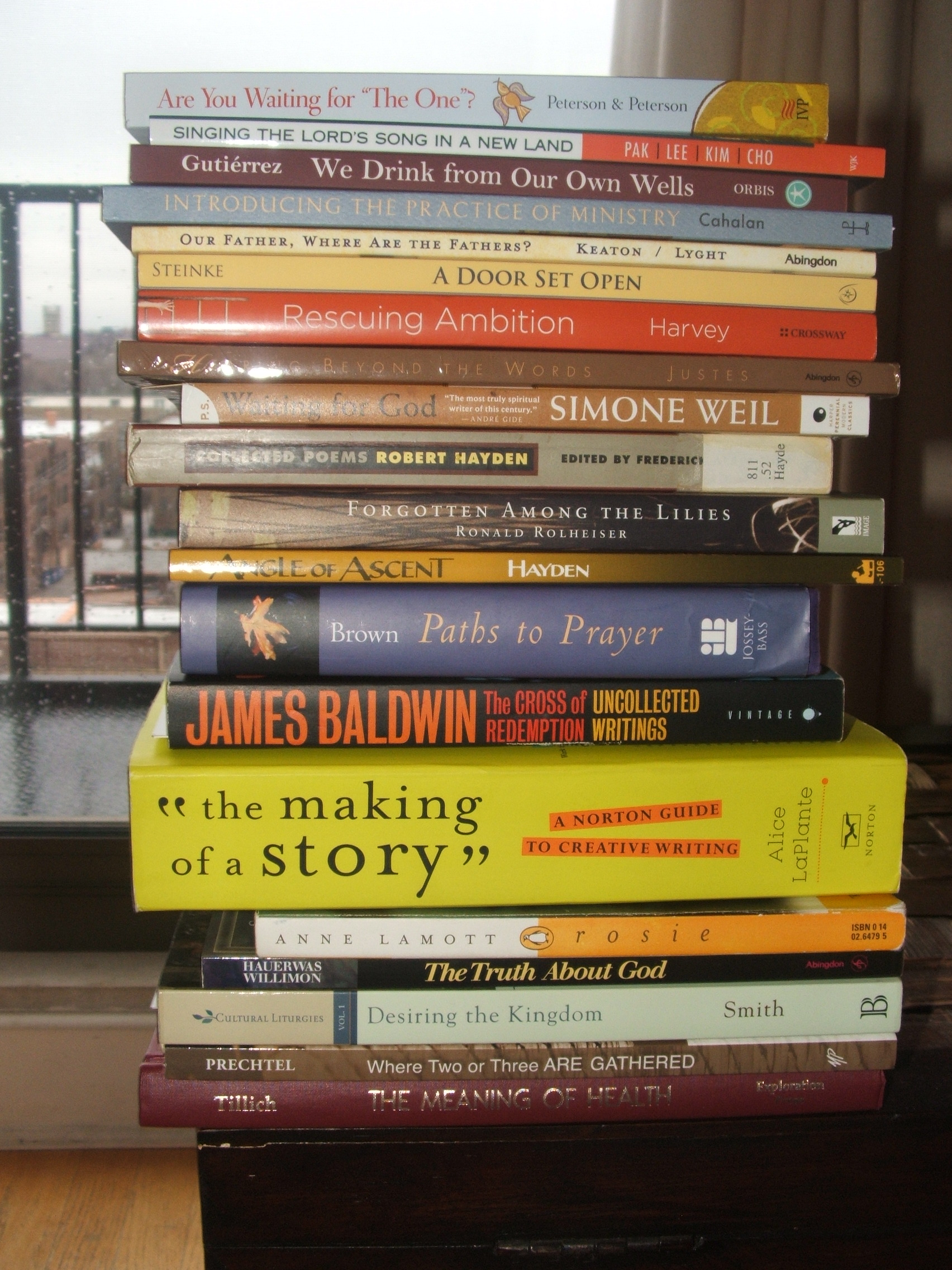
TBR Pile #1

TBR Pile #1

Livability’s top ten cities for book lovers…Have you ever read such a wonderful list?  They rank cities based upon the presence of independent bookstores, support of those books, and a few other factors.  Most the cities were surprises to me, in a refreshing way.

Even if your favorite city for books isn’t on it, the idea is compelling.  It may be worth compiling your own list.  What would be on it?  Or, if there’s traveling in your future, perhaps you can choose one of these places.  I think it’s worth doing, planning travel around the love  of reading and purchasing books.

As for this list, I’m partial to their number one city, the city of roses.  I fell in love with Portland as a place, at least, to visit when I went to the Rose Garden and Powells in the same day.  And Jake’s Grill only sealed the deal.

Validation, Human Desire, & Criticism

I saw part of this originally in a post by Rachel Held Evans.  Then I went back to the original post and found more to quote.

Validation is an interesting thing though, and no matter how strong or unphased by criticism we are, there is an undeniable human desire to have people like what we feel passionate about–our art, our words, our stories, our styles, our writing, our opinions.  It’s why we sometimes feel hesitant to publish or share.  What will people think?  

Let me answer that.  If you share, if you publish, if you write, if you speak, if you are brave and decide to put yourself out there, I promise you, someone won’t like it.  Someone won’t agree with you.  Someone will misinterpret.  Someone will think that you are silly, unqualified and that your work is crap.  That you are crap.  They might not just think it but they might tell you.  And that won’t feel good, especially not the first time you hear it.  But it is necessary.  And it’s okay.

My friend Melina is a fabulous writer.  She lives an adventurous life and writes riveting accounts of her excursions.  She is funny and witty and brave in her writing.  Sometimes I read her stories and think “I want to write like that.”  Her blog readership has understandably increased the last year and I wasn’t surprised when I recently received an e-mail from her–sister’s first really really nasty comment. Girlfriend took a punch to the gut, and I’m not going to lie–it was a doozy.  The commenter went for the jugular and beyond.  In summary, the comment wasted a lot of needless words to say “You. Are. Crap.”  And Melina’s e-mail to me went something like “I am shaking, I am pissed, I am processing this.”  And I shook my head and smiled and thought, “I get it, I get it, I get it.”  I promised her that she would grow confidence and understanding faster than a Chia Pet grows sprouts–that it was good and normal she felt this way and that this whole experience would help her own her words, her style, her work and be proud of it.  I told her that the hurtful words shared had nothing to do with Melina and everything to do with this commenter’s pain or insecurities or desire to do what Melina is doing.  Within two days, Melina was on a roll again.  Wrote a hilarious piece in response to that hurtful criticism and then moved on…fiercely.  She’s more confident in her writing–I can tell.

For me, receiving negative criticism has been an important tool in self awareness and owning my voice.  I’ve gone from believing what mean comments pointed out (I am a horrible person and I suck at writing), getting angry with the people who wrote them (You are a horrible person and you suck at leaving comments) and doubting if writing publicly was really something I wanted to do to a completely different place of understanding and compassion–both for myself and the people who are hurting enough to project it in a carefully crafted you-are-crapcomment.  I have a dear friend who has helped me with this.  She talks about pain–how we are all hurting–and she helps me see nastiness in the world as the need for more love.  Does that sound unicornish?  Maybe, but it has helped me move forward and embrace cutting comments both in and outside of this little Internet, as an opportunity to initiate more kindness.  We’ve all been there–the hurting one.

Read the full post by Kelle Hampton here.

A Sentence of Unsolicited Advice

Make a list of people, places, and things you’re grateful for, giving yourself time, room, and imagination for that list, and I’m convinced you’ll find yourself writing heavier things, more memorable but easily forgotten places, and more significant people than those long, dreaded names which burden you.

Cornelius Eady’s Travelin’ Shoes

It’s something how poetry—and literature in general—can touch your reality with words that feel so much like your own.  I read this poem by Cornelius Eady last night and thought it an appropriate, almost exact, reflection of life right now.  It’s called “Travelin’ Shoes.”

And at last, I get the phone call.  The blues rolls into

my sleepy ears at five A.M., a dry, official voice from

my father’s hospital.  A question, a few quick facts,

and my daddy’s lying upstate on the coolin’ floor.

Death, it seems, was kinder to him in his last hour

than life was in his last four months.

Death, who pulls him to a low ebb, then slowly

floods over his wrecked body like a lover.

Cardio-vascular collapse, the polite voice is telling

me, but later my cousin tells me, he arrives on the

ward before they shut my father’s eyes and mouth to

see the joy still resting on his face from the moment

my daddy finally split his misery open.

Things My Son Did This Week

I haven’t written about the boy in a while.  Here’s a selective summary of the acts and gestures I’m recalling from the last 7 days:

  • Bryce took his first plane trip.  We ended up flying on four planes, to and from Raleigh and to and from Little Rock, and the boy did okay—mostly.
  • Bryce played with a dog, ran up and down stairs carrying everything from luggage to glasses and toys—by himself—and basically slept half the time he’s used to, which, for the record, made me crazy.
  • He got a lot of love in the form of hugs and kisses from Grammie Joseph, from his Grandma, his uncles, and too many relatives to name.  I hope this week stands up in his memory as full of nothing but long love and tight embraces.
  • He proved that Thomas is still more popular than I am, as Bryce played with Thomas, talked to Thomas, and introduced everybody he met to (something about) Thomas.  I’ve not heard another person’s name in a week more than I’ve heard Thomas’s name.
  • Bryce ran away from his mother and a group of family members outside of a restaurant, while I was off getting the car, along the side of a building, surrounded by mostly parked cars, until a nephew I just met ran after to catch him.  Ask Bryce if you want to know how I responded…
  • Bryce ran away inside a restaurant one day after the above while I, again, was off to get the car.  Ask Bryce how his mommy responded…
  • He continued his fascination with fire trucks, police cars, and ambulances.  Those words and their obvious siren sounds were the soundtracks of our conversations.
  • Bryce maintained his favorite word, “No,” and substituted it only for his favorite response, “Why?” until I came up with my own favorite responses to his why: Who, What, Where, When, How—in no particular order, which silenced him.
  • Bryce played drums on a table, with straws for sticks, at B.B. King’s restaurant on Beale Street and was called out by the band, a comment he paid no attention to.  He was in it for the music alone.
  • He went off when Dawn turned off the Thomas video and couldn’t understand or even hear my explanation about the FAA and its rules for landings.  He stopped crying after the whole plane woke to his screaming, “Thomas, I want my Thomas,” and after his mom kept comforting him, while his aunt was handing me a picture book and after his grandma sent over a lollipop tree.
  • Bryce said goodbye to Pawpaw when I picked him up, explained in two sentences what he was about to see in my father’s stiff remains, and said he too wanted to be with JesusPop and Bryce in 2011

Reflection on Resurrection & Mardell Culley, Sr.

I think that sermons are oral documents, best heard and not read, but as a memory for myself and an invitation to you, I’m posting the notes of my eulogy for my father.  I preached it yesterday, and while it doesn’t include necessary spontaneous elements which come from being in the preaching moment, I did stay close to my notes.

I often say in situations like this that there are, at least, two aspects to a eulogy: one that looks backward and one that looks ahead.  The backward part turns our vision to yesterday, and we remember what we’ve lived and felt and experienced from the deceased.  We reflect on things.  We laugh at jokes.  We tear up because of tender moments that nobody else shared but us and the dead person.

Alexander Maclaren, a late 19th century preacher, said, “Most men have to die before their true beauty is discerned.”  That true beauty is often seen and reflected in the stories we tell about those men.  Perhaps also in the stories we don’t tell.  There are things worth saying about my father, Mardell Culley, Sr.  Some of them have been said, some only considered.  I’ve thought of my time with pop.  You’ve probably thought of your time with him, as a friend, a brother, a neighbor.  Like me, you know him as an usher in the church, as a relative, as a man who drank a beer occasionally—as a man who drank too many beers occasionally.  But as helpful as it may be, I don’t want to dwell in that backward glance today.  I want to sit with that second part of the eulogy, the part that turns our gaze ahead.  And to focus our collective vision, I want to do what anchors me as a Christian: to see scripture.

The passage in John is about Jesus after he’s been told of his friend Lazarus’s death.  Jesus was with his disciples when he received the news.  He delayed their leaving to go and see about Lazarus’s remains and the sister friends, Mary and Martha who were grieving.  The passage has Jesus turning his soul inward before he travels on the road to Bethany.  The Bible says that Jesus did what all of us do when we love, wept for a friend.  Have you ever wept?  Maybe you didn’t shed tears but your heart ached in your own way—you wept.  Over your children, at a loved one’s descent into addiction, while confused, or something else…  If you love, you will weep.

JOHN 11:44 says, The man who had died came out, his hands and feet bound with linen strips, and his face wrapped with a cloth. Jesus said to them, “Unbind him, and let him go.”

There is more detail before this ministry of Jesus.  There are questions raised, answers given, prayers offered.  And then Jesus calls for the dead man.  I read that this passage about what Jesus does for Lazarus is a confirmation and a promise.  Jesus miraculously resuscitates Lazarus.  He comes out of the grave and is unwrapped so that he lives, so that he has more time on this side of eternity.  In doing this, the Lord shows us a picture of his own future.  We get a slice of what Jesus himself will experience—death and power over death.  Now, Lazarus eventually dies again.  Jesus, though, readies us as readers and listeners for what is to come: resurrected life.  Jesus will rise from the grave by God’s own power, and this passage readies us for such an event.  It prepares us for our own deaths in light of the resurrection.  It is a confirmation and a promise.  When Lazarus rises in this passage, we hear scripture telling us that what happened to him, in preliminary form, is a foretaste of what will come for all people in complete form.

As I prepared for today, I wanted to tell you something about my father, something from my experience of him, which is different from my brothers, from my aunts, from Mr. Robert Bell.  I’ve made lists in my head of things that I’ve recalled about daddy.

I’ve thought about things that he told me, things I’ve seen him do, lessons I believe I’m learning from him.  But rather than go into that, I thought of something more meaningful, at least, in my opinion, and the most meaningful thing I can tell you about my father is that he is loved by God.  That’s a deceptively simple thing to say, but I think it’s the most important thing I can tell you about Mardell Culley, Sr.: He is loved by God.  He is loved by God.  He is loved by God.  He is loved by God.  He is loved by God.

There are surely other things to say, and then again, there really isn’t more beyond this in my mind, perhaps other than the fact that my father knew he was so loved.  Yes, pop was a man with pain and memory and hurt and disease.  Yes, pop was wrestled in the mind by slow, ravaging dementia, unsettled by strokes and a failing brain.  Pop was angry from a loss of independence, from not being able to drive where he wanted, when he wanted.  Yes, pop was a stubborn man, a man spoiled by people, chiefly his sisters as far as I can tell; a man with a grin so infectious it could make you grin whether you wanted to or not.  There are other things to say, but atop that list for me today is that pop is loved by God.  Not some version of my father but him.  The man who got angrier as his frustrations grew.  That man is loved by God.  The man who couldn’t remember that you had been there moments after you left his room.  That man is loved by God.  The man who yelled and didn’t take his medicine even though he was usually mild-mannered.  That man is loved by God.  The man who wasn’t a perfect father to any of his sons, who wasn’t a perfect brother or a perfect friend.  That man is loved by God.

I tell you that like Lazarus in the gospel and like Mardell Culley who lived his last days in a nursing home completely against his best will—like these men who are loved by God—you and I are also loved.  Lazarus and my father, men who reflect a truth that is so large it’s incredible, are mirrors for us today: we, as we are, sit loved by God.  We, imperfect as we are, are perfectly acceptable to God.  We, with our bruises and our egos and our faults, are wanted and desired so by God that Jesus comes to us and offers a splendid future where resurrection is normal.

Resurrected life, in part, means life where God is immediately present.  I cannot imagine all that it means, but living on that other side of breath has to mean living in response to the limitless freedom that comes with no pain and only love.  What would that be for you?  Would it be a meeting with some family member who has died?  Would your resurrected life look like lowered blood pressure or stronger legs so that you could walk or run or leap as long as you want?  Would resurrected life mean courage and the absence of fear?  Would it mean that you could rest without having so many things to do?  These words in John’s gospel pull us to embody what it means for God to be immediate and present.  That’s our invitation today.

Among my last words to my father was a prayer.  I asked him at the acute care hospital in Searcy whether I could pray with him.  He bowed his head, tipping the white rain cap he was wearing.  He was fond of those hats—hats in general.  He had a large leather hat that was probably as old as me, but in this case, he wore a white hat with a thin blue stripe.  When he turned to bow, I took his thin, frail arm and bowed my head.  He prayed with me, for what I think was the first time, if I don’t get count thanksgiving for a meal.

When I last spoke with pop, it was days later, Monday, Christmas Eve.  Aunt Lynnie called while she at the nursing home and gave daddy the phone.  We talked briefly—him asking about Bryce and Dawn, me asking about him and if he’d gotten adjusted to being back at Robinson Nursing Home.  Aunt Mose was coming into the room while we were on the phone.  There was a lift in my father’s voice.  He wasn’t moaning or whispering.  He wasn’t muttering the way he often had when he was upset or ready for you to leave his company.  I thought he was getting better.  I didn’t know he was leaving.  I didn’t know at the time that his was the tone of a man getting ready to respond to the immediate presence of God.  I’d like to think that my father’s favorite holidays were the ones where he bought some of us gifts.  But Daddy would celebrate Christmas thinking of Jesus who he would soon see.  My father had his best Christmas ever this year.  Even with the lack of an appetite.  Even with the chest pains which caused our final alarms.  Daddy knew Tuesday and Wednesday that he was going the way his brothers had gone, the way Lazarus had gone.  He would see the Lord, the giver of Life.  Mardell Culley got the confirmation and the promise.

Pray with me: Oh, God who gives resurrected life, thank you for the chance to know my father, the opportunities to love him and be loved by him.  Thank you for every person who showed him kindness, who aided him in recovering and healing.  Thank you for his sisters, these beautiful women who have suffered all these times in closing the coffins of their brothers and for how you have sustained them under such grief.  Thank you for my brothers and our relatives who have all had our own unique relationships with my father and for how you have blessed us with memories to cherish.  Now, Lord, give us unwavering faith, as we leave this place, even if that faith is thin or frail or hardly visible.  Grant that we may see the true beauty of this beloved man, and grant that we may discern the true beauty of his savior.  Open our eyes to the wonder of every possibility that comes with life in you.  Keep company with us from this day on so that we might live as if death will, indeed, come for us.  Convince us of your promises to us and confirm your love for us as people who can only accept your unconditional love.  We ask these things in the name of the One who beat death and whose victory changed everything, Jesus.  Amen.
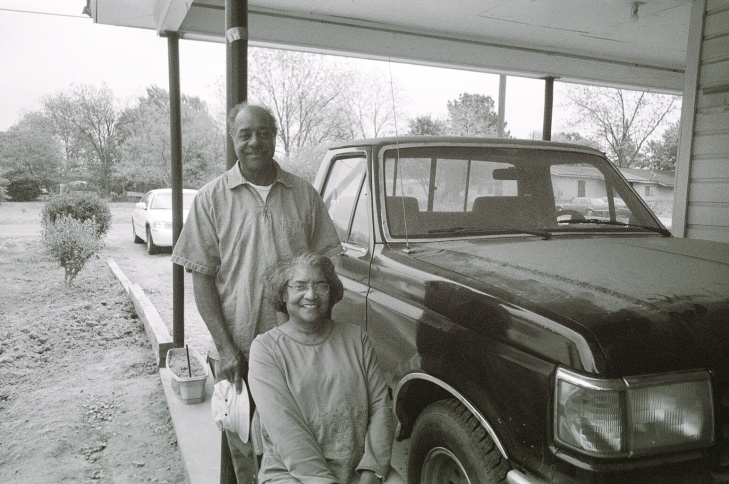
My Dad with his sister, auntie Lynnie a few years ago

My Dad with his sister, auntie Lynnie a few years ago
The Breath Prayer I’m Praying at Pop’s Funeral

These are the words I’m breathing today as we celebrate, remember, grieve further, and hear the good news.  They come from John 11, the scene where a weeping Jesus raises a dead friend.

Did I not tell you that if you believed you would see the glory of God?

I’m breathing and praying that last phrase, that God would help me see the glory, help me spot the splendor, notice the Presence.  Pick one of those phrases and pray it for yourself.  We’ll pray together today.

My 2012 WordPress Review

The WordPress.com stats helper monkeys prepared a 2012 annual report for this blog.  Take a look at the review.  Thank you for reading this blog and commenting if you have.  I hope you continue to participate next year.  Happy New Year.

Here’s an excerpt:

600 people reached the top of Mt. Everest in 2012. This blog got about 3,200 views in 2012. If every person who reached the top of Mt. Everest viewed this blog, it would have taken 5 years to get that many views.

Click here to see the complete report.

My WordPress 2012 Review

The WordPress.com stats helper monkeys prepared a 2012 annual report for this blog.  Thank you for reading it, commenting if you have, and I hope you’ll continue to visit next year.  Happy New Year.

Here’s an excerpt:

600 people reached the top of Mt. Everest in 2012. This blog got about 6,000 views in 2012. If every person who reached the top of Mt. Everest viewed this blog, it would have taken 10 years to get that many views.

Click here to see the complete report.

Dear Pop

I’m not the guy to talk to dead people.  Even when I serve grieving families, I flinch when they start addressing the departed as if they are there.  As I sit or stand in that setting, I say in my head that they are there but that the opportunity before us is to speak first to those who are physically present.

I write that because I need to define this post as an exercise in theological and personal stretching.  It may just be altogether imaginative.  After all, nothing about my framework thinks that you read my blog.  I’m writing as if you’re reading.  I wish you were.

Nonetheless, I’m looking at the next days.  One of them includes your funeral and your burial and words I’m to say over you as a eulogist.  I’m not looking forward to that day.  It’s ahead of me, but I’m not looking forward to it.

Because it means what it always means in situations like this: it means goodbye.  I have never been good at goodbye.  I leave people’s houses without saying it.  I simply walk out.  I figure, they’ll realize I’m gone.  I make little deals out of such departures.  But your goodbye is different.  This funeral is not like the others I’ve been to.  And I’ve been to so many.  I’ve stood at dozens of caskets, dressed in my uniform, and walked people through those dismal moments that are rushing up in my head and keeping me up late at night and making me search through my memory like a catalog so I don’t forget some important memory, some something you said.  I already feel crippled by shock, sad that I can’t remember every single thing.

I tell myself to sleep and that, like mama told me on the phone Friday, I need to rest.  I tell myself to hope.  I tell myself all these good things people have written in emails to me or on a text message.  I remember the people who have left me voice mail messages.  I smile, genuinely thankful.

And then I tell myself to rejoice that your suffering is over.  That you aren’t struggling to stand up and keep your balance or fighting with a nurse because you’ve lost something fundamental to you, independence.  I tell myself that you won’t have some strange, repetitive flash of a memory that I can’t understand because I wasn’t there to live through it with you.  I tell myself that you are resting in an essential way, that you are experiencing something splendid, if my faith is true, even if I cannot give adequate justice to what that life is now.

I tell these things to myself and some hole still persists.  Dark and wide, the gap takes my feet into it, and I feel like I’m slipping again.  I hear you smiling, hear you because of the lift in your voice when you really smiled; it was a personal song to something you laughed at.  It’s a song I loved.  I keep thinking about your nose and unshaven face and how at certain moments in my life, I can really see you in my mirror.  How you shaved twice a week after you retired and always on Saturday night before church on Sunday.  I tell myself that Magic Shave on shelves in Walgreens will never look the same to me because you used Magic Shave.

I won’t write you these letters regularly.  And when I do, I’ll put them in my moleskin.  But I’m writing this one to get started, to look ahead but not exactly forward, to find some courage to train my head and heart for the other words I have to say; these are some of the ones that may not make it to the eulogy.  That assignment is clear enough for me.  It’s not my forum to express these things; not exactly anyway.  I won’t have enough time to write those words well; I’ll stick to that message which is at my core, and it will be the proclamation of the day.

But this is the start of the rambling that comes when the man I love has died.  This is scattered set of sayings I wish I could say to you, even though I’ve said them to you.  This is my first letter to repeat the things I hope and trust you know.

I Didn’t Realize He Was Leaving

On Wednesday evening, December 26, I was sitting next to Dawn and in front of Bryce in the B concourse of Midway airport.  We had successfully pressed through the security checkpoint, rearranged our clothes and shoes, and walked to our gate to wait for an hour before boarding a plane.  Bryce was eyeing some passenger’s ice cream, whispering to me about wanting some.  I told him to wait, to let me get settled.  I told him I had just sat down.  I told him to stop looking at the woman’s ice cream like that because he was scaring me and probably scaring her.

We were heading to Charlotte, North Carolina ultimately to complete our annual time with Grammie Joseph.  It would be a week where we would see the Gant museum, walk through the botanical gardens in Belmont, eat at Captain Steve’s, talk a lot, catch up, do nothing.  My aunt, Lynnie, called me while we were waiting to board.  I have a rule when certain people call my phone: I always answer.  I do not observe this rule for most people.  I’m a pastor so I cannot.  I meet with people and they say things to me, and when they say these things, it makes a lot of sense for me to stop the rest of the world as those people present their worlds to me.  So I’m “present” with them as they talk.  I ignore the phone.  I don’t hear rings in those moments.  But I make exceptions.  When my aunt calls, because my father has been in the nursing home in her city, I take her call, even if I need to ask if I can call right back.

As she always does, she asked me how I was.  There was static in the line.  Perhaps it wasn’t static.  Do cell towers allow for static?  It was choppy.  Whatever the interference, I couldn’t quite hear her clearly.  Some voice was droning about a passenger whose flight was leaving or some gate change.  There was Bryce switching to his mother and asking her for ice cream.  He’s been doing that more and more: shifting to her when I don’t answer the way he thinks I should.

Aunt Lynnie asked if I had gotten her message.  I pulled my phone from my ear and looked at it as if to ask it if it had rung without my hearing it.  Perhaps it sang while we were in the cab with the preacher cab driver who I talked theology with on the way to the airport.  “No,” I told her, “I didn’t.”  Then I thought—as she let out a long “Well,”—perhaps she called the house.  I heard her “Welling” and I had a flash of some indication of what was to come.  It was something spiritual, like and unlike the Welling in the black church, when people sometimes rock while they hear the preacher.  They say “Well” as they listen, and something about the “Well” makes what they hear stick.  My aunt’s well was different; she was stalling just for a moment, and auntie, in my experience, didn’t stall.  She breathed and she said it, quickly and clearly, without interference from cell towers or airport clutter.  My dad had passed an hour or so before that moment.

They were just arriving to the nursing home; the snow had prevented them from getting there sooner.  I knew Little Rock didn’t get snow.  I imagined my three Little Rock aunts, wrapped in coats, looking as lovely as always, dressed in care and concern and love and something familiar.  They were there, three of my father’s sisters, a group of faithful friends to him, and he was dead.  I asked her to repeat herself.  Actually, I said, “What?” I had heard her, but something in me got very cliche in that moment.  Or something in me needed to hear again.  Dawn heard me and she knew.  She had been down a path like this one when her father was snatched over six months after his stroke two years ago.  I felt Dawn turn to me.  I saw her take Bryce by the hand.  I was really surprised at that simple sentence from my aunt.  I wanted to turn to Dawn; I wanted to turn away.

I had just seen him.  This was my first thought: I had just seen him.  One week ago at the hospital in Searcy.  He hugged me twice.  I held him, walked with him.  I showed him pictures, something, I realize now, I did often on my trips to see him.  My second thought was: I just talked to him.  It was on Christmas Eve, two days before.  His voice was bright, brighter than usual even.  he talked to Bryce, asked about Dawn.  I thought he was getting better.  I didn’t realize he was leaving.