Unknown's avatar

Posts by Michael

I am a husband, father, minister, and writer.

Questions for Preachers, Writers & Everybody Else

Peter Scazzero, a pastor in New York, asks 10 questions of preachers in an article at Preaching Today, and they just may apply to other vocations and professions as well with some slight nuance.  See if any of these speak to you, your life.  I’ve included a sentence from the article along with the question:

  1. Am I grounded in my own contemplation of God?  Quoting Benard of Clairvaux under this question, “You don’t have the walk with God that sustained the weight of responsibility that you’re carrying and I fear for your soul.”
  2. Am I centered in Christ?  When we’re not centered in Christ, we end up preaching out of a reflected self—finding who we are from other people rather than who we are in God.
  3. Am I allowing the text to intersect with my family of origin?  Our family system defines us far more than we think it does.
  4. Am I preaching out of my vulnerability and weakness?  The truth is that we’re as weak and broken and vulnerable as anyone in our congregations.
  5. Am I allowing the text to transform me?  This sounds simple but it isn’t.
  6. Am I surrendering to Christ’s process of birth, death, resurrection, and ascension?  This process can’t be forced or controlled.
  7. Am I making time to craft clear application?  It is not something you do at the last minute.
  8. Am I thinking through the complexities and nuances of my topic and audience?  It takes sensitivity and empathy for how complicated human life is.
  9. Am I doing exegesis in community?  But I always try to have at least one other person that I can talk to…
  10. Am I connecting the message to our long-term formation?  I try to connect people creatively in ways that sheer speaking can’t.

I think all of these are relevant for ministers, even ministers who aren’t preaching regularly.  But these questions can be just as anchoring for people who work in other areas.  Peter’s post is full, and if these questions interest you, do read the entire article here.

Something of Worth

I find that intentionally easing the fast pace of my days is indispensable if a spirit of hope is to be sustained in tough times.  Being overly active and involved in the constant bombardment of social media or other stress-induced activities whittles away my ability to go to the deeper places of life.  Without daily attention to what lies beyond the outer world I can easily get mired in the non-essentials and miss the hidden movement leading to future maturity.

…There awaits something of worth even though I may feel emptied and forsaken, beaten or humbled by loss.

From Joyce Rupp’s My Soul Feels Lean (pg. 87).

Things That Strengthen Us, pt 2 of 2

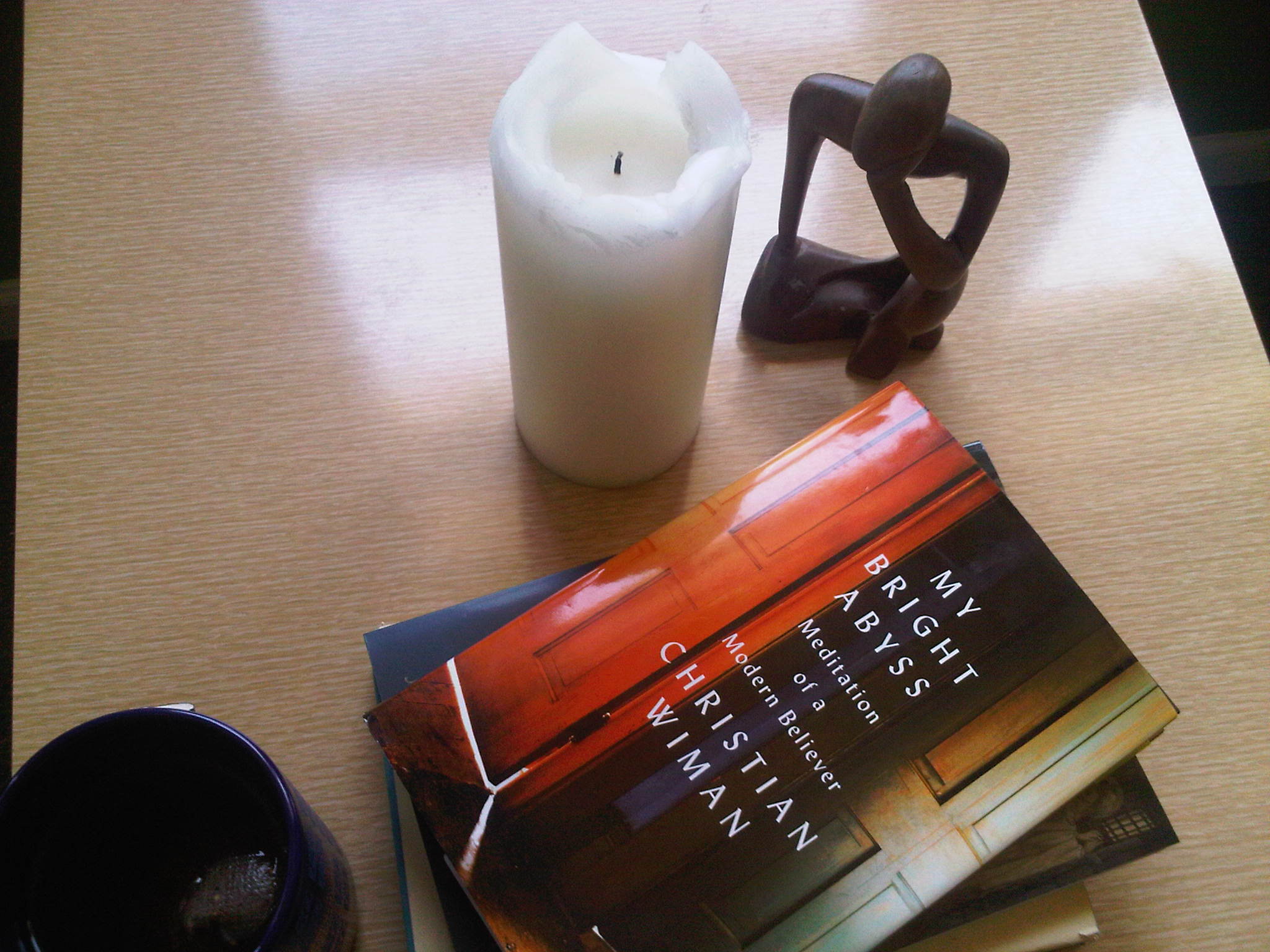
From Christian Wiman’s meditation, in My Bright Abyss (pg. 161):

Life tears us apart, but through those wounds, if we have tended them, love may enter us.  It may be the love of someone you have lost.  It may be the love of your own spirit for the self that at time you think you hate.  However it comes through, in all these—of all these and yet more than, so much more—there burns the abiding love of God.  But if you find that you cannot believe in God, then do not worry yourself with it.  No one can say what names or forms God might take, nor gauge the intensity of unbelief we may need to wake up our souls.  My love is still true, my children, still with you, still straining through your ambitions and your disappointments, your frenzies and forgetfulness, through all the glints and gulfs of implacable matter—to reach you, to help you, to heal you.

LaValle on People We Idealize

Victor LaValle in an interview with Books and Culture, answering a question about how a meeting with Norman Mailer, how meeting other people whose wrote work people loved, changed the reading of them:

Everyone is going to disappoint you if you get to know them well enough. I don’t mean that in a dismissive way, but to say that it’s important to think about why we ask so much of the people we idolize. Why must they pass the test of perfection? Or even just amiability? This is certainly the case with artists, but it applies to my priest and my postman, too. I don’t know how I would’ve reacted if I’d known Mailer stabbed his wife before me and my friend showed up at his house. Would it have stopped us? I doubt it. Mailer sure wasn’t a wilting violet, but I’d hate to disqualify artists simply because their personalities were remarkable. Caravaggio was a scumbag and a street fighter, Flannery O’Connor a racist, and, from her letters, a bit of a pill. I love the work both produced though, without reservation. The saints weren’t even saints.

Read the full interview here.  It’s good.

Things That Strengthen Us, pt 1 of 2

From Christman Wiman’s meditation, in My Bright Abyss, undoubtedly written first to the close loves of his life (pg. 161):

My loves, I will be with you, even if I am not with you.  Every day I feel a little more the impress of eternity, learn a little more “the discipline of suffering which leads to peace of the spirit,” as T. S. Eliot said, writing of the seventeenth-century poet and priest George Herbert (read him!), who died when he was thirty-nine and had only recently found true happiness with his new wife and new commitment to God.  My loves, I love you with all the volatility and expansiveness of spirit that you have taught me to feel, and I feel your futures opening out from you, and in those futures I know my own.  I will be with you.  I will comfort you in your despair and I will share in your joy.  They need not be only grief, only pain, these black holes in our lives.  If we can learn to live not merely with them but by means of them, if we can let them be part of the works of sacred art that we in fact are, then these apparent weaknesses can be the very things that strengthen us.

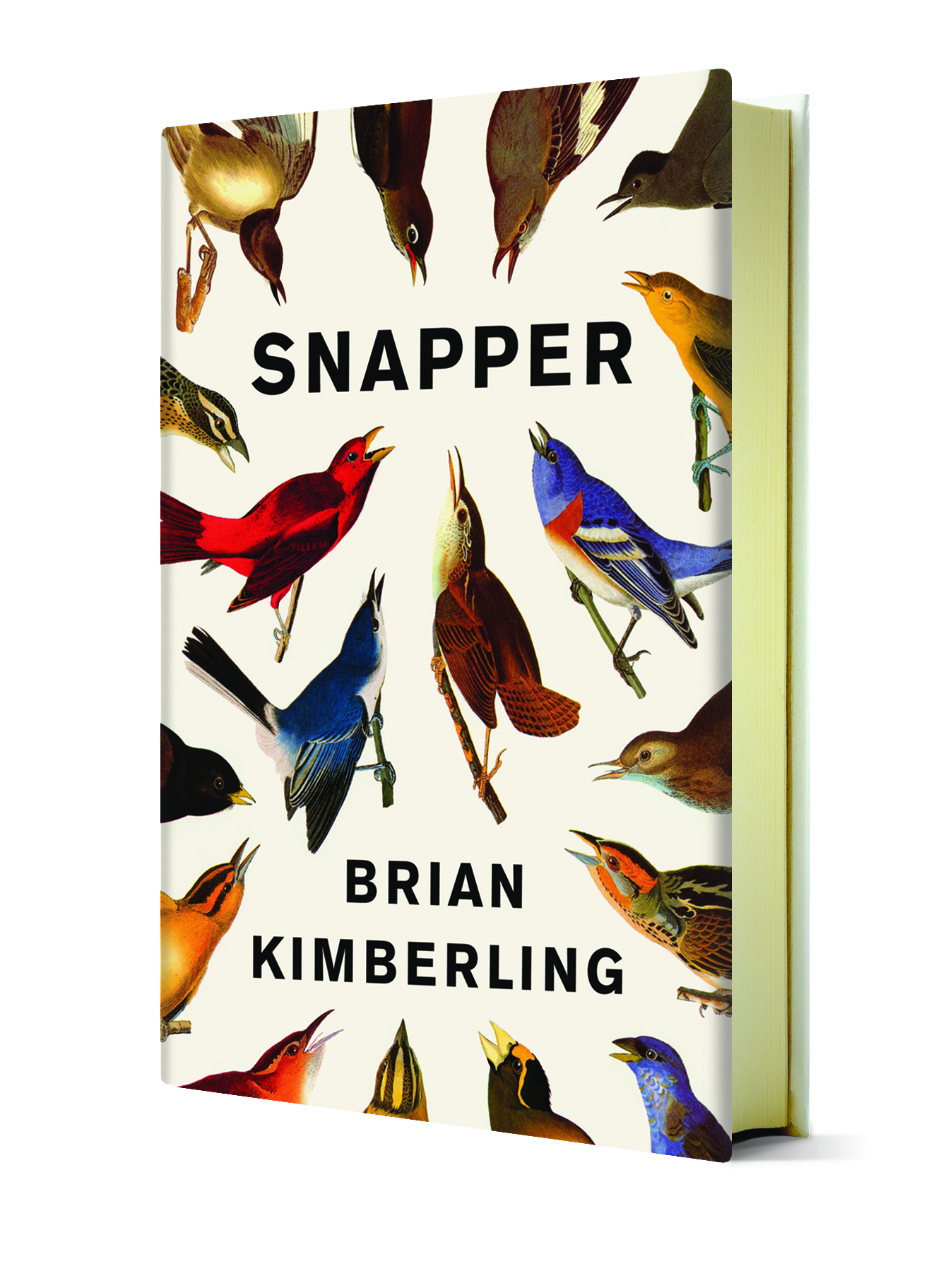
Interview With Brian Kimberling, Author of Snapper

Give us a view into your life as a novelist whose book was recently published. What type of work does the novel call forth from you on this side of publication? I did a ten-day, ten-city tour in the US in April. It was exhilarating and exhausting. Have had some events in England since then, I have loved all of it. Also now getting requests for comments and blurbs on two kinds of book: Midwestern memoirs and bird books. Enjoying the Midwestern memoirs much more than I expected to. Now that the tour is over and the events over here largely done, I should get back to work writing fiction. Well, I have. Intermittently. Publishing does take over your life for a while, though.
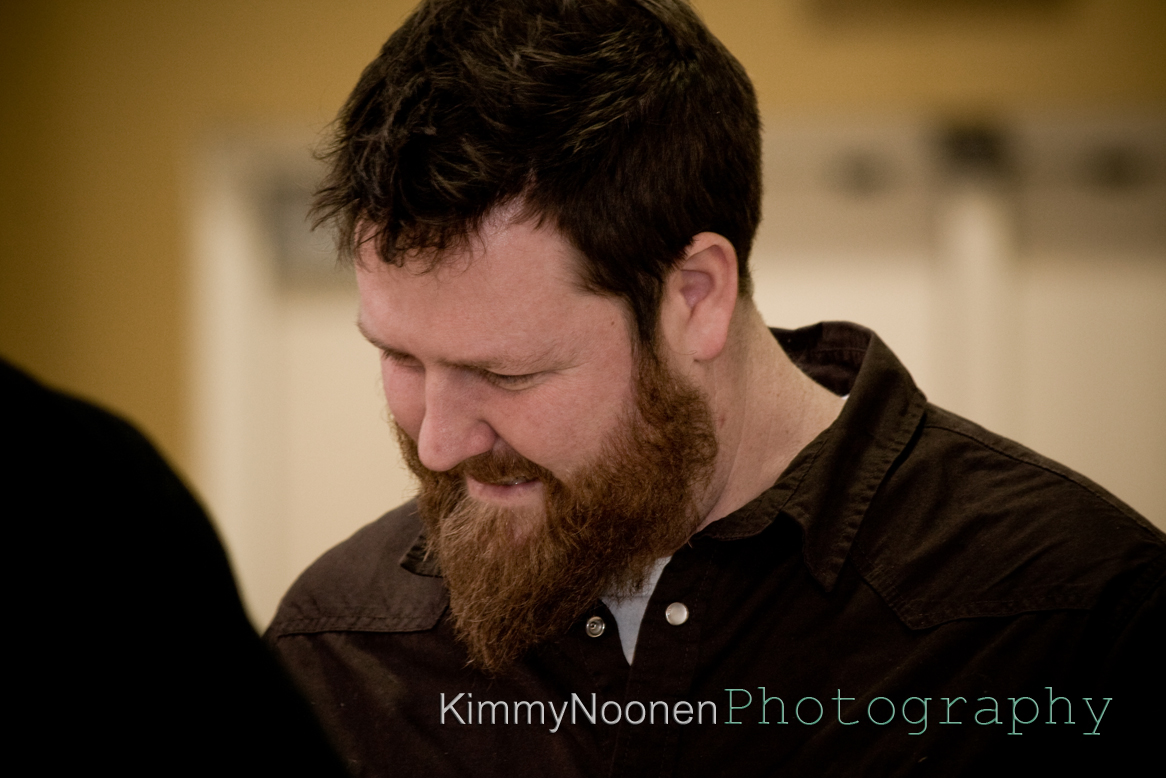
Brian Kimberling
Did you draw from your own experiences as a birdwatcher in writing your story, and if so, in what ways? For me it was a summer job I did as an undergraduate. Nathan, the narrator and protagonist of Snapper, makes a sort of eight-year career out of it. I embellished and exaggerated some of my own experiences, borrowed some others, and made other things up. I did not do much bird research — I tried to stick to what I was pretty sure of from experience.

Making fiction entertaining must take work. Making it funny must be either natural or laborious. How did you gauge your great humor’s effectiveness as you wrote? Actually took a lot of jokes out of the MS. Underneath Nathan’s irrepressible drollery some sad things are going on. I always tried to find a balance between the comical and the melancholic. One thing that helped was reading everything out loud. Some things that looked OK on the page didn’t quite sound right, so I struck them.

This novel is as much about Indiana as it is other things. How did you come to write about Indiana? It’s what I know. A few years ago (a bit pre-Snapper) I was there and someone asked what a certain plant was. I knew, and I knew various things about it, but I didn’t know how I knew or when or where I had learned what I knew. In England I can’t identify plants or birds or much of anything else. When I’ve written about England I’ve written less vividly. I could feel Indiana coming alive as I wrote, so I ran with it.

Indiana becomes visible geography for us readers. How have people began responding to learning about the state that by the main character’s perspective is overlooked or misunderstood? Have you heard from residents of my neighboring state? Nathan’s pretty savage about Indiana, but most readers as far as I can tell take him with a grain of salt. In general, responses have been very positive. (A number of British readers in particular have said they wanted to go to Indiana when they had finished the book). I’m sure there are or will be a few offended Hoosiers out there, though.

Nathan’s experiences are detailed with a researcher’s specificity. How did his appreciation and knowledge of his town and his work areas express his love, his devotion? He seemed to like his work. It is a pretty nostalgic book, underneath the jokes and the disparagements of Indiana. He details it not just specifically but lovingly, I think. He doesn’t quite appreciate just how free and fortunate he is at the time of doing the job — it is only in retrospect that he suspects he may have had it pretty good for a while.

Will you talk about your process of becoming a writer? Were you always a writer or did you become one? I’ve been writing since high school at least. Prior to Snapper I wrote and produced several plays at a theatre five minutes’ walk from my house in England. That was very helpful preparation for Snapper as I began to enjoy writing
dialogue, setting scene, et cetera.

What are you reading these days? Currently on Age of Innocence by Edith Wharton. Never read her before; glaring negligence on my part. I just finished The Distancers by Lee Sandlin and Leaving Rollingstone by Kevin Fenton — the Midwestern memoirs I mentioned above. I enjoyed them both very much.

How can readers stay aware of your work? I do have a website, briankimberling.com. It’s due for some changes. I’ll get around to that pretty soon.
Snapper Cover

To The Men Who Are Our Fathers

I read this in church this morning and thought to put it up.

This is a reading to the men who are our fathers.

As you stand today in celebration, in remembrance, in prayer, with hope and joy and fear in your hearts, I remind you that you are a man.  I remind you that we—in this church, in this community, in this city, in this world—need you because of that.

We don’t need your skills necessarily.  We don’t require your cultivated talents, though they can be useful.  We don’t need your ingenuity or your success or the long list of things you’ve done or hope to do.

No, what we need is less, or more.  We need you.David Kiragu

You should work hard, be diligent in vocation, and perhaps that creates the background of manhood.  Still, there is a greater vocation than your productivity.

This is not a common message, even on Father’s Day, but it is true.  This church, this city, this world, and all the people that make up the world as you know it, need you.

We need you to stand up today in a million ways as you leave the beautiful space that is this sanctuary, to step down the blocks of the city and to re-present the divinity you are reminded of by coming to worship.

We need you changing the worlds of your jobs or homes or play places by your small and large acts of faithfulness and elegance and goodness and power, coming in the form of stopping violence whenever you meet it, quelling wickedness in all its clothes, and stalling the principalities of the anti-kingdom.Alan Frost

We need you pleading by your presence for justice that comes through men who love with all their hearts, who encourage when life doesn’t, who inspire when situations break the spirit.

We need you leading the way in loving perfectly and without fear, surrendering your pride and your ego and offering them in the hand of God in order to gain something greater and better and deeper.

We need you taking the first position of serving and working and toiling for the good of those around you, especially when those around you cannot return your good efforts.

We need you raising children, whether those you conceived with women you love, those you conceived with women you don’t, or those you did not conceive at all because all of them need a father and because there’s no reason you can’t be that man.

We need you praying however you can and to do it daily because only God can be the strength behind and under and around a good man.

We need you loving the women in your lives, be they spouses or mothers or sisters or friends or women you don’t know because they are all precious and strong and valiant and expect us to treat them accordingly.

We need you living up to the words in the greeting, “Happy Father’s Day,” taking every word seriously, pursuing your happiness and that of others, embodying what it means to be a generative, creative man who gives and loves and serves, and living one day at a time like it is precious and filled with grace.

We need you living in response to the grace of God, and so, finally, the Lord bless you and keep you; the Lord make his face to shine upon you, and be gracious to you: the Lord lift up his countenance upon you, and give you peace. Amen.EJ

Until We Can’t Feel Them Anymore

I read these strategies over at the Crunk Feminist Collective, and while they’re especially written for Black women, I think all women and all men who love women and want to love women well should ingest them.  We need to know how to live, how to address the stressors in our lives, how to stop pushing away our “needs and desires down until we can’t feel them anymore.”

I think mothers, fathers, and friends of mothers and fathers need to be aware these strategies for staying alive.  I think of this list, and lists like them, as little love points for the people I care about.  I think these are some of the ways we ought to push each other live and thrive and flourish.

Read the full post here.  Because there’s a steeped personal introduction to the tips, a poem you really need to sip, a lot words I’ve left, and a few other things that are worth seeing over in the Collective.

  1. Take some time to/for yourself and be unapologetic about it.  At least one hour a day should be yours.
  2. Say no!  Be impolite.  Say no (without an explanation/reason).
  3. Reject negativity.  …we don’t have to take on other people’s baggage.
  4. Pay attention to your body.  When your body speaks, listen!  And do something about it.
  5. Have a bi-annual or annual check-up.  While sometimes our family histories can be mysteries, it is important to know what hereditary diseases or ailments you may be at risk for.
  6. Do a regular inventory and purge anything toxic in your life.  This includes people, relationships, thoughts, habits, and hobbies.
  7. Let people go.  If someone fails to treat you like the queen you are…on to the next one.
  8. Don’t be a people pleaser.  Living your life for yourself and not for other people makes a world of difference.
  9. Have a confidante.  We should all have someone in our life we don’t have to “put on” for.
  10. Celebrate yourself and your accomplishments even if/when you have to do it (by/for) yourself.  Don’t miss an opportunity to acknowledge all of what/who you are and where you come from.
  11. Take care of yourself mentally, physically and spiritually.  Figure out how best to take care of yourself.
  12. Kick it, regularly, with your homegirls.  This can be magic.
  13. Let people do things for you.  When someone offers to do something for you, let them!

If I didn’t suggest this already, read the full post here.

What We Desire to Find

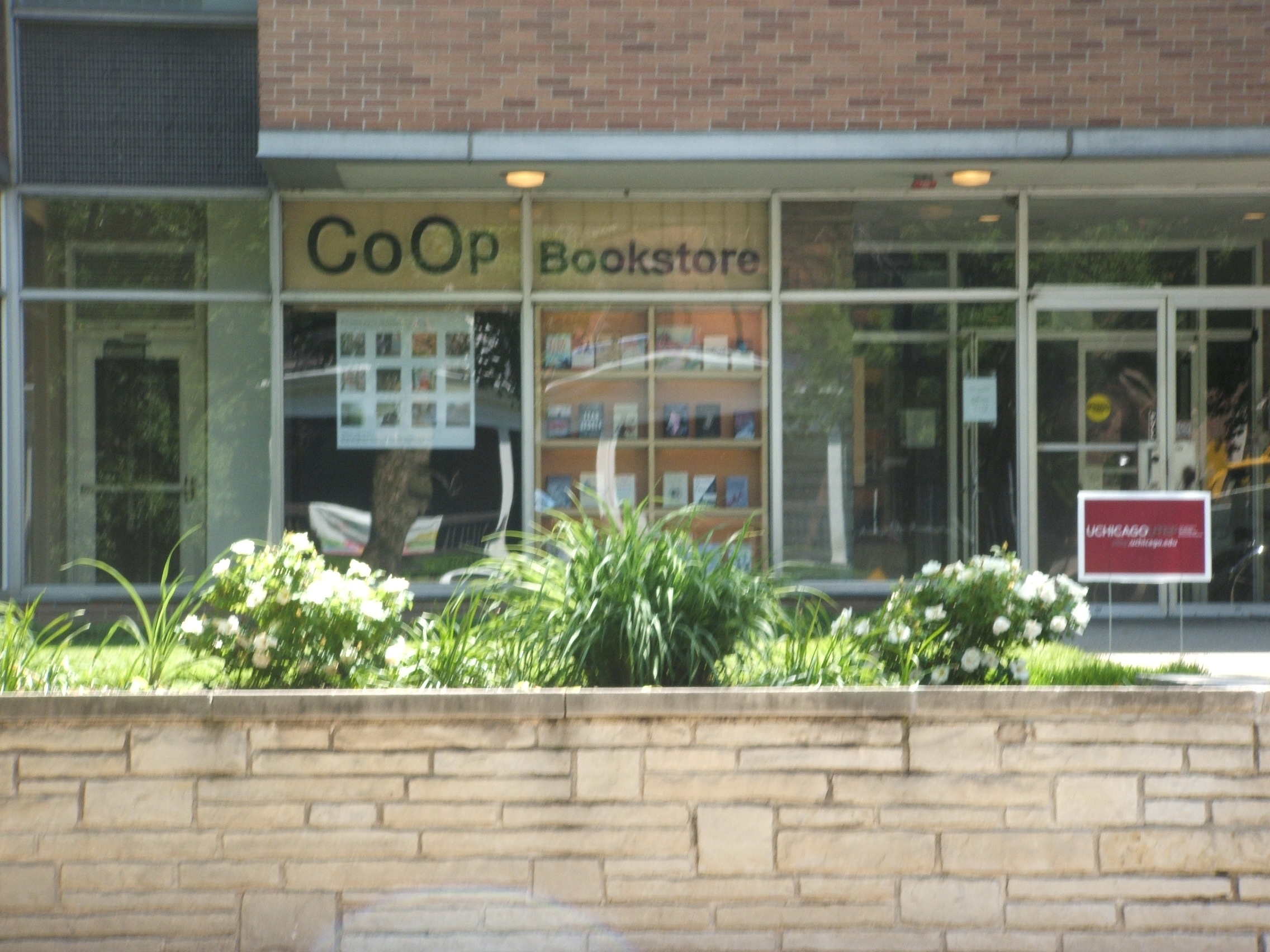
If you love books and stores selling them, you should meet the Seminary Co-op Bookstore, a place I’m pretty sure Ernest Johnson introduced me to when we were in high school.  That was back when we’d eat at the now defunct Cafe Florian and do other things I’ll leave unmentioned.

The Seminary Co-op held our futures in a curious way, pressing in me and in EJ a thirst for learning, a love for the mind, and an appeal to practice what we think we know.  And it held our presents because that basement was another world entirely, a place where time fell to the side of a stone step or ran through an alcove or up to a chapel and waited like an answer to prayer.

Here is a quote from an exchange of two friends talking about a visit to the new Co-op.  Newly owned by the University of Chicago, the old dark one is being gutted.  All our current affections must train to this new light-filled room, which is very worth savoring.Old Co-op

With books, too, we seek out what we desire to find, and soon enough we reflect what we have sought. The contrast between old and new Seminary Co-Ops could not be more apt— the old store with its nooks, corners, pipes, and warren of aisles did indeed exhibit the “disordered glory” of the first collection you described, while the new store, well, if it was not carefully color-coded and alphabetized – all professionalism and spacious tidiness – then it was surely close to that.

Like you, I’m not exactly complaining about the new setting. It’s just different, and will take some getting used to. I suspect it will be a pleasant enough adjustment as older memories give way to more recent ones, spaced out across multiple visits. Then, when we think of “Seminary Co-Op,” this new, big-windowed building with its lighter woods and airy spaces will happily come to mind. And let’s be grateful that the Seminary Co-Op, during these turbulent times for booksellers, has managed to keep its doors, or different doors, open.

–From the exchange of letters between Wesley Hill and Brett Foster, where Brett responds to Wes’s letter about the new Seminary Co-op bookstore in Hyde Park.  Read both full letters here.New Co-op

Being a Fan

I am a sports fan.  My dad taught me the love of both playing and watching sports as a child.  I remember doing the Heisman pose with Desmond Howard as an 8-year-old.  I remember watching Bo Jackson hit a home run at Kauffman Stadium.  When I saw signs for Howard Johnson, I thought the Mets third baseman was also an owner of roadside establishments.  I will never forget the disappointment I felt in 1995, 1997, and 2007 when the Indians fell short.  I will always have a special place in my heart for the melodic tones of Pat Hughes and Ron Santo as the soundtrack of my afternoons as an intern in a comfortable Ohio town and as a new software developer in a brand new city.  Their voices welcomed me to the town I now call home.

I am a man.  I wanted a son to share in this joy of sports. That desire died the minute Charlotte became real to me, and my wildest dreams of a few years ago now pale in comparison to my reality.  The experiences we share will be just as amazing as the experiences I would share with a son.  When I take a good look at what sports are and what they have become to me, I realize that they are just another tool.  When used properly they can strengthen and enhance good character traits. When used improperly they can cause irreparable damage.

I am a father.  I cannot wait to pass on my love of sports to my daughter in a way that will inform who she is.  There are things that I learned from sports that she will have to learn at some point.

She needs to learn that success is fleeting and instances of joy need to be savored.  She needs to learn that heroes exist, but they are humans just like her.  She needs to learn that to love one thing means you inherently dislike another thing.  She needs to learn that it matters if you win or lose but once you’ve won or lost, it doesn’t matter as much. And most importantly, she needs to learn how to be empathetically joyful: how to truly be joyful for the success of another when all she wants to do is wallow in self-pity and doubt.  She will learn these things with sports, as I did, or without sports, as her mother did.  The vehicle for learning will be as nuanced as her personality.

I am a Charlotte fan and she’s a fan of me. That is all that matters.
Me And the Bug

Favorite Paradoxical Questions

I’m reading Christian Wiman’s plunging book, My Bright Abyss.  Christian is a poet, which means he’s a thinker and feeler and imaginative person.  I’ve come through the early chapters of his meditations, small but full chunks about art and death and love and sorrow.  He’s turning to the reality (the notion?) of God in the section I’m reading now.

He opens by restating something I’ve heard from you.  Christian says behind all of our beliefs, whatever they may be, is the child’s insistent question: Why?

This question has been your favorite for a while.  Like cornbread or chocolate or cookies, the word comes from your lips with regularity.  I can anticipate it the way I can you being the first to rise from bed.

And with your question comes the distant penetrating truth that whatever I say, whatever your mama says, exhausts.  Our answers, however clever, will meet an end, will stall in silence.  We will not answer every creation of your curiosity.  You have too many questions.  You’re too interested in each answer.

And it shows me how deep conversation can go, how full an answer quickly offered can turn into another invitation.  At my best, I take a breath and come up with another answer, one that can make sense to you.  And even while I’m answering it, I know that that shrunken answer won’t be fully true.

I want to tell you the exact truth, the best answer, even when I know you won’t grasp it.  Why?  You keep asking.  We keep trying.  And when we don’t know how to answer, you’re still waiting.  And we sit in quiet and ask silence to tell us.