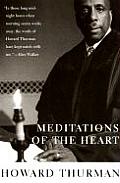
Thurman on An Island of Peace

A beautiful and significant phrase, “Island of Peace within one’s own soul.”  The individual lives his life in the midst of a wide variety of stresses and strains.  There are many tasks in which he is engaged that are not meaningful to him even though they are important in secondary ways.  There are many responsibilities that are his by virtue of training, or family, or position.  Again and again, decisions must be made as to small and large matters; each one involves him in devious ways.

No one is ever free from the peculiar pressures of his own life.  Each one has to deal with the evil aspects of life, with injustices inflicted upon him and injustices which he wittingly or unwittingly inflicts upon others.  We are all of us deeply involved in the throes of our own weaknesses and strengths, expressed often in the profoundest conflicts within our own souls.

The only hope for surcease, the only possibility of stability for the person, is to establish an Island of Peace within one’s own soul.  Here one brings for review the purposes and dreams to which one’s life is tied.  This is the place where there is no pretense, no dishonesty, no adulteration.  What passes over the threshold is simon-pure.  What one really thinks and feels about one’s own life stands revealed; what one really thinks and feels about other people far and near is seen with every nuance honestly labeled: love is love, hate is hate, fear is fear.

Well within the island is the Temple where God dwells–not the God of the creed, the church, the family, but the God of one’s heart.  Into His Presence one comes with all of one’s problems and faces His scrutiny.  What a man is, what his plans are, what his authentic point is, where his life goes–all is available to him in the Presence.  How foolish it is, how terrible, if you have not found your Island of Peace within your own soul!  It means that you are living without the discovery of your true home.

From Howard Thurman’s “An Island of Peace Within One’s Soul” in Meditations of the Heart

Thurman on Stages to Maturity

The immediate reaction of the child is clear and precise: varying forms of protest from the sustained whisper to the roaring scream (these two words are used together quite advisedly).  Sometimes it is a battle of nerves between the baby and the mother.

At this point the baby is having his initial encounter with spiritual discipline.  A pattern of life has been interrupted.  In the presence of an expanding time interval between wish and fulfillment the child is forced to make adjustment, to make room in the tight circle of his life for something new, different, and therefore threatening.  The baby begins to learn how to wait, how to postpone fulfillment.  He thus finds his way into community within the family circle.

…If the response of the parents or others continues to be available on demand, the conscious or unconscious intent being to keep the time interval at zero between wish and fulfillment, the baby begins to get a false conditioning about the world and his place in it.  For if he grows up expecting and regarding as his due that to wish is to have his wish fulfilled, then he is apt to become a permanent cripple.  There are many adults who for various reasons have escaped this essential discipline of their spirit.  True, in terms of physical and intellectual development they have continued to grow.  Their bodies and minds have moved through all the intervening stages to maturity, but they have remained essentially babies in what they expect of life.  They have a distorted conception of their own lives in particular and of life in general.

Thurman on Christmas, 3 of 3

This is my third post of Howard Thurman’s meditations relative to Christmas.  In it he speaks of “Gifts on My Altar.”  I hope you can think of gifts you’ve received and gifts you’ve given, particularly as this year turns toward its end.

I place these gifts on my altar this Christmas;

Gifts that are mine, as the years are mine:

The quiet hopes that flood the earnest cargo of my dreams:

The best of all good things for those I love,

A fresh new trust for all whose faith is dim.

The love of life, God’s precious gift in reach of all:

Seeing in each day the seeds of the morrow,

Finding in each struggle the strength of renewal,

Seeking in each person the face of my brother.

I place these gifts on my altar this Christmas;

Gifts that are mine, as the years are mine.

Thurman on Christmas, 2 of 3

The following is a meditation on “The Season of Affirmation.”  It’s also from Meditations Of The Heart.

Christmas is the season of affirmation.

I affirm my faith in the little graces of life: The urgency of growth, the strength of laughter, the vitality of friendship.

I affirm my confidence in the dignity of man: His fortitude in despair, his strength in weakness, his love in hatred.

I affirm my joy in the experience of living: The fragrance of nostalgia, the scattered moments of delight, the exhilaration of danger.

I affirm my need of my fellows: The offerings of faiths, the gifts of variety, the quality of difference.

I affirm my hunger for God: The desire for fulfillment, the ache for understanding, the sense of peace.

Christmas  is my season of affirmation.

Thurman on Christmas, 1 of 3

One of my favorite people, Howard Thurman, writes the following in Meditations Of The Heart.  It’s amazing how relevant his writings continue to be.  I hope this can be meaningful for you as you think about the irony of a greeting like “Merry Christmas,” whether you employ it or hear it.

There is a strange irony in the usual salutation, “Merry Christmas,” when most of the people on this planet are thrown back upon themselves for food which they do not possess, for resources that have long since been exhausted, and for vitality which has already run its course.  Despite this condition, the inescapable fact remains that Christmas symbolizes hope even at a moment when hope seems utterly fantastic.  The raw materials of the Christmas mood are a newborn baby, a family, friendly animals, and labor.  An endless process of births is the perpetual answer of life to the fact of death.  It says that life keeps coming on, keeps seeking to fulfill itself, keeps affirming the margin of hope in the presence of desolation, pestilence and despair.  It is not an accident that the birth rate seems always to increase during times of war, when the formal processes of man are engaged in the destruction of others.  Welling up out of the depths of vast vitality, there is Something at work that is more authentic than the formal, discursive design of the human mind.  As long as this is true ultimately, despair about the human race is groundless.

Strength to be Free (Thurman)

I’m reading a book of meditations by Howard Thurman.  Today’s passage felt like it made a lot of sense for fathers and for those who love us.

“Give me the strength to be free.”  The thought of being free comes upon us sometimes with such power that under its impact we lose the meaning that the thought implies.  Often, “being free” means to be where we are not at the moment, to be relieved of a particular set of chores or responsibilities that are bearing heavily upon minds, to be surrounded by a careless rapture with no reminders of costs of any kind, to be on the open road with nothing overhead but the blue sky and whole days in which to roam.  For many, “being free” means movement, change, reordering.

To be free may not mean any of these things.  It may not involve a single change in a single circumstance, or it may not extend beyond one’s own gate, beyond the four walls in the midst of which all of one’s working hours and endless nights are spent.  It may mean no surcease from the old familiar routine and the perennial cares which have become one’s persistent lot.  Quite possibly, your days mean the deepening of your rut, the increasing of your monotony and the enlarging of the areas of your dullness.  All of this, and more, may be true for you.

“Give me strength to be free.”  Often, to be free means the ability to deal with the realities of one’s situation so as not to be overcome by them.  It is the manifestation of a quality of being and living that that the results not only from understanding of one’s situation but also from wisdom in dealing with it.  It takes no strength to give up, to accept shackles of circumstance so that they become shackles of soul, to shrug the shoulders in bland acquiescence.  This is easy.  But do not congratulate yourself that you have solved anything.  In simple language, you have sold out, surrendered, given up.  It takes strength to affirm the high prerogative of your spirit.  And you will find that if you do, a host of invisible angels will wing to your defense, and the glory of the living God will envelop your surroundings because in you He has come into His own.

Trouble With “An Eye For An Eye”

When I was in seminary, I wrote a paper in Dr. Cheryl Anderson’s Biblical Law class.  It was an exegetical on the Leviticus 24 passage addressing lex talionis, one of the Hebrew writer’s phrases for retaliation or punishment.  In a different class, Dr. Larry Murphy assigned us to research different responses in the Christian Tradition as it relates to capital punishment.  I thought about those two experiences during my ride to work this morning.

I listen to the Santita Jackson show on WVON as much as I can.  She’s a great communicator.  She helps me think.  She tells me things I wouldn’t know without her.  And today during her first hour, she was hosting callers and questions and comments about the scheduled execution of Troy Davis.  In 1991 Mr. Davis was convicted of murdering a police officer.  Since that time he has fought for his freedom.  Yesterday the Georgia Parole Board met and didn’t vote to stay the lethal injection.

Judges, FBI agents, preachers, lawyers, people you wouldn’t know, and the pope have joined a chorus in support of Mr. Davis and in opposition, more broadly, to the application of the death penalty in this particular case.  Callers into Ms. Jackson’s show highlighted not only the suspicious nature of Mr. Davis’s case but also the twisted and distorted ways executions have mostly affected black folks and poor folks.  They asked and answered the penetrating question, who’s being sentenced to death?  Who’s being put to death?

Since I left my car, I’ve been turning over a response to what I heard.  It’s unfair and inhuman that people are wrongly accused and convicted and sentence to death.  Indeed I’m thankful to live in a state that’s outlawed that penalty.  And beyond that, I’m trying to pull my beliefs into and out of my life practices.  I’m trying to make sense of Jesus, a man who didn’t overlook his enemies–perhaps making sense is impossible and wrong as well–but who died for them.  I don’t think I ask the hard question enough when people commit crimes against me and against the world.  Not what would Jesus do.  But what should I do?  What should I do as a person whose life is supposed to be God-ward?  What should my response be since I’m a follower of a servant named Jesus?

I’m having trouble because for some reason most of the people who promote life and really good at advocating punishment by death.  Most of the people who’d read Leviticus 24 literally wouldn’t read Matthew 5 as literally.  I’m troubled because I think violently more than I do lovingly and am probably as much a literal reader of some canon-within-a-canon as the next person.

The meditation I read this morning from Howard Thurman’s Meditations of the Heart is entitled “Myself, a High Priest of Truth.”  While he doesn’t talk about Jesus Christ per se in the meditation, Jesus is inside Thurman’s overall framework.  Of course, Jesus is in my view as well.  So when I read the title it intrigued me on its own.  Here’s one blurb from the short reflection,

I purpose in my heart that I shall not use my memory to store up those things which fester, poison and destroy my living, my life, or the living and the life of others.  I shall make it my study to preserve my soul in balance and liberty.  I will use my memory to store up the excellent things of my experience.

I can’t help but pull together the image of Jesus as a Priest, my own struggles with what it means to follow Jesus, and what I heard about Troy Davis on Santita Jackson’s show.  I’m not at all ready to launch into the larger contemporary debate about capital punishment.  Perhaps that’s an entrance that life will make to engage in, but today isn’t that day.  Yet as a pastoral theologian or, better-said, as a pastor who encourages critical reflection in my congregation and as a man who tries to live theologically, it is hard to close my ears to how the person and work of Jesus comes to the issue of punishment.  It would be hermenuetically irresponsible to use the scriptures to discuss our conceptions of justice and law and punishment–at least doing so without a good amount of pre-interpretation.

So, here’s an attempt to invite your comments and thoughts.  Questions for you.  How do you hold together your faith and practice that faith, whatever that faith, when it comes to capital punishment?  Does your faith tradition say things that help you “come to” the issue and respond to capital punishment?

If you’re interested in knowing more of my thoughts about related things:
Season of Lent, pt. 6

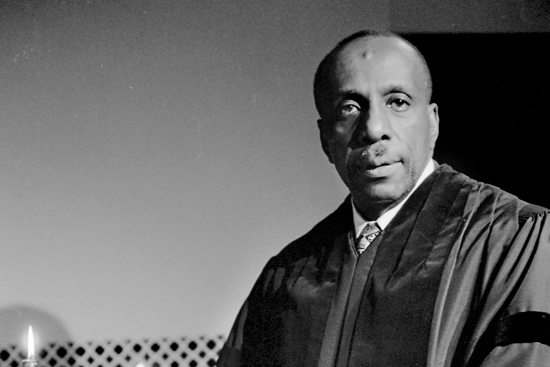
As we enter into the week that Christians have called holy–or terrible or amazing or horrifying or passion–I’d like to start these next days leading to Easter by thinking about the words of Howard Thurman.  Thurman was a pastor-scholar who, among his many accomplishments, taught at Howard University and Boston University and started the Church for the Fellowship of All Peoples.  I encourage you to ponder his words.  As a pastor, theologian, and teacher, Thurman pushed people to think of Jesus and his ministry to the disinherited.  You can read more about him by clicking here.  This meditation comes from Deep Is The Hunger, and every sentence is thick to me.  I hope you find it penetrating.  

One of the great gifts of God to man is the sense of concern that one individual may develop for another, the impulse toward self-giving that finds its ultimate fulfillment in laying down one’s life for his friend.  It is difficult to keep the sense of concern free from those subtle desires to place another under obligation, and thereby stifle and strangle that which one wishes to bless and heal.  When I ask myself why I try to help others, what reply do I get?  Is it merely an effort on my part to build up my own sense of significance?  Am I trying to prove my own superiority?  When I do something for another which involves a clear definitive act of concern on my part, do I spoil it by saying to myself or to another, “Look what I did for him.  And now he treats me as he does”?  Or do we say, “After all I have done for him, he should do anything I ask of him”?  Is our sense of concern used as a means for gaining power over others?  To be able to give oneself without expecting to be paid back, to love disinterestedly but with warmth and understanding, is to be spiritually mature and godlike and to lay hold on the most precious possessions vouchsafed to the human race.