Dear Work-In-Progress

I am not going to leave you unfinished.  It’s just that every time I see you–all those tracked changes, in blue and red and green–I feel like I’m walking across the country without shoes and in climates that shift from sunny to frosty and back again.  My feet itch and sweat and fall into that stupid numbness.  They tell my legs to stop all that walking.

I look at you and I want you to be better.  Not perfect.  Just better.  I want the words to be right, the sentences to sing.  I want the story to work, the plot points to combine into some seamless experience I remember someone calling the fictional dream.  But I feel like an insomniac and not a dreamer.  So I close the document that teases me.  I open you back up when I feel the promise emerging again.  I start, get going, and I stop again.  But I’m not done with you.  You’re not done with me.  One of these days we’ll make each other happy or we’ll make each other crazy.

See you later.

Story Week at Columbia College, pt 2

Story WeekLast week I went to a few sessions at Columbia College’s festival for writers.  It was another generous time at what they called one of the largest free conferences for folks interested in writing and publishing.  Sadly, like good gatherings, it ended.

The last session I went to consisted of a panel–including two publishers, one editor, and two agents.  They talked for an hour about submissions, traditional and self-publishing, marketing, and voice.  They said a lot.  I wasn’t trying to write their comments or answers to questions, as much as I was taking them in.  Here are a few quotes were worth capturing from the panel:

There’s no threat of books and stories going away.  None.

…how it’s going to end up, I’m not too sure.

Publishing is the intersection between art and commerce.

No one place is central to the conversation.

There’s a really bright future.  For every book.

There were certainly less inspiring words.  But I’ll keep these and revisit them.  Perhaps you will too as you write, revise, and submit.

Story Week at Columbia College Chicago, pt 1

A room of generous people, lavish with their words, though precise, all of them attentive to turns of phrase, metaphors, and descriptions and dialogue and little slices of character as expressed in five to seven minutes of reading.  Students and teachers, each one accepting parts of the label emerging writer, gather and clap for their friends who stand behind the podium stammering and then flowing and for their professors who seem used to the space and the art and for that newly published novelist whose work is being read as if for the first time to a hungry audience of well-wishers.  Then there is Sapphire, the bold poet whose voice stood up in the written form of a novel she said people forgot they didn’t like, and who reminded me that writers could be activists or not but that all writers needed to be good, and who remembered some of the greats by going down a notable list of influences that read like a canon because it included folks like Richard Wright and Lucille Clifton and Sonia Sanchez.

Sapphire signing books

Sapphire signing books

Only Your Best Work

This is one of those quotes that is about writing but can be about everything in life that requires preparation, work, revision, and the courage to surrender the results.  Anything where we choose can be around these words.  Anything that calls forth effort is like writing and requires careful editing.  A decision where to take the person you love for a quiet, meaningful conversation.  The answer to a penetrating question.  Picking what to where for an important meeting.  Not rushing is essential because it means we run through the slow work of foundation-building.  From Writers Digest:

But building a career requires that you lay a strong foundation of only your best work--and nobody’s first draft is the best it can be. Careful editing is the mortar that holds the story bricks together.

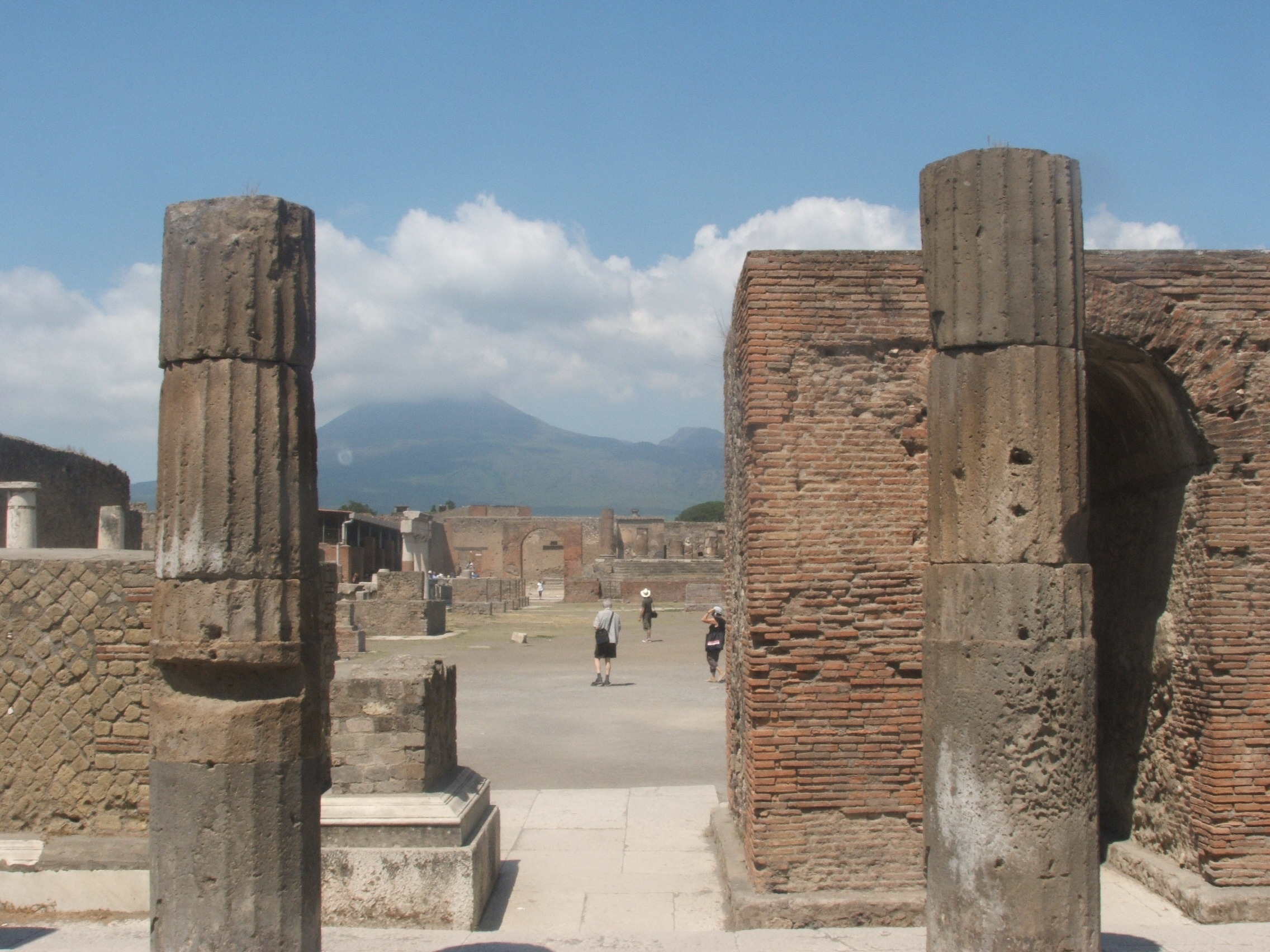
Foundations in Pompei

Victor Lavalle on Writing and Revising

I’m finishing Victor Lavalle’s latest novel, The Devil in Silver, a story about inmates in a mental hospital who befriend each other while fighting a known but unknown devil and an increasingly unresponsive health system.  These videos aren’t about Victor’s novel but writing itself; he reads a good bit of a story in the video and discusses it the way he would in one of his classes.  I hope you learn from him.  It’s helpful if you’re writing now or revising.

Marilynne Robinson’s Advice to Her Students

But all we really know about what we are is what we do.  There is a tendency to fit a tight and awkward carapace of definition over humankind, and to try to trim the living creature to fit the dead shell.  The advice I give my students is the same advice I give myself–forget definition, forget assumption, watch.

From “Freedom of Thought” in When I Was A Child, I Read Books

Validation, Human Desire, & Criticism

I saw part of this originally in a post by Rachel Held Evans.  Then I went back to the original post and found more to quote.

Validation is an interesting thing though, and no matter how strong or unphased by criticism we are, there is an undeniable human desire to have people like what we feel passionate about–our art, our words, our stories, our styles, our writing, our opinions.  It’s why we sometimes feel hesitant to publish or share.  What will people think?  

Let me answer that.  If you share, if you publish, if you write, if you speak, if you are brave and decide to put yourself out there, I promise you, someone won’t like it.  Someone won’t agree with you.  Someone will misinterpret.  Someone will think that you are silly, unqualified and that your work is crap.  That you are crap.  They might not just think it but they might tell you.  And that won’t feel good, especially not the first time you hear it.  But it is necessary.  And it’s okay.

My friend Melina is a fabulous writer.  She lives an adventurous life and writes riveting accounts of her excursions.  She is funny and witty and brave in her writing.  Sometimes I read her stories and think “I want to write like that.”  Her blog readership has understandably increased the last year and I wasn’t surprised when I recently received an e-mail from her–sister’s first really really nasty comment. Girlfriend took a punch to the gut, and I’m not going to lie–it was a doozy.  The commenter went for the jugular and beyond.  In summary, the comment wasted a lot of needless words to say “You. Are. Crap.”  And Melina’s e-mail to me went something like “I am shaking, I am pissed, I am processing this.”  And I shook my head and smiled and thought, “I get it, I get it, I get it.”  I promised her that she would grow confidence and understanding faster than a Chia Pet grows sprouts–that it was good and normal she felt this way and that this whole experience would help her own her words, her style, her work and be proud of it.  I told her that the hurtful words shared had nothing to do with Melina and everything to do with this commenter’s pain or insecurities or desire to do what Melina is doing.  Within two days, Melina was on a roll again.  Wrote a hilarious piece in response to that hurtful criticism and then moved on…fiercely.  She’s more confident in her writing–I can tell.

For me, receiving negative criticism has been an important tool in self awareness and owning my voice.  I’ve gone from believing what mean comments pointed out (I am a horrible person and I suck at writing), getting angry with the people who wrote them (You are a horrible person and you suck at leaving comments) and doubting if writing publicly was really something I wanted to do to a completely different place of understanding and compassion–both for myself and the people who are hurting enough to project it in a carefully crafted you-are-crapcomment.  I have a dear friend who has helped me with this.  She talks about pain–how we are all hurting–and she helps me see nastiness in the world as the need for more love.  Does that sound unicornish?  Maybe, but it has helped me move forward and embrace cutting comments both in and outside of this little Internet, as an opportunity to initiate more kindness.  We’ve all been there–the hurting one.

Read the full post by Kelle Hampton here.

“Which Led To His Death”

I’m almost finished reading James Cone’s The Cross And The Lynching Tree.  The book is an insightful and personal addition to the powerful language that I’ve read from Professor Cone in the past.

In the book he turns his critical and historical powers as a premier theologian to the subject of Jesus’s crucifixion and the lynching of black people in the United States of America.  Never good at subtlety, his remarks about the perplexity of being Christian, or a Christian nation, while engaging in the systematic and, worse, spontaneous murder of black people throughout history is searing and probing and heavy.  He nods to current forms of lynching, though he doesn’t dwell with them.  Like backgrounds in a memorable scene, they are there even if they aren’t central.Cross at St. Ascension

I love what he’s doing in exalting again the place of the crucifixion and its dark woody symbol the cross.  He corrals the great artists and writers of the Harlem Renaissance and the lyrics of singers like Billie Holiday; he showcases the testimony of Fannie Lou Hamer and reminds us of the massive, prophetic role of Ida B. Wells.  He doesn’t flinch when he heralds the primacy of the cross (and not the resurrection per se) in the African American experience in this country.  He does it in a way that is refreshing for the truth within it, and there is love springing through it.  He says more in the book than I think he does in other places about his personal story, his upbringing in an A.M.E. church, and his worry over the possibility of his father’s death at the hands of whites in Arkansas.

Here is a quote that doesn’t sum up his thought but that does give you a view into the central ministry of Jesus and his cross as Dr. Cone discusses.  Every word has meaning:

The gospel of Jesus is not a rational concept to be explained in a theory of salvation, but a story about God’s presence in Jesus’ solidarity with the oppressed, which led to his death on the cross.  What is redemptive is the faith that God snatches victory out of defeat, life out of death, and hope out of despair, as revealed in the biblical and black proclamation of Jesus’ resurrection.

There is little more appealing to me right up through here than this kind of stuff.  If you want something growth-provoking this Advent–and this is not the most liturgically appropriate meditation, I suppose–find this book and take it slow.
Because Love Itself Is Beautiful

It is rather obvious why I chose this title.  I believe it is what life is much of the time.  When I think of great lovers in history, there was always some pain involved.  Maybe not for everyone, but most likely.

I, also, think Love is beautiful and feels good.  I think what some people do with it, who do not know what they are doing, is what makes it painful…sometimes.

So maybe it is not Love that hurts, maybe it’s the person we love.  It can even be a lack of Love.  Because Love itself is beautiful.

I named this book what I think about Life; Some Love, Some Pain, Sometime.

From J. California Cooper’s note in Some Love, Some Pain, Sometime.

Writers Expanding the Spectrum of Acceptable Images

From one of the most insightful essays I’ve read recently.

While it remains a human truth that people live in terms of images, it is also true that where there are no good images there will always be bad ones.  And the images that, day after day, condition all of us are mostly drawn from the extreme, unmetaphorical range of the visual spectrum, evoking no recognition of moral complexity or depth.  We have come to accept the mundane image, and its lack of human vitality, as only what should be expected, and are sometimes even bothered by the passionate, the perfected, the aspiration toward the ideal.  The general culture has forged a kind of unconscious consensus with respect to the proper precincts in which beauty, and therefore truth and goodness, may be located.  Given this reality, it seems to me that there should arise a challenge to this status quo from within those communities of writers whose job it is to expand the spectrum of acceptable images steeped in moral and metaphysical meanings.  Opportunities for such expansions can come from the most unexpected of places.

From James A. McPherson’s “Workshopping Lucius Mummis,” (p. 306-307) in A Region Not Home