I found and am posting a conversation with Charlotte Gill, author of the memoir, Eating Dirt. I hope you enjoy this quick compelling interview from B&N:
Dear Reader,
I have the best job in the world, and Charlotte Gill’s Eating Dirt made me want to drop everything, ditch NYC, and head out into the wilderness to plant trees — and I’m hardly the only selection committee reader who felt that way. Eating Dirt is more than a memoir about Gill’s 20-year stint planting trees in Canada; it’s also an exploration of the natural world, and our place in it, written with incredible verve and exuberance.
Charlotte discusses planting trees, writing about natural history, and wanting to be transported by fiction, among other things, with Discover Great New Writers.
You were a professional tree planter for nearly 20 years. You grew up in New York State, thousands of miles from the wilderness you describe in Eating Dirt. How did you get involved in the business?
I moved to Canada to go to college. Tree planting was a very common summer job for undergraduates, but I had never heard of it before. My roommate was a tree planter. She would return from summers spent deep in the woods looking fit, bug-bitten and suntanned. She told me stories about her coworkers—they sounded to me like crazy woodland gypsies. She showed me photos of clearcuts that went on in all directions as far as the eye could see. To me, this strange occupation looked both totally fascinating and deeply intimidating. But I knew I just had to try it myself. Certainly there’d been nothing in my upbringing that had prepared me for hard physical labor. If I had known what I was getting into, I would never have gone in the first place.
Planting trees is hard physical labor. You say that it’s one of the dirtiest jobs left in the modern world. Why would anyone want to make a career of such a thing?
Planting trees is a sweaty, filthy job. It’s done by hand and on foot, often through very rough, steep terrain. There are heavy loads of seedlings to carry. There is bad weather and heat exhaustion. There are biting insects and sore backs, and all the other repetitive strain injuries that come with doing something a few thousand times a day. Most tree planters are in some kind of discomfort all the time. On the upside, tree planters go places most people would never get to see in the course of their entire lives. Some of these are stunning, wild geographies. We commute to work in boats and helicopters. We cross paths with exotic wildlife. And we make incredible friendships—a kind of soldier love. Writing the book, I wanted to explore what that attraction was all about. What makes anyone take on an adventure like this, even though they know they’ll get dirty, they’ll weep, they’ll wish they’d never said yes? Maybe we suspect we’ll get to the bottom of ourselves and discover some hidden well of courage and fortitude—often enough that’s exactly what happens. There is also a love story inside the book. Can you say a little bit about that?
There is a character in the book named K.T. He was my boyfriend at the time. We shared our planting experience for several years, and the narrative follows our time together in the woods. I never intended to cover our relationship when I began Eating Dirt. I think it’s incredibly difficult to do justice to a workplace romance, especially when it’s going reasonably well. But as I wrote I discovered that our work and our companionship were intertwined. Together, we’d experienced exhaustion, stress, hunger, competition and danger. These are reasonably normal things to face on the job, but they’re also deeply revealing moments when you’re in a relationship. They distil one’s character traits. After planting trees, I knew he’d make a patient, caring, hardworking husband, which he is even now. We still talk about our old job. It’s a topic of fond nostalgia at our house.
You describe the biology and the planetary evolution of trees and forests in a way that’s easy to understand. Do you enjoy writing about natural history?
I’ve always loved reading natural history, and I find it a wonderful challenge to capture science in a way that’s engaging and easy to read. My research began with burning questions. Is planting trees a cure for climate change? Can it do all the things we hope it might ecologically, aesthetically and economically? I discovered that the answers were more nuanced and variable than I’d expected. Does planting trees work? It depends on what we want it to do. Do we want to renew a timber supply? Or are we attempting to recreate forest ecosystems in all their layered complexity? The answers lie embedded in the history of trees on this planet, which in itself is quite an elegant story.
You’ve planted over a million seedlings in your career. Have you ever revisited some of these places?
We don’t often go back. Ours is a forward-moving business, as is the logging industry. We plant the trees and move along to the next place. On the few occasions when I’ve gone back to see the trees that I’ve planted I’ve been astounded by their resilience as a species. It’s as if survival is part of their in-built design. You can plant a tree in a cupful of dry dirt sandwiched between two rocks and that tree will try to grow. That’s a forest’s only job—to build. The trees that I planted when I was a teenager are over twenty years old now. They’d be the size of exceptionally large Christmas trees. And they’ve still got a lot of growing to do.
Who have you discovered lately?
The Immortal Life of Henrietta Lacks by Rebecca Skloot is just the kind of non-fiction I love—a book that begins with a deceptively tiny idea but explores themes as big as immortality. HeLa cells: they’re in practically every biology lab in the world. Their original donor, Henrietta Lacks, is brought back to life in vivid detail—her clothes, her children, even the color of her toenail polish.
In my other life I’m a fiction writer, and lately I’ve been indulging my abiding love of novels. Ever since reading Susan Orlean’s The Orchid Thief I’ve been taken with the geography of Florida swamps. I’ve never visited any of these places, but the heat and the humidity, the lush vegetation—well, it’s the perfect place to set a novel, which is why I knew I’d read Karen Russell’s Swamplandia. I’ve also got Heidi Julavits, The Vanishers on my bookshelf. Who wouldn’t want to read a story set in a school for psychics? When I read fiction, I love to be whisked off to other worlds where different laws of physics apply. I want to be transported.
I’m pasting Bria Brissey’s interview with Michelle Gagnon where she discusses her debut YA novel, Don’t Turn Around. I found the interview here at shelf life:
Michelle Gagnon’s Don’t Turn Around hits shelves today. The first in a planned trilogy, Don’t Turn Around follows 16-year-old Noa, a computer hacker who uses her skills to stay off the grid, safely anonymous. Check out the trailer and first two chapters here. In honor of her YA debut, Gagnon chats about the inspiration for the book and shares what she learned from the hackers she consulted for the book.
ENTERTAINMENT WEEKLY: Where did you come up with the idea for Don’t Turn Around? MICHELLE GAGNON: I was really fascinated by some of the things happening with Anonymous, the hackers group. I don’t necessarily agree with everything they’ve done, but I thought it was a really interesting use of technology and the fact that there’s a whole group of people who can take over systems and fight things from behind the scenes. And teenagers are such amazing computer whizzes, they are far better than most of their adult counterparts. I thought it would be interesting to see what a couple of teenage hackers would do if they actually formed their own group that targeted issues that were more their concern. Out of that, I got the idea for Peter’s group, Alliance, which is loosely based on the Anonymous model. And then Noa waking up on the table, that was just something that an editor and I had discussed. I kind of took the idea and ran with it, and I created this fictional illness that was only effecting teenagers.
This is your first young-adult novel. Why make the switch to YA?
I’d never really considered doing young-adult novels, but one of the things that a friend pointed out to me is that I’ve actually had a teenage character in almost every adult novel that I’ve written. He suggested that I work with characters who were just teenagers and tell everything from their perspective. It was fun to go back to that mindset of being young and having everything be so important and critical. Having all the emotions be so much more intense, and having such a very clear sense of right and wrong, which I think tends to get muddier as you get older.
I hear you had your own computer meltdown while you were writing. What happened?
I had such a computer meltdown! I have no idea. That’s the great irony of this book is that I am such a luddite — I spend a lot of time at the Apple store at the Genius help desk. And I had a bunch of hackers who were helping me with this book, and they thought that it was absolutely hilarious. And now, working on book 2, I’ve split my time between San Francisco and L.A. I fly Southwest, and one of the flight attendants on one of the flights a couple of months ago—while I was working on book 2—handed a glass of wine to the person next to me and spilled the entire thing on my keyboard. So that was the demise of my next computer. So apparently with each book in this trilogy I’ll be suffering from horrible computer failures that I’m going to have to claw my way back from.
So you worked with actual hackers for the book? How did you meet those people?
I have a good friend who runs an IT company called Rocket Science. That’s a real thing. They don’t do exactly what I say they do in the book. They are more of an IT support company. But the place is full of 20-year-olds who know more about computers than any person has a right to. The head of that company is a good friend of mine, and he referred me to some people.
Did you learn anything interesting?
What they really drilled into me is that there’s a difference between hackers and crackers. Hackers there’s not really a malevolent intent behind it. They’re trying to test systems and find doors, but not necessarily do harm. If anything they consider themselves to be White Hatters who are doing this for the good of the companies and the networks that they’re infiltrating. And then there are crackers who are more like the equivalent of a teenager spraying graffiti across a wall. Not a graffiti artist, just trying to deface something. And the hackers very much look down on the crackers. I wasn’t aware at all that there were these two very separate camps, and that was something that they clarified for me.
Anything else you want to add?
Going through this I really learned a lot about the foster care system, and one of my great sources of frustration was that it was really hard to find groups that were actually helping kids in the system. A lot of the stuff that I put in about Noa’s childhood and her upbringing was based on real stories that I found. Kind of by chance I found out about an organization call Rising Tides that another friend of a friend recently established. [Rising Tides is a] non-profit where you can directly support foster teens who are aging out of the system. You can directly help kids who turn 18 and have absolutely no one to rely on. It’s really amazing idea and an amazing group. So I’ve been working with them a little bit to start supporting them and helping them get off the ground.
I understand that titles are often changed throughout the publishing process. Tell us how your title came about.
Hi Michael, thanks so much for including me on your stellar blog.
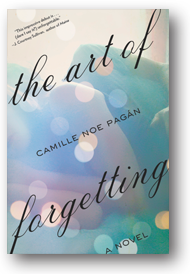
I was about halfway through the first draft of this novel when the title, The Art of Forgetting, came to me. It seemed spot on—and happily, my editor and publisher agreed! My agent tells me this is extremely rare, so I don’t anticipate it will happen for future novels.
What new things did you learn in writing this novel? For example, did you already have knowledge of Traumatic Brain Injury?
I’m a journalist by day, and I was writing an article about brain health when a doctor pointed out that brain injury is extremely common in women under the age of 40—more than breast and most other cancers, in fact. I started to research the topic and discovered that even a seemingly-small injury could lead to significant personality changes. It wasn’t long before I realized I had a great book plot on my hands. I did a lot of research while I was writing Forgetting—combing through medical journals, interviewing neurologists and even people who’d experienced brain injuries. What I learned is that while there are often commonalities in individuals with brain injury, no two brain injuries are identical in their symptoms. As a novelist, this gave me leeway to be creative with my plot and characters.
It seems your characters negotiated their friendships with care. All of them had their own unique qualities, their own memories, and perspectives shaped by remembered things. How did you balance the many needs, issues, and negotiations which were at work?
It was an extremely organic process: I tried to create characters who were true to life, from their larger motivations. I have to give a lot of credit to my agent and editor; this being my first novel, I made a lot of rookie mistakes—like having too many side characters—during earlier drafts. My editor, especially, helped me cull unnecessary information in order to streamline the story.
Who was your most challenging character to listen to, write, create? Do you know why?
Julia, hands down. She’s a very strong personality—someone with natural confidence who rarely doubts her own decisions. For that reason, she’s magnetic to Marissa, who can be meek and wishes she herself was naturally more confident.
Even after suffering a brain injury that alters her personality, many of Julia’s (often unlikable, if realistic) traits remain. Some readers told me that they hated Julia from start to finish, but the response I hear more often is that readers have had someone similar to Julia in their lives at one point.
Your story has a lot about body image, physical activity, and health in it. From running and dancing to building young girls, there’s a lot there. All of these are lengthy, relevant topics for children, youth, and adult readers. What kind of reception have you gotten relative to those topics? Any interesting feedback or stories from your readers?
You know, as someone who’s been writing about women’s health and psychology for more than a decade, I had a lot of material to work with and it felt natural to use it for my first novel. Women, especially younger women, spend a lot of time thinking about body image—not just their own, but body image as a concept, and what it means to be a woman comfortable in your own skin. I wanted this to be reflected in Marissa, who works at a women’s health magazine and struggles with some of the messages that her magazine conveys to readers.
The very best feedback I’ve received has been from readers who’ve suffered brain injury or who know someone who’s experienced brain injury. Not long after my novel was published, a woman who had copyedited the book contacted me. As it turned out, someone close to her had recently suffered a brain injury, and she said that my novel had been a source of comfort during that difficult time. It was the highest praise I could have received. To connect on that level, even with one reader—for me, that’s really the whole point of writing.
How would you like people to talk about this novel? What connections would you instigate from the book, if you could do so?
I didn’t write the book with a message in mind; the most I hope for with any novel is that readers will laugh a little and maybe cry a bit, too. The books that move me most are both funny and sad.
Discuss this stage of your novel’s life. It’s written, edited, and published. What are you doing with, for, and because of it now?
After 18 months of promoting Forgetting—before and during the hardback release, and then again when the paperback came out two months ago—I had to step back and just let it be. Right now, I’m focused on making my second novel as strong as it can be, which requires solid blocks of writing time and mental focus. Which means stepping away from Facebook, Twitter and blogs. It’s not easy!
What are you reading these days?
I’m just about finished with Nora Ephron’s HEARTBURN; the woman was a comedic genius. I recently read Matthew Norman’s terrific debut, DOMESTIC VIOLETS, which reminded me very much of Jonathan Tropper, who is one of my all-time favorite authors (I can’t wait for his latest, ONE LAST THING BEFORE I GO). I also enjoyed Gillian Flynn’s GONE GIRL—that’s sitting on the NYT bestseller list for a reason!—and Deborah Copaken Kogan’s THE RED BOOK. I’ve read a few that I didn’t love, too, but mum’s the word on those. It takes a lot of work to string 80,000+ words together in a coherent manner, so even if I didn’t connect with a book, you’ll never catch me trashing it or its author.
Are you working on anything you can talk about?
Absolutely! I just wrapped up the first draft of what I hope will be my second novel. It’s about four childhood friends who grew up in the Detroit area, one of whom becomes famous, and what happens when they reunite in their mid-thirties. I’m also reworking a historical fiction novel that I wrote last year. It needs a lot of work, but I have my fingers crossed that it will be published one day!
This book was graciously provided to me by Judson Press.
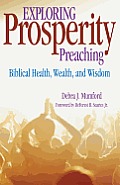
MW: I think one critical element within your book is faith. What is faith?
DM: Faith is the belief that God is able to do all things – even the seemingly impossible.
MW: Tell us what makes prosperity preaching so attractive. It’s a relatively recent development.
DM: At the core of prosperity preaching’s appeal that the hope that the American Dream which for many people has been elusive, can be realized by faith. If they have faith in God and are obedient to (what they are taught by prosperity preachers is) the word of God, they can be rich and enjoy perfect physical health.
This preaching is also attractive because it is cloaked inside of sound theology that sounds good. For example, four very appealing traits with which most Christians agree are:
Immovable, unshakeable faith. Nothing is impossible for God. So if Christians believe and do not doubt, nothing will be impossible for them.
Unlimited hope. Hope for a more abundant life compels believers to pray and believe for a tomorrow that is better than today. It is hard to live in this world without hope.
Personal accountability. Believers are taught to live righteous lives that are pleasing to God through prayer, reading the bible, being faithful in marriage, giving of tithes and offerings.
Importance of the Holy Spirit. Listeners are taught that the power of the anointing of the Holy Spirit is necessary for them to fulfill God’s will for them in the church and in the world.
The problem with each of these teachings is that they are taught as means of achieving financial wealth and perfect physical health. Though we all like to be beneficiaries of God’s blessings, we should strive to praise God and live Godly lives because we simply want to please the God who created us and sustains us daily.
MW: Why might other Christians have resisted this kind of hermeneutic in the past?
DM: Some people may have resisted this hermeneutic in the past because its message is problematic is many ways:
The preachers obtain their consistent message of prosperity by proof texting or interpreting verses of the bible out of context. Sighting isolated verses and ignoring the verses that come before and after them can make the bible mean almost anything.
When people do not become wealthy or have problems with their health, they (as individual followers) are blamed. Preachers tell their members that if they do not experience the wealth and health benefits prosperity preachers promise, they are obviously doing something wrong. Perhaps they do not have enough faith or are not working through all of the steps as the preachers instruct.
Adherents are encouraged to be individualistic in their thinking rather than communal. They are taught to pray and believe for their own prosperity rather than for prosperity for all people.
Social justice is overlooked. Members are taught that social ills of the world will disappear as more people are converted to Christianity. They are not taught that as Christians they have a moral and ethical responsibility to help all people and not just themselves.
MW: Talk about how your brother’s experience and your father’s ministry helped you in sustaining a critical book that was loving, analytical, and even. You could have been sharper in your exploration, but you weren’t. Yet you weren’t soft in your clear, pointed affirmations or disagreements either.
DM: It is because my father is a prosperity preacher and my brother was a member of a prosperity church that I worked to achieve balance in the book. My goal was to affirm teachings that were positive and to critique those that were not. I aimed for balance because I personally know that there are good and faithful Christians who are members of prosperity preaching churches and who preach and believe in the prosperity message. It is these people whom I had in mind when writing the book. I want them to understand from whence prosperity preaching originated and the positive and negative aspects of its teachings. I also wanted to offer them alternative ways of interpreting the bible and understanding theology.
MW: One of the important things you do, among many, is expand what poverty means. What is poverty? And can you talk about why the prosperity message, as it has been, has not necessarily been a message that for the world as much as for North America?
DM: I like the World Bank’s definition of poverty:
Poverty is pronounced deprivation in well-being, and comprises many dimensions. It includes low incomes and the inability to acquire the basic goods and services necessary for survival with dignity. Poverty also encompasses low levels of health and education, poor access to clean water and sanitation, inadequate physical security, lack of voice, and insufficient capacity and opportunity to better one’s life.
Their definition of poverty transcends money. It speaks to quality of life which I believe is what makes poverty so problematic. When people are poor, they are not only deprived of basic needs such as food, clothing and shelter, they are often also deprived of the opportunity to make their lives better. They cannot afford education and training that can help them get well- paying jobs. In our capitalistic society, money creates power. As a result, the opinions and needs of the poor are often overlooked and underrepresented. Hence, many of the poor find themselves caught in a cycle of poverty.
There are many poor in the United States of course. However, even people we consider poor in our nation, are not as poor as people in many other nations. Though it would seem that the prosperity message would not resonate well in very poor nations, it actually does. Prsoperity churches are located in nations such as Brazil, Kenya, and the Ukraine and many African countries. Many of the people who attend those churches want to be rich like people in the United States. However, the opportunities for them to become wealthy are often even more limited than they are in the US. Preaching prosperity in these poor nations is an especially egregious enterprise.
MW: I imagine you spend some time as a professor appealing to others to lean into the Bible and other sacred texts. In some ways you even put your own way of studying on the page. Why do you think it’s important to study the scriptures?
DM:The bible has been in the past and continues to be a sacred text for those of us who claim to follow Christ. The scriptures provide guidance for how we should treat our sisters, brothers, mothers, fathers, and our neighbors. It defines who our neighbors are. It offers encouragement when we want to give up, comfort when we are lonely and disheartened, strength when we are weak, and the opportunity to lament and grieve when we have suffered loss. The bible also informs the ways we see the world – that which we believe to be good and that which is bad. Unfortunately, the bible has also been used to discriminate against people for reasons such as gender, race, class, age, and sexuality. By learning to read the bible for ourselves, we will be better equipped to discern whether the messages being preached in our midst are true to the will of God. 2 Timothy 2:15 instructs us to study so that we can rightly divide the word of truth. We should all be willing to take the time to study the word of God for ourselves so we can better understand what God is calling us to do.
MW: It seems that the Word of Faith movement is, among other things, a severe attempt to apply the scriptures to a listener’s life. What are some ways you’ve suggested students/readers can approach, read, and apply the scriptures?
DM: Always pray for understanding before reading the scriptures. Then (1) read the text for basic understanding being sure to read as much of the chapter and book in which the text is found as possible; (3)use bible dictionaries, lexicons, and/or commentaries to define important and recurring words and phrases; and (4) research the geography, customs, current events, and politics of people in the text. This particular approach can enable people who read the Bible to mine its depths for deeper understanding. After following these steps, read the text again with the definitions and background information in mind. Then pray for God to help you determine how this text applies to your life.
MW: I kept thinking about theological education as I read your work. What do you see is the role of seminaries in educating leaders and non-leaders? How might congregations enhance what is happening in seminaries and divinity schools, again, for leaders and non-leaders?
DM: I believe that pastors and preachers are spiritual physicians. We would not allow medical personnel to attend to our needs without having been trained in their fields. Theological education is the training ground for pastors, preachers and religious educators. In seminaries and divinity schools women and men learn how to critically engage biblical texts, how to evangelize, how to think theologically about the world and its social conditions, how to preach and teach to different age groups and cultures, how to work effectively within the local culture of the congregations (church politics), how to engage with people who are theologically different they, and how to handle conflict. They also learn approaches to ministry to help them meet the many needs of their congregations.
People who are trained in seminaries can then teach people in their congregations how as well. Churches and denominational leaders can require their leaders earn degrees from seminaries and divinity schools. They can also encourage their members to attend seminars, lectures and conferences sponsored by theological institutions in their area. This way, all of the members will be exposed to theological education on some level.
MW: I appreciate how you gave several examples of ministers from the WOF and from the African American prophetic stream. Who are some of the preachers we who serve in churches need to hear, read, or study? Who can we not forget in your opinion, particularly from the prophetic stream?
DM:Donna Allen – Pastor, New Revelation Church, Oakland, California
Teresa Fry Brown – Professor of Homiletics and Director of Black Church Studies Candler School of Theology
MW: You talk about Christian entitlement and the danger of it. Explain that term and its accompanying dangers.
DM:Christian entitlement is the belief that only people who choose to follow particular teachings of Christ are entitled to certain benefits. It can cause people to ignore issues of social justice. If people believe they are the only people who deserve particular blessings from God, they may be less inclined to help people who believe differently than they. People who have the attitude of Christian entitle believe that, if people who believe they are being discriminated against would just be faithful, they would not have any problems. This attitude ignores the reality of systemic issues such as racism.
There may also be a sense of false pride or moral superiority. The moral superiority can cause people not to admit that though they are saved and sanctified, they are not perfect and should therefore extend to other people the grace they would like God to extend to them.
MW: What are you reading these days?
DM: I’ve been reading through the book of Job. I am always fascinated by the conversations he has with his friends throughout his ordeal. It raises questions about whether God tests us and how we respond to trials in our lives. It also raises questions about our faith in God – is it unconditional?
Books I have read recently include:
Your Spirits Walk BesideUs by Barbara Dianne Savage. Here she looks at a history of the intersections of African American religion and life through the works of icons like W.E.B. DuBois, Benjamin Mays and Carter G. Woodson, Mary McCleod Bethune, and Zora Neale Hurston.
A Quiet Revolution: The Veil’s Resurgence, from the Middle East to America by Leila Ahmed. Ahmed explores the issue of veiling for Muslim women by revealing the political, social, and religious issues at play in the lives of women who veil or do not veil.
The Anointed by Randall J. Stephens and Karl W. Giberson. The authors examine how leaders like James Dobson, Jerry Falwell, Ken Ham, Peter Marshall, Pat Robertson, Tim LaHaye, Oral Roberts came to wield their influences in the evangelical community and public square given the reality that many of them had few academic credentials (i.e. Ken Ham, founder of the Creation Museum, convinced thousands of people of the viability of his museum which rejects the concept of evolution).
MW: How can readers keep in touch with you and stay aware of your work?
DM: The seminary website and the website for my book are good places to stay aware of my work:
I am very thankful to have read Professor Mumford’s book. Share this interview with anyone you think would be interested in her work.
Professor Mumford mentioned Teresa Fry Brown above. Listen to Dr. Brown’s description of identity, preparation, and the preaching moment. There are a few pauses in the video, but you probably need them to think through her words…
I just finished Will and Spirit by Gerald May, a commitment of careful reading. I took a year and a half to read it slowly while reading other things. Here’s a list of the ten books in my current pile. I’m holding the ones with asterisks now:
The Memory Palace by Mira Bartok
Blacks by Gwendolyn Brooks*
The Year of Magical Thinking by Joan Didion
Exploring Prosperity Preaching by Debra Mumford*
Lying Awake by Mark Salzman*
Faith in the Fire by Gardner C. Taylor*
Mothers and Sons by Colm Toibin
An Altar In The World by Barbara Brown Taylor
Allah: A Christian Response by Miroslav Volf
A Happy Marriage by Rafael Yglesias
Any recommendations for me, particularly for novels, short story collections, memoirs, or psychology and theology?
I still think of myself as a person learning to appreciate fiction. I’ve been reading fiction actively for about seven years, reading more fiction than non-fiction as I go along. For the last couple years I’ve been getting more into short story collections. They are both rewarding and brief.
Here are a few recommendations, in case you’re looking for something good to read, alphabetized by author name.
The Thing Around Your Neck by Chimamanda Ngozi Adichie. This collection is full of grace and care, and it describes well the things that bind people. I read it a while ago. I was thankful to get it after reading both of Chimamanda’s novels, two lyrical works she’s won many praises for. The stories were just as impressive, just as wonderful, and just as searing. Reading them made me appreciate language more, made me think better about others and how I look at their lives when they are very different from me.
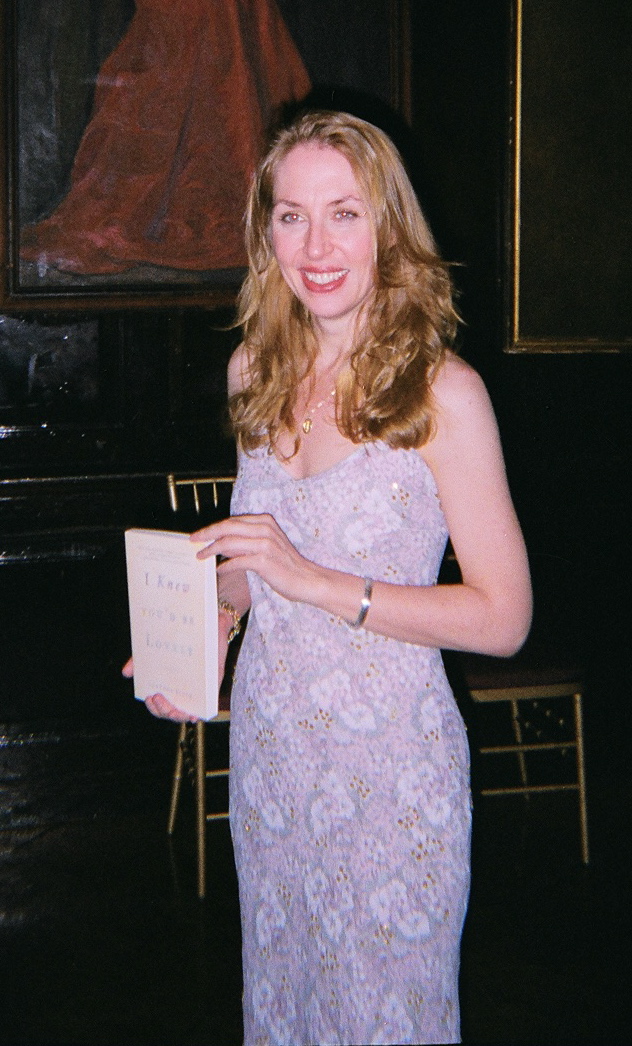
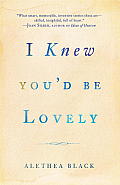
I Knew You’d Be Lovely by Alethea Black. I finished reading this collection on a trip to the Boston area. It was a treat to read, in part, because the author is from that region. I soaked these stories up. They were pointed to the heart and they illuminated the varied ways one event can take on significance in people’s lives. I read it thinking through the great detail and world-building which came along with the fresh plot lines. I appreciated seeing the cast of characters giving pieces of their lives to me. Alethea just participated in a blog interview here. Leslie won a copy of the collection.
Vida by Patricia Engel. I read this collection two years ago, when I put myself on a short story diet for a few months. I enjoyed entering into the families, neighborhoods, and conversations Engel created. I felt like I could see and feel and smell and hear the conversations in her dialogue, like I could sit in front of the scenes she wrote, meeting the men and women on those pages like they were friends and enemies. The collection was refreshing and stood up and sang right with some of the other stuff I thumbed through around that time. I’m still waiting for the author to publish more stuff. I should email her and tell her.
Before You Suffocate Your Own Fool Self by Danielle Evans. This delightful collection came to me at the recommendations of writers and bloggers all over the place back when it was first published. I was glad to get my hands on it and glad to read each story. The author depicted the youth and young adults with grace, care, specificity and humor. She dealt with issues of identity and race and love. When I think about the stories, I smile. I’ll probably be re-reading them soon.
Gumbo edited by E. Lynn Harris and Marita Golden. This is a feast that I’m still sniffing, biting and savoring. It is more than a collection; it’s a massive tribute to two writers (Zora Neal Hurston and Richard Wright) and an undertaking of support for the writing foundation in their name which Marita Golden started. I’m about a fourth of the way through the 800 page collection. I’ll be reading it for years, but it will be responsible for the love and appreciation I continue to nurture for black writers and all writers. This collection is a guide for me, a lifesaver for me, a friend I can call when I can’t sleep or write or when I don’t feel like doing either.
Lost in the City by Edward P. Jones. I enjoyed both collections I’ve read by this author, but I came to Lost first. It was also shorter than the second collection, which is why I’m commending it. Most readers who are new to short stories look for reasons not to take them on. Length can be a reason. But this collection and the other work I’ve read by Edward Jones is still teaching me how to be a patient, careful reader. His work teaches me how to enjoy a created world on a page. He is a writer the world needs to read with love and open ears.
Unaccustomed Earth by Jhumphi Lahiri. I read this book because a coworker told me I should. That coworker maintains a good place in my mind because of that recommendation. I may be setting up evaluations of people where I determine how much I like them based upon what they tell me to read. The people, places, and environments I read in Lahiri’s collection were enticing and probing and edifying. More than anything, I think this collection sparked my imagination, made me want to write better, made me want to read with love and write with depth. Other books have pulled that same desire from me, but I remember feeling that while reading this.
I Got Somebody in Staunton by William Henry Lewis. This is collection is a tutor for me right now. I’ve read through it, both slowly and quickly because the pages were a combination of entertaining and elegant. Lewis did a great job to build characters who stick with you, incorporating humor and depth and color and breath. I think these stories are truly worth lingering over, spending time with, even though reading them doesn’t require time commitments. That’s the mark of a good story to me.
Elbow Room by James Alan McPherson. If there’s one book of short stories I’d love to get as a gift, it would be this one. I already read it, but I rented it from the library when I did. I haven’t bought it yet because I haven’t seen it in the bookstore. It’s dated, but it’s worth reading and re-reading. It’s worth owning. I’d trade ten books on my shelf for this one if I had to. I’m coming close to saying it’s one of the best books I’ve read. I just don’t want to appear presumptuous in saying so. The author won a Pulitzer for his work, and the pages still speak to readers. I think you should read this book at the library and then go to your closest bookstore and do what I haven’t–demand it right away.
Drinking Coffee Elsewhere by ZZ Packer. I read this collection a few years ago, and I still recall how well Packer introduced me to her characters, to their worlds particularly as women, and to an empathy that I’m steadily cultivating in my life. I think of her stories as an education in fiction and in living. This collection should be read and read again. Her writing is precise and picturesque and spicy.
MW: Tell us about you, perhaps before, behind, or beneath the pages of your work.
AB: I lead a fairly simple life. I live in a house on a lake with a wood-burning stove and a little dog (a dappled miniature dachshund) who’s sleeping beside me right now. I’m a night owl, which is too bad, because I’ve heard the sun rises over the lake. But the moon rises over it, too, so it all works out.
MW:How did you start writing, and how do you sustain your writing life?
AB: I started writing after my sister gave me a 1994 volume of The Best American Short Stories. Something about the stories in that anthology gave me a feeling of having come home. For many years I sustained my writing habit by proofreading for BusinessWeek, but I was laid off in 2009 when the magazine was bought by Bloomberg.
MW: What can you tell us about your writing process? What helps you nurture your work?
AB: I tend to write a lot when an idea is exciting to me and a project feels urgent — then I can really take the night owl tendency to extremes — and not to write very much when things aren’t hot. This is probably the exact opposite of what you’re supposed to do, so I wouldn’t necessarily recommend it, but it’s how things seem to work for me. I find ideas everywhere; the book I’m working on now takes its opening line from something a writer named Mo told me a couple of years ago at the all-night post office across from Madison Square Garden.
MW: Can you give us a view into your world of writing short stories? What makes the form of fiction interesting to you?
AB: I like intelligent stories with humor and heart, and that’s the kind I try to write. The thing I love about storytelling — I’ve been thinking about this lately — is that sense it can give you that everything is somehow okay, even when things are stupendously, outrageously not okay. There’s a mysterious sense of consolation that accompanies a well-told story.
MW: Your stories link through decisive moments. Each one looks to emerge from or respond to a slice of time that is significant for your characters. Did you always have that link or did that develop as you wrote?
AB: I had a teacher who told us that a writer should always be asking: “Why is this night different from every other?” I’ve tried to abide by that, even when it’s not Passover. The thing that interests me are those moments in life — even if they are subtle — when everything changes.
MW: How were you able to keep the stories fresh and engaging while keeping that common quality to them?
AB: Thank you for the compliment! I tend to write about everyday people in everyday situations but I try to find that spark of the extraordinary. If I can’t keep a story fresh and engaging, it goes in the trash and I start over. Life is short.
MW: The stories take place in the Northeast mostly—with my city being a shining exception! Do you see geography as important either for your stories in the collection or for your self as an author?
AB: Who doesn’t love Chicago? Actually, I’m not very interested in geography, and I don’t think of myself as a regional writer in any sense. When other writers start to talk about geography, that’s usually when I take a nap. The landscape that interests me is the human heart.
MW: What are you reading or about to read these days?
AB: I just read CORPUS CHRISTI by Bret Anthony Johnston; I’m partway through VOLT by Alan Heathcock; and I’m about to pre-order THE WORLD WITHOUT YOU by Joshua Henkin.
MW: Are you currently working on things you can talk about? If so, what? And how can my readers keep in touch with you?
AB: My agent has my next book, a short novel called THE KEY, about a woman who’s missing her dead father when a stranger in Grand Central Station hands her a key. The next next book is about two brothers, one successful and one feckless, who spend a weekend together. I love hearing from readers — it’s been my favorite part of the publishing experience. They can find me at http://aletheablack.com.
Now for the giveaway. If you’re interested in getting a free copy of Alethea’s collection, leave a comment with the title of the last book you read and a sentence about what you thought of the book. And maybe tell other people to do the same. Leave the comment by Friday 8, 11:59p.m. I’ll choose a winner sometime Saturday and email the winner for a mailing address.
Have you heard of Toni Morrison’s newest book, Home? This videos quickly covers the Medal of Freedom recipients and then offers an interview with the prizing-winning author. She talks, among other things, about “writing less to make it more.” Everything she says is worth hearing. Enjoy this enticing introduction of her latest novel.
The other week I finished Stanley Hauerwas’s memoir, Hannah’s Child. Hauerwas spoke a bit in the beginning of his book about the reasons he wrote a memoir. He mentioned the obvious in that theologians are not known for completing such works. He said by their nature and by the nature of their work theologians don’t spend many energies in the apparent effort of telling their own stories as much as they tell another story, the story of God and God’s things. Of course, that’s a very rough summary of his introductory remarks, in my own words.
Coming away from his book, thinking it through slowly while I read it, I am convinced and glad at how peopled his remembrances are. He even said that he nearly subtitled his memoir so as to make it a clear tribute to his friends. Over and again he commented on how necessary and significant others were for the work he had done and the work he was doing. Friends–and he named them and told their stories as well–were the ones who framed how this thinker about God told of his life.
I’m not writing a memoir and I won’t most likely, but I think Hauerwas, theologian that he is, has left us with more than his own story in Hannah’s Child. I think he’s given us a method of doing theology. I think he’s given a way of going about the work of God and God things and in God’s world. I think his example of pointing to people, getting into trouble and fun with them, and of making a life for and full of others is more than commendable for us, whether or not we consider ourselves theologians.
Of course, we all talk and make sense of God; in that way, aren’t we all theologians? But we can benefit from the way this teacher and servant has chronicled his life. If you’re interested, please read the memoir. The content in the first pages is worth the purchase. Then there’s the added benefit in getting through the pages.
Have you seen this essay, The Second Shelf, by Meg Wolitzer, over at the NYT? You can read the entire essay by clicking here.
If “The Marriage Plot,” by Jeffrey Eugenides, had been written by a woman yet still had the same title and wedding ring on its cover, would it have received a great deal of serious literary attention? Or would this novel (which I loved) have been relegated to “Women’s Fiction,” that close-quartered lower shelf where books emphasizing relationships and the interior lives of women are often relegated? Certainly “The Marriage Plot,” Eugenides’s first novel since his Pulitzer Prize-winning “Middlesex,” was poised to receive tremendous literary interest regardless of subject matter, but the presence of a female protagonist, the gracefulness, the sometimes nostalgic tone and the relationship-heavy nature of the book only highlight the fact that many first-rate books by women and about women’s lives never find a way to escape “Women’s Fiction” and make the leap onto the upper shelf where certain books, most of them written by men (and, yes, some women — more about them later), are prominently displayed and admired.
This is a tricky subject. Bringing up the women’s question — I mean the women’s fiction question — is not unlike mentioning the national debt at a dinner party. Some people will get annoyed and insist it’s been talked about too much and inaccurately, and some will think it really matters. When I refer to so-called women’s fiction, I’m not applying the term the way it’s sometimes used: to describe a certain type of fast-reading novel, which sets its sights almost exclusively on women readers and might well find a big, ready-made audience. I’m referring to literature that happens to be written by women. But some people, especially some men, see most fiction by women as one soft, undifferentiated mass that has little to do with them.
Recently at a social gathering, when a guest found out I was a writer, he asked, “Would I have heard of you?” I dutifully told him my name — no recognition, fine, I’m not that famous — and then, at his request, I described my novels. “You know, contemporary, I guess,” I said. “Sometimes they’re about marriage. Families. Sex. Desire. Parents and children.” After a few uncomfortable moments he called his wife over, announcing that she, who “reads that kind of book,” was the one I ought to talk to. When I look back on that encounter, I see a lost opportunity. When someone asks, “Would I have heard of you?” many female novelists would be tempted to answer, “In a more just world.”
The truth is, women who write literary fiction frequently find themselves in an unjust world, even as young single women are outearning men in major American cities and higher education in the United States is skewing female. As VIDA, a women’s literary organization, showed in February in its second annual statistical roundup, women get shockingly short shrift as reviewers and reviewees in most prestigious publications. Of all the authors reviewed in the publications it tracked, nearly three-fourths were men. No wonder that when we talk about today’s leading novelists — the ones who generate heat and conversation and are read by both men and women — we are talking mostly about men.
Exploring Amazon, I came across a category called “Women’s Fiction” where I am listed, along with Jane Austen, Sophie Kinsella, Kathryn Stockett, Toni Morrison, Danielle Steel and Louisa May Alcott. (Needless to say, Amazon fits us into other categories as well.) If there is a stylistic or thematic link to be found among us, it’s hard to see. It should be noted that Amazon puts the occasional man in this category. Tom Perrotta is there, and so is Jonathan Franzen (albeit the Oprah’s Book Club edition of “Freedom”), which should provide yet more fodder for those who complain of his ubiquity. Both men write about relationships and also about suburbia; is that why they’re included?
Amazon is clearly trying to help readers find titles they want. But any lumping together of disparate writers by gender or perceived female subject matter separates the women from the men. And it subtly keeps female writers from finding a coed audience, not to mention from entering the larger, more influential playing field. It’s done all the time, and not just by strangers at parties or by various booksellers that have no trouble calling interesting, complex novels by women “Women’s Fiction,” as if men should have nothing to do with them. A writer’s own publisher can be part of a process of effective segregation and vague if unintentional put-down. Look at some of the jackets of novels by women. Laundry hanging on a line. A little girl in a field of wildflowers. A pair of shoes on a beach. An empty swing on the porch of an old yellow house.
Compare these with the typeface-only jacket of Chad Harbach’s novel, “The Art of Fielding,” or the jumbo lettering on “The Corrections.” Such covers, according to a book publicist I spoke to, tell the readers, “This book is an event.” Eugenides’s gold ring may appear to be an exception, though it has a geometric abstraction about it: the Möbius strip ring suggesting that an Escher-like, unsolvable puzzle lies within. The illustration might have been more conventional and included the slender fingers and wrist of a woman, had it not been designated a major literary undertaking.
I took semiotics back at Brown University in the same heyday of deconstruction in which Eugenides’s novel takes place (he and I were in a writing workshop together), but I don’t need to remember anything about signifiers to understand that just like the jumbo, block-lettered masculine typeface, feminine cover illustrations are code. Certain images, whether they summon a kind of Walker Evans poverty nostalgia or offer a glimpse into quilted domesticity, are geared toward women as strongly as an ad for “calcium plus D.” These covers might as well have a hex sign slapped on them, along with the words: “Stay away, men! Go read Cormac McCarthy instead!”
I sometimes wonder if book length, intentionally or inadvertently, signals to readers a novel’s supposed importance. Certain novelists who have achieved high literary profiles, like David Foster Wallace, Haruki Murakami and William T. Vollmann, have all published extremely long books — in the case of Wallace and Vollmann, over 1,000 pages. With some notable exceptions, women have not published many well-known doorstops since Doris Lessing’s “Golden Notebook.” As it happens, we live not only in the era of the abbreviated attention span, but also in the era of the book group, whose members often set a strict page limit. Yet does the marketplace subtly and paradoxically seem to whisper in some men’s ears, “Sure, buddy, run on as long as you like, just sit down and type out all your ideas about America” — what might in some extreme cases be titled “The Big Baggy Book of Me”? Do women reflexively edit themselves (or let themselves be edited) more severely, creating tight and shapely novels that readers and book groups will find approachable? Or do they simply not fetishize book length one way or the other? (And for that matter, would most long-form men say they were just letting content seek form?)
All this isn’t to say megabooks are necessarily better; in their prolixity perhaps it’s easier for them to in fact be worse. But they are certainly louder.
Over centuries, the broad literary brush strokes and the big-canvas page have belonged mostly to men, whereas “craft” had belonged to women, uncontested. It’s no wonder that the painted-egg precision of short stories allows reviewers to comfortably celebrate female accomplishment, even to celebrate it prominently in the case of Alice Munro. But generally speaking, a story collection is considered a quieter animal than a novel, and is tacitly judged in some quarters as the work of someone who lacks the sprawling confidence of a novelist.
My sense is that like most men, most women are writing at the length they want to write — but they’re not always getting the same reward. Men like Ian McEwan and Julian Barnes have written very short, highly regarded and widely read books in recent years. Yet if a woman writes something short these days, particularly if it’s about a woman, it risks being considered minor. (“Spare” is the oft-used word of faint praise.) Yet if, on the other hand, a woman writes a doorstop filled with free associations about life and love and childbirth and war, and jokes and recipes and maybe even a novel-within-a-novel, and anything else that will fit inside an endlessly elastic membrane, she risks being labeled undisciplined and self-indulgent.
Sure, Hilary Mantel’s “Wolf Hall” is pretty massive, but I suspect that a historical work — one that teaches the reader about a subject (in this case a male one) — is considered more acceptable from a woman than, say, the kind of long “sensibility” novel written more frequently by men. Julia Glass, who won a National Book Award in 2002 for her novel “Three Junes,” said: “Many readers ask why I write so often from a male point of view. I have theories, but I don’t really know. I don’t game my books toward a male audience, and yet the point of view may help their reception. I think men are more accepting of my books than they would be if the points of view were always female.”
Characters matter to a great extent, and novels that involve parents and young children seem at first glance to be considered the potentially sentimental province of women. Except, of course, when those parents and children are male, as is the case in “The Road” and “Extremely Loud and Incredibly Close,” both of which feature father-son duos and have been praised enthusiastically by men and women.
But some of the most acclaimed female novelists have written unapologetically and authoritatively about women. And the environment needs to be receptive to that authority, recognizing and celebrating it in order for it to catch. It seems no coincidence that some of the most esteemed women writing today — Toni Morrison, Joyce Carol Oates, Margaret Atwood, Doris Lessing, Marilynne Robinson — came to prominence at an unusual moment in time when the women’s movement could be felt everywhere. Stories, long and short, and often about women’s lives, suddenly mattered to the cultural conversation. This period, the 1970s and to an extent the early ’80s, initially appeared to create an entirely different and permanent reality for female fiction writers. Men were actively interested in reading about the inner lives of women (or maybe some just pretended they were) and received moral kudos for doing so. Whereas before that a lone woman might be allowed on the so-called men’s team, literary women began achieving critical mass and becoming more than anomalies. But though this wave of prominent authors helped the women who followed, as time passed it seemed harder for literary women to go the distance. As Katha Pollitt, the poet and literary critic, says: “I think there’s always space for a Toni Morrison or a Mary McCarthy, but only one of them at a time. For every one woman, there’s room for three men.”
I follow Kelcey Parker’s blog, phdincreativewriting, and Kelcey recently posted this interview with Amina Gautier. I hope you find it interesting and inspiring. You can visit Kelcey’s blog to see her other interviews by clicking here.
How Amina Gautier Became a Writer
This is the next installment in the How to Become a Writer interview series, which will post here at Ph.D. in Creative Writing every other Sunday until I run out of writers to interview, or until they stop saying yes. Each writer answers the same 5 questions. Thanks to Amina for saying yes!
1. Why did you want to become a writer?
I came of age during the anti-apartheid movement in the US; I was an adolescent when Stevie Wonder recorded his anti-apartheid song, when the play Sarafina!toured New York, when the Cosby spin-off A Different World was weaving anti-apartheid material into its episodes, and when Nelson Mandela was not yet free. At home, my mother had a copy of Kaffir Boy and when I entered ninth grade, Nadine Gordimer’sJuly’s People was selected as the book in common, the one text all incoming students would have to read and discuss communally. I was surrounded by adult and peer discussions of apartheid, which also led to conversations wherein which it was easy to draw parallels between the restrictions placed upon native (black) South Africans during apartheid and on African Americans during slavery and after the Reconstruction, one of the most obvious being restrictions upon literacy and education. This atmosphere impressed upon me the importance, power and danger of literature. When factions attempt to create oppressed societies, one of the foremost ways they go about doing so is by banning thought-provoking literature. It is no accident that slaves were forbidden to read and write, or that women were long kept out of universities. Knowing this so early on made me believe that being a writer was the best thing one could be and that writing literature was the most revolutionary, dangerous, powerful, empowering and important thing a human being could do.
2. How did you go about becoming a writer?
Short Answer: I have always been a writer.
Long Answer: I played with dolls and listened to music. When I was a child, I imbibed many elements of craft without any conscious effort on my part, learning quite a bit about writing stories from playing with my toys and listening to music. Any child who has played with toys—be it Barbie or Transformers—has the makings of a fiction writer. As any kid knows, there’s no game without a premise or story. Playing with dolls went a long way to helping me learn the intricacies of plot. No matter what I had in mind for Barbie and Ken, Midge or Skipper could always interfere. Enter subplot. Enter characterization. Enter forward moving action motivated by a character’s wants or desires.
The first stories I ever recognized as stories were actually songs. There was no way to live in my childhood home and not be exposed to music. When I was younger, I was part of an extended family and I had only to walk from one room to another to hear a different song i.e. a different story. My grandmother played gospel, my cousin favored hip hop, and my uncle preferred rock, but it was in my mother’s room, where she played soul music that I first absorbed stories. The songs I heard: Ashford and Simpson’s “Hi-Rise” The Temptations’ “Just My Imagination” and “Since I Lost My Baby,” Luther Vandross’s “Superstar/Until You Come Back to Me,” The Stylistics’ “People Make the World Go Round” and “Children of the Night,” Aretha Franklin’s “Jump to It” and “Jimmy Lee,” Natalie Cole’s “Just Can’t Stay Away,” Blue Magic’s “Sideshow” and Roberta Flack and Donny Hathaway’s duet “You Are My Heaven” were complete and linear narratives set to music. They had beginnings, middles, and ends. If you took away the musical accompaniment, you would have short stories.
In the more formal sense, I began with writing poetry, in the way that most elementary school kids in Brooklyn begin with writing poetry. My language arts teacher exposed us to poetry around the fourth grade and made us kids in the gifted class enter a variety of poetry contests. My poems won a bunch of these school-wide, district-wide, borough-wide, city-wide contests. One particular win allowed me to meet the mayor (Koch, at the time) and shake his hand. All of the contest wins came with trophies and savings bonds. All in all, it was a good deal and it wasn’t anything I thought very much about. When I got to Stanford, I majored in English with a Creative Writing Emphasis (the precursor to the minor which the university now offers). The creative writing courses were all taught by Jones Lecturers (former Stegner Fellows who stayed on to teach) and entry into the courses was by lottery only.
As lottery would have it, my number came up for the fiction workshop first, though I continued to write poetry. My fiction instructor shared an office with one of the poetry instructors and one afternoon I brought some of my poetry to Chris Wiman for some feedback. After showing him my poems, he promptly shot me down. And—here’s the thing—I let him. I realized that I had no desire to be a poet if I had to train to do it. This was partly because the rewards of it had come too easily to me as an adolescent and partly because I just wasn’t interested enough. That’s how I knew I was a fiction writer. I’d only been in the workshop for one quarter, but I already knew that if I’d shown my fiction teacher my stories and he told me I would never make it and advised me to quit, I would not have been meek and walked away with my tail between my legs. I would have ignored him, marched to my dorm, written ten brand new stories, and made him choke on his words. After only weeks, I was fully invested. There was no one in the world that could discourage me. In order to be a fiction writer, I was willing to be in it for the long haul, to work as hard as it took, to write as many hours as it required, to dump as many boyfriends as it necessitated and to lose as much sleep as I could afford.
3. Who helped you along the way, and how?
Odd as this may seem, my Latin teachers helped me to become a good writer. I started studying Latin in fifth grade and continued with it all the way through high school to AP Latin my junior year, after which there was nothing left to study until college. The rules of grammar, which I found confusing or irregular in English, made sense to me when I viewed them through the lens of this non-native language. Exposure to Latin will, of course, improve anyone’s vocabulary, but the focus on word formation, etymology, derivatives and nuanced language will serve the fiction writer a good turn. Since no one expects secondary school Latin students to prepare for lives as theologians or priests, much of the material students learn to translate is secular rather than ecclesiastical. Thus, Latin exposed me to rhetoric and poetry. Although I learned first through another language, I was already well-versed in scansion, metaphor, synecdoche, metonymy, hyperbole, irony, litotes, caesuras and all of the other rhetorical devices long before I ever got to AP English. My study of Latin made me hyper-aware of language, syntax, diction, and rhetoric earlier than I might have been expected to care about the formal qualities of language. Thank you—ago tibi gratias— Mr. Doddington, Mr. Schroeder, Mr. Mulgrew, Miss Bennett, Barb Watson and David Demaine.
4. Can you tell me about a writer or artist whose biography inspires you?
I’m not particularly interested in any fiction writer’s biography. Perhaps I would be if I were reading poetry or autobiography, but when it comes to fiction all I need to know about the writers that I read is that they write damn good stories and don’t cut corners. Just as Allen Iverson, Kobe Bryant and Michael Jordan never met a shot they didn’t like, I’ve never met a story I didn’t like. For just a small investment of my time—somewhere between five and thirty minutes depending on the story’s length—I can read a story that will make my heart and mind grow by leaps and bounds. That’s a great return on investment if ever I’ve heard of one. Unfortunately, I’m not as open-minded when it comes to novels. Given the tendency of many contemporary novels to disintegrate three fourths of the way through, I’m hardly willing to invest hours or days of my time into one unless multiple trusted sources can vouch for it. If, by some chance, I am roped in to reading a novel that dies midway through, I make it a point to never read anything else by that author ever again. You never get a second chance to make a first impression.
I am, however, inspired by lines and passages in stories. If I’m in a funk, reading the last line of James Baldwin’s “Sonny’s Blues” or the opening paragraph of Stanley Elkin’s “A Poetics for Bullies” or the “Be a Martin” scene in Philip Roth’s “The Conversion of the Jews” will always bring me back to a better frame of mind.
To write with taste, in the highest sense, is to write with the assumption that one out of a hundred people who read one’s work may be dying, or have some loved one dying; to write so that no one commits suicide, no one despairs; to write, as Shakespeare wrote, so that people understand, sympathize, see the universality of pain, and feel strengthened, if not directly encouraged to live on. That is not to say, of course, that the writer who has no personal experience of pain and terror should try to write about pain and terror, or that one should never write lightly, humorously; it is only to say that every writer should be aware that he might be read by the desperate, by people who might be persuaded toward life or death. It does not mean, either that writers should write moralistically, like preachers. And above all it does not mean that writers should lie. It means only that they should think, always, of what harm they might inadvertently do and not do it. If there is good to be said, the writer should remember to say it. If there is bad, to be said, he should say it in a way that reflects the truth that, though we see the evil, we choose to continue among the living.”
Gardner’s suggestion that literature can soothe the desperate and that good literature is a matter of life and death rings true with me. Literature has certainly saved my sanity. Therefore, whenever I write, I am always mindful of Gardner’s inspiring advice. It reminds me that my reader has many faces. He or she is not just a person with leisure reclining on a sofa. He or she is also a nursing home patient, the quiet teen who turns to books when shut out of reindeer games and socializing and reads late at night in corners of the house/apartment when parents are asleep, an infirm person who rarely has visitors, the adolescent who closes the bedroom door and buries himself or herself in a book to drown out the noise of adults fighting, the retiree who has been waiting decades to read literature at leisure. Knowing this prevents me from cutting corners and taking shortcuts as a writer, it deters me from writing gimmicky material, veers me away from sentimentality, forces me to write however many drafts the story requires.
5. What would you say in a short letter to an aspiring writer?
Dear Writer,
1. Get Out of Your Own Way:
In his rap “Bad” LL Cool J rhymes “You want a hit? Give me an hour plus a pen and a pad!” Bravado aside, his lyrics boil the writing process down to its bare essentials. In terms of accoutrements, all a writer needs in order to write is pen and paper. All of other the niceties are a bonus, like sprinkles on ice cream, nice but not necessary. Real writers can write anywhere, anytime, anyplace. You don’t need a certain time of day, peace and quiet, the right circumstances, the correct placement of the constellations in the sky, green apples or any type of rituals. You don’t even need a muse. These esoteric needs are actually self-imposed obstacles and roadblocks aspiring writers place in their paths. If you spend your time awaiting optimal conditions to begin writing, you are setting yourself up to fail. Writers are not picky. When we need to write, we will write on whatever is handy. I have written on computers, typewriters, and word processors. I have written by hand. I have filled spiral notebooks, Trapper Keepers, legal pads. I have written on index cards, construction paper, receipts and cereal boxes. I have even written on myself. I am a writer. I write.
2. Don’t try to write something ‘new.’ Just try to write something good.
Although fiction is not as old as poetry in terms of genre, it is at least four hundred years old (if not older), if we date it back to 1605 with Cervantes’s Don Quixote, which many cite as the “first novel.” Plenty of stories have been written since then and most, if not all, stories have already been told. Writing a short story as a series of emails is neither new nor innovative, since it is based on the premise of writing a short story as a series of letters, a technique which is at least as old as Samuel Richardson’s novels Pamela (1740) and Clarissa (1748). Same thing goes for writing the story in the form of a photo album, homework assignment, map, radio broadcast, telegram, or PowerPoint presentation. Ditto for writing the story in second person, first person plural, or the point of view of an animal/inanimate object/ghost. This is not to say that the writer should eschew experimenting with these forms or any others; it is merely to say that the writer who does so in the belief that adopting any of these forms makes the story “new” is a writer who is not well-read enough to discern. There has been a tendency among aspiring writers and workshop students (at least in my own classes) to offer the following commentary as praise when discussing a fellow student’s story: “This is good. I’ve never seen it before. It’s very original” which erroneously conflates quality, originality and lack of exposure, when all it really means is that the person making the comment needs to read more and read better.
3. Remember what Yoda told Luke: “Do or do not. There is no try.”
I think that if I didn’t have this outlet–which allows me to focus and have an ongoing passion–I would go crazy too. Whatever book I’m writing often becomes the organizing principle for my days–it’s what I think about from morning to night. The book becomes the country where I live. Without it, I might go insane. That’s why vacation time is often really hard for me.




 Michael Washington