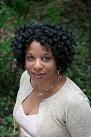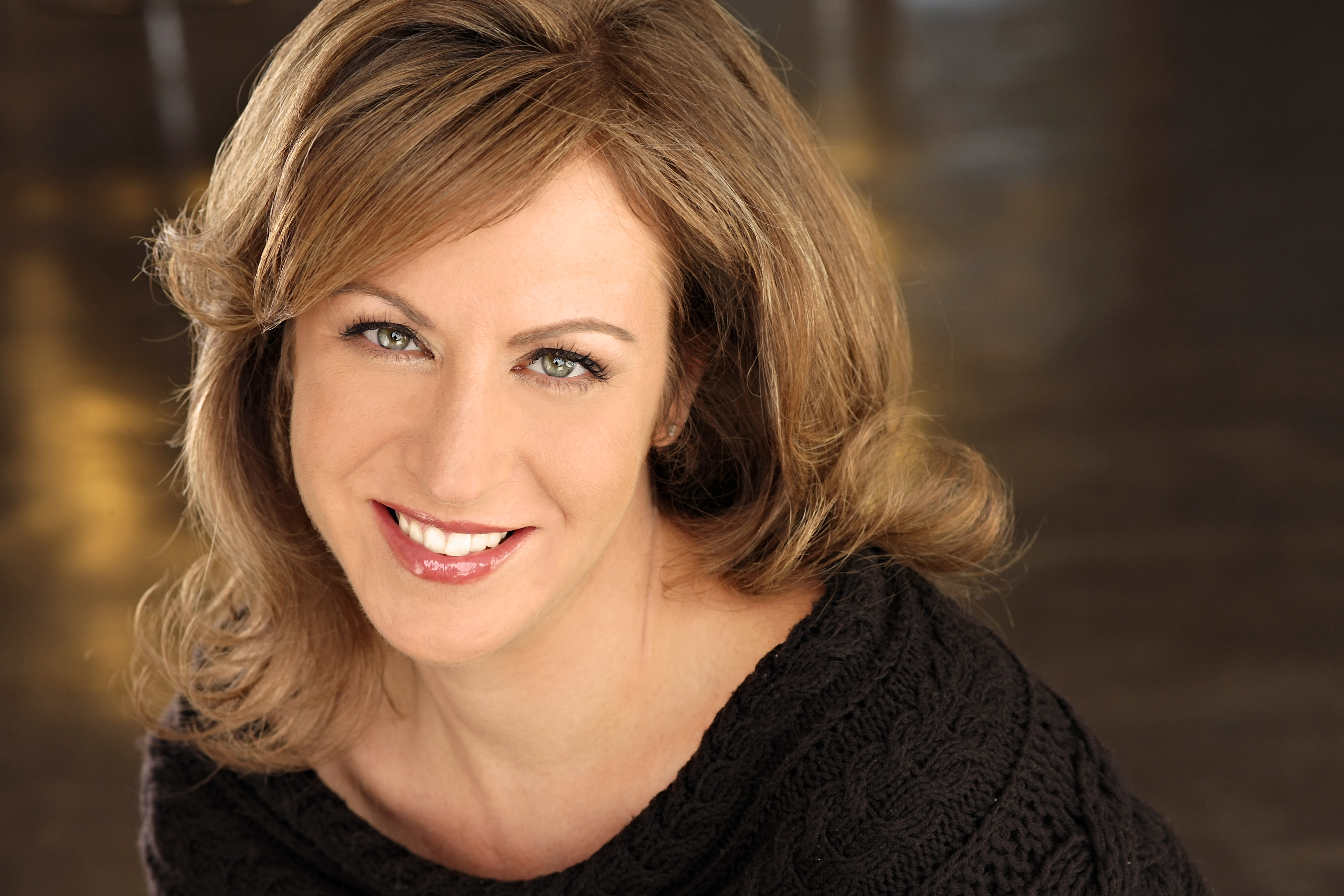
Interview with Rabbi Zoe Klein & Book Giveaway

I am happy to bring you the next author interview with Rabbi Zoe Klein.  Rabbi Klein’s novel, Drawing in the Dust, tells the story of an archaeologist who risks her reputation to excavate beneath the home of an Arab couple to make a miraculous discovery.  I’d like to give away a copy of the novel, so look into that at the bottom of the interview.  Rabbi Klein inspires me.  As a spiritual leader and writer, she gives powerful answers to how she thinks about what she does, how she wobbles all her plates.  Enjoy…

MW: When did you first know you would be both a writer and a rabbi?

RZK: Hi Michael! Thank you for bringing these questions to me, it is an honor to participate in this interview! Long before I ever could imagine that a little girl like myself could grow up and become a Rabbi, I knew I loved to write. I wrote stories all the time. I remember writing stories on those beige thin sheets of paper on which the lines were two inches apart, filling in scenes with chubby crayoned letters. I even remember one of my first stories, about a magical species called the Giringos, half giraffe and half flamingo.

I remember a powerful moment, the first time I told my father I wanted to be a writer when I grew up. He is an artist and I remember standing beside his dawing board while he worked and saying I wanted to be a writer. He said, “That’s great. But you cannot call yourself a writer until you finish a book. Even if it is never published, even if no one reads it, once you finish a book you will be a writer, but until then you are not.” It sounds like a strong thing to say, but it was a valuable lesson. For my father, it was very important that I learn the value of taking a creative idea to its completion. Lots of people have wonderful novels in their souls, but very few put in the tedious effort to realize it. When I finished my first novel in college, an as-yet unpublished story called “The Goat Keeper”, it was such a proud moment to hand it to him and to become a writer!

It wasn’t until I was in my Junior year in college that I truly understood that the path to the rabbinate was even a possibility for me. I had always thought that it was something only men could do. Even though there were female rabbis around, I hadn’t met any. However, I always loved religion, studying faiths and myths and cultures. The kinds of conversations and debates I had with people with strong faith identities in many ways mirrored the conversations I’d hear between my parents and their artist friends. The artists would always talk about such things as mortality, man’s fragility, the futility of monument, shattering dogmas, the supremacy of blank space…it was art they were discussing, but it filtered into my mind as theology, and I loved it.

In many ways I think of myself as a rabbi with the heart of a novelist, rather than the other way around. I started as a writer and then expanded my material from the confines of pen and ink to people and community. As a congregational rabbi, I have the opportunity to help craft the story of a community of families, engage in their sacred and profound moments, adding our chapters to an ever-unfolding scripture of a people.

MW: I realize both roles relate to one another, if I’m reading your interview in Drawing in the Dust correctly.  But does writing serve your role as a spiritual leader? If so, how?

RZK: Sometimes I think my rabbinate is almost like fieldwork for writing, and my writing is soulwork for the rabbinate. Writing is interesting in that it is done in physical solitude, and yet it is never lonely for me. I am full up with characters, with vivid dreams and scenes, demons to wrestle, I’m haunted and vexed and also ecstatic and weeping. In contradiction to that, in the rabbinate there is no solitude, you are continually working with people. It is a very social position, and yet for me there is loneliness there. There is a lot of what the mystics call “tzim-tzum,” a kind of spiritual contraction one does to make room for others. You retract yourself enough to allow space for other’s voices. You become an expert active listener. When I write though, that part of me that contracts in order to give center stage to others’ stories and needs, suddenly unfurls its great wings and jets about wildly.

The short answer to your question is that I think my writing allows me to be a whole person as a spiritual leader. Without it, I think I’d be fragments of a mosaic, chipped with no clear design. I think when you take the time regularly, whether through writing or meditation or running or whatever, to reflect on your decisions and desires, face your darkness, and emerge with a burning but joyful heart, you can better take others by the hand and lead them through a courageous process of reflection and growth.

MW: Talk about your experience as a person of faith—indeed a leader—writing biblical fiction for a broad audience.  Were you concerned that you wouldn’t be received well, that you might misrepresent yourself, or that your story might be misperceived?

RZK: While I was perhaps concerned about the story being misperceived or not received well, it was not a deterrent for me. I was encouraged by a great editor Al Silverman to forget while I wrote that I was a rabbi, a mother, a wife, and just write from a place of uniqueness, without titles, and I’ve always tried to do that. I am a person of faith. I believe that stories which are filled with metaphor and myth are a form of prayer. I never feel far from God when I write, in fact I feel close, even if I’m writing a scene that is sexual or violent or both. It is a process of exploration into human nature, into fantasy, into longing and fear, and it is not too different than the best kind of worship experience, where you are completely honest and raw, repentant, mournful, terrified, awe-filled, trembling with humility, romanced and swept up in all your smallness into the impossible arms of the infinite. There is no doubt that it is scary to write for a broad audience, and that no matter how much you try to hide your truths under layers and layers of plot and characterization you always end up realizing that despite your efforts you ended up publishing your very private diary, but it is also freeing to realize that the things that you say are the honest voicing of your humanness, what a relief to not be a spiritual leader hiding behind a façade, with word locked into routine platitudes! How refreshing to be real, to have a faith that wrestles, breathes, challenges and confounds!

MW: How has your congregation responded to your writing life?

RZK: My congregation has been celebratory and wonderful. I am fortunate to share this journey with them! We have many writers, thinkers, professors and experts-in-their-field in our community, people who love and appreciate art and don’t shy away from its darker sides…

MW: When I connected with you about this interview, I mentioned my gratitude for the seen and unseen work behind this novel.  I’m glad you’ve labored in all the ways you have to give us this work.  What don’t people know about what it takes to write a good story for publication?  Will you give us a sense of some of what it took for you?

RZK: Ah, that’s a good question. I don’t think people understand the sheer mass of hours that it takes. People don’t realize that once the book is finished and you feel completely beaten and your hair is grayer and thinner because of the process, and your eyes are dim from staring into the computer, and every time you blink you see bright blue squares, and your wrecked with fatigue after months of not sleeping, once you’ve gotten that far, you have to STILL muster the strength to face rejection after rejection after rejection…years of rejection and pitching your story, and trying even after years have gone by and you’ve already become passionate about a NEW idea retaining the freshness about the book that no one seems to want…and then after you finally find an agent and an editor, realizing that there are two of three or four more Everests to climb with revisions, revisions that keep tearing out your heart and then sewing it back in. Every time I’d get to a new mountain where it would be so easy to just drop the whole thing, I would think to myself, “This is a filter, and only the most determined get through.” And I was determined to be determined enough! I think people understand how steep the climb is from conception to publication, but I don’t think people know how long it is, how much stamina is involved.
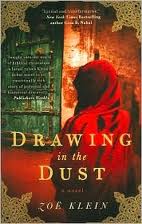
I also tend to like to write stories that have a lot of different characters and layers of interpretation, and it is hard to keep track of all of those little pieces over the course of 600 hundred pages, which was how long DRAWING IN THE DUST originally was. When I was editting it at one point I realized that if one added up the years and scenes carefully for one of the very peripheral characters and tried to figure out her age, she would have to be something like 130 years old. Keeping track of all these strands of lives is hard!

MW: I’m pretty sure you have many things to do.  I could be wrong.  I’m probably not.  How do you serve both these areas in your life well?  And how do you do anything else?!

RZK: Sometimes I feel like one of those cirque-d’soleil contortionists with the spinning plates on top of sticks, except that while they make it look so graceful and beautiful, all the plates spinning perfectly, my plates are often pretty wobbly! And some of them crash. If I were to label my plates, there would be the Writing Plate, the Rabbi Plate, the Children Plate, the Husband Plate, Friend Plate, and of course lots more. I think while I’ve made time to keep the Writing Plate spinning by devoting Mondays, my one day off, to writing, and the Rabbi plate I devote much time to, and the Children Plate keeps spinning even though it’s hectic, I admit the Husband Plate often wobbles and falls (luckily it’s a sturdy, rebounding plate!), and I haven’t been able to devote much time to the Friends Plate (I have friends, we just don’t see each other at all, I haven’t been able to nourish that part of my life)…there are a lot of sacrifices! As I’ve gotten older, I am trying to redistribute my energy, focusing more on my family and building relationships, and trying to approach work with less frenetic energy and more joy and appreciation. Everything is not always in balance as people like to believe! But up until now I think I’ve lived my life is a giant rush, and I really want to learn to slow down and appreciate BEING instead of eating up every hour with DOING.

MW: I read Eugene Peterson who is a pastor and writer, and he encourages clergy to read fiction.  He says that artists have become his allies and have taken a place next to theologians and scholars in his formation as a pastor and as an artist.  You talk about the power of fiction in your provided interview.  How does fiction nurture a person in general and a religious leader in particular?

RZK: That is beautiful. I think that fiction unlocks people’s hearts in a particular way that nothing else can. You take fiction under the covers with you, give it the heat of your breath, and like the genie in the lamp it has an enchantment. Somehow entering the world of fiction, our vault of tears is more easily unlocked, particular drama reflects universal understanding. There is an intimacy in fiction, partly because of the intimacy it took to create it. In terms of a religious person, I think that today we tend to sterilize the idea of a person of faith, turn that person into a kind of sexless judge. Piety is purity. But dancing with God is an intimacy, it’s a cosmic affair, filled with subordination and abuses, mastery and humility, and of course love. I once wrote a new definition for love — Reverence for Mystery. I think fiction nurtures a person in general and a religious person in particular because there are very high truths that can only be expressed in metaphor. God, for example, can only be expressed in metaphor, as shepherd or teacher or lover or parent or guide.  I believe Fiction, ironically, is Ultimate Truth’s master key.

MW: What are you reading these days, by the way?

RZK: To be honest, I’m reading a lot of Science Fiction! I just printed out the top 100 Science Fiction books, and right now I’m reading Ender’s Game. It’s just a field I had never read before, and I am surprised at how much I’m loving it! Before this new kick though, I read Cynthia Ozick’s novels, The Shawl, The Putterman Papers and Heir to The Glimmering World, and my goodness, her language was like cashmere, so rich and sumptous.

MW: You’ve talked about God as the Reader of All Life—language that I love.  What are you working on, preparing, and “offering skyward”?

RZK: I just finished a novel called Origin of Color which will be released in summer of 2012; it is going through its editing process now. I went to Swaziland and Tanzania to research for it when I was on sabbatical this past December. The book is about an American couple that accidently falls into the middle of a crime ring of witchdoctors and politicians in East Africa who sell albino body parts to be made into potions. I met with East Africans with alibinism and families whose children with albinism had been butchered. I wove these experiences into this novel. It was an emotional novel to write, it is a thriller, and it even scared me as I was creating it. I’d be writing in the middle of the night and leaping up to make sure the doors were locked…jumping if I thought the curtain moved! The “offering skyward” part of it is that it is also a contemplation about perception. I am very excited about it.

I am also leaving in two weeks to go back to Africa, to Ghana, with the American Jewish World Service. I will be in Winneba, Ghana with American Jewish World Service’s Young Rabbis’ Delegation. The Young Rabbis’ Delegation brings together a group of rabbis from all over the country to experience first-hand the power of grassroots development and explore issues of social justice and global responsibility from the perspective of Jewish texts and tradition.  The group is working at Challenging Heights, an AJWS-supported NGO devoted to providing education to former child slaves and resources to families whose children are at risk for slavery and human trafficking.

MW: How can readers stay in touch with you and support your work?

RZK: On my website www.zoeklein.com, or by emailing me at zoe@zoeklein.com. Thank you so much for inviting me to participate on your website. Abundant blessings to you and to all of your readers!

As for the book giveaway, if you know of a clergy person who would benefit from reading this novel, post a comment, a sentence or two, about why they would.  Do so by Friday, midnight, CST.  I’ll choose a winner randomly and you can give a copy to your clergy person.

Morrison on Writing & The Interior Life

To follow is a passage from Toni Morrison’s “The Site of Memory” in her book of selected nonfiction, What Moves At The Margin.

If writing is thinking and discovery and selection and order and meaning, it is also awe and reverence and mystery and magic.  I suppose I could dispense with the last four if I were not so deadly serious about fidelity to the milieu out of which I write and in which my ancestors actually lived.  Infidelity to that milieu–the absence of the interior life, the deliberate excising of it from the records that the slaves themselves told–is precisely the problem in the discourse that proceeded without us.  How I gain access to that interior life is what drives me and is the part of this talk which both distinguishes my fiction from autobiographical strategies and which also embraces certain autobiographical strategies.  It’s a kind of literary archaeology: on the basis of some information and a little bit of guesswork you journey to a site to see what remains were left behind and to reconstruct the world that these remains imply.  What makes it fiction is the nature of the imaginative act: my reliance on the image–on the remains–in addition to recollection, to yield up a kind of a truth.  By “image,” of course, I don’t mean “symbol”; I simply mean “picture” and the feelings that accompany the picture.

A Rabbi or A Novelist

I just finished Drawing in the Dust, the debut novel by Zoe Klein from 2009.  It’s a rich and detailed story about an archaeologist who has spent years working around Israel.  The main character, Page, spends her days unearthing artifacts from centuries prior, while the story takes readers through Page’s on personal and interior excavations.  She’s searching for answers, for connections, for her own heaven meets earth.  The story captures the sights, smells, and textures of places from biblical Israel to New York to a tiny cottage in Massachusetts and back to Israel.

In addition to the novel, the copy I have includes a Q & A with Zoe Klein who is the senior rabbi of Temple Isaiah, a large congregation in Los Angeles.  I wanted to post one question and Rabbi Klein’s answer.  She’s done a fascinating thing in writing this novel.  If you’re adding to your summer reading list or looking for something you can delve into, get Drawing in the Dust.

Though the two are not mutually exclusive, what do you consider yourself most to be?  A religious figure–a rabbi–who has written a novel, or a novelist who is also a rabbi?  While the answer to this question is clear in my heart, it is hard to answer it in words, but I will try.  I consider myself a novelist first, but this takes a bit of explaining.  While God is often referred to as the Author of All Life, I like to relate to God as the Reader of All Life as well.  Life is a love letter, written in logos deeper than language.  I am a novelist first, but I don’t always compose with pen and ink, or keyboard and monitor.  Rather, as a rabbi I help people compose with heartbeats and breath, identifying the myths and truths in their lives.  A community is a library of timeless tales and adventures, of grief that poeticizes, often darkly, and of redemption that fill the air with song.  When I officiate the life cycle ceremonies, I always feel as if I am trying to weave in something strong out of delicate fibers.  At weddings, I try to help build a solid foundation out of very feathery dreams.  At births, I try to infuse joy and light into an entirely mysterious future.  At death, I take the tiny strands of an infinitely complex life and try to thread them into something sacred.  Writing and serving as a rabbi are not too different to me.  In the end, it is about crafting stories, and helping people discover their grand themes and subtler metaphors.  It is about offering these stories skyward to the Reader of All Life.

Parker Palmer on Questions & Listening

If you’d like to enter my giveaway, please leave a book title in the comments from my interview with Tayari Jones.  You can do so til midnight today.  It looks like Cathy has a strong chance of winning so far!  I know you’ve read the interview, people.

Now, for today’s post.  Parker Palmer writes the passage below in A Hidden Wholeness, words that echo how I feel when I’m trying to listen well, to withhold unnecessary words when I sit with someone I care about.

Two things it may be helpful to know before you read the quote.  One is that he uses the phrase “inner teacher” to talk about the core of humanity, the soul, or the true person, what in the general Christian tradition may also be called either the image of God or the Spirit of God.  Second, when he says “circle of trust,” he’s describing a group of people who come together to pay attention to no other agenda except to provide a safe space for the soul.  The book’s about these two things, so while that one-sentence is only so helpful, you can gather his gist with my summary (from pgs. 117-18):

When you speak to me about your deepest questions, you do not want to be fixed or saved: you want to be seen and heard, to have your truth acknowledged and honored.  If your problem is soul-deep, your soul alone knows what you need to do about it, and my presumptuous advice will only drive your soul back into the woods.  So the best advice I can render when you speak to me about such a struggle is to hold you faithfully in a space where you can listen to your inner teacher.

But holding you that way takes time, energy, and patience.  As the minutes tick by, with no outward sign that anything is happening for you, I start feeling anxious, useless, and foolish, and I start thinking about all the other things I have to do.  Instead of keeping the space between us open for you to hear your soul, I fill it up with advice, not so much to meet your needs as to assuage my anxiety and get on with my life.  Then I can disengage from you, a person with a troublesome problem, while saying to myself, “I tried to help.”  I walk away feeling virtuous.  You are left feeling unseen and unheard.

How do we change these deeply embedded habits of fixing, saving, advising, and setting each other straight?  How do we learn to be present to each other by speaking our own truth; listening to the truth of others; asking each other honest, open questions; and offering the gifts of laughter and silence?  These ways of being together are so important in a circle of trust that each of them has its own chapter in this book…

Our purpose is not to teach anyone anything but to give the inner teacher a chance to teach us.

Book Giveaway and Interview with Tayari Jones

I am grateful to have Tayari Jones, author of Silver Sparrow, for an interview.  If you’re interested in getting a free copy of the novel, those instructions are below.  I’ve been following this writing professor’s blog for a few years, learning about the writing life, reading her critical analysis of events, and enjoying how she presents publishing and life as a woman of color.  I’m a student and fan.  I think you should be too, which is why I’m commending Silver Sparrow.

I think you should go buy this novel from the closest bookstore or rent it from you local public library.  I’ve made several recommendations like these in the author’s interviews, suggestions I hope you’re considering.

Here’s the interview:

MW: Congratulations on the multiple-weeks tour promoting Silver Sparrow.  How are you holding up during your book tour?

TJ: I’m holding up, but I have to say that I am tired. 40 cities is a lot of traveling, but I love connecting with readers to actually talk. It’s really inspiring.

MW: You had an interesting and maybe horrifying experience with the title.  Will you mention how you came to it?

TJ: Well, the short version is that my original title, SILVER GIRL, was already in use.  Another book with the very same title was just published. I had about a week to come up with a new title.  Everyone in my life jumped in.  I was just cleaning out emails and found some potential titles from brainstorming sessions.  It’s funny, but it wasn’t funny at the time.  And then a friend mentioned the hymn, “His Eye Is On The Sparrow,” and I knew that I had found my title.  It was a real blessing.  A gift.

MW: Your novels detail girlhood, picture femininity, and in my wife’s words describing Leaving Atlanta, “take me back to my childhood.”  How do you continually offer such real, honest, strong, brilliant characters?  How do you replenish yourself to keep seeing women for who they are rather than what’s often popular and visible if that makes sense?

TJ: First off, thank you to your wife for that compliment because that really was my goal with Leaving Atlanta–to remind people what it was like to grow up in the 1970s, to record our history.  To make a record that we were there.  I think the key to writing solid characters is to be a loving but honest observer.  When I write I think of real people, not people I have seen on TV or in movies–or even other books.  I want to make close replicas of actual human beings.  I don’t want to make a replica of a replica, getting further and further away from real and you can see how looking the way society wants you to look is like having a part-time job. I think we really squander our resources chasing down that ideal–trying to be show ponies.  But at the same time, we deserve the right to enjoy our bodies, our faces, our hair.  I wrestle a lot with keeping balance.

MW: You dedicate the book to your parents.  If this isn’t too personal–and I can’t recall whether you’ve blogged about this–how did your father respond to the story?

TJ: My dad emailed yesterday saying that he loved the book but he thought that James Witherspoon got off too easy.  My dad is my biggest cheerleader.  He is proud of me, not just for the text of the book, but for being brave enough to go my own way.  I feel like I should say, for the record that he’s not a bigamist!

MW: The women in this novel seek love.  They give it and seek it.  The ways the daughters sought their father’s love jumped out to me.  How was it writing two daughters with such competitive experiences?

TJ: Everyone in the novel is seeking love.  This is a book about how far people will go to keep their families in tact.  Even James, the bigamist.  Everyone in this book makes bad decisions for the right reasons.  The key to writing it was not to take sides–to write with as much affection for Laverne, the lawfully wedded wife as for Gwen the mistress “wife.”  The same goes for the daughters.  Everyone wants to be loved.  You can’t blame them for that.

MW: Are there any intersections between your life as writer and as professor?

TJ: I teach creative writing, so I feel like I am helping shape the literature of tomorrow.  I love watching a young writer grow.  It’s really inspiring.

MW: Among the many entertaining things about this story was the use of lies and the movement toward truth.  I imagine writing a story cloaked in deception was fun and challenging.  Any reflections on that?

TJ: There was so much pain in this story and I had to really keep my eyes open as I wrote it.  The stakes were so high for all the characters that none of them could compromise, and as a result, everyone was compromised.  I didn’t take pleasure in watching the lies unravel.  I feel really attached to my characters.  I knew that at least one of the characters would lose everything and everyone they loved.

But I think that the pleasure in this story comes in the pleasure of reading a difficult story on a difficult topic.  There is a sort of joy that comes from facing the truth, and looking it in the face.

MW: If you had to keep one of your characters with you on your book tour, who would it be and why?

TJ: I would chose Dana’s running buddy Ronalda. I like that girl.  She’s funny and she knows how to keep a cool head.

MW: How can readers keep in touch with you, learn about other works in progress when they come, and support the growing reception ofSilver Sparrow?

TJ: I would love for folks to come out and say hello to me when I’m on book tour. You can see my whole schedule here http://www.tayarijones.com/appearances.

If you’d like to enter my contest for a free autographed copy of Silver Sparrow, leave a comment with a book title and the author’s name that you recently enjoyed or one that simply stays with you.  I’d love to know what about the work stuck with or struck you, though that’s not required for the randomly selected winner to be chosen.  Post the comment by midnight, CST, June 13, 2011.

Printers Row Festival


Book lovers, shoppers, people watchers, joggers, and dog-walkers line the streets.  Vendors exchange money and swipes of cards for hard and softbound worlds in between covers.  Bags and backpacks bulge with the latest novel and with goods like newspapers and t-shirts and pamphlets from street preachers around the block.  Panels sit, adjusting microphones until that clunk from some guy’s elbow sends a dong into your ear for a while.

Bunches and crowds of men and women who look like your high school librarian collect in front of a tent.  What have you missed?  Children walk around, some of them with leashes around their necks.  You laugh.  It’s funny.  Dogs roam freely while the kids are leashed.

You spot a writer you’ve read.  You get a children’s book signed by an author you respect even though you don’t read children’s books, you don’t have children to give it to, and just because it’s Nikki Giovanni.  In fact, you buy two and give one to your niece, hoping she’ll appreciate the gift.  You’re convinced she’ll trade it in a flinch for ten dollars.  You sigh and get the second book anyway.  You love supporting writers, especially writers you love.

The last time I was at the Printers Row Lit Fest it was a day full of cramped walking, scooting really.  My wife was with me.  We listened to Ms. Giovanni discuss writing and her process of developing and publishing a story about Rosa Parks.  It feels like it was a long time ago.

I saw a status update from Cathy or maybe it was Laura that the Fest is coming back.  I was and am happy.  Then I saw that one of my favorite writers will be there.  I’m reading her (Tayari Jones) novel (Silver Sparrow) now.  I was and am even happier.  Hopefully I’ll get to have a blog interview up before the Fest and one of you can win a copy she can sign in person. Whether you’re into recently published novels, cooking books, biographies, rare finds, books about spirituality or romance, you will find what you love at this fest.  You’ll need an allowance, a budget, a spending cap.  You’ll need a friend to make sure you respect that cap.  But come.

Come and bring people you like.  Bring people who enjoy reading and talking about reading.  Come if you don’t like reading but think you could be converted.  Come to the programs on the street or to the ones at the library.  Make new friends.  Have a good time.  If you’d like more information on the Fest, visit the website by clicking here.

Links to Things

Take a look at some of the things I’ve appreciated lately.

  • Penguin has developed an online community called “Book Country” for the purpose of developing community among unpublished authors, providing quality feedback on manuscripts, and moving toward publication, including self-publishing.
  • Tayari Jones mentioned the other day that Rachel Lloyd has published her memoir, Girls Like Us, and I’ve linked to Girls Educational & Mentoring Services which Ms. Lloyd founded.
  • Speaking of Tayari Jones, please watch her website or blog because her third novel, Silver Sparrow, is due next month.
  • Professor Henry Louis Gates, Jr. will be speaking on “African American Lives: Genealogy, Genetics, and Black History” at Rockefeller Chapel today if you’re in the area.

Souls In Transition

bookshotI just finished Souls In Transition: The Religious & Spiritual Lives of Emerging Adults.  The book continues an earlier sociological study of teens, now emerging adults, young men and women between the ages of 18-23 years.  It’s a continuation for the investigators of work they started with the same youth, a book published under a similar title, Soul-Searching, which I haven’t read.  The book I did read is filled with statistics, which I’m naturally intimidated by; thankfully there’s more that stats.  There is a well of information about the newly developed phase, emerging adulthood.  The authors point out attributes, religious types, and contributing factors which enable or disable the religious and spiritual lives of these folks.  It was an education in general and an internal conversation as I read with now five years experience of serving a church with at least a hundred emerging adults.
Here are three passages from the book.  I’m interested to hear any thoughts you may have–whether or not you’re in the 18-23 yr. old range.  These pieces seem to translate to other life phases.  The first is a quote early on in the book.  The authors are discussing transitions as possibly the most consistent theme in the lives of the young folks they’ve interviewed.

…for emerging adults not a lot in life is stable or enduring.  Some of what seemed to be proves unreliable or unpredictable.  Other things they know from the start are going to change.  Changes are incessant.  A lot is up in the air.  There is sometimes too much to manage.

This quote goes to identity, whether it’s fixed or stable or subject to change.  Most identity development material I’ve read (and I’m not pretending expertise at all) follows this finding below.  But as I think about redemption and life transformation from a Christian viewpoint, I’m encouraged when I see great change or massive identity transformation.  It seems to support the great work of faith and grace, when it happens.

People are not simply preoccupied with increasing their rewards and benefits but are perhaps more fundamentally concerned with knowing, confirming, and protecting their own and others’ sense of who they are, that is, their personal and social identities.  The assumption here is that people have a strong interest in conserving their senses of self, of sustaining the continuity of their identities do change.  But such change must be limited in extent if one is to maintain a healthy human existence.  The transition from the teenage to the emerging adult years is certainly one of identity development, but, contrary to common misperceptions, it is not usually one of massive identity transformation.  Most emerging adults…continue being essentially the same persons they have been in the past.

I think this last passage captures the book well, not only the particular chapter I pulled it from.  It helps me, pushes me to think about how I deal with people’s pasts, how I regard a person’s past, how I respect it.  I think an easy temptation is either to stick with the past, to explore and wander through it, on the one hand, or to ignore it and pummel ahead.

The past continues to shape the future.  This is important to know, because it means that religious commitments, practices, and investments made during childhood and the teenage years, by parents and others in families and religious communities, matter–they make a difference.  Appreciating the stabilities and continuities that usually override unpredictable changes also reinforces the basic sociological insight that people’s lives are profoundly formed by the social networks and institutions that socialize not easily changed or inexplicably made irrelevant.  Again, who people are is very much a product of where they are socially located, of what social and relational forces have formed their lives.  And who people are usually does not randomly and unaccountably change over time.  What people have been in the past is generally the best indicator of why they are what they are in the present and what they will likely be in the future.

Any thoughts about these?

Book Giveaway and Interview With Dolen Perkins-Valdez

I have the pleasure of including an interview with Ms. Dolen Perkins-Valdez on my blog.  Her fiction touches upon my writing interests, historical fiction and the stories of African Americans.  When I contacted her about her novel and about the possibility of an interview, she suggested that we wait until after the paperback was released.  That happened in January, and when I reconnected with her, Ms. Perkins-Valdez was happy to be interviewed.  I’m giving a copy away, so see below for more information on that.  Here’s the interview.

MW: You started this novel by stumbling upon something.  Tell us about that.

DPV: I was reading a biography of W.E.B. DuBois by David Levering Lewis, and I came across a line about the origins of Wilberforce University. Lewis wrote that it was once a resort hotel popular among slaveowners and their slaves.  I was shocked and intrigued.

MW: Before learning of your work’s success, I didn’t think most people rushed to discuss how white mistresses lived in and around their husband’s slave wenches.  What was it like preparing this great novel as a WIP?  What was it like to pitch the project?

DPV: As I was writing, I just focused on telling the story. I wasn’t thinking of it as a “great novel” or anything like that because it was my first book and I wasn’t even sure if it would be published.  Once I decided to pitch it to agents, I just described the story as honestly and confidently as I could.

MW: I think I read that you had a little trouble pulling together historical fragments as you researched.  How would you suggest that writers, communicators, and people in general tell history?  How do we pass on stories these days?

DPV: I hear from so many people who have fascinating family stories.  I always urge them to write those stories down.  Most cell phones have built-in voice recorders, sort of like mini-cassette recorders.  At the very least, people should talk into these and then save the audio files on their computers and/or e-mail them to the tech-savvy members of their family.  Those of us who are younger should solicit the stories from the elders in our family.  Many oral stories will be lost if we don’t do this with a greater sense of urgency.

MW: Did you find new things or learn things as you worked on the manuscript?

DPV: Of course! Yes, I learn so much when I’m working.  There are many things that can’t possibly make it into the final book.  Not only do I learn a lot about history, but I also learn a lot about how to tell a stories.  Writing is a craft, and it takes many years to master.  I am still learning.

MW: You’ve probably been asked a lot of questions since publishing the novel.  What question haven’t you been asked that you really want to answer, and what is the answer?

DPV: I can’t think of a good question I haven’t been asked.  Recently, however, in Santa Monica, an audience member asked me about Jeremiah in the book and why he won’t take orders from the overseer’s wife.  I’d forgotten all about Jeremiah! I insisted that there was no Jeremiah in the book.  That was a funny moment.  People are often surprised when authors forget what they wrote, but it can happen sometimes.

MW: What’s next and how can my blog readers stay in touch with you?

DPV:  I’m working on a new novel. It’s a historical novel, but it is not a sequel to WENCH. I hope my fans will be patient.  In the meantime, please pass the news about the book.  There are still lots of readers out there to reach.  My website is http://www.dolenperkinsvaldez.com and I’m on Facebook at facebook.com/writerdolen.

In celebration of the release of Dolen’s paperback, I’d like to give a copy away to someone who answers a question: What book or author has helped you see more clearly some part of history or life?  I’ll randomly select a winner by Thursday so have your comments by Wednesday, midnight.

A Book For Meat Eaters

I’m reading The Jungle by Upton Sinclair.  It’s giving me a needed fiction break in between two or three theologically related volumes I’m working through.  After this one, I’ll be reading Anita Diamant’s Day After Night and revisiting Native Son by Richard Wright.  Nonetheless, this novel has created quite a buzz since its publication because it’s one of those that had massive social consequences.  I’m slightly embarrassed that I’ve never read it.

The Jungle is usually on the list when people talk about United States of American novels that meant something.  Those lists are always as subjective as the next thing.  That’s why I’m slow to read what other people tell me to read.  I picked this one up because I’m turning my writerly interests to Chicago.  Sinclair’s work meets a lot of my interests in that it’s fiction, written by a person who can inspire me in my own efforts, and it tells a story about people and things near me.  I can actually go to the Stockyards.  I can walk State Street and King Drive, which used to be Park Avenue and Grand Avenue, depending on where you are.

If you don’t know much about the novel–and I’m 3/4 through it so I won’t say too much–it’s the story of a man, a family, that immigrated from Lithuania in the early 20th century.  They encounter real problems looking for work and learning a new language, and adapting to a way of life completely different from what they’re accustomed to.  Sinclair is masterful in creating the work of Chicago’s Stockyards and the surrounding neighborhoods, ethnic tensions at the time, and the pronounced ways poverty and class shaped life.

It’s a good read.  It’ll make you question whether you want to keep eating meat!  It’ll make you wonder how much has changed since the early 1900s as it relates to race, class, education, and immigration.  If you’re in my city, it’ll change the way you look at the streets and neighborhood boundaries.  You’ll experience the Stockyards differently if you drive down Halsted.  You’ll wonder about fairness and justice if only a little bit.

I’m thankful for this read.  It reminds me, like other books I’ve read thankfully, that books have power.  Words have power.  Authors are important people because they offer gifts to the world even if the world never meets them, knows them personally, or can tell what they looked like in the morning.

Are you reading anything worth mentioning?

Public Library’s Writing-Related Events

If you are interested, the Harold Washington Library Center will host several authors this month, one event being in connection with the Columbia College Chicago Fiction Writing Department.  Among the programs remaining are an event featuring Joyce Carol Oates, discussions with Jennifer Egan, Audrey Niffenegger and Regina Taylor, as well as readings and conversation with, again, Audrey Niffenegger, Karen Tei Yamashita, Gerard Woodward, and Alexis Pride.  Visit chicagopubliclibrary.org for more information.

Branch Photo

Interview With Marita Golden

I recently read The Word: Black Writers Talk About the Transformative Power of Reading and Writing and contacted Ms. Marita Golden for an interview.  She graciously accepted and I’m pleased to bring you her answers to my questions.  There are other interviews, to the right, in the Writing and Reading “neighborhoods”.  This book is worth reading, soaking up, and holding onto.  Ms. Golden has several other published works that the same can be said about.  Now, the interview.

MW: Your book presents author interviews and one of your common questions is about childhood influences and early beginnings for those writers as readers.  Talk about your early beginnings as a reader and writer. 

MG: I grew up in a home in which my love of reading and writing was
nurtured and encouraged. My father and mother both influenced my
writing life in different ways. My father was a great storyteller and
his stories to me often told at bedtime, were about famous heroines
from Black history such as Frederick Douglass and Sojourner Truth so I
learned early on what a hero was and what a hero or heroine did. My
mother told me early on that one day I would write a book and that was
crucial in terms of my development of a creative identity.

MW: The Word exposes us to writers today who are telling great stories.  Who are some writers from before, perhaps writers too quickly forgotten, who readers need to find, remember, and keep reading?

 MG: Anne Petry is one of my favorite writers from the 40’s and 50’s she
is most known her novel THE STREET but I am a huge fan of her second
novel THE NARROWS which is rich and deep and very satisfying to read
as well as her short stories.

MW: Your latest book reminds me of the continuous gift of Gumbo, an earlier anthology you edited with E. Lynn Harris.  In that great book, along with this current one, you’ve brought together astounding artists.  Tell us about your process of editing them.  I imagine those works were full of gifts for you.

MG: In the Word I wanted to shape the interviews so that the
conversations became a commentary not only on the writing and reading
life of the writer, but also an invitation into that kind of life for
the reader. It was important to also get them talking about the issues
of literacy facing the Black Community.

MW: Speaking of gifts, how did you establish the Hurston/Wright Foundation?  How did that vital work come about?

MG: I established the Hurston/Wright Foundation 20 years ago with Clyde
McElvene as a way to support what I saw as a fantastic flowering of
creativity among Black writers. I wanted to create an institution that
would give Black writers the kind of support I wished I had had as a
younger writer-workshops, awards, recognition, community. The
foundation has opened doors and created possibilities for a whole
generation of writers and I am just glad that I was chosen to do that
work.

MW: You’ve shared this answer in pieces throughout interviews in The Word, but tell us why reading is important to you.

MG: Reading is important to me because it is a passport into the lives of others and the unique wisdom, intelligence and creativity that they possess. Reading also gives me experiences that I have not and may not ever had and increases my empathy for and connection to others.

MW: What are you reading these days?  

MG: I am reading a wonderful memoir called THE MEMORY PALACE and a
collection of short stories by Nadine Gordimer.

MW: Can you recommend particular writers who are must reads for children?

MG: Eloise Greenfield is a must!

MW: You have communicated in multiple forms and continue to do so.  How do your roles–as writer, teacher, speaker, and editor–intersect?  What enables you to do all you do?

MG: I find that writing teaching and speaking are all interrelated in
that that enable me to connect with others which is one of my favorite
things to do.

MW: How can readers of my blog learn more about you and your work?  

MG: They can go to www.maritagolden.com.

Questions for you, blog readers: What are you reading?  What have you just finished or are looking forward to reading?  I just closed Jhumpa Lahiri’s The Namesake and am taking in long amounts of the elegant and massive The Warmth of Other Suns.  I am also reading Souls in Transition.