Morrison on Writing & The Interior Life

To follow is a passage from Toni Morrison’s “The Site of Memory” in her book of selected nonfiction, What Moves At The Margin.

If writing is thinking and discovery and selection and order and meaning, it is also awe and reverence and mystery and magic.  I suppose I could dispense with the last four if I were not so deadly serious about fidelity to the milieu out of which I write and in which my ancestors actually lived.  Infidelity to that milieu–the absence of the interior life, the deliberate excising of it from the records that the slaves themselves told–is precisely the problem in the discourse that proceeded without us.  How I gain access to that interior life is what drives me and is the part of this talk which both distinguishes my fiction from autobiographical strategies and which also embraces certain autobiographical strategies.  It’s a kind of literary archaeology: on the basis of some information and a little bit of guesswork you journey to a site to see what remains were left behind and to reconstruct the world that these remains imply.  What makes it fiction is the nature of the imaginative act: my reliance on the image–on the remains–in addition to recollection, to yield up a kind of a truth.  By “image,” of course, I don’t mean “symbol”; I simply mean “picture” and the feelings that accompany the picture.

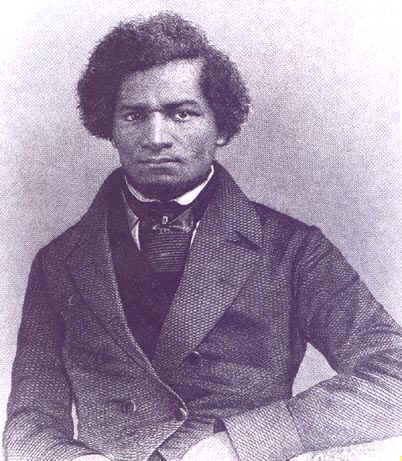
Frederick Douglass On The Meaning of July 4

This is an excerpt from Frederick Douglass’s speech in Rochester, 1852.  It is a long speech, full of a remarkable orator’s skill and precision.  Douglass’s experience and passion fueled and boasted much of the abolition movement.  His voice is keen when I think about the nation’s journey toward continued freedom and how we include or don’t include people in liberty.  I wonder if you can think of people who might wail, as Douglass says, toward the bottom, while we celebrate:

Friends and citizens, I need not enter further into the causes which led to this anniversary.  Many of you understand them better than I do.  You could instruct me in regard to them.  That is a branch of knowledge in which you feel, perhaps, a much deeper interest than your speaker.  The causes which led to the separation of the colonies from the British crown have never lacked for a tongue.  They have all been taught in your common schools, narrated at your firesides, unfolded from your pulpits, and thundered from your legislative halls, and are as familiar to you as household words.  They form the staple of your national poetry and eloquence.

I remember, also, that, as a people, Americans are remarkably familiar with all facts which make in their own favor.  This is esteemed by some as a national trait–perhaps a national weakness.  It is a fact, that whatever makes for the wealth or for the reputation of Americans and can be had cheap! will be found by Americans.  I shall not be charged with slandering Americans if I say I think the American side of any question may be safely left in American hands.

I leave, therefore, the great deeds of your fathers to other gentlemen whose claim to have been regularly descended will be less likely to be disputed than mine!

My business, if I have any here-to-day, is with the present.  The accepted time with God and His cause is the ever-living now.

Trust no future, however pleasant,

Let the dead past bury its dead;

Act, act in the living present,

Heart within, and God overhead.

We have to do with the past only as we can make it useful to the present and to the future.  To all inspiring motives, to noble deeds which can be gained from the past, we are welcome.  But now is the time, the important time.  Your fathers have lived, died, and have done their work, and have done much of it well.  You live and must die, and you must do your work.  You have no right to enjoy a child’s share in the labor of your fathers, unless your children are blest by your labors.  You have no right to wear out and waste the hard-earned fame of your fathers to cover your indolence.

…Fellow-citizens, above your national, tumultuous joy, I hear the mournful wail of millions! whose chains, heavy and grievous yesterday, are, to-day, rendered more intolerable by the jubilee shouts that reach them.  If I do forget, if I do not faithfully remember those bleeding children of sorrow this day, “may my right hand forget her cunning, and may my tongue cleave to the roof of my mouth!”

Fathers Know Best, Interview #1

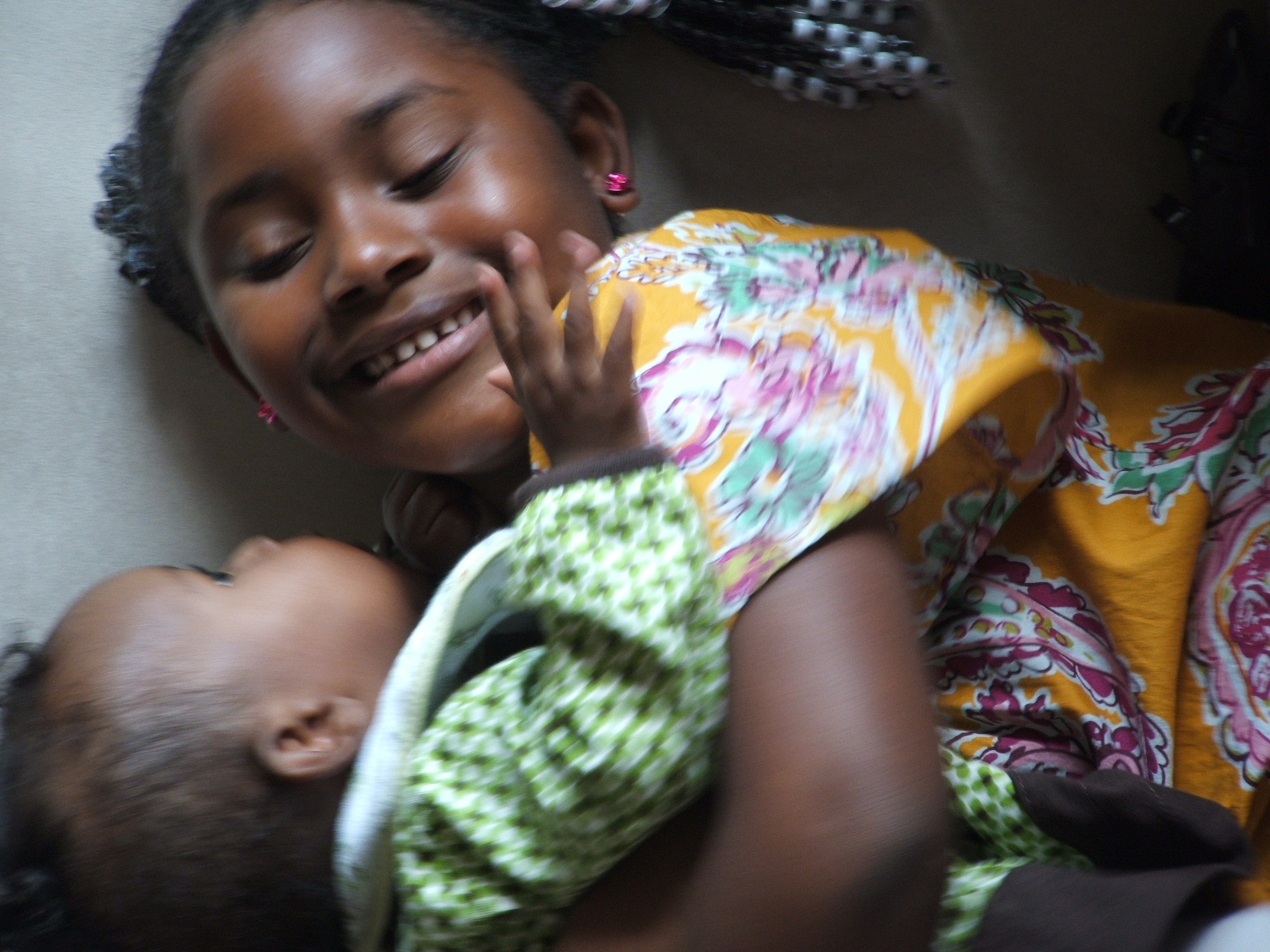
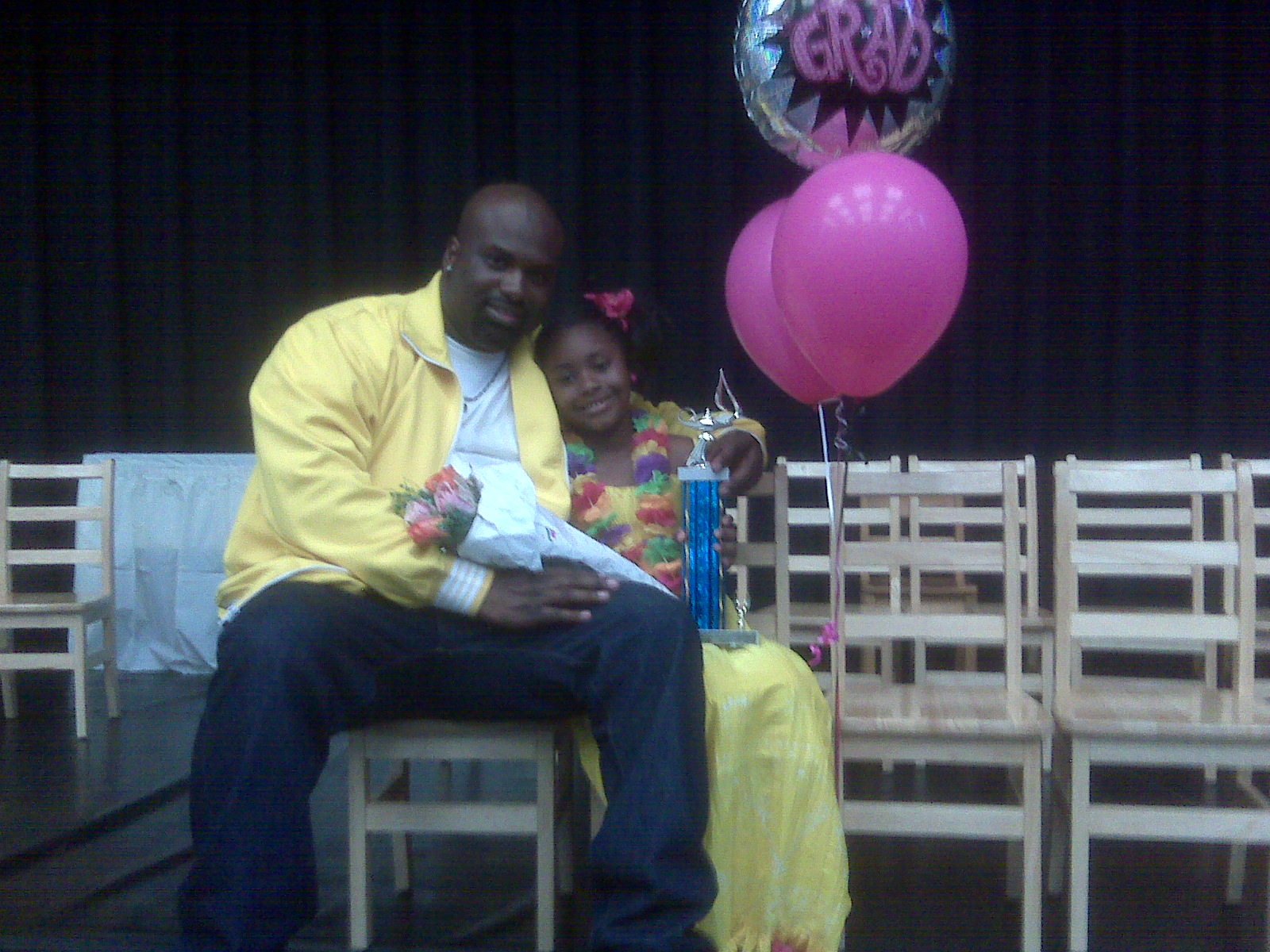
To follow is my interview with Mark Washington.  Mark is my brother, and though he isn’t the first father I knew (our dad is), I thought it’d be fun to have him be my first interviewee on the blog.  He’s a man of few words.  Just like our father.  My sense is that Mark’s interview will be the most succinct.  Mark’s two daugthers, Laila and London, two out of three of my nieces, are pictured to the left.

FF: Describe your family.

MW: My family are comedians, they always keep me laughing.

FF:  How has fatherhood changed you?

MW: Fatherhood has changed me where I’m more giving then I was.  It has also taught me that it’s not all about me anymore.  My children come first before my needs and wants.

FF:  Have you made any mistakes as a dad?  If you’re not a liar, name one and talk about what it meant to you.

MW: One of the biggest mistakes that I have made was to start taking Laila to the beauty shop at the age of four.  Now she expects it every two weeks.  LOL.  No, but really sometimes I don’t choose my words carefully and, sooner or later, I hear them echoed around the house.

FF:  What’s the most helpful advice you heard when you were becoming a father or as you’ve been a father?

MW: The best advice I’ve heard is to enjoy the younger years with them because when they become teenagers, I will start to feel the gap.

FF:  How do you attend to your relationship with your children’s mother?  It’s changed over time.  How so?

MW: Well, we hear each other out, and then we discuss what logic will work.  With any relationship it’s all about communication.

FF:  What surprises are there along the way for parents?  What do you wish you were told to expect?

MW: I can’t really think of one, but my children never cease to amaze me.  I mean just when you thought you heard or seen it all, here’s another surprise.  And part two of that question is, how expensive they can be.  I mean I’ve been told that, but no one ever stressed it!  LOL.

FF:  What is one recent memory you made with your child?

MW: Last night I was playing shouting music off You Tube and the little one (London) came and got Laila and I.  She said “I’m about to shout,” and we all started shouting while holding hands.  It was too funny!

I appreciate Mark for his answers.  Since this is the beginning of a series–we’ll have a couple interviews per month on the blog–I invite you to participate.  If you are a father and would like to be interviewed, or if you know one who would, leave a comment with your email address.

Five Questions For Writers

Jane Friedman is a gift for writers.  Her blog, There Are No Rules (which you can visit by clicking here) is full of resources, tips, summaries, and posts about writing, editing, publishing, marketing, and promotions.

In a recent post at Writer Unboxed, Jane offers writers five questions to ask when we wonder whether we have talent.  There are different questions, better questions, according to Jane.  Here is an excerpt with question 4:

4. What do you do after you fail?

Everyone fails. That’s not the important part. What’s important is what you do next. Are you learning? Are you growing? Is your experience making your heart bigger? Or is it shrinking you down, making you small? Beware of cynicism and bitterness, because if these emotions stick around too long, they will poison your efforts.

If you’re a writer or you know someone who is, pass these thoughts on.  If you’re interested to read more, see the full post here.

Otis Moss Jr Giving Words To Live By

This is a quote from a collection of sermons, Preaching With Sacred Fire: An Anthology of African American Sermons, 1750 to the Present, which my coworker Nina mentioned to me a couple months ago.  I love love love this anthology.  In this brief portion, Pastor Moss, whom I’m thrilled to say I met in Oxford a few years ago, is talking about the role of the preacher as a prophetic voice.  The sermon is entitled “A Prophetic Witness In An Anti-Prophetic Age,” reflects on Isaiah 61:1, and was delivered in February 2004.  Here are three paragraphs:

…What a sermon!  Have you ever preached a sermon shorter than your text?  And then they engaged in a brief dialogue.  I think it was after the sermon.  And he started talking about some things.  And before the dialogue was over, we would call it a fellowship, he almost got killed just talking about the sermon.

How often have our lives, as representatives of the gospel of Jesus Christ, been threatened for having dialogue about the sermon we had just delivered?  We are not in particular danger because we have too often adjusted to this anti-prophetic age.  There is no danger in the sermons we preach, no challenge, and no threat to anybody in particular.

But Jesus almost got killed on his first public sermon–perhaps, his first public sermon.  And let me say, we ought to remember that the community, the world does not like prophets, and neither does the church.  The world does not like prophets.  Prophets disturb us.  They shake us out of our dogmatic slumber.  So we prefer comfort to commitment.  The world does not like prophets.  Prophets override our creeds and our half-truths.  Prophets expose our injustices and our contradictions and put to shame our mediocrity.  The world does not like prophets and the church often refuses to celebrate them.

Welfare Myths About Fathers

Cynthia Gordy wrote a helpful and informative post on the myths of politics, economics, and fatherhood over at The Root.  In her article she includes several statements from leaders in the Dept. of Housing and Urban Development where officials are working to promote their hopes for father involvement in families.

“All of us realize the critical importance of fathers in the home,” Ron Sims, deputy secretary of HUD, told The Root. “We want fathers to understand that they are welcome at our housing-authority sites, and that we want them there to play meaningful roles in raising their children and supporting the women that they’ve been with.”

Gordy tracks the main myth that the welfare system has inherently sought to undermine families and the unification of families.  She clears up the historical thread associating financial assistance from the government with the dismissal of fathers from homes.  Enlisting the words of Andrew Billingsley, a sociologist, the article points to unemployment as the main culprit in the abrupt shifts in male presence and participation in the family.

“What happened in the mid-1950s were technological changes that abolished unskilled jobs that most black men could do and created high-tech jobs that they couldn’t,” Billingsley told The Root, explaining that the advent of efficient, goods-producing machines drove millions of black men out of the stable blue-collar work force. “That’s what kept black families from getting and staying married, not the welfare system. To say otherwise is a misunderstanding of the data, and it’s a misreading of history.”

I have to confess that I have functioned from the notions which Cynthia Gordy so carefully addresses.  Though I do not receive funds from the government these days, I worked in a church for several years that served as a site for the Department of Human Services, cutting checks to women who were searching for work as part of Temporary Aid for Needy Families.  I’ve heard their stories.  I have lovely memories visiting the WIC site over in Roseland near Roseland Community Hospital when my niece was newly born.  And like most of my friends, I know what it means to stand in a line or two waiting for those huge blocks of church cheese.  I am thankful for Ms. Gordy’s work in this article.  Take a look at it by clicking here, if you haven’t already.

A Rabbi or A Novelist

I just finished Drawing in the Dust, the debut novel by Zoe Klein from 2009.  It’s a rich and detailed story about an archaeologist who has spent years working around Israel.  The main character, Page, spends her days unearthing artifacts from centuries prior, while the story takes readers through Page’s on personal and interior excavations.  She’s searching for answers, for connections, for her own heaven meets earth.  The story captures the sights, smells, and textures of places from biblical Israel to New York to a tiny cottage in Massachusetts and back to Israel.

In addition to the novel, the copy I have includes a Q & A with Zoe Klein who is the senior rabbi of Temple Isaiah, a large congregation in Los Angeles.  I wanted to post one question and Rabbi Klein’s answer.  She’s done a fascinating thing in writing this novel.  If you’re adding to your summer reading list or looking for something you can delve into, get Drawing in the Dust.

Though the two are not mutually exclusive, what do you consider yourself most to be?  A religious figure–a rabbi–who has written a novel, or a novelist who is also a rabbi?  While the answer to this question is clear in my heart, it is hard to answer it in words, but I will try.  I consider myself a novelist first, but this takes a bit of explaining.  While God is often referred to as the Author of All Life, I like to relate to God as the Reader of All Life as well.  Life is a love letter, written in logos deeper than language.  I am a novelist first, but I don’t always compose with pen and ink, or keyboard and monitor.  Rather, as a rabbi I help people compose with heartbeats and breath, identifying the myths and truths in their lives.  A community is a library of timeless tales and adventures, of grief that poeticizes, often darkly, and of redemption that fill the air with song.  When I officiate the life cycle ceremonies, I always feel as if I am trying to weave in something strong out of delicate fibers.  At weddings, I try to help build a solid foundation out of very feathery dreams.  At births, I try to infuse joy and light into an entirely mysterious future.  At death, I take the tiny strands of an infinitely complex life and try to thread them into something sacred.  Writing and serving as a rabbi are not too different to me.  In the end, it is about crafting stories, and helping people discover their grand themes and subtler metaphors.  It is about offering these stories skyward to the Reader of All Life.

DuBois Writing His Daughter

This letter is included in Letters From Black America, a volume of letters covering subjects like family and love and art and education, edited by Pamela Newkirk.  In this letter, W.E.B. Du Bois writes to his fourteen-year-old daughter, Yolande.

Dear Little Daughter:

I have waited for you to get well settled before writing.  By this time I hope some of the strangeness has worn off and  my little girl is working hard and regularly.

Of course, everything is new and unusual.  You miss the newness and smartness of America.  Gradually, however, you are going to sense the beauty of the old world: its calm and eternity and you will grow to love it.

Above all remember, dear, that you have a great opportunity.  You are in one of the world’s best schools, in one of the world’s greatest modern empires.  Millions of boys and girls all over this world would give almost anything they possess to be where you are.  You are there by no desert or merit of yours, but only by lucky chance.

Deserve it, then.  Study, do you work.  Be honest, frank and fearless and get some grasp of the real values of life.  You will meet, of  course, curious little annoyances.  People will wonder at your dear brown and the sweet crinkly hair.  But that simply is of no importance and will be soon forgotten.  Remember that most folk laugh at anything unusual whether it is beautiful, fine or not.  You, however, must not laugh at yourself.  You must know that brown is as pretty as white or prettier and crinkly hair as straight even though it is harder to comb.  The main thing is the YOU beneath the clothes and skin–the ability to do, the will to conquer, the determination to understand and know this great, wonderful, curious world.  Don’t shrink from new experiences and custom.  Take the cold bath bravely.  Enter into the spirit of your big bedroom.  Enjoy what is and not pine for what is not.  Read some good, heavy, serious books just for discipline: Take yourself in hand and master yourself.  Make yourself do unpleasant things, so as to gain the upper hand of your soul.

Above all remember: your father loves you and believes in you and expects you to be a wonderful woman.

I shall write each week and expect a weekly letter from you.

Lovingly yours,

Papa

I’d say that Dr. Du Bois’s letter has much to say to his daughter and to your child and mine.  And to us probably.

Parker Palmer on Questions & Listening

If you’d like to enter my giveaway, please leave a book title in the comments from my interview with Tayari Jones.  You can do so til midnight today.  It looks like Cathy has a strong chance of winning so far!  I know you’ve read the interview, people.

Now, for today’s post.  Parker Palmer writes the passage below in A Hidden Wholeness, words that echo how I feel when I’m trying to listen well, to withhold unnecessary words when I sit with someone I care about.

Two things it may be helpful to know before you read the quote.  One is that he uses the phrase “inner teacher” to talk about the core of humanity, the soul, or the true person, what in the general Christian tradition may also be called either the image of God or the Spirit of God.  Second, when he says “circle of trust,” he’s describing a group of people who come together to pay attention to no other agenda except to provide a safe space for the soul.  The book’s about these two things, so while that one-sentence is only so helpful, you can gather his gist with my summary (from pgs. 117-18):

When you speak to me about your deepest questions, you do not want to be fixed or saved: you want to be seen and heard, to have your truth acknowledged and honored.  If your problem is soul-deep, your soul alone knows what you need to do about it, and my presumptuous advice will only drive your soul back into the woods.  So the best advice I can render when you speak to me about such a struggle is to hold you faithfully in a space where you can listen to your inner teacher.

But holding you that way takes time, energy, and patience.  As the minutes tick by, with no outward sign that anything is happening for you, I start feeling anxious, useless, and foolish, and I start thinking about all the other things I have to do.  Instead of keeping the space between us open for you to hear your soul, I fill it up with advice, not so much to meet your needs as to assuage my anxiety and get on with my life.  Then I can disengage from you, a person with a troublesome problem, while saying to myself, “I tried to help.”  I walk away feeling virtuous.  You are left feeling unseen and unheard.

How do we change these deeply embedded habits of fixing, saving, advising, and setting each other straight?  How do we learn to be present to each other by speaking our own truth; listening to the truth of others; asking each other honest, open questions; and offering the gifts of laughter and silence?  These ways of being together are so important in a circle of trust that each of them has its own chapter in this book…

Our purpose is not to teach anyone anything but to give the inner teacher a chance to teach us.

Eugene Peterson Writing About Writing

This is from Eugene Peterson’s memoir, The Pastor.  He’s talking about heuristic writing, writing as a conversation with scripture, with his conversation.  He’s talked about writing as conversation and as exploring, not explaining, not directing.  In this quote he refers to the “badlands” which was his name for a period of particularly challenging times in his pastoral work.

It was a way of writing that involved a good deal of listening, looking around, getting acquainted with the neighborhood.  Not writing what I knew but writing into what I didn’t know, edging into a mystery…

Heuristic writing–writing to explore and discover what I didn’t know.  Writing as a way of entering into language and letting language enter me, words connecting with words and creating what had previously been inarticulate or unnoticed or hidden.  Writing as a way of paying attention.  Writing as an act of prayer.  In the badlands the act of writing was assimilated into my pastoral vocation, revealing relationships, drawing into mysteries, training me imaginatively to enter the language world of scripture in which God “spoke and it came to be,” in which “the Word was made flesh and dwelt among us.”  And it became a way of writing in which I was entering into the language world of my congregation, their crises and small talk, their questions and doubts, listening for and discerning the lived quality of the gospel in their lives.  Not just saying things.  Not just writing words.

I came across something that Truman Capote wrote, with a sneer, on the work of a popular novelist: “That’s not writing, it’s typing.”  About the same time, I read Emily Dickinson’s pronouncement, “Publication is no business of the poet.”  Capote exposed much of what I had been doing as “typing”–using words to manipulate or inform or amuse.  Dickinson rescued me from a lust to be published.

I began to understand the sacred qualities of language.  My work as a pastor was immersed in language… And I began to understand that the way I used language involved not just speaking it and writing it, but listening to it–listening to the words in scripture, but also listening to the words spoken to me by the people in my congregation.

bell hooks on Writing and Gardner Taylor on Preaching

I’m pulling quotes from two of my favorite people, bell hooks and Dr. Gardner Calvin Taylor.  I consider preaching (or pastoring) and writing to be my two main works.  So, as I reflect on my labor, I offer you their thoughts.  First, bell hooks.

bell hooks is a writer, teacher, and lecturer, and her areas of strength and interest are the politics of race, class, and gender, sexuality and human relationships, and writing.  I suppose there are many others.  I’m drawing this quote from her book about writing, Remembered Rapture, a book every writer should have.  In this quote, professor hooks is talking about writing inside and despite the structures and strictures of the academy in the chapter, “dancing with words.”  You can see several synopses of her books at South End Press.

Writing to fulfill professional career expectations is not the same as writing that emerges as the fulfillment of a yearning to work with words when there is no clear benefit or reward, when it is the experience of writing that matters.  When writing is a desired and accepted calling, the writer is devoted, constant, and committed in a manner that is akin to monastic spiritual practice.  I am driven to write, compelled by a constant longing to choreograph, to bring words together in patterns and configurations that move the spirit.  As a writer, I seek that moment of ecstasy when I am dancing with words, moving in a circle of love so complete that like the mystical dervish who dances to be one with the Divine, I move toward the infinite.  That fulfillment can be realized whether I write poetry, a play, fiction, or critical essays.

Dr. Taylor served as Pastor of Concord Baptist Church of Christ in Brooklyn, NY for 42 years before retiring twenty years ago.  His exemplary preaching style and content is instructive, but his words about the role and task for preachers is what I’m pulling from in this post.  The quote is from the Yale University Lyman Beecher Lecture Series in 1976.  The particular lecture is “Preaching the Whole Counsel of God.”  Dr. Taylor is speaking from a passage in the book of Ezekiel where the watchman’s role is discussed.

It is the watchman’s job to watch.  Such a person is expected to scan the hills and to peer toward the valleys with the eye straining to see the rim of the horizon.  On who is chosen to watch is freed from the regular occupational responsibilities of those who select him or her to be watchman…It is the watchman’s job to see, since for this cause came he or she to the appointed lookout tower.  The watchman has been given the vantage point of an elevated position in order to see.  The watchman has, likewise, no right to claim indifference or indolence or sleepiness, for he or she is spared many of the irksome annoyances of the workaday world.  The sentry has no right to claim poor vision, since the capacity to see, to see clearly and accurately, is one of the principal requirements of a watchman…There is little place for ranting by the preacher, but there is a very large place indeed for urgency and for an earnest, honest passion.  The stakes are high!

These are two people, among too many others, who anchor me in my work.  If you like, tell us who anchors you in yours?

Interview with Lee Butler, Author of Listen My Son

I am a father.  And since the boy came in March–since we found out we were expecting, really–I’ve been looking for good information to strengthen myself as a parent.  I found one such resource in Listen My Son: Wisdom to Help African American Fathers by Lee H. Butler, Jr.  Dr. Butler is a professor of theology and psychology and director of the Center for the Study of Black Faith and Life at the Chicago Theological Seminary

I asked Dr. Butler to consider being interviewed for the blog shortly after reading Listen My Son.  I’m pleased to have him answers on the blog.  I hesitate slightly to say so, but this book isn’t just for African Americans or just for men even if the content springs from the work of African American men.  I asked the professor about that, too.  I hope you’re interested enough to search out this resource for your own knowledge and appreciation. 

Questions

1) You and the other contributors are open about personal experiences as sons and as fathers.  What motivated you to write Listen, My Son?

Listen, My Son has been written by special invitation by the publisher, Abingdon Press, the publisher of the United Methodist Church.  I was intrigued by the invitation and motivated to write because African American manhood is an identity in transition.  I wanted to be able to make a contribution by encouraging a much needed discussion that will help us to develop a more positive self-understanding as Black men in America.

2) You worked with three colleagues on this work.  What was the writing process like, and how did you determine what you’d write and what the other contributors would offer?

The project design was mine.  Just as no one person can be all things to all people, I was clear I didn’t have the life experience to write about all topics.  Because I wanted this book to be readable and not a research project, I invited a few friends to join me in the project.  I developed the chapter outline, then I asked the others to write specific chapters that matched their lived experiences, which of course differed from my own.

3) Your contrast of sirehood and fatherhood is compelling and powerful.  Can you summarize the difference between these two marks of manhood and say a word or two about how men can “resist the selfish, immature legacy of sirehood”?

Responsibility and a commitment to relationship are what separate fatherhood and sirehood.  A father is not only one who takes responsibility for his actions, he takes responsibility to care for, provide for, nurture, and protect his children.  This deep sense of responsibility is guided by his commitment to being present and fully participate in every aspect of his children’s lives.  Many men understand responsibility to mean that we work hard to be good providers; but responsibility that is guided by relationship means that we work hard to give of ourselves those things that we have worked hard to provide.  It is our presence, participation, and active giving that makes all the difference in the world.  Fatherhood promotes responsibility and relationship.  Sirehood, on the other hand, is quite selfish and is only concerned about being served.  It is always focused on what the man desires to be given and his own personal satisfaction in being able to say he has children, even if he never does a thing for those children.  Resistance is an important concept for African American men.  We have come to believe that being the sire, “the king in his castle” is how we are to see ourselves.  The most noble of kings, however, is concerned about the well-being of all the people, not about what he can get by exploiting the people.  We have been exploited for so many generations, we must resist the temptation to do to others what has been done to us.  Our children are not to be our servants, they are to live as our sons and daughters who are most loved by us.

4) Parenting is full of surprises, surprises that are hard to prepare for.  How do you talk about mentoring and its impact in parenting?  And where can men find mentors as we seek to become better fathers?

Now there’s a question for everyday!  Each and everyday brings something new.  Children are constantly growing, changing, becoming new right before our eyes.  In this age of information and technology, we are everyday surprised by what our children are exposed to that we must become more aware of.  What I encourage men to see in the book is that none of us can go through life alone.  Mentoring is a good way of understanding that we all need support and must give support.  A mentoring relationship–and relationship is what is emphasized throughout the book–is a learning as we grow relationship.  There is a natural give-and-take that exists in mentoring relationship that allows both persons to give and receive gifts of life.  It is the ability to tell and listen to the stories of life’s ups and downs.  Also, finding mentors requires an openness to believe that another as a good word about life to share.  Becoming a good father means that a man is willing to sit down to tell and listen to stories that speak about the everyday up and down experiences of life.

5) Can you discuss an African American father’s impact upon his daughter’s life, what his role is, and how it is different from raising a son?

Before answering these question directly, I feel it very important to first say that we live in a male-preferred society that encourages men to see our value as men by fathering sons.  So strong is this feeling that many men feel disappointment at the birth of a daughter.  This feeling must be addressed and transformed before any of us can be true fathers to our daughters.  It is the father-daughter relationship that will help the daughter to know she is too important to be abused.  If that relationship is strong and truly loving, when she grows into full womanhood, she will not tolerate anyone treating her with less respect and dignity than her father treated her.  As a result, a father’s role in the life of his daughter is to nurture her to be strong and interdependent so she will know how to stand alone as well as stand in mutual respect and partnership with another.  Raising a son means we must teach him how to respect a girl/woman as another man’s daughter.

6) What would you like readers who are not fathers or who are not African American to take away from Listen, My Son?

To the readers who are not fathers, I have taken the attitude in the book to speak of the importance of every man to adopt a fathering attitude for himself as he relates to every child, to take a mentoring attitude as he relates to every other man.  We all, whether fathers or not, have a responsibility to the larger community.  This means we are mentors and guides for all for the maintenance of community life.  This is no less true for those who are not African American.  On the whole, the book helps men to understand more fully who we are, and it offers insights for women to know why we might think and act as we do. Continue reading →