Writing To Your Bottom

Writing can be a spiritual exercise.  It can be a spiritual practice.  In my mind a spiritual practice is a gesture done or a habit undertaken to make you more honest, to bring you closer to you, and to put you in the conscious presence of God who is greater than you.  Now, that’s what I mean by a spiritual practice or exercise.  And I think writing can be one of those practices.  There are others, many others.

I read an interview with Robert Boyers at Catching Days.  I’m grateful to Jane Friedman for introducing me to Catching Days.  At the end of the repetitive interviews (The blog host, Cynthia Martin, offers interviews at the first of every month), writers are asked the same three questions.

  1. What is the best book you’ve read in the last three months and how did you choose it?
  2. Would you give us one little piece of writing advice?
  3. What is your strangest reading or writing habit?

In his interview Robert Boyers answers the second question by saying,

“Use your writing–even work written on assignment–to get to the very bottom of what you are thinking and feeling.”

I think this is an illuminating piece of advice for writers, but I also think non-writers can do this.  What do you think?  Have you used writing as a spiritual exercise?  Perhaps you journal or you blog.  What else have you done to get to your bottom, to articulate or to understand your thoughts and feelings?

Sweet Insanity

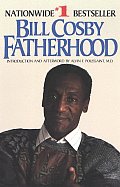
This is a passage from Bill Cosby’s Fatherhood, under the chapter entitled “Sweet Insanity.”

Yes, having a child is surely the most beautifully irrational act that two people in love can commit.  Having had five qualifies me to write this book but not to give you any absolute rules because there are none.  Screenwriter William Goldman has said that, in spite of all the experience that Hollywood people have in making movies, “Nobody knows anything.”  I sometimes think the same statement is true of raising children.  In spite of the six thousand manuals on child raising in the bookstores, child raising is still a dark continent and no one really knows anything.  You just need a lot of love and luck—and, of course, courage because you’ll be spending many years in fear of your kids…

It seems to me that two people have a baby just to see what they can make, like a kind of erotic arts and crafts.  And some people have several children because they know there are going to be failures.  They figure that if they have a dozen, maybe one or two will work out, for having children is certainly defying the odds.  The great sports writer Ring Lardner once said that all life is eight-to-five against.  Well, trying to raise a child to come out right is like trying to hit the daily double—which my father used to do when he whacked my brother and me.

Raising children is an incredibly hard and risky business in which no cumulative wisdom is gained: each generation repeats the mistakes the previous one made.  When England’s literary giant Dr. Samuel Johnson saw a dog walking on its hind legs, he said, “The wonder is not that it be done well but that it be done at all.”  The same thing is true of raising children, who have trouble walking straight until they’re nineteen or twenty.

We parents so often blow the business of raising kids, but not because we violate any philosophy of child raising.  I doubt there can be a philosophy about something so difficult, something so downright mystical, as raising kids.  A baseball manager has learned a lot about his job from having played the game, but a parent has not learned a thing from having once been a child.  What can you learn about a business in which the child’s favorite response is “I don’t know”?

A father enters his son’s room and sees that the boy is missing his hair.

“What happened to your head?” the father says, beholding his skin-headed son.  “Did you get a haircut?”

“I don’t know,” the boy replies.

“You don’t know if you got a haircut?  Well, tell me this: Was your head with you all day?”

“I don’t know,” says the boy.

For Really New Dads

Several of my friends are brand new fathers, several of them at my church.  I started blogging at Intersections when I became a new father.  I wrote a few posts over those first few months which I think are relevant for fathers and the people who love them.  So, I’m adding these older entries to the pile of recent posts on this blog.

I’d love to know what you think after looking through some of these.

Fathers Know Best, Interview #3

FF: Describe your family.

DS: I am Maggie’s husband of twelve years and Eliot’s dad for the past two years.  I’m Kevin and Linda’s son, Anne Marie’s brother and brother-in-law to her husband, Tony.  I’m privileged to have known well all four of my grandparents.  When we adopted Eliot in 2009 our family grew to include members of his birth family.  We’re an imperfect but decent group of folks.

FF: How has fatherhood changed you?

DS: I’ll need a few more years before I can answer this with any certainty.  Honestly, like marriage, I think fatherhood is simply revealing more of who I already was–both good and bad.

FF: Have you made any mistakes as a dad? If you’re not a liar, name one and talk about what it meant to you.

DS: I make mistakes daily.  My flexible schedule allows me to be with Eliot while Maggie works.  Because much of my work is done from home I often feel the tug to respond to work-related tasks when my attention should be given entirely to my son.  Put another way, I struggle to be fully present to Eliot.  Like my previous answer, I’m pretty sure this struggle has little to do with my delightful son and everything to do with my own distracted self.

FF: What’s the most helpful advice you heard when you were becoming a father or as you’ve been a father?

DS: In the days before Eliot came to live with us a friend and parent of three sensed my growing anxiety about being a good parent.  Her counsel was simple and significant: “Parenting is all about grace.”  This truth has alleviated some of my tendencies to strive to get it right. I desire my son to come up in a family atmosphere where grace is the air he breathes.

FF: How do you attend to your relationship with Maggie?  How has it changed since you’ve become parents?

DS: My first answer will sound silly, but it’s true.  Getting Eliot on a sleep schedule as soon as was reasonably possible may be our best parenting decision as of now.  By the time he was four months he was sleeping through the night.  Reclaiming our evenings together, not to mention our rest, was great for that new stage of married life.  I realize not all children will take to sleep this well, but it’s worth trying!

Another thing we’ve done is to go on a date twice a month.  We’ve been able to secure some great babysitters who spend time with Eliot while we take a few hours together.  I should say that Maggie initiated both of these things.

Our relationship continues to evolve now that Eliot is part of our family.  Sleep training and date nights are proof of the added intentionality we’ve found to be necessary to nurture our marriage.  But much of this evolution is completely haphazard.  Predicting how your spouse will respond to parenthood is tricky business; it’s been good to watch each other react to this little person who we care so deeply for.

FF:  Does your job as a pastor bring any particular blessings and challenges to you when it comes being a dad?

DS: I’ve mentioned the flexible schedule being a gift to our family.  There are plenty of dads who rarely see their children throughout the week and I’m grateful this isn’t my situation.  On the flip side, much of my time is given to the church and this includes times –weekends and some evenings – when many families are together.  I’m also keenly aware of the pressures many pastors’ children have felt and I hope to actively oppose those sorts of expectations.  Again, it’s all about grace!

FF:  You adopted your son.  What did you learn about yourself in that process?

DS: I learned that waiting is hard!  While it’s not unique to adoption, the process does require vast amounts of patience and making peace with ambiguity and an unknown future.  This was tough for someone who desires to be in control, especially of these types of really important events.

FF: What surprises are there along the way for parents? What do you wish you were told to expect?

DS: Hold loosely to your plans.  Make plans, wise plans.  But don’t be too nervous when the plans change.  Make a new one and go with it until a new shift is required.

FF: What is one recent memory you made with your child?

DS: Maggie’s work schedule requires three weeks of full-time work, so this week I’m spending a lot of time with Eliot.  Our mothers are graciously traveling to be with us for the next two weeks.  Yesterday we ran errands.  Today involved a walk to a neighborhood splash park.  Given his passionate interest, I’m sure a ride on a train will be required tomorrow.  All of these moments are excuses to watch him interact with his circumstances.  I love the delight I’ve gained as he invites me into his ever-expanding world.

Waking Up to Life’s Bigness

This is a quick quote from Donald Miller’s A Million Miles In A Thousand Years.  I’ve read a few of his books and always find his writing humorous, clear, insightful, and full of good stories.  He’s one of the people I read to help me see.  He writes and I’m able to see and read the stories in my life after seeing and reading the ones he tells.  If you’re looking for some nonfiction to read, consider him.  I think these words are a gentle nudge to notice or, at least, to pay attention since there may be something worth seeing in our lives that we miss.

We get robbed of the glory of life because we aren’t capable of remembering how we got here.  When you are born, you wake slowly to everything.  Your brain doesn’t stop growing until you turn twenty-six, so from birth to twenty-six, God is slowly turning the lights on, and you’re groggy and pointing at things saying circle and blue and car and then sex and job and health care.  The experience is so slow you could easily come to believe life isn’t that big of a deal, that life isn’t staggering.  What I’m saying is I think life is staggering and we’re just used to it.  We all are like spoiled children no longer impressed with the gifts we’re given–it’s just another sunset, just another rainstorm moving in over the mountain, just another child being born, just another funeral.

From Donald Miller’s A Million Miles

This is part of a story in A Million Miles In A Thousand Years.  Donald Miller is talking about his friend Jason saving his family.  Jason heard something Donald said about Jason’s daughter living a terrible story and decided to write a different story as a family.  He called a family meeting and told his wife and daughter that they were going to help build an orphanage.  Jason’s family looked at him like he lost his mind and sat at the table in silence until Jason thought the same.

“I actually think you might have lost your mind,” I said, feeling somewhat responsible.

“Well, maybe so,” Jason said, looking away for a second with a smile.  “But it’s working out.  I mean things are getting pretty good, Don.”

Jason went on to explain that his wife and daughter went back to their separate rooms and neither of them talked to him.  His wife was rightly upset that he hadn’t mentioned anything to her.  But that night while they were lying in bed, he explained the whole story thing, about how they weren’t taking risks and weren’t helping anybody and how their daughter was losing interest.

“The next day,” he said, “Annie came to me while I was doing the dishes.”  He collected his words.  “Things had just been tense for the last year, Don.  I haven’t told you everything.  But my wife came to me and put her arms around me and leaned her face into the back of my neck and told me she was proud of me.”

“You’re kidding,” I said.

“I’m not,” my friend said.  “Don, I hadn’t heard Annie say anything like that in years.  I told her I was sorry I didn’t talk to her about it, that I just got excited.  She said she forgave me but that it didn’t matter.  She said we had an orphanage to build, and that we were probably going to make bigger mistakes, but we would build it.”  My friend smiled as he remembered his wife’s words.

“And then Rachel came into our bedroom, maybe a few days later, and asked if we could go to Mexico.  Annie and I just sort of looked at her and didn’t know what to say.  So then Rachel crawled between us in the bed like she did when she was little.  She said she could talk about the orphanage on her web site and maybe people could help.  She could post pictures.  She wanted to go to Mexico to meet the kids and take pictures for her Web site.”

“That’s incredible,” I said.

“You know what else, man?” Jason said.  “She broke up with her boyfriend last week.  She had his picture on her dresser and took it down and told me he said she was too fat.  Can you believe that?  What a jerk.”

“A jerk,” I agreed.

“But that’s done now,” Jason said, shaking his head.  “No girl who plays the role of a hero dates a guy who uses her.  She knows who she is.  She just forgot for a little while.”

Guest Post: My Hope For My Husband

Leslie Beckett is a friend and overall extraordinary person.  She’d laugh hearing me say that, but I think highly of her and her husband, Michael.  We met at the church where I work, and I’m grateful that Leslie agreed to write a post.  You can follow Leslie’s blog, http://lesliebeckett.wordpress.com/.

My Hope for My Husband

When certain close friends of ours first told us the happy news of their pregnancies, Mike and I both smiled widely.  My expression stemmed from pure joy for my friends while Mike’s more sinister explanation was that his misery was gaining more company.  Don’t get me wrong, he was glad, too.  Glad that he would no longer have to hear about them traveling the world, taking advantage of every festival and restaurant the city had to offer, and sleeping in each weekend.

When the awful aroma of dirty diaper hits the air, or a middle of the night cry screams through the monitor, we both try to pretend we don’t smell/hear hoping the other’s parental duty will beckon them to make what’s wrong right.  Sometimes we wait a very, very, very long time (maybe Jesus will come back before?), or one of us painfully loses at rock-paper-scissors and has to face the fire.

Our 5 year-old, Ethan, has made it routine to tell Mike before his bedtime story, “Don’t read TOO fast and read ALL the words, please!”  He has good reason behind it, too.

Mike is a fairly patient man.  It takes a lot to ruffle his feathers.  When he raises his voice and has a tone, I know it’s bad because he so rarely does.  However, the boys can easily ruffle those feathers, sky rocket that voice, and elicit that tone.  World War III then rages as the perpetrator(s) screams and wails in an Oscar-worthy manner after his (their) father has read the riot act in both word and deed.  As a 3rd party witness, I find myself later debriefing with Mike about what is helpful (yes, the boys need discipline), what is not (but that method only exacerbates), and what to try next (chill out!).  With each of these debriefings, I know that it is easier said than done.  If I had a 3rd party view of myself in my time alone with the kids, I would be repeating the same conversation a million times a day.  But my husband takes these conversations with humility and the desire to be a better father.

Fatherhood is no joke.  My hard-working, intelligent husband is competent in practically every role he has.  I think deep down he knows and believes that, too.  I would venture to say that when it comes to the challenging role of DAD, he may not be so sure.  Most of what I’ve written so far may only seem to confirm those fears.  My hope for my husband is that he would know that he is also good in his role as a father despite any inner suspicions suggesting otherwise.

He is able to carry out discipline when I am not.  Even if WWIII rages at times, the aftermath is having boys who can listen and know the difference between right and wrong.  People have told us that Ethan and Connor are well-behaved.  Although it seems hard to believe, I don’t think they are the kind of people who make it a habit to spread falsehoods.  If his patience wasn’t tried as a father, I would start to suspect alien abduction and an altering of his humanity.

Ethan says his nightly story-time phrase to his father because, yes, his father may sometimes read too fast or skip some words, but also because he is there.  It is routine that Mike eats dinner with him and his brother, gives them both a bath, reads stories, prays and helps put them to bed.  Even if his time with them is limited during the weekday, he makes the most of it and is fully a hands-on father.  Mike has changed plenty of poopy diapers and gotten up out of bed in the middle of sweet slumber.  He never expects me to do more than he.  In truth, there came a point that most nightly interventions were carried out by him despite that fact that he would be the first one up in the morning to go to work.  And even if he still may give a sinister grin, he is truly glad that his friends will enter not just the pain of parenthood but the immeasurable joys as well.  True, he doesn’t travel the world or sleep in or go out as much as he’d like, but he has never exhibited such silliness before as inspired by his boys.  He is about as low maintenance of a man as you can get, but becomes the doting father who insists on packing the cumbersome humidifier on road trips (when the trunk is already crammed full of stuff) if it might help relieve a son’s bloody nose.  When I had the most unpleasant crisis with Connor in the middle of a work day, he didn’t hesitate to drop everything, grab a cab (he NEVER cabs), come check the poop impaction, and take the bus and train transfer back to the office just to have given me support in tackling the MESS.  He loves them.  My hope for my husband is that he will know that is what they need from him the most and that he has already and will continue to show that to them.  My hope for my husband is that he will know he is competent as a father but as with every challenging role he can trust that his mistakes will not scar beyond the reach of grace (and good therapy) and that his Help is greater than his inadequacies.  My hope for my husband is what my hope for every parent including myself is, that he would continue to discover aspects of the Father’s heart in every fatherly experience.  As much as it is about raising good and godly children, it is even more about realizing who He is in every way possible.

Fathers Know Best, Interview #2

FF: Describe your family.

PW: My family is comprised of me, my wife Vicky, and my three sons: Chris (16), Joshua (7), and Caleb (5). We are a fun loving bunch. We laugh together, go to church together and enjoy each others company doing many things. Everyone has their own personality – Josh and I are the extroverts; Vicky, Chris and Caleb are the introverts. I think all of us are temperamental at times but we have learned to give each other space when needed and to live in each other’s space with understanding.

FF: How has fatherhood changed you?

PW: First of all it has made me respect and love my parents more. It has given me a new perspective on the impact that fathers have on their children and family. It has pushed me to live carefully and cautiously. For me, parenting challenges me to know me better. I think about why I say no and yes in many situations. Even if I don’t always tell my sons why I said yes or no, I, at least, think my responses through. There have been times when my responses were based on my upbringing and I had to reevaluate them. I have enjoyed the process.

FF: Have you made any mistakes as a dad? If you’re not a liar, name one and talk about what it meant to you.

PW: Yes. I was made in an household that believed you “do as I say and not as I do.” In my house my children respond better to what I do rather than what I say. So I don’t ask them to do something that I am not willing to do. I used to just tell them to do stuff around the house but now I do it and tell them to model what I do.

FF: What’s the most helpful advice you heard when you were becoming a father or as you’ve been a father?

PW: What you do in moderation your children will do in excess. Be careful what you do; your children are watching and listening even when you think they are not. Oh how true this is!

FF: How do you attend to your relationship with your children’s mother? It’s changed over time. How so?

PW: I believe my sons take their cues in how to treat their Mother from me. I am careful to demonstrate how I want them to treat their mother. Even when we are angry with one another, I am careful with my words and careful not to argue in front of them. Our relationship has improved. I think how we handle our frustration has changed and we have some understood rules of engagement, now. Our children must see that Mom and Dad are okay. They must see that we love, respect and cherish one another so we are careful to demonstrate t in front of them.

FF: How do you pay attention to the differences, the unique characteristics, between your sons? Do you have a spreadsheet?

PW: LOL…No I do not have a spreadsheet but I am very observant. I know each of their strengths, personalities and temperaments. I listen to each one’s questions and conversations no matter how silly I may think they are. Their questions and conversations are the inroads to their possible passions. The movies, books, music, toys, etc. that they show interest in give me some clues as to how I should feed their passions. Chris loves technology, CSI and music. Josh loves math, hero cartoons, performance and movies. Caleb loves cars and singing. All of them have their likes and interests that are unique and fascinating to me. So I observe carefully.

FF: What surprises are there along the way for parents? What do you wish you were told to expect?

PW: I wished someone would have said to prepare my heart. Parenting is joyous, painful, sometimes confusing, frustrating, happy, thought-provoking and challenging. If your heart is not in the right posture you may respond erroneously. A parent’s heart is that of a servant. If you do it right, you do grow and develop a good relationship with them. Over time the relationship changes and may have to be modified to fit their station in life. There are sometimes when I look at my 16 yr old like he is still 6 and have to understand that he is becoming a man. Eventually I will have to let him go or at least change how I respond to his needs because his needs will change and what he needs from me will be different. The shifting in our relationships carries with it a host of emotions.

FF: What is one recent memory you made with your children?

PW: I took the oldest boy and his friends paint balling for his 16th birthday. I took the 7 year old and his friends along with his 5 yr old brother to Lego Land. We have gone camping, to football games, baseball games, basketball games, field trips, boating, etc. We are always trying to find something to do together.

There are times when I remember all the things my 16 yr old and I did when he was younger and how I was involved, present and engaged in his world. Now, since he is becoming a man I must shift. It hurts because I have grown to love him and enjoy his company but he is growing up like we expected he would. Now I am careful to be just as present in my younger sons’ lives. The thought of doing it all over again with them is exhausting. But they need the same amount of time that I gave my oldest.

I was teacher, pastor, coach, mentor, principal and many times playmate. In the time of their lives I find myself trying to be the father that I felt my father should have been. Don’t get me wrong my father was a great provider, fun loving, outgoing, and present. But he was not a good listener, watcher and observer. I have always believed that he should have been more involved than what he was in my life. Now I understand that he was more involved than his father was in his life. His job and the demands of life – i.e.providing for a family, dictated how involved and present he could be. My career choice creates opportunities and possibilities of being actively present and involved in my sons’ lives. That is a blessing!

I recently told my son that I know he is growing up and the boundaries that we have in our house are becoming more noticeable to him. I told him we have these boundaries because as Christian men it’s good to have boundaries and accountability. I shared with him that the time is coming where he will have to set his own boundaries, I will try hard not to tell him what to do and that how I function as a father will change from life overseer to life coach. But it’s not now but soon. I would not have been able to make that statement if I had not done some soul searching to see how best to serve his ever changing needs.

Fatherhood is ironic because while I am fathering my children and helping and directing them in development and and healthy growth; the interaction is developing and growing me. I appreciate the lessons my sons give me everyday.

From Migrations of the Heart

I’m reading Marita Golden’s autobiography, Migrations of the Heart.  Her story is compelling and thoughtful and beautifully written.  Can I use beautifully?  It’s hard at times and yet still somehow beautiful.  Her writing is striking and full and lively.

In this passage, she’s writing about a very powerful loss.  Her first pregnancy ended with what her doctor called a spontaneous abortion.  Ms. Golden is “taking me to school” in her writing.  I’m learning.  I’m listening.  As she’s talked about her experiences in this autobiography of loving Femi, a Nigerian, and moving into his culture after having lived for years in the US, I’m learning, through her, of what it took for her to adjust.  New expectations, new rules, spoken and unspoken.  I’m learning of how manhood and womanhood was seen and expressed in her life.  I’m learning about being a husband.

At home I recuperated, confined by the doctor, Femi and my own desire to bed.  Almost immediately I began to write furiously, with the fervor of a long-awaited eruption.  I filled page after page with an outpouring the loss of my child released.  The writing affirmed me, anointed me with a sense of purpose.  Most of all, it slowly began to dissipate the sense of failure that squatted, a mannerless intruder, inside my spirit.  The writing redeemed my talent for creation and, as the days passed, made me whole once again.

In the evenings Bisi came to visit, and for several days under her hand I received a postpartum “native treatment.”  Filling the tub with warm water and an assortment of leaves, grasses and herbs, her hands pressed and gently kneaded my stomach in a downward motion.  “This will bring out the poisons,” she explained.  The water was the color of strong tea and the steam rising from it made me drowsy.  Drying me with a towel, she warned, “Tell uncle to let you rest.  Let your body heal.  Tell him to be patient.”

“I will,” I assured her, “I will.”

Mourning the loss of his child, his son, Femi inhabited the house with me but was dazed with grief.  As I ate dinner from a tray in bed one evening, he said, “We lost a man.”

“No, Femi, we lost a child.”

“We lost my son,” he insisted.  “And we must find out why this happened.  What went wrong, so that it won’t happen again.  Next time you will not drive; the roads alone could cause a miscarriage.”

“Femi, the doctor told me that sometimes a weak or defective fetus will spontaneously abort.  That perhaps if the child had gone nine months, it may not have been a healthy baby anyway.”

In response he quieted me with a wave of his hand.  “We will be more careful next time.”

Interview with Rabbi Zoe Klein & Book Giveaway

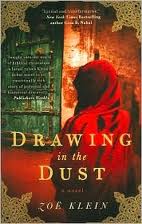
I am happy to bring you the next author interview with Rabbi Zoe Klein.  Rabbi Klein’s novel, Drawing in the Dust, tells the story of an archaeologist who risks her reputation to excavate beneath the home of an Arab couple to make a miraculous discovery.  I’d like to give away a copy of the novel, so look into that at the bottom of the interview.  Rabbi Klein inspires me.  As a spiritual leader and writer, she gives powerful answers to how she thinks about what she does, how she wobbles all her plates.  Enjoy…

MW: When did you first know you would be both a writer and a rabbi?

RZK: Hi Michael! Thank you for bringing these questions to me, it is an honor to participate in this interview! Long before I ever could imagine that a little girl like myself could grow up and become a Rabbi, I knew I loved to write. I wrote stories all the time. I remember writing stories on those beige thin sheets of paper on which the lines were two inches apart, filling in scenes with chubby crayoned letters. I even remember one of my first stories, about a magical species called the Giringos, half giraffe and half flamingo.

I remember a powerful moment, the first time I told my father I wanted to be a writer when I grew up. He is an artist and I remember standing beside his dawing board while he worked and saying I wanted to be a writer. He said, “That’s great. But you cannot call yourself a writer until you finish a book. Even if it is never published, even if no one reads it, once you finish a book you will be a writer, but until then you are not.” It sounds like a strong thing to say, but it was a valuable lesson. For my father, it was very important that I learn the value of taking a creative idea to its completion. Lots of people have wonderful novels in their souls, but very few put in the tedious effort to realize it. When I finished my first novel in college, an as-yet unpublished story called “The Goat Keeper”, it was such a proud moment to hand it to him and to become a writer!

It wasn’t until I was in my Junior year in college that I truly understood that the path to the rabbinate was even a possibility for me. I had always thought that it was something only men could do. Even though there were female rabbis around, I hadn’t met any. However, I always loved religion, studying faiths and myths and cultures. The kinds of conversations and debates I had with people with strong faith identities in many ways mirrored the conversations I’d hear between my parents and their artist friends. The artists would always talk about such things as mortality, man’s fragility, the futility of monument, shattering dogmas, the supremacy of blank space…it was art they were discussing, but it filtered into my mind as theology, and I loved it.

In many ways I think of myself as a rabbi with the heart of a novelist, rather than the other way around. I started as a writer and then expanded my material from the confines of pen and ink to people and community. As a congregational rabbi, I have the opportunity to help craft the story of a community of families, engage in their sacred and profound moments, adding our chapters to an ever-unfolding scripture of a people.

MW: I realize both roles relate to one another, if I’m reading your interview in Drawing in the Dust correctly.  But does writing serve your role as a spiritual leader? If so, how?

RZK: Sometimes I think my rabbinate is almost like fieldwork for writing, and my writing is soulwork for the rabbinate. Writing is interesting in that it is done in physical solitude, and yet it is never lonely for me. I am full up with characters, with vivid dreams and scenes, demons to wrestle, I’m haunted and vexed and also ecstatic and weeping. In contradiction to that, in the rabbinate there is no solitude, you are continually working with people. It is a very social position, and yet for me there is loneliness there. There is a lot of what the mystics call “tzim-tzum,” a kind of spiritual contraction one does to make room for others. You retract yourself enough to allow space for other’s voices. You become an expert active listener. When I write though, that part of me that contracts in order to give center stage to others’ stories and needs, suddenly unfurls its great wings and jets about wildly.

The short answer to your question is that I think my writing allows me to be a whole person as a spiritual leader. Without it, I think I’d be fragments of a mosaic, chipped with no clear design. I think when you take the time regularly, whether through writing or meditation or running or whatever, to reflect on your decisions and desires, face your darkness, and emerge with a burning but joyful heart, you can better take others by the hand and lead them through a courageous process of reflection and growth.

MW: Talk about your experience as a person of faith—indeed a leader—writing biblical fiction for a broad audience.  Were you concerned that you wouldn’t be received well, that you might misrepresent yourself, or that your story might be misperceived?

RZK: While I was perhaps concerned about the story being misperceived or not received well, it was not a deterrent for me. I was encouraged by a great editor Al Silverman to forget while I wrote that I was a rabbi, a mother, a wife, and just write from a place of uniqueness, without titles, and I’ve always tried to do that. I am a person of faith. I believe that stories which are filled with metaphor and myth are a form of prayer. I never feel far from God when I write, in fact I feel close, even if I’m writing a scene that is sexual or violent or both. It is a process of exploration into human nature, into fantasy, into longing and fear, and it is not too different than the best kind of worship experience, where you are completely honest and raw, repentant, mournful, terrified, awe-filled, trembling with humility, romanced and swept up in all your smallness into the impossible arms of the infinite. There is no doubt that it is scary to write for a broad audience, and that no matter how much you try to hide your truths under layers and layers of plot and characterization you always end up realizing that despite your efforts you ended up publishing your very private diary, but it is also freeing to realize that the things that you say are the honest voicing of your humanness, what a relief to not be a spiritual leader hiding behind a façade, with word locked into routine platitudes! How refreshing to be real, to have a faith that wrestles, breathes, challenges and confounds!

MW: How has your congregation responded to your writing life?

RZK: My congregation has been celebratory and wonderful. I am fortunate to share this journey with them! We have many writers, thinkers, professors and experts-in-their-field in our community, people who love and appreciate art and don’t shy away from its darker sides…

MW: When I connected with you about this interview, I mentioned my gratitude for the seen and unseen work behind this novel.  I’m glad you’ve labored in all the ways you have to give us this work.  What don’t people know about what it takes to write a good story for publication?  Will you give us a sense of some of what it took for you?

RZK: Ah, that’s a good question. I don’t think people understand the sheer mass of hours that it takes. People don’t realize that once the book is finished and you feel completely beaten and your hair is grayer and thinner because of the process, and your eyes are dim from staring into the computer, and every time you blink you see bright blue squares, and your wrecked with fatigue after months of not sleeping, once you’ve gotten that far, you have to STILL muster the strength to face rejection after rejection after rejection…years of rejection and pitching your story, and trying even after years have gone by and you’ve already become passionate about a NEW idea retaining the freshness about the book that no one seems to want…and then after you finally find an agent and an editor, realizing that there are two of three or four more Everests to climb with revisions, revisions that keep tearing out your heart and then sewing it back in. Every time I’d get to a new mountain where it would be so easy to just drop the whole thing, I would think to myself, “This is a filter, and only the most determined get through.” And I was determined to be determined enough! I think people understand how steep the climb is from conception to publication, but I don’t think people know how long it is, how much stamina is involved.
I also tend to like to write stories that have a lot of different characters and layers of interpretation, and it is hard to keep track of all of those little pieces over the course of 600 hundred pages, which was how long DRAWING IN THE DUST originally was. When I was editting it at one point I realized that if one added up the years and scenes carefully for one of the very peripheral characters and tried to figure out her age, she would have to be something like 130 years old. Keeping track of all these strands of lives is hard!

MW: I’m pretty sure you have many things to do.  I could be wrong.  I’m probably not.  How do you serve both these areas in your life well?  And how do you do anything else?!

RZK: Sometimes I feel like one of those cirque-d’soleil contortionists with the spinning plates on top of sticks, except that while they make it look so graceful and beautiful, all the plates spinning perfectly, my plates are often pretty wobbly! And some of them crash. If I were to label my plates, there would be the Writing Plate, the Rabbi Plate, the Children Plate, the Husband Plate, Friend Plate, and of course lots more. I think while I’ve made time to keep the Writing Plate spinning by devoting Mondays, my one day off, to writing, and the Rabbi plate I devote much time to, and the Children Plate keeps spinning even though it’s hectic, I admit the Husband Plate often wobbles and falls (luckily it’s a sturdy, rebounding plate!), and I haven’t been able to devote much time to the Friends Plate (I have friends, we just don’t see each other at all, I haven’t been able to nourish that part of my life)…there are a lot of sacrifices! As I’ve gotten older, I am trying to redistribute my energy, focusing more on my family and building relationships, and trying to approach work with less frenetic energy and more joy and appreciation. Everything is not always in balance as people like to believe! But up until now I think I’ve lived my life is a giant rush, and I really want to learn to slow down and appreciate BEING instead of eating up every hour with DOING.

MW: I read Eugene Peterson who is a pastor and writer, and he encourages clergy to read fiction.  He says that artists have become his allies and have taken a place next to theologians and scholars in his formation as a pastor and as an artist.  You talk about the power of fiction in your provided interview.  How does fiction nurture a person in general and a religious leader in particular?

RZK: That is beautiful. I think that fiction unlocks people’s hearts in a particular way that nothing else can. You take fiction under the covers with you, give it the heat of your breath, and like the genie in the lamp it has an enchantment. Somehow entering the world of fiction, our vault of tears is more easily unlocked, particular drama reflects universal understanding. There is an intimacy in fiction, partly because of the intimacy it took to create it. In terms of a religious person, I think that today we tend to sterilize the idea of a person of faith, turn that person into a kind of sexless judge. Piety is purity. But dancing with God is an intimacy, it’s a cosmic affair, filled with subordination and abuses, mastery and humility, and of course love. I once wrote a new definition for love — Reverence for Mystery. I think fiction nurtures a person in general and a religious person in particular because there are very high truths that can only be expressed in metaphor. God, for example, can only be expressed in metaphor, as shepherd or teacher or lover or parent or guide.  I believe Fiction, ironically, is Ultimate Truth’s master key.

MW: What are you reading these days, by the way?

RZK: To be honest, I’m reading a lot of Science Fiction! I just printed out the top 100 Science Fiction books, and right now I’m reading Ender’s Game. It’s just a field I had never read before, and I am surprised at how much I’m loving it! Before this new kick though, I read Cynthia Ozick’s novels, The Shawl, The Putterman Papers and Heir to The Glimmering World, and my goodness, her language was like cashmere, so rich and sumptous.

MW: You’ve talked about God as the Reader of All Life—language that I love.  What are you working on, preparing, and “offering skyward”?

RZK: I just finished a novel called Origin of Color which will be released in summer of 2012; it is going through its editing process now. I went to Swaziland and Tanzania to research for it when I was on sabbatical this past December. The book is about an American couple that accidently falls into the middle of a crime ring of witchdoctors and politicians in East Africa who sell albino body parts to be made into potions. I met with East Africans with alibinism and families whose children with albinism had been butchered. I wove these experiences into this novel. It was an emotional novel to write, it is a thriller, and it even scared me as I was creating it. I’d be writing in the middle of the night and leaping up to make sure the doors were locked…jumping if I thought the curtain moved! The “offering skyward” part of it is that it is also a contemplation about perception. I am very excited about it.

I am also leaving in two weeks to go back to Africa, to Ghana, with the American Jewish World Service. I will be in Winneba, Ghana with American Jewish World Service’s Young Rabbis’ Delegation. The Young Rabbis’ Delegation brings together a group of rabbis from all over the country to experience first-hand the power of grassroots development and explore issues of social justice and global responsibility from the perspective of Jewish texts and tradition.  The group is working at Challenging Heights, an AJWS-supported NGO devoted to providing education to former child slaves and resources to families whose children are at risk for slavery and human trafficking.

MW: How can readers stay in touch with you and support your work?

RZK: On my website www.zoeklein.com, or by emailing me at zoe@zoeklein.com. Thank you so much for inviting me to participate on your website. Abundant blessings to you and to all of your readers!

As for the book giveaway, if you know of a clergy person who would benefit from reading this novel, post a comment, a sentence or two, about why they would.  Do so by Friday, midnight, CST.  I’ll choose a winner randomly and you can give a copy to your clergy person.
Faith and Fiction, pt 2

One of my exemplars when it comes to writing and leading is Frederick Buechner.  I mentioned a quote from this same message by Buechner some time ago, which you can visit by clicking here.  What’s belowe is a small attempt to ready you for tomorrow’s post, an interview with Zoe Klein.  Make sure to come and read it!

The word fiction comes from a Latin verb meaning “to shape, fashion, feign.”  That is what fiction does, and in many ways it is what faith does too.  You fashion your story, as you fashion your faith, out of the great hodgepodge of your life–the things that have happened to you and the things you have dreamed of happening.  They are the raw material of both.  Then, if you’re a writer like me, you try less to impose a shape on the hodgepodge than to see what shape emerges from it, is hidden in it.  You try to sense what direction it is moving in.  You listen to it.  You avoid forcing your characters to march too steadily to the drumbeat of your artistic purpose, but leave them some measure of real freedom to be themselves…

…In faith and fiction both you fashion out of the raw stuff of your experience.  If you want to remain open to the luck and grace of things anyway, you shape that stuff in the sense less of imposing a shape on it than of discovering the shape.  And in both you feign–feigning as imagining, as making visible images for invisible things.  Fiction can’t be true the way a photograph is true, but at its best it can feign truth the way a good portrait does, inward and invisible truth.  Fiction at its best can be true to the experience of being a human in this world, and the fiction you write depends, needless to say, on the part of that experience you choose.

From One Father To His Son

This letter is a part of the collection of letters in Letters From Black America edited by Pamela Newkirk.  I’ve posted one other letter on the blog.  If these stories-in-the-form-of-letters, or the idea of them is interesting to you, take a look at the book.  I think you’ll find a narrative of the African American experience as well as delightful examples of language about family, love, and a host of other aspects of Black life.

My dear Son Rudolph,

I am in receipt of your letter and have read it carefully.  I know that in many respects I must appear a stranger father and rather disinterested, but that is not the case.  There is more of the Indian stoicism in me than the Negro loquacity.  When I am deeply moved I am least demonstrative.  You were exactly about my age when you made your choice.  I have not tried to dominate your selection in any way.  I have taken the girl only on what your mother has said.  She intimated the probability of this last year, and seemed satisfied.  I therefore made myself satisfied.  I hope your choice will be all you desire and as you have expressed it, she may prove as noble a wife as your mother is.  I suppose really that I should have interested myself in Isabel when she was here last.  But to tell the truth, it did not occur to me.  Just tell her for me that she must take me as she finds me.  Make herself at home whenever she comes around me and do not look for any gushing over as it is not my way.  Let her know that I will take her to my bosom just as warmly as either of you boys and would do as much for her as for any of you.

All I ask is that you boys will not neglect your mother, for, hale and active as I appear, my time is fast approaching and I feel that my [illegible] is not far off…

Wishing you the best,

Your loving father