Why Should It Mean So Much

Dag Hammarskjold, a twentieth-century diplomat, advisor, and leader is a companion of mine (through the text).  I read selections from his Markings from time to time.  They are poems, reflections, meditations, and musings.  Last night I read a few.  Here’s one from 1952 that seems compelling to me today:

How ridiculous, this need of yours to communicate!  Why should it mean so much to you that at least one person has seen the inside of your life?  Why should you write down all this, for yourself, to be sure–perhaps, though, for others as well?

I’m in the middle of revising another draft of my manuscript.  I’m walking through some thoughtful edits from Maya Rock, and the walk is both enlivening and humbling.

I’ve been sick for more than two weeks thanks to my generous son.  I’m still a little congested, in the head especially, and I mean that, at least, in two ways.  But Hammarskjold’s words come alongside me as I’m reading my edits, adding and cutting and thinking and shaking my head at some of the assumptions I make in my story.

I’m considering my draft in light of his reflection.  How he says writing, or communicating, allows a person to see the inside of your life.  How communication is for others.  It really takes me out of my head, where all the assumptions are, where all the answers are, and delivers them onto the page, into the conversation, in the space where communication happens between two people.

Ode to Gumbo & Other Memories

For weeks I have waited

for a day without death

or doubt.  Instead

the sky set afire

or the flood

filling my face.

A stubborn drain

nothing can fix.

Every day death.

Every morning death

& every night

& evening

And each hour

a kind of winter—

all weather

is unkind.  Too

hot, or cold

that creeps the bones.

Father, your face

a faith

I can no longer see.

Across the street

a dying, yet

still-standing tree.

So why not

make a soup

of what’s left?  Why

not boil & chop

something outside

the mind—let us

welcome winter

for a few hours, even

in summer.  Some

say Gumbo

starts with file

or with roux, begins

with flour & water

making sure

not to burn.  I know Gumbo

starts with sorrow—

with hands that cannot wait

but must—with okra

& a slow boil

& things that cannot

be taught, like grace.

Done right,

Gumbo lasts for days.

Done right, it will feed

you & not let go.

Like grief

you can eat & eat

& still plenty

left.  Food

of the saints,

Gumbo will outlast

even us—like pity,

you will curse it

& still hope

for the wing

of chicken bobbed

up from below.

Like God

Gumbo is hard

to get right

& I don’t bother

asking for it outside

my mother’s house.

Like life, there’s no one

way to do it,

& a hundred ways,

from here to Sunday,

to get it dead wrong.

Save all the songs.

I know none,

even this, that will

bring a father

back to his son.

Blood is thicker

than water under

any bridge

& Gumbo thicker

than that.  It was

my father’s mother

who taught mine how

to stir its dark mirror—

now it is me

who wishes to plumb

its secret

depths.  Black

Angel, Madonna

of the Shadows,

Hail Mary strong

& dark as dirt,

Gumbo’s scent fills

this house like silence

& tells me everything

has an afterlife, given

enough time & the right

touch.  You need

okra, sausage, bones

of a bird, an entire

onion cut open

& wept over, stirring

cayenne in, till the end

burns the throat—

till we can amen

& pretend

such fiery

mercy is all we know.

Kevin Young’s Ode to Gumbo in Dear Darkness

A Prompt: Write In And Through Love

I was re-reading Parker Palmer’s Let Your Life Speak for a class with students of theology the other evening.  But I thought of writers when I read it.  He was discussing how to honor and live one’s nature.  Parker had discussed how we damage our own integrity when trying to be generous, even if we have nothing to give, all in the name of love.

When I give something I do not possess, I give a false and dangerous gift, a gift that looks like love but is, in reality, loveless–a gift given more from my need to prove myself than from the other’s need to be cared for.  That kind of giving is not only loveless but faithless, based on the arrogant and mistaken notion that God has no way of channeling love  to the other except through me.  Yes, we are created in and for community, to be there, in love, for one another.  But community cuts both ways: when we reach the limits of our own capacity to love, community means trusting that someone else will be available to the person in need.

Continuities

Are You Waiting for the OneChristian marriage is meant to be a place in which love can flourish without fear.  It is intended to create families into which children can be welcomed, to provide a secure and life-giving context for sexual relationship, and to set in place a nurturing and supportive relationship between husband and wife.  It is meant to be a setting in which human beings grow together into a love that is shaped by God’s own love for his people.

But we live in a fallen world, and this does not happen automatically.  The best of marriages are marked by shortcomings and imperfections.  And when marriages go bad, they can go very bad indeed.  The children of such marriages tend to be very deeply marked by the sorrow and suffering they have endured.  They want so desperately to do better themselves and are often deeply skeptical as to whether better things are really possible.

In circumstances like these, how can we find the courage to love?  One way to begin might be to remember the continuities between marriage and Christian life in general.  Sometimes, what a marriage or any relationship needs is not an injection of big doses of excitement or inspiration.  What it needs is more of the basic things that form the substance of the Christian life…love, joy, peace, patience, kindness, goodness, faithfulness, gentleness, self control.

My First Response

This is from my meditation for today, from Eugene Peterson’s A Year With Jesus, which is a daily reading from the gospels, accompanied by a few sentences of explanation and a prayer.  I’ve been turning over the prayer today and thought I’d share it.

My goal, Savior Christ, is to believe in you so deeply and thoroughly that my first response in every crisis is faith in what you will do, trust in how you will bless.  But I have a long way to go.  Lead me from my fearful midget-faith to mature adulthood.  Amen.

Cross at CTS

Needles-n-Things

You were a champion at the doctor’s office.  You took that needle like it was a hug, hardly blinking, and only repeating what I told you before the nurse came in.  After your exam, I explained it like your doctor had.  There would be a pinch.  It would be quick and it would hurt.  Then it would be over.  You repeated the words pinch and hurt because you knew those words, understood them.  And then the nurse came.

You stared at her, watching her like she was going to mess up.  And afterward, you just looked down at the little sticker.  You touched the spot on your thigh.  And later, on the way to the car, you repeated a few times, “It was a pinch, daddy.”  It was your way of saying that thing still hurt.  I asked if you were okay and you nodded.  But you said a few more times tonight, in case I forgot, “It was a pinch, daddy.”

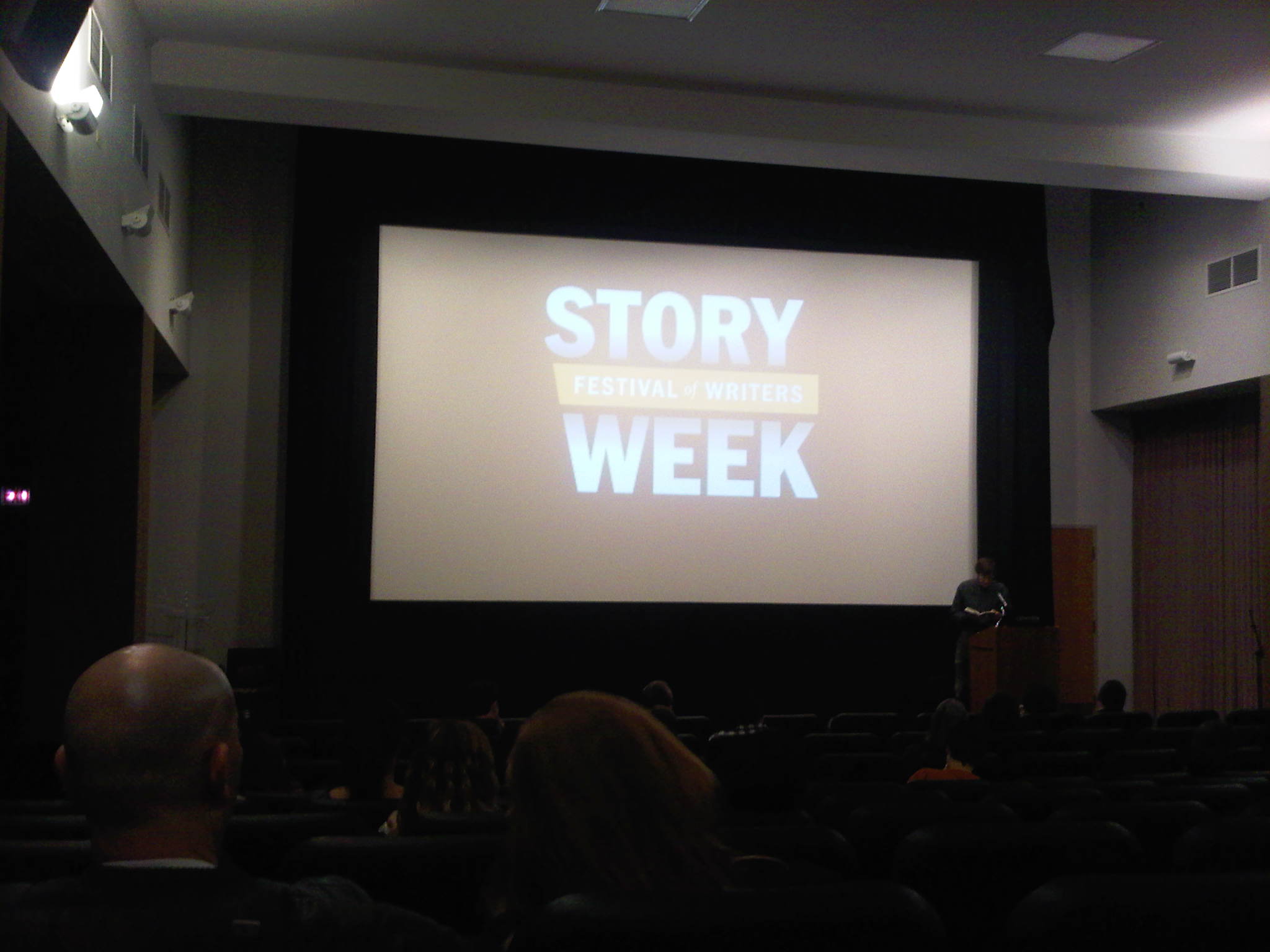
Story Week at Columbia College, pt 2

Story WeekLast week I went to a few sessions at Columbia College’s festival for writers.  It was another generous time at what they called one of the largest free conferences for folks interested in writing and publishing.  Sadly, like good gatherings, it ended.

The last session I went to consisted of a panel–including two publishers, one editor, and two agents.  They talked for an hour about submissions, traditional and self-publishing, marketing, and voice.  They said a lot.  I wasn’t trying to write their comments or answers to questions, as much as I was taking them in.  Here are a few quotes were worth capturing from the panel:

There’s no threat of books and stories going away.  None.

…how it’s going to end up, I’m not too sure.

Publishing is the intersection between art and commerce.

No one place is central to the conversation.

There’s a really bright future.  For every book.

There were certainly less inspiring words.  But I’ll keep these and revisit them.  Perhaps you will too as you write, revise, and submit.

Only Your Best Work

This is one of those quotes that is about writing but can be about everything in life that requires preparation, work, revision, and the courage to surrender the results.  Anything where we choose can be around these words.  Anything that calls forth effort is like writing and requires careful editing.  A decision where to take the person you love for a quiet, meaningful conversation.  The answer to a penetrating question.  Picking what to where for an important meeting.  Not rushing is essential because it means we run through the slow work of foundation-building.  From Writers Digest:

But building a career requires that you lay a strong foundation of only your best work--and nobody’s first draft is the best it can be. Careful editing is the mortar that holds the story bricks together.

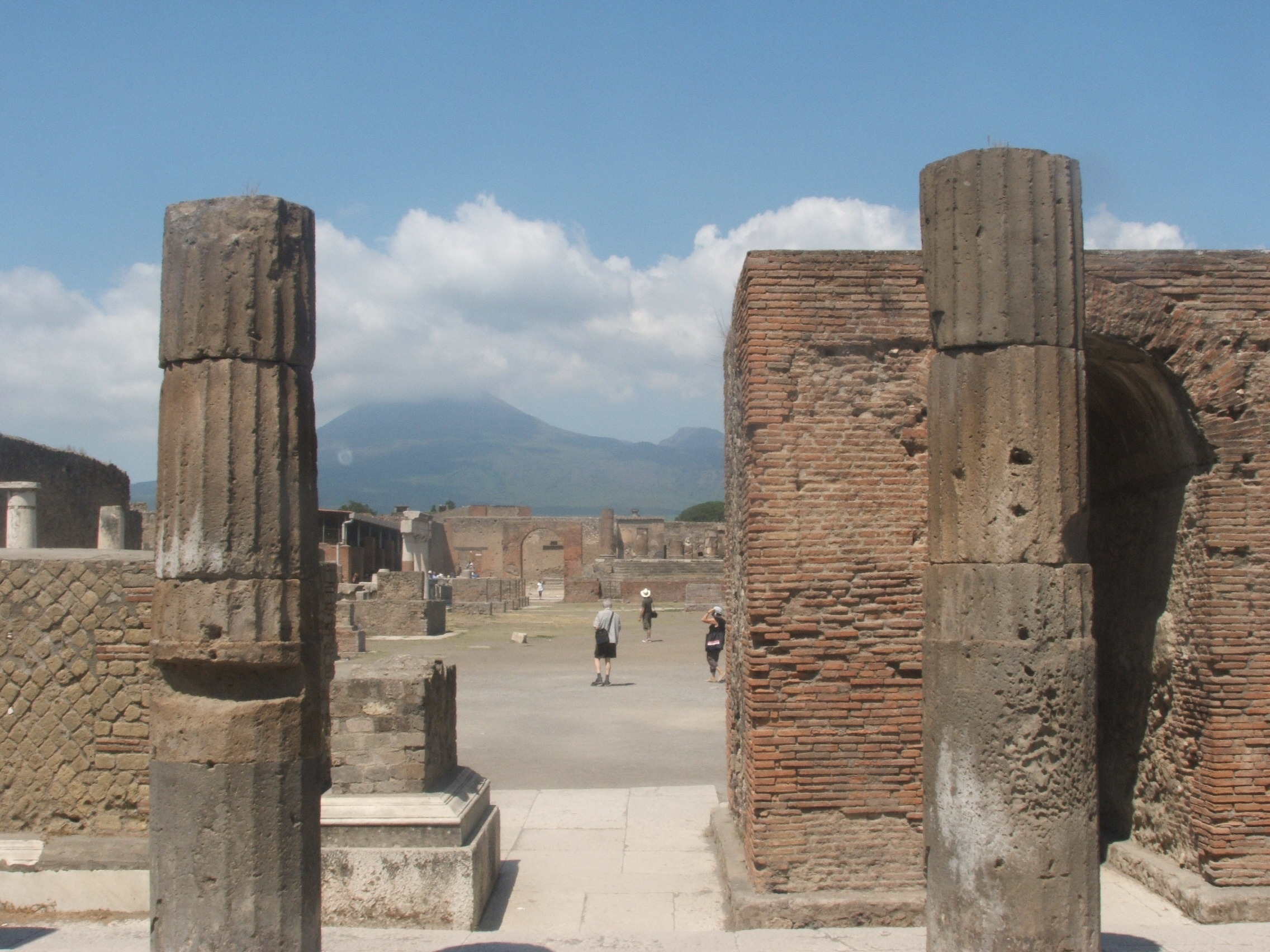
Foundations in Pompei

James K.A. Smith on Real Formation

Mile Marker

One of the most crucial things to appreciate about Christian formation is that it happens over time.  It is not fostered by events or experiences; real formation cannot be effected by actions that are merely episodic.  There must be a rhythm and a regularity to formative practices in order for them to sink in–in order for them to seep into our kardia and begin to be effectively inscribed in who we are, directing our passion to the kingdom of God and thus disposing us to action that reflects such a desire.

From James K.A. Smith’s Desiring the Kingdom: Worship, Worldview, and Cultural Formation