The Thing About Weddings

I told a friend today that weddings are the perfect pastoral occasion.  When I lead a couple in their wedding celebration, I am participating in their story.  Sometimes I tell them this.  I say that I’m glad, honored to be a part of their narrative, to be a character in their tale.

Last Sunday I led Kynshasa and Ellen in their vows.  Their wedding was in a place on Cermak, on the second floor of a brick-walled converted loft space.  Everything was fun.  Just the right balance of casual and expectation.  When I arrived, I had to jab Kynshasa for setting up a microphone.  I teased him and managed the tie under his neck.  I greeted people I knew and people I didn’t.  I hugged Ellen and asked if she needed anything.  I told people to sit down and rest because the wedding would take a while.  I was reminded why I love to be a pastor in such situations.

I love to interact with people’s families.  I enjoy being able to say things, hopefully decorated with humor, to people who I’ll never meet on a Sunday morning.  The music entertains me.  Following people around as they awkwardly reintroduce themselves to old friends amuses me.

The ceremony itself is a treat.  I feel like a pro.  Thaddeus says that my old man comes out.  I poke fun at people.  I stray from the order of things.  It’s a picture of the Christian life.  Everybody has a perception of how things should be, an expectation that this is done and that isn’t.  In the actual experience, very little is orderly.

After the ceremony, I get a kick out of listening to people say something nice about the ceremony, especially when they don’t really know how to compliment a pastor.  It comes through because they make their compliment sound like a cross between what they’d say to an actor in a play and what they might say in a confessional.

At each moment in a wedding, I’m thinking to myself how the wedding is only a slice of what’s real.  But it is really a slice of what is real.  It isn’t everything, but it is usually true.  There are people present who love the idea that the couple is finally doing this.  Aunties are crying because they never thought little junior would settle down.  There may be an ex somewhere in the crowd sizing up the scene and asking why they weren’t in the outfit on the stage.  If there isn’t a drunk, something is wrong.  People are late.  Nothing goes according to the bride’s plan, and she hardly cares anyway.

All of that is real; all of it is an expression of those families crashing together.  You can’t coat it brown sugar.  You can’t change it.  It’s there.  And I get to sit right in it and point people to the source of love, the start of grace in the context of a marriage.  I get to tell bright smiling brides and sweaty or cool grooms that what they have is an opportunity to love another on God’s behalf.  I get to say that all the good that they feel for one another is a glimpse of all that God feels about them.  I get to say that the lasting love they have for each other grasps for the unconditional love of God.  I say other things.  I tell them that life will suck, that they will suck, that marriage, if it’s anything , is a community of forgiveness.

I don’t change the wedding message much.  That sermon is hardly spiced with fresh jokes.  I’ve done more than twenty in the last four years alone.  And I’ll probably stay as close as I can to the themes above, and I’m pretty sure I’ll keep enjoying every moment of each ceremony.

Conversations As Reminders

I learned early on that being a pastor meant ten thousand things.  Following Rev. Trotter when I was a boy, I saw that being a pastor meant making connections for people.  It meant preaching on Sundays and visiting homes and hospitals.  It meant finding people jobs when they came home from prison, going by Mary Moore’s house to get fishing rods, or praying in the sanctuary at night when no one else was there.  It meant listening to leaders complain in meetings.  It meant being under-appreciated and overworked.  As a child I witnessed the wideness to our work as pastors.

But the long list of uncountable things congregational ministers do can, simply, miss it.  I’ve grown and aged since my days as an up close student of Bishop Trotter, and I’ve seen how necessary it is to have people “rehearse the point” in my ears.  Yesterday I met with the team of adjuncts who’ll piece together a program in vocational formation that will attempt to remind first, second, and third year seminarians what our calling is about and, probably, what it’s not.  One of my conversations last Sunday was a reminder to me.

When I sat with Byron at Letizia’s, we talked about things that matter.  We launched into a conversation about Mystery, about sacred speech, about the ways we like to control our lives, about the usual practice of people taking too much on themselves and acting (poorly) like God.  We talked theology.

Theology is talk or speech about God and us.  It is talk that is informed by life.  That is the word I use to sum up how we think about, believe, and live toward God.  It’s not a Christian act but a human one.  Everybody has a view or opinion of God.  We have a perspective or an experience with God, even when we disbelieve in a deity.  We live that view out.  We talk that view out.  We live, in a word, theologically.

That captures an important part of my role in people’s lives.  As I’ve thought about my conversations with Byron over the time we known each other, he reminds me that I am essentially a worship leader.  I lead people in worship.  I remind people that there is a God and that that God is, and must be, responded to.  Rather ignored or cursed or adored or answered, we respond.

There are certainly other parts of my job, other aspects to my vocation.  I have meetings that feel very unrelated to worship.  I talk to people about things that are in no way related to this essential core.  And Byron and people like Byron remind me of what my life is about.  God is God, and we are people.  God does things God does.  Humans respond.  We worship.

As a pastor, one of the things I wear, the skin of my vocation, if you will, is that divine reminder.  When I show up, I’m showing up as a person whose life is a sign that says God must be worshiped.  Eugene Peterson wrote an excellent memoir, The Pastor, and he talked about how congregations can easily focus on problems.  He said that his role as a pastor was unlike that of a therapist.  He wasn’t present to fix people, though that became an expectation he had to reform with his church.  He said that his role was to lead people in the worship of God and to lead them in living holy.  Living holy and living worship was different from fixing issues.  “Worship,” Peterson wrote, “becoming whole, opening our lives to what we could not control or understand, was about God.”

Imagine that–worshiping–opening your life to what you couldn’t control.  Doesn’t it frame the issues running around in your mind?  Certainly there are things that we can and should control.  Of course, God isn’t one of those issues.

It makes me thankful for the Bryons in my life.  I know he’s going to ask a question that sends me down and deep and further.  I know that he is going to make me comfortable in what is uncomfortable most of the time–being before God.  Conversation with the Byrons of my life bring me back to the important role of the pastor, even one whose function is to troubleshoot and resolve problems.  It’s to live theologically, to lead others in doing the same, and to live like the God whose sign I am in untamed.

Dreams For My Daughter

Nate & Charlotte Noonen

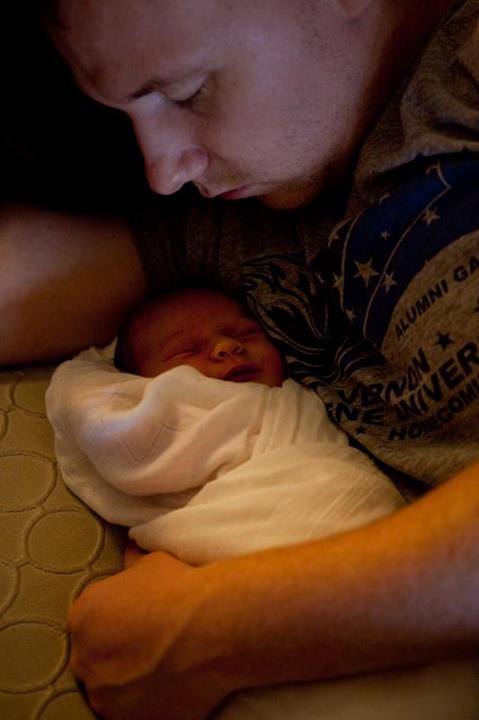
On Saturday, July 28, 2012 at 7:50 PM my daughter Charlotte was born.  I was there and watched my wife deal with pain that is indescribable.  In the moments of labor, when it seemed like she would never come, I laid in the bed with my wife and gave her truths.  God is with you.  Charlotte is coming soon.  You are doing so well.  I love you so much.  When 7:50 happened it was surreal.

A baby born at 7 pounds 7 ounces and 19 inches long is a lot larger than I imagined.  She was still very tiny, but large given the size of things that normally come out of a human’s body.

Kimmy held her and Charlotte nursed.  Then, while the midwives tended to my wife, it was my turn to hold my daughter.  I picked her up, soothed her cries, and held her close to my heart.  There was no magic surge of love, no profound thoughts, just a frozen world where the only thing that mattered to me was this tiny, red, living being.

The first days have been vignettes of one to four hour increments.  Sleep, diaper, eat, burp, rock, sleep, eat, burp, diaper in an endless cycle.  Interspersed among these have been visitors, texts, emails from work that I felt it necessary to respond to (old habits die hard), time with God, and sleep.

One evening, after watching the Olympics and thinking of medals, I read Charlotte some of Bertrand Russell’s philosophy and his critique of the existence of God.  For any person who believes in God, doubts are a recurring theme.  Bertrand isn’t persuasive enough for me, but sometimes, as it says in “Holy, Holy, Holy,” the darkness and the eyes of sinful man may hide Him for a few moments, hours, or even longer.  That evening, imagination of athletic success and debating philosophy with Charlotte were all I could think about.

The next day, at an hour when it was daylight (our only time delimiter is day/night), I was on the couch holding Charlotte trying to remember the words of the third verse of “Hallelujah, What a Savior” when I decided it was time to hang out with God.  I started up Pandora and seeded a station with “He Reigns” by the Newsboys.  The song “In Christ Alone” came on and I sung to her every word.  The final verse I modified the lyrics to “No guilt in life, no fear in death this is the power of Christ in you. From life’s first cry to final breath, Jesus commands your destiny. No power of hell, no scheme of man, could ever pluck you from His hand. ‘Til he returns or calls you home, here in the power of Christ you’ll stand.” In that moment I had no doubts as to God’s existence.  The visions of the previous night faded into obscurity behind the praise of God and the hope for Charlotte’s relationship with Him.

My only priority at this moment is to find a way to keep God first in my life, Charlotte and Kimmy second.  Oddly enough, the closer I get to God, the better my relationship with my family becomes.  I am less likely to take time with Charlotte for granted when I realize she is a gift who could be taken at any moment.  I am more likely to respond to my wife’s attempts to wake me (I’m a really heavy sleeper) and respond in love when I know where I would be if God hadn’t brought her into my life.

As my child grows, I will have to constantly remind myself of this.  When I have visions of her with a gold medal, a college diploma, and a child of her own, I have to give her future to God.  Living life in tiny increments permeated with the flavor of a loving home, showing her little by little the God she has yet to encounter.

Inconvenience of Death

My next four posts will pull from my day yesterday.  It was a different day, unlike most of my Sundays.  Granted, as a pastor, I meet with people on Sundays.  I pray with people.  I talk about God, squint my eyes, and answer questions people have.  But this Sunday was unique.

I left home, and by the time I was passing the perimeter of blue and white officers around the president’s house, I got a call in the car about the death of a member’s mother.  Then I headed to a meeting before worship where me and another member talked theology.  I officiated a wedding for a couple and then ended the day meeting with another couple who’s expecting their first son in 7 weeks.  Inside those movements were all the other details of the day.  I harassed a few men from church for not wearing helmets while bicycling.  I hugged and held people.  I picked up my son and we went to retrieve his grandmother who would sit with him while we were out.  It turned into a long day.  Most of my Sundays are not this full.

So today I want to think about yesterday.  First, the notice of death’s coming.

Death is hardly convenient when it comes.  I say this as a man who has done some thinking about the confusing event.  I go back and forth between considering death an enemy and grounding my view of it in faith.  My own faith rewrites the story of death.  Christianity has encouraging things to say about death.  And still, good words, strong words, feel weak when death comes.

As I thought about the shocking news on that call yesterday morning, I wondered like most people what was on God’s mind.  I wondered whether the deceased had power over her own exit, whether she was close enough with God herself to choose when to meet him on the other side of life.  I wondered about her daughter, her son, her husband, and her son-in-law.  I turned off my radio because the gospel music I was listening to crowded the long thoughts of nothing-but-wondering.

I ran over the conversations I’d had with our member.  I saw her two days before.  I wasn’t sure if she had traveled to see her mother.  I’d later learn that she was with her mother when she died.  In the car, I heard myself whispering things about grace in the midst of death.  I was talking to myself in the car, rehearsing truths, but the truths came too quickly to take root.  I turned the music on again, thinking that music was the best thing to hear when the inconvenient angel hovered.  I told myself that music was better than truth.  Music was better than an answer with fast feet.

I held that member in my mind all day.  I thought about her during the worship service.  I mentioned her to a few people.  The weight of her grief was on me as I went throughout the other parts of my day.  As much as I was present with everyone else, I was accompanied by the anguish of that member and friend.  I imagined the pain, the anticipation of it I had seen in her eyes during our talks about her mother’s cancer, her father’s disposition, and her brother’s long-term care.

It’s interesting to me, inexplicable too, how you can be somewhere fully and yet be somewhere else.  How you can be with people and have some other matter grab you by the ear or the stomach.  Have you ever said to someone something like, “I’m with you in spirit”?  Or “You’ve been on my mind”?  Those words get at the wonder of being in two places, being with two people, being split, I suppose you could say.  I was very much with the couple I was marrying yesterday, but I was also with the couple who was lingering over the last days they had with their now dead beloved.  I was with my son in the car, but as a pastor, I couldn’t help but recall the shadow of death that cloaked over the otherwise bright day.

I read these words last night in Gwendolyn Brooks’s poem, “truth”

The dark hangs heavily

Over the eyes.

Isn’t that an image of death?  Hanging dark.  Heavy dark.  Eye-covering dark.  And that darkness, that hanging drape is hardly ever truly welcome.

A Prayer For Writers #3

Periodically I write and post a prayer for writers and for others.  These prayers come out of my writing life, out of my hopes for the writers among us, and out of my desire for this blog to sit at the intersections between faith and writing.  Pray them or a line from them, with and for the writers you read, know, and support.  This prayer is about faith.  Join me, if you will.

Dear God,

Unfold faith in us when our hands clench doubt.  Pull the cord keeping us tied to what we see, and spin us in twirling circles of enfleshed hope.  Open our eyes.  Make our vision or visions clear, unencumbered by the litter of lifeless life.  Where we sit and, then, lay in faithlessness, give us confidence to rise.  Whisper to us the way babies do, in tones that are anything but quiet.  Call to what talent you’ve placed inside us.  Speak to our futures and talk to us until we believe enough to take one more step forward.  Grant the same loud whisper tomorrow and each following day.  When we are overwhelmed, convince us to stay faithful, to keep going, even when going is steep, hard, hardly possible.  Give us little bits of you and make our days decorated by grace.  We will be lonely in our work, and that loneliness will tempt us.  Please be more powerful than the emotion that comes from our long obedience.  Be more convincing than all the feelings within.  Be more.

In the name of the One who wrote lost words in the sand,

Amen.

Something My Dad Said

When we were with my father a few days ago, he kept talking about wanting to go to church.  He was mixing days because it was Wednesday, then, Thursday.  We told him that tomorrow wasn’t church.  He talked about needing to get ready for church.  He asked if we were going.

I thought about the last time we had visited him, a couple months ago.  We had gone to church with him, Mark and me.  He watched me walk up to the pulpit, shaking my head and hesitant, because the pastor called me out and asked me to come and sit there, asked me in front of everybody.  They all knew that I didn’t want to be in that pulpit.  I thanked him from that back row.  I smiled and gave that bunched brow and bow while shrugging.  I wanted to worship next to my brother for a chance, sit near my father.

The pastor said he understood; he knew “we didn’t get many days off,” but he persisted in having me come there.  So I went, mostly to prevent myself from embarrassing my dad.  I sat on the raised platform with the pastor, close to the five-person choir, far from my brother and father.

When I got to the pulpit, the man gave me an assignment, to lead the congregational prayer.  So much for a day off.  And I saw my daddy, standing at the door, ushering people into the sanctuary.  I relished that moment because it felt like a long lovely dream just remembered.

At his sister’s last week, he kept talking about going to church.  I’m turning it over today as I wait to hear how his follow up appointment’s gone.  We’ve put a lot of hope in what the doctor will say following his stroke.  He told us, “I’ve got to get my clothes ready for church.”  He was thinking of his black suit.

In a way, his repetitive words are helping me stretch the thin faith I have about his health.  The line of it feels shallow.  It feels like a belief giving itself up, holding but less tightly.  I’m rehearsing my father’s words.  I’m the preacher listening to the usher, the son finding something–comfort?  I’m not sure–in the words of his father.  It’s Wednesday again, and Sunday seems a long way off.

Miscarriage, Marriage to a Bear, & Expecting a Daughter

My name is Nate Noonen and I am going to be a father in about two weeks, give or take two weeks. I have always dreamed of being a dad.  That sounds odd, but children were a huge part of my life growing up.  I married my teddy bear, Tabitha, in a ceremony performed by my father, an ordained minister in the Nazarene church.  I don’t think the ceremony was legally binding since I was three years old at the time.  From that point on, every teddy bear brought into my house was a child of Tabitha and me.  Having four younger sisters meant that Tabitha and I had children fairly regularly.

Tabitha now lives with my mom and the rest of my family back in Ohio and I have since married a beautiful non-ursine woman named Kimmy.  We live in an apartment in Logan Square which used to be populated by a series of pet rodents until the last one died a year or so ago.  After that we were going to get a dog but that was stopped by landlord intervention and a realization that what we really wanted, and felt God had prepared us for, was a child.

Kimmy had a miscarriage a year and ten days ago (July 5, 2011).  We confirmed pregnancy and knew she would have a baby for less than 24 hours before the miscarriage.  People don’t tell each other about those things, but they are all a part of being a parent.  The joy of the positive pregnancy test followed by the agony and shared pain of having to wait that much longer for the first, second, or third child.  I don’t want to get into a discussion on abortion, but I know a God who weeps for every living thing, regardless of age, and sometimes I weep with Him.

Through that sadness and the discussions we have had with other parents, we were prepared to try again, with a more in depth understanding of the fragility of life.  That fragility expresses itself in every offer of genetic testing, every “this is nothing to worry about but,” every realization of just how not in control we are and how petrifying that is.  A belief in a loving God does not shield us from that fear, but it does make the fear subject to the reminders of just how much He loves us, how much He loves my daughter Charlotte and knows her in her inmost being, regardless of the age at which she leaves this realm for another.

My daughter will be born at some point.  That is the only fact that I know right now.  Michael has asked me to write a monthly article for his blog which I will do everything in my power to fulfill.

I look forward to seeing what God has in store over the next year.

Nate

Raising a Son Knowing Such Sobering Statistics

I read a few articles this morning that made me think of my son, of my raising him, and of all the other parents raising sons in particular.  These are quotes from the next issue of my denomination’s magazine, the Covenant Companion.  These statements are disheartening and motivating on a lot of levels.

Debbie Blue talked about compassion, mercy, and justice as a necessary response to mass incarceration.  She gave the following details:

On any given day, nearly 87,000 juvenile offenders are not living in their homes but are held in residential placement (e.g., juvenile detention facilities, corrections facilities, group homes, or shelters).

Every day, nearly 25,000 youth are detained in America.

An estimated 200,000 youth are tried, sentenced, or incarcerated as adults every year across the United States.

On any given day, nearly 7,500 young people are locked up in adult jails.

On any given day, more than 3,600 young people are locked up in adult prisons.

Nekima Levy-Pounds discussed the war on drugs and gave background on the still legal disparities between people of color and white people in the country before saying:

…Since 90 to 95 percent of criminal cases end in guilty pleas, it is not surprising that women who are peripherally involved in drug trafficking may wind up serving decades behind bars.

…About 2.7 million children have at least one incarcerated parent, and African American children are nine times more likely than white children to have a parent who is incarcerated.

…According to a report by the Children’s Defense Fund, a black boy born in 2001 has a one in three chance of going to prison in his lifetime.

…Our faith in God and his kingdom should compel us to ask the tough questions, seek the not-so-obvious answers, and look beyond the surface to discover what is really happening and why.  We are poised with the resources, the voices, and the courage to take a stand for justice and to put our faith to action to help end this human suffering and misery and fix our criminal justice system.

Open Letter We All Need to Consider

This is a letter from Maria Lloyd to Judge Marvin Aspen who sentenced her father to 15 life sentences for her father’s first nonviolent offense.  This matter, matters like them, and all the “legal” issues related therein, are becoming matters of faith for me.  I’d love to know what you think.  I’d love, simply, to have you thinking of this as I am.

Dear Judge Marvin E. Aspen:

It took me some time to address you because I didn’t know you were the source of my anger until recently. In case you care to know who I am, I’m Maria Lloyd- the daughter of Mario Lloyd, the non-violent, first-time offender from Chicago. You sentenced him to 15 life sentences without parole on May 11, 1989. He has been incarcerated since I was the age of two. In addition to sending my father to prison, you also sentenced my grandmother, my aunt, and my uncle.  You basically incarcerated my entire family.

I’m not one to make excuses for anyone’s poor decisions, including those of my own family. They broke the law, so they deserved punishment. I get it.  I also get the point you were proving in punishing them: Drug trafficking is not tolerated in the state of Illinois. It’s quite obvious you were taking a very personal stand against the War on Drugs. Well, as you can imagine, I have too, but I’m sure our views differ.

Even if one argues that my family deserved to go to prison for the distribution of drugs, does my father deserve to be incarcerated for life? Do you really think he deserves to die in prison? My four siblings and I have literally faced hell because of our father’s incarceration. I truly believe my eldest brother, who is now deceased, wouldn’t have diedat the hands of violence if my father wasn’t incarcerated.

You have no idea how much embarrassment, confusion, and heartache a child faces when handed an Emergency Contact Form requesting contact information for mom and dad. For years, I’d write my father’s name and ask my mom if I could write the prison’s information on the lines requesting his address and phone number. “Daddy-Daughter” socials were the worst. Instead of enjoying the festivities, I would stay home in shame because of my father’s incarceration. I’m still haunted by those experiences to this very day, and I have yet to recover emotionally.

I can’t believe the word “Honorable” is placed before your name and title. What’s honorable about your work? Nothing. Because of you, I haven’t recited the Pledge of Allegiance in years. Liberty and justice aren’t for “all”, it’s reserved exclusively for the wealthy which are generally of European descent.

I know my dad deserved to be punished for his crimes- I accept that.  But, for a non-violent, first time offense, 15 life sentences is far too harsh.  By giving a life sentence to my father, you also sentenced me to a lifetime of misery that comes from losing the man I’ve loved since birth.   My father has spent 23 years of my life in prison.  Now, I pray that men like you will never be allowed to ruin a family again. To be honest, I don’t wish hardship upon you but I definitely don’t wish you well.

Sincerely,

Maria Lloyd

I found the letter here.

A Prayer For Writers #2

Periodically I’ll write and post a prayer for writers.  Other people can pray them, but they are coming out of my writing life, out of my hopes for the writers among us, and out of my desire for this blog to sit at the intersections between faith and writing.  Perhaps you can pray them, or a line from them, with and for the writers you read, know, and support.  This particular prayer is about ideas.  Pray with me, if you will.

Dear God,

For some of us countless ideas run around in our heads.  For others of us the struggle is to start seeing anything at all.  Grant us the ability to see when our heads are clouded, the ability to hear when the story is being told somewhere just beyond our ear’s grasp, and the ability to put enough form to that thing so it feels.  Help us hold the idea gently.  Help us appreciate and respect the models you’ve given our world, the idea generators whose stories stay and sustain.  Sift through the mess and the garbage inside us so that what we find is truly a treasure.  Search us and shine your light through us so that we can see ourselves as sparkling vessels capable of repeating the amazing in our work.  Enable us to organize, to structure, and to take one step after another.  Give us the gifts of something that can nourish the world.  May we use them for good.  Place in our hearts strength and stamina so we can see those nourishing gifts on display.  And make us mindful to call them yours.

In the name of the One who wrote lost words in the sand,

Amen.

Cultivating New Routines

…it is much easier to resist temptations if we adjust our worldview so that they no longer seem like temptations at all…Healthy living, of course, amounts to more than quick decisions: it involves cultivating new routines, bodily habits, and values.

Andrew Aghapour writing at Religion Dispatches about whether religion will solve the obesity crisis.