Unknown's avatar

Posts by Michael

I am a husband, father, minister, and writer.

When Someone Matters

One way to know that people matter to you is how long you keep them–in your head, in your heart, in your spirit–when they bother you, when they hurt you. It’s one thing to drop and run. It’s another thing to be tripped by the fact of their mattering.

If you drop and run too fast, who you thought mattered didn’t. If don’t quite cut and run, if you don’t bolt, and if you move slower out of connection, something else may be happening.

If your feet are clogged by the dry and wet grasses of disappointment, anguish, and sorrow, perhaps you were good at a little word called love.

If you think of your students long after the ringing bell; if you consider the comment made and how pained it made your listener; if you remember, hours later, that interaction and its biting chump into you, perhaps you have evidence that you have loved.

Perhaps what happened in those relationships actually matter. Maybe what you built, created, and cultivated made a difference. Grant it and grieve.

Things Heard Daily

When I’m actively supervising a group of CPE students, it always impacts when I can get to my unit in the intensive care where I’m the unit chaplain.

When I’m not supervising, for instance, it’s easier to be with my patients because I have more time for patient care.

When I’m supervising students, I split my time between the pastoral education component of my work and the clinical chaplaincy with patients and staff.

The other day I was in the MICU, and I heard something that I hear whenever I’m on the floor. Have you ever considered what you hear on a day-to-day basis?

It didn’t occur to me that I heard this comment so much until that moment. A nurse was talking to another nurse and she said, “I’ll help you.”

I think a patient needed moving. They may have been readying for a procedure. I can’t remember the context, but the phrase stood up and jumped into my ears.

I hear it all the time. Nurses talking to nurses. Supervisors talking to students. Fellows talking to residents. When you spend your time hearing, “I’ll help you,” it turns you into a person who expects help and, maybe, who will be helpful.

In My Own Heart and Life

We tend to condemn in the system what we do not recognize in ourselves. Sins do not exist in general; they are specific, concrete, carrying their weight measured in terms of fearful accuracy. We do not sin against humanity; we sin against persons who have names, who are actual, breathing, human beings. The root of what I condemn in society is found at long last in the soil of my own backyard. What I seek to eradicate in society that it may become whole and clean and righteous, I must first attack in my own heart and life.

From Howard Thurman’s Deep is the Hunger, p. 99

Exercising Perfect Control

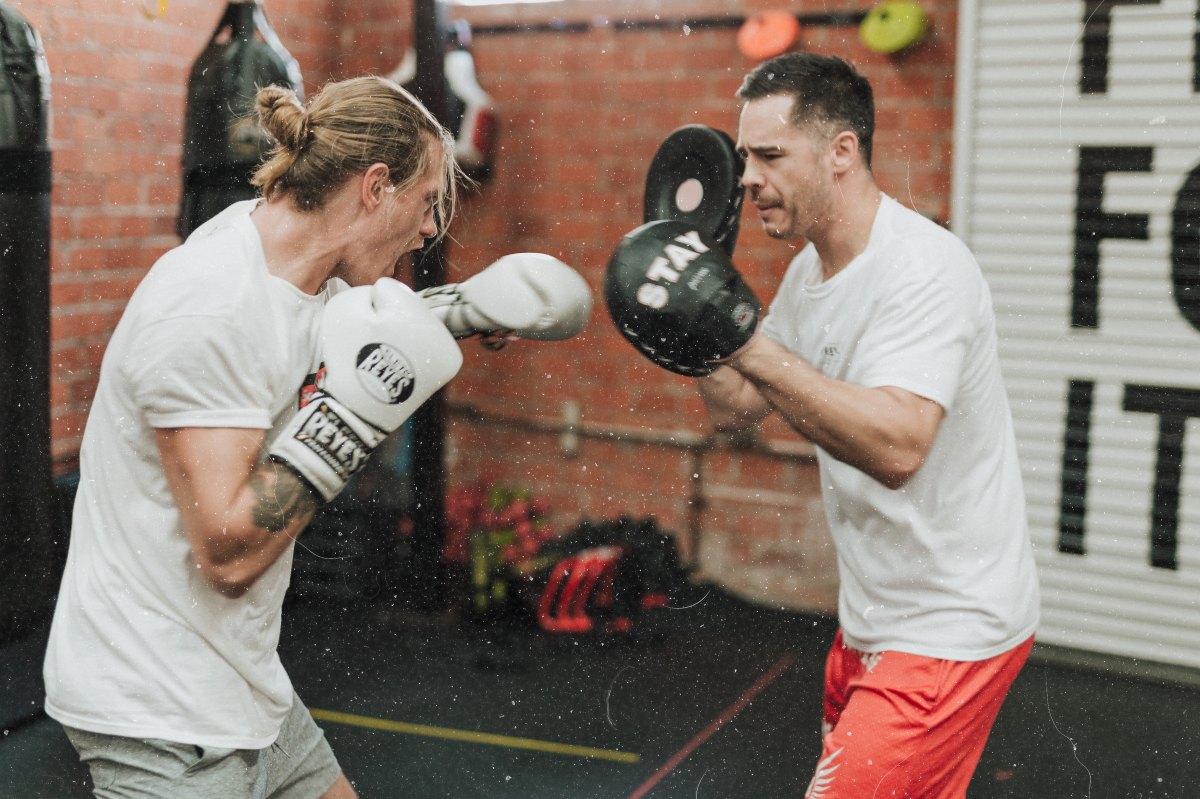
I got hit hard in a class the other day. It was an illegal target–my chin–but I also dropped my guard. I was stunned, turned in a circle to shake passed the hit, indicated to my partner that I was okay, and returned to the work.

In sparring class, there’s a lot of partner work, and to complicate the learning, we always switch partners. Depending on how many learners are in the class that day, we get to spar with several partners in an hour.

Working with partners of varied abilities, skill levels, and histories with giving and receiving contact allows us all to moderate our approach, speed, pace, and more importantly, energy. If someone’s energy is low, you learn to lower yours. If someone’s energy is high, well, you might catch up!

In the dojo, we don’t fight, a subtle word that can be used by the uninitiated. Dojos are “places to learn.” There we practice. Martial arts is a practice. I’m trying to live this in front of my oldest son who is at another dojo, little fighter that he is. It’s not like I go to Thousand Waves to fight. I don’t go to learn to fight. Frankly, I go to learn how not to.

I’m used to fighting. After all, I’m a black man. I grew up on the South side of Chicago. And I was born fighting. I mean that literally. I spent the first six weeks of my life fighting without stopping. I came home from a neonatal intensive care unit tired of fighting.

In the dojo though, I learn how to be as non-violent as possible. I go to self-defense classes and I’m moving through our curriculum. I learn how to fight, but my personal spiritual integration is in the other direction. And sparring is a window into that. You take contact. You get hit. You give contact. You adjust so that you are learning how to meet the challenge. “How do I give as little power as possible, especially since I’m not threatened in our dojo? I’m safe and my partner is helping me. We’re here to learn.”

Our senior-most teacher said to us once that sparring is an exercise in perfect control. I love that. It’s true. You use as much power as needed for the situation. So for me, I’m learning how to yell when my inclination may be to punch. I’m learning to walk away when I want to yell. I’m learning to hit when I’d rather hit, kick, stomp, and rip (…a combination technique, if you will).

When one act accomplishes the need, don’t do two things. Practice perfect control. This is becoming my way of being, especially since I started training three and half years ago. If I can do one thing and end a situation, I will. If I have to act in three ways, I will not act in six ways. I’ll both reserve my energy and I’ll practice perfect control. That’s the learning.

While in sparring class, after turning in my “damn-that-hurt-circle,” I knew my jaw would have more to say later. I had to eat after class and it took a long time to chew on one side of my mouth. I muttered how old I was, too old in my view to start getting used to being hit in the face. Two days later, my teeth recognized themselves again and I was cool. Then, I wrote this post as a memorial.

I’m in class tomorrow. Keep my guard up. When hit, monitor energy. Keep practicing perfect control. If you see me walking around with a rear guard up, it’s because I’m practicing. Encourage me. Don’t tease me.

I may not be a good student, in that moment, if you do.

An Ode That Isn’t Exactly An Ode

I looked at you, the glossy, colorful ways you showed me what black beauty was.

I looked at the curves you featured. I took in the sumptuous reds on your lips and imprinted in my soul the kinky, curly, flat, puffy, drizzly, stringy, clipped, busy, avenues from your head.

I looked at smiling black men, fathers and uncles and brothers and teachers, people professing with their lives what it meant to make efforts, what it meant to pull it together, and what it meant to create for one’s own community counter-images which were truer, better, and accurate images.

You trained my gaze, expanded my vision, and showed me how to start my attraction, how to turn my sight, and how to see the bodies of women closer to me, men very near me, children around me, people whose faces would come to close to my nose, in conversation, around the table, at church, and on all my childhood playgrounds.

I sat struck and dumb and inspired to write because of images you created by showing up like a gift, directed to me, made for me, fashioned with me in mind, and in your every offering was an issue that made me imagine and reimagine how to be black and how to be man and how to be beautiful and how to be with other beautiful black people.

In you and saw what love and work looked like. I saw the sights of wonder. I saw the sights of accomplishment. In you was a body of work, a composed collection cracking my developing notions of the color that captured everything from cream to cacao and did so with hands and eyes and ears of appreciation for how good black looked.

Written on the latest public occasion to grieve a significant treasure all of us should remember well, Johnson Publishing, which is in its last stages as a necessary-but-dying institution.

Teach Me To Look

I had a martial arts teacher say when I started karate, “You can look at me. That’s why I’m here.”

She was modeling our kata, showing us, all of us who knew nothing about what we were doing, how to do the martial form.

She was permitting us to see. She was requiring it.

I wrote in the last post that I’ve been reading about painful things lately. It’s hard to read about pain.

A lot of trauma, therefore, is unseen. A lot of pain goes un-witnessed. But I know that a lot of people go unseen, too.

There may be good reason for not seeing. I have trained myself to look in side glances rather than directly. I have been trained “not to stare.”

Who wants to offend? There is a way in which we learn not to look at one another, even when we are there to be seen. Even when that’s why we’re there.

So much so that it’s the noticing that becomes shocking, the witnessing that becomes jolting.

May God and all our teachers teach us how to look.

Current Learning

I’m reading about bodies a lot, particularly black bodies, and I’m also reading about trauma, though not trauma theory per se. I’m doing this for my course of study and because my courses are of interest to me, I’m doing this for me.

These readings are at work on my consciousness, hopefully helping me think about and see people in their bodies. I’d like to be a person who knows how to actually participate, in a healing way, in the lives of people who have been hurt.

As a man who’s trying to live in his body and who feels that everyday, with all the nuances that falling on the floor with my boys brings; or being kicked while sparring offers the second day after that class; or after sitting too long and hearing of sounds of my loosening joints; or, hell, waking up and getting out of bed and needing what my yoga teacher calls a full body stretch (who knew I’d need to do that?); as that person, it’s getting harder to forget about my body.

I like remembering my body, acquainting myself with this physical blackness that walks through the world. And I’m starting to re-view history of the last couple years when I was just going and going and holding at bay this awareness. I’m learning how to notice my self.

I hope I’m learning how to notice the same self in others. I think it’s getting easier to consider, to see, and to hold in my gaze and in my mind the bodies of others.

I wonder what you hope you’re learning? What are you currently seeing?


Installations

I walked in and saw the group of you, people I didn’t know but did. It was good to see you. Good to be with you. Good to be both known and unknown by you.

When one of you stretched out that familiar arm, draped in black and pointed to the wall, I took the invitation and the smile with it and went to my seat.

The old cushion was, like every face, a reminder. A reminder of things from before. Of organ music and hugs. Of cracked pieces of crackers and juice. Of microphones and fans. Of old people and young people. Of splendid togetherness.

Starting with you for those hours and hearing my senior colleague speak to his beloved relative about what was ahead; tracking the promise in the midst of a church’s choice to call a new pastor; praying for the strength of your emerging bond as church and leader; it was all familiar and wonderful. It was all new and unknown.

It was a faith community doing what faith communities do. It was good to be with you.

What If

What if your faith community gathered together today or tomorrow and, rather than participated in your planned liturgy, decided to claim the closest Muslim community as your neighbor?

What if you contacted the leader there, let that person know that you and your people were coming to support them, to stand in solidarity, to pray in love, and to witness to the possible?

What if your church expanded its definition of an encounter with God so that you saw the Eucharist, the Mass, the body and the blood in, now, the broken bodies of the latest victim of ever-present, simmering, structured, resilient evils representing themselves as having to do with goodness?

What if your community of faith added to its solid theology a pointed plan to always claim the latest least of these by re-working agendas in order to show up, to initiate the call to worship around that black church basement, around those riddled walls of that synagogue, and just outside the caution tape and close enough to see shreds of scattered prayer rugs?

What if you believed that God believed that being present meant going and waiting, going and crying, going and replacing your order of service in your city or your suburb so that the order came from the dizzying chaos of no order and blasted hope and suffering?

What if you took seriously the deepest pains of your folk and your people and used that pain to turn outward to the folks you have yet to see?

What if those previously unseen people started to look like you, your beautiful faith community, and your spiritual family until it became completely unsettling to do what your leadership committee planned for this fiscal year?

What if you took a risk to respond to this moment?

What if you committed to doing more as a spiritual practice, to inviting others to do more, and to staying inspired to make “more” a new setting in the face of politically nourished xenophobia?

What if you queried your people and said in an authentic, your-own-voice-and-your-own-words-kinda-way, what will we do about this?

What if that question became standard in response to such tragedy?

What if you listened to their responses?

Massaging Scars

I was reading a list, something sent in the letter that holds all kinds of health articles at work. On the list was a brief description of how massaging scars helps them disappear.

It’s interesting, it’s embodied, it’s clear. There are scars on us. Touching those scars enables the skin to further heal. Touching scars enables them to fade.

I’m no medical person, but I know that a scar is already evidence of healing having happened. Scars are, in my way of thinking, the finishing touch on the healing process.

They are reminders but even reminders can fade. The healing will be in the skin. The body will keep the memory, but the constant reminder can fade. That’s refreshing.