Unknown's avatar

Posts by Michael

I am a husband, father, minister, and writer.

In Praise of Conversations and Other Words

A conversation can be an uplifting gift.  It can be a reason to reflect, a reason to change.  It can bring an invitation to life and to renewal and to something new and horrifying.

Everything can change after one.  Everything can look different, be different.  Words can be said that bring perspective and clarity.  And words can be said that hurt, slice, and do so much worse.

They are so much better than texts and voice mails and emails and postal mail.  They can be had over the internet and over the phone and in coffee shops and in cafes that serve the most delightful, and still healthy, meals.  They can start with intention and by surprise.  Like the chat I had this morning and the one I had this afternoon, both planned, both worth looking forward to.  Or the unexpected words I exchanged with Sam, when he called laughing because of the message I left him moments before.  We laughed and laughed and went back and forth about things we’ve known for years about each other but which came out in a few jokes and sarcastic lines.  One minute, two at the most, and the call brought a week’s worth of joy.

When you know the contentment that comes from listening to someone, it draws you back to that verbal rope.  You slow down.  You pay attention.  You still the world around you and settle on the person in front of you.  You care.  And such caring opens the world to you.

Conversations are the homes of happiness, if there is such a thing.  They are the places where real humanness lives.  They make silence full and significant.  They make loneliness the shining hole of maturity that it is.  They are so much more than words, but, in truth, there probably isn’t much more to life than words, is it?

Questions I’d Raise At A Presidential Debate

I wonder what it’d be like for fathers (and mothers) to ask questions of the presidential candidates with particular attention to issues related to their children and families.  Here are a few of my questions, written for either of them and in no order of importance:

  1. You both have run for this office before.  What exactly did your spouse say when you broached this subject again?
  2. Does the federal government have any responsibility in presenting a model for how to support parents who take their children’s upbringing seriously?
  3. How do you explain your aspirations for this office to your children and your family?
  4. What would you like families to know about your policies?
  5. How do you think we can make the political parts of our country accessible to children of all ages?
  6. Your opponent’s children are in a different stage than yours.  What would you ask him about his parenting habits?
  7. Give us an explanation of how you expect to personally manage being a parent and spouse with the requirements of the presidency.
  8. Will your administration address unfair sentencing practices so that a child who looks like me who does something stupid has the same consequences as children who don’t look like me?
  9. Children are often most disadvantaged because their votes don’t count, so I’m really interested in you explaining how children matter in our democracy.
  10. Why hasn’t the issue of poverty been raised by your campaign, and what will you do about it, another than making sure the middle class is attended to in whatever way you’re discussed already?

What would you ask?

Mondays With My Boy #20

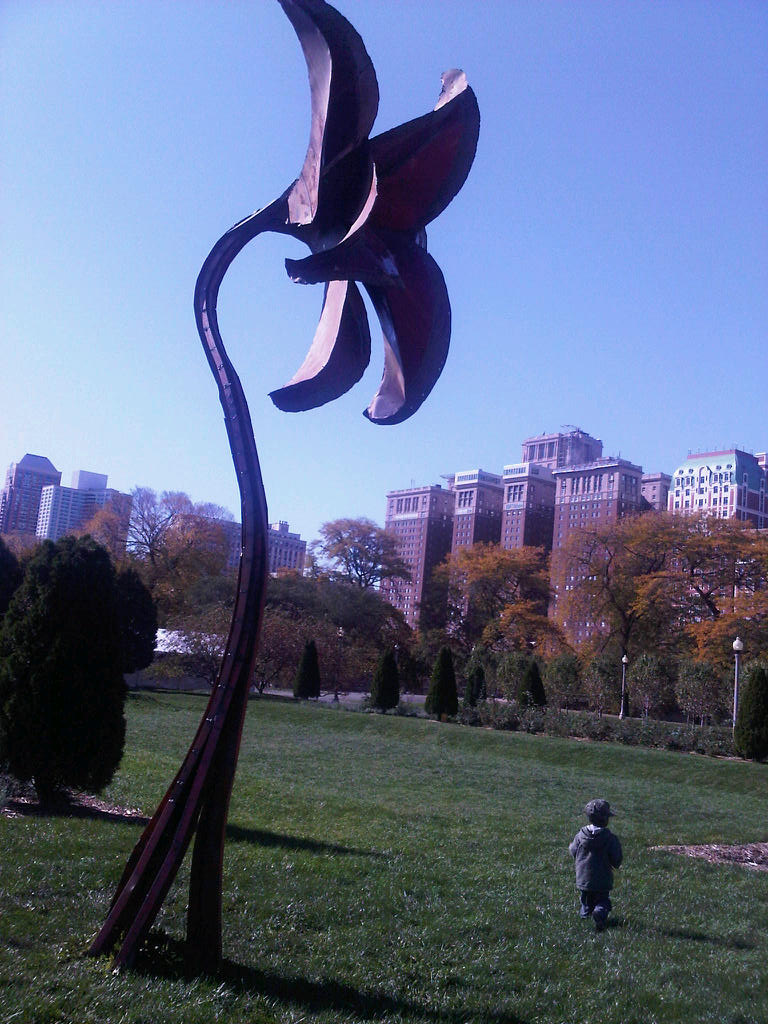
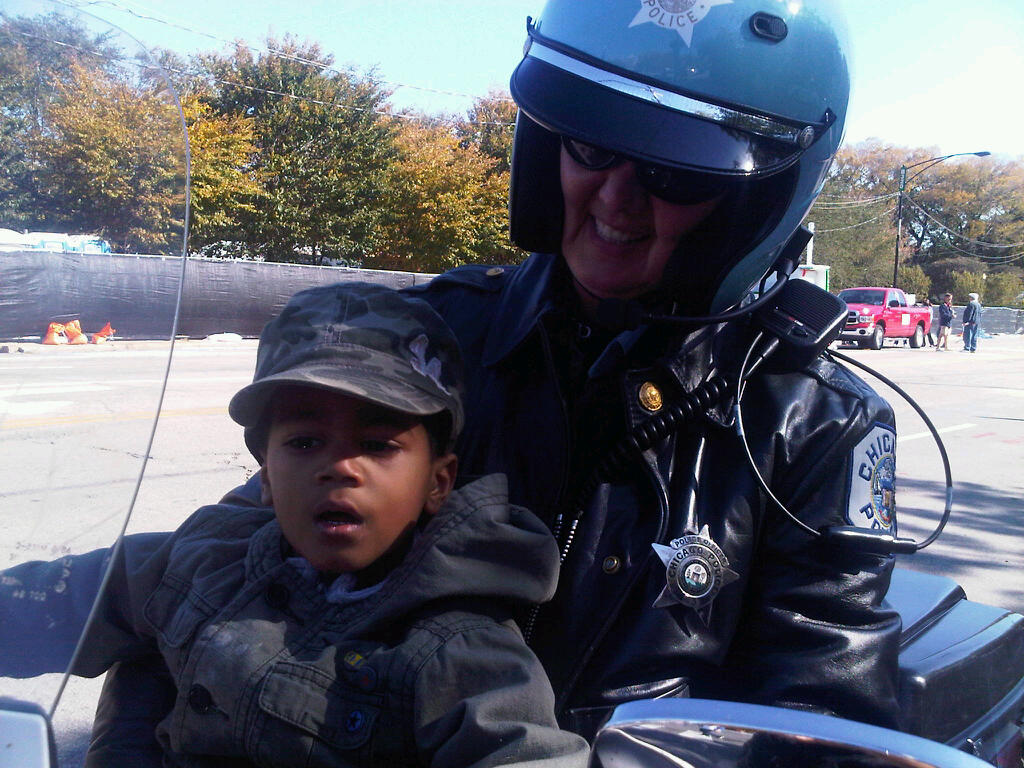
Today the daycare had professional development for its staff, which means me and the boy spent the day together.  Though I’ve inserted two from Sunday’s book fair, here are a few pictures from the adventure.  We returned a rental from my road trip to see my father and saw the beginnings of what was to be a parade.  We won’t mention the bad things from the day.  Let’s keep this positive for now.

At the Hyde Park Book Fair

Making Music

In the Grass

Checking Out a Motorcycle Up Close

Buckingham Fountain

A Train! A Train!

Voting As a Matter of Faith

Nelson Pierce, an Ohio pastor, recently wrote about voting as a sacred act in this post at Colorlines.  I hope his theological reflection can add to your own, whatever your view of voting, sacredness, and the interplay between the two:

In 1984, Reverend Jesse Jackson declared his candidacy for the Democratic Party’s nomination for the president of the United States. I was six at the time, but I remember my parents’ anguished conversation over the dinner table. Both of my parents had been involved at different levels of the Civil Rights struggle in the United States. My father was one of the first African-Americans to attend what was then Louisiana State University in New Orleans. My mother had been involved with the Black Panther Party in Detroit. By 1984, all of that was a lifetime ago to them. They had met and married in the late 1970s, both of them eager to build a life and raise a family; they had become deeply reconnected to their Christian faith, both of them taking on positions of leadership within the church. And, perhaps most surprisingly, they both had become Republicans.

At the time, my parents were part of the Religious Right that was growing all over the United States. They believed that the morals and tenets of the Christian faith was embodied by the Republican Party. They also were strong supporters of the work that Rev. Jackson had done, both in the Civil Rights movement, and with corporations. They felt that Rev. Jackson could best speak to the needs and hopes of people who had been marginalized, not just by racism, but by sexism and classism as well. Should they vote for their faith or should they vote for their community?

I grew up believing in that same tension. At one point in my life, I rejected my community responsibility as an attempt to fully own my faith. During another point in my life, I put my faith on the back burner to fully present in my community’s struggles. At best, I thought that these were two trains that ran on separate tracks. It may have been convenient to do civic engagement with the community out of a church, but I did not see it as a part of the life of the church.

I was operating in this “separate track” mindset when I started seminary. On the first day of my Old Testament class, my professor began with the following text, and it was like I read the Bible for the first time when I came upon Exodus 3:7-8a:

Then the Lord said, “I have surely seen the affliction of my people who are in Egypt and have heard their cry because of their taskmasters. I know their sufferings, and I have come down to deliver them out of the hand of the Egyptians and to bring them up out of that land to a good and broad land, a land flowing with milk and honey […].

In Egypt, God was concerned because the government became unjust. God became active because the people were crying. So God sent Moses to change Pharaoh’s labor policy. God worked on behalf of those who had the greatest need. Later, when the children of the people whom God set free from Egypt were forming their own society, they would be warned to remember that their parents were once vulnerable, and that they should always provide for the vulnerable, because God cares about what happens to the vulnerable.

Ohio’s 2004 election process was the source of national ridicule. Long lines forced many people to make a choice between voting and going to work on time, or voting and picking up their children on time from school or daycare. Machines broke down, causing already long lines to be still for hours at a time. In addition, many people were told that they were not eligible to vote, much to their surprise and dismay. As I saw reports of what was happening, and I heard the frustration and disbelief of United States citizens and Ohio residents who were kept from the voting process, I could not help but imagine that the same God who called Moses to speak to Pharaoh was not pleased with what was happening in Ohio.

As it turned out, God was not the only one not pleased. The external pressure by the media and voting rights organizations helped create internal pressure by the state government. A bipartisan effort to reform the voting process got underway and by 2008 many positive changes occurred. Among these changes were the advent of early, in-person voting and the expansion of vote-by-mail or absentee voting. These reforms made it possible for our state and nation to live up to its responsibility of hearing the voices of all of its citizens.

The sad news is that it was not long before the positive changes began to slowly erode. The in-person early voting hours were cut back in 2010, again in 2011, and most surprisingly even further in 2012. I believe that this is the reason why so many clergy from across Ohio have been engaged in conversations with the Boards of Elections over voting hours. I believe that this is why 50 clergy representing different cities and denominational traditions gathered as a part of Ohio Prophetic Voices to meet the Secretary of State Jon Husted about his decision to cut the early, in-person hours back from what they had been in 2008. It is not simply because we have access to so many people, and it is not just because we care about the people. I am in this fight because of what my parents did not realize as they debated across the dinner table: that there is no distinction, let alone a difference between the claims of my faith and civic engagement within the community. I am in this fight because I believe that God is concerned about what happens to the most vulnerable in our society, and I want to help our elected officials to be concerned about the very same thing that God is concerned about.

The Warmth of Other Suns Book Giveaway

Isabel Wilkerson, whose book is wonderful for a hundred reasons, wrote about the price of writing The Warmth of Other Suns and a “cave of obligation” over at More.  In celebration of the book being in paperback for a year, I’m giving away two copies.  Leave a comment by Saturday, midnight, CST, and I’ll choose.

I awoke to the cooing of pigeons on the ledge outside my window and the sight of the slate rooftops of rue Racine, gray and streaking soot from the centuries. I could make out the murmur of traffic below, the coughs from the room across the hall, the fumbling for keys and the turning of doorknobs, the whispers and knocking of chambermaids and, in the distance, the aah-ee, aah-ee, aah-eeof an unmistakably foreign police siren. I was in Paris, the last refuge of the man who had inspired me and, in a literary sense, rescued me. I was in the hotel where he’d spent his first night here, waking to the same sky and sounds that he hoped would save him precisely 66 years ago. I’d followed him as far as the trail would lead me. I was in room 703 of the Hotel Trianon in search of the Paris of novelist Richard Wright.

Only a few years before, I’d been in a deep forest, seeking a way out. On leave from the best job I could imagine—Chicago bureau chief of theNew York Times, where I’d won a Pulitzer Prize—I had jumped into the unknown to begin writing a book, the first I’d ever attempted. It was ambitious; I wanted to tell the story of the Great Migration, from 1915 to 1970, when six million African Americans, my parents among them, fled the Jim Crow South like immigrants within their own land, changing our culture, our politics, our country. The project was taking longer than I had ever imagined. I was in year 12 or 13, having interviewed more than 1,200 people, narrowed them down to three flawed and aging protagonists and buried myself in their lives as I retraced their journeys from the rural South to the big cities of the North and West. One of the major events of the 20th century, this was a story so big, I couldn’t see the end of it.

In the middle of what was quite enough, the moorings of my own life shifted around me. I moved from the Midwest to the South, where the people I was writing about had come from. My beloved father, who had tried nudging me into the safety of an engineering career rather than the uncertainties of writing, who had reluctantly abided my decision and then saved everything I wrote (“Isabel’s story on page A14,” he noted in his draftsman’s pen at the top of a New York Timesfrom the ’90s), passed away and would not see the fruit of my hardest labor. With his death, I inherited the role of caregiver for my wheelchair-bound mother, who had always been the proudly and lovably more difficult of the two. And within a year, my marriage of 14 years ended. As for the book I’d signed to write, I was toiling away but not moving forward.

Then I came across these words in the endnotes of Richard Wright’s autobiography, Black Boy:

I was leaving the South

To fling myself into the unknown. . . .

I was taking a part of the South

To transplant in alien soil,

To see if it could grow differently,

If it could drink of new and cool rains,

Bend in strange winds,

Respond to the warmth of other suns

And, perhaps, to bloom.

These words from Wright, author of Native Son, a classic of American literature, were buried in the appendix to his autobiography, as if waiting for an obsessive like me to discover them. In these lines (which are deleted in the current-day edition), Wright contemplated the moment he fled Mississippi for Chicago as part of the Great Migration. He would become the poet laureate of this turning point in American history, whose retelling had taken hold of my life.

By the time I read Wright’s words, I had worked on my book for so long that people began to doubt if I’d ever finish it. Once, they couldn’t stop asking if I’d found my subjects or completed the prologue; now they avoided any mention of it. If I brought it up, it was as if I were talking about an invisible friend. But I saw those words, and a thin sliver of daylight broke through the forest leaves and assured me that I could finish this thing. They gave what I’d been researching all these years a purpose, a breath, a name. I raced to finish it. Published two years later, it was called The Warmth of Other Suns.

Finish reading Ms. Wilkerson’s article by clicking here.

Assembly Required

I posted this on my other blog this morning, and it feels like it fits here too.

Bryce is good at getting gifts.  And people are good at being generous to him.  Often the generosity of others means things for my time.

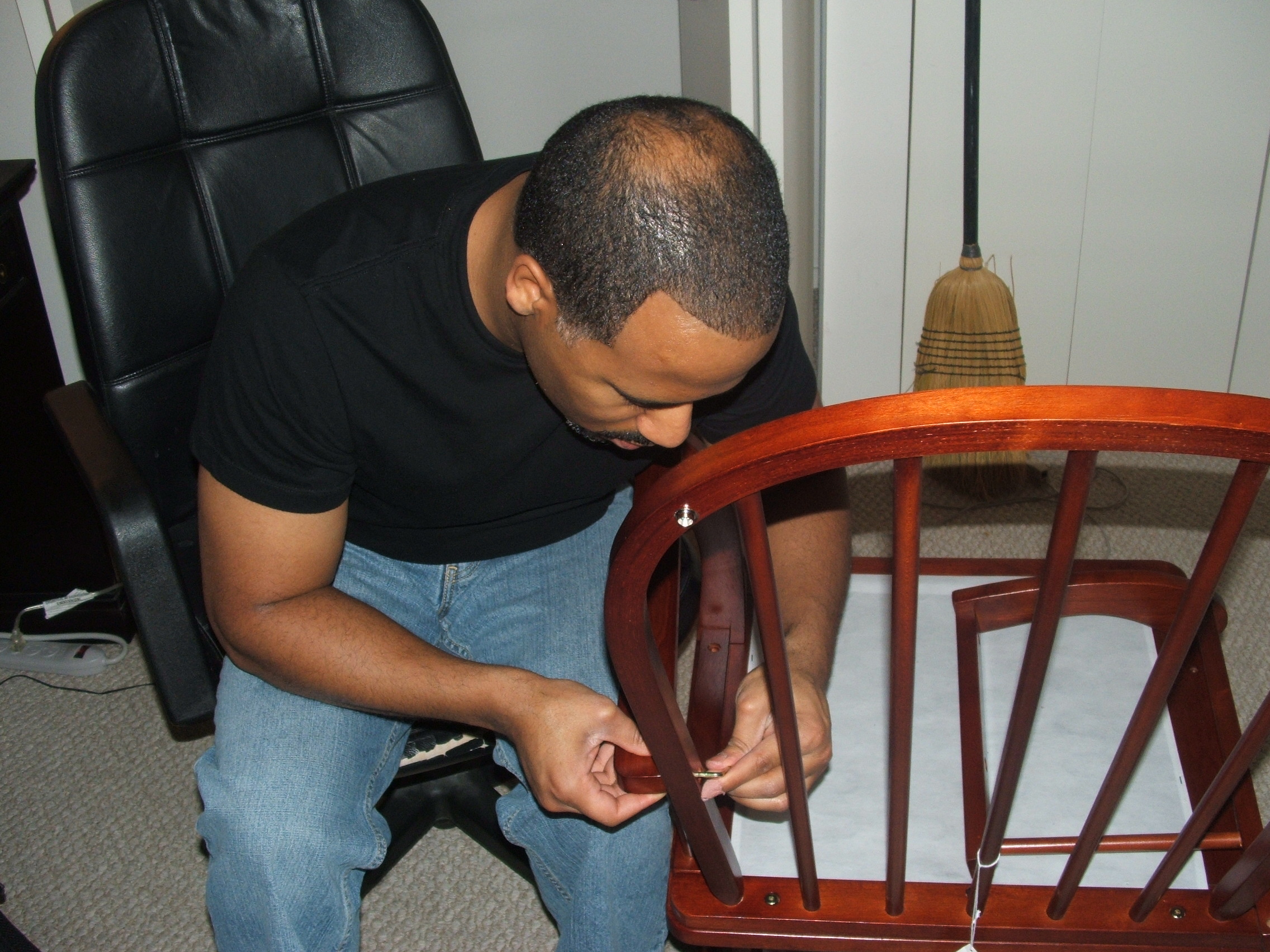
For instance, when Bryce was given a mini car—the kind he would see at the playlot and never release for others to play with—I had to put it together.  Of course, Dawn hadn’t explained that that was my responsibility until Christmas Eve night, before I was set to preach at church the following morning.  I wouldn’t have given my mechanic that thing, it was so complicated.

Here are a few things I don’t quite like when assembly is required.

  1. The box is so deceptive.  It’s shiny and colorful.  The picture of the thing is inspiring.  It touches the imagination of the boy so that he goes on and on about the car or the big wheel in the recent example.  But the picture never tells the story, does it?
  2. There are so many pieces.  Looking at the box, you’d think the thing could be put together without so much drama.  There I am, holding the instructions, opening small plastic bags, and trying to keep my son from walking through three piles of variously sized implements.  Slowly I begin to appreciate inventors and builders and craftspeople.  After I use other words under my breath.
  3. I always have to read the directions.  I’m a reader.  I’m happy about that.  But I secretly want to be one of those men who open up a box of boards, screws, and tiny pins and who make something by looking at the picture only.  I never claimed to be one of those guys.  I’ve only envied them.  And secretly hated them too.  While I like reading, it’s a different experience reading something that explains something else, when it takes you reading it fourteen times to grasp the point.
  4. I hate sweating.  Putting things together makes me sweat.  It requires a kind of concentration that I’m not used to.  I am fine with paying attention.  I’m good at listening and am even all right with taking cues, but putting pieces together is a large, monstrous task to me.  It makes my armpits stream, my forehead shine.  It makes my butt hurt for sitting in the same spot for longer than I really should.  I get up and have to change my clothes, like I’ve surfaced from a workout.
  5. The noise is unhelpful.  There’s pounding.  There’s language I wouldn’t generally use in public.  My son is walking around in circles singing about a new this or that.  I imagine my neighbors, trying to be nice because they know I’m hard at something for the boy.  But they tire of the hammering.  They’re exhausted because I’m racking at the kitchen island since it substitutes for the flat surface of the wood wedge I don’t have.

Finish the list by clicking here.

Assembly Required

Bryce is good at getting gifts.  And people are good at being generous to him.  Often the generosity of others means things for my time.

For instance, when Bryce was given a mini car—the kind he would see at the playlot and never release for others to play with—I had to put it together.  Of course, Dawn hadn’t explained that that was my responsibility until Christmas Eve night, before I was set to preach at church the following morning.  I wouldn’t have given my mechanic that thing, it was so complicated.

Here are a few things I don’t quite like when assembly is required.

  1. The box is so deceptive.  It’s shiny and colorful.  The picture of the thing is inspiring.  It touches the imagination of the boy so that he goes on and on about the car or the big wheel in the recent example.  But the picture never tells the story, does it?
  2. There are so many pieces.  Looking at the box, you’d think the thing could be put together without so much drama.  There I am, holding the instructions, opening small plastic bags, and trying to keep my son from walking through three piles of variously sized implements.  Slowly I begin to appreciate inventors and builders and craftspeople.  After I use other words under my breath.
  3. I always have to read the directions.  I’m a reader.  I’m happy about that.  But I secretly want to be one of those men who open up a box of boards, screws, and tiny pins and who make something by looking at the picture only.  I never claimed to be one of those guys.  I’ve only envied them.  And secretly hated them too.  While I like reading, it’s a different experience reading something that explains something else, when it takes you reading it fourteen times to grasp the point.
  4. I hate sweating.  Putting things together makes me sweat.  It requires a kind of concentration that I’m not used to.  I am fine with paying attention.  I’m good at listening and am even all right with taking cues, but putting pieces together is a large, monstrous task to me.  It makes my armpits stream, my forehead shine.  It makes my butt hurt for sitting in the same spot for longer than I really should.  I get up and have to change my clothes, like I’ve surfaced from a workout.
  5. The noise is unhelpful.  There’s pounding.  There’s language I wouldn’t generally use in public.  My son is walking around in circles singing about a new this or that.  I imagine my neighbors, trying to be nice because they know I’m hard at something for the boy.  But they tire of the hammering.  They’re exhausted because I’m racking at the kitchen island since it substitutes for the flat surface of the wood wedge I don’t have.
  6. It always takes more time than less.  This is probably the most pressing concern.  Reading those instructions, following the rolling screws and picking the right screwdriver; these things take time.  More time than skill.  And those are moments you don’t get back.  They are moments that add up into the invisible math of being a good parent, or trying to be.  You add pliers.  You insert a snap or a click.  And you don’t know what you’ll get.  All of a sudden putting together a chair two weeks before your son is born becomes an act of faith.
  7. There’s too much room for wrong.  Nothing tells you early that you’ve put something together wrong.  It’s not until the picture unfolds, right?  Then you know you’re stupid, that you’re illiterate, that you’re unlike your big brother, or that you should have called Karlos Dodson before you got started.
  8. I really feel like I should get it done.  I’m not one of those guys who cannot admit defeat.  I gladly do and will.  But when I know I’m on the way to finishing up, I can see it.  I see the end.  I see the thing shaping up.  Of course, there are a dozen setbacks, but the abiding feeling is some version of guilt.  That cracked voice that says you really should feel good about doing this because it’s for the kid.
  9. People aren’t good at encouragement.  Dawn is great at coming in when I’m three quarters finished and asking if I need help.  Bryce is great at walking around picking up little screws and asking if his big wheel is ready.  He’ll look at the box and say, “Where’s the car?”  I have to quiet them.  Usually with my eyes and the slight shake of my head.  They know I’m in my zone, the space that is uncomfortable; they know I’m resisting badness.  Thankfully, they leave.
  10. The thing I’m putting together isn’t for me.  This gets at one of the hearts of the matter for me.  It feels like the thing will belong to my son, that I’ll get no pleasure or benefit from all the hacking, screwing, and sweating.  Assembling a thing is an act of generosity.  It’s inherently gracious because it involves me making a gift available to my son for his pleasure and play.  But that can be transformational.  It can change me into a different man, a man who learns to receive pleasure in someone else’s.

Heard Enough?

I’ve accepted the fact that when I’m on my bicycle I’m doing more prayerful work than I am exercise.  When I do get to it, I maintain the same distance, about 18 miles, and even pedal within the same time frame, approximately 1.5 hours.  But I’m pretty sure that I get more spiritually out of cycling than I do physically.

Of course, I also resist such artificial splits.  I think physical exercise is spiritual.  I think God relates to us through our physical frames.  God made those bodies, knows them well, and wouldn’t have us detaching our selves from them.  I’ve written about this in pieces before, but the more I think of it, the more riding becomes a time of prayer.

The other day I wasn’t riding as well.  The wind was against me.  It was, at least, in my face.  I resolved that there was a difference.  After about four miles, I conked out, slowed down, got off the bike, and walked for a minute.  Then I turned around, got back on the bike, and rode home.

I was frustrated.  I wasn’t tired.  But I didn’t have the normal course in me that morning.  I listened to my body.  It wasn’t saying much.  My legs felt heavy.  The air around me was loud.  I heard myself during all those similar days when I felt the same way, back when I would mutter a mantra like, “Keep pedaling.”  Or, “You can slow down, but don’t turn around.”

I’m not good at turning around.  I’m not good at changing course.  I’m excellent at seeing an end and getting to it.  Detours, changes, adaptations, and enhancements–terrible things they are–though I’ve learned how to do them with some facility, are not what I’m naturally constituted for.  I am the person who gets to the destination.  With screaming feet or aching legs or a throbbing head, I don’t turn away from the path.

So, on those days when I’ve quit, I’ve bemoaned such failures.  That’s what they are to me, failures.  Because I tell myself, when I begin, what the day’s ride will be.  The minimum is always what I did last time.  I don’t make allowances for weakness, for less sleep, for crankiness, or for the weight of the two dozen things I’m thinking through while I ride.

The other morning, I rode back and felt the wind gently pushing behind me.  It was as if I was finally riding in the right direction.  When I trailed around the Point, I stopped at sat in a circle of rocks and listened to the water lapping against the stones, trading claps with green leaves overhead.  The wind and water sang to the tunes of the birds flapping around the area.  I stretched my legs and took an unnecessary breath.  I told myself that I hadn’t quite earned a seat.  I had more riding to do.  The message coming inside the wind said to me quickly, almost sharply, that there are things that I can’t do.

I got up, hardly motivated to listen to more than that.  It was an answer to many things.  I didn’t need to hear the voice of the wind.  I didn’t want to hear the voice of the Spirit.  I had heard enough.  And I didn’t have to travel my normal course for it.

Carrying Bags and Boxes

The other week Bryce was given a gift by his Grannie.  He had been over her house, spending a few hours with her.  When I returned to pick him up, there was his usual luggage: his Thomas bag, some other bag, his car seat, the toilet top.  But there was a box at the door, one the boy was pointing too.

His face was humble, too humble, and I knew the box without looking at it.  I knew it was another gift that he really wanted.  I could tell from the look in his eyes that he thought I would overrule the gift.

His Grannie was asking if he wanted to leave his big wheel at her house.  He was saying no to her but looking at me, hoping I would say yes.  I got a kick out of it.  Even while I questioned what I had done to my son for him to think I would say he couldn’t bring his new toy home.

For a flash, I thought about all the other gifts people have given him that I’ve had to pick up and carry and, later, put together.  I was nodding in the doorway, repeating his Grannie’s question.  Are you leaving it here or taking it home?  You can imagine his answer.

I thought back to when I rode my own big wheel.  I softened, not that I was hard.  I was surprised how many bags I already had to carry.  But I am getting used to carrying more than I think I can.  There’s always time to go to the car and come back and get another box, another bag, another gift for the boy.

I stood there, asking that question.  He was answering, holding on to the box, hardly saying goodbye to his kind Grannie.  From that point on, the only thing he said was something about that box.  All the way to the car.  All the way home.  All while I, later on, put that thing together.

“…because they are strong.”

Sometimes the most penetrating words rise from fiction:

She told me about a group of people in Guinea who carry the sky on their heads.  They are the people of Creation.  Strong, tall, and mighty people who can bear anything.  Their Maker, she said, gives them the sky to carry because they are strong.  These people do not know who they are, but if you see a lot of trouble in your life, it is because you were chosen to carry part of the sky on your head.

Writing Rules

I saw this list of Zadie Smith’s Writing Rules a couple years ago, before I started blogging, I think.  Since I saw it again here, I thought to pass it on.

  1. When still a child, make sure you read a lot of books. Spend more time doing this than anything else.
  2. When an adult, try to read your own work as a stranger would read it, or even better, as an enemy would.
  3. Don’t romanticise your ‘vocation’. You can either write good sentences or you can’t. There is no ‘writer’s lifestyle’. All that matters is what you leave on the page.
  4. Avoid your weaknesses. But do this without telling yourself that the things you can’t do aren’t worth doing. Don’t mask self-doubt with contempt.
  5. Leave a decent space of time between writing something and editing it.
  6. Avoid cliques, gangs, groups. The presence of a crowd won’t make your writing any better than it is.
  7. Work on a computer that is disconnected from the ­internet.
  8. Protect the time and space in which you write. Keep everybody away from it, even the people who are most important to you.
  9. Don’t confuse honours with achievement.
  10. Tell the truth through whichever veil comes to hand — but tell it. Resign yourself to the lifelong sadness that comes from never ­being satisfied.