Unknown's avatar

Posts by Michael

I am a husband, father, minister, and writer.

A Prayer For All Our School Starts

O God, you know “our ends from our beginnings” as my elders used to say.  You know our downsittings and our uprisings.  Our futures belong to you.  Our futures are with you.

Look ahead into this year and bless us with all the growth that would make you look good and make us look more like who we really are.

You know that this year will have shifts for us, changes to our schedules, and that we’ll need you, it seems, more than before.  We submit to you and how you’ll work through the long pulling that will come.

Call us and speak to us and journey with us.  Live in and through us so that we might bring light into darkness.

Give us grace that we might be full of love.  May our days begin and end with you and be punctuated by love and grace.

Where we will learn to write this year, give us ready pens and appointed words.  May the strokes coming from our fingers spell words that cause ourselves and others to flourish.

Where we will learn to count this year, make us ready to notice things, to add things to our lives what you bring and to patiently suffer through any subtraction for the loss it will be.

When we learn to work with others, make us prepared and mature enough to reconcile, to be humble, to practice silence even if it’s only holding that last word or that convincing, if sharp, retort.

When we listen, slow us down and open us to be so generous that what things people say and write and live become gifts which we cherish and steward and protect.

And finally, may you grant us these particulars:

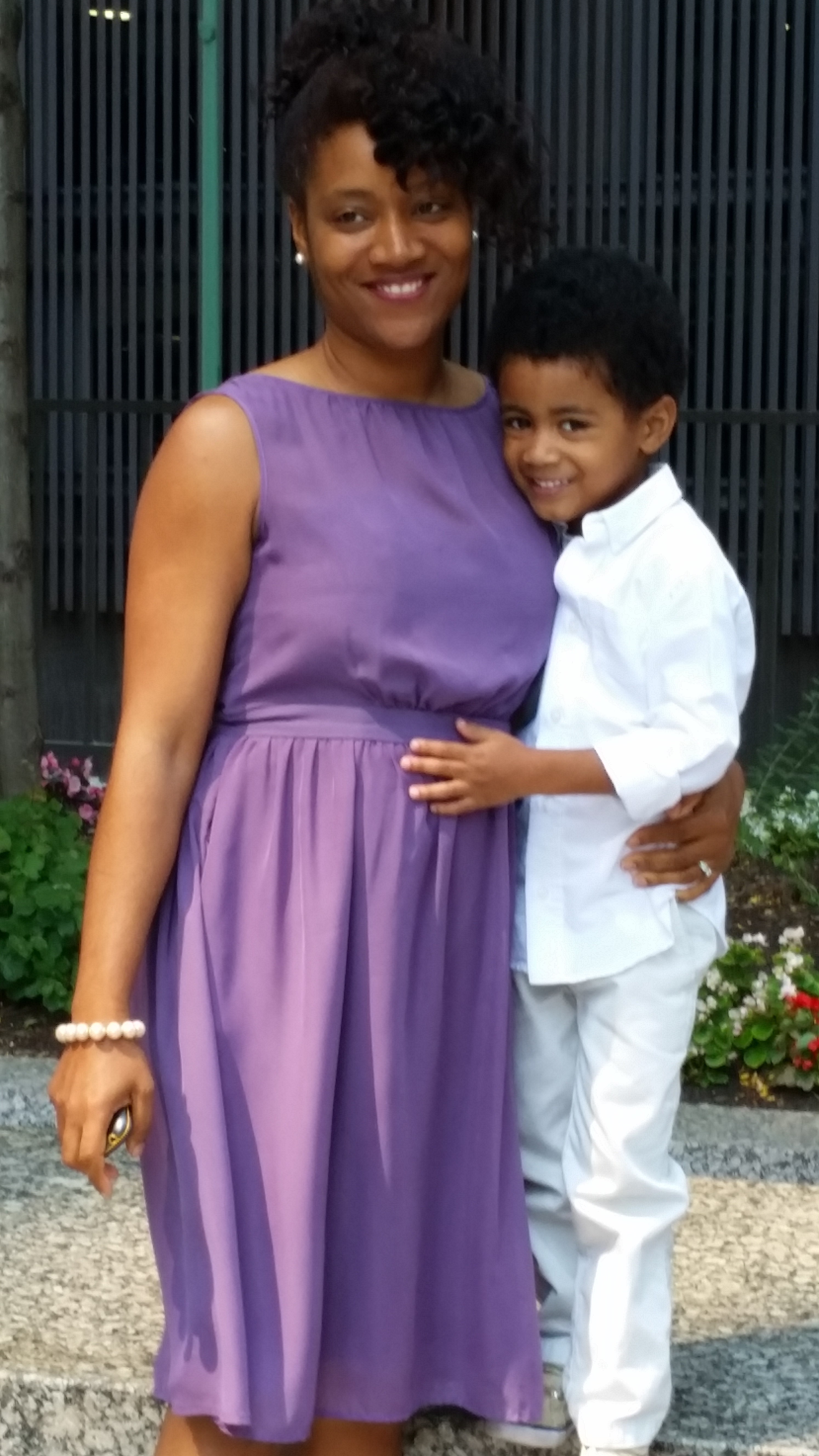
That Bryce may have a fun year, one full of learning leaps like last time, loving his teachers and developing friendships with his classmates and collecting all those good words we say about him as a brilliant, beautiful, beloved boy.

May you grant Dawn the repeated remarkable brilliance of all her previous courses, giving her the steady help she needs as she prepares and sits for her comprehensive exam.

May you go with me daily into the learning rooms of the seminaries, into the peer work and ministry in the hospital, and into the regular course of growth that is my church ministry.

May we labor for you and with you and may we be marked with memorable moments we’ll never forget.  Will you change us for the better, sweetening me, preserving the best natures of my wife and son, and turning us continually toward you as a family.

For us all, give us an abiding sense of your presence, reminders of your unfailing nature, comments and signposts along each path that you are active, boldly bringing about healing for people, growth in us, and justice for the world.

Amen.
Creating a Rule of Life, pt 8

There’s one more post next week on this, where I’ll try to offer a grid to pull things together.  The final category that Debra Farrington teaches we should include in the Rule of Life is hospitality.  It comes after prayer, service, self care and so on.  Hospitality builds upon these previous traits, these earlier acts.  Centering our efforts in these other places, as hospitable people, we show who we are and how we’ve become and how we are becoming.

When I think of hospitality, I think of my mother’s regular, unmentioned, almost unseen way of opening our home to several people when I was a child.  I think of how our table on Sundays was the church’s table, our house turning inside out as people came and ate at her hand.

I think of Grammie and how she takes us in each winter for a week in the upstairs of her home, with a water pitcher on the nightstand, how she considers our time, how we make meals together, and how we have our long liberal conversations which cover beginning to end of the current things that matter.

I think of my sister friend, Maggie, and how she naturally exerts herself into the hearts of people by preparing meals, cooking simple and elaborate options, listening and making me listen, and talking about so many things I’d never notice.

I think of the earlier Bishop and Mrs. Trotter from my boyhood who granted me an essential hospitality, taking me into their home and allowing it to literally become my home.  Each memory was somehow sweet behind those trees on Hopkins place and like these other powerful events have shaped me into someone attempting hospitality when people come around.

Hospitality is a peopled act.  It’s not between me and God.  It’s defined by the interaction between people.  It doesn’t always involve food and housing, but hosting is that plain way we take or accept or invite or keep people in our presence.  It’s about how well we notice and sustain contact between us and another.

I don’t do hospitality well when I’m tired because of my natural bent toward interiority.  I know I need to retreat regularly in order to be like Mama or Maggie or Grammie or the Trotters of my childhood.  What seemed easy for them is good work for me.

And that’s where the Rule comes in.  The Rule of Life asks us to be intentional about those times when we’ll turn toward others, not for service, but for humanity.  We need others.  We don’t need to do things for others, but we do, simply, need people.  Like food and water, our lives only make sense in relationship with others.

There is an essential rightness to friendship, a wrongness too when it’s real, but the rightness signals how we just require people.  The same with marriage or long-term working relationship and so forth.  We need those peopled affairs because those affairs compose or lives.

Where will you stretch in this area over the next months?  Where will you extend yourself and thereby become your self?  Where will you intentionally place people in your day or week so you can be hosted and so you can host?


Among Many Tasks

The fall will bring a slightly different schedule for me.  The whole thing holds together and will open me to new ways of deepening my vocation and the little works which make up my vocation.  I’ll be doing a lot, and I’m looking forward to it.

Perhaps it seems inappropriate to hold this poem on this blog, but it seems a striking reminder for me as a parent.  In the end, as I see it and believe it and imagine it, all our small works turn to one task of continued self-surrender, continued dying.

That dying sits at the bottom of my faith, though that bottom would quickly, almost too effortlessly, be named as living.  That eternal life only comes after one has regularly and daily passed through the gates of death.  Life comes from death, says the One we follow.  May this poet’s words be a reminder of these things to me:

Among Many Tasks

Among many tasks

very urgent

I’ve forgotten that

it’s also necessary

to be dying

frivolous

I have neglected this obligation

or have been fulfilling it

superficially

beginning tomorrow

everything will change

I will start dying assiduously

wisely optimistically

without wasting time

Tadeusz Rozewicz (From The Vintage Book of Contemporary World Poetry)

Keep Going

It is a powerful thing.  May it never cripple you.

It is a present visitor, even if it’s deep under your skin, deeper than your muscles, your bones.  May you always find its root.

It can be an enemy that takes you by the feet and pulls you down into the ground and below the dirt.  May your strength be better than its grip.Looking Up

I’m talking about fear, son.  May you rise above fear, each fear, and may it only be a good teacher to you.  May fear be your best inspiration.

I thought of you when I heard all the cheering for the Jackie Robinson West team today.  Named and unnamed people congratulated them for their win, for their courage, for their consistent and elegant boyishness.

And I considered your future and how you would be like those boys, triumphant after having practiced and worked and played a game for fun and for sport and for your own sake.

ReachingI remember when I couldn’t cajole you into reaching for this sliding contraption, when you only looked at it with something like confusion or wonder or fear in your eyes.  And look at you, growing beyond what once made you afraid.

Keep going.  Keep looking up.  Keep being guided by your mother and me.  Keep doing what seems out of reach.

A Recent Journey With A Friend

The initial question.

The reasons we participated.

The preparation for an interruption which wasn’t really.

The long ride, trading sentences and looking out and catching up.

The nervousness of being surrounded by people so different and so similar.

The mumbling that became words which turned into songs.

The string of cameras and the open streets.

The rhythmic stamping of our feet.

The commitment to stay.

The commitment to stay together.

The rumbles of thunder.

The hard-won meal in a hurry.

The symbols of darkness and light.

The gas masks, water bottles, and signs.

The jumping and chanting and watching and waiting.

The circles of prayer, the clusters of pain.

The playful way we wondered what in the world we were the doing.

The amplified voice of that one man commanding them, not us, to leave.

The joking.  The questions.  The long silence.  The disgust-filled prayers.

The heavyset, sweating leader we stood with and for.

The shock to our bodies from the weight of the evening.

The words of that one sister, the missionary, who checked us all.

The stark contrasting pictures of justice.

The greetings and the welcome words.

The shaking of our heads and the wringing of our hearts.

The long, aching journey home.

The stars, bright like flashes, overhead in the darkness.

Lessons From One Night In Ferguson

David captures things well from our prayerful walking and witnessing. Keep praying, people, and discerning other steps we might take in our country.

David Swanson's avatarDavid W. Swanson

Last night Michael and I joined a group of clergy to pray and petition for justice on behalf of Michael Brown. We were already in the St. Louis area with our families for a few days of vacation and when word came about the clergy march the timing and location seemed too providential to ignore. I won’t go into the play-by-play of our evening, but the experience was unlike any I’ve had.

Ferguson

This morning I woke up thinking about some of the lessons I’m walking away with from our short time in Ferguson. My perspective is incredibly limited: I’m an outsider who spent a few hours in a place where others have lived their entire lives. Even so, I want to hold onto some of my experiences, despite how incomplete they are.

The Anger Is Real

It seemed that many of the protestors, like us, where from places other than Ferguson…

View original post 575 more words

Creating a Rule of Life, pt 7

This message gets a lot of play in church.  In my church, there is an assumption that serving is so much a part of our Christian life that there’s rarely a Sunday when service of some kind isn’t mentioned.

I almost don’t need to connect this to the practice of developing a Rule because we live by the implied rule that doing for others is Christian or religious or spiritual at its core.  It’s hard to live in the world and not care for others, give to others, and serve for others.  It’s even harder to be a part of a religious tradition and not serve, because service is a part of most, if not all, religious traditions.

Still, the placement of this in the work of developing a Rule is important because having service somewhere in this instrument of spiritual growth will help us 1) reflect on our service, 2) inspect our motives for service, and 3) discern what we’ll do next as we care for others.

That’s the framework when it comes to questioning or discovering what kind of service needs to be in your rule.  Where have I served or given to others?  To serve is to be generous; it is to give of one’s self and one’s stuff.

Serving, when paired with reflection, is another way of reflecting upon our motives.  We ask, “Why am I doing this?”

Richard Foster wrote, “When the heart is purified by the action of the Spirit, the most natural thing in the world is the virtuous thing.  To the pure in heart, vice is what is hard.”

I agree with Foster.  For the person whose heart continually turns toward the Divine, sin and wrongdoing and wrongbeing is what’s hard.  But that transformation of motivation takes a long time, i.e., a life time.

I’d love to know that rather than jumping at the chance to serve, the people in my church were pausing long enough to question their motives.  Not so that their motives would be pure and sacred.  It’s impossible to get to the clear ground of a person’s motivation.  No matter how long we search or how long we look, we’ll never be truly aware of our motives.  But we can survey them.  We can question them.

Third, placing service in your rule is a simple way of looking forward to what’s next.  There is a host of ways to serve around you.  In your family or your apartment building, in your residence or in your workplace, there are countless needs–some of which you can meet.  What do you do next?  Carry with you your clarified sense of intention, your hopes and expectations, your goals for personal transformation, your awareness of God who works–always–through people.

Then, listen to that voice that’s within you, that voice that either sounds so familiar you gauge that it isn’t God’s or that voice that is so strange and uncommon that it could be nothing other than God’s.  Perhaps that voice is the hushed voice of friends who are sure that you should do this or do that.

Don’t retreat from the service others call you to.  Inspect it prayerfully.  Wonder around in it for a while.  See if there’s a place in it for you.

That’s the way I came into ministry.  I was headed toward the more effective arena of politics in my earlier view.  I wanted to study law so I could write law.  I wanted to give my skills over toward the social-political world and have God use me there.  I knew I wanted to be of service, and of God’s service, in the world.  But I didn’t entertain ministry until others told me to.

I tell people who ask about my “call story,” that the story was written by the community of people who told me to face this way and go that way when it came to my call.  I was headed elsewhere, but the persistent whisper emerging in me was repeated, distilled, and clarified in the inflections and voices of church people around me.  And they’re as much responsible for my life of service as anybody.

So, for you, what service do you need to start doing?  What will you write into that Rule to turn you both inward, toward that inside voice, and outward, toward the world that very much needs you?

Sunday Morning Reminders

The last two Sunday mornings a different person in our church has asked me prior to worship what was going to said about the Middle East (last Sunday) and what was going to said about Michael Brown (today).  Both those people approaching me before service have become reminders for me of several things I want to list in order to remember.  I’m grateful for Lara and Jeremy and my reflections are out of gratitude for them:

  1. The people of God (aka, the church) know what to say in worship.  The content of our faith, and the content of our liturgy, has never solely come from the recognized leaders of the faith.  I am comforted by this.  As the pastor, I’m not the only person with a facility for words about God in relation to human beings and human life.  God has gifted the people with the people.  And those lovely people have things to say about the world.  Pradeep reminded me of this even before Lara greeted me last week.
  2. What we do in worship is important for when we’re not in worship.  This comes out of something my member and friend, Nate, said.  Our worship connects to the lives we live when we’re not gathered with God’s people.  As James Smith says, our worship ends in mission.  The cyclic nature of mission, though, is that mission continues to feed and instruct our worship.  We live between Sundays, worshiping God and then, in a thousand ways, living for God.
  3. Our worship has to echo or reflect something about the world after the benediction.  If there is no connection, no reflection, then there is no real tangible reason for being a church that God continually sends into the world.  The end of a worship service is a recommissioning for all involved.  When we return the following week, we return with all that’s happened since last Sunday and we bring those events, those sorrows and joys, with us as worship, hear, and respond with others gathered.
  4. The prayers of God’s people are filled with news.  Daily news.  The news and the headlines of our times should become the words we pray, fill our throats when we sing about God’s future, and inspire us to live Spirit-empowered lives now.  The fact is our songs are all out-of-date.  They are not necessarily old though.  Our hymns and choruses are out of date in the sense that they anticipate a future that hasn’t fully come.  Those words match with the images of black hands uplifted before police holding guns–reminders from the 50s and 60s in the present–and they pull our hands upward in the direction of a God whose heart is still broken.
  5. Our words are the words of the oppressed, the marginalized, the disinherited, and the over-looked.  The truth of the disinherited is that they feel unheard and cast aside.  The truth of any good Christian faith is wrapped in the power of a God who reclaims, always holds close, and never abandons.  In other words, Christianity is an answer to the state of oppression, marginalization, and disinheritance.  That faith is a bottom-up reiteration of a deadly event where God abandoned God, upsetting all of created history and all of created future, and where God reset all things to move creation toward a better future.
  6. The hope of the church has to be proclaimed as an answer.  The hope of the world is in Christ; this is the news of the Christian faith, and that news is a long-told story.  When we proclaim the gospel in the midst of the world–be that gospel proclaimed in explicit or implicit ways, be it seen and experienced in the church’s rituals, be it lived in our lives–we are following Jesus who has always entered into our experience, checked our experience with God’s message for our time, and pointed us toward the hope of the ages.

Thank you Nate, Pradeep, Lara, and Jeremy.  You’ve led our church these weeks, even if you haven’t picked up the microphone.  Your leadership and service has filled me with thanksgiving.