Unknown's avatar

Posts by Michael

I am a husband, father, minister, and writer.

Archie Smith on Pastoral Prayer

The message that comes across is that prayer is private and limited to satisfying immediate needs or personal wants. Very seldom do such prayers include a quest for love of neighbor and care for the perceived enemy. Only rarely do such prayers include justice in community. Only infrequently do present-day personal prayers include an embracing of mystery, self-examination, facing our illusions, or an earnest search for God’s will (and not our own) to be done in our inner and social or public lives.4 It is even more rare to pray on behalf of those who scheme to entrap or have already have wronged us. Prayers that are all about “me,” self-maintenance, and personal or private fulfillment typically neglect care for the world. The private and self-focused prayer is seldom about interpersonal responsibility, social and mental illness, or practices of forgiveness and wider justice. It seldom concerns all sorts and conditions of life. A wider sense of justice would include care for the natural environment and the strength to build up the beloved community (which includes the perceived enemy). Such is part of an ancient and ongoing conversation.

From Smith, A. (2018). Thoughts Concerning the Pastoral Prayer. Pastoral Psychology, 67(1), 85-97.

To Come Home to Yourself

This is from John O’Donohue’s blessing entitled, “To Come Home to Yourself” and I’m holding it these days. Hold it with me:

May all that is unforgiven in you

Be released.

May your fears yield

Their deepest tranquilities.

May all that is unlived in you

Blossom into a future

Graced with love.

Value to be Gained

I was reading a story that has been in the making for a while. The topic was the bankruptcy of Sears, an originally Chicago company that has a more than century-long history. I’ve read a number of stories and articles about Sears over the years. Something about its demise illuminates the ways in which iconic institutions transform themselves and, even still, diminish and die. There’s something in that ending arc that’s worth respecting.

In my reading of stories, and this recent one in particular, I have remembered KMart commercials. I’ve recalled flipping through thick catalogues as a boy, searching the pages for stuff my mother wouldn’t and couldn’t buy. I thought about the time seven years ago I went into the Sears on 79th Street, near Stony Island, just because it was still open and how I shopped for vacuum bags and then went into a sister’s store where she sold fragrant oils and African cloth.

I have slowly reviewed the ways Sears could be the huge business it was, sell so many things, and, as slowly, crack into forgetfulness. I’ve watched Sears linger. I’ve grieved, in a way, at the death of a business so meaningful. And even without knowing why I’ve felt so endeared toward the store.

I’ve thought about all the years and all the people who have worked there, made careers there, been given first jobs there and about how very little is written about those folks. I’ve thought about the highlights from the cratering of Sears centering on the named executives. I’ve been disappointed that after one hundred plus years, the stories last told are about the high-level figures who made the most money and seldom, if ever, about the people who sold washing machines and light bulbs and winter clothing.

Even with my slow thinking about this store’s end, I don’t have many memories of the place. We shopped at Everblack–also called Evergreen Plaza–where Montgomery Ward held premium real estate. My big brother took me into Oaktree for a black suit, a peach shirt, and tie with images of something like grapes. Mama took me and Mark to McDonalds sometimes in the pavilion where they’d later play live music on the weekends. I bought a girl I liked a gold bracelet at Chain Reaction one Christmas, and the Original Cookie Company knew me for several of those splendid pizza-sized chocolate chip cookies. But I didn’t really sit with the decline of the Plaza. I drove by as they demolished it, but I don’t remember thinking through that change. Perhaps it was in the driving by, in the re-viewing, in the re-visiting that I grieved in a stretched out way for Everblack.

Now though, I’m sitting with the death of Sears and what it means. I don’t live near a Sears. It takes too much effort to pass by the 79th Street location just to witness that old building sitting like a shell  and to see this storied company’s death. Death is not a legal term. The company couldn’t compete, couldn’t maintain or re-engineer itself for the times, despite new leadership, changed strategies, effective-for-a-time consultations and re-organizations. Sears had to die.

I’m sad about it. Sad in a way that I can’t quite articulate. Sad, perhaps, because it’s one of those institutions that predated me that is now dying prior to me. And I hope to live a long time! Sad, perhaps, because it is something that was born before me that will not outlive me. Sad, perhaps, because I shop at the places that have contributed to the death of this store and company. Then, again, as the story said, Sears could return:

It may be that we haven’t seen the last of Sears. But insomuch as we may be losing a storied brand that holds some cultural value, there is value to be gained back in the form of insight.

Endings gift us with insight. Losing grants us space to mourn. Sometimes we notice and use that space. Sometimes we pass by it as we scroll down the day’s newsfeed, acting as if that title didn’t connect with an unwanted loss. So I keep considering where my grief begins.

I know the name and role of Julius Rosenwald is a part of my adult reflections on Sears. Rosenwald’s support of historically Black schools and centers of learning have developed in me profound respect. I used to walk around the corner to see his old home, to “pay my respects,” and to keep the appreciation for what he did alive in me. It may be there that my grief begins. Not that Rosenwald was single-handedly responsible for the success of Sears as we knew it. That may be attributed to him, but there is no such thing as single hands in business or anything else, is there?

My grief is related to Rosenwald but I’m sure that’s not the length of it. And I also don’t yet know the “value to be gained.” I’m not sure of this loss’s insight. I’ll have to wait. I’ll have to see. I do know that I have lost before. I know that all losses have eventually brought me something, even something small, and, in that offering, has been generous to me.

This loss–and all my losses–can be trusted for that. They are brutal, losses, and some of them intend to wipe away the easy comfort a person has with the world. Losing a job or closing a company or ending anything may mean changing the trust you have in your footing. You lose trust, but you still can trust that something else is coming. It may be insight. It may be grace. It may be a lesson. It may be a quality. Loss will take something from you, no doubt, but taking is never all that loss does.

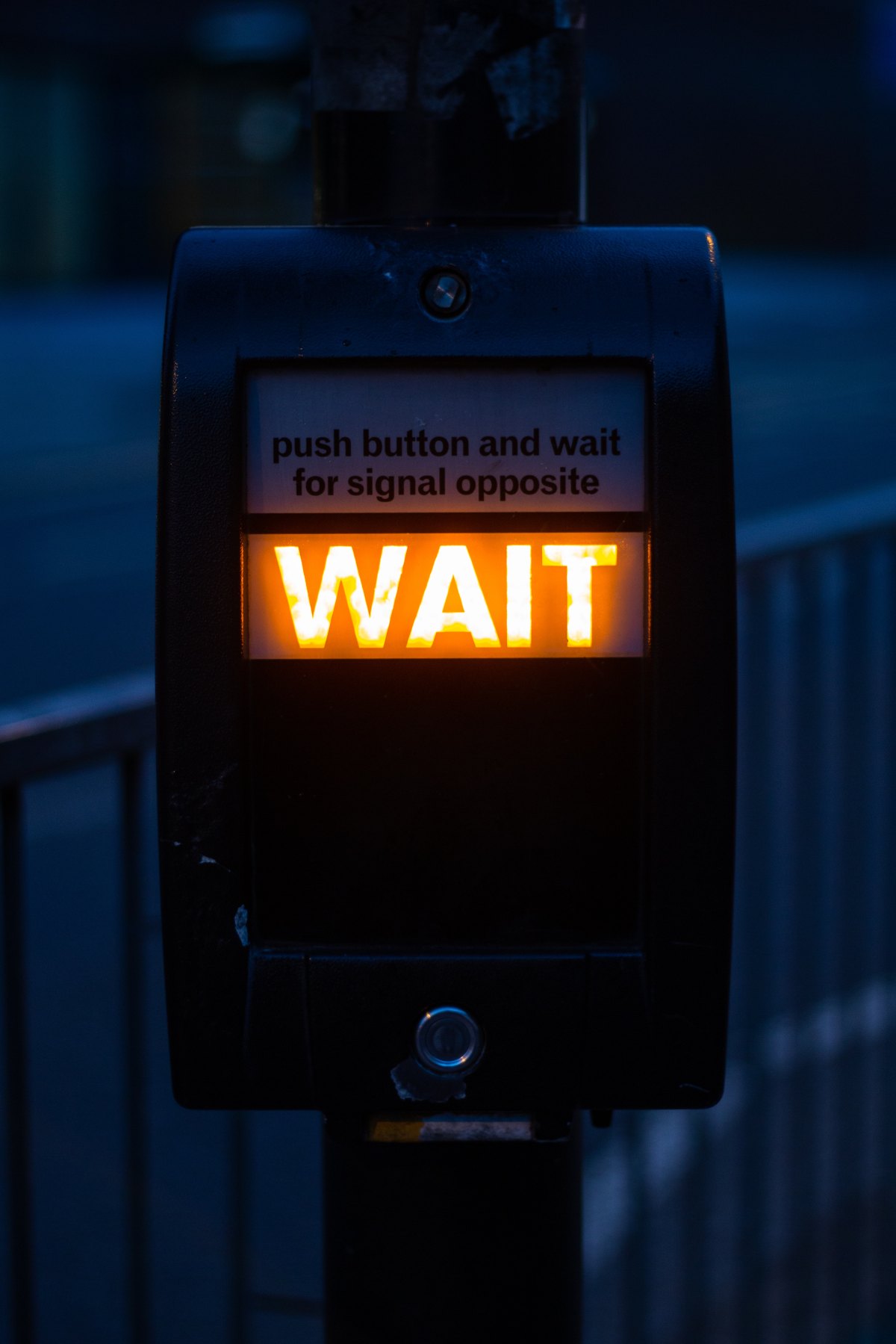
In the meantime, you wait and when you can, you wait with hope. I’m right there waiting too.

A Long Way From Marsh Chapel

As I sat there, smelling of one long sunny day, of goodbyes to new chaplain friends, and of walks around Cambridge where I ducked into a comic store for the oldest boy and a used bookstore for the youngest and for me, I took a deep breath.

The lobster roll I ate left me a long time ago by then, but I wasn’t hungry because I had a completely unappetizing salad in a train station where I met a train-taking friend who was on her way to receive an award for her justice work in the world.

After two buses and a train ride from Boston to Providence, a brief interview from a police officer, and a search to find an outlet in an atrium that had only one, I sat in the hard-backed chair sitting across from a Southwest sign. The blue, orange, and yellow was like the brightness of the day turning into an evening of quiet.

The airport security area was behind me, the sign ahead. Nothing was moving. Conveyors were belted into silence. Lights and sirens dulled into repose. No one walked except the occasional environmental service worker.

One man who, like me, had his flight canceled, lay out his golf bag and pulled a pillow from his suitcase. I was determined to sit in the chair overnight. It felt like a small failure when looked to the floor and said without words, “I think I’m coming down there.”

I didn’t want to be the guy who slept on the airport floor. I chuckled to myself. It was perfect and terrible. I had never done that before. I had people in Boston, people who later reminded me that I had people in Boston.

I was and am blessed that I pretty much don’t travel anywhere in the US where I can’t call people who live within 2-3 hours of me, people who care enough to retrieve me from my stinky, stuck position after lugging luggage and trying to get home. I didn’t want to be that sleeping guy but I was.

l opened my luggage and pulled my black hoodie, the one I packed in case I got cold during the research conference. Hadn’t worn it yet. Perfectly folded, it was wear I put it, like it was waiting to be called into service. I zipped it up over my white polo and lay on that floor.

I didn’t really sleep. I’m from the south side of Chicago. Instead of sleeping, I put my leg across my luggage and dozed while forming fists and blinking each time I heard footsteps on the muffled carpet.

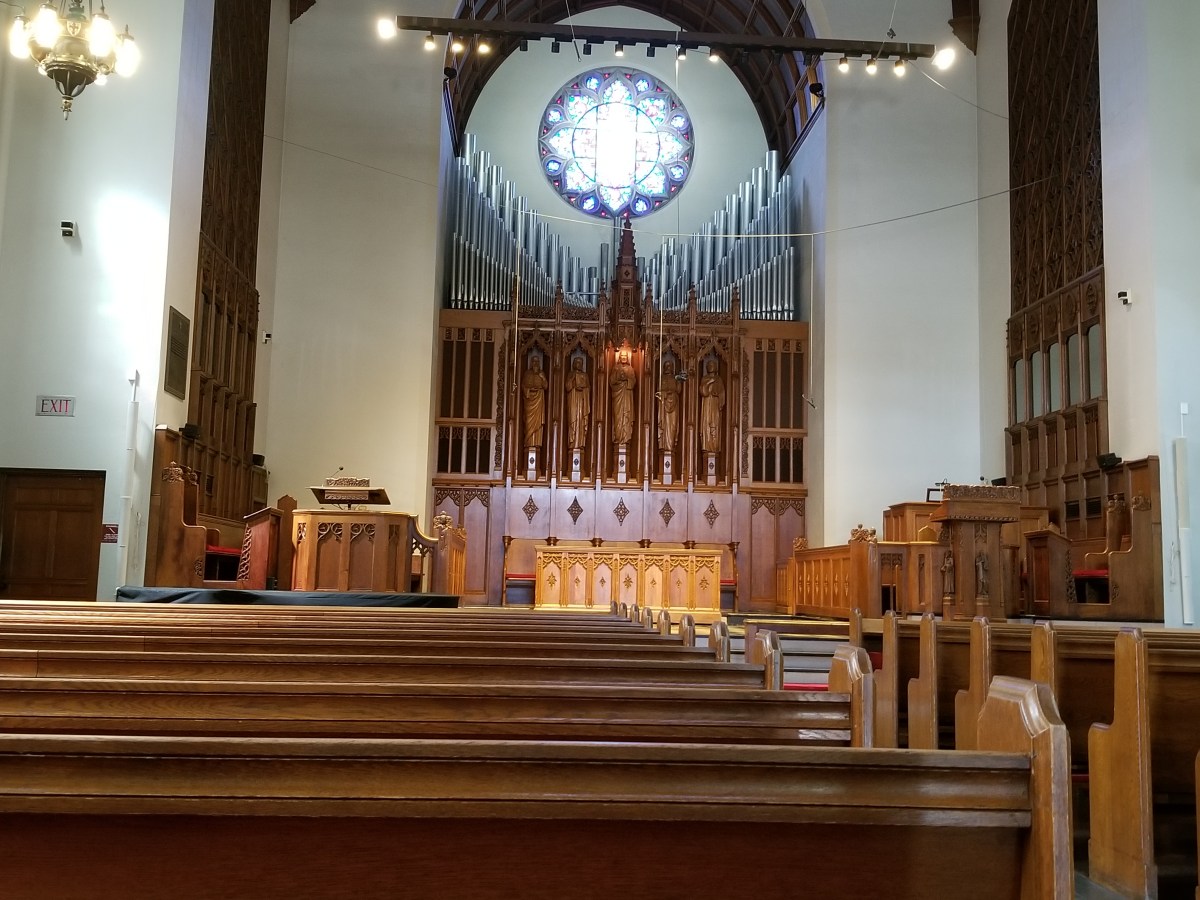
I was a long way from Marsh Chapel where I sat each day of the week, listening to the quiet, imagining what Howard Thurman did in that space, envisioning how students and ministers and others came there to sit, to wait, to hear, and to rest. I had been in Marsh Chapel but the airport wasn’t the chapel.

I would even go into an airport chapel during that upcoming thirty-hour trek to return home where I’d find a dark and equally quiet Chicago on a Saturday night. Returning would be like moving from Marsh Chapel, where one of my spiritual heroes did his work, to the airport, where I’d wait and wonder and get into new postures that surprised me and taught me how to return.

I was a long way from Marsh Chapel, and then I wasn’t.

Watching For Dead Rats

Near our hospital office building where the chaplains meet, a hotel is waiting through its final stages of construction. Men and women in hard hats are completing electrical lines and other finishing touches. The sidewalk is almost open again, and the long temporary roof that covered what was the skeleton of the structure is gone. A man has been there for the last few mornings, accepting my greeting and offering his own.

Today he said to line of us as we passed by, “Watch out. Stay to the right. There’s a dead rat to the left. You don’t want to roll over that.” He spoke to all of us but phrased his admonition to the woman in the wheelchair who was at the front of the line. Between me and that woman was another woman whose face was in her phone. She never lifted her head and probably only looked with her eyes the way I do over my glasses when people say things that unnerve me.

My mother’s words–she says them all the time, to anybody she needs to say them–came before me. Mama does not like us (or you or Jesus) talking on a phone or using a phone while you’re a pedestrian. This woman needs to meet my mother. I decided not to introduce her to Mama through me. And it came to me that the woman looking at her phone was handling the sidewalk. She didn’t walk over the dead rat. She didn’t trip or stumble. She kept a good pace ahead of me, didn’t slow anyone in our line down. She walked into my building so we probably work for the same hospital. How she walked was fine. Her pace was fine.

I thought about something as I went up the elevator. You can pay attention in a number of ways. Was this woman as attuned to her surroundings as I think she should have been? No. Was she in some potential danger walking down a street in Chicago while not looking up? Yes. But she made it to her destination. And she had, at least, one person who would have helped her should something have happened that did surprise her. I was there and I was alert. I was aware because Mama’s voice is in my head about being aware. In a sense, this woman had me in her corner.

It’s true for me. It’s true for you. Perhaps I’m not paying attention to dangers in my path, and I’m thinking about the spiritual path insofar as one can tease it apart from non-spiritual paths, something I don’t think can be done by the way. Still, maybe there are dangers ahead, dangers I’m unaware of. I can, like this woman in the line of passersby, use what I do have and I can trust that God will surround me with people who will be there to help when I need it.

In very specific and in less specific and vague ways, my future is unknown. I’m watching for dead rats, especially when warned about them. But I don’t see all the rats under the new building. I’m not able to recognize every threat. I do and will stumble. But when I do, I won’t be alone. I won’t be unprotected. I’ll use what I can and when that’s not enough, others will help. I have a hunch that this is true for you too.

Belts

When I started one of my latest continuing educations a few years ago, it was in a dojo, “a place to learn,” and in our dojo–like most American dojos–there is a belt system. Our dojo, Thousand Waves, has a large and wonderful youth program where hundreds of youth learn Seido.

In addition, dozens of adults with disabilities train through TW’s adapted program and dozens of non-martial artists come to learn self-defense skills through the dojos programs. In each of these, gauging competency is important, as is being rewarded for it. So, we have belts.

While I appreciate the belt system–really, I need it for different reasons–there were no belts in traditional Japanese karate. I like that because participating in martial arts is a means of pursuing integration of my physical, spiritual, and mental strength. Karate, for me, isn’t about belts but practice.

Now, the belts serve a purpose. They allow me to go through our structured curriculum at my pace, assessing my own needs. The curriculum builds in ways for me to know when I’m ready to test for a belt. But, by then, I’m not testing for a belt. I’m receiving a belt, but I’m testing to assess my effort and my practice to a point.

I read once that in the earliest Japanese arts, white belts were the only belts, that they weren’t associated with ranking in the earliest martial traditions, and that the longer a student wore that white belt, the dirtier it became. The belt aged as the artist did. By tradition, martial artists clean our gi’s, the outfits we train in, but not our belts. Your belt contains your energy, your effort, and your history with the art.

You never wash it or otherwise disrespect it because you’d be disrespecting your energy, effort, and history. It’s a part of the practice, a part of the way you learn to discipline yourself, respect yourself, and develop your art. I call this spiritual work.

The belt, then, gets dirty with use. Folding in a bag, tying it and tightening it around your waist for 2 or 3 classes a week, letting it rub the floor as you learn how best to fall–all of these movements, in a traditional sense, changed the nature of the belt. In that older sense, the fibers ripped with wear, the strands pulled apart over years of use. What was once white would, slowly, became black. You can imagine that white belt reflecting a number of colors on the way, no?

White turning yellow with the sun. White fading into gray. White smudged with brown flecks of dirt. White turning into black. Running barefoot down New York streets–the way Kaicho trained his earliest Seido students–the sun reflecting against a multi-ethnic group of students, rain or snow shining against the dull and moving group of people punching and kicking and offering guttural groans that weren’t decipherable to the uninitiated.

The blackness would emerge over years of practice, over failed attempts that in a martial sense were never failure. Blackness would skid across fibers, be indistinguishable from effort, identical to energy. Blackness would come through the repeated kicks you’d receive from your fellow karatekas who worked with you to show you how to form a weapon. Blackness would line the fabric of that once white line, never cleaned and only used and used and used.

I’m not “a black belt,” a modern way that people who aren’t martial artists speak of those who wear those dingy-but-not-so-dingy straps. The image with this post is of my master teacher, Sei Shihan Nancy Lanoue’s belt. I have a green belt, hope to move to advanced green in a couple months according to our curriculum and my practice. Gauging our curriculum and my schedule fairly–and my ambition to stay ahead of my oldest boy–I have about 3 years between advanced green and the first degree. In one way, it’s complimentary to say, “You’re a black belt.” It is a compliment because it can be a remark of integration. You become your practice. You become a black belt.

In another way, it is a misreading of the historical effort a person put into the martial way. You’re not a black belt. You’re a person. The belt is the image of the person you are. You put it on. You take it off. You better respect it. But you wear it. You’re a person with a black belt. In that way, I think, the belt is still available to be sullied by the next class, the next kata, the next senior teacher.

Jesmyn Ward on Returning Home

I fantasize about living in that fabled America. And then I remember that one cannot escape an infinite room. Moving across a few state lines is not going to help me escape this place that tells me I am less. The racist, misogynistic sentiment I encounter every day in Mississippi is the same belief that put in place the economic and social caste systems that allowed America to become America. It is the bedrock beneath the soil. Racial violence and subjugation happen on the streets of St. Louis, on the sidewalks of New York City and in the BART stations of Oakland. I breathe. I remain. I remember…

Read the full article at Time.

Someone Told Me Once

Someone told me once, not long ago, that I fit. It was in an email. I won’t give the context but only the response.

Her response was a broad way of delivering to me–a person who loves context and who, often, uses context to be narrow and too focused–an invitation to the large neighborhood of hospitality.

She was hosting me, settling me into a spaciousness. She said to me, “There’s no doubt that you fit. That’s not an issue.” She and her people weren’t discussing my fit. That was a call that had been made. That was a choice that had been decided. I already fit. The rest was derivative.

Reading Humane Insight

Humane Insight explores the ways we see people, the ways we look and notice the experiences of people through the history of experiences of suffering and death.

“Humane” is a word that intends to point toward a particular “kind of looking,” one that “seeks knowledge about the humanity of that person” (5). Baker’s book about seeing pain focuses on the ways Blacks have been represented visually and how those visual portrayals express, challenge, or ignore the intense suffering within black life.

In investigating (or re-searching) how black suffering has been identified, she illuminates possibilities for maintaining the humanity and protection of the black body. The particular kind of looking that she invites readers to is a looking through the experience of African Americans in order to preserve humanity and dignity. Dignity threads the pain-filled pages. It lifts the project to purposes beyond seeing, allowing us to look and to, in my view, hope.

There are a number of conversation partners in Baker’s work. She listens especially to liberationists from the past with Ida B. Wells and Mamie Till as two notable survivalists. Baker points to how these folks have contributed to “the image of the African American body in pain and death” (6), making visible black experience in order to call for change despite what is the extremely private event of a person’s body. Noticing black particularity is a means of understanding how to notice broadly. Baker calls this noticing empathic and political, active and ideological. Her book takes what is seen and interprets the visual into discourse. In using language for this translational purpose, Baker “reveals how black pain has been made to make sense” (7).

Baker takes the reader through discourse (i.e., language) in order to construct a critical understanding of humanity. She brings into dialogue theorists who are steeped in empiricist and scientific ways of seeing, such as Darwin and Schmitt, in order to put forward good questions about the acknowledgement of vulnerability as universal and how racial identity impacts perception. The construction of photography and enduring images from history are her tools to interrogate race, culture, and the various ways black pain and suffering are re-presented.

She traces the re-presentation by lifting up expressions of culture as a component of how humanity is expressed, drawing attention to the abolitionist movement in order to situate the term image, turning to lynchings as a social controlling mechanism, exploring the political and emotional power of Mamie Till-Mobley’s insistent decision to show the world brother Emmett’s brutalized body, and activating imagination for the connected civil gestures of nonviolent direct action. The book ends with a recounting of the destruction around and in Hurricane Katrina.

Dr. Baker doesn’t exactly hold her reader’s hand through the text. You know she cares but you don’t always feel it when you meet the deep wisdom in her scholarship. This seems good. Responsible critical discourse, even if it ends in one’s growth, is not first about the emotional. The sentimental is present in the book but there is a wideness to those available sentiments. There is disappointment and anguish in the pages. There is appreciation and gratitude for those who have fought, resisted, lived, died, and made babies who took pictures with their lives and passed on their stories so scholars and teachers and other black people could keep the life alive.

I couldn’t read Humane Insight without seeing more of how I see. I think Baker’s meditation on critical race watching has contributed to my “sensitive” sighting of race as an enduring, political, and ideological tool that can construct, dissemble, and reconstruct how we see beautiful black bodies. Baker’s work makes me think of the body and she helps me reconsider how the body is depicted in popular media and in decidedly theological discourse.

Related, black bodies that have been afflicted by pain–be it through sickness or violence–are particular, and the re-view of such bodies takes and develops care. I would be interested in seeing a similar analysis by Baker on black photographic resources and materials. She highlights the important role of black newspapers in portions of US history, but her primary work is to interrogate the ways mainstream images have constructed views, calcified understandings, and sustained images of and about Blacks, images which don’t represent true expressions of suffering and death in African American life.

How you see matters. How you see people matters. I’ve known this and Baker tells me a lot more about what I know. She deepens my knowledge in a relentless, thorough, painful, and captivating way. She shows and tells a truth about how black bodies have been shown and how black bodies have been told or spoken or languaged into existence and death. In creating such an engrossing, scholarly project, Baker has given a gift to the world, even if it’s a gift that’s hard to fully appreciate. Gifts remarking upon pain are no less valuable for the spread of responses we have to them.