Conflicted With The Help

Have you read Kathryn Stockett’s The Help?  I haven’t.  I told my close friend, Maggie, last year when she was reading it that I had my challenges coming to the work.  I asked if she was enjoying it and was happy she said that she was.  She resonated with much of the novel because of her background and because of her experience growing up a white woman in the South.  I celebrated the book.  I loved that she could find the portrayal in it credible when gauged by her own personal story.  But I was off center.

I told Maggie and David and Dawn (we were all together at the time) that my conflict with the novel was with my desire to support and celebrate books in general and fiction in particular with my learned-over-the-years suspicion that my story–that story that I own collectively with all other black folks in this country–can so readily be accepted, supported, purchased, and promoted when it’s written by non-black folks.  I continue to experience that conflict as the movie is now being promoted.

I’m careful not to take these conflicts too far on this blog.  But my conflict is my conflict.  In fact, I’m very thankful for the humility Ms. Stockett exhibits on her website when responding to the question, “Were you nervous that some people might take affront to you…writing in the voice of two African American maids?”  She says,

…I was very worried about what I’d written and the line I’d crossed. And the truth is, I’m still nervous. I’ll never know what it really felt like to be in the shoes of those black women who worked in the white homes of the South during the 1960s and I hope that no one thinks I presume to know that. But I had to try. I wanted the story to be told. I hope I got some of it right.

Having not read the novel, conflicted man that I am still, I appreciate the author’s hope.  I share it.  And I also hope that the success of her novel continues to grow in relation to her posture around the issue of telling someone else’s story.  Indeed, novelists always tell another character’s story.  I hope she’s done that well.

That said, the other day I read the comments from Rosetta Ross, a religious studies scholar at Spelman, over at Religion Dispatches.  I share some of her biographical experiences, reactions to The Help, and sentiments about the acceptance of African American culture when its ushered to the wider world through the pen and hands and submission processes of white publishing professionals in this case.  Now, to be clear, I love white folks.  Some of you all are white, and I hope you know I love you.  And I hope you have a comment or two about this, especially if you’ve read the novel or seen the screening.  And still, I’m intrigued by how often and constant black authors or, more pointedly, African American authors, try to tell stories that cannot be accepted and embraced as cultural stories, as stories for the wider reading public.

Dr. Ross identifies three messages from the embrace of The Help.  Three reasons she won’t see the movie.  She says,

The first false message says: The real agents of the world are white….This message is false because black women, from a variety of stations in life, have voices and live and demonstrate to the world fulfilled lives every day—without the assistance or interference of white people.

The second false message is this: The really important point of all cultural production and activity is for white agency and dignity to be actualized. The overarching plot of this book presents the narrative of a young white woman finding herself and her voice amidst cliches, circumscriptions, traditions of the South during the 1960s. Against this background, the black women are instrumental in Skeeter’s journey into adulthood. Skeeter’s journey is the more prominent message of the book, and, I suspect, of the film as well. I will not go to see the movie The Help because I do not wish to view yet another production that tells me, a black woman, it is all about whiteness.

…the third, and most detrimental false message: Black persons—perhaps people of color, generally—exist primarily to serve of enhance the lives of white people….A predominant element of the Western imaginary, the idea that black persons ultimately exist as servants for white life, has long been supported by rhetorical constructions of Christianity. The most obvious examples, of course, were rituals such as catechisms about the necessity for [black] servants to obey [white] masters…

What do you think about Professor Ross’s comments?  Have you noticed some of the biases and patterns she speaks of, some of the messages she’s read and heard in the buzz around the novel and the film?  What experience have you had around hearing your story told through someone else’s lips?

Finally, I hope you read the novel.  One day I may.  I’ve read many representations of black people written under the hand of non-blacks, and this novel may join that shelf.  And, again, my conflicts aside, I can support the work of an author reaching the world with a good story–and upon the great experience my good friend had of the work.  I can easily separate my experience of the novel (or my perspective of the novel as I approach it from a distance) from my hearty suggestion that it should be read by others.

By the way, if you’d like to see Professor Ross’s full essay at RD, click here.

Closing Books

Last week I went to Borders with my son, and it was sad and exhilarating at the same time.  We strolled into the store, me refusing to press the silver button with  the blue chair in the middle, Bryce trying to help.  He’s into opening and closing doors these days.  Somebody waited for us to pass into the store.  The second door was propped open so customers could come and go easily.

The place was packed.  I had the sense that it would be full of people all day.  It was around 2:30 in the afternoon.  I scanned the place.  I had never been to Borders on State.  We had one in the neighborhood which we frequented before it met the same fate dressed in yellow with bold black block letters.  Bryce was immediately captivated.  He’d glance up at me and then to the shoppers.  He looked from left to right, nervous and a little thrilled that we were there.  People scanned titles.  They hoisted novels, stacking them in their hands and holding them in a line over their bellies.  One lady called somebody and read the back cover copy over the phone.  She asked, “Have you heard of this author before?”  I pressed ahead into aisle and ignored the conversation after that.  It felt like people were looting, excited over the broken glass of ten thousand authors’ dreams.

Before we left, the boy gave me the signal that he was ready for a snack.  He, like me, tired at the scene and needed nourishment.  I couldn’t blame him.  The writer in me, the reader in me, wanted something to eat after that.  I wanted something to sustain me after seeing another bookstore close.  Books are the things that have built me and built many of the people that I love.  Books have taught me and us.  We should buy them, in stores large and small.  We should rent them from our public libraries.  We should.

I thought of my usual places to buy books.  I thought of Azzizzi Books in Lincoln Mall and Powells in Hyde Park.  I recalled my last visit to the Seminary Co-Op and to it’s relative, 57th Street Books.  All of sudden, pushing the boy back toward the bridge we’d cross to get to our car, I felt like the closing of Borders was, in part, my fault.  I was like those readers, those scavengers in that store.  I, too, looked for the best price for a book when I shopped.  I chose and do choose to buy most books for a discount because my book budget comes mostly when I get an honorarium of sorts that I don’t expect.  I’ve changed that over the last four or five years as I’ve learned how to buy an author’s work for the toil that’s seen and unseen.  I don’t mind–in fact, I enjoy–buying a book for retail or from an author directly since it comes under a habit I think the world is poorer without.

I’m not into e-readers.  I’ll protest them as much as possible.  I will take my books, open, and read them.  I will crave and consume the spines and jackets and covers be they soft or hard.  I will smell the pages and rub my fingers over the corners, turning that page slightly when my eyes are half way down.  I will flip the page or pages to see how long it is until the chapter is finished.  I may scribble a note to the author, continuing what feels like a conversation between us.  I’ll move my bookmark to the page I want to stop at for the night, never counting and only judging by whether I’ve started at 11:30pm or 1:00am or by how far I think that night’s insomnia will take me.  I will laugh and squint and sigh and hold my breath.  I will sit my book on my table by that glider or in my bag or on the desk.

I’m sad for the funerals happening for all the Borders stores across the country.  I’m sad for the careers that have been upset and altered and forever changed because another company has failed.  But I will keep reading and renting and buying books.  You should too.

Interview with Rabbi Zoe Klein & Book Giveaway

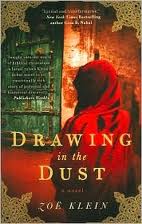
I am happy to bring you the next author interview with Rabbi Zoe Klein.  Rabbi Klein’s novel, Drawing in the Dust, tells the story of an archaeologist who risks her reputation to excavate beneath the home of an Arab couple to make a miraculous discovery.  I’d like to give away a copy of the novel, so look into that at the bottom of the interview.  Rabbi Klein inspires me.  As a spiritual leader and writer, she gives powerful answers to how she thinks about what she does, how she wobbles all her plates.  Enjoy…

MW: When did you first know you would be both a writer and a rabbi?

RZK: Hi Michael! Thank you for bringing these questions to me, it is an honor to participate in this interview! Long before I ever could imagine that a little girl like myself could grow up and become a Rabbi, I knew I loved to write. I wrote stories all the time. I remember writing stories on those beige thin sheets of paper on which the lines were two inches apart, filling in scenes with chubby crayoned letters. I even remember one of my first stories, about a magical species called the Giringos, half giraffe and half flamingo.

I remember a powerful moment, the first time I told my father I wanted to be a writer when I grew up. He is an artist and I remember standing beside his dawing board while he worked and saying I wanted to be a writer. He said, “That’s great. But you cannot call yourself a writer until you finish a book. Even if it is never published, even if no one reads it, once you finish a book you will be a writer, but until then you are not.” It sounds like a strong thing to say, but it was a valuable lesson. For my father, it was very important that I learn the value of taking a creative idea to its completion. Lots of people have wonderful novels in their souls, but very few put in the tedious effort to realize it. When I finished my first novel in college, an as-yet unpublished story called “The Goat Keeper”, it was such a proud moment to hand it to him and to become a writer!

It wasn’t until I was in my Junior year in college that I truly understood that the path to the rabbinate was even a possibility for me. I had always thought that it was something only men could do. Even though there were female rabbis around, I hadn’t met any. However, I always loved religion, studying faiths and myths and cultures. The kinds of conversations and debates I had with people with strong faith identities in many ways mirrored the conversations I’d hear between my parents and their artist friends. The artists would always talk about such things as mortality, man’s fragility, the futility of monument, shattering dogmas, the supremacy of blank space…it was art they were discussing, but it filtered into my mind as theology, and I loved it.

In many ways I think of myself as a rabbi with the heart of a novelist, rather than the other way around. I started as a writer and then expanded my material from the confines of pen and ink to people and community. As a congregational rabbi, I have the opportunity to help craft the story of a community of families, engage in their sacred and profound moments, adding our chapters to an ever-unfolding scripture of a people.

MW: I realize both roles relate to one another, if I’m reading your interview in Drawing in the Dust correctly.  But does writing serve your role as a spiritual leader? If so, how?

RZK: Sometimes I think my rabbinate is almost like fieldwork for writing, and my writing is soulwork for the rabbinate. Writing is interesting in that it is done in physical solitude, and yet it is never lonely for me. I am full up with characters, with vivid dreams and scenes, demons to wrestle, I’m haunted and vexed and also ecstatic and weeping. In contradiction to that, in the rabbinate there is no solitude, you are continually working with people. It is a very social position, and yet for me there is loneliness there. There is a lot of what the mystics call “tzim-tzum,” a kind of spiritual contraction one does to make room for others. You retract yourself enough to allow space for other’s voices. You become an expert active listener. When I write though, that part of me that contracts in order to give center stage to others’ stories and needs, suddenly unfurls its great wings and jets about wildly.

The short answer to your question is that I think my writing allows me to be a whole person as a spiritual leader. Without it, I think I’d be fragments of a mosaic, chipped with no clear design. I think when you take the time regularly, whether through writing or meditation or running or whatever, to reflect on your decisions and desires, face your darkness, and emerge with a burning but joyful heart, you can better take others by the hand and lead them through a courageous process of reflection and growth.

MW: Talk about your experience as a person of faith—indeed a leader—writing biblical fiction for a broad audience.  Were you concerned that you wouldn’t be received well, that you might misrepresent yourself, or that your story might be misperceived?

RZK: While I was perhaps concerned about the story being misperceived or not received well, it was not a deterrent for me. I was encouraged by a great editor Al Silverman to forget while I wrote that I was a rabbi, a mother, a wife, and just write from a place of uniqueness, without titles, and I’ve always tried to do that. I am a person of faith. I believe that stories which are filled with metaphor and myth are a form of prayer. I never feel far from God when I write, in fact I feel close, even if I’m writing a scene that is sexual or violent or both. It is a process of exploration into human nature, into fantasy, into longing and fear, and it is not too different than the best kind of worship experience, where you are completely honest and raw, repentant, mournful, terrified, awe-filled, trembling with humility, romanced and swept up in all your smallness into the impossible arms of the infinite. There is no doubt that it is scary to write for a broad audience, and that no matter how much you try to hide your truths under layers and layers of plot and characterization you always end up realizing that despite your efforts you ended up publishing your very private diary, but it is also freeing to realize that the things that you say are the honest voicing of your humanness, what a relief to not be a spiritual leader hiding behind a façade, with word locked into routine platitudes! How refreshing to be real, to have a faith that wrestles, breathes, challenges and confounds!

MW: How has your congregation responded to your writing life?

RZK: My congregation has been celebratory and wonderful. I am fortunate to share this journey with them! We have many writers, thinkers, professors and experts-in-their-field in our community, people who love and appreciate art and don’t shy away from its darker sides…

MW: When I connected with you about this interview, I mentioned my gratitude for the seen and unseen work behind this novel.  I’m glad you’ve labored in all the ways you have to give us this work.  What don’t people know about what it takes to write a good story for publication?  Will you give us a sense of some of what it took for you?

RZK: Ah, that’s a good question. I don’t think people understand the sheer mass of hours that it takes. People don’t realize that once the book is finished and you feel completely beaten and your hair is grayer and thinner because of the process, and your eyes are dim from staring into the computer, and every time you blink you see bright blue squares, and your wrecked with fatigue after months of not sleeping, once you’ve gotten that far, you have to STILL muster the strength to face rejection after rejection after rejection…years of rejection and pitching your story, and trying even after years have gone by and you’ve already become passionate about a NEW idea retaining the freshness about the book that no one seems to want…and then after you finally find an agent and an editor, realizing that there are two of three or four more Everests to climb with revisions, revisions that keep tearing out your heart and then sewing it back in. Every time I’d get to a new mountain where it would be so easy to just drop the whole thing, I would think to myself, “This is a filter, and only the most determined get through.” And I was determined to be determined enough! I think people understand how steep the climb is from conception to publication, but I don’t think people know how long it is, how much stamina is involved.
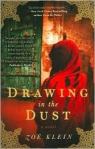
I also tend to like to write stories that have a lot of different characters and layers of interpretation, and it is hard to keep track of all of those little pieces over the course of 600 hundred pages, which was how long DRAWING IN THE DUST originally was. When I was editting it at one point I realized that if one added up the years and scenes carefully for one of the very peripheral characters and tried to figure out her age, she would have to be something like 130 years old. Keeping track of all these strands of lives is hard!

MW: I’m pretty sure you have many things to do.  I could be wrong.  I’m probably not.  How do you serve both these areas in your life well?  And how do you do anything else?!

RZK: Sometimes I feel like one of those cirque-d’soleil contortionists with the spinning plates on top of sticks, except that while they make it look so graceful and beautiful, all the plates spinning perfectly, my plates are often pretty wobbly! And some of them crash. If I were to label my plates, there would be the Writing Plate, the Rabbi Plate, the Children Plate, the Husband Plate, Friend Plate, and of course lots more. I think while I’ve made time to keep the Writing Plate spinning by devoting Mondays, my one day off, to writing, and the Rabbi plate I devote much time to, and the Children Plate keeps spinning even though it’s hectic, I admit the Husband Plate often wobbles and falls (luckily it’s a sturdy, rebounding plate!), and I haven’t been able to devote much time to the Friends Plate (I have friends, we just don’t see each other at all, I haven’t been able to nourish that part of my life)…there are a lot of sacrifices! As I’ve gotten older, I am trying to redistribute my energy, focusing more on my family and building relationships, and trying to approach work with less frenetic energy and more joy and appreciation. Everything is not always in balance as people like to believe! But up until now I think I’ve lived my life is a giant rush, and I really want to learn to slow down and appreciate BEING instead of eating up every hour with DOING.

MW: I read Eugene Peterson who is a pastor and writer, and he encourages clergy to read fiction.  He says that artists have become his allies and have taken a place next to theologians and scholars in his formation as a pastor and as an artist.  You talk about the power of fiction in your provided interview.  How does fiction nurture a person in general and a religious leader in particular?

RZK: That is beautiful. I think that fiction unlocks people’s hearts in a particular way that nothing else can. You take fiction under the covers with you, give it the heat of your breath, and like the genie in the lamp it has an enchantment. Somehow entering the world of fiction, our vault of tears is more easily unlocked, particular drama reflects universal understanding. There is an intimacy in fiction, partly because of the intimacy it took to create it. In terms of a religious person, I think that today we tend to sterilize the idea of a person of faith, turn that person into a kind of sexless judge. Piety is purity. But dancing with God is an intimacy, it’s a cosmic affair, filled with subordination and abuses, mastery and humility, and of course love. I once wrote a new definition for love — Reverence for Mystery. I think fiction nurtures a person in general and a religious person in particular because there are very high truths that can only be expressed in metaphor. God, for example, can only be expressed in metaphor, as shepherd or teacher or lover or parent or guide.  I believe Fiction, ironically, is Ultimate Truth’s master key.

MW: What are you reading these days, by the way?

RZK: To be honest, I’m reading a lot of Science Fiction! I just printed out the top 100 Science Fiction books, and right now I’m reading Ender’s Game. It’s just a field I had never read before, and I am surprised at how much I’m loving it! Before this new kick though, I read Cynthia Ozick’s novels, The Shawl, The Putterman Papers and Heir to The Glimmering World, and my goodness, her language was like cashmere, so rich and sumptous.

MW: You’ve talked about God as the Reader of All Life—language that I love.  What are you working on, preparing, and “offering skyward”?

RZK: I just finished a novel called Origin of Color which will be released in summer of 2012; it is going through its editing process now. I went to Swaziland and Tanzania to research for it when I was on sabbatical this past December. The book is about an American couple that accidently falls into the middle of a crime ring of witchdoctors and politicians in East Africa who sell albino body parts to be made into potions. I met with East Africans with alibinism and families whose children with albinism had been butchered. I wove these experiences into this novel. It was an emotional novel to write, it is a thriller, and it even scared me as I was creating it. I’d be writing in the middle of the night and leaping up to make sure the doors were locked…jumping if I thought the curtain moved! The “offering skyward” part of it is that it is also a contemplation about perception. I am very excited about it.

I am also leaving in two weeks to go back to Africa, to Ghana, with the American Jewish World Service. I will be in Winneba, Ghana with American Jewish World Service’s Young Rabbis’ Delegation. The Young Rabbis’ Delegation brings together a group of rabbis from all over the country to experience first-hand the power of grassroots development and explore issues of social justice and global responsibility from the perspective of Jewish texts and tradition.  The group is working at Challenging Heights, an AJWS-supported NGO devoted to providing education to former child slaves and resources to families whose children are at risk for slavery and human trafficking.

MW: How can readers stay in touch with you and support your work?

RZK: On my website www.zoeklein.com, or by emailing me at zoe@zoeklein.com. Thank you so much for inviting me to participate on your website. Abundant blessings to you and to all of your readers!

As for the book giveaway, if you know of a clergy person who would benefit from reading this novel, post a comment, a sentence or two, about why they would.  Do so by Friday, midnight, CST.  I’ll choose a winner randomly and you can give a copy to your clergy person.

Book Giveaway and Interview with Tayari Jones

I am grateful to have Tayari Jones, author of Silver Sparrow, for an interview.  If you’re interested in getting a free copy of the novel, those instructions are below.  I’ve been following this writing professor’s blog for a few years, learning about the writing life, reading her critical analysis of events, and enjoying how she presents publishing and life as a woman of color.  I’m a student and fan.  I think you should be too, which is why I’m commending Silver Sparrow.

I think you should go buy this novel from the closest bookstore or rent it from you local public library.  I’ve made several recommendations like these in the author’s interviews, suggestions I hope you’re considering.

Here’s the interview:

MW: Congratulations on the multiple-weeks tour promoting Silver Sparrow.  How are you holding up during your book tour?

TJ: I’m holding up, but I have to say that I am tired. 40 cities is a lot of traveling, but I love connecting with readers to actually talk. It’s really inspiring.

MW: You had an interesting and maybe horrifying experience with the title.  Will you mention how you came to it?

TJ: Well, the short version is that my original title, SILVER GIRL, was already in use.  Another book with the very same title was just published. I had about a week to come up with a new title.  Everyone in my life jumped in.  I was just cleaning out emails and found some potential titles from brainstorming sessions.  It’s funny, but it wasn’t funny at the time.  And then a friend mentioned the hymn, “His Eye Is On The Sparrow,” and I knew that I had found my title.  It was a real blessing.  A gift.

MW: Your novels detail girlhood, picture femininity, and in my wife’s words describing Leaving Atlanta, “take me back to my childhood.”  How do you continually offer such real, honest, strong, brilliant characters?  How do you replenish yourself to keep seeing women for who they are rather than what’s often popular and visible if that makes sense?

TJ: First off, thank you to your wife for that compliment because that really was my goal with Leaving Atlanta–to remind people what it was like to grow up in the 1970s, to record our history.  To make a record that we were there.  I think the key to writing solid characters is to be a loving but honest observer.  When I write I think of real people, not people I have seen on TV or in movies–or even other books.  I want to make close replicas of actual human beings.  I don’t want to make a replica of a replica, getting further and further away from real and you can see how looking the way society wants you to look is like having a part-time job. I think we really squander our resources chasing down that ideal–trying to be show ponies.  But at the same time, we deserve the right to enjoy our bodies, our faces, our hair.  I wrestle a lot with keeping balance.

MW: You dedicate the book to your parents.  If this isn’t too personal–and I can’t recall whether you’ve blogged about this–how did your father respond to the story?

TJ: My dad emailed yesterday saying that he loved the book but he thought that James Witherspoon got off too easy.  My dad is my biggest cheerleader.  He is proud of me, not just for the text of the book, but for being brave enough to go my own way.  I feel like I should say, for the record that he’s not a bigamist!

MW: The women in this novel seek love.  They give it and seek it.  The ways the daughters sought their father’s love jumped out to me.  How was it writing two daughters with such competitive experiences?

TJ: Everyone in the novel is seeking love.  This is a book about how far people will go to keep their families in tact.  Even James, the bigamist.  Everyone in this book makes bad decisions for the right reasons.  The key to writing it was not to take sides–to write with as much affection for Laverne, the lawfully wedded wife as for Gwen the mistress “wife.”  The same goes for the daughters.  Everyone wants to be loved.  You can’t blame them for that.

MW: Are there any intersections between your life as writer and as professor?

TJ: I teach creative writing, so I feel like I am helping shape the literature of tomorrow.  I love watching a young writer grow.  It’s really inspiring.

MW: Among the many entertaining things about this story was the use of lies and the movement toward truth.  I imagine writing a story cloaked in deception was fun and challenging.  Any reflections on that?

TJ: There was so much pain in this story and I had to really keep my eyes open as I wrote it.  The stakes were so high for all the characters that none of them could compromise, and as a result, everyone was compromised.  I didn’t take pleasure in watching the lies unravel.  I feel really attached to my characters.  I knew that at least one of the characters would lose everything and everyone they loved.

But I think that the pleasure in this story comes in the pleasure of reading a difficult story on a difficult topic.  There is a sort of joy that comes from facing the truth, and looking it in the face.

MW: If you had to keep one of your characters with you on your book tour, who would it be and why?

TJ: I would chose Dana’s running buddy Ronalda. I like that girl.  She’s funny and she knows how to keep a cool head.

MW: How can readers keep in touch with you, learn about other works in progress when they come, and support the growing reception ofSilver Sparrow?

TJ: I would love for folks to come out and say hello to me when I’m on book tour. You can see my whole schedule here http://www.tayarijones.com/appearances.

If you’d like to enter my contest for a free autographed copy of Silver Sparrow, leave a comment with a book title and the author’s name that you recently enjoyed or one that simply stays with you.  I’d love to know what about the work stuck with or struck you, though that’s not required for the randomly selected winner to be chosen.  Post the comment by midnight, CST, June 13, 2011.

Printers Row Festival


Book lovers, shoppers, people watchers, joggers, and dog-walkers line the streets.  Vendors exchange money and swipes of cards for hard and softbound worlds in between covers.  Bags and backpacks bulge with the latest novel and with goods like newspapers and t-shirts and pamphlets from street preachers around the block.  Panels sit, adjusting microphones until that clunk from some guy’s elbow sends a dong into your ear for a while.

Bunches and crowds of men and women who look like your high school librarian collect in front of a tent.  What have you missed?  Children walk around, some of them with leashes around their necks.  You laugh.  It’s funny.  Dogs roam freely while the kids are leashed.

You spot a writer you’ve read.  You get a children’s book signed by an author you respect even though you don’t read children’s books, you don’t have children to give it to, and just because it’s Nikki Giovanni.  In fact, you buy two and give one to your niece, hoping she’ll appreciate the gift.  You’re convinced she’ll trade it in a flinch for ten dollars.  You sigh and get the second book anyway.  You love supporting writers, especially writers you love.

The last time I was at the Printers Row Lit Fest it was a day full of cramped walking, scooting really.  My wife was with me.  We listened to Ms. Giovanni discuss writing and her process of developing and publishing a story about Rosa Parks.  It feels like it was a long time ago.

I saw a status update from Cathy or maybe it was Laura that the Fest is coming back.  I was and am happy.  Then I saw that one of my favorite writers will be there.  I’m reading her (Tayari Jones) novel (Silver Sparrow) now.  I was and am even happier.  Hopefully I’ll get to have a blog interview up before the Fest and one of you can win a copy she can sign in person. Whether you’re into recently published novels, cooking books, biographies, rare finds, books about spirituality or romance, you will find what you love at this fest.  You’ll need an allowance, a budget, a spending cap.  You’ll need a friend to make sure you respect that cap.  But come.

Come and bring people you like.  Bring people who enjoy reading and talking about reading.  Come if you don’t like reading but think you could be converted.  Come to the programs on the street or to the ones at the library.  Make new friends.  Have a good time.  If you’d like more information on the Fest, visit the website by clicking here.

Eugene Peterson Writing About Writing

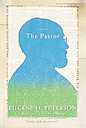
This is from Eugene Peterson’s memoir, The Pastor.  He’s talking about heuristic writing, writing as a conversation with scripture, with his conversation.  He’s talked about writing as conversation and as exploring, not explaining, not directing.  In this quote he refers to the “badlands” which was his name for a period of particularly challenging times in his pastoral work.

It was a way of writing that involved a good deal of listening, looking around, getting acquainted with the neighborhood.  Not writing what I knew but writing into what I didn’t know, edging into a mystery…

Heuristic writing–writing to explore and discover what I didn’t know.  Writing as a way of entering into language and letting language enter me, words connecting with words and creating what had previously been inarticulate or unnoticed or hidden.  Writing as a way of paying attention.  Writing as an act of prayer.  In the badlands the act of writing was assimilated into my pastoral vocation, revealing relationships, drawing into mysteries, training me imaginatively to enter the language world of scripture in which God “spoke and it came to be,” in which “the Word was made flesh and dwelt among us.”  And it became a way of writing in which I was entering into the language world of my congregation, their crises and small talk, their questions and doubts, listening for and discerning the lived quality of the gospel in their lives.  Not just saying things.  Not just writing words.

I came across something that Truman Capote wrote, with a sneer, on the work of a popular novelist: “That’s not writing, it’s typing.”  About the same time, I read Emily Dickinson’s pronouncement, “Publication is no business of the poet.”  Capote exposed much of what I had been doing as “typing”–using words to manipulate or inform or amuse.  Dickinson rescued me from a lust to be published.

I began to understand the sacred qualities of language.  My work as a pastor was immersed in language… And I began to understand that the way I used language involved not just speaking it and writing it, but listening to it–listening to the words in scripture, but also listening to the words spoken to me by the people in my congregation.

Book Giveaway and Interview With Dolen Perkins-Valdez

I have the pleasure of including an interview with Ms. Dolen Perkins-Valdez on my blog.  Her fiction touches upon my writing interests, historical fiction and the stories of African Americans.  When I contacted her about her novel and about the possibility of an interview, she suggested that we wait until after the paperback was released.  That happened in January, and when I reconnected with her, Ms. Perkins-Valdez was happy to be interviewed.  I’m giving a copy away, so see below for more information on that.  Here’s the interview.

MW: You started this novel by stumbling upon something.  Tell us about that.

DPV: I was reading a biography of W.E.B. DuBois by David Levering Lewis, and I came across a line about the origins of Wilberforce University. Lewis wrote that it was once a resort hotel popular among slaveowners and their slaves.  I was shocked and intrigued.

MW: Before learning of your work’s success, I didn’t think most people rushed to discuss how white mistresses lived in and around their husband’s slave wenches.  What was it like preparing this great novel as a WIP?  What was it like to pitch the project?

DPV: As I was writing, I just focused on telling the story. I wasn’t thinking of it as a “great novel” or anything like that because it was my first book and I wasn’t even sure if it would be published.  Once I decided to pitch it to agents, I just described the story as honestly and confidently as I could.

MW: I think I read that you had a little trouble pulling together historical fragments as you researched.  How would you suggest that writers, communicators, and people in general tell history?  How do we pass on stories these days?

DPV: I hear from so many people who have fascinating family stories.  I always urge them to write those stories down.  Most cell phones have built-in voice recorders, sort of like mini-cassette recorders.  At the very least, people should talk into these and then save the audio files on their computers and/or e-mail them to the tech-savvy members of their family.  Those of us who are younger should solicit the stories from the elders in our family.  Many oral stories will be lost if we don’t do this with a greater sense of urgency.

MW: Did you find new things or learn things as you worked on the manuscript?

DPV: Of course! Yes, I learn so much when I’m working.  There are many things that can’t possibly make it into the final book.  Not only do I learn a lot about history, but I also learn a lot about how to tell a stories.  Writing is a craft, and it takes many years to master.  I am still learning.

MW: You’ve probably been asked a lot of questions since publishing the novel.  What question haven’t you been asked that you really want to answer, and what is the answer?

DPV: I can’t think of a good question I haven’t been asked.  Recently, however, in Santa Monica, an audience member asked me about Jeremiah in the book and why he won’t take orders from the overseer’s wife.  I’d forgotten all about Jeremiah! I insisted that there was no Jeremiah in the book.  That was a funny moment.  People are often surprised when authors forget what they wrote, but it can happen sometimes.

MW: What’s next and how can my blog readers stay in touch with you?

DPV:  I’m working on a new novel. It’s a historical novel, but it is not a sequel to WENCH. I hope my fans will be patient.  In the meantime, please pass the news about the book.  There are still lots of readers out there to reach.  My website is http://www.dolenperkinsvaldez.com and I’m on Facebook at facebook.com/writerdolen.

In celebration of the release of Dolen’s paperback, I’d like to give a copy away to someone who answers a question: What book or author has helped you see more clearly some part of history or life?  I’ll randomly select a winner by Thursday so have your comments by Wednesday, midnight.

Interview with Donna Freitas & Book Giveaway

Several months ago I read This Gorgeous Game and I contacted Donna Freitas to see if she would conduct a blog interview.  She graciously accepted.  As I told her, this novel was a treat to read.  It was an engaging, well-written story that covers a challenging topic.  It’s accessible for young readers, meaning youth and young adult readers, but the issues inside the covers are ones that anyone can relate to.  Here’s the cover flap copy:

Seventeen-year-old Olivia Peters has long dreamed of becoming a writer.  So she’s absolutely over the moon when her literary idol, the celebrated novelist and much-adored local priest Mark D. Brendan, selects her from hundreds of other applicants as the winner of the Emerging Writers High School Fiction Prize.  Now she gets to spend her summer evenings in a college fiction seminar at the nearby university, where dreamy college boys abound and Father Mark acts as her personal mentor.

But when Father Mark’s enthusiasm for Olivia’s writing develops into something more, Olivia quickly finds her emotions shifting from wonder to confusion and despair.  And as her wide-eyed innocence deteriorates, Olivia can’t help but ask–exactly what game is Father Mark placing, and how on earth can she get out of it?

This remarkable second novel by the author of The Possibilities of Sainthood, about overcoming the isolation that stems from victimization, is powerful, luminous, and impossible to put down.

If you’re interested in learning more about Ms. Freitas or her work, visit her website.  Here’s my interview with Professor Freitas.

You say in your acknowledgments that writing this story was a long, tedious journey.  What can you share about that journey?  Well, this was a dark story, its subject matter tough, and there are many friends and loved ones along the way who have been there for me and supported me with respect to my own experiences related to where the story came from. But, perhaps somewhat ironically, writing This Gorgeous Game was such a liberating experience. To tell Olivia’s story, and to bring her through this darkness to the other side, knowing that she would be okay and that there were so many people in her life that would be there before, during, and afterward, was pretty amazing in and of itself. My editor, Frances Foster, and everyone at FSG and Macmillan that supported This Gorgeous Game from start to finish and still now were pretty amazing, too. It’s funny (and wonderful, too) how something so dark can end up directing you toward joy eventually.

Olivia’s voice is clear and the story captures her experiences, her hopes, and some of her frustrations.  Can you talk about what helped you hear her voice and see her experience?  One of the most important aspects of This Gorgeous Game for me is Olivia’s voice. It came to me clear as a bell one day on my way home and I decided it was my job to follow it until she had nothing left to say. I think her voice is that of a girl who is stressed and scared and insecure about what she is experiencing and I hope readers can truly be in her head while they read. I suppose that is a terrible thing to wish on readers in some respects, but I want Olivia to come to life for people through her voice!

Among Olivia’s early lines is a passage about gratitude.  She wills herself gratitude and the story centers–maybe not quite centers–on her tension between thankfulness and fear, gratitude and confusion.  How did you walk that line and strengthen those tensions throughout the work?  Well, thank you for the compliment about the tension. I’m not sure I consciously tried to walk any lines, to be honest. My biggest job was to stay true to Olivia’s voice. The main thing I was aware of, though, was the fact that the reader was going to know that something was wrong and what was wrong, too, far before Olivia would ever do or say anything about what was happening to her. That meant that my job was to show the confusion that made Olivia stay silent for so long, even as she begins to fear what is really happening to her. I needed to convey the enormity of what it meant to accuse a priest of abuse, especially when he never did anything “technically” wrong—he just showed her an enormous amount of attention. This was a complicated thing to convey.

I read somewhere that you were interested or concerned about readers’ reception of your use of Thomas Merton.  What led you to use his writings and what would you like readers to know about him?  I am actually not a Merton fan, but I knew that he fell in love with a much, much younger woman shortly before he died and that they had an affair. In my mind, Father Mark (the priest in This Gorgeous Game), fancies himself as a Merton type—he is a famous writer, a priest, and in many other ways is a very private person—and he begins to see Olivia as his “M.”. I actually didn’t add the Merton parallel until after I’d finished the first draft, though.

Power is abused.  People are mistreated by individuals and by systems made up of people.  This story illuminates how that happens in one person’s life.  How do you see Olivia now that her story is written, being read, and being discussed?  How would you describe her?  Power certainly is abused all the time, and it is particularly awful (in my opinion) when someone abuses the power they have in relation to a person or a community’s faith in general, and faith in them particularly. I would describe Olivia as a totally innocent victim, a teen girl who was deeply involved in her family’s Church and faith tradition, as well as a gifted young person with lots of hopes and dreams. Father Mark preys on both these aspects of Olivia’s character, and when we are kids, we are so vulnerable in these areas of our life. I hope that people will talk about the events of the story as they happen; why it takes so long for Olivia to tell on Father Mark; what they wish would happen to Father Mark after the story is over; and also, how we can educate teens to not only be aware of sexual abuse, but the kind of abuse that is rather more elusive, that comes from the kind of manipulative, relentless attention Father Mark shows Olivia.

How do you balance your work as a teacher and your work writing?  Related to that, what kinds of connections do you see in the roles of writer and teacher?  Does one role equip you for the other?  I am not great at balancing! I wish I was better, but don’t we all need to be better? I would say that my nonfiction work (most recently, Sex and the Soul from Oxford University Press) is more directly in line with my teaching and concerns in the classroom. Almost all of my nonfiction research and writing comes from conversations I’ve had with my students or topics they seem interested in or wish they had more discussions about. My fiction in general is more personal, I think, even though I think (hope!) that it is useful in the classroom, too.

Has This Gorgeous Game come up in your classes or conversations with students?  If so, what has that meant to you?  Not yet—this is my first semester since the book came out, though. I don’t think my students even know I write novels to be honest!

I don’t know you well.  In fact, I’m only a new fan because of This Gorgeous Game.  But I’ll make an assumption to ask you this last question.  My assumption is that everyone has faith in something(s), even if faith is understood differently by different people.  Can you talk about what this story did for your faith?  You handled a bold story in a skillful way that makes me want to know how this good work worked on you if that makes sense.  Thanks for this question. Writing This Gorgeous Game was the closest I’ve ever come to an experience of grace, I think. I’ve never felt more empowered before, than when I was working on this book. Through this novel, I was able to take experiences in my own past that I’d buried somewhere deep and dark, and transform them into a story that is difficult, I know, but one about which I am proud. It has helped me to have faith in the possibility of healing even from life’s most painful moments.

What’s next for you and how can my readers keep in touch?  My third novel is coming out in September of 2011. It’s called The Survival Kit, and it’s about a girl named Rose whose mother has just died. On the day of the funeral, when her brother and father are arguing over Mom’s wishes, Rose escapes into her mother’s closet, looking at all the things her mother left behind. Hanging with Rose’s favorite dress of her mother, she finds something special that her Mom made for Rose: a survival kit. Inside the bag are items and tasks to help Rose get through this first year, and everything Rose finds inside is what ends up shaping the next twelve months. The story is uplifting and hopeful, I think! And the biggest storyline other than the items inside the kit is a romance, which I really enjoyed writing. The survival kit is based on something my mother used to make when she was alive.

People can contact me through my website, where they will find all my info!

To enter into the competition to win a free copy of This Gorgeous Game:

Post a comment offering one way we can educate teens about the dangers of sexual abuse or one way we can protect teens from such dangers.  Respond by midnight, Thursday, the 18th.

Interview with Ravi Howard & Book Giveaway

As I’ve said in previous blog interviews, I hope you will look seriously at these conversations as ways and reasons to consider adding these works to your to-be-read pile!  I also hope they provide a slight window into the world of publishing from the author’s point of view.  I found Like Trees, Walking three years after it was published (in 2007), so there is time for you to get it still.  I appreciated this read and am grateful for Mr. Howard’s willingness to be on the blog.  First the backcover copy for the novel and then the interview.

Melanin helps to obscure some bruises, making them difficult to distinguish from the dark skin they’ve stained.  Under the strong light, all of the bruises that covered him head to toe were plain to see.  The defensive wounds that covered Michael’s palms appeared bold against the pale skin.  Seeing Michael’s hands and face, I thought of my schoolyard brawls.  After the fights I’d won, I remembered how the rush of victory dulled the pain of taken blows.  Then I thought of the fights I had lost, when I felt the pain of knuckles against my face and the hot rush of blood coming to the surface.  Those fights seemed important at the time, but we were all just kids.  There was nothing at stake besides pride or shame.

My Photo

Now, the interview.

Tell us about your writing process, your research, giving us a glimpse into what came before this novel’s publication a few years ago.  Like Trees, Walking is set in Mobile, Alabama.  Though I live here now, I was on the East Coast during the writing process.  I made multiple trips here to the local library, as well as other trips just to get a feel for local culture.  I wanted to be accurate with neighborhoods and street names, so I tried to learn as much as possible about local flavor to make the story feel more authentic. 

I worked in television production for much of that time, so most of the writing was done on weekends, evenings, and vacation time.  The challenge for any writer is finding a balance between work, personal lives, and writing.

You tell a story that is very much a part of the history of the United States , bringing before readers the ugly brutality of lynching.  How were you personally affected by the strong and hard pieces of the research and plot for the work?  I was most affected by the photographs and court testimony of the lynching.  It was hard to believe that crimes like the Donald murder happened as late as 1981.  I think any writer who lives with material for so long ends up with a personal connection to the subject matter.  I think the fact that I live in Mobile now makes certain elements of the crime scene and events more vivid because I travel the streets regularly.  I’ve also met journalists and citizens who were somehow involved with the case, directly or indirectly, so that makes the crime feel current.  People remember where they were when it happened.

Two central characters, Roy and Paul, are brothers.  Their relationship is playful and fun and enduring despite the big losses and fears in your novel.  They had different reactions to Michael Donald’s murder.  How did you develop their relationship as you wrote?  People deal with grief and trauma differently, and the brothers illustrated a small part of the emotional range.   While there is often a collective mood of a particular city, era, or event, fiction provides the opportunity to peel away characters and show the impact of moments and conflicts on individuals.  Sometimes responses can be reduced to norms or what is considered abnormal.  Through characters, readers and writers can explore a range of responses to everyday events and traumatic ones.

What audience did you write this for or who do you hope finds and reads Like Trees, Walking?  I really don’t write with an eye on the audience.  It’s hard to know who will like a work and who will not.   Performers can look out at the audience and know who’s there and who’s not, but our folks are in bookstores, libraries, or online.  I think that invisibility can be a good thing.  I’m open to anyone who wants to try the book, even the ones who end up not liking it.  I think the folks who are constantly reading are central to the mix, but we always need those folks who might not read that often.  It’s always helpful to the cause when people discuss their reading with others.  That’s the easiest way to spread the word and help a small audience develop into a big one.  

You live in Mobile , Alabama .  Tell us about the local reception of your book over the last few years.  I’ve been pleased with the reception of the book.   Prior to the publication of the book, the street where Michael Donald’s body was found was renamed for him.  A historical marker was added as well.  The city has been receptive to historical remembrances, even for something this tragic.  Mobile has had a different relationship to the Civil Rights Movement than other cities.  The violence associated with Birmingham, Montgomery, Selma, and Anniston didn’t happen on the same scale in Mobile.  But people have been willing to discuss the event and its aftermath in various public forums.

I was struck that the main characters were young—thankful and struck.  I imagined how I would have interacted with this as a reader if I were the age of the characters, how much fun or sorrow-filled conversations with classmates might have been.  What would you like young people to discuss, to talk about, after reading this story?  I want young people to know that they can tell their own stories as well as anyone else.  Sometimes young people can look to older generations to explain their times to them.  It’s good for students to know that Dr. King was 26 during the Montgomery Bus Boycott.  Claudette Colvin, one of the first women who protested before Rosa Parks, was a high school student.  Sit-ins were conducted by college students, and there were school-age children participating in marches.  Young people have always had a point of view, and they should feel empowered to write and read stories that reflect their perspectives.

How do you see the role for this history, and history like it, in our country today?  The experience of Michael Donald is relatively recent but probably forgotten.  Do you see this story pushing us to remember in particular ways?  I think the divisive racist rhetoric we’ve heard during this election cycle shows that people still exploit racial tensions.  History shows us that exploitation can lead to violence.  I think that we should remember recent history with the understanding that those kinds of incidents can still happen if people are allowed to belittle people of color and minimize our contributions to American culture.  

What are you working on these days, and how can my blog readers connect with you?  I’m working on a piece set in Montgomery in the 1950s.  It shows elements of civil rights history and music history, especially the life and influence of Nat Cole, who was born in Montgomery in 1919.

Readers can connect with me at www.ravihoward.com .  I’d be happy to hear from them.  Thanks for including me in your blog.

Please do visit Ravi’s website and pick up a copy of his novel.

If you would like to enter into my competition to get a free copy of Like Trees, Walking, post in the comments either a) an event, any event, in history that you’d like an author to write about in a novel or b) the name of a novel focusing on a particular event in history.  I’ll choose a winner on Saturday, November 6 so post a comment by Friday, November 5 at midnight, CST.

Interview with Bernice McFadden & Book Giveaway

One of the hopes I have for this blog is to point to, highlight, and, if I can, scream about some of the things I’m reading.  Today’s interview is a third example of me telling you about books I’ve read through author interviews; the first is here and the second is here.   I want to commend to you Glorious

I asked Ms. Bernice McFadden if she would like to be interviewed and she graciously accepted.  I’m glad to bring my questions and her answers about Glorious, introducing you to this story and her work as a novelist.  The interview follows the back cover copy for Glorious:

Glorious is set against the backdrops of the Jim Crow South, the Harlem Renaissance, and the Civil Rights era.  Blending fact and fiction, Glorious is the sotry of Easter Venetta Bartlett, a fictional Harlem Renaissance writer whose tumultuous path to success, ruin, and ultimately revival offers a candid a true portrait of the American experience in all its beauty and cruelty.

It is a novel informed by the question that is the title of Langston Hughes’s famous poem: What happens to a dream deferred?  Based on years of research, this heart-wrenching fictional account is given added resonance by factual events coupled with real and imagined larger-than-life characters.  Glorious is an audacious exploration into the nature of self-hatred, love, possession, ego, betrayal, and, finally, redemption.

Glorious

Now, the interview.

  • You wrote a great story, pulling from people of the past.  What’s the role of history in Glorious?  Do you think that you’ve used history as a character in your work?  When I write fiction that includes historical reference, I do so simply to inform my reader – black and white – of Black peoples role in history, because we as a people have been erased from said history. I do believe that history becomes a character in and of itself in my books.


  • There is a sense that you are telling several people’s stories.  For example, several writers from the Harlem Renaissance are featured.  Are there writers from that period who, if you will, 1) shaped the story with you and 2) who inspire your work?  I have been inspired by every factual character who appears in Glorious. Without their participation the story would not have been authentic and thus, would not have rang true with the readers.


  • Easter is the main character in Glorious.  She carries into the story hope, certainty, perseverance, and strength.  How did you develop her character?  How did you listen to her voice?  I allow my characters to tell their own stories. I do not force their hands and so I allow them to share with me and the world what they choose to share.


  • Sexuality, affection, and love play prominent roles in Glorious.  I would say the same for Sugar and This Bitter Earth.  For me, the love and intimacy I read in your pages add a natural and normal quality to the relationships in the stories.  My sense as a reader is that scenes like those you write give us a view of sexuality and love.  How do you think your work—this current one or the body of your work—helps readers image and see examples of love?  My depictions of love and sex are raw. Meaning, that I do not dress those emotions/actions up in order to make the reader comfortable. It is what it is – and that is exactly what I want the reader to walk away with – not some glamorized, Hollywood version of love and sex.


  • Give us a glimpse of how you found the publisher for GloriousI queried Akashic Books in the Spring of 2010 and they quickly responded, requesting a copy of the manuscript. I bumped into the publisher (Johnny Temple) at the Harlem Book Fair in July 2010. He told me that he still had not read the ms – but that one of his associates had, and loved it! In August 2010 I received and email from Johnny conveying his admiration for the work and his desire to publish it. The rest..as you know.. is Glorious literary history!


  • Your blog and your novels always include a highlight, emphasis, or reminder about communicators from before.  What other writers would you like to point readers to?  What titles should readers have on our shelves?  I am blessed to know a bevy of incredible writers! Donna Hill, Deberry and Grant, Bonnie Glover, Tina McElroy Ansa, Carleen Brice, Lori Thorps, Elizabeth Nunez and Stacey Patton- are some writers that readers should support and add to their collections!


  • What do writers who aspire to publish fiction need to know that they don’t?  Aspiring writers need to know that they will have to wear two hats. That of the creator and the marketing/publicity professional.


  • If I read you correctly, cultural memory is important to you.  What do you mean by cultural memory and why is it significant?  My slogan is: I write to breathe life back into memory. I say this because we (Af-Am’s) have been stricken from numerous pages of history books. In school are children are taught that our history begins with slavery. It’s an abomination!  It is of the utmost importance to know where we come from. Undertsanding our origins will place us firmley on a successful journey towards enlightement and success. If you believe you’ve come from nothing – it’s most likely you will become nothing. We come from greatness and we need to be aware of that!


  • What’s the last novel you read, and what’s the one you’re looking to read? What else is in your to-be-read pile?  I had the immense pleasure of reading Anna-in-Between by Elizabeth Nunez. I am very much looking forward to reading Perfect Peace, by Daniel Black.


  • How can my blog readers stay connected to you?  I am active on FB and my handle on Twitter is: queenazsa. Interested individuals can visit my cyber-home at: www.bernicemcfadden.com

Finally, I am giving away a new copy of Glorious!  All you need to do is post a comment, either recommending a book or posting the title of the last book you read by Sunday, 11:59PM, CST.  I will randomly select a winner on Monday.  Check in after that because I’ll announce who’s won and ask you to email me your mailing address.

My Pleasing Path to Publication…

So I’m not pleased.  I’m not published.  But I’m patient.  Extremely patient. 

In my dreams. 

I’m a writer.  I’m unpublished.  Well, mostly unpublished.  I’ve been calling myself a writer for a few years.  I say that because I write.  I write words.  Even though most people don’t see them.  That’s a problem for me, being a writer whose words go unread.  So this post is a small installment in writerly vulnerability. 

I want you to know that there is a path to publication that I’m on.  It’s a rugged road.  I want you to recognize it and travel it with me. 

Don’t worry.  I’m too private to bemoan forever in public.  But I’d like to write about my pursuit of publication.  When I write about publishing, storytelling and submissions, you’ll get a glimpse–only a glimpse–of my real, tragic up-n-down existence as someone who feels he’s supposed to publish novels.  Not self-publish or publish-on-demand.  But publish, where publish means be contracted by a publisher to complete a manuscript, probably due to the unfailing efforts of a respected agent and a handful of helpful readers and editors and sales teams and marketing professionals along the way.

Related to that, I started a new work in progress (i.e., WIP) the other week.  When I start these–so far there are two full ones, one waiting for resolution, and several sitting or fledgling in pieces and stages on my laptop–I have a general way of writing.  My way makes it difficult to talk about a story when it’s in progress.  My psychological issues make it difficult to talk about them when they’re finished.  So, you can imagine that talking about stories is difficult.  There won’t be much of that on the blog.  But I will periodically attempt to entertain you with ramblings about my process. 

Today I wanted you to know that I started writing a story some days ago.  I got comfortable writing historical fiction, but this WIP is not in that genre.  It’s contemporary fiction.  I feel out-of-my-element, but I’m working on it anyway.  And I’m working hard. 

When I’m done, I’ll sit with it for a while.  I don’t know how long a while is.  But after sitting with it, I’ll reread it, revising bits and pieces as I read.  Then I’ll have one or two people from Team Michael read it.  And I’ll read it while they do, again, revising through that reading.  At the same time I’ll likely work on a query, that one-page letter written to literary gatekeepers called agents, holding my breath and praying short prayers that that letter will be  the one that gets me representation by someone who will “love” my pitch, want to read my story, and eventually love it too.

I am many days from that.  If I write 500 words a day, my current quota, I’m more than six months from a manuscript.  It’ll take me a week to read through it that first time, two weeks to get up the nerve to send it to someone on the Team, and another month before I hear back from them.  The process already sounds long, doesn’t it?  I may shorten it.  I may write 1,000 words a day for a while, but that’s too optimistic with a new kid over there, a wife who should and needs to be loved, a church to add leadership to–you get the picture. 

So, I’m setting my expectations low.  I just sat down this evening and in twenty minutes wrote 1,000 words.  It was a good evening for writing.  I have those from time to time.  It was nothing like last Thursday when it took me forever to revise what had been written the day before and leave that session adding only 75 or so words to the page.  All that to say, it may be a while, this path.  Stick with me.  Be careful about asking questions, though.  It’s a strange mix of emotions that comes when I get the well-intentioned, “So how’s the writing coming?”  One of these days I’ll give you my personal list of safe questions to ask an unpublished writer.  Remind me though.