For Really New Dads

Several of my friends are brand new fathers, several of them at my church.  I started blogging at Intersections when I became a new father.  I wrote a few posts over those first few months which I think are relevant for fathers and the people who love them.  So, I’m adding these older entries to the pile of recent posts on this blog.

I’d love to know what you think after looking through some of these.

Guest Post: My Hope For My Husband

Leslie Beckett is a friend and overall extraordinary person.  She’d laugh hearing me say that, but I think highly of her and her husband, Michael.  We met at the church where I work, and I’m grateful that Leslie agreed to write a post.  You can follow Leslie’s blog, http://lesliebeckett.wordpress.com/.

My Hope for My Husband

When certain close friends of ours first told us the happy news of their pregnancies, Mike and I both smiled widely.  My expression stemmed from pure joy for my friends while Mike’s more sinister explanation was that his misery was gaining more company.  Don’t get me wrong, he was glad, too.  Glad that he would no longer have to hear about them traveling the world, taking advantage of every festival and restaurant the city had to offer, and sleeping in each weekend.

When the awful aroma of dirty diaper hits the air, or a middle of the night cry screams through the monitor, we both try to pretend we don’t smell/hear hoping the other’s parental duty will beckon them to make what’s wrong right.  Sometimes we wait a very, very, very long time (maybe Jesus will come back before?), or one of us painfully loses at rock-paper-scissors and has to face the fire.

Our 5 year-old, Ethan, has made it routine to tell Mike before his bedtime story, “Don’t read TOO fast and read ALL the words, please!”  He has good reason behind it, too.

Mike is a fairly patient man.  It takes a lot to ruffle his feathers.  When he raises his voice and has a tone, I know it’s bad because he so rarely does.  However, the boys can easily ruffle those feathers, sky rocket that voice, and elicit that tone.  World War III then rages as the perpetrator(s) screams and wails in an Oscar-worthy manner after his (their) father has read the riot act in both word and deed.  As a 3rd party witness, I find myself later debriefing with Mike about what is helpful (yes, the boys need discipline), what is not (but that method only exacerbates), and what to try next (chill out!).  With each of these debriefings, I know that it is easier said than done.  If I had a 3rd party view of myself in my time alone with the kids, I would be repeating the same conversation a million times a day.  But my husband takes these conversations with humility and the desire to be a better father.

Fatherhood is no joke.  My hard-working, intelligent husband is competent in practically every role he has.  I think deep down he knows and believes that, too.  I would venture to say that when it comes to the challenging role of DAD, he may not be so sure.  Most of what I’ve written so far may only seem to confirm those fears.  My hope for my husband is that he would know that he is also good in his role as a father despite any inner suspicions suggesting otherwise.

He is able to carry out discipline when I am not.  Even if WWIII rages at times, the aftermath is having boys who can listen and know the difference between right and wrong.  People have told us that Ethan and Connor are well-behaved.  Although it seems hard to believe, I don’t think they are the kind of people who make it a habit to spread falsehoods.  If his patience wasn’t tried as a father, I would start to suspect alien abduction and an altering of his humanity.

Ethan says his nightly story-time phrase to his father because, yes, his father may sometimes read too fast or skip some words, but also because he is there.  It is routine that Mike eats dinner with him and his brother, gives them both a bath, reads stories, prays and helps put them to bed.  Even if his time with them is limited during the weekday, he makes the most of it and is fully a hands-on father.  Mike has changed plenty of poopy diapers and gotten up out of bed in the middle of sweet slumber.  He never expects me to do more than he.  In truth, there came a point that most nightly interventions were carried out by him despite that fact that he would be the first one up in the morning to go to work.  And even if he still may give a sinister grin, he is truly glad that his friends will enter not just the pain of parenthood but the immeasurable joys as well.  True, he doesn’t travel the world or sleep in or go out as much as he’d like, but he has never exhibited such silliness before as inspired by his boys.  He is about as low maintenance of a man as you can get, but becomes the doting father who insists on packing the cumbersome humidifier on road trips (when the trunk is already crammed full of stuff) if it might help relieve a son’s bloody nose.  When I had the most unpleasant crisis with Connor in the middle of a work day, he didn’t hesitate to drop everything, grab a cab (he NEVER cabs), come check the poop impaction, and take the bus and train transfer back to the office just to have given me support in tackling the MESS.  He loves them.  My hope for my husband is that he will know that is what they need from him the most and that he has already and will continue to show that to them.  My hope for my husband is that he will know he is competent as a father but as with every challenging role he can trust that his mistakes will not scar beyond the reach of grace (and good therapy) and that his Help is greater than his inadequacies.  My hope for my husband is what my hope for every parent including myself is, that he would continue to discover aspects of the Father’s heart in every fatherly experience.  As much as it is about raising good and godly children, it is even more about realizing who He is in every way possible.

Fathers Know Best, Interview #2

FF: Describe your family.

PW: My family is comprised of me, my wife Vicky, and my three sons: Chris (16), Joshua (7), and Caleb (5). We are a fun loving bunch. We laugh together, go to church together and enjoy each others company doing many things. Everyone has their own personality – Josh and I are the extroverts; Vicky, Chris and Caleb are the introverts. I think all of us are temperamental at times but we have learned to give each other space when needed and to live in each other’s space with understanding.

FF: How has fatherhood changed you?

PW: First of all it has made me respect and love my parents more. It has given me a new perspective on the impact that fathers have on their children and family. It has pushed me to live carefully and cautiously. For me, parenting challenges me to know me better. I think about why I say no and yes in many situations. Even if I don’t always tell my sons why I said yes or no, I, at least, think my responses through. There have been times when my responses were based on my upbringing and I had to reevaluate them. I have enjoyed the process.

FF: Have you made any mistakes as a dad? If you’re not a liar, name one and talk about what it meant to you.

PW: Yes. I was made in an household that believed you “do as I say and not as I do.” In my house my children respond better to what I do rather than what I say. So I don’t ask them to do something that I am not willing to do. I used to just tell them to do stuff around the house but now I do it and tell them to model what I do.

FF: What’s the most helpful advice you heard when you were becoming a father or as you’ve been a father?

PW: What you do in moderation your children will do in excess. Be careful what you do; your children are watching and listening even when you think they are not. Oh how true this is!

FF: How do you attend to your relationship with your children’s mother? It’s changed over time. How so?

PW: I believe my sons take their cues in how to treat their Mother from me. I am careful to demonstrate how I want them to treat their mother. Even when we are angry with one another, I am careful with my words and careful not to argue in front of them. Our relationship has improved. I think how we handle our frustration has changed and we have some understood rules of engagement, now. Our children must see that Mom and Dad are okay. They must see that we love, respect and cherish one another so we are careful to demonstrate t in front of them.

FF: How do you pay attention to the differences, the unique characteristics, between your sons? Do you have a spreadsheet?

PW: LOL…No I do not have a spreadsheet but I am very observant. I know each of their strengths, personalities and temperaments. I listen to each one’s questions and conversations no matter how silly I may think they are. Their questions and conversations are the inroads to their possible passions. The movies, books, music, toys, etc. that they show interest in give me some clues as to how I should feed their passions. Chris loves technology, CSI and music. Josh loves math, hero cartoons, performance and movies. Caleb loves cars and singing. All of them have their likes and interests that are unique and fascinating to me. So I observe carefully.

FF: What surprises are there along the way for parents? What do you wish you were told to expect?

PW: I wished someone would have said to prepare my heart. Parenting is joyous, painful, sometimes confusing, frustrating, happy, thought-provoking and challenging. If your heart is not in the right posture you may respond erroneously. A parent’s heart is that of a servant. If you do it right, you do grow and develop a good relationship with them. Over time the relationship changes and may have to be modified to fit their station in life. There are sometimes when I look at my 16 yr old like he is still 6 and have to understand that he is becoming a man. Eventually I will have to let him go or at least change how I respond to his needs because his needs will change and what he needs from me will be different. The shifting in our relationships carries with it a host of emotions.

FF: What is one recent memory you made with your children?

PW: I took the oldest boy and his friends paint balling for his 16th birthday. I took the 7 year old and his friends along with his 5 yr old brother to Lego Land. We have gone camping, to football games, baseball games, basketball games, field trips, boating, etc. We are always trying to find something to do together.

There are times when I remember all the things my 16 yr old and I did when he was younger and how I was involved, present and engaged in his world. Now, since he is becoming a man I must shift. It hurts because I have grown to love him and enjoy his company but he is growing up like we expected he would. Now I am careful to be just as present in my younger sons’ lives. The thought of doing it all over again with them is exhausting. But they need the same amount of time that I gave my oldest.

I was teacher, pastor, coach, mentor, principal and many times playmate. In the time of their lives I find myself trying to be the father that I felt my father should have been. Don’t get me wrong my father was a great provider, fun loving, outgoing, and present. But he was not a good listener, watcher and observer. I have always believed that he should have been more involved than what he was in my life. Now I understand that he was more involved than his father was in his life. His job and the demands of life – i.e.providing for a family, dictated how involved and present he could be. My career choice creates opportunities and possibilities of being actively present and involved in my sons’ lives. That is a blessing!

I recently told my son that I know he is growing up and the boundaries that we have in our house are becoming more noticeable to him. I told him we have these boundaries because as Christian men it’s good to have boundaries and accountability. I shared with him that the time is coming where he will have to set his own boundaries, I will try hard not to tell him what to do and that how I function as a father will change from life overseer to life coach. But it’s not now but soon. I would not have been able to make that statement if I had not done some soul searching to see how best to serve his ever changing needs.

Fatherhood is ironic because while I am fathering my children and helping and directing them in development and and healthy growth; the interaction is developing and growing me. I appreciate the lessons my sons give me everyday.

Fathers Know Best, Interview #1

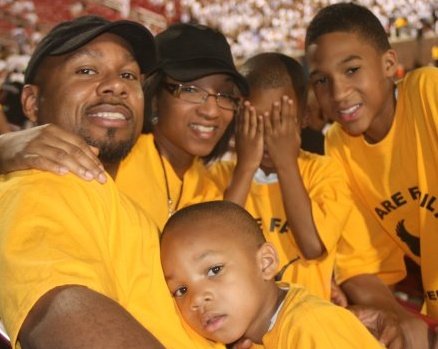
To follow is my interview with Mark Washington.  Mark is my brother, and though he isn’t the first father I knew (our dad is), I thought it’d be fun to have him be my first interviewee on the blog.  He’s a man of few words.  Just like our father.  My sense is that Mark’s interview will be the most succinct.  Mark’s two daugthers, Laila and London, two out of three of my nieces, are pictured to the left.

FF: Describe your family.

MW: My family are comedians, they always keep me laughing.

FF:  How has fatherhood changed you?

MW: Fatherhood has changed me where I’m more giving then I was.  It has also taught me that it’s not all about me anymore.  My children come first before my needs and wants.

FF:  Have you made any mistakes as a dad?  If you’re not a liar, name one and talk about what it meant to you.

MW: One of the biggest mistakes that I have made was to start taking Laila to the beauty shop at the age of four.  Now she expects it every two weeks.  LOL.  No, but really sometimes I don’t choose my words carefully and, sooner or later, I hear them echoed around the house.

FF:  What’s the most helpful advice you heard when you were becoming a father or as you’ve been a father?

MW: The best advice I’ve heard is to enjoy the younger years with them because when they become teenagers, I will start to feel the gap.

FF:  How do you attend to your relationship with your children’s mother?  It’s changed over time.  How so?

MW: Well, we hear each other out, and then we discuss what logic will work.  With any relationship it’s all about communication.

FF:  What surprises are there along the way for parents?  What do you wish you were told to expect?

MW: I can’t really think of one, but my children never cease to amaze me.  I mean just when you thought you heard or seen it all, here’s another surprise.  And part two of that question is, how expensive they can be.  I mean I’ve been told that, but no one ever stressed it!  LOL.

FF:  What is one recent memory you made with your child?

MW: Last night I was playing shouting music off You Tube and the little one (London) came and got Laila and I.  She said “I’m about to shout,” and we all started shouting while holding hands.  It was too funny!

I appreciate Mark for his answers.  Since this is the beginning of a series–we’ll have a couple interviews per month on the blog–I invite you to participate.  If you are a father and would like to be interviewed, or if you know one who would, leave a comment with your email address.

Son, Please Forgive Me For…

  1. Not understanding those things I think only you, your angels, and God can understand
  2. Keeping you strapped into your car seat when all those tears fell, asking to be freed
  3. Making you eat more than sweet potatoes and beans
  4. Being less than patient and for moving too quickly more times than I’ve slowed down
  5. Letting your mother make you wear shoes that were too small
  6. Raising my voice and thinking that it would help you understand an instruction
  7. Not forgiving the way you do, quickly and effortlessly
  8. Leaving you in the room with all those relatives you didn’t know in Alabama that day
  9. All those pictures we took
  10. Having strong opinions…about everything
  11. Not finding more ways to put you into the hands of people who love you well and consistently
  12. The mistakes you’ll notice that I won’t
  13. Being angry with you when you were really really little because you cried more than I knew to expect when we brought you home
  14. The times I said you were a “miracle from the Lord” because it was true but didn’t really treat you that way
  15. Failing to love your mother as much as possible to the best of my ability
  16. My dullness when I was tired and too exhausted to enjoy your excitement about some random thing
  17. Overlooking all those moments when you were trying to get me to see something I was too busy to notice
  18. Not listening
  19. Teaching you things by my example and my words which were wrong
  20. For keeping this list so short.

A Hallmark Definition of Fatherhood

The other morning I was listening to the Santita Jackson show, a radio show that I catch whenever I can.  It was a day or two after Father’s Day.  The topic was fatherhood.

Apparently, Hallmark Mahogany created a line of cards specifically for single black mothers.  This may have been a business decision on the part of the card company.  Many African American families are led by unmarried women.  Those single women work out the juggling act which is working outside of the home and coming home for the second shift that is parenting.  They find childcare.  They schedule doctor’s appointments.  They care.  They love.  They parent.  And these sisters do these things mostly on their own.

About the Hallmark cards, several people have been commenting on whether this move was smart of the company, whether it was racist or tacky.  I didn’t shop for a card this year so I didn’t see the line.  But several listeners called in to the show to express their feelings.  Thoughts went in a few directions, directions I want to mention and then see what you think.

  1. Women need to be acknowledged for their work as parents.  In this case, we’re talking about black women, but the same is true for any mom.  Most mothers work hard to care for and raise children.  They are hardly acknowledged by their children or by their partners or by their ex-partners.  Their families have high or no expectations.  Their love and life as mothers go unsupported by their churches, their friends.
  2. Distinguishing roles is complicated.  It’s tricky saying what a mother’s role is versus a father’s role.  Many callers stated there were differences but didn’t describe them or elaborate.  And it’s not that easy.  Saying what a father does is as unique from week to week as taking a look at my work calendar.  I have more meetings some weeks than others.  I do more of this and less of that.  The same is true about being a father.  And me and my wife work together to accomplish this small project called parenting.  We both take out garbage, change diapers, feed the boy, wash the clothes.  We both are this cute kid’s unpaid staff.
  3. Men are essential too.  Fathers need to be in the lives of their children.  I heard callers expressing their frustration with the notion that many women feel that they a) can raise children by themselves or b) are made to raise children alone.  It pained me to hear.  I knew the reality before the show, and it only reminded me that men, fathers, need to step up and remain standing.  It made me grateful for the examples of men I know who are doing just that, even while they go unnoticed.
  4. Defining what fathers do is a moving target.  I hinted at this above, but let me state clearly that whatever we do as parents, as fathers, we need to be present to do it.  Every father won’t do the things I do with or for my child.  I don’t do some of the things that a few friends do with their children.  And that’s fine.  But we do need to be around.  We need to form our own working definitions of fathers as fathers.  Hallmark doesn’t get to define who I am.  They may get to inspire me to thank the women who go at the task of mothering, but a card won’t motivate me to parent well.  My kid will.

For Fathers & People Who Love Them

Tomorrow I’m launching a second blog.  I will continue to ramble about faith, writing, and relationships on this blog.  But the second blog will be for fathers and the people who love them.  I’ll share stories about parenting and focus on the skills that fathers and parents need, the interior life as a father, and the moments of grace I’m experiencing as a father.  That last part will also still get some coverage on this blog, though the posts for Intersections will be explicitly about my faith and how fatherhood is relating to, renovating, or enriching me spiritually.

Of course, I’m a man of faith whatever blog I’m writing on, so you should expect to see glimpses or full-scale shows of faith and grace on both blogs.  If you’re interested in these father-related topics, or you know someone who is, the address is forfathers.wordpress.com.  I’d love to have you or that person you know visit the blog.

The second thing about tomorrow I’d like to mention is that you should read about modern slavery in America over at the Root.  It summarizes Juneteenth, what it is, and how we should look at and respond to issues of slavery today.

Being Late

The other day I dropped my son off to Maggie’s.  She had consented to watch him for a few hours before one of the Grands picked him up.  When I got to the Swansons’ place, I was rushing.  We were late.  The boy delayed matters that morning.

He wasn’t as interested in eating breakfast as I expected him to be.  His little lips closed when I offered his cereal.  He, of course, didn’t obey when I told him to eat.  At least not right away.  He sat, taking me in, figuring me out.  I saw his little mind working, wondering why I was glancing at the clock, why I was rushing his meal.  I saw his brain turning, thinking how futile my anxiety was.  The boy already knew that we, and I, were late.  And he had no problem with lateness.  He had no place to be except where he was.  It became a little lesson for me.

So, there was me saying “Come here” to him.  “Come put on your coat.”  There was him looking at me, standing still in the doorway.  There was the bottle to grab so he could drink when he arrived at the Swansons.  There was the pacifer to put in the bag.  Did I remember that?  Even though he was officially off the thing, Dawn reintroduced it last week since he was sick.  I disagreed.  He didn’t need the mouth stop in my view, but sometimes I go along with other people’s programs.  There was the coat to put on.  I needed to bring the stroller.  Grannie would walk him home.  I forgot the spare set of keys.

When I got to Maggie’s, it was too early to greet her.  I think I grunted.  A thin layer of sweat always pops across my forehead when I’m late.  I hate being late.  Almost as much as I hate being yelled at.  I have a thing about time.  The boy doesn’t get that.  He was waiting in the strapped seat for me.  I pulled the stuff out of the trunk.  I got him.  Maggie was great, always is.  When I ran through answers to her questions, I sounded quick.  She knew I was late because I told her I was going to be there 2o something minutes before that moment.  Maggie probably laughed inside, amused that I still don’t quite get how being a parent leaves you perpetually unable to schedule yourself well.  It’s a loss.

I turned to leave.  I heard Bryce wailing.  Maggie picked him up.  He’s aware of what it means when he’s at the Swansons’ or at one of the Grands’ homes.  He knew I was leaving.  He yelled.  I turned, hearing and not hearing, thinking about my appointment and how late I was going to be.  When I got to the car, I wondered if it would matter to me later on in his development that he no longer cried when I left.  I wondered if it will bother me as much then as it did that morning because I was late, that I was off schedule, that I had something to be rearranged.  It probably won’t.  I’ll probably cry one day that the boy doesn’t care that I’m here or anywhere, and I’ll probably miss those tears I tasted when I kissed him goodbye in Maggie’s arms.

Grace and Parenting Mistakes

One of the things we did to celebrate my son’s birthday was visit my father in Little Rock.  On the way back, I was tired.  I hadn’t eaten.  I had gotten up early, at the time I designated, so we could get on the road and return home in enough time to keep the bedtime ritual solid.  It’s funny how much happens around a baby’s bedtime routine. 

We got up early.  I slept enough hours to feel like I could actually drive while awake.  But I hadn’t gotten that much sleep, certainly not enough to deal with people, including a small one, expecting me to be social.  My wife understood this about me at the time.  She’s had enough experiences with me to know that I’m half sane before morning.  She knows that morning to me is post 10a.m., and that any time before morning is still night.  My son, well, he’s still learning about these things.

Somewhere, long after my real morning, and probably closer to the afternoon, I had been driving long enough to wish the trip was over.  The boy had his naps.   We stopped for lunch.  Things were fine.  But the kid started making noise.  My eyes had started doing the things they do when I’m tired.  I don’t exactly not see things in those moments, but I can tell that it takes more concentration and energy to focus.  I get quieter.  I pay more attention to how I’m holding the wheel. 

Bryce whined and cried.  I told him to stop.  Of course, he didn’t listen.  Well, he didn’t obey.  I told him that I was not in the mood to hear his noise.  He kept up the noise-making anyway.  I raised my voice to match him.  I turned up the music to drown him out.  When he was smaller, music would settle him.  He’d stop or moan or even bounce at the head.  Coming back from Little Rock he just screamed.  At some point he stopped fussing.  But it was after I’d gotten short with him.  It was after I made the mistake of losing patience, the thing I seem to lose so easily.  He stopped after I marked my little parenting path with another small failure. 

I thought about it that night.  I wondered if he were piling up my mistakes and my wrongs in his little head. the way I had been  I wondered, worse, if he wasn’t.  I wondered how it was that he could so quickly forget my shortcomings and run to me with stretched up arms after his bath or his meal, asking me to hold him.  I wondered if Bryce was secretly plotting in his crib to get even when he’s the one changing my diapers. 

It would probably make me feel better if the boy was able to keep count of my errors and wrongs.  It’d make me feel accomplished if I knew there was a correlation between good parenting moments and a good outcome with my son or bad moments and bad outcomes.  It would leave me with something to count and organize and expect.  From what I’m told by seasoned parents, though, that’s not the way it is. 

God, having something to do with children-making and parent-developing, probably smiles at little thoughts like mine.  Thoughts which hope that we could do the right things and get the right results.  If I am patient enough, then I’ll be a better parent.  If I am good enough at this parenting job, then the kid’ll come up bright and confident and handsome.  That’s the essential parenting mistake in my increasingly muddy and yet clear view.  It pushes grace out when we need it most.  That car ride was just another current example of how I’m in need of a grace-giver, and not just the boy.  This short spark of a fuse in my heart is an abiding reminder that the more my boy grows up, the more help I’ll need to raise him.  I couldn’t get through that ride, yes, without the forebearance of my wife and a little help from some random country song by Rascal Flatts that mysteriously came on three separate stations in Missouri.  But I couldn’t make it without God either.

Boys, Men, or Something In Between

My son’s birthday is approaching, and one of my gifts will be to continually evaluate what kind of man I’m presenting to him.  I fear being a poor example because I want him to grow up loving people, honoring his mother, respecting his elders and everyone after that.  I want him to be a bold man, to be what he is.  I want him to have a bright boyhood full of fun and laughter, a phase that leads to a young adulthood that exposes him to greatness, that calls him to greatness.  I want him to be so much better than I am, than my mentors have been, than the exemplars before him–even though we’re aren’t “all that bad.”

I don’t think being a man is easy and I’m already finding that bringing one up has its challenges.  Telling him how to respond when people speak to him.  Walking with him by the hand so we can see new things approaching really slowly since once of us moves slower than the other.  Encouraging him to explore but not so much that he jumps off a balcony.  Watching him pull the oven door down upon his head.  And then watching him go toward it again later, just brushing against it that second time as he remembers the knot on his head from just a few weeks ago.  Yeah, I did it.  It’s called Michael’s method of child-proofing. 

I cannot imagine parenting without all my smart and generous family and friends around me and Dawn.  I cannot imagine.  With that said, I read something that has me turning over my role as a father and my role as a guy, as a man.  The question, “What makes a man?” stands out from a piece I read over at the WSJ.

The article talks about pre-adulthood, that phase that’s certainly post-high school and often post-college when young adults are earning and spending money and making their own decisions.  They are deciding what they want to do and what they don’t, including whether or not to clean the kitchen or take out the garbage.  Young adults, males and females, are deciding how to pay bills, how to develop themselves, how to become.  And, though the article is about men, women go through this as well.  I have a niece who’s growing up, and at times it is painful to watch.  But this post is about boys and men and something in between.

I’m wondering how you view manhood and what it takes to become a man.  I’m wondering if you have a real clear approach to raising the boys in your life so that they become good men.  I’m wondering why some guys are less motivated to get up and do things like take care of the people they love. 

I grew up with good models, including my father who didn’t live with us.  He taught me.  My mother taught me.  Other “fathers” taught me.  It’s foreign to me not to wash and cook and take care of myself, almost to the point where I find myself saying “I don’t need you” because I’m so good at that self-care thing, if that makes sense.  I’m not the guy who would just watch a woman do things for me.  I never have been.  My mother taught me to iron my shirts and she stopped because I started.  I have other issues, ones we don’t need to discuss in this post.  But this article reminds me that I can’t take for granted what becoming a man is and that’s done these days.  Seeing my boy grow up tells me the same. 

Questions for you: How do you think we can continue to encourage boys to become men?  And let’s not get nasty.  Let’s be constructive.  Any thoughts?  Is the project of bringing up a boy different from the one years ago?

An Indispensable Checklist, 2 of 2

The last post started my small list of things to do when you’re readying yourself for a new kid.  Or a new all-encompassing something.  Here’s the balance of my suggestions for the checklist:

  1. Create a plan for how you’ll take care of yourself.  If you got a person in your life or even if you went to a new job, you’d benefit from having in place the way you plan to live and stay alive during those first critical months.  I told my wife that it would’ve helped greatly if I could’ve come around month 4.  She hardly laughed.  I thought it was funny.  Those first months were brutal.  I still find myself telling people that I would have had an easier time emotionally if I could have surfaced a few months in, mostly because self-care was less possible.  I couldn’t sleep.  I walked too much.  I jumped up from quasi sleep when the boy moved, when the wife sneezed.  I learned how to care for the boy but not for me.
  2. Implement above-mentioned plan as soon as possible but before your kid arrives.  Not much to say here.  You need to practice the pattern of your life early on.  The kid will so disrupt that pattern that if it’s not grained in, if it’s not second-nature, the plan will disintegrate.  Even then the plan was fall and crash and shatter.  The other day I went to exercise and I saw a friend, a personal trainer.  I waved and talked for a minute to Mimi, interfering with her client’s workout.  I knew her client didn’t care.  Personal training is torture so the pause was probably desired.  I told Mimi that I could count the times I had worked my fitness routine in the last year on one hand.  I didn’t have a way to “keep pushing play,” to continue exercising during those last eleven months. 
  3. Decide what your measures of growth will be.  When I first started leading the staff at Sweet Holy Spirit years ago, before I knew about NC3 and what I’d be doing here, one of my coworkers challenged me on a particular decision.  I remember telling myself that that was the person, the relationship I wanted to renovate and change so that when I left, she’d be one of my best supporters.  It happened.  And that change was a marker for me.  It gave me a picture of growth.  When you start a new job, how will you know when you’re effective, when you’re wrong, when you’re at your best or at your worst?  What about the relationship you’re nurturing?  How will you know these things with a kid if you’re a new parent?  Decide what your pencil marks on the wall will be.
  4. Tell your mother to help.  She will.  She’ll help you more than you want.  She’ll feed your kid black eye peas when he’s four months old and tell you she didn’t.  She’ll let the boy stay up later than he’s supposed to and she’ll devise a plan that’s different from the one you made.  Uh, for the record, my mama didn’t do this.  Not exactly.  My point is that mothers and family and loved ones are the best helpers when we’re faced with something new.  I am fond of repeating something a professor once said.  It takes the brain up to three years to adjust to a new role, to a major transition.  Let other people help you and give yourself time and grace to catch up to the role, to the relationship, and to its demands.

Would you add anything?

An Indispensible Checklist, 1 of 2

I remember people telling me when I was engaged to get married that you were never “ready” to get married.  They said the same thing about parenthood.  They, whoever they are, are probably right.  You may not ever be ready, but you can be prepared.  A year ago me and Dawn were in the slow process of readying ourselves for the baby who is Bryce. 

So, reflecting on some of the grand experiences of having a newly born boy in my house, I offer the following checklist for you who are preparing for something or someone that promises to change your life.  Maybe not a baby.  Myabe a new job or life after a breakup.  I’m writing, thinking about prepping for a baby but I suppose you can read this a view toward preparing for anything:

1) Consider why you want one of these people in your home.  Really.  Why do you want that job?  Or that baby?  Of course, some people wouldn’t necessarily say they want a baby.  They may just get one.  It’s helpful to know your reasons, whatever they are.  Sometimes the reasons sustain you at two in the morning when you haven’t slept because of you-know-who or you know what in the case of a new job or a new life as a student.  Or when you’ve changed seven diapers with increasing amounts of baby waste, all in varying shades of green, brown, purple, and gray.

2) Start a list of reminders of life before the baby.  I believe that life should be lived in the moment.  Life is now.  But life now is informed and shaped by what we’ve done and what we’re looking to do.  New parents need to remember what life was so that we are able to do what the wise mentor of mine, Johnathan Alvarado, says, integrate a child into the life you have and not build your life around a child.

3) Develop ideas on what you’d do if a sitter magically appeared.  One way of thinking about this is to consider how you’d take a break, how you’d relax.  Friends might call.  Relatives may become spontaneously generous.  Of course, you won’t leave your kid with everybody.  You won’t even leave the child with every relative.  But if those people on the parentally approved Post-It came along, what would you do if you had an hour or three?  Know this because God might send someone or someones to provide you respite.  I have my list.  It’s developing into a seasonally adaptive list, too.  So, if you’re on my Post-It (and you know who you are), I’m ready already for your call!

4) Make a list of all your friends.  Then, send them an email, or better, call them.  Have a nice conversation for as long as you can.  And end the conversation with something along the language of, “I enjoyed this, loved this.  If we don’t do it again in a few years, don’t take it personally.”  The truth is you will have to make an effort to keep those special people around.  You won’t have the energy to be friends.  You’ll hardly have energy to go to work.  Or to brush your teeth.  You’ll give yourself over to that child.  I imagine starting a job is like this.  You give all you are to it.