NaNoWriMo and “…in the middle…”

This passage comes from Margaret Atwood’s novel, Alias Grace (pg. 298).  I read it a couple years ago.  It’s the story of a woman from the nineteenth century who’s been convicted for her involvement in the murder of her employer and his mistress.  While this passage isn’t exactly reflective of the novel, I wrote it in my journal back then and think it fits with my postings to encourage us writers.

It is morning, and time to get up; and today I must go on with the story.  Or the story must go on with me, carrying me inside it, along the track I must travel, straight to the end, weeping like a train and deaf and single-eyed and locked tight shut; although I hurl myself against the walls of it and scream and cry and beg to God himself let me out.

When you are in the middle of a story it isn’t a story at all, but only a confusion; a dark roaring, a blindness, a wreckage of shattered glass and splintered wood; like a house in a whirlwind, or else a boat crushed by the icebergs or swept over the rapids, and all aboard powerless to stop it.  It’s only afterwards that it becomes anything like a story at all.  When you are telling it to yourself or to someone else.

NaNoWriMo and “…gentle concentration.”

This is passage is from Anne Lamott’s Bird By Bird (pgs. 112-113).  It’s a book about the writing life, and it’s a wonderful read, along with anything else by Anne Lamott.

You get your confidence and intuition back by trusting yourself, by being militantly on your own side.  You need to trust yourself, especially on the first draft, where amid the anxiety and self-doubt, there should be a real sense of your imagination and your memories walking and woolgathering, tramping the hills, romping all over the place.  Trust them.  Don’t look at your feet to see if you are doing it right.  Just dance.

You get your intuition back when you make space for it, when you stop the chattering of the rational mind.  The rational mind doesn’t nourish you.  You assume that it gives you the truth, because the rational mind is the golden calf that this culture worships, but this is not true.  Rationality squeezes out much that is rich and juicy and fascinating.

Sometimes intuition needs coaxing, because intuition is a little shy.  But if you try not to crowd it, intuition often wafts up from the soul or subconscious, and then becomes a tiny fitful little flame.  It will be blown out by too much compulsion and manic attention, but will burn quietly when watched with gentle concentration.

So try to calm down, get quiet, breathe, and listen.  Squint at the screen in your head, and if you look, you will see what you are searching for, the details of the story, its direction–maybe not right this minute, but eventually.  If you stop trying to control your mind so much, you’ll have intuitive hunches about what this or that character is all about.  It is hard to stop controlling, but you can do it.

NaNoWriMo and “…the merging of two extremes…”

Today starts a month of writing for fiction writers across the world.  So, it’s for us who aspire to write but don’t get around to it.  It’s for us who have dreamed about writing fiction but who have allowed everything else to come first.  Or second or third.  The list that keeps us from writing is long.  Indeed, for some, it’s unending.

I have no idea how this movement to write, to encourage writing, to congregate around the written word for a solid month, started.  If you know, tell me.  But if you are a writer, if you know a writer, get involved this month.  Start writing, either along with the structured approach at NaNo or on your own.  For the supporters among us, love the writers in your life and do everything you can to help them write.  That may mean buying them tea.  Or sending them writing prompts.  It may mean waiting longer for a reply to your email.  It may mean leaving them alone.

So I’m going to include a few inspiring words about writing from some of my favorite places over the course of the month.  I’ll resist the urge to repeat some of the authors who I’ve interviewed on the blog.  But look there too, if you require great nudges.  I’m especially thankful this year for Marisel Vera who met with me a few weeks ago.  After our chat, I started writing fiction again regularly, after a very long pause.

Today’s quote comes from Richard Wright in the Author’s Note and in the text of Native Son:

In a fundamental sense, an imaginative novel represents the merging of two extremes; it is an intensely intimate expression of the part of a consciousness couched in terms of the most objective and commonly known events.  It is at one something private and public by its very nature and texture.  Confounding the author who is trying to lay his cards on the table is the dogging knowledge that his imagination is a kind of community medium of exchange: what he has read, felt, thought, seen, and remembered is translated into extensions as impersonal as a worn dollar bill.

We must deal here with the raw stuff of life, emotions and impulses and attitudes as yet unconditioned by the strivings of science and civilization.  We must deal here with a first wrong which, when committed by us, was understandable and inevitable; and then we must deal with the long trailing black sense of guilt stemming from that wrong, a sense of guilt which self-interest and fear would not let us atone.  And we must deal here with the hot blasts of hate engendered in others by that first wrong, and then the monstrous and horrible crimes flowing from that hate, a hate which has seeped down into the hearts and molded the deepest and most delicate sensibilities of multitudes.

For more information or if you aren’t familiar with National Novel Writing Month, click here.  Then, go and write.

Interview with Rabbi Zoe Klein & Book Giveaway

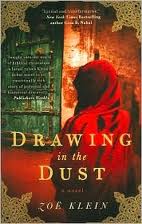
I am happy to bring you the next author interview with Rabbi Zoe Klein.  Rabbi Klein’s novel, Drawing in the Dust, tells the story of an archaeologist who risks her reputation to excavate beneath the home of an Arab couple to make a miraculous discovery.  I’d like to give away a copy of the novel, so look into that at the bottom of the interview.  Rabbi Klein inspires me.  As a spiritual leader and writer, she gives powerful answers to how she thinks about what she does, how she wobbles all her plates.  Enjoy…

MW: When did you first know you would be both a writer and a rabbi?

RZK: Hi Michael! Thank you for bringing these questions to me, it is an honor to participate in this interview! Long before I ever could imagine that a little girl like myself could grow up and become a Rabbi, I knew I loved to write. I wrote stories all the time. I remember writing stories on those beige thin sheets of paper on which the lines were two inches apart, filling in scenes with chubby crayoned letters. I even remember one of my first stories, about a magical species called the Giringos, half giraffe and half flamingo.

I remember a powerful moment, the first time I told my father I wanted to be a writer when I grew up. He is an artist and I remember standing beside his dawing board while he worked and saying I wanted to be a writer. He said, “That’s great. But you cannot call yourself a writer until you finish a book. Even if it is never published, even if no one reads it, once you finish a book you will be a writer, but until then you are not.” It sounds like a strong thing to say, but it was a valuable lesson. For my father, it was very important that I learn the value of taking a creative idea to its completion. Lots of people have wonderful novels in their souls, but very few put in the tedious effort to realize it. When I finished my first novel in college, an as-yet unpublished story called “The Goat Keeper”, it was such a proud moment to hand it to him and to become a writer!

It wasn’t until I was in my Junior year in college that I truly understood that the path to the rabbinate was even a possibility for me. I had always thought that it was something only men could do. Even though there were female rabbis around, I hadn’t met any. However, I always loved religion, studying faiths and myths and cultures. The kinds of conversations and debates I had with people with strong faith identities in many ways mirrored the conversations I’d hear between my parents and their artist friends. The artists would always talk about such things as mortality, man’s fragility, the futility of monument, shattering dogmas, the supremacy of blank space…it was art they were discussing, but it filtered into my mind as theology, and I loved it.

In many ways I think of myself as a rabbi with the heart of a novelist, rather than the other way around. I started as a writer and then expanded my material from the confines of pen and ink to people and community. As a congregational rabbi, I have the opportunity to help craft the story of a community of families, engage in their sacred and profound moments, adding our chapters to an ever-unfolding scripture of a people.

MW: I realize both roles relate to one another, if I’m reading your interview in Drawing in the Dust correctly.  But does writing serve your role as a spiritual leader? If so, how?

RZK: Sometimes I think my rabbinate is almost like fieldwork for writing, and my writing is soulwork for the rabbinate. Writing is interesting in that it is done in physical solitude, and yet it is never lonely for me. I am full up with characters, with vivid dreams and scenes, demons to wrestle, I’m haunted and vexed and also ecstatic and weeping. In contradiction to that, in the rabbinate there is no solitude, you are continually working with people. It is a very social position, and yet for me there is loneliness there. There is a lot of what the mystics call “tzim-tzum,” a kind of spiritual contraction one does to make room for others. You retract yourself enough to allow space for other’s voices. You become an expert active listener. When I write though, that part of me that contracts in order to give center stage to others’ stories and needs, suddenly unfurls its great wings and jets about wildly.

The short answer to your question is that I think my writing allows me to be a whole person as a spiritual leader. Without it, I think I’d be fragments of a mosaic, chipped with no clear design. I think when you take the time regularly, whether through writing or meditation or running or whatever, to reflect on your decisions and desires, face your darkness, and emerge with a burning but joyful heart, you can better take others by the hand and lead them through a courageous process of reflection and growth.

MW: Talk about your experience as a person of faith—indeed a leader—writing biblical fiction for a broad audience.  Were you concerned that you wouldn’t be received well, that you might misrepresent yourself, or that your story might be misperceived?

RZK: While I was perhaps concerned about the story being misperceived or not received well, it was not a deterrent for me. I was encouraged by a great editor Al Silverman to forget while I wrote that I was a rabbi, a mother, a wife, and just write from a place of uniqueness, without titles, and I’ve always tried to do that. I am a person of faith. I believe that stories which are filled with metaphor and myth are a form of prayer. I never feel far from God when I write, in fact I feel close, even if I’m writing a scene that is sexual or violent or both. It is a process of exploration into human nature, into fantasy, into longing and fear, and it is not too different than the best kind of worship experience, where you are completely honest and raw, repentant, mournful, terrified, awe-filled, trembling with humility, romanced and swept up in all your smallness into the impossible arms of the infinite. There is no doubt that it is scary to write for a broad audience, and that no matter how much you try to hide your truths under layers and layers of plot and characterization you always end up realizing that despite your efforts you ended up publishing your very private diary, but it is also freeing to realize that the things that you say are the honest voicing of your humanness, what a relief to not be a spiritual leader hiding behind a façade, with word locked into routine platitudes! How refreshing to be real, to have a faith that wrestles, breathes, challenges and confounds!

MW: How has your congregation responded to your writing life?

RZK: My congregation has been celebratory and wonderful. I am fortunate to share this journey with them! We have many writers, thinkers, professors and experts-in-their-field in our community, people who love and appreciate art and don’t shy away from its darker sides…

MW: When I connected with you about this interview, I mentioned my gratitude for the seen and unseen work behind this novel.  I’m glad you’ve labored in all the ways you have to give us this work.  What don’t people know about what it takes to write a good story for publication?  Will you give us a sense of some of what it took for you?

RZK: Ah, that’s a good question. I don’t think people understand the sheer mass of hours that it takes. People don’t realize that once the book is finished and you feel completely beaten and your hair is grayer and thinner because of the process, and your eyes are dim from staring into the computer, and every time you blink you see bright blue squares, and your wrecked with fatigue after months of not sleeping, once you’ve gotten that far, you have to STILL muster the strength to face rejection after rejection after rejection…years of rejection and pitching your story, and trying even after years have gone by and you’ve already become passionate about a NEW idea retaining the freshness about the book that no one seems to want…and then after you finally find an agent and an editor, realizing that there are two of three or four more Everests to climb with revisions, revisions that keep tearing out your heart and then sewing it back in. Every time I’d get to a new mountain where it would be so easy to just drop the whole thing, I would think to myself, “This is a filter, and only the most determined get through.” And I was determined to be determined enough! I think people understand how steep the climb is from conception to publication, but I don’t think people know how long it is, how much stamina is involved.
I also tend to like to write stories that have a lot of different characters and layers of interpretation, and it is hard to keep track of all of those little pieces over the course of 600 hundred pages, which was how long DRAWING IN THE DUST originally was. When I was editting it at one point I realized that if one added up the years and scenes carefully for one of the very peripheral characters and tried to figure out her age, she would have to be something like 130 years old. Keeping track of all these strands of lives is hard!

MW: I’m pretty sure you have many things to do.  I could be wrong.  I’m probably not.  How do you serve both these areas in your life well?  And how do you do anything else?!

RZK: Sometimes I feel like one of those cirque-d’soleil contortionists with the spinning plates on top of sticks, except that while they make it look so graceful and beautiful, all the plates spinning perfectly, my plates are often pretty wobbly! And some of them crash. If I were to label my plates, there would be the Writing Plate, the Rabbi Plate, the Children Plate, the Husband Plate, Friend Plate, and of course lots more. I think while I’ve made time to keep the Writing Plate spinning by devoting Mondays, my one day off, to writing, and the Rabbi plate I devote much time to, and the Children Plate keeps spinning even though it’s hectic, I admit the Husband Plate often wobbles and falls (luckily it’s a sturdy, rebounding plate!), and I haven’t been able to devote much time to the Friends Plate (I have friends, we just don’t see each other at all, I haven’t been able to nourish that part of my life)…there are a lot of sacrifices! As I’ve gotten older, I am trying to redistribute my energy, focusing more on my family and building relationships, and trying to approach work with less frenetic energy and more joy and appreciation. Everything is not always in balance as people like to believe! But up until now I think I’ve lived my life is a giant rush, and I really want to learn to slow down and appreciate BEING instead of eating up every hour with DOING.

MW: I read Eugene Peterson who is a pastor and writer, and he encourages clergy to read fiction.  He says that artists have become his allies and have taken a place next to theologians and scholars in his formation as a pastor and as an artist.  You talk about the power of fiction in your provided interview.  How does fiction nurture a person in general and a religious leader in particular?

RZK: That is beautiful. I think that fiction unlocks people’s hearts in a particular way that nothing else can. You take fiction under the covers with you, give it the heat of your breath, and like the genie in the lamp it has an enchantment. Somehow entering the world of fiction, our vault of tears is more easily unlocked, particular drama reflects universal understanding. There is an intimacy in fiction, partly because of the intimacy it took to create it. In terms of a religious person, I think that today we tend to sterilize the idea of a person of faith, turn that person into a kind of sexless judge. Piety is purity. But dancing with God is an intimacy, it’s a cosmic affair, filled with subordination and abuses, mastery and humility, and of course love. I once wrote a new definition for love — Reverence for Mystery. I think fiction nurtures a person in general and a religious person in particular because there are very high truths that can only be expressed in metaphor. God, for example, can only be expressed in metaphor, as shepherd or teacher or lover or parent or guide.  I believe Fiction, ironically, is Ultimate Truth’s master key.

MW: What are you reading these days, by the way?

RZK: To be honest, I’m reading a lot of Science Fiction! I just printed out the top 100 Science Fiction books, and right now I’m reading Ender’s Game. It’s just a field I had never read before, and I am surprised at how much I’m loving it! Before this new kick though, I read Cynthia Ozick’s novels, The Shawl, The Putterman Papers and Heir to The Glimmering World, and my goodness, her language was like cashmere, so rich and sumptous.

MW: You’ve talked about God as the Reader of All Life—language that I love.  What are you working on, preparing, and “offering skyward”?

RZK: I just finished a novel called Origin of Color which will be released in summer of 2012; it is going through its editing process now. I went to Swaziland and Tanzania to research for it when I was on sabbatical this past December. The book is about an American couple that accidently falls into the middle of a crime ring of witchdoctors and politicians in East Africa who sell albino body parts to be made into potions. I met with East Africans with alibinism and families whose children with albinism had been butchered. I wove these experiences into this novel. It was an emotional novel to write, it is a thriller, and it even scared me as I was creating it. I’d be writing in the middle of the night and leaping up to make sure the doors were locked…jumping if I thought the curtain moved! The “offering skyward” part of it is that it is also a contemplation about perception. I am very excited about it.

I am also leaving in two weeks to go back to Africa, to Ghana, with the American Jewish World Service. I will be in Winneba, Ghana with American Jewish World Service’s Young Rabbis’ Delegation. The Young Rabbis’ Delegation brings together a group of rabbis from all over the country to experience first-hand the power of grassroots development and explore issues of social justice and global responsibility from the perspective of Jewish texts and tradition.  The group is working at Challenging Heights, an AJWS-supported NGO devoted to providing education to former child slaves and resources to families whose children are at risk for slavery and human trafficking.

MW: How can readers stay in touch with you and support your work?

RZK: On my website www.zoeklein.com, or by emailing me at zoe@zoeklein.com. Thank you so much for inviting me to participate on your website. Abundant blessings to you and to all of your readers!

As for the book giveaway, if you know of a clergy person who would benefit from reading this novel, post a comment, a sentence or two, about why they would.  Do so by Friday, midnight, CST.  I’ll choose a winner randomly and you can give a copy to your clergy person.
Morrison on Writing & The Interior Life

To follow is a passage from Toni Morrison’s “The Site of Memory” in her book of selected nonfiction, What Moves At The Margin.

If writing is thinking and discovery and selection and order and meaning, it is also awe and reverence and mystery and magic.  I suppose I could dispense with the last four if I were not so deadly serious about fidelity to the milieu out of which I write and in which my ancestors actually lived.  Infidelity to that milieu–the absence of the interior life, the deliberate excising of it from the records that the slaves themselves told–is precisely the problem in the discourse that proceeded without us.  How I gain access to that interior life is what drives me and is the part of this talk which both distinguishes my fiction from autobiographical strategies and which also embraces certain autobiographical strategies.  It’s a kind of literary archaeology: on the basis of some information and a little bit of guesswork you journey to a site to see what remains were left behind and to reconstruct the world that these remains imply.  What makes it fiction is the nature of the imaginative act: my reliance on the image–on the remains–in addition to recollection, to yield up a kind of a truth.  By “image,” of course, I don’t mean “symbol”; I simply mean “picture” and the feelings that accompany the picture.

A Rabbi or A Novelist

I just finished Drawing in the Dust, the debut novel by Zoe Klein from 2009.  It’s a rich and detailed story about an archaeologist who has spent years working around Israel.  The main character, Page, spends her days unearthing artifacts from centuries prior, while the story takes readers through Page’s on personal and interior excavations.  She’s searching for answers, for connections, for her own heaven meets earth.  The story captures the sights, smells, and textures of places from biblical Israel to New York to a tiny cottage in Massachusetts and back to Israel.

In addition to the novel, the copy I have includes a Q & A with Zoe Klein who is the senior rabbi of Temple Isaiah, a large congregation in Los Angeles.  I wanted to post one question and Rabbi Klein’s answer.  She’s done a fascinating thing in writing this novel.  If you’re adding to your summer reading list or looking for something you can delve into, get Drawing in the Dust.

Though the two are not mutually exclusive, what do you consider yourself most to be?  A religious figure–a rabbi–who has written a novel, or a novelist who is also a rabbi?  While the answer to this question is clear in my heart, it is hard to answer it in words, but I will try.  I consider myself a novelist first, but this takes a bit of explaining.  While God is often referred to as the Author of All Life, I like to relate to God as the Reader of All Life as well.  Life is a love letter, written in logos deeper than language.  I am a novelist first, but I don’t always compose with pen and ink, or keyboard and monitor.  Rather, as a rabbi I help people compose with heartbeats and breath, identifying the myths and truths in their lives.  A community is a library of timeless tales and adventures, of grief that poeticizes, often darkly, and of redemption that fill the air with song.  When I officiate the life cycle ceremonies, I always feel as if I am trying to weave in something strong out of delicate fibers.  At weddings, I try to help build a solid foundation out of very feathery dreams.  At births, I try to infuse joy and light into an entirely mysterious future.  At death, I take the tiny strands of an infinitely complex life and try to thread them into something sacred.  Writing and serving as a rabbi are not too different to me.  In the end, it is about crafting stories, and helping people discover their grand themes and subtler metaphors.  It is about offering these stories skyward to the Reader of All Life.

Would You Suit If I Wrote A Book About You?

One of last year’s bookish blockbusters is subject to a suit.  I haven’t read The Help by Kathyrn Stockett.  I know folks who have.  I’m waiting to get and read it for reasons I’ll bring up after I read it. 

But I read this article from a NYT blog.  An inviting quote into the piece’s scope is:

There are few topics in the South more complicated and fraught than the one between white families and black women who raise their children and keep their houses clean. The South, and high society in particular, is governed in large part by what is left unsaid, and this is particularly true on the topics of race and family.

This article has me thinking about the dangerous relationship between a writer’s resources for writing, on the one hand, and the responses of the people and situations which are those resources on the other.  I suppose I’m also spinning the words of this NYT post with Tuesday’s episode of The Good Wife (my current favorite show), along with having recently been forced by my wife to watch The Social Network.

That preface offered, fiction is fiction.  Made up.  Created.  From the imagination.  Or from some combination of the imagined and the real.  But it’s fiction, and that means that the literary display between the covers is accountable first to the author’s imagination.  The inimitable Richard Wright said that the writer should only bow to the monitor of his own imagination.  It’s difficult enough for a writer to be responsive to that vision.  When that vision–the result of sustained imagining–is tutored and decorated by real people and events, it’s get trickier.

Fiction is not only accountable to an author’s imagination.  It’s accountable, in ways that I suppose an audience has to detail, to the reader, to the people mentioned, even when those people are consumed inside the residence of a “work of fiction.”  Novels like The Help portray real people and real events, and writers are responsible to those folks and happenings.  In some way. 

Writers should take care in handling people, particularly writers of historical fiction.  And care is best evaluated by the people whose voices we use to tell our stories.  It’s evaluated by the people who are the subjects of our stories because those same folks are often subject to them.

So, my question, Would you suit if someone wrote a book about you, a novel about you?  If the writing wasn’t true or if the artistic expression crowded the way you perceived yourself before having paged through the published copy.  If the language was offensive or if the implicit ideas driving the story were disagreeable to some part of you.  What would you do?  How would you think?  Just a question.

Interview with Donna Freitas & Book Giveaway

Several months ago I read This Gorgeous Game and I contacted Donna Freitas to see if she would conduct a blog interview.  She graciously accepted.  As I told her, this novel was a treat to read.  It was an engaging, well-written story that covers a challenging topic.  It’s accessible for young readers, meaning youth and young adult readers, but the issues inside the covers are ones that anyone can relate to.  Here’s the cover flap copy:

Seventeen-year-old Olivia Peters has long dreamed of becoming a writer.  So she’s absolutely over the moon when her literary idol, the celebrated novelist and much-adored local priest Mark D. Brendan, selects her from hundreds of other applicants as the winner of the Emerging Writers High School Fiction Prize.  Now she gets to spend her summer evenings in a college fiction seminar at the nearby university, where dreamy college boys abound and Father Mark acts as her personal mentor.

But when Father Mark’s enthusiasm for Olivia’s writing develops into something more, Olivia quickly finds her emotions shifting from wonder to confusion and despair.  And as her wide-eyed innocence deteriorates, Olivia can’t help but ask–exactly what game is Father Mark placing, and how on earth can she get out of it?

This remarkable second novel by the author of The Possibilities of Sainthood, about overcoming the isolation that stems from victimization, is powerful, luminous, and impossible to put down.

If you’re interested in learning more about Ms. Freitas or her work, visit her website.  Here’s my interview with Professor Freitas.

You say in your acknowledgments that writing this story was a long, tedious journey.  What can you share about that journey?  Well, this was a dark story, its subject matter tough, and there are many friends and loved ones along the way who have been there for me and supported me with respect to my own experiences related to where the story came from. But, perhaps somewhat ironically, writing This Gorgeous Game was such a liberating experience. To tell Olivia’s story, and to bring her through this darkness to the other side, knowing that she would be okay and that there were so many people in her life that would be there before, during, and afterward, was pretty amazing in and of itself. My editor, Frances Foster, and everyone at FSG and Macmillan that supported This Gorgeous Game from start to finish and still now were pretty amazing, too. It’s funny (and wonderful, too) how something so dark can end up directing you toward joy eventually.

Olivia’s voice is clear and the story captures her experiences, her hopes, and some of her frustrations.  Can you talk about what helped you hear her voice and see her experience?  One of the most important aspects of This Gorgeous Game for me is Olivia’s voice. It came to me clear as a bell one day on my way home and I decided it was my job to follow it until she had nothing left to say. I think her voice is that of a girl who is stressed and scared and insecure about what she is experiencing and I hope readers can truly be in her head while they read. I suppose that is a terrible thing to wish on readers in some respects, but I want Olivia to come to life for people through her voice!

Among Olivia’s early lines is a passage about gratitude.  She wills herself gratitude and the story centers–maybe not quite centers–on her tension between thankfulness and fear, gratitude and confusion.  How did you walk that line and strengthen those tensions throughout the work?  Well, thank you for the compliment about the tension. I’m not sure I consciously tried to walk any lines, to be honest. My biggest job was to stay true to Olivia’s voice. The main thing I was aware of, though, was the fact that the reader was going to know that something was wrong and what was wrong, too, far before Olivia would ever do or say anything about what was happening to her. That meant that my job was to show the confusion that made Olivia stay silent for so long, even as she begins to fear what is really happening to her. I needed to convey the enormity of what it meant to accuse a priest of abuse, especially when he never did anything “technically” wrong—he just showed her an enormous amount of attention. This was a complicated thing to convey.

I read somewhere that you were interested or concerned about readers’ reception of your use of Thomas Merton.  What led you to use his writings and what would you like readers to know about him?  I am actually not a Merton fan, but I knew that he fell in love with a much, much younger woman shortly before he died and that they had an affair. In my mind, Father Mark (the priest in This Gorgeous Game), fancies himself as a Merton type—he is a famous writer, a priest, and in many other ways is a very private person—and he begins to see Olivia as his “M.”. I actually didn’t add the Merton parallel until after I’d finished the first draft, though.

Power is abused.  People are mistreated by individuals and by systems made up of people.  This story illuminates how that happens in one person’s life.  How do you see Olivia now that her story is written, being read, and being discussed?  How would you describe her?  Power certainly is abused all the time, and it is particularly awful (in my opinion) when someone abuses the power they have in relation to a person or a community’s faith in general, and faith in them particularly. I would describe Olivia as a totally innocent victim, a teen girl who was deeply involved in her family’s Church and faith tradition, as well as a gifted young person with lots of hopes and dreams. Father Mark preys on both these aspects of Olivia’s character, and when we are kids, we are so vulnerable in these areas of our life. I hope that people will talk about the events of the story as they happen; why it takes so long for Olivia to tell on Father Mark; what they wish would happen to Father Mark after the story is over; and also, how we can educate teens to not only be aware of sexual abuse, but the kind of abuse that is rather more elusive, that comes from the kind of manipulative, relentless attention Father Mark shows Olivia.

How do you balance your work as a teacher and your work writing?  Related to that, what kinds of connections do you see in the roles of writer and teacher?  Does one role equip you for the other?  I am not great at balancing! I wish I was better, but don’t we all need to be better? I would say that my nonfiction work (most recently, Sex and the Soul from Oxford University Press) is more directly in line with my teaching and concerns in the classroom. Almost all of my nonfiction research and writing comes from conversations I’ve had with my students or topics they seem interested in or wish they had more discussions about. My fiction in general is more personal, I think, even though I think (hope!) that it is useful in the classroom, too.

Has This Gorgeous Game come up in your classes or conversations with students?  If so, what has that meant to you?  Not yet—this is my first semester since the book came out, though. I don’t think my students even know I write novels to be honest!

I don’t know you well.  In fact, I’m only a new fan because of This Gorgeous Game.  But I’ll make an assumption to ask you this last question.  My assumption is that everyone has faith in something(s), even if faith is understood differently by different people.  Can you talk about what this story did for your faith?  You handled a bold story in a skillful way that makes me want to know how this good work worked on you if that makes sense.  Thanks for this question. Writing This Gorgeous Game was the closest I’ve ever come to an experience of grace, I think. I’ve never felt more empowered before, than when I was working on this book. Through this novel, I was able to take experiences in my own past that I’d buried somewhere deep and dark, and transform them into a story that is difficult, I know, but one about which I am proud. It has helped me to have faith in the possibility of healing even from life’s most painful moments.

What’s next for you and how can my readers keep in touch?  My third novel is coming out in September of 2011. It’s called The Survival Kit, and it’s about a girl named Rose whose mother has just died. On the day of the funeral, when her brother and father are arguing over Mom’s wishes, Rose escapes into her mother’s closet, looking at all the things her mother left behind. Hanging with Rose’s favorite dress of her mother, she finds something special that her Mom made for Rose: a survival kit. Inside the bag are items and tasks to help Rose get through this first year, and everything Rose finds inside is what ends up shaping the next twelve months. The story is uplifting and hopeful, I think! And the biggest storyline other than the items inside the kit is a romance, which I really enjoyed writing. The survival kit is based on something my mother used to make when she was alive.

People can contact me through my website, where they will find all my info!

To enter into the competition to win a free copy of This Gorgeous Game:

Post a comment offering one way we can educate teens about the dangers of sexual abuse or one way we can protect teens from such dangers.  Respond by midnight, Thursday, the 18th.

Interview with Ravi Howard & Book Giveaway

As I’ve said in previous blog interviews, I hope you will look seriously at these conversations as ways and reasons to consider adding these works to your to-be-read pile!  I also hope they provide a slight window into the world of publishing from the author’s point of view.  I found Like Trees, Walking three years after it was published (in 2007), so there is time for you to get it still.  I appreciated this read and am grateful for Mr. Howard’s willingness to be on the blog.  First the backcover copy for the novel and then the interview.

Melanin helps to obscure some bruises, making them difficult to distinguish from the dark skin they’ve stained.  Under the strong light, all of the bruises that covered him head to toe were plain to see.  The defensive wounds that covered Michael’s palms appeared bold against the pale skin.  Seeing Michael’s hands and face, I thought of my schoolyard brawls.  After the fights I’d won, I remembered how the rush of victory dulled the pain of taken blows.  Then I thought of the fights I had lost, when I felt the pain of knuckles against my face and the hot rush of blood coming to the surface.  Those fights seemed important at the time, but we were all just kids.  There was nothing at stake besides pride or shame.

My Photo

Now, the interview.

Tell us about your writing process, your research, giving us a glimpse into what came before this novel’s publication a few years ago.  Like Trees, Walking is set in Mobile, Alabama.  Though I live here now, I was on the East Coast during the writing process.  I made multiple trips here to the local library, as well as other trips just to get a feel for local culture.  I wanted to be accurate with neighborhoods and street names, so I tried to learn as much as possible about local flavor to make the story feel more authentic. 

I worked in television production for much of that time, so most of the writing was done on weekends, evenings, and vacation time.  The challenge for any writer is finding a balance between work, personal lives, and writing.

You tell a story that is very much a part of the history of the United States , bringing before readers the ugly brutality of lynching.  How were you personally affected by the strong and hard pieces of the research and plot for the work?  I was most affected by the photographs and court testimony of the lynching.  It was hard to believe that crimes like the Donald murder happened as late as 1981.  I think any writer who lives with material for so long ends up with a personal connection to the subject matter.  I think the fact that I live in Mobile now makes certain elements of the crime scene and events more vivid because I travel the streets regularly.  I’ve also met journalists and citizens who were somehow involved with the case, directly or indirectly, so that makes the crime feel current.  People remember where they were when it happened.

Two central characters, Roy and Paul, are brothers.  Their relationship is playful and fun and enduring despite the big losses and fears in your novel.  They had different reactions to Michael Donald’s murder.  How did you develop their relationship as you wrote?  People deal with grief and trauma differently, and the brothers illustrated a small part of the emotional range.   While there is often a collective mood of a particular city, era, or event, fiction provides the opportunity to peel away characters and show the impact of moments and conflicts on individuals.  Sometimes responses can be reduced to norms or what is considered abnormal.  Through characters, readers and writers can explore a range of responses to everyday events and traumatic ones.

What audience did you write this for or who do you hope finds and reads Like Trees, Walking?  I really don’t write with an eye on the audience.  It’s hard to know who will like a work and who will not.   Performers can look out at the audience and know who’s there and who’s not, but our folks are in bookstores, libraries, or online.  I think that invisibility can be a good thing.  I’m open to anyone who wants to try the book, even the ones who end up not liking it.  I think the folks who are constantly reading are central to the mix, but we always need those folks who might not read that often.  It’s always helpful to the cause when people discuss their reading with others.  That’s the easiest way to spread the word and help a small audience develop into a big one.  

You live in Mobile , Alabama .  Tell us about the local reception of your book over the last few years.  I’ve been pleased with the reception of the book.   Prior to the publication of the book, the street where Michael Donald’s body was found was renamed for him.  A historical marker was added as well.  The city has been receptive to historical remembrances, even for something this tragic.  Mobile has had a different relationship to the Civil Rights Movement than other cities.  The violence associated with Birmingham, Montgomery, Selma, and Anniston didn’t happen on the same scale in Mobile.  But people have been willing to discuss the event and its aftermath in various public forums.

I was struck that the main characters were young—thankful and struck.  I imagined how I would have interacted with this as a reader if I were the age of the characters, how much fun or sorrow-filled conversations with classmates might have been.  What would you like young people to discuss, to talk about, after reading this story?  I want young people to know that they can tell their own stories as well as anyone else.  Sometimes young people can look to older generations to explain their times to them.  It’s good for students to know that Dr. King was 26 during the Montgomery Bus Boycott.  Claudette Colvin, one of the first women who protested before Rosa Parks, was a high school student.  Sit-ins were conducted by college students, and there were school-age children participating in marches.  Young people have always had a point of view, and they should feel empowered to write and read stories that reflect their perspectives.

How do you see the role for this history, and history like it, in our country today?  The experience of Michael Donald is relatively recent but probably forgotten.  Do you see this story pushing us to remember in particular ways?  I think the divisive racist rhetoric we’ve heard during this election cycle shows that people still exploit racial tensions.  History shows us that exploitation can lead to violence.  I think that we should remember recent history with the understanding that those kinds of incidents can still happen if people are allowed to belittle people of color and minimize our contributions to American culture.  

What are you working on these days, and how can my blog readers connect with you?  I’m working on a piece set in Montgomery in the 1950s.  It shows elements of civil rights history and music history, especially the life and influence of Nat Cole, who was born in Montgomery in 1919.

Readers can connect with me at www.ravihoward.com .  I’d be happy to hear from them.  Thanks for including me in your blog.

Please do visit Ravi’s website and pick up a copy of his novel.

If you would like to enter into my competition to get a free copy of Like Trees, Walking, post in the comments either a) an event, any event, in history that you’d like an author to write about in a novel or b) the name of a novel focusing on a particular event in history.  I’ll choose a winner on Saturday, November 6 so post a comment by Friday, November 5 at midnight, CST.

In The Margins, pt. 1 of who knows how many

I will seek representation early next year for a novel I’m revising.  I tell people I can’t say much about the story because the story could seek revenge and change on me.  I tell them that talking about a story without them having read the story is like telling somebody about a movie.  You’re left to explain with ambiguous language that just isn’t helpful.

Nonetheless, a few months ago, I enlisted a professional editor to help me do this well.  When I got my critique letter from the editor, I paged through the letter and then the manuscript itself, following all the tracked changes, comments, and proposed corrections.  One thing stood out immediately.  Well, two things stood out.  I’ll tell you about the first one and leave the second for another time.  In a word, overwriting. 

She had listed that as a kind of threat to the manuscript.  Of course, that’s my way of saying what she said.  She pointed to several sections where I wrote too much description, for instance, and not enough immediate action or feelings or body language.  Or where I included chatty dialogue on two occasions.  She highlighted times when the narrator went on too long about this or that.  Overwriting.  It’s writing that doesn’t move the plot, writing that affects the pacing.  Incidentally, pacing is the second thing that stood out, but I will bring that up later.

I had already made it a goal to write less.  And I told my editor that I, indeed, had cut a fair amount of the overwritten morass.  I’ve even made it a personal goal to say less.  I think words are best when chosen and offered carefully, sparingly.  Words are expensive and they such be cherished and not thrown to the wind or cast in any and every direction.  Less is more.  Which is why the language of my stuff being overwritten is powerful. 

I want to do the opposite of that.  I almost want to underwrite.  I almost wish I could say right under enough, using provocative words and compelling language so that the eventual reader of that novel can ask for more.  So, as I’ve revised once post-critique, I’m looking forward to adding a few new scenes before resending it to the editor for that line edit.  I hope the feedback in the margins will come back that it’s right on, not overwritten or underwritten.

Interview with Bernice McFadden & Book Giveaway

One of the hopes I have for this blog is to point to, highlight, and, if I can, scream about some of the things I’m reading.  Today’s interview is a third example of me telling you about books I’ve read through author interviews; the first is here and the second is here.   I want to commend to you Glorious

I asked Ms. Bernice McFadden if she would like to be interviewed and she graciously accepted.  I’m glad to bring my questions and her answers about Glorious, introducing you to this story and her work as a novelist.  The interview follows the back cover copy for Glorious:

Glorious is set against the backdrops of the Jim Crow South, the Harlem Renaissance, and the Civil Rights era.  Blending fact and fiction, Glorious is the sotry of Easter Venetta Bartlett, a fictional Harlem Renaissance writer whose tumultuous path to success, ruin, and ultimately revival offers a candid a true portrait of the American experience in all its beauty and cruelty.

It is a novel informed by the question that is the title of Langston Hughes’s famous poem: What happens to a dream deferred?  Based on years of research, this heart-wrenching fictional account is given added resonance by factual events coupled with real and imagined larger-than-life characters.  Glorious is an audacious exploration into the nature of self-hatred, love, possession, ego, betrayal, and, finally, redemption.

Glorious

Now, the interview.

  • You wrote a great story, pulling from people of the past.  What’s the role of history in Glorious?  Do you think that you’ve used history as a character in your work?  When I write fiction that includes historical reference, I do so simply to inform my reader – black and white – of Black peoples role in history, because we as a people have been erased from said history. I do believe that history becomes a character in and of itself in my books.


  • There is a sense that you are telling several people’s stories.  For example, several writers from the Harlem Renaissance are featured.  Are there writers from that period who, if you will, 1) shaped the story with you and 2) who inspire your work?  I have been inspired by every factual character who appears in Glorious. Without their participation the story would not have been authentic and thus, would not have rang true with the readers.


  • Easter is the main character in Glorious.  She carries into the story hope, certainty, perseverance, and strength.  How did you develop her character?  How did you listen to her voice?  I allow my characters to tell their own stories. I do not force their hands and so I allow them to share with me and the world what they choose to share.


  • Sexuality, affection, and love play prominent roles in Glorious.  I would say the same for Sugar and This Bitter Earth.  For me, the love and intimacy I read in your pages add a natural and normal quality to the relationships in the stories.  My sense as a reader is that scenes like those you write give us a view of sexuality and love.  How do you think your work—this current one or the body of your work—helps readers image and see examples of love?  My depictions of love and sex are raw. Meaning, that I do not dress those emotions/actions up in order to make the reader comfortable. It is what it is – and that is exactly what I want the reader to walk away with – not some glamorized, Hollywood version of love and sex.


  • Give us a glimpse of how you found the publisher for GloriousI queried Akashic Books in the Spring of 2010 and they quickly responded, requesting a copy of the manuscript. I bumped into the publisher (Johnny Temple) at the Harlem Book Fair in July 2010. He told me that he still had not read the ms – but that one of his associates had, and loved it! In August 2010 I received and email from Johnny conveying his admiration for the work and his desire to publish it. The rest..as you know.. is Glorious literary history!


  • Your blog and your novels always include a highlight, emphasis, or reminder about communicators from before.  What other writers would you like to point readers to?  What titles should readers have on our shelves?  I am blessed to know a bevy of incredible writers! Donna Hill, Deberry and Grant, Bonnie Glover, Tina McElroy Ansa, Carleen Brice, Lori Thorps, Elizabeth Nunez and Stacey Patton- are some writers that readers should support and add to their collections!


  • What do writers who aspire to publish fiction need to know that they don’t?  Aspiring writers need to know that they will have to wear two hats. That of the creator and the marketing/publicity professional.


  • If I read you correctly, cultural memory is important to you.  What do you mean by cultural memory and why is it significant?  My slogan is: I write to breathe life back into memory. I say this because we (Af-Am’s) have been stricken from numerous pages of history books. In school are children are taught that our history begins with slavery. It’s an abomination!  It is of the utmost importance to know where we come from. Undertsanding our origins will place us firmley on a successful journey towards enlightement and success. If you believe you’ve come from nothing – it’s most likely you will become nothing. We come from greatness and we need to be aware of that!


  • What’s the last novel you read, and what’s the one you’re looking to read? What else is in your to-be-read pile?  I had the immense pleasure of reading Anna-in-Between by Elizabeth Nunez. I am very much looking forward to reading Perfect Peace, by Daniel Black.


  • How can my blog readers stay connected to you?  I am active on FB and my handle on Twitter is: queenazsa. Interested individuals can visit my cyber-home at: www.bernicemcfadden.com

Finally, I am giving away a new copy of Glorious!  All you need to do is post a comment, either recommending a book or posting the title of the last book you read by Sunday, 11:59PM, CST.  I will randomly select a winner on Monday.  Check in after that because I’ll announce who’s won and ask you to email me your mailing address.

Discussing Work in Progress

When you seek publication, one of the first steps to finding a publisher is convincing an agent to represent you.  In order to do that, you have to pitch your work to the agents.  They choose you from your pitch which comes in a one-page letter called a query or from your sample pages which usually includes a synopsis and up to 50 pages of the completed manuscript.  Jessica Faust has a great dictionary of publishing terms, if you’re interested, by the way.

Whether we’re talking about a query or a full proposal with pages, I pitch projects too soon.  I’m not the most patient person.  I blame it on the fact that I was born premature.  I blame it on whatever movie my mother was watching when I announced my early coming.

But I decided recently to restrict myself from submissions for a while.  It’s an exercise in building patience, in reading the work-in-progress better, in critiquing myself harder, and in gathering useful information to enhance my voice.  I’ve made some version of this decision several times since I started writing fiction a few years ago, making the early switch from nonfiction about all things spiritual.  But I tend to release the unrealistic goal of waiting, and I submit submit submit. 

I don’t have an agent currently.  I used to, when I was pitching a particular nonfiction manuscript that we “just couldn’t sell” at the time.  But right now, I’m agentless.  So, even though I don’t have an agent, I have a manuscript, well two of them.  But we’re talking about one of them.  One I was told to get professionally edited–by an agent who read the full (the abbreviated way of saying the full manuscript). 

Somewhere between ending one year with its records and papers and making room for the new tenant who pays no rent, I filed the rejection letter along with its advice.  I had already started working on another project when I got that feedback.  Since then, I’ve finished that historical–which I’m told I can’t expect to break into publishing with since it’s historical–and started work on something else.  Writing, for me, is non-linear as you can tell. 

I’m at the point now where I am decided to have the work edited.  It’s been read by a few members of my team.  I’ve read and revised it six times since the first draft.  I started by being in love with the story.  I’ve gone the route of hating it, cutting it, changing it, breaking it and returning to the love I once had.  And it’s time to send it off to some professional person who will give me feedback, who will check my plot, characterization, and execution, who will tell me that I am, in fact, out of my mind for thinking I could write good fiction for publication or that I am on the right path and how to strengthen the work.

I’m told that many published authors have editors review and critique their work.  Since I didn’t study writing in college, I’m looking forward to this level of feedback.  I’m choosing that editor carefully over the next weeks.

So, I wanted to share a few scattered ramblings about editing this WIP.  Things that have occurred to me as I prepare to send it to someone else.

1) Giving my work away hasn’t gotten easier.  I’ve had helpful readers give me great feedback.  Each time I’ve sent my file, it’s been difficult.  The patience I’ve exercised in the waiting period from “send” to “receive” has been nothing less than divine because it took God and all God’s angels to keep me from pestering my readers with daily reminders to read and email me.  Patience comes slowly when I’m waiting for a response.  But so does my ability to send something I’ve written.  It feels a bit like taking an unflattering picture of myself–and most of them from one angle or another are unflattering–and sending it to my the guy whose girl left him for me in second grade and asking for a compliment on the photo.  Second-graders don’t forgive. Continue reading →