Why Fathers Reject Affection

I read the Baby Center Bulletin the other day and the article was about why toddlers may reject affection from their parents.  If you aren’t familiar with Babycenter, it’s a website that captures most, if not all, of what you need to know about babies–from pregnancy to delivery to infancy and so on.  I’ve been reading weekly emails from them since I signed up after we found out we would have a baby the summer of 2009.

The article got me thinking.  I have my own reasons for rejecting my boy’s affection.  And since my reasons are often similar to my kid’s, I’m going to list the same reasons they gave in the Baby Center piece, and reflect on them, in a sentence or two, from a father’s perspective.

  1. He’s had a bad day.  While grown people should handle our bad days differently than our children, we do have them.  And bad days affect us in a variety of ways.  One way is by us withholding ourselves.  Another way is by rejecting the people we love.  Acknowledge the day, bad or good, and go to sleep at night hoping that the next one won’t be a twin.
  2. He’s recovering from a tantrum.  I don’t know that I have tantrums, but I do go off from time to time, and I need my wife or my friends to bring me back to my senses by knocking me around in whatever way works.  They may need to give me space and let me roll in the floor until I notice that I look as foolish as ever.  They may need to be patient as I come back to myself, recovering slowly and trying to find my pride.
  3. He’s upset with you and doesn’t know how to say it.  I’m a father who’s new at this, and when it comes to interacting with my son, I don’t know how to express all my feelings.  I tell him when I’m upset.  I tell him when I’m happy.  He only recognizes the changes in tone, the bass or the soprano underneath my words.  He’s just now starting to realize my expressions, particularly when I’m not including the phrases, “Don’t do that,” or “Stop,” or “No.”  How am I supposed to communicate with this kid?
  4. He may be going through an “independent” phase.  I have to remind my wife that Bryce owns nothing, that he doesn’t work, that he’s entitled to nothing, and that his contributions to our household are best measured in decibels.  I tell her and him that I and we had a life before the boy and that that life is sprinkled across the home that the kid is trying his best to overtake.  That’s independence and that’s smart.  Because it’s true.  Sometimes I assert those truths better than I integrate being  a father.
  5. He’s in a Daddy-favoring (or Mommy-favoring) phase.  My son is in a permanent Daddy-favoring stage.  He loves me, but I don’t always reciprocate.  Don’t misunderstand me: I love the boy.  I care deeply about him.  But I know too well that as much as I want my love and care to be unconditional—the I’d do anything for my son kinda love—I know that’s not true.  That’s because I’m too good at being selfish.  Yes, parenting is working that out of me.  Parenting is making me give my attention, time, money, care, ideas, and money to someone else.  But selfishness is a slow beast to kill.
  6. He may not be the touchy-feely type.  Bryce is the touchy-feely type.  For people he likes that is.  He loves to hug and kiss.  In fact, if I ask him for a kiss, he’s subject to giving me 14 of them.  I like to express my affection physically, but I don’t give 14 kisses.  Each time my boy runs to me after I open the door in the evening or when I go into the room I let him live in to pick him up out of his crib, he’s grabbing and hugging and singing some song that I can’t understand.  Perhaps he’s not always singing and hugging.  Sometimes he just walks to me and turns in a circle as if to say, “Oh, you.  You keep coming back.”  I hope in all those moments that my disposition doesn’t poison him.  I hope that his touchy-feelyness brings him joy, and that I don’t dampen his way of loving.
  7. He isn’t feeling well.  When fathers don’t feel well, we need space.  We need to walk or run or bike or sit or read or play or groan.  Sometimes we know what we need to make us feel better.  Other times, like the mothers of our children and like our children themselves, we have no idea what will heal us.  And we don’t always know what sickens us either.
  8. He’s experiencing real anger or distress—and acting out inappropriately.  I am like all fathers.  I experience distress.  Real distress.  My kid, well, what does he have to be angry about?  He doesn’t know distress.  He may know impatience, but he knows nothing about distress.  That said, I know that I haven’t handled my early days as a dad in the best ways.  I’m glad that my wife can call me on something, that she can give me that look, and that my friends can also bring me back to my senses when I go off and stay off a little too long.  I wouldn’t be able to father without them.
Why do you think fathers reject affection?

For Really New Dads

Several of my friends are brand new fathers, several of them at my church.  I started blogging at Intersections when I became a new father.  I wrote a few posts over those first few months which I think are relevant for fathers and the people who love them.  So, I’m adding these older entries to the pile of recent posts on this blog.

I’d love to know what you think after looking through some of these.

Fathers Know Best, Interview #3

FF: Describe your family.

DS: I am Maggie’s husband of twelve years and Eliot’s dad for the past two years.  I’m Kevin and Linda’s son, Anne Marie’s brother and brother-in-law to her husband, Tony.  I’m privileged to have known well all four of my grandparents.  When we adopted Eliot in 2009 our family grew to include members of his birth family.  We’re an imperfect but decent group of folks.

FF: How has fatherhood changed you?

DS: I’ll need a few more years before I can answer this with any certainty.  Honestly, like marriage, I think fatherhood is simply revealing more of who I already was–both good and bad.

FF: Have you made any mistakes as a dad? If you’re not a liar, name one and talk about what it meant to you.

DS: I make mistakes daily.  My flexible schedule allows me to be with Eliot while Maggie works.  Because much of my work is done from home I often feel the tug to respond to work-related tasks when my attention should be given entirely to my son.  Put another way, I struggle to be fully present to Eliot.  Like my previous answer, I’m pretty sure this struggle has little to do with my delightful son and everything to do with my own distracted self.

FF: What’s the most helpful advice you heard when you were becoming a father or as you’ve been a father?

DS: In the days before Eliot came to live with us a friend and parent of three sensed my growing anxiety about being a good parent.  Her counsel was simple and significant: “Parenting is all about grace.”  This truth has alleviated some of my tendencies to strive to get it right. I desire my son to come up in a family atmosphere where grace is the air he breathes.

FF: How do you attend to your relationship with Maggie?  How has it changed since you’ve become parents?

DS: My first answer will sound silly, but it’s true.  Getting Eliot on a sleep schedule as soon as was reasonably possible may be our best parenting decision as of now.  By the time he was four months he was sleeping through the night.  Reclaiming our evenings together, not to mention our rest, was great for that new stage of married life.  I realize not all children will take to sleep this well, but it’s worth trying!

Another thing we’ve done is to go on a date twice a month.  We’ve been able to secure some great babysitters who spend time with Eliot while we take a few hours together.  I should say that Maggie initiated both of these things.

Our relationship continues to evolve now that Eliot is part of our family.  Sleep training and date nights are proof of the added intentionality we’ve found to be necessary to nurture our marriage.  But much of this evolution is completely haphazard.  Predicting how your spouse will respond to parenthood is tricky business; it’s been good to watch each other react to this little person who we care so deeply for.

FF:  Does your job as a pastor bring any particular blessings and challenges to you when it comes being a dad?

DS: I’ve mentioned the flexible schedule being a gift to our family.  There are plenty of dads who rarely see their children throughout the week and I’m grateful this isn’t my situation.  On the flip side, much of my time is given to the church and this includes times –weekends and some evenings – when many families are together.  I’m also keenly aware of the pressures many pastors’ children have felt and I hope to actively oppose those sorts of expectations.  Again, it’s all about grace!

FF:  You adopted your son.  What did you learn about yourself in that process?

DS: I learned that waiting is hard!  While it’s not unique to adoption, the process does require vast amounts of patience and making peace with ambiguity and an unknown future.  This was tough for someone who desires to be in control, especially of these types of really important events.

FF: What surprises are there along the way for parents? What do you wish you were told to expect?

DS: Hold loosely to your plans.  Make plans, wise plans.  But don’t be too nervous when the plans change.  Make a new one and go with it until a new shift is required.

FF: What is one recent memory you made with your child?

DS: Maggie’s work schedule requires three weeks of full-time work, so this week I’m spending a lot of time with Eliot.  Our mothers are graciously traveling to be with us for the next two weeks.  Yesterday we ran errands.  Today involved a walk to a neighborhood splash park.  Given his passionate interest, I’m sure a ride on a train will be required tomorrow.  All of these moments are excuses to watch him interact with his circumstances.  I love the delight I’ve gained as he invites me into his ever-expanding world.

You Need To See This: PSA 64

I read that Dr. Boyce Watkins is involved with a film exploring the impact of fatherless homes.  Then I saw the short promo for the film.  Squeaky Moore and Ashley Shante are the filmmakers, and their promo for the “Father’s Day” film went viral back in April, before I launched the For Fathers blog.  Nonetheless, you can find out about their work by visiting Squeaky Moore’s website here.

You need to see this promo below.  And you need to invite other people to see this–whether you’re Black or not, whether you’re a parent or not, whether you grew up with or without your father in your home.  And if you’re at all interested in supporting the work behind this, go here and learn more.

I’ll keep track of the film’s development and let you know how things go.

Guest Post: My Hope For My Husband

Leslie Beckett is a friend and overall extraordinary person.  She’d laugh hearing me say that, but I think highly of her and her husband, Michael.  We met at the church where I work, and I’m grateful that Leslie agreed to write a post.  You can follow Leslie’s blog, http://lesliebeckett.wordpress.com/.

My Hope for My Husband

When certain close friends of ours first told us the happy news of their pregnancies, Mike and I both smiled widely.  My expression stemmed from pure joy for my friends while Mike’s more sinister explanation was that his misery was gaining more company.  Don’t get me wrong, he was glad, too.  Glad that he would no longer have to hear about them traveling the world, taking advantage of every festival and restaurant the city had to offer, and sleeping in each weekend.

When the awful aroma of dirty diaper hits the air, or a middle of the night cry screams through the monitor, we both try to pretend we don’t smell/hear hoping the other’s parental duty will beckon them to make what’s wrong right.  Sometimes we wait a very, very, very long time (maybe Jesus will come back before?), or one of us painfully loses at rock-paper-scissors and has to face the fire.

Our 5 year-old, Ethan, has made it routine to tell Mike before his bedtime story, “Don’t read TOO fast and read ALL the words, please!”  He has good reason behind it, too.

Mike is a fairly patient man.  It takes a lot to ruffle his feathers.  When he raises his voice and has a tone, I know it’s bad because he so rarely does.  However, the boys can easily ruffle those feathers, sky rocket that voice, and elicit that tone.  World War III then rages as the perpetrator(s) screams and wails in an Oscar-worthy manner after his (their) father has read the riot act in both word and deed.  As a 3rd party witness, I find myself later debriefing with Mike about what is helpful (yes, the boys need discipline), what is not (but that method only exacerbates), and what to try next (chill out!).  With each of these debriefings, I know that it is easier said than done.  If I had a 3rd party view of myself in my time alone with the kids, I would be repeating the same conversation a million times a day.  But my husband takes these conversations with humility and the desire to be a better father.

Fatherhood is no joke.  My hard-working, intelligent husband is competent in practically every role he has.  I think deep down he knows and believes that, too.  I would venture to say that when it comes to the challenging role of DAD, he may not be so sure.  Most of what I’ve written so far may only seem to confirm those fears.  My hope for my husband is that he would know that he is also good in his role as a father despite any inner suspicions suggesting otherwise.

He is able to carry out discipline when I am not.  Even if WWIII rages at times, the aftermath is having boys who can listen and know the difference between right and wrong.  People have told us that Ethan and Connor are well-behaved.  Although it seems hard to believe, I don’t think they are the kind of people who make it a habit to spread falsehoods.  If his patience wasn’t tried as a father, I would start to suspect alien abduction and an altering of his humanity.

Ethan says his nightly story-time phrase to his father because, yes, his father may sometimes read too fast or skip some words, but also because he is there.  It is routine that Mike eats dinner with him and his brother, gives them both a bath, reads stories, prays and helps put them to bed.  Even if his time with them is limited during the weekday, he makes the most of it and is fully a hands-on father.  Mike has changed plenty of poopy diapers and gotten up out of bed in the middle of sweet slumber.  He never expects me to do more than he.  In truth, there came a point that most nightly interventions were carried out by him despite that fact that he would be the first one up in the morning to go to work.  And even if he still may give a sinister grin, he is truly glad that his friends will enter not just the pain of parenthood but the immeasurable joys as well.  True, he doesn’t travel the world or sleep in or go out as much as he’d like, but he has never exhibited such silliness before as inspired by his boys.  He is about as low maintenance of a man as you can get, but becomes the doting father who insists on packing the cumbersome humidifier on road trips (when the trunk is already crammed full of stuff) if it might help relieve a son’s bloody nose.  When I had the most unpleasant crisis with Connor in the middle of a work day, he didn’t hesitate to drop everything, grab a cab (he NEVER cabs), come check the poop impaction, and take the bus and train transfer back to the office just to have given me support in tackling the MESS.  He loves them.  My hope for my husband is that he will know that is what they need from him the most and that he has already and will continue to show that to them.  My hope for my husband is that he will know he is competent as a father but as with every challenging role he can trust that his mistakes will not scar beyond the reach of grace (and good therapy) and that his Help is greater than his inadequacies.  My hope for my husband is what my hope for every parent including myself is, that he would continue to discover aspects of the Father’s heart in every fatherly experience.  As much as it is about raising good and godly children, it is even more about realizing who He is in every way possible.

Fathers Know Best, Interview #2

FF: Describe your family.

PW: My family is comprised of me, my wife Vicky, and my three sons: Chris (16), Joshua (7), and Caleb (5). We are a fun loving bunch. We laugh together, go to church together and enjoy each others company doing many things. Everyone has their own personality – Josh and I are the extroverts; Vicky, Chris and Caleb are the introverts. I think all of us are temperamental at times but we have learned to give each other space when needed and to live in each other’s space with understanding.

FF: How has fatherhood changed you?

PW: First of all it has made me respect and love my parents more. It has given me a new perspective on the impact that fathers have on their children and family. It has pushed me to live carefully and cautiously. For me, parenting challenges me to know me better. I think about why I say no and yes in many situations. Even if I don’t always tell my sons why I said yes or no, I, at least, think my responses through. There have been times when my responses were based on my upbringing and I had to reevaluate them. I have enjoyed the process.

FF: Have you made any mistakes as a dad? If you’re not a liar, name one and talk about what it meant to you.

PW: Yes. I was made in an household that believed you “do as I say and not as I do.” In my house my children respond better to what I do rather than what I say. So I don’t ask them to do something that I am not willing to do. I used to just tell them to do stuff around the house but now I do it and tell them to model what I do.

FF: What’s the most helpful advice you heard when you were becoming a father or as you’ve been a father?

PW: What you do in moderation your children will do in excess. Be careful what you do; your children are watching and listening even when you think they are not. Oh how true this is!

FF: How do you attend to your relationship with your children’s mother? It’s changed over time. How so?

PW: I believe my sons take their cues in how to treat their Mother from me. I am careful to demonstrate how I want them to treat their mother. Even when we are angry with one another, I am careful with my words and careful not to argue in front of them. Our relationship has improved. I think how we handle our frustration has changed and we have some understood rules of engagement, now. Our children must see that Mom and Dad are okay. They must see that we love, respect and cherish one another so we are careful to demonstrate t in front of them.

FF: How do you pay attention to the differences, the unique characteristics, between your sons? Do you have a spreadsheet?

PW: LOL…No I do not have a spreadsheet but I am very observant. I know each of their strengths, personalities and temperaments. I listen to each one’s questions and conversations no matter how silly I may think they are. Their questions and conversations are the inroads to their possible passions. The movies, books, music, toys, etc. that they show interest in give me some clues as to how I should feed their passions. Chris loves technology, CSI and music. Josh loves math, hero cartoons, performance and movies. Caleb loves cars and singing. All of them have their likes and interests that are unique and fascinating to me. So I observe carefully.

FF: What surprises are there along the way for parents? What do you wish you were told to expect?

PW: I wished someone would have said to prepare my heart. Parenting is joyous, painful, sometimes confusing, frustrating, happy, thought-provoking and challenging. If your heart is not in the right posture you may respond erroneously. A parent’s heart is that of a servant. If you do it right, you do grow and develop a good relationship with them. Over time the relationship changes and may have to be modified to fit their station in life. There are sometimes when I look at my 16 yr old like he is still 6 and have to understand that he is becoming a man. Eventually I will have to let him go or at least change how I respond to his needs because his needs will change and what he needs from me will be different. The shifting in our relationships carries with it a host of emotions.

FF: What is one recent memory you made with your children?

PW: I took the oldest boy and his friends paint balling for his 16th birthday. I took the 7 year old and his friends along with his 5 yr old brother to Lego Land. We have gone camping, to football games, baseball games, basketball games, field trips, boating, etc. We are always trying to find something to do together.

There are times when I remember all the things my 16 yr old and I did when he was younger and how I was involved, present and engaged in his world. Now, since he is becoming a man I must shift. It hurts because I have grown to love him and enjoy his company but he is growing up like we expected he would. Now I am careful to be just as present in my younger sons’ lives. The thought of doing it all over again with them is exhausting. But they need the same amount of time that I gave my oldest.

I was teacher, pastor, coach, mentor, principal and many times playmate. In the time of their lives I find myself trying to be the father that I felt my father should have been. Don’t get me wrong my father was a great provider, fun loving, outgoing, and present. But he was not a good listener, watcher and observer. I have always believed that he should have been more involved than what he was in my life. Now I understand that he was more involved than his father was in his life. His job and the demands of life – i.e.providing for a family, dictated how involved and present he could be. My career choice creates opportunities and possibilities of being actively present and involved in my sons’ lives. That is a blessing!

I recently told my son that I know he is growing up and the boundaries that we have in our house are becoming more noticeable to him. I told him we have these boundaries because as Christian men it’s good to have boundaries and accountability. I shared with him that the time is coming where he will have to set his own boundaries, I will try hard not to tell him what to do and that how I function as a father will change from life overseer to life coach. But it’s not now but soon. I would not have been able to make that statement if I had not done some soul searching to see how best to serve his ever changing needs.

Fatherhood is ironic because while I am fathering my children and helping and directing them in development and and healthy growth; the interaction is developing and growing me. I appreciate the lessons my sons give me everyday.

Fathers Know Best, Interview #1

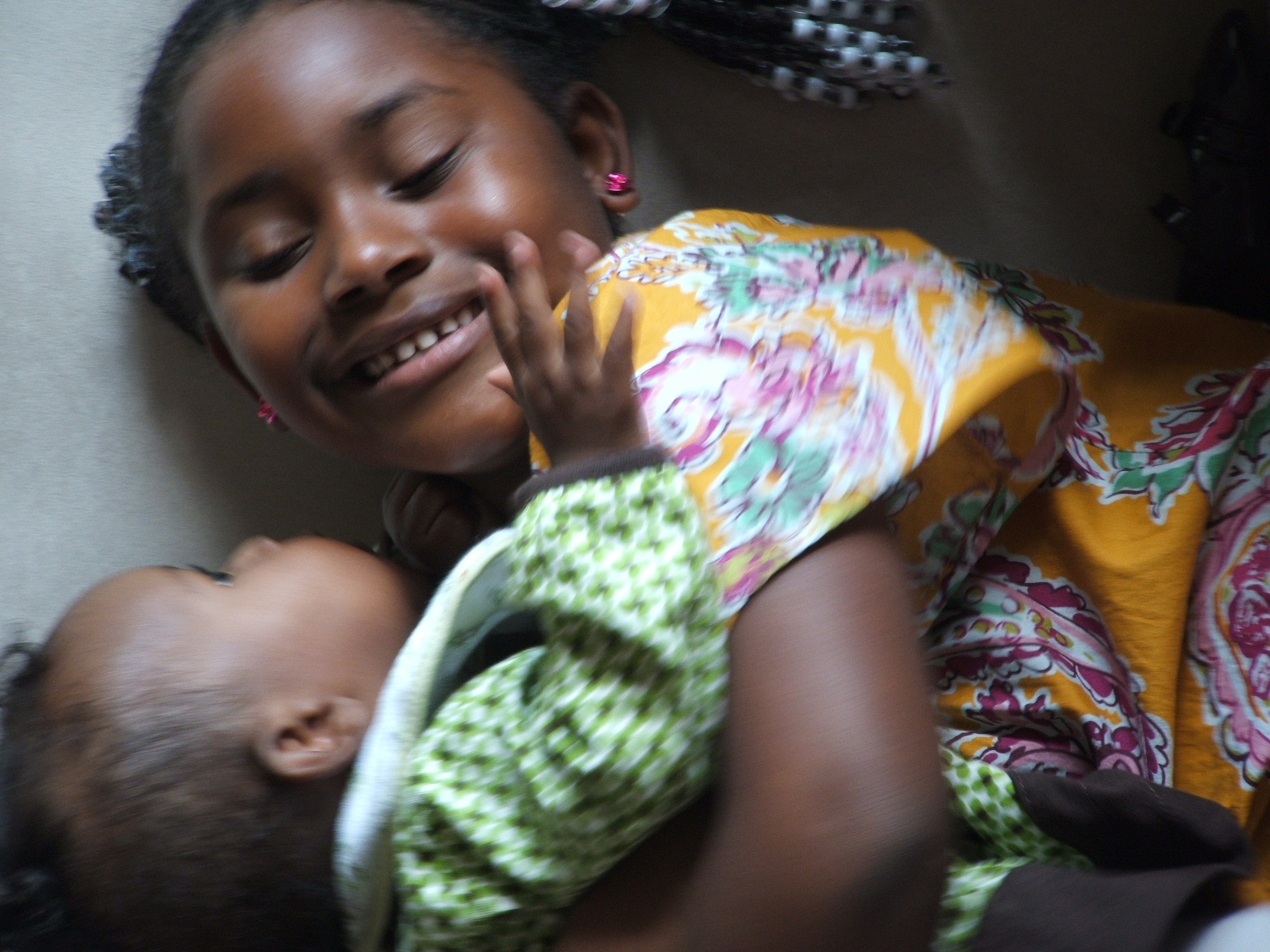
To follow is my interview with Mark Washington.  Mark is my brother, and though he isn’t the first father I knew (our dad is), I thought it’d be fun to have him be my first interviewee on the blog.  He’s a man of few words.  Just like our father.  My sense is that Mark’s interview will be the most succinct.  Mark’s two daugthers, Laila and London, two out of three of my nieces, are pictured to the left.

FF: Describe your family.

MW: My family are comedians, they always keep me laughing.

FF:  How has fatherhood changed you?

MW: Fatherhood has changed me where I’m more giving then I was.  It has also taught me that it’s not all about me anymore.  My children come first before my needs and wants.

FF:  Have you made any mistakes as a dad?  If you’re not a liar, name one and talk about what it meant to you.

MW: One of the biggest mistakes that I have made was to start taking Laila to the beauty shop at the age of four.  Now she expects it every two weeks.  LOL.  No, but really sometimes I don’t choose my words carefully and, sooner or later, I hear them echoed around the house.

FF:  What’s the most helpful advice you heard when you were becoming a father or as you’ve been a father?

MW: The best advice I’ve heard is to enjoy the younger years with them because when they become teenagers, I will start to feel the gap.

FF:  How do you attend to your relationship with your children’s mother?  It’s changed over time.  How so?

MW: Well, we hear each other out, and then we discuss what logic will work.  With any relationship it’s all about communication.

FF:  What surprises are there along the way for parents?  What do you wish you were told to expect?

MW: I can’t really think of one, but my children never cease to amaze me.  I mean just when you thought you heard or seen it all, here’s another surprise.  And part two of that question is, how expensive they can be.  I mean I’ve been told that, but no one ever stressed it!  LOL.

FF:  What is one recent memory you made with your child?

MW: Last night I was playing shouting music off You Tube and the little one (London) came and got Laila and I.  She said “I’m about to shout,” and we all started shouting while holding hands.  It was too funny!

I appreciate Mark for his answers.  Since this is the beginning of a series–we’ll have a couple interviews per month on the blog–I invite you to participate.  If you are a father and would like to be interviewed, or if you know one who would, leave a comment with your email address.

A Hallmark Definition of Fatherhood

The other morning I was listening to the Santita Jackson show, a radio show that I catch whenever I can.  It was a day or two after Father’s Day.  The topic was fatherhood.

Apparently, Hallmark Mahogany created a line of cards specifically for single black mothers.  This may have been a business decision on the part of the card company.  Many African American families are led by unmarried women.  Those single women work out the juggling act which is working outside of the home and coming home for the second shift that is parenting.  They find childcare.  They schedule doctor’s appointments.  They care.  They love.  They parent.  And these sisters do these things mostly on their own.

About the Hallmark cards, several people have been commenting on whether this move was smart of the company, whether it was racist or tacky.  I didn’t shop for a card this year so I didn’t see the line.  But several listeners called in to the show to express their feelings.  Thoughts went in a few directions, directions I want to mention and then see what you think.

  1. Women need to be acknowledged for their work as parents.  In this case, we’re talking about black women, but the same is true for any mom.  Most mothers work hard to care for and raise children.  They are hardly acknowledged by their children or by their partners or by their ex-partners.  Their families have high or no expectations.  Their love and life as mothers go unsupported by their churches, their friends.
  2. Distinguishing roles is complicated.  It’s tricky saying what a mother’s role is versus a father’s role.  Many callers stated there were differences but didn’t describe them or elaborate.  And it’s not that easy.  Saying what a father does is as unique from week to week as taking a look at my work calendar.  I have more meetings some weeks than others.  I do more of this and less of that.  The same is true about being a father.  And me and my wife work together to accomplish this small project called parenting.  We both take out garbage, change diapers, feed the boy, wash the clothes.  We both are this cute kid’s unpaid staff.
  3. Men are essential too.  Fathers need to be in the lives of their children.  I heard callers expressing their frustration with the notion that many women feel that they a) can raise children by themselves or b) are made to raise children alone.  It pained me to hear.  I knew the reality before the show, and it only reminded me that men, fathers, need to step up and remain standing.  It made me grateful for the examples of men I know who are doing just that, even while they go unnoticed.
  4. Defining what fathers do is a moving target.  I hinted at this above, but let me state clearly that whatever we do as parents, as fathers, we need to be present to do it.  Every father won’t do the things I do with or for my child.  I don’t do some of the things that a few friends do with their children.  And that’s fine.  But we do need to be around.  We need to form our own working definitions of fathers as fathers.  Hallmark doesn’t get to define who I am.  They may get to inspire me to thank the women who go at the task of mothering, but a card won’t motivate me to parent well.  My kid will.

Grace and Parenting Mistakes

One of the things we did to celebrate my son’s birthday was visit my father in Little Rock.  On the way back, I was tired.  I hadn’t eaten.  I had gotten up early, at the time I designated, so we could get on the road and return home in enough time to keep the bedtime ritual solid.  It’s funny how much happens around a baby’s bedtime routine. 

We got up early.  I slept enough hours to feel like I could actually drive while awake.  But I hadn’t gotten that much sleep, certainly not enough to deal with people, including a small one, expecting me to be social.  My wife understood this about me at the time.  She’s had enough experiences with me to know that I’m half sane before morning.  She knows that morning to me is post 10a.m., and that any time before morning is still night.  My son, well, he’s still learning about these things.

Somewhere, long after my real morning, and probably closer to the afternoon, I had been driving long enough to wish the trip was over.  The boy had his naps.   We stopped for lunch.  Things were fine.  But the kid started making noise.  My eyes had started doing the things they do when I’m tired.  I don’t exactly not see things in those moments, but I can tell that it takes more concentration and energy to focus.  I get quieter.  I pay more attention to how I’m holding the wheel. 

Bryce whined and cried.  I told him to stop.  Of course, he didn’t listen.  Well, he didn’t obey.  I told him that I was not in the mood to hear his noise.  He kept up the noise-making anyway.  I raised my voice to match him.  I turned up the music to drown him out.  When he was smaller, music would settle him.  He’d stop or moan or even bounce at the head.  Coming back from Little Rock he just screamed.  At some point he stopped fussing.  But it was after I’d gotten short with him.  It was after I made the mistake of losing patience, the thing I seem to lose so easily.  He stopped after I marked my little parenting path with another small failure. 

I thought about it that night.  I wondered if he were piling up my mistakes and my wrongs in his little head. the way I had been  I wondered, worse, if he wasn’t.  I wondered how it was that he could so quickly forget my shortcomings and run to me with stretched up arms after his bath or his meal, asking me to hold him.  I wondered if Bryce was secretly plotting in his crib to get even when he’s the one changing my diapers. 

It would probably make me feel better if the boy was able to keep count of my errors and wrongs.  It’d make me feel accomplished if I knew there was a correlation between good parenting moments and a good outcome with my son or bad moments and bad outcomes.  It would leave me with something to count and organize and expect.  From what I’m told by seasoned parents, though, that’s not the way it is. 

God, having something to do with children-making and parent-developing, probably smiles at little thoughts like mine.  Thoughts which hope that we could do the right things and get the right results.  If I am patient enough, then I’ll be a better parent.  If I am good enough at this parenting job, then the kid’ll come up bright and confident and handsome.  That’s the essential parenting mistake in my increasingly muddy and yet clear view.  It pushes grace out when we need it most.  That car ride was just another current example of how I’m in need of a grace-giver, and not just the boy.  This short spark of a fuse in my heart is an abiding reminder that the more my boy grows up, the more help I’ll need to raise him.  I couldn’t get through that ride, yes, without the forebearance of my wife and a little help from some random country song by Rascal Flatts that mysteriously came on three separate stations in Missouri.  But I couldn’t make it without God either.

Ten Things Different As Compared To This Time Last Year

I don’t know how to interpret the non-response to the book giveaway.  Maybe you’ll tell me.  So, even though I don’t have a winner to announce, I do hope you enjoyed the interview and I do have this post on a view things I’ve noticed from this time last year.

  1. I can tell you the number of times Dawn has sat across the table from me, just us, talking about something other than diapers, feeding schedules, formula, and other random things related mostly to the influence of sleep deprivation.
  2. I am still not a morning person.
  3. A schedule consisting mostly of driving a tender package around and doctor-visiting and note-taking, all while being afraid since nobody else seemed to know the rules of the road.  Actually I was doing this with my pregnant wife a year ago.
  4. The three pictures of me as a newborn, as a one-year old, and as a 7th grader on my refrigerator, placed there by my mother to show the similar features between me and the boy.
  5. My gym membership goes unused much more regularly.
  6. I only carve out one day per week to have evening meetings and my Sundays have become much longer because of it.
  7. I smile at other people’s kids because they make me think of my own.
  8. When I consider doing something I shouldn’t, I think about the boy’s face over my shoulder in the car, his eyes following mine as he peers through the gap in the seat shade, and it makes me remember responsibility again–to both God and the people who matter.
  9. I clean up.  All the time.  Even when other people are doing it too.  It never stops.
  10. People have literally forgotten my name, identity, and use, preferring 1) to label me “Bryce’s father,” 2) to ask me where he is first and where his mother is second, and 3) to compare me and my features to his as if I weren’t here first.

Click These Links

  • Read how Tayari Jones talks about prettiness and publishing as she thinks about the upcoming release of Silver Girl.
  • This post is a great reminder from a father for a father and for a mother too about what not to do.
  • My friend and coworker, David Swanson wrote a thoughtful short piece on church segregation and has a piercing question at the end of this post.
  • Zadie Smith tells a lovely, funny story when explaining in an unexpected way how friends are generous.
  • Mario Vargas Llosa’s writing is discussed at the Guardian in ways that put forward some interesting intersections between writing and politics.

Reasons I Get Nervous When My Son Smiles At Me

Everyday my son smiles at me, at least three times.  He smiles when I come into the room I’ve loaned him to give him that last bottle at night.  He smiles and sometimes giggles when I come home from work.  He smiles when I sing or play with him.  He even bucks and kicks and tries to jump when I come in after being gone during long stretches in the day. 

I tell my wife that I’m very aware that one day this will stop.  I told her that the first smiles were mostly hers.  During those days when I felt like he didn’t recognize me, or, worse, that he recognized me as some wierd, hairy big guy who kept returning to his space.  I tell Dawn that those days traded themselves for the mornings where, if you look at how he acts, you’d think I was the best person on earth.  Still, this is the same little boy who will one day disobey me on purpose, conduct himself in ways that make me sick or mad or crazy.  He will one day do things that make me just about forget these splendid smiles.  So I suck up these moments, and each time I walk away I bit more human.

But I’m a little nervous.  I’ll tell you why.

1) I’m not as good as he thinks I am.  I’ve spent the last six plus months responding to this person’s needs.  Somewhere in his brain he’s concluded that I’m a good guy.  I’m not as good and delightful as he thinks.  I know that already.  One day he’ll get it, and I think he’ll smile less.

2) I’ve made mistakes that’s he’s already forgotten.  I remember things he can’t because his memory structures are yet to be fully formed.  He clearly remembers that I belong.  I think he’s finished with stage where he’s asking himself why we’re always around and never seem to stay away.  Still, he doesn’t recall the little wrongs, the missteps and mistakes, the mumbles under my breath at 2AM or those several hours later when I still haven’t had my required allotment of sleep.

3) I’m slow at matching my life with his grin.  In some ways, each time the boy delights in my company or laughs at something I said that really wasn’t funny or giggles because I tickled him or just because he is truly happy I’m with him, I see the distance between whatever’s happening in those eyes and what’s happening inside me.  Having a child, one who lives where I live and doesn’t go away–not that I have any other kind, just to be clear–makes you grow.  You see the kid, identify the praise in that smile, and walk away saying, “I’ve got a lot to live up to.” 

4) I will certainly screw something up soon enough.  Maybe even later today.  Even if I’m a good dad, even if I get some marks for all the things only God saw–things the boy will one day devalue in some stubborn fit and grasp for independence–I am certain to mess up.  A lot.  I can see it already.  Some embarassing comment made at the wrong time in the company of his friends.  A misguided response to some secret he’s told me.  Making him wear the wrong set of clothes for a field trip.  Making him do anything. 

There is so much room for him to reserve those beautiful smiles.  I’m nervous.  And I’m collecting each smile the best way I can.  I’m trying to see his presence in my life as a gift like those stencils boast on the wall in my used-to-be-office-now-turned-baby-space.  I’m trying to notice how God is using him to change me and make me a man who lives up toward something as a big as a boy’s smile and as wide the world around him.