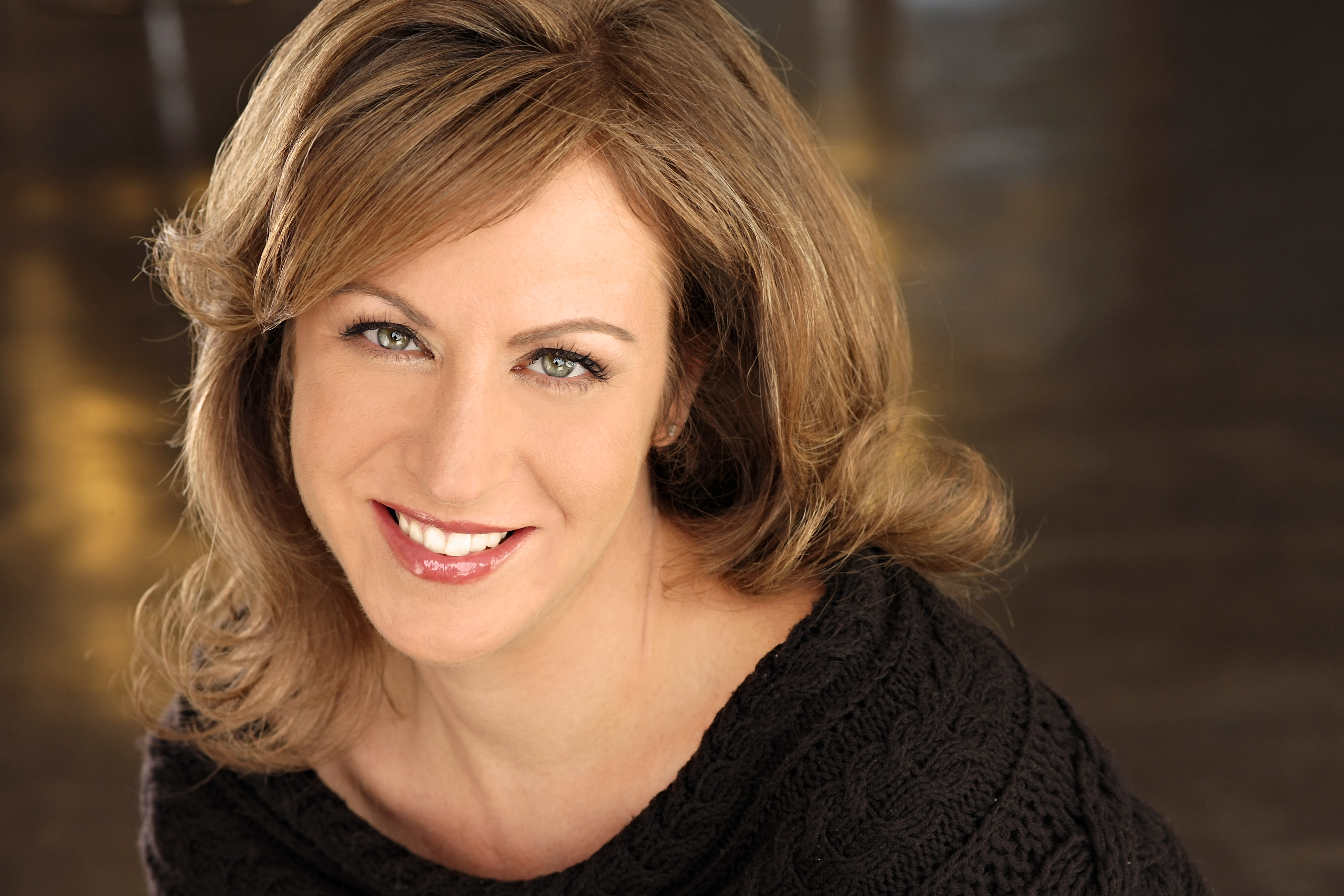
 I am happy to bring you the next author interview with Rabbi Zoe Klein. Rabbi Klein’s novel, Drawing in the Dust, tells the story of an archaeologist who risks her reputation to excavate beneath the home of an Arab couple to make a miraculous discovery. I’d like to give away a copy of the novel, so look into that at the bottom of the interview. Rabbi Klein inspires me. As a spiritual leader and writer, she gives powerful answers to how she thinks about what she does, how she wobbles all her plates. Enjoy…
MW: When did you first know you would be both a writer and a rabbi?
RZK: Hi Michael! Thank you for bringing these questions to me, it is an honor to participate in this interview! Long before I ever could imagine that a little girl like myself could grow up and become a Rabbi, I knew I loved to write. I wrote stories all the time. I remember writing stories on those beige thin sheets of paper on which the lines were two inches apart, filling in scenes with chubby crayoned letters. I even remember one of my first stories, about a magical species called the Giringos, half giraffe and half flamingo.
I remember a powerful moment, the first time I told my father I wanted to be a writer when I grew up. He is an artist and I remember standing beside his dawing board while he worked and saying I wanted to be a writer. He said, “That’s great. But you cannot call yourself a writer until you finish a book. Even if it is never published, even if no one reads it, once you finish a book you will be a writer, but until then you are not.” It sounds like a strong thing to say, but it was a valuable lesson. For my father, it was very important that I learn the value of taking a creative idea to its completion. Lots of people have wonderful novels in their souls, but very few put in the tedious effort to realize it. When I finished my first novel in college, an as-yet unpublished story called “The Goat Keeper”, it was such a proud moment to hand it to him and to become a writer!
It wasn’t until I was in my Junior year in college that I truly understood that the path to the rabbinate was even a possibility for me. I had always thought that it was something only men could do. Even though there were female rabbis around, I hadn’t met any. However, I always loved religion, studying faiths and myths and cultures. The kinds of conversations and debates I had with people with strong faith identities in many ways mirrored the conversations I’d hear between my parents and their artist friends. The artists would always talk about such things as mortality, man’s fragility, the futility of monument, shattering dogmas, the supremacy of blank space…it was art they were discussing, but it filtered into my mind as theology, and I loved it.
In many ways I think of myself as a rabbi with the heart of a novelist, rather than the other way around. I started as a writer and then expanded my material from the confines of pen and ink to people and community. As a congregational rabbi, I have the opportunity to help craft the story of a community of families, engage in their sacred and profound moments, adding our chapters to an ever-unfolding scripture of a people.
MW: I realize both roles relate to one another, if I’m reading your interview in Drawing in the Dust correctly. But does writing serve your role as a spiritual leader? If so, how?
RZK: Sometimes I think my rabbinate is almost like fieldwork for writing, and my writing is soulwork for the rabbinate. Writing is interesting in that it is done in physical solitude, and yet it is never lonely for me. I am full up with characters, with vivid dreams and scenes, demons to wrestle, I’m haunted and vexed and also ecstatic and weeping. In contradiction to that, in the rabbinate there is no solitude, you are continually working with people. It is a very social position, and yet for me there is loneliness there. There is a lot of what the mystics call “tzim-tzum,” a kind of spiritual contraction one does to make room for others. You retract yourself enough to allow space for other’s voices. You become an expert active listener. When I write though, that part of me that contracts in order to give center stage to others’ stories and needs, suddenly unfurls its great wings and jets about wildly.
The short answer to your question is that I think my writing allows me to be a whole person as a spiritual leader. Without it, I think I’d be fragments of a mosaic, chipped with no clear design. I think when you take the time regularly, whether through writing or meditation or running or whatever, to reflect on your decisions and desires, face your darkness, and emerge with a burning but joyful heart, you can better take others by the hand and lead them through a courageous process of reflection and growth.
MW: Talk about your experience as a person of faith—indeed a leader—writing biblical fiction for a broad audience. Were you concerned that you wouldn’t be received well, that you might misrepresent yourself, or that your story might be misperceived?
RZK: While I was perhaps concerned about the story being misperceived or not received well, it was not a deterrent for me. I was encouraged by a great editor Al Silverman to forget while I wrote that I was a rabbi, a mother, a wife, and just write from a place of uniqueness, without titles, and I’ve always tried to do that. I am a person of faith. I believe that stories which are filled with metaphor and myth are a form of prayer. I never feel far from God when I write, in fact I feel close, even if I’m writing a scene that is sexual or violent or both. It is a process of exploration into human nature, into fantasy, into longing and fear, and it is not too different than the best kind of worship experience, where you are completely honest and raw, repentant, mournful, terrified, awe-filled, trembling with humility, romanced and swept up in all your smallness into the impossible arms of the infinite. There is no doubt that it is scary to write for a broad audience, and that no matter how much you try to hide your truths under layers and layers of plot and characterization you always end up realizing that despite your efforts you ended up publishing your very private diary, but it is also freeing to realize that the things that you say are the honest voicing of your humanness, what a relief to not be a spiritual leader hiding behind a façade, with word locked into routine platitudes! How refreshing to be real, to have a faith that wrestles, breathes, challenges and confounds!
MW: How has your congregation responded to your writing life?
RZK: My congregation has been celebratory and wonderful. I am fortunate to share this journey with them! We have many writers, thinkers, professors and experts-in-their-field in our community, people who love and appreciate art and don’t shy away from its darker sides…
MW: When I connected with you about this interview, I mentioned my gratitude for the seen and unseen work behind this novel. I’m glad you’ve labored in all the ways you have to give us this work. What don’t people know about what it takes to write a good story for publication? Will you give us a sense of some of what it took for you?
RZK: Ah, that’s a good question. I don’t think people understand the sheer mass of hours that it takes. People don’t realize that once the book is finished and you feel completely beaten and your hair is grayer and thinner because of the process, and your eyes are dim from staring into the computer, and every time you blink you see bright blue squares, and your wrecked with fatigue after months of not sleeping, once you’ve gotten that far, you have to STILL muster the strength to face rejection after rejection after rejection…years of rejection and pitching your story, and trying even after years have gone by and you’ve already become passionate about a NEW idea retaining the freshness about the book that no one seems to want…and then after you finally find an agent and an editor, realizing that there are two of three or four more Everests to climb with revisions, revisions that keep tearing out your heart and then sewing it back in. Every time I’d get to a new mountain where it would be so easy to just drop the whole thing, I would think to myself, “This is a filter, and only the most determined get through.” And I was determined to be determined enough! I think people understand how steep the climb is from conception to publication, but I don’t think people know how long it is, how much stamina is involved.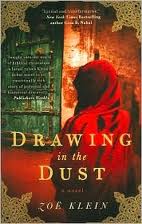
I also tend to like to write stories that have a lot of different characters and layers of interpretation, and it is hard to keep track of all of those little pieces over the course of 600 hundred pages, which was how long DRAWING IN THE DUST originally was. When I was editting it at one point I realized that if one added up the years and scenes carefully for one of the very peripheral characters and tried to figure out her age, she would have to be something like 130 years old. Keeping track of all these strands of lives is hard!
MW: I’m pretty sure you have many things to do. I could be wrong. I’m probably not. How do you serve both these areas in your life well? And how do you do anything else?!
RZK: Sometimes I feel like one of those cirque-d’soleil contortionists with the spinning plates on top of sticks, except that while they make it look so graceful and beautiful, all the plates spinning perfectly, my plates are often pretty wobbly! And some of them crash. If I were to label my plates, there would be the Writing Plate, the Rabbi Plate, the Children Plate, the Husband Plate, Friend Plate, and of course lots more. I think while I’ve made time to keep the Writing Plate spinning by devoting Mondays, my one day off, to writing, and the Rabbi plate I devote much time to, and the Children Plate keeps spinning even though it’s hectic, I admit the Husband Plate often wobbles and falls (luckily it’s a sturdy, rebounding plate!), and I haven’t been able to devote much time to the Friends Plate (I have friends, we just don’t see each other at all, I haven’t been able to nourish that part of my life)…there are a lot of sacrifices! As I’ve gotten older, I am trying to redistribute my energy, focusing more on my family and building relationships, and trying to approach work with less frenetic energy and more joy and appreciation. Everything is not always in balance as people like to believe! But up until now I think I’ve lived my life is a giant rush, and I really want to learn to slow down and appreciate BEING instead of eating up every hour with DOING.
MW: I read Eugene Peterson who is a pastor and writer, and he encourages clergy to read fiction. He says that artists have become his allies and have taken a place next to theologians and scholars in his formation as a pastor and as an artist. You talk about the power of fiction in your provided interview. How does fiction nurture a person in general and a religious leader in particular?
RZK: That is beautiful. I think that fiction unlocks people’s hearts in a particular way that nothing else can. You take fiction under the covers with you, give it the heat of your breath, and like the genie in the lamp it has an enchantment. Somehow entering the world of fiction, our vault of tears is more easily unlocked, particular drama reflects universal understanding. There is an intimacy in fiction, partly because of the intimacy it took to create it. In terms of a religious person, I think that today we tend to sterilize the idea of a person of faith, turn that person into a kind of sexless judge. Piety is purity. But dancing with God is an intimacy, it’s a cosmic affair, filled with subordination and abuses, mastery and humility, and of course love. I once wrote a new definition for love — Reverence for Mystery. I think fiction nurtures a person in general and a religious person in particular because there are very high truths that can only be expressed in metaphor. God, for example, can only be expressed in metaphor, as shepherd or teacher or lover or parent or guide. I believe Fiction, ironically, is Ultimate Truth’s master key.
MW: What are you reading these days, by the way?
RZK: To be honest, I’m reading a lot of Science Fiction! I just printed out the top 100 Science Fiction books, and right now I’m reading Ender’s Game. It’s just a field I had never read before, and I am surprised at how much I’m loving it! Before this new kick though, I read Cynthia Ozick’s novels, The Shawl, The Putterman Papers and Heir to The Glimmering World, and my goodness, her language was like cashmere, so rich and sumptous.
MW: You’ve talked about God as the Reader of All Life—language that I love. What are you working on, preparing, and “offering skyward”?
RZK: I just finished a novel called Origin of Color which will be released in summer of 2012; it is going through its editing process now. I went to Swaziland and Tanzania to research for it when I was on sabbatical this past December. The book is about an American couple that accidently falls into the middle of a crime ring of witchdoctors and politicians in East Africa who sell albino body parts to be made into potions. I met with East Africans with alibinism and families whose children with albinism had been butchered. I wove these experiences into this novel. It was an emotional novel to write, it is a thriller, and it even scared me as I was creating it. I’d be writing in the middle of the night and leaping up to make sure the doors were locked…jumping if I thought the curtain moved! The “offering skyward” part of it is that it is also a contemplation about perception. I am very excited about it.
I am also leaving in two weeks to go back to Africa, to Ghana, with the American Jewish World Service. I will be in Winneba, Ghana with American Jewish World Service’s Young Rabbis’ Delegation. The Young Rabbis’ Delegation brings together a group of rabbis from all over the country to experience first-hand the power of grassroots development and explore issues of social justice and global responsibility from the perspective of Jewish texts and tradition. The group is working at Challenging Heights, an AJWS-supported NGO devoted to providing education to former child slaves and resources to families whose children are at risk for slavery and human trafficking.
MW: How can readers stay in touch with you and support your work?
RZK: On my website www.zoeklein.com, or by emailing me at zoe@zoeklein.com. Thank you so much for inviting me to participate on your website. Abundant blessings to you and to all of your readers!
As for the book giveaway, if you know of a clergy person who would benefit from reading this novel, post a comment, a sentence or two, about why they would. Do so by Friday, midnight, CST. I’ll choose a winner randomly and you can give a copy to your clergy person.
 Michael Washington