Book Giveaway and Interview with Tayari Jones

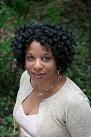
I am grateful to have Tayari Jones, author of Silver Sparrow, for an interview.  If you’re interested in getting a free copy of the novel, those instructions are below.  I’ve been following this writing professor’s blog for a few years, learning about the writing life, reading her critical analysis of events, and enjoying how she presents publishing and life as a woman of color.  I’m a student and fan.  I think you should be too, which is why I’m commending Silver Sparrow.

I think you should go buy this novel from the closest bookstore or rent it from you local public library.  I’ve made several recommendations like these in the author’s interviews, suggestions I hope you’re considering.

Here’s the interview:

MW: Congratulations on the multiple-weeks tour promoting Silver Sparrow.  How are you holding up during your book tour?

TJ: I’m holding up, but I have to say that I am tired. 40 cities is a lot of traveling, but I love connecting with readers to actually talk. It’s really inspiring.

MW: You had an interesting and maybe horrifying experience with the title.  Will you mention how you came to it?

TJ: Well, the short version is that my original title, SILVER GIRL, was already in use.  Another book with the very same title was just published. I had about a week to come up with a new title.  Everyone in my life jumped in.  I was just cleaning out emails and found some potential titles from brainstorming sessions.  It’s funny, but it wasn’t funny at the time.  And then a friend mentioned the hymn, “His Eye Is On The Sparrow,” and I knew that I had found my title.  It was a real blessing.  A gift.

MW: Your novels detail girlhood, picture femininity, and in my wife’s words describing Leaving Atlanta, “take me back to my childhood.”  How do you continually offer such real, honest, strong, brilliant characters?  How do you replenish yourself to keep seeing women for who they are rather than what’s often popular and visible if that makes sense?

TJ: First off, thank you to your wife for that compliment because that really was my goal with Leaving Atlanta–to remind people what it was like to grow up in the 1970s, to record our history.  To make a record that we were there.  I think the key to writing solid characters is to be a loving but honest observer.  When I write I think of real people, not people I have seen on TV or in movies–or even other books.  I want to make close replicas of actual human beings.  I don’t want to make a replica of a replica, getting further and further away from real and you can see how looking the way society wants you to look is like having a part-time job. I think we really squander our resources chasing down that ideal–trying to be show ponies.  But at the same time, we deserve the right to enjoy our bodies, our faces, our hair.  I wrestle a lot with keeping balance.

MW: You dedicate the book to your parents.  If this isn’t too personal–and I can’t recall whether you’ve blogged about this–how did your father respond to the story?

TJ: My dad emailed yesterday saying that he loved the book but he thought that James Witherspoon got off too easy.  My dad is my biggest cheerleader.  He is proud of me, not just for the text of the book, but for being brave enough to go my own way.  I feel like I should say, for the record that he’s not a bigamist!

MW: The women in this novel seek love.  They give it and seek it.  The ways the daughters sought their father’s love jumped out to me.  How was it writing two daughters with such competitive experiences?

TJ: Everyone in the novel is seeking love.  This is a book about how far people will go to keep their families in tact.  Even James, the bigamist.  Everyone in this book makes bad decisions for the right reasons.  The key to writing it was not to take sides–to write with as much affection for Laverne, the lawfully wedded wife as for Gwen the mistress “wife.”  The same goes for the daughters.  Everyone wants to be loved.  You can’t blame them for that.

MW: Are there any intersections between your life as writer and as professor?

TJ: I teach creative writing, so I feel like I am helping shape the literature of tomorrow.  I love watching a young writer grow.  It’s really inspiring.

MW: Among the many entertaining things about this story was the use of lies and the movement toward truth.  I imagine writing a story cloaked in deception was fun and challenging.  Any reflections on that?

TJ: There was so much pain in this story and I had to really keep my eyes open as I wrote it.  The stakes were so high for all the characters that none of them could compromise, and as a result, everyone was compromised.  I didn’t take pleasure in watching the lies unravel.  I feel really attached to my characters.  I knew that at least one of the characters would lose everything and everyone they loved.

But I think that the pleasure in this story comes in the pleasure of reading a difficult story on a difficult topic.  There is a sort of joy that comes from facing the truth, and looking it in the face.

MW: If you had to keep one of your characters with you on your book tour, who would it be and why?

TJ: I would chose Dana’s running buddy Ronalda. I like that girl.  She’s funny and she knows how to keep a cool head.

MW: How can readers keep in touch with you, learn about other works in progress when they come, and support the growing reception ofSilver Sparrow?

TJ: I would love for folks to come out and say hello to me when I’m on book tour. You can see my whole schedule here http://www.tayarijones.com/appearances.

If you’d like to enter my contest for a free autographed copy of Silver Sparrow, leave a comment with a book title and the author’s name that you recently enjoyed or one that simply stays with you.  I’d love to know what about the work stuck with or struck you, though that’s not required for the randomly selected winner to be chosen.  Post the comment by midnight, CST, June 13, 2011.

Links to Interesting Posts

I’m recovering from my reflection on civil unions and from a long weekend that included a beautiful wedding, the Printers Row Literary Festival where I met one of my favorite writers, and an equally long and fun day with my son on Monday.  That said, I need a moment to recharge and get into my next posts.

In the meantime, take a look at these posts and articles from “friends-through-the-blog-world”:

  • David Swanson opens again his sermon preparation process and reflects on something called Roadside Sabbath.

Misspellings And Other Mistakes

I hate reading misspelled words.  I really hate writing them.  Like most people I’m subject to doing what I hate.

Over the weekend, I looked at my blog.  I had scheduled Nina’s post.  The day it went up, I read it.  I read it like I had several times before scheduling it.  But, after it went up on the blog, I saw an error.  I saw a misspelled word, a mis-chosen wrong.  If you read the last post, you saw it too.

I was reading the post on my phone.  I reread it to make sure that I wasn’t seeing things.  This happens when I wake up too early, when I don’t get sleep.  I blinked, rubbed my eyes, looked away at an object on the other side of the glass.  The mistake was still there.  So I logged into my account.

I was going to write the wrong, fix the error.  Except the mountains had other plans.  It turns out that the interstate highway between Tennessee and Alabama isn’t too friendly to smartphones.  I had the hardest time logging in to wordpress, and even after getting into my dashboard, I couldn’t successfully edit the post.  I silently complained to peaks and cliffs to our side while we drove up and down the winding road.  By the time I got to where I was headed, I lost energy.  I forgot to edit the post.  Then, after remembering–which was after a long day of driving and negotiating tiny truces with the boy and meeting relatives and cleaning a room that looked like an ad for a new bed bug product–I was too exhausted to visit the closet-labeled-business center in the hotel.

The error haunted me.  It hasn’t stopped.  But I wouldn’t correct myself.  I wouldn’t change the word when I finally got the chance.  The mistake meant something by then.

When I came home, I got back to a book, The Active Life, I’m reading for an upcoming class.  It’s by Parker Palmer.  I’ve read three of his other books and will read this one and a fifth one for my class.  In the chapter I read through today, he talks about failure.  I thought of my failure to proof the blog post.  I thought of my day and the one before that, the mistakes jumping out at me, joining the other misspellings of my weekend.  It was a moment of orientation for me, a moment where I came back to grace in a humble way.  Here’s a quote from Palmer, speaking about the “downward movement” and the healing power of failure:

If downward movement is key to our quest for reality, then failure is key to our growth.  Success, or the illusion of success, is an upward movement, an inflation of the ego that makes us lighter than air.  But failure is life’s ballast.  It restrains our tendency to float away on a bloated ego and pulls us back toward common ground…The paradox is that failure may turn to growth, while success can turn to self-satisfaction and closure.

Printers Row Festival


Book lovers, shoppers, people watchers, joggers, and dog-walkers line the streets.  Vendors exchange money and swipes of cards for hard and softbound worlds in between covers.  Bags and backpacks bulge with the latest novel and with goods like newspapers and t-shirts and pamphlets from street preachers around the block.  Panels sit, adjusting microphones until that clunk from some guy’s elbow sends a dong into your ear for a while.

Bunches and crowds of men and women who look like your high school librarian collect in front of a tent.  What have you missed?  Children walk around, some of them with leashes around their necks.  You laugh.  It’s funny.  Dogs roam freely while the kids are leashed.

You spot a writer you’ve read.  You get a children’s book signed by an author you respect even though you don’t read children’s books, you don’t have children to give it to, and just because it’s Nikki Giovanni.  In fact, you buy two and give one to your niece, hoping she’ll appreciate the gift.  You’re convinced she’ll trade it in a flinch for ten dollars.  You sigh and get the second book anyway.  You love supporting writers, especially writers you love.

The last time I was at the Printers Row Lit Fest it was a day full of cramped walking, scooting really.  My wife was with me.  We listened to Ms. Giovanni discuss writing and her process of developing and publishing a story about Rosa Parks.  It feels like it was a long time ago.

I saw a status update from Cathy or maybe it was Laura that the Fest is coming back.  I was and am happy.  Then I saw that one of my favorite writers will be there.  I’m reading her (Tayari Jones) novel (Silver Sparrow) now.  I was and am even happier.  Hopefully I’ll get to have a blog interview up before the Fest and one of you can win a copy she can sign in person. Whether you’re into recently published novels, cooking books, biographies, rare finds, books about spirituality or romance, you will find what you love at this fest.  You’ll need an allowance, a budget, a spending cap.  You’ll need a friend to make sure you respect that cap.  But come.

Come and bring people you like.  Bring people who enjoy reading and talking about reading.  Come if you don’t like reading but think you could be converted.  Come to the programs on the street or to the ones at the library.  Make new friends.  Have a good time.  If you’d like more information on the Fest, visit the website by clicking here.

Eugene Peterson Writing About Writing

This is from Eugene Peterson’s memoir, The Pastor.  He’s talking about heuristic writing, writing as a conversation with scripture, with his conversation.  He’s talked about writing as conversation and as exploring, not explaining, not directing.  In this quote he refers to the “badlands” which was his name for a period of particularly challenging times in his pastoral work.

It was a way of writing that involved a good deal of listening, looking around, getting acquainted with the neighborhood.  Not writing what I knew but writing into what I didn’t know, edging into a mystery…

Heuristic writing–writing to explore and discover what I didn’t know.  Writing as a way of entering into language and letting language enter me, words connecting with words and creating what had previously been inarticulate or unnoticed or hidden.  Writing as a way of paying attention.  Writing as an act of prayer.  In the badlands the act of writing was assimilated into my pastoral vocation, revealing relationships, drawing into mysteries, training me imaginatively to enter the language world of scripture in which God “spoke and it came to be,” in which “the Word was made flesh and dwelt among us.”  And it became a way of writing in which I was entering into the language world of my congregation, their crises and small talk, their questions and doubts, listening for and discerning the lived quality of the gospel in their lives.  Not just saying things.  Not just writing words.

I came across something that Truman Capote wrote, with a sneer, on the work of a popular novelist: “That’s not writing, it’s typing.”  About the same time, I read Emily Dickinson’s pronouncement, “Publication is no business of the poet.”  Capote exposed much of what I had been doing as “typing”–using words to manipulate or inform or amuse.  Dickinson rescued me from a lust to be published.

I began to understand the sacred qualities of language.  My work as a pastor was immersed in language… And I began to understand that the way I used language involved not just speaking it and writing it, but listening to it–listening to the words in scripture, but also listening to the words spoken to me by the people in my congregation.

The Story

After my little installment of ramblings about forgiveness and justice, I should tell you that I’ve been thinking a lot about writing lately.  I’ve been thinking about it, I confess, not necessarily doing it.

Writing is hard.  It’s hard for many reasons.  The reason today is that it takes time to write, particularly when you’re writing in the midst of a life that revolves around so many other things not including writing.  I know writers who spend all their work time writing.  And writing includes everything from thinking about writing to marketing what’s written and working on what’s next.

I’m not one of those writers.  I write when I have an assignment from my generous editor friend.  I write when I snatch time after the boy and the wife have gone to bed.  I read when I force myself.  I write when I put down a good read in order to try my hand at penning one.

I have yet to publish a book, but the more I learn about the stages of writing, the phases of the writing life, and all that comes along with this work, the muddier the picture gets.  It gets clear from time to time, but it’s pretty dirty these days.  The dirt comes from all the questions swirling around my head.  What should I focus on given the time I have?  What should attend to in my life to make me better, to make my writing better?  How should I develop that character in that story?  Should I go back the story I started or stay with the one in front of me?  Do I blog–which counts, doesn’t it?–or work on fiction?  Why haven’t I taken notes on that other experience poking up from my unconscious?  There are so many questions, and the questions torment me.  And the torment distracts me.

I got a message from a writer and friend the other day, and it was helpful to bring me back to some clarity.  I reminded her of something she said actually, and it was a moment for us both.  She told me once to forget about writing a book, to forget the idea of a novel.  She said that I should tell the story.

Then I read on Michael Hyatt’s blog about Donald Miller’s upcoming conference, a conference I cannot attend, but would love to.  It’s called Storyline.  It’ll be in Portland, and you can learn about the conference by clicking here.

That message from my writer friend and that post about Storyline have collected together to give this thirsty writer water.  Just knowing about Donald Miller’s conference is an encouragement, and that, alongside the accountability and prayers of a fellow writer, will envelope me with grace as I write whatever the next words are.  If you pray, really, pray for me that I can listen and honor the call inside to tell the story.  Whether it’ll be in this format or that format, this genre or the other, it’s something I need to do.

Links to Things

Take a look at some of the things I’ve appreciated lately.

  • Penguin has developed an online community called “Book Country” for the purpose of developing community among unpublished authors, providing quality feedback on manuscripts, and moving toward publication, including self-publishing.
  • Tayari Jones mentioned the other day that Rachel Lloyd has published her memoir, Girls Like Us, and I’ve linked to Girls Educational & Mentoring Services which Ms. Lloyd founded.
  • Speaking of Tayari Jones, please watch her website or blog because her third novel, Silver Sparrow, is due next month.
  • Professor Henry Louis Gates, Jr. will be speaking on “African American Lives: Genealogy, Genetics, and Black History” at Rockefeller Chapel today if you’re in the area.

Book Giveaway and Interview With Dolen Perkins-Valdez

I have the pleasure of including an interview with Ms. Dolen Perkins-Valdez on my blog.  Her fiction touches upon my writing interests, historical fiction and the stories of African Americans.  When I contacted her about her novel and about the possibility of an interview, she suggested that we wait until after the paperback was released.  That happened in January, and when I reconnected with her, Ms. Perkins-Valdez was happy to be interviewed.  I’m giving a copy away, so see below for more information on that.  Here’s the interview.

MW: You started this novel by stumbling upon something.  Tell us about that.

DPV: I was reading a biography of W.E.B. DuBois by David Levering Lewis, and I came across a line about the origins of Wilberforce University. Lewis wrote that it was once a resort hotel popular among slaveowners and their slaves.  I was shocked and intrigued.

MW: Before learning of your work’s success, I didn’t think most people rushed to discuss how white mistresses lived in and around their husband’s slave wenches.  What was it like preparing this great novel as a WIP?  What was it like to pitch the project?

DPV: As I was writing, I just focused on telling the story. I wasn’t thinking of it as a “great novel” or anything like that because it was my first book and I wasn’t even sure if it would be published.  Once I decided to pitch it to agents, I just described the story as honestly and confidently as I could.

MW: I think I read that you had a little trouble pulling together historical fragments as you researched.  How would you suggest that writers, communicators, and people in general tell history?  How do we pass on stories these days?

DPV: I hear from so many people who have fascinating family stories.  I always urge them to write those stories down.  Most cell phones have built-in voice recorders, sort of like mini-cassette recorders.  At the very least, people should talk into these and then save the audio files on their computers and/or e-mail them to the tech-savvy members of their family.  Those of us who are younger should solicit the stories from the elders in our family.  Many oral stories will be lost if we don’t do this with a greater sense of urgency.

MW: Did you find new things or learn things as you worked on the manuscript?

DPV: Of course! Yes, I learn so much when I’m working.  There are many things that can’t possibly make it into the final book.  Not only do I learn a lot about history, but I also learn a lot about how to tell a stories.  Writing is a craft, and it takes many years to master.  I am still learning.

MW: You’ve probably been asked a lot of questions since publishing the novel.  What question haven’t you been asked that you really want to answer, and what is the answer?

DPV: I can’t think of a good question I haven’t been asked.  Recently, however, in Santa Monica, an audience member asked me about Jeremiah in the book and why he won’t take orders from the overseer’s wife.  I’d forgotten all about Jeremiah! I insisted that there was no Jeremiah in the book.  That was a funny moment.  People are often surprised when authors forget what they wrote, but it can happen sometimes.

MW: What’s next and how can my blog readers stay in touch with you?

DPV:  I’m working on a new novel. It’s a historical novel, but it is not a sequel to WENCH. I hope my fans will be patient.  In the meantime, please pass the news about the book.  There are still lots of readers out there to reach.  My website is http://www.dolenperkinsvaldez.com and I’m on Facebook at facebook.com/writerdolen.

In celebration of the release of Dolen’s paperback, I’d like to give a copy away to someone who answers a question: What book or author has helped you see more clearly some part of history or life?  I’ll randomly select a winner by Thursday so have your comments by Wednesday, midnight.

Where Do You Work?

Whether I’m writing a sermon or a blog post or a scene in a manuscript, there are two types of places I go to in order to write.  In general, I like writing in places that inspire me, that provoke me, that stretch me.  These places inevitably give me other things to see when I look up.  People, books, art, drinks standing and waiting to be consumed.  A view of a busy street.  The constant stream of children or joggers or dog-walkers or people pushing baby carriers.

So, as I said, two types of places.  One is a cafe.  I’ll mark my time in the cafes that “belong” to my friends.  My friends like Starbucks or Bronzeville Coffeehouse or Z & H.  I don’t like those places.  In a pinch, I’ll find a spot at Starbucks.  But me?  I prefer the less known spots like what used to be Istria, the tiny closet of a shop where they just changed ownership and the new co-owner reminds me of Alex Taylor on three shots of espresso.  Or there’s Medici’s cafe side where I find a table at the oddest hours because they stay open late in my neighborhood, a community where nothing nothing nothing stays open late–a fact that loses me since I live near the U of C.

Then, of course, there is my favorite place.  Little Black Pearl.  Come.  Come anytime.  Just not when I’m there, please.  The place perpetually smells of coffee and fills my ears with the whooshing of an espresso machine, swishing of foamed milk, and a Pandora station that almost always plays music I know and love.  LBP gives me more than the smell of coffee grounds.  It gives me an ever-changing gallery where the art switches almost on a monthly basis.  For the last few months they’ve showcased photographs from the neighborhood’s storefront churches.  The photos took me back to the days when, as a child, we’d go to visit churches on Sunday afternoons and stay out forever, listening to the same songs and the same words from the preachers we’d heard earlier that day.  This month the artistic display is all about shoes.  Women’s shoes.  Pumps, heals, whatever you call it.  It’s fine.  It’s a distraction when it needs to be.  So, LBP and the cafes like it are my first preferred places to go.

The second type of place is a library.  I work on sermons in theological libraries because they help me do the second phase of sermon work, the phase when I’ve “gotten” my direction and my trajectory, if you will, and am ready to look for the exegetical or theological strands for the message.  But the public library is my better context to work.

At the library I saw a woman with dreads walk in, pushing up her glasses, and asking for books about relationships.  I looked up from my reading and paid attention.  I’m immediately interested, nosey.  I’m not ashamed.  I watched her go back and forth with the librarian who would get up, her ID tag swinging.  They walk from the desk, and the shorter ID wearing woman leads the woman with dreads to a wall near me.  She’s fingering titles, calling out names, muttering them and pulling them out for the guest to see.

The public library reminds me of who I’m working for, who I’m trying to talk to, when I speak.  The same is true when it comes to writing fiction.  I’m writing for the people reading and typing and playing in those libraries.  That spot is an inspiring reminder to me that what work I’m doing will eventually (and hopefully is inside that word, is it not?) be received by listeners or readers who are looking for something meaningful.  The library’s a reminder that writing and sermon-working is a meaningful labor if only because people will read those words once or hear those phrases once and that those people might try to make meaning from those words.

I work in an office too.  I get good work done there when I have to, mostly meetings that can’t be as public or as “in somebody else’ face” as a gallery would require.  But the library and the cafe helps me see people for whom I’m working in a way that my Boston Fern-painted room doesn’t.  What about you?  Where do you work?  A phrase or two to describe your work space?

Death, Writing, and the Season of Lent, pt. 4

I have a habit.  I have these dreams.  I haven’t tracked them for too long in the past.  But I started noticing the dreams a couple years ago.  My mother gets dreams too.  I’ve known that for years.  Her dreams range from scenes which show up when somebody’s pregnant to scenes which wake her up with a caution that I’m supposed to pass on to a friend to other things I won’t go into. 

I dream when people are about to die.  Not all people.  I’d never get any sleep.  No, just some people.  I haven’t figured it all out.  Indeed, I’m not really trying to figure it all out!  I wake and pronounce to my wife as I did two years ago that “This is going to be a hard year,” and when she asks what I mean, I explain that a lot of people I’m connected to will die soon.

Today is the fourth Sunday of Lent, the time where Christians reflect on the life and death of Jesus.  It’s the time leading to Easter, the lowest and highest event in the Christian calendar.  As I move through Lent, I’m thinking about this disturbing habit of mine.  Part of it is the normalness of death.  It becomes increasingly normal as you age, right?  I’m not that old, but the longer I live, the more I notice death.  People have died since we’ve started reproducing, but noticing death takes time. 

One of my spiritual mother’s funeralized her mother Saturday.  I read of Manning Marable’s death in a tribute by Professor Michael Eric Dyson over at the Root.  Another spiritual mother and mentor continues to grieve her mother’s death from last Christmas.  I feel “in between” as I think about Rev. Beans, a father and friend to me, who died two years ago, about Michael Bailey, a CPD officer whose death still goes unsolved, and a long list of other people like Christopher Gary, Darlene Johnson, and my father-in-law, John McKinney–all of whom died last year.

I think about death in one form or another all the time.  I feel like I’m aware of death whenever I “make my Easter speech,” when I preach publicly, because, in some way, the Christian message always passes over the grave.  It doesn’t end in a tomb, but death is inevitably there in the message.

I think about death as a writer.  The nagging words of one of my favorite teachers from the text, bell hooks, come back.  When talking about the writer’s life, in Remembered Rapture, she invokes the role of time and death.  She talks about how writers have to find time to write but that we also write against time.  She says, “Without urgency or panic, a writer can use this recognition to both make the necessary time for writing and make much of that time.” 

As I think about time and death, the inescapable entrance in something else, I have to connect my work as a church servant, my work as I writer and parent and person to what comes after death.  That’s why Lent and Easter take on significance to me. 

There are many little deaths.  The unexpected departure of a friend when you made a pact to stay in the same community.  Being fired from a job.  A rejection letter by an agent signaling what could be the death of a potential novel.  A struggling marriage which releases another piece of that dreamy romantic idea of what you thought you had.  A comment that changed everything by someone you thought cared for you.  A diagnosis, any diagnosis.  Deaths are everywhere.  Which is why I run to Easter, trip to it, and push myself to look up inside that mystical empty tomb, from all the big and little deaths.  I think of resurrection, the stronger event after death, when I wake from another one of those wierd dreams, even when it takes me days to forget waking up as I catch my breath and look over at my wife whose eyes pop open to see me gasp.  I think about death and for the Christian, what is the next fundamental event.  Both are real, but I can’t help but be grateful for the hope that death isn’t all there is.

Writing As A Difficult Entreprise

I re-read the words of Orhan Pamuk, the youngest person to have received a Nobel Prize in Literature in 2006.  He’s one of the contributors in Burn This Book, a helpful gem of a book that I come back to now and then.  He’s talking about the freedom of thought and expression and how they are universal human rights.  He says that the suffering of poverty in shame result not because of freedom of expression but lack of that freedom.  Here’s a quote from him:

But to respect humanity and religious beliefs of minorities is not to suggest that we should limit freedom of thought on their behalf.  Respect for the rights of religious or ethnic minorities should never be an excuse to violate freedom of speech.  We writers should never hesitate on this matter, no matter how “provocative” the pretext.  Some of us have a better understanding of the West, some of us have more affection for those who live in the East, and some, like me, try to keep our hearts open to both sides of this slightly artificial divide, but our natural attachments and our desire to understand those unlike us should never stand in the way of our respect for human rights.

He goes on to say that people can, in a very short time, become both a victim of tyranny and a tyrannical oppressor.  He says that that contradictory ability is a “difficult entreprise,” and then he says this about writing novels:

The pleasure of writing novels comes from exploring this peculiarly modern condition whereby people are forever contradicting their own minds.  It is because our modern minds are so slippery that freedom of expression becomes so important: we need it to understand ourselves, our shady, contradictory, inner thoughts, and the pride and shame that I mentioned earlier.

Writing is that exercise, in some ways like living, where we try to put aside one impression for the sake of two.  We write the antagonist with all our hearts when we prefer the protagonist.  We finish a scene from one character’s viewpoint and then push to write it better from the opposing character’s perspective.  It’s empathy in words. 

I’ve been thinking about holding two or three or four contradictory viewpoints at the same time and how writing is a discipline for enabling me to do that juggling.  Just yesterday I sat listening to things I didn’t agree with, and I tried to hold my view soft enough to hear another, perhaps more, convicing one.  Have you ever had that happen?  Hearing someone say something you thought wrong, watching someone do something that you wouldn’t.  Between my writing projects, my preparation for the next class while finishing this semester, my work with the boy as a dad–this feels like my life right now.  Holding contradictory viewpoints gently is, like writing, a difficult entreprise.  What about you, when you’ve experienced these things?  Were they opportunities for you to hold tightly to what you already had?  Or were they opportunities for you to ease your grip and gain something?

Writing, Parenting, Pastoring

A brother asked me the other week how I balance the parts of my life.  He is a student finishing a second Masters degree in the realm of pastoral and theological studies.  He knows how difficult leading in a church can be.  Most divinity students or seminary students hear and learn pretty quickly that the work of pastors can be, let’s say, ongoing.  We don’t finish projects in the same way that non-pastors do.  Even with increasing specialization in ministry, it’s difficult.  In my church, we aren’t necessarily generalists, meaning we don’t do “everything.”  We do specific things.

My friend David Swanson is different.  He is on our staff, but as a church planter, he’s much closer to doing everything than, say, Peter Hong, our lead pastor.  Because of New Community Logan Square’s age, most of the staff consists of ministry ministry specialists.  One person oversees Children’s Ministry as an example.  That’s her area.  Another leads worship and ministries related to Sunday worship service because that’s her area.

I’m not a senior pastor.  Part of what that means for me in my full-time work life is that I don’t consistently prepare sermons or studies.  I teach at New Community periodically, regularly, but not hardly as much as my supervisor or some of my friends.  That said, I don’t get bored with the details of my role.  I’m an executive pastor, though I prefer the title associate pastor, and for me that involves leadership in the areas of staff supervision, ministerial duties, and vision implementation, to choose the three predominant and no less clear-for-you areas (you who aren’t in my church) I spend time working on.

So, me and my seminary student friend discussed balance.  We got to me and writing and parenting and pastoring.  I told him that I wasn’t balancing well.  At least not lately.  I told him that when I’m not exercising consistently, I’m also not writing consistently.  I told him that I’m just reentering the world of regular exercise after a year since the boy’s coming.

I’ve read the advice that writers should write daily, that where ever we have to squeeze it in, we need to.  My life doesn’t allow it.  And, of course, that nags me.  But I write as much as I can, as often as I can.  It’s a little compromise.  I can’t quite give up being a pastor, particularly since that’s what I spend the largest amounts of my time doing, thinking about, preparing for, etc.  With parenting, you don’t just pause as a father after the child comes.  This kid doesn’t go away.  He’s always around.  He’s adorable, but he keeps me occupied.  Even when he goes to bed, he’s goes after having left me with rooms full of things to do.

Writing, well, writing is different.  I can short change writing and claim exhaustion.  Of course, writing will complain.  My characters show up, crowd, and scream in my dreams, doing their best to rouse me to my desk.  A trusted person told me, after I explained some really deep-for-me things, that I was being called to write more.  To spend more time with my writng.  I’m almost back to a stride, not my old one when I wrote 1,000 words per day until the story was done or at least done with me for the moment.  I’m much slower.  But I’m thinking about that story, those people, and their lives.  I’m writing in my head nowadays, even if I haven’t gotten all those letters into this bright box.