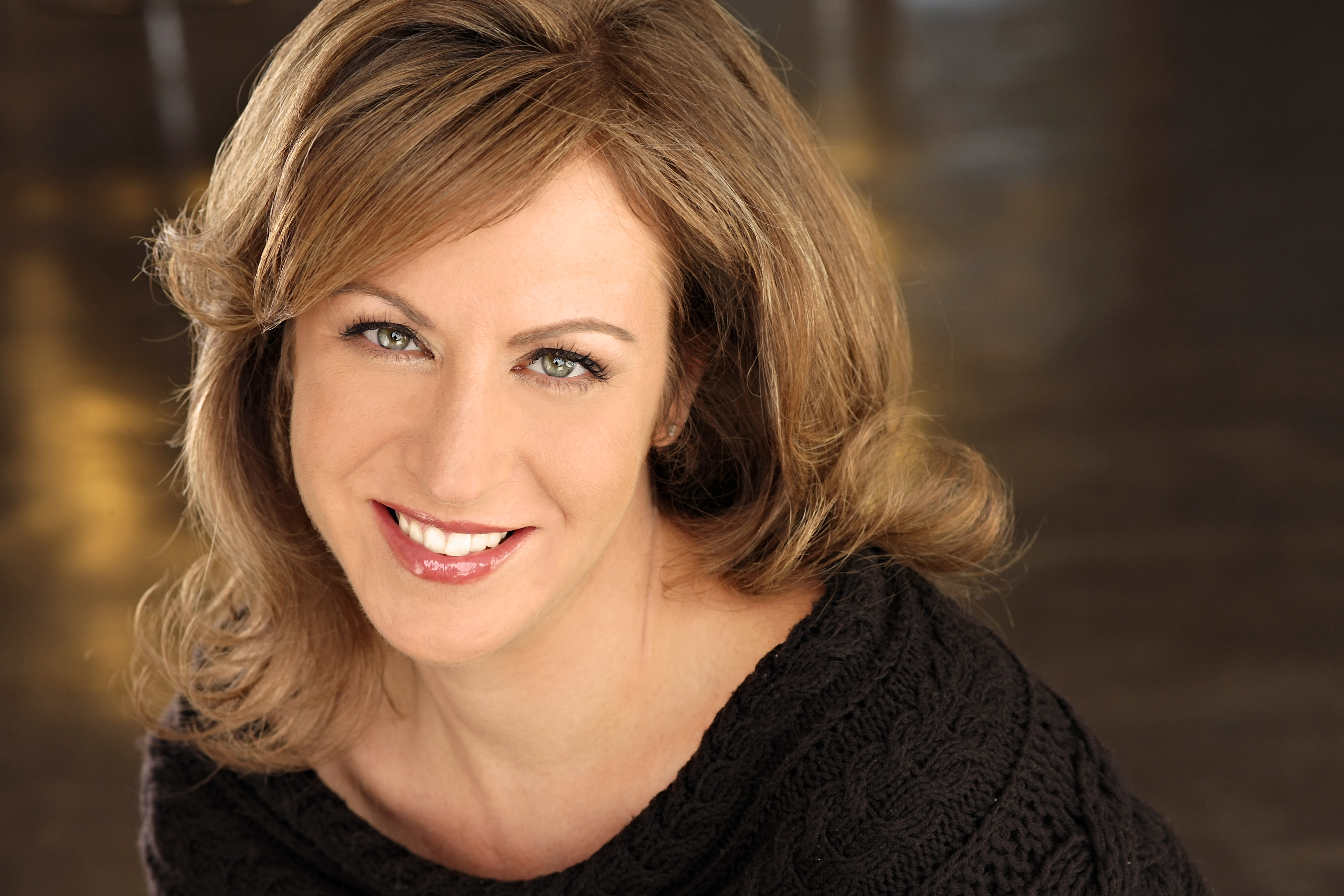
Marisel Vera, Author of If I Bring You Roses, 1 of 3

I met Marisel Vera at the Printers Row Literary Festival this year.  She and Tayari Jones were meeting readers after a panel discussion.  We connected briefly over Marisel’s debut novel, which has now been published.  I’m very thankful to put her before you on my blog and suggest that you go and get her novel, If I Bring You Roses.  And I want you to know that you can meet Marisel.  She will be meeting friends and readers, signing books if you have them on August 28, 2011 at 8 pm at The Nervous Breakdown Reading Series co-sponsored by Sunday Salon Chicago.  The location is Katerina’s, 1929 W. Irving Park Rd., Chicago, IL.

This is a three-part blog series featuring Marisel where she’ll be telling us about her novel, her experience publishing it, as well as a bit about her life as a writer…

When I was 13-years-old there were a rash of house fires in the Pilsen neighborhood over on Chicago’s South Side.  Families with children died in the fires because the victims couldn’t speak English and when they shouted “¡Ayuda!” the firefighters couldn’t understand that they meant “Help!” Community leaders called for the firefighters to learn Spanish, but that infuriated many Chicagoans. I remember an on-air editorial about how everyone should learn English. This was America!  People wrote letters to the Chicago papers saying how the victims were at fault because they should have learned English like their parents and grandparents.

I was shocked and disheartened particularly because I didn’t have a voice as a young Puerto Rican girl in my own family. To my young self, what mattered most was that innocent people had died. Wasn’t it a good thing to learn a few words in another language if that would help prevent a tragedy?  I determined that one day I would write something to help people see how we were all the same whatever race, whatever nationality.

My novel If I Bring You Roses is a story about two people who marry and move to Chicago in the 1950s and how things happen and how they deal with it. That the novel is set partly in Puerto Rico and the couple is Puerto Rican is juice of the pineapple, the sauce of the beans, the ajo en mofongo.  Having said that, some readers will read If I Bring You Roses as a straight story about a man and a woman and a marriage while others will notice how the United States presence and control over Puerto Rico had severe economic repercussions that resulted in events that led to the mass immigration of Puerto Ricans to the mainland. I tried to be historically accurate and also captivate the reader’s attention with my storytelling.

I wanted to tell the novel in two voices, both female and male, because the immigrant experience is different for Latin Americans depending on gender.  In If I Bring You Roses, Aníbal is always wishing to be a man like his father. Aníbal comes from a culture where the man is king but in America, he is disrespected in the workplace.  His feelings of powerlessness compromise his sense of manhood.  In turn, the humiliation that male immigrants experience creates a cycle of privilege and subordination that ultimately disrespects women.  For Felicidad, who was a second class citizen in Puerto Rico and in her own family, immigration is the best thing that ever happened to her.  She can be independent and speak up for herself and for others and she is respected for doing so. The status of immigrant women from Latin American tends to rise in the U.S. while men lose their privileged status.

If I Bring You Roses is set in Chicago because I wanted to write about the first wave of Puerto Ricans who came in the 1950s like my parents and my uncles. I am a fan of multi-cultural literature and there is very little of Puerto Ricans in Chicago.  The closest I had to any literature about Puerto Ricans when I was growing up was Piri Thomas’ Down These Mean Streets and that was non-fiction and set in NYC.  Being Puerto Rican in NYC is not the same as being Puerto Rican in Chicago and as we Chicagoans know, New York City is not Chicago.

It was very liberating to write from Aníbal’s perspective. Loved it, loved it, loved it.  I do have to admit to a slight concern about how people who know me will think of me once they read how Aníbal thinks about sex. But not for a moment did I think of silencing him. I had to be true to him and Aníbal is a very sexual guy.  Sex is how he expresses how he feels. I found Felicidad’s character more difficult to write.  I thought a lot about her and what made her the woman she became and that helped me to understand her and to empathize and love her.

Conflicted With The Help

Have you read Kathryn Stockett’s The Help?  I haven’t.  I told my close friend, Maggie, last year when she was reading it that I had my challenges coming to the work.  I asked if she was enjoying it and was happy she said that she was.  She resonated with much of the novel because of her background and because of her experience growing up a white woman in the South.  I celebrated the book.  I loved that she could find the portrayal in it credible when gauged by her own personal story.  But I was off center.

I told Maggie and David and Dawn (we were all together at the time) that my conflict with the novel was with my desire to support and celebrate books in general and fiction in particular with my learned-over-the-years suspicion that my story–that story that I own collectively with all other black folks in this country–can so readily be accepted, supported, purchased, and promoted when it’s written by non-black folks.  I continue to experience that conflict as the movie is now being promoted.

I’m careful not to take these conflicts too far on this blog.  But my conflict is my conflict.  In fact, I’m very thankful for the humility Ms. Stockett exhibits on her website when responding to the question, “Were you nervous that some people might take affront to you…writing in the voice of two African American maids?”  She says,

…I was very worried about what I’d written and the line I’d crossed. And the truth is, I’m still nervous. I’ll never know what it really felt like to be in the shoes of those black women who worked in the white homes of the South during the 1960s and I hope that no one thinks I presume to know that. But I had to try. I wanted the story to be told. I hope I got some of it right.

Having not read the novel, conflicted man that I am still, I appreciate the author’s hope.  I share it.  And I also hope that the success of her novel continues to grow in relation to her posture around the issue of telling someone else’s story.  Indeed, novelists always tell another character’s story.  I hope she’s done that well.

That said, the other day I read the comments from Rosetta Ross, a religious studies scholar at Spelman, over at Religion Dispatches.  I share some of her biographical experiences, reactions to The Help, and sentiments about the acceptance of African American culture when its ushered to the wider world through the pen and hands and submission processes of white publishing professionals in this case.  Now, to be clear, I love white folks.  Some of you all are white, and I hope you know I love you.  And I hope you have a comment or two about this, especially if you’ve read the novel or seen the screening.  And still, I’m intrigued by how often and constant black authors or, more pointedly, African American authors, try to tell stories that cannot be accepted and embraced as cultural stories, as stories for the wider reading public.

Dr. Ross identifies three messages from the embrace of The Help.  Three reasons she won’t see the movie.  She says,

The first false message says: The real agents of the world are white….This message is false because black women, from a variety of stations in life, have voices and live and demonstrate to the world fulfilled lives every day—without the assistance or interference of white people.

The second false message is this: The really important point of all cultural production and activity is for white agency and dignity to be actualized. The overarching plot of this book presents the narrative of a young white woman finding herself and her voice amidst cliches, circumscriptions, traditions of the South during the 1960s. Against this background, the black women are instrumental in Skeeter’s journey into adulthood. Skeeter’s journey is the more prominent message of the book, and, I suspect, of the film as well. I will not go to see the movie The Help because I do not wish to view yet another production that tells me, a black woman, it is all about whiteness.

…the third, and most detrimental false message: Black persons—perhaps people of color, generally—exist primarily to serve of enhance the lives of white people….A predominant element of the Western imaginary, the idea that black persons ultimately exist as servants for white life, has long been supported by rhetorical constructions of Christianity. The most obvious examples, of course, were rituals such as catechisms about the necessity for [black] servants to obey [white] masters…

What do you think about Professor Ross’s comments?  Have you noticed some of the biases and patterns she speaks of, some of the messages she’s read and heard in the buzz around the novel and the film?  What experience have you had around hearing your story told through someone else’s lips?

Finally, I hope you read the novel.  One day I may.  I’ve read many representations of black people written under the hand of non-blacks, and this novel may join that shelf.  And, again, my conflicts aside, I can support the work of an author reaching the world with a good story–and upon the great experience my good friend had of the work.  I can easily separate my experience of the novel (or my perspective of the novel as I approach it from a distance) from my hearty suggestion that it should be read by others.

By the way, if you’d like to see Professor Ross’s full essay at RD, click here.

Closing Books

Last week I went to Borders with my son, and it was sad and exhilarating at the same time.  We strolled into the store, me refusing to press the silver button with  the blue chair in the middle, Bryce trying to help.  He’s into opening and closing doors these days.  Somebody waited for us to pass into the store.  The second door was propped open so customers could come and go easily.

The place was packed.  I had the sense that it would be full of people all day.  It was around 2:30 in the afternoon.  I scanned the place.  I had never been to Borders on State.  We had one in the neighborhood which we frequented before it met the same fate dressed in yellow with bold black block letters.  Bryce was immediately captivated.  He’d glance up at me and then to the shoppers.  He looked from left to right, nervous and a little thrilled that we were there.  People scanned titles.  They hoisted novels, stacking them in their hands and holding them in a line over their bellies.  One lady called somebody and read the back cover copy over the phone.  She asked, “Have you heard of this author before?”  I pressed ahead into aisle and ignored the conversation after that.  It felt like people were looting, excited over the broken glass of ten thousand authors’ dreams.

Before we left, the boy gave me the signal that he was ready for a snack.  He, like me, tired at the scene and needed nourishment.  I couldn’t blame him.  The writer in me, the reader in me, wanted something to eat after that.  I wanted something to sustain me after seeing another bookstore close.  Books are the things that have built me and built many of the people that I love.  Books have taught me and us.  We should buy them, in stores large and small.  We should rent them from our public libraries.  We should.

I thought of my usual places to buy books.  I thought of Azzizzi Books in Lincoln Mall and Powells in Hyde Park.  I recalled my last visit to the Seminary Co-Op and to it’s relative, 57th Street Books.  All of sudden, pushing the boy back toward the bridge we’d cross to get to our car, I felt like the closing of Borders was, in part, my fault.  I was like those readers, those scavengers in that store.  I, too, looked for the best price for a book when I shopped.  I chose and do choose to buy most books for a discount because my book budget comes mostly when I get an honorarium of sorts that I don’t expect.  I’ve changed that over the last four or five years as I’ve learned how to buy an author’s work for the toil that’s seen and unseen.  I don’t mind–in fact, I enjoy–buying a book for retail or from an author directly since it comes under a habit I think the world is poorer without.

I’m not into e-readers.  I’ll protest them as much as possible.  I will take my books, open, and read them.  I will crave and consume the spines and jackets and covers be they soft or hard.  I will smell the pages and rub my fingers over the corners, turning that page slightly when my eyes are half way down.  I will flip the page or pages to see how long it is until the chapter is finished.  I may scribble a note to the author, continuing what feels like a conversation between us.  I’ll move my bookmark to the page I want to stop at for the night, never counting and only judging by whether I’ve started at 11:30pm or 1:00am or by how far I think that night’s insomnia will take me.  I will laugh and squint and sigh and hold my breath.  I will sit my book on my table by that glider or in my bag or on the desk.

I’m sad for the funerals happening for all the Borders stores across the country.  I’m sad for the careers that have been upset and altered and forever changed because another company has failed.  But I will keep reading and renting and buying books.  You should too.

Writing To Your Bottom

Writing can be a spiritual exercise.  It can be a spiritual practice.  In my mind a spiritual practice is a gesture done or a habit undertaken to make you more honest, to bring you closer to you, and to put you in the conscious presence of God who is greater than you.  Now, that’s what I mean by a spiritual practice or exercise.  And I think writing can be one of those practices.  There are others, many others.

I read an interview with Robert Boyers at Catching Days.  I’m grateful to Jane Friedman for introducing me to Catching Days.  At the end of the repetitive interviews (The blog host, Cynthia Martin, offers interviews at the first of every month), writers are asked the same three questions.

  1. What is the best book you’ve read in the last three months and how did you choose it?
  2. Would you give us one little piece of writing advice?
  3. What is your strangest reading or writing habit?

In his interview Robert Boyers answers the second question by saying,

“Use your writing–even work written on assignment–to get to the very bottom of what you are thinking and feeling.”

I think this is an illuminating piece of advice for writers, but I also think non-writers can do this.  What do you think?  Have you used writing as a spiritual exercise?  Perhaps you journal or you blog.  What else have you done to get to your bottom, to articulate or to understand your thoughts and feelings?

On My Conversation With Dr. Gardner Taylor, 2 of 3

One week ago I left home at a few minutes to five on my way to O’hare.  It was so early God was still asleep.  Imagine my surprise when I saw a white-coated resident chomping up the sidewalk, already late for something, moving too quickly to say good morning.  I got to the Green line, took it to the Blue line, seeing that a lot of people were headed places.  I grew in my shock since I can’t fathom waking up that early for anything.  I did that day, but that was an exception.

I rustled through the line toward airport security, stepping through, worried that I’d miss my flight.  I texted the editor I was to meet at the gate.  I felt myself sweating because my body knew that I’d be late.  He replied that they weren’t doing anything at the gate, that he’d meet me at K4.  I looked at my ticket.  They were a minute late beginning to board.  I scanned the snake of a line in front of me.  At least two dozen people were still paralyzed ahead.  I sighed.  I looked at my phone.  I wanted to call somebody important, somebody who could order the security to confirm that I was safe.  I had to wait.  A few minutes later my editor friend said they were boarding and he’d meet me on the plane.  In my head, I saw a very thick door closing.  I saw the keypad and the shaking head of a flight attendant apologizing or trying to.  I saw a screen listing all the flights to Raleigh and read, in my mind, that I had missed each one.

I asked a few folks if I could get in front of them.  They were saints or angels.  Really kind, they allowed me to jump ahead.  How far is K4, I asked somebody.  “Not far,” she said.  “You won’t have to run.”  I undressed, stood in a space ship with my arms out like a cross, and held my breath like I do when the nurse collects my weight.  The lady allowed me through.  I got my bags, thankful that they didn’t snatch my deodorant.  There was no time to put my shoes on, and I felt the tops of my shoes under my heels as I ran.  After starting into a jog, I thought of the woman who said I wouldn’t have to do what I was doing.  I thought about the foolishness of missing a conversation with Gardner Taylor because I took too long to put on my belt at the airport.  I ran faster, made it to the gate, and was greeted by name by a really nice woman.  For a minute, I couldn’t imagine that people could smile that early in the morning.  I had probably missed several smiles already.  I was barely awake.

It was too early to run through an airport.  It was just after seven.  The blue-uniformed lady took my wrinkled pass and the apology I gave with it.  She opened the thick door after sliding a card into the scanner.  I looked into the tunnel, took a deep breath to stop myself from huffing.  I thanked her twice.  She couldn’t know why I was so grateful.

We spent the entire flight talking–both catching up from our last meeting, talking of our families and our churches and our work, and discussing the interview.  Among the many notable things, Marshall said in that conversation was that he wanted me to conduct the interview.  He would provide the colorful commentary, but he wanted me to talk to Dr. Taylor.  I digested his words with large eyes.  This wasn’t exactly a request.  It was more of an invitation.  It would be a pleasure.

Marshall and I had a couple hours before our appointment with Dr. Taylor.  We visited Duke, walking through the University chapel and meandering through the seminary.  We poked our heads into Stanley Hauerwas’s office.  The door was open but he wasn’t there.  I snapped a picture with my phone and sent it to Winston because I knew he’d like that sort of thing.  I looked for L. Gregory Jones, and Marshall asked about Jason Byassee.  Neither was there, and we concluded that the Seminary was slow to upgrade its directories.  We ate lunch and got back to the car to head to our meeting.

When we arrived at his home, Dr. Taylor stepped up to the door and greeted us in that, now familiar, deep and penetrating song of a voice.  “Gentlemen,” he sang.  “Come in.”  He escorted us to his study, told us we were home, and to get comfortable.  Even with age crossing his back and shoulders, I could see the strength that God had given the man over the years.  He had stood in many pulpits, in churches and chapels, in seminaries and in universities, and he was here behind his desk, opening himself for our questions.

On My Conversation With Dr. Gardner Taylor, 1 of 3

I’ve been reading Leadership Journal for several years.  It’s a magazine that’s written primarily for church leaders.  Most of the articles are written by pastors and the Journal provides a massive amount of practical material for people doing ministry, particularly in the Evangelical stream.

A little more than a month ago I recommended to a friend that he should suggest that the Journal publish an interview with Gardner C. Taylor.  My friend, David Swanson, who writes for the Journal’s blog, Out Of Ur, liked the idea and passed it to the editorial team.  He and I have fond appreciation for Dr. Taylor, for his historical significance as a pastor, and for his extreme gifts as a preacher and writer.

We were both pleasantly surprised that the editors took the idea to heart, discussed it with other folks on the magazine’s board, and agreed that it would be a great interview to try to get.  My surprise continued when David and I were asked what kinds of things we’d ask Dr. Taylor.  Of course, we chimed in, glad that our idea was being pursued.

A week or so went by when the next surprise came.  Marshall Shelley, the editor of the Journal, asked me if I’d be interested in participating in the interview, in conducting it with him.  You should know that this was no where in my atmosphere when I suggested the article to Leadership.  I have a sense of how articles are queried, how they are discussed and decided upon, and getting this opportunity was not in my field of expectation.  I was thrilled.  I told Marshall I was thrilled.  I saw mental pictures of him laughing at me because I was so thrilled.

I was at our denomination’s Annual Meeting, a day or two from being ordained when I saw Marshall’s email.  It was a great addition to that week, the thought of participating in an interview with Dr. Taylor.  My wife was happy for the same reason I was.  My denomination was ready to bestow a life-long credential for pastoral leadership while, at the same time, I was about to participate in a conversation with a man who had served churches in various ways for seventy years, who was a friend to folks like Martin King Jr. and Samuel Dewitt Proctor, who had a love for the Gospel and for the church for which Jesus died, and who spent his life as a consummate communicator.  I was looking forward to what was next.

By the way, if you’re interested in learning a bit more about Gardner Taylor, here are two interviews, one more current and one from several years back with the parent magazine of Leadership Journal, Christianity Today:

  1. Kim Lawton conducted a 2006 interview for PBS with Dr. Taylor in Raleigh.
  2. Lee Strobel conducted a 1995 interview for Christianity Today with Dr. Taylor in Brooklyn.

Interview with Rabbi Zoe Klein & Book Giveaway

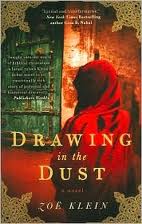
I am happy to bring you the next author interview with Rabbi Zoe Klein.  Rabbi Klein’s novel, Drawing in the Dust, tells the story of an archaeologist who risks her reputation to excavate beneath the home of an Arab couple to make a miraculous discovery.  I’d like to give away a copy of the novel, so look into that at the bottom of the interview.  Rabbi Klein inspires me.  As a spiritual leader and writer, she gives powerful answers to how she thinks about what she does, how she wobbles all her plates.  Enjoy…

MW: When did you first know you would be both a writer and a rabbi?

RZK: Hi Michael! Thank you for bringing these questions to me, it is an honor to participate in this interview! Long before I ever could imagine that a little girl like myself could grow up and become a Rabbi, I knew I loved to write. I wrote stories all the time. I remember writing stories on those beige thin sheets of paper on which the lines were two inches apart, filling in scenes with chubby crayoned letters. I even remember one of my first stories, about a magical species called the Giringos, half giraffe and half flamingo.

I remember a powerful moment, the first time I told my father I wanted to be a writer when I grew up. He is an artist and I remember standing beside his dawing board while he worked and saying I wanted to be a writer. He said, “That’s great. But you cannot call yourself a writer until you finish a book. Even if it is never published, even if no one reads it, once you finish a book you will be a writer, but until then you are not.” It sounds like a strong thing to say, but it was a valuable lesson. For my father, it was very important that I learn the value of taking a creative idea to its completion. Lots of people have wonderful novels in their souls, but very few put in the tedious effort to realize it. When I finished my first novel in college, an as-yet unpublished story called “The Goat Keeper”, it was such a proud moment to hand it to him and to become a writer!

It wasn’t until I was in my Junior year in college that I truly understood that the path to the rabbinate was even a possibility for me. I had always thought that it was something only men could do. Even though there were female rabbis around, I hadn’t met any. However, I always loved religion, studying faiths and myths and cultures. The kinds of conversations and debates I had with people with strong faith identities in many ways mirrored the conversations I’d hear between my parents and their artist friends. The artists would always talk about such things as mortality, man’s fragility, the futility of monument, shattering dogmas, the supremacy of blank space…it was art they were discussing, but it filtered into my mind as theology, and I loved it.

In many ways I think of myself as a rabbi with the heart of a novelist, rather than the other way around. I started as a writer and then expanded my material from the confines of pen and ink to people and community. As a congregational rabbi, I have the opportunity to help craft the story of a community of families, engage in their sacred and profound moments, adding our chapters to an ever-unfolding scripture of a people.

MW: I realize both roles relate to one another, if I’m reading your interview in Drawing in the Dust correctly.  But does writing serve your role as a spiritual leader? If so, how?

RZK: Sometimes I think my rabbinate is almost like fieldwork for writing, and my writing is soulwork for the rabbinate. Writing is interesting in that it is done in physical solitude, and yet it is never lonely for me. I am full up with characters, with vivid dreams and scenes, demons to wrestle, I’m haunted and vexed and also ecstatic and weeping. In contradiction to that, in the rabbinate there is no solitude, you are continually working with people. It is a very social position, and yet for me there is loneliness there. There is a lot of what the mystics call “tzim-tzum,” a kind of spiritual contraction one does to make room for others. You retract yourself enough to allow space for other’s voices. You become an expert active listener. When I write though, that part of me that contracts in order to give center stage to others’ stories and needs, suddenly unfurls its great wings and jets about wildly.

The short answer to your question is that I think my writing allows me to be a whole person as a spiritual leader. Without it, I think I’d be fragments of a mosaic, chipped with no clear design. I think when you take the time regularly, whether through writing or meditation or running or whatever, to reflect on your decisions and desires, face your darkness, and emerge with a burning but joyful heart, you can better take others by the hand and lead them through a courageous process of reflection and growth.

MW: Talk about your experience as a person of faith—indeed a leader—writing biblical fiction for a broad audience.  Were you concerned that you wouldn’t be received well, that you might misrepresent yourself, or that your story might be misperceived?

RZK: While I was perhaps concerned about the story being misperceived or not received well, it was not a deterrent for me. I was encouraged by a great editor Al Silverman to forget while I wrote that I was a rabbi, a mother, a wife, and just write from a place of uniqueness, without titles, and I’ve always tried to do that. I am a person of faith. I believe that stories which are filled with metaphor and myth are a form of prayer. I never feel far from God when I write, in fact I feel close, even if I’m writing a scene that is sexual or violent or both. It is a process of exploration into human nature, into fantasy, into longing and fear, and it is not too different than the best kind of worship experience, where you are completely honest and raw, repentant, mournful, terrified, awe-filled, trembling with humility, romanced and swept up in all your smallness into the impossible arms of the infinite. There is no doubt that it is scary to write for a broad audience, and that no matter how much you try to hide your truths under layers and layers of plot and characterization you always end up realizing that despite your efforts you ended up publishing your very private diary, but it is also freeing to realize that the things that you say are the honest voicing of your humanness, what a relief to not be a spiritual leader hiding behind a façade, with word locked into routine platitudes! How refreshing to be real, to have a faith that wrestles, breathes, challenges and confounds!

MW: How has your congregation responded to your writing life?

RZK: My congregation has been celebratory and wonderful. I am fortunate to share this journey with them! We have many writers, thinkers, professors and experts-in-their-field in our community, people who love and appreciate art and don’t shy away from its darker sides…

MW: When I connected with you about this interview, I mentioned my gratitude for the seen and unseen work behind this novel.  I’m glad you’ve labored in all the ways you have to give us this work.  What don’t people know about what it takes to write a good story for publication?  Will you give us a sense of some of what it took for you?

RZK: Ah, that’s a good question. I don’t think people understand the sheer mass of hours that it takes. People don’t realize that once the book is finished and you feel completely beaten and your hair is grayer and thinner because of the process, and your eyes are dim from staring into the computer, and every time you blink you see bright blue squares, and your wrecked with fatigue after months of not sleeping, once you’ve gotten that far, you have to STILL muster the strength to face rejection after rejection after rejection…years of rejection and pitching your story, and trying even after years have gone by and you’ve already become passionate about a NEW idea retaining the freshness about the book that no one seems to want…and then after you finally find an agent and an editor, realizing that there are two of three or four more Everests to climb with revisions, revisions that keep tearing out your heart and then sewing it back in. Every time I’d get to a new mountain where it would be so easy to just drop the whole thing, I would think to myself, “This is a filter, and only the most determined get through.” And I was determined to be determined enough! I think people understand how steep the climb is from conception to publication, but I don’t think people know how long it is, how much stamina is involved.
I also tend to like to write stories that have a lot of different characters and layers of interpretation, and it is hard to keep track of all of those little pieces over the course of 600 hundred pages, which was how long DRAWING IN THE DUST originally was. When I was editting it at one point I realized that if one added up the years and scenes carefully for one of the very peripheral characters and tried to figure out her age, she would have to be something like 130 years old. Keeping track of all these strands of lives is hard!

MW: I’m pretty sure you have many things to do.  I could be wrong.  I’m probably not.  How do you serve both these areas in your life well?  And how do you do anything else?!

RZK: Sometimes I feel like one of those cirque-d’soleil contortionists with the spinning plates on top of sticks, except that while they make it look so graceful and beautiful, all the plates spinning perfectly, my plates are often pretty wobbly! And some of them crash. If I were to label my plates, there would be the Writing Plate, the Rabbi Plate, the Children Plate, the Husband Plate, Friend Plate, and of course lots more. I think while I’ve made time to keep the Writing Plate spinning by devoting Mondays, my one day off, to writing, and the Rabbi plate I devote much time to, and the Children Plate keeps spinning even though it’s hectic, I admit the Husband Plate often wobbles and falls (luckily it’s a sturdy, rebounding plate!), and I haven’t been able to devote much time to the Friends Plate (I have friends, we just don’t see each other at all, I haven’t been able to nourish that part of my life)…there are a lot of sacrifices! As I’ve gotten older, I am trying to redistribute my energy, focusing more on my family and building relationships, and trying to approach work with less frenetic energy and more joy and appreciation. Everything is not always in balance as people like to believe! But up until now I think I’ve lived my life is a giant rush, and I really want to learn to slow down and appreciate BEING instead of eating up every hour with DOING.

MW: I read Eugene Peterson who is a pastor and writer, and he encourages clergy to read fiction.  He says that artists have become his allies and have taken a place next to theologians and scholars in his formation as a pastor and as an artist.  You talk about the power of fiction in your provided interview.  How does fiction nurture a person in general and a religious leader in particular?

RZK: That is beautiful. I think that fiction unlocks people’s hearts in a particular way that nothing else can. You take fiction under the covers with you, give it the heat of your breath, and like the genie in the lamp it has an enchantment. Somehow entering the world of fiction, our vault of tears is more easily unlocked, particular drama reflects universal understanding. There is an intimacy in fiction, partly because of the intimacy it took to create it. In terms of a religious person, I think that today we tend to sterilize the idea of a person of faith, turn that person into a kind of sexless judge. Piety is purity. But dancing with God is an intimacy, it’s a cosmic affair, filled with subordination and abuses, mastery and humility, and of course love. I once wrote a new definition for love — Reverence for Mystery. I think fiction nurtures a person in general and a religious person in particular because there are very high truths that can only be expressed in metaphor. God, for example, can only be expressed in metaphor, as shepherd or teacher or lover or parent or guide.  I believe Fiction, ironically, is Ultimate Truth’s master key.

MW: What are you reading these days, by the way?

RZK: To be honest, I’m reading a lot of Science Fiction! I just printed out the top 100 Science Fiction books, and right now I’m reading Ender’s Game. It’s just a field I had never read before, and I am surprised at how much I’m loving it! Before this new kick though, I read Cynthia Ozick’s novels, The Shawl, The Putterman Papers and Heir to The Glimmering World, and my goodness, her language was like cashmere, so rich and sumptous.

MW: You’ve talked about God as the Reader of All Life—language that I love.  What are you working on, preparing, and “offering skyward”?

RZK: I just finished a novel called Origin of Color which will be released in summer of 2012; it is going through its editing process now. I went to Swaziland and Tanzania to research for it when I was on sabbatical this past December. The book is about an American couple that accidently falls into the middle of a crime ring of witchdoctors and politicians in East Africa who sell albino body parts to be made into potions. I met with East Africans with alibinism and families whose children with albinism had been butchered. I wove these experiences into this novel. It was an emotional novel to write, it is a thriller, and it even scared me as I was creating it. I’d be writing in the middle of the night and leaping up to make sure the doors were locked…jumping if I thought the curtain moved! The “offering skyward” part of it is that it is also a contemplation about perception. I am very excited about it.

I am also leaving in two weeks to go back to Africa, to Ghana, with the American Jewish World Service. I will be in Winneba, Ghana with American Jewish World Service’s Young Rabbis’ Delegation. The Young Rabbis’ Delegation brings together a group of rabbis from all over the country to experience first-hand the power of grassroots development and explore issues of social justice and global responsibility from the perspective of Jewish texts and tradition.  The group is working at Challenging Heights, an AJWS-supported NGO devoted to providing education to former child slaves and resources to families whose children are at risk for slavery and human trafficking.

MW: How can readers stay in touch with you and support your work?

RZK: On my website www.zoeklein.com, or by emailing me at zoe@zoeklein.com. Thank you so much for inviting me to participate on your website. Abundant blessings to you and to all of your readers!

As for the book giveaway, if you know of a clergy person who would benefit from reading this novel, post a comment, a sentence or two, about why they would.  Do so by Friday, midnight, CST.  I’ll choose a winner randomly and you can give a copy to your clergy person.

Faith and Fiction, pt 2

One of my exemplars when it comes to writing and leading is Frederick Buechner.  I mentioned a quote from this same message by Buechner some time ago, which you can visit by clicking here.  What’s belowe is a small attempt to ready you for tomorrow’s post, an interview with Zoe Klein.  Make sure to come and read it!

The word fiction comes from a Latin verb meaning “to shape, fashion, feign.”  That is what fiction does, and in many ways it is what faith does too.  You fashion your story, as you fashion your faith, out of the great hodgepodge of your life–the things that have happened to you and the things you have dreamed of happening.  They are the raw material of both.  Then, if you’re a writer like me, you try less to impose a shape on the hodgepodge than to see what shape emerges from it, is hidden in it.  You try to sense what direction it is moving in.  You listen to it.  You avoid forcing your characters to march too steadily to the drumbeat of your artistic purpose, but leave them some measure of real freedom to be themselves…

…In faith and fiction both you fashion out of the raw stuff of your experience.  If you want to remain open to the luck and grace of things anyway, you shape that stuff in the sense less of imposing a shape on it than of discovering the shape.  And in both you feign–feigning as imagining, as making visible images for invisible things.  Fiction can’t be true the way a photograph is true, but at its best it can feign truth the way a good portrait does, inward and invisible truth.  Fiction at its best can be true to the experience of being a human in this world, and the fiction you write depends, needless to say, on the part of that experience you choose.

Morrison on Writing & The Interior Life

To follow is a passage from Toni Morrison’s “The Site of Memory” in her book of selected nonfiction, What Moves At The Margin.

If writing is thinking and discovery and selection and order and meaning, it is also awe and reverence and mystery and magic.  I suppose I could dispense with the last four if I were not so deadly serious about fidelity to the milieu out of which I write and in which my ancestors actually lived.  Infidelity to that milieu–the absence of the interior life, the deliberate excising of it from the records that the slaves themselves told–is precisely the problem in the discourse that proceeded without us.  How I gain access to that interior life is what drives me and is the part of this talk which both distinguishes my fiction from autobiographical strategies and which also embraces certain autobiographical strategies.  It’s a kind of literary archaeology: on the basis of some information and a little bit of guesswork you journey to a site to see what remains were left behind and to reconstruct the world that these remains imply.  What makes it fiction is the nature of the imaginative act: my reliance on the image–on the remains–in addition to recollection, to yield up a kind of a truth.  By “image,” of course, I don’t mean “symbol”; I simply mean “picture” and the feelings that accompany the picture.

Five Questions For Writers

Jane Friedman is a gift for writers.  Her blog, There Are No Rules (which you can visit by clicking here) is full of resources, tips, summaries, and posts about writing, editing, publishing, marketing, and promotions.

In a recent post at Writer Unboxed, Jane offers writers five questions to ask when we wonder whether we have talent.  There are different questions, better questions, according to Jane.  Here is an excerpt with question 4:

4. What do you do after you fail?

Everyone fails. That’s not the important part. What’s important is what you do next. Are you learning? Are you growing? Is your experience making your heart bigger? Or is it shrinking you down, making you small? Beware of cynicism and bitterness, because if these emotions stick around too long, they will poison your efforts.

If you’re a writer or you know someone who is, pass these thoughts on.  If you’re interested to read more, see the full post here.

A Rabbi or A Novelist

I just finished Drawing in the Dust, the debut novel by Zoe Klein from 2009.  It’s a rich and detailed story about an archaeologist who has spent years working around Israel.  The main character, Page, spends her days unearthing artifacts from centuries prior, while the story takes readers through Page’s on personal and interior excavations.  She’s searching for answers, for connections, for her own heaven meets earth.  The story captures the sights, smells, and textures of places from biblical Israel to New York to a tiny cottage in Massachusetts and back to Israel.

In addition to the novel, the copy I have includes a Q & A with Zoe Klein who is the senior rabbi of Temple Isaiah, a large congregation in Los Angeles.  I wanted to post one question and Rabbi Klein’s answer.  She’s done a fascinating thing in writing this novel.  If you’re adding to your summer reading list or looking for something you can delve into, get Drawing in the Dust.

Though the two are not mutually exclusive, what do you consider yourself most to be?  A religious figure–a rabbi–who has written a novel, or a novelist who is also a rabbi?  While the answer to this question is clear in my heart, it is hard to answer it in words, but I will try.  I consider myself a novelist first, but this takes a bit of explaining.  While God is often referred to as the Author of All Life, I like to relate to God as the Reader of All Life as well.  Life is a love letter, written in logos deeper than language.  I am a novelist first, but I don’t always compose with pen and ink, or keyboard and monitor.  Rather, as a rabbi I help people compose with heartbeats and breath, identifying the myths and truths in their lives.  A community is a library of timeless tales and adventures, of grief that poeticizes, often darkly, and of redemption that fill the air with song.  When I officiate the life cycle ceremonies, I always feel as if I am trying to weave in something strong out of delicate fibers.  At weddings, I try to help build a solid foundation out of very feathery dreams.  At births, I try to infuse joy and light into an entirely mysterious future.  At death, I take the tiny strands of an infinitely complex life and try to thread them into something sacred.  Writing and serving as a rabbi are not too different to me.  In the end, it is about crafting stories, and helping people discover their grand themes and subtler metaphors.  It is about offering these stories skyward to the Reader of All Life.

For Fathers & People Who Love Them

Tomorrow I’m launching a second blog.  I will continue to ramble about faith, writing, and relationships on this blog.  But the second blog will be for fathers and the people who love them.  I’ll share stories about parenting and focus on the skills that fathers and parents need, the interior life as a father, and the moments of grace I’m experiencing as a father.  That last part will also still get some coverage on this blog, though the posts for Intersections will be explicitly about my faith and how fatherhood is relating to, renovating, or enriching me spiritually.

Of course, I’m a man of faith whatever blog I’m writing on, so you should expect to see glimpses or full-scale shows of faith and grace on both blogs.  If you’re interested in these father-related topics, or you know someone who is, the address is forfathers.wordpress.com.  I’d love to have you or that person you know visit the blog.

The second thing about tomorrow I’d like to mention is that you should read about modern slavery in America over at the Root.  It summarizes Juneteenth, what it is, and how we should look at and respond to issues of slavery today.