Nouwen “Writing to Save the Day”

This is from Henri Nouwen’s Daybook of Wisdom and Faith, Bread For The Journey.  The book is a daily meditation and the next two posts are from the meditations for April 27 and April 28.  Obviously those aren’t the dates I’m posting them, but they fit.

Writing can be a true spiritual discipline.  Writing can help us to concentrate, to get in touch with the deeper stirrings of our hearts, to clarify our minds, to process confusing emotions, to reflect on our experiences, to give artistic expression to what we are living, and to store significant events in our memories.  Writing can also be good for others who might read what we write.

Quite often a difficult, painful, or frustrating day can be “redeemed” by writing about it.  By writing we can claim what we have lived and thus integrate it more fully into our journeys.  Then writing can become lifesaving for us and sometimes for others too.

Warner and the “inner critic”

Brook Warner offers writers some compelling advice.  She talks about the writer’s inner critic and all the things the critic says.  She says that we should take it all in, breathe deeply, and ask if any of the critic’s messages are based in fear.  Brook’s words spill beyond the work and life of the writer…

Your inner critic is a loud mouth who sits on a pile of fear in hopes that you won’t risk yourself. If you don’t try, you can’t fail. If you never risk, you maintain the status quo. If you don’t stretch yourself, you stay safe.

Our writing pushes us outside of our comfort zone because it challenges us to be more visible, bigger, more truthful, to take a stand for ourselves and what we want.

I challenge you to write down your list of fears and hang it in your writing space this week. It’s amazing how giving voice to something lessens its charge. When you sit down to a message that says, “Your writing sucks,” rather than getting worked up about it, answer with, “Yes, it mostly does, but this is a content dump.” The point of SheWriMo is to write. It’s okay if it’s shit. The whole challenge is about getting yourself into the habit of writing and setting a pace.

So let it be shit. And do invite your critic into your writing space this week. By the end of the week you might just have a new friend.

Read Brook’s entire post over at She Writes.

Morrison On Love, Narrating, & Language

Take some time to watch this video.  It’s about 27 minutes long.  Any video with Toni Morrison is worth the time.  She’s always the writer, the architect of language, always the teacher of history.  I hope you enjoy her depth, her voice, and her articulation how her work is a work of love.  She’s discussing Love, one of her novels, but is just as much discussing love in general and how it relates to writing and telling story.

Miller and “…a great story…”

Here’s the truth about telling stories with your life.  It’s going to sound like a great idea, and you are going to get excited about it, and then when it comes time to do the work, you’re not going to want to do it.  It’s like that with writing books, and it’s like that with life.  People love to have lived a great story, but few people like the work it takes to make it happen.  But joy costs pain.

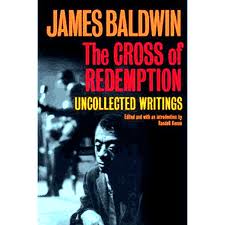
Baldwin and “the writer’s subject”

I suppose that it has always been difficult to be a writer.  Writers tell us so; and so does the history of any given time or place and what one knows of the world’s indifference.  But I doubt that there could ever have been a time which demanded more of the writer than do these present days.  The world has shrunk to the size of several ignorant armies; each of them vociferously demanding allegiance and many of them brutally imposing it.  Nor is it easy for me, when I try to examine the world in which I live, to distinguish the right side from the wrong side.  I share, for example, the ideals of the West–freedom, justice, brotherhood–but I cannot say that I have often seen these honored; and the people whose faces are set against us have never seen us honor them at all.

But finally for me the difficulty is to remain in touch with the private life.  The private life, his own and that of others, is the writer’s subject–his key and ours to his achievement.  Nothing, I submit, is more difficult than deciphering what the citizens of this time and place actually feel and think.  They do not know themselves; when they talk, they talk to the psychiatrist; on the theory, presumably, that the truth about them is ultimately unspeakable.  This thoroughly infantile delusion has its effects: it is contagious.  The writer trapped among a speechless people is in danger of becoming speechless himself.  For then he has no mirror, no corroborations of his essential reality; and this means that he has no grasp of the reality of the people around him.  What the times demand, and in an unprecedented fashion, is that one be–not seem–outrageous, independent, anarchical.  That one be thoroughly disciplined–as a means of being spontaneous.  That one resist at whatever cost the fearful pressures placed on one to lie about one’s own experience.  For in the same way that the writer scarcely ever had a more uneasy time, he has never needed more.

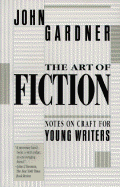
Gardner and “…a dream in the reader’s mind.”

John Gardner in the Art of Fiction says a lot that writers should read.  For me his overall thrust is captured in a few helpful passages in his chapter on Basic Skills, Genre, and Fiction as Dream.  If you’re a writer of fiction and haven’t met this book, visit your nearest public library and thumb through it.

In any piece of fiction, the writer’s first job is to convince the reader that the events he recounts really happened, or to persuade the reader that they might have happened (given small changes in the laws of the universe), or else to engage the reader’s interest in the patent absurdity of the lie.  The realistic writer’s way of making events convincing is verisimilitude….

He must present, moment by moment, concrete images drawn from a careful observation of how people behave, and he must render the connections between moments, the exact gestures, facial expressions, or turns of speech that, within any given scene, move human beings from emotion to emotion, from one instant in time to the next….

…whatever the genre may be, fiction does its work by creating a dream in the reader’s mind.  We may observe, first, that if the effect of the dream is to be powerful, the dream must probably be vivid and continuous–vivid because if we are not quite clear about what it is that we’re dreaming, who and where the characters are, what it is that they’re doing or trying to do and why, our emotions and judgments must be confused, dissipated, or blocked; and continuous because a repeatedly interrupted flow of action must necessarily have less force than an action directly carried through from its beginning to its conclusion.

Wangerin, Writing, and “…the shape of my days.”

I’m celebrating the work of writing and revising and wrestling with words.  This is partly because of National Novel Writing Month and partly because I need to think about writing more than I allow myself.

I came across a delightful conversation between Mark Neal and Walter Wangerin.  Walter Wangerin is a retired writing teacher and pastor and author of more than thirty books, a few of which I’ve read.  His writing is wide, deep, mystical and searching.

In the conversation, Wangerin talks about the five covenants of writing.  He says of beginning a project that he starts “with something that has possibility,” something he can pursue.  He says, I’m sure for those of us learning from his long record as a writer, communicator, and teacher, “In order to see truth or reality as clearly as you possibly can, you have to empty yourself. And that means emptying yourself of any preconceived interpretive factors.”

He discusses his views of technology and how it’s impacted his own way of writing.  Then Wangerin mentions a friend, Eugene Peterson and how he has ended book writing and taken up letter writing.  Wangerin says,

And his mind is my mind. I’m sure there are authors who do consider what they are sending out, even by email, to be of literary value. But I think letter writing has been profoundly undermined by email. Letter writing used to be a genre of its own that was just a delight. You didn’t have to go back and forth and revise it; you could allow your mind to wander and be shaped by the relationship you had with the person you were writing. And I am sorry that that has been diminished. Because email simply gets deleted.

Is that true in your world?  Do you think that your communications have changed, or, more pointedly, that your writing has lost value because of technology?  When talking about how many people can’t live without devices and gadgets to get things like writing done quickly, he says that “writing shouldn’t be easy or fast.”  And he offers advice to writers and the theme, if I can call it that, is nurturing one’s soul.

When answering one of the last questions in the interview, one having to do with a recent book, Letters From the Land of Cancer, Wangerin talks about what motivates him to keep writing.

But it takes somebody who knows how to write it so the commonality can be discovered and experienced. And that always is the sweet slip of the sea along my boat, the pleasure of that. Why would I stop that? I mean that’s why I’m telling you all this. Not just because it’s a thing I can do, but larger than that, it’s my identity. There are a number of things that make up what I would call myself. I would say all of them are relational. And certainly I am defined by my family, my heritage, just as in the Old Testament, nobody was an individual. But I’m also defined by this thing I can do. This is not a profession, this is a characteristic that reveals the soul, the core. I write, I am a writer. In fact, it has become the shape of my days, which is a pleasure.

To read the full conversation with Walter Wangerin, click here.

NaNoWriMo and “…in the middle…”

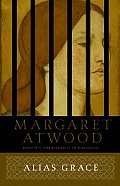
This passage comes from Margaret Atwood’s novel, Alias Grace (pg. 298).  I read it a couple years ago.  It’s the story of a woman from the nineteenth century who’s been convicted for her involvement in the murder of her employer and his mistress.  While this passage isn’t exactly reflective of the novel, I wrote it in my journal back then and think it fits with my postings to encourage us writers.

It is morning, and time to get up; and today I must go on with the story.  Or the story must go on with me, carrying me inside it, along the track I must travel, straight to the end, weeping like a train and deaf and single-eyed and locked tight shut; although I hurl myself against the walls of it and scream and cry and beg to God himself let me out.

When you are in the middle of a story it isn’t a story at all, but only a confusion; a dark roaring, a blindness, a wreckage of shattered glass and splintered wood; like a house in a whirlwind, or else a boat crushed by the icebergs or swept over the rapids, and all aboard powerless to stop it.  It’s only afterwards that it becomes anything like a story at all.  When you are telling it to yourself or to someone else.

NaNoWriMo and “…gentle concentration.”

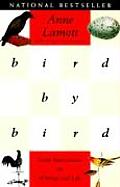
This is passage is from Anne Lamott’s Bird By Bird (pgs. 112-113).  It’s a book about the writing life, and it’s a wonderful read, along with anything else by Anne Lamott.

You get your confidence and intuition back by trusting yourself, by being militantly on your own side.  You need to trust yourself, especially on the first draft, where amid the anxiety and self-doubt, there should be a real sense of your imagination and your memories walking and woolgathering, tramping the hills, romping all over the place.  Trust them.  Don’t look at your feet to see if you are doing it right.  Just dance.

You get your intuition back when you make space for it, when you stop the chattering of the rational mind.  The rational mind doesn’t nourish you.  You assume that it gives you the truth, because the rational mind is the golden calf that this culture worships, but this is not true.  Rationality squeezes out much that is rich and juicy and fascinating.

Sometimes intuition needs coaxing, because intuition is a little shy.  But if you try not to crowd it, intuition often wafts up from the soul or subconscious, and then becomes a tiny fitful little flame.  It will be blown out by too much compulsion and manic attention, but will burn quietly when watched with gentle concentration.

So try to calm down, get quiet, breathe, and listen.  Squint at the screen in your head, and if you look, you will see what you are searching for, the details of the story, its direction–maybe not right this minute, but eventually.  If you stop trying to control your mind so much, you’ll have intuitive hunches about what this or that character is all about.  It is hard to stop controlling, but you can do it.

NaNoWriMo and “…the merging of two extremes…”

Today starts a month of writing for fiction writers across the world.  So, it’s for us who aspire to write but don’t get around to it.  It’s for us who have dreamed about writing fiction but who have allowed everything else to come first.  Or second or third.  The list that keeps us from writing is long.  Indeed, for some, it’s unending.

I have no idea how this movement to write, to encourage writing, to congregate around the written word for a solid month, started.  If you know, tell me.  But if you are a writer, if you know a writer, get involved this month.  Start writing, either along with the structured approach at NaNo or on your own.  For the supporters among us, love the writers in your life and do everything you can to help them write.  That may mean buying them tea.  Or sending them writing prompts.  It may mean waiting longer for a reply to your email.  It may mean leaving them alone.

So I’m going to include a few inspiring words about writing from some of my favorite places over the course of the month.  I’ll resist the urge to repeat some of the authors who I’ve interviewed on the blog.  But look there too, if you require great nudges.  I’m especially thankful this year for Marisel Vera who met with me a few weeks ago.  After our chat, I started writing fiction again regularly, after a very long pause.

Today’s quote comes from Richard Wright in the Author’s Note and in the text of Native Son:

In a fundamental sense, an imaginative novel represents the merging of two extremes; it is an intensely intimate expression of the part of a consciousness couched in terms of the most objective and commonly known events.  It is at one something private and public by its very nature and texture.  Confounding the author who is trying to lay his cards on the table is the dogging knowledge that his imagination is a kind of community medium of exchange: what he has read, felt, thought, seen, and remembered is translated into extensions as impersonal as a worn dollar bill.

We must deal here with the raw stuff of life, emotions and impulses and attitudes as yet unconditioned by the strivings of science and civilization.  We must deal here with a first wrong which, when committed by us, was understandable and inevitable; and then we must deal with the long trailing black sense of guilt stemming from that wrong, a sense of guilt which self-interest and fear would not let us atone.  And we must deal here with the hot blasts of hate engendered in others by that first wrong, and then the monstrous and horrible crimes flowing from that hate, a hate which has seeped down into the hearts and molded the deepest and most delicate sensibilities of multitudes.

For more information or if you aren’t familiar with National Novel Writing Month, click here.  Then, go and write.

Marisel Vera, Author of If I Bring You Roses, 3 of 3

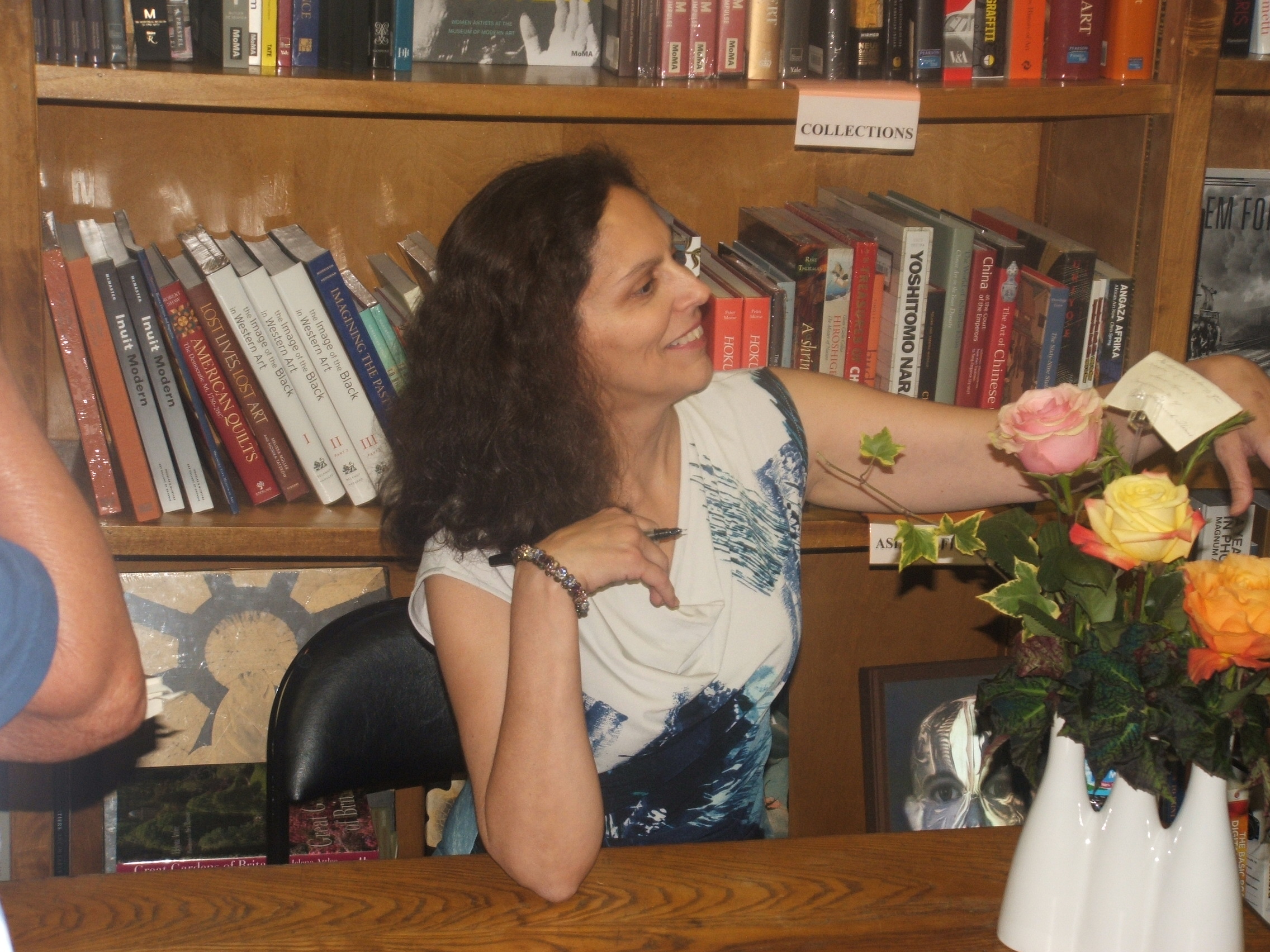
Marisel’s debut novel is available.  I’ve shown you a few pictures from her first book signing, which was last weekend.  I’m thankful she has given us these three posts about herself, her novel, and her experience as a writer seeking publishing.  If you’re available, come out and meet Marisel with other friends, fans, and readers on August 28, 2011 at 8 pm.  She’ll be at The Nervous Breakdown Reading Series co-sponsored by Sunday Salon Chicago.  The location is Katerina’s, 1929 W. Irving Park Rd., Chicago, IL.

This is the last of a three-part blog series featuring Marisel, and today she discusses her experience pursuing publishing…

What a writer needs most is Faith. I had a huge crisis of faith some years ago which I wrote about in a blog post Forgive Me, For I Have Doubted.  Your readers can read it on www.shewrites.com or www.mariselvera.com. It was the moment when I just had to say I am going to keep trying, even if I never get published, I am going to keep trying. From that point on, I never looked back.  That same year when I sent off my manuscript to an agent, I got an encouraging letter back.  That agent, Betsy Amster, is now my agent.  She didn’t take on my novel then but it fortified my determination to continue.  My husband has been financially and emotionally supportive throughout the whole process and our children became English geniuses so I’ve had the luxury of in-house editors for blog posts, etc. I have direct access to Puerto Ricans and especially to my mother and godmother who shared many details about growing up en el campo. I also conducted extensive research in all things Puerto Rican.

In addition to faith, I believe a writer needs to learn the craft of writing fiction.  An MFA is nice but if you can’t do that—I didn’t have that opportunity—then take writing classes, a writing workshop with a writer you admire (I did that with Jonis Agee and Cristina García), get some writing books, find a few fellow writers whom you trust and critique each other’s work in a constructive way.  Last but not least, the big D.  Discipline. Schedule time for writing and force yourself to do it.  It’s not easy in the beginning especially if you have a full-time job and/or small children.  When my children were little and I was living inOklahoma without my sisters to babysit, it was so hard!  One day I read about how Toni Morrison as a young writer was writing with her child on her hip and the child spit up on the page.  She didn’t want to lose her thought so she wrote around the spit-up before she cleaned up the child.  I found that so encouraging! I was a writer and I would write and I would do what I had to do to write and nothing would stop me.

Michael, I’d love to hear from your readers and especially book club groups. I’m open to meeting with book clubs especially in the Chicagoland area and having video or phone chats with others.  My website is www.mariselvera.com.

As I said, Marisel would enjoy meeting a few of you at the Series this Sunday.  And finally, if you’d like to see a dramatic reading of a chapter from If I Bring You Roses, it’s in the link below.

Marisel Vera, Author of If I Bring You Roses, 2 of 3

As I said in my last post, I met Marisel Vera at the Printers Row Literary Festival this year, where we connected briefly over her debut novel.  The book is available.  I’m very thankful to put her before you on my blog and suggest that you go and get If I Bring You Roses.  

In today’s post Marisel tells us a bit about who she’d like to pick the novel up along with some insights into her background and how she came to writing.  Below I mention how you can see her this weekend…

It’s true that I’ve had a few friends and relatives look at me a little differently after reading If I Bring You Roses but, so far, everyone is cool even my born-again Christian relatives.  A few weeks ago, I wrote about being nervous of the novel’s publication in a blog post for www.shewrites.com which I titled Taking My Clothes Off in Public. Mostly likely, the majority of my relatives won’t read my novel and if they do and make a comment, I’ll just shrug my shoulders and say, “It’s literature.”

I would love for If I Bring You Roses to be taught in Eng. Lit classes in Chicago public high schools especially Roberto Clemente High School, my alma mater.  That would make me SO happy.  Perhaps some of your readers are teachers and could choose it. (Hint.)  It thrills me to say that it will be taught in a Latino Studies class at Vanderbilt University next Spring. This October, If I Bring You Roses will be taught in four classes at the College of Lake County in Grayslake,IL.  I plan to go in one day and answer questions from students.  I’d love to go to Clemente or other inner-city schools and talk to students too.

I believe that one of the reasons that it took me so long to pursue my dream of writing a novel is that although I read voraciously since I was eight years old, I never read a book written by a Latina or Latino writer other than Down These Mean Streets so it never occurred to me to think of it as a possibility. All the books I read on my own or were assigned in my classes were written by Anglo writers. Any one who is the child of immigrants knows that while your parents might encourage education, they want you to get educated so that you can get a traditional job like a teacher or doctor or nurse. No one ever said to me, Marisel, you have talent. I think you could be a writer. I think it makes a big difference in the life of a kid from the ghetto or inner-city, for an adult to say, Marisel, you can do it!

And I want you to know that you can meet Marisel.  She will be meeting friends and readers, signing books if you have them on August 28, 2011 at 8 pm at The Nervous Breakdown Reading Series co-sponsored by Sunday Salon Chicago.  The location is Katerina’s, 1929 W. Irving Park Rd., Chicago, IL.