Decisions, Decisions, Decisions

The year we got married we made a lot of decisions. We purchased a fixer-upper. We had to get a car. We built a garage and searched for a lawn mower at the hardware store my father sent me to over in the Back of the Yards.

We also completed a budget together, elected an executor of our estate, little estate that we had as twenty-three year olds, and chose agents to make healthcare decisions for us if and when we couldn’t make those decisions for ourselves.

I selected my brother Mark, both because I trust my brother and because I didn’t want my wife to be in that situation. Mark will answer his phone and talk through the implications with a medical team, with my wife, with a cool demeanor. Mark will make sure I’m cared for.

I wanted to plan ahead and put that responsibility on my brother’s shoulders. That advance directive is still in place. Mark decides for me if I can’t decide for myself. He communicates for me if I can’t communicate for myself.

At a recent family dinner I reminded everyone of this. We were actually celebrating my mother’s birthday last fall, and I took the moment to nudge my loved ones to plan in advance. I told them that I didn’t want to live in a prolonged state if I had been oxygen-deprived for longer than 10 minutes. I gave specific instructions, in the presence of my family, to my brother and to the others. Mark’s the agent but they all heard about my decision. Again and again, I will remind them that there are wishes I have regarding my medical care. I will refine those as I go and certainly the longer I’m in healthcare as a chaplain.

Today is national healthcare decisions day. I went to a program about it here at the hospital. Randi Belisomo spoke about her organization, Life Matters Media, and talked about the simple and important process of choosing an agent. Of course, as a chaplain, I walk through the steps of this simple process with people. I witness their completion of the healthcare power of attorney form. And sometimes I get to tell people how vital it is to do this simple thing.

If you don’t choose a person to speak for you, the law has answered your lack of choice. The law puts surrogates in place when you have not chosen. Someone always speaks for those who don’t speak for themselves. So, today, if you haven’t chosen a person to stand in your place, to communicate for you what your medical care should look like, and how aggressive those interventions should or shouldn’t be, consider it. If you need to update your form, the form generally opens with something like, “This Power of Attorney Revokes All Previous Powers.” You can change it at any time.

Consider your feelings and thoughts on these matters, taking the opportunity to involve your family in your thinking, in your care, and in your planning. Communicate your wishes to your loved ones and to your agent, and realize that this is a good way to communicate what you want so that that doesn’t have to be decided for you. Document it on your state’s version of the healthcare power of attorney, and these don’t have to be notarized or done by an attorney, as long as you have a witness who isn’t named as the agent. You’ll want to consult your state’s version because every state is different, but they should be similar from one to another.

If you’re in Chicago today, Life Matters Media is working with the Chicago Public Library at two locations this afternoon to explain these advance directives and to help people fill these documents out. For more information, look here at Life Matters Media.

For the Illinois form, you can visit my hospital’s page and print off a copy.

Public Process Note

I spend time with people who are dying, actively dying, and I spend time with the people who love them. It does and doesn’t get easier to listen to the rises of hope and the slips into sadness as some son imagines the soon-coming death of his mother or to the patient who looks ahead and thinks about not existing anymore.

I know how to stand and sit with a nurse whose patient just died or expired or passed away. I know how to acknowledge the connection between myself and a doctor I met only around the grim and delightful experience of a patient who died late that night a few months back, the recognition between us like a secret we keep to ourselves.

The medical intensive care unit, the on-call experience, the jacket that identifies me in the hospital all lend themselves to wearing the experience of somebody’s grief. Of course, I have my own because I learn something of these good people, I am known in little bits, and I know them in little bits. And then, I carry and hold the grief of others. And it does and doesn’t get easier.

This post isn’t about the skills necessary to carry the grief of others, and it’s not about the ways in which I support people up to the edge and just before the dark unknown that is death. Of course, for the Christian, the reality is that death is a step or slip or movement. Like the shift of one’s body in a gracious dance, death is supposed to be a movement into another life, another part of life. In the words of a young woman who said something I’ll never forget: Whether we live or die, we win. That is a Christian view of death.

The lived experience is murkier. Living with the stories and words and prayers of another as she approaches that existential doorstep into eternity is grounding.

When I woke up this morning, I heard myself say of one of my patients, “He’s not going to die over the weekend” and, shaking my head at the unbidden thought, “He’s not dying today”. Of course, when I arrived for our morning report where we discuss the issues of the previous day, where we talk about who needs to be followed or continually given care, that patient was on the lips of my colleague. She dropped her head and her tone and said she had sad news. It was brutal for that to be saved until the last relay.

I had been right up until that moment. He had not died. In my mind, he was still with us. In truth, his spirit or his intention was waiting on the perimeter of my unconscious, even before I woke, telling me in his own way–or in God’s own way–that he was, in fact, gone.

I was glad, made glad really, that my chaplain colleague was with him when he died. Knowing of his faith and seeing the notes that had been charted, she sat with him and played gospel music for him. She sang to him, held his hand. She was there when he breathed his last breath.

This morning became for me another moment to grieve, another patient I had cared for, another person I had gotten to know. He was another person whose story, in such a compressed time, I learned to appreciate.

I spent the day doing the same things I always do in the hospital. And if you weren’t a colleague of mine or a nurse from my unit, you wouldn’t know that this gentleman was now added to my mental picture of deceased patients. I would remember that he had been in that room. I would associate the number with the first meeting and then the second until I captured what my last prayers for him had been. Had I prayed a prayer of benediction? I generally tried to.

He joined a different cloud of witnesses and not just the one the scriptures speak of. His face became associated with his room so that when I walked by, I said another goodbye, and it was like that on the unit. He was still a teacher to me, a teacher in how to acknowledge what was happening in me, a teacher of remarking on a man’s grace-filled transformation, and how to continually respect the boundary that we give all that we have when we’re there and that when we’re not there, somebody else is.

He became an occasion for me to remember the other patients who I thought of in similar ways, even if there was one or two profound ways that distinguished him forever in my memory. He will be one of the people I look for when I slip through the split in the veil myself one day. I will anticipate him as a host quite like he was when he welcomed me at the hospital, and I believe he’ll be smiling widely and probably calling me by a title and a last name.

“Grief” by Stephen Dobyns

Trying to remember you

is like carrying water

in my hands a long distance

across sand. Somewhere

people are waiting.

They have drunk nothing for days.


Your name was the food I lived on;

now my mouth is full of dirt and ash.

To say your name was to be surrounded

by feathers and silk; now, reaching out,

I touch glass and barbed wire.

Your name was the thread connecting my life;

now I am fragments on a tailor’s floor.


I was dancing when I

learned of your death; may

my feet be severed from my body.


(Posted in remembrance of our father, Mardell Culley, Sr. on the second anniversary of his death)

“We Must Act”

If racism manifests itself as violence, we cannot be content simply to dialogue or just to talk over the negative consequences of prejudice. We cannot dismantle racism by fostering cross-cultural awareness. We must find the spiritual courage to speak truth to power, to take a public stand against the institutional evils of oppression. We must not engage in conversation, we must act; we must actively, as Martin Luther King, Jr., put it, strive toward freedom. We must live our truths to transform society.

From Manning Marable’s essay in Black Faith and Public Talk, 78

Desmond-Harris on Facebook, Compassion, and Choice

But here’s what Facebook comments are good for: revealing data about whether you want your “friends” to be your friends any longer. That is, of course, if you believe, as I do, that the way someone responds to other people’s pain and mistreatment—including the systemic mistreatment of entire groups of people—is a perfectly fine way to decide whether he or she is someone you like or want to continue to interact with.

Call me intolerant, but my view is that, if someone’s reaction to an unarmed black teenager being killed is to announce that he probably deserved it, that person is not someone I’m interested in being associated with, and I won’t miss him or her a bit after I hit “block.” There are too many compassionate and smart people in the world for me to waste even a fraction of my social media scrolling time on interactions with people who are either racist or unintelligent and insensitive enough to appear so.

From Jenee Desmond-Harris’ article “How to Deal With Friends’ Racist Reactions to Ferguson” here

20 Things Worth Saying to Our Children These Days

In no particular order:

  1. People die everyday but I want you to live a long, full, gorgeous life.
  2. Don’t believe that there aren’t safe spaces for you. We will find them together, protect them, and play in them.
  3. Slow down and be as small as you can for as long as you can, because I only see big things in you. When those things mature, you will turn the world upside down.
  4. Turn off the TV and listen to the words of Jarena Lee, Ida Wells, Booker Washington, WEB DuBois, Benjamin Mays, James Baldwin, Toni Morrison, Renita Weems, Louis Farrakhan, Michael Dyson, and your pastor if she or he has courage to speak to right-now-issues.
  5. The news does not define you and neither does the pain that envelopes our people. We include the pain in who we are, but we are more than our pain.
  6. I want the best for you, and though I will make mistakes in pursuing that, I commit to you that I’ll live with you in mind for the rest of my life.
  7. Your skin is precious, so precious that it can get you into as much trouble as death if you’re black, free from accountability for your actions if you’re white. This is still the country we live in.
  8. The unmistakable print of God’s finger is on your life and people may not call it that because of their own faith differences, but know deep down that you were made by the most fascinating Creator to live a most fascinating life.
  9. Talk to your oldest relative about the way they make sense of the bottom parts of life, and then write down what you hear and how you feel and how it makes you want to be better.
  10. You are beautiful, you are brilliant, you are beloved. This a benediction I pronounce over my son and I gladly share it with you for your children, for your revision.
  11. Obey those who have rule over you. This is a biblical warrant, so listen to your parents when we tell you “how to act” in public.
  12. Disobey authorities when necessary for goodness sake and do so for a worthy cause. You won’t be the first to “go down” for justice, and when you do, your blood will join the saving stream of God’s heroes.
  13. Make noise in life and be a bit irreverent because the people who’ll complain about your noise will be those of us who have lost our throats, who need you to inspire us, and who will, surprisingly, follow your lead.
  14. Take the helm of something that stirs the hearts of people, challenges the fixed impressions of others, and helps you practice your best values.
  15. Love the women in the world because they will be more reliable than the men and they will support you harder than the men and in your love, you will continually lift them.
  16. Love the men in the world because your love will correct and heal our broken places, places we’ve spent years covering, hiding, avoiding, and convincing ourselves aren’t there.
  17. I do not want you to die, but you will die as will I. Live with that end in mind, and move the world toward something more beautiful, more compelling, more attractive, and more whole while you’re here.
  18. Give something away and get into the habit of giving. It will save you when the world takes and takes and takes because you will have defined yourself and your needs and your hopes in a generous way.
  19. Be a messianic force for peace, tolerating no violence, even the violence in your own soul because that self-control is the strongest grace, the most Christlike offering you can give the world. It may save us.
  20. Tell me what I should have said and feel free to update me as we go along.

About Playing

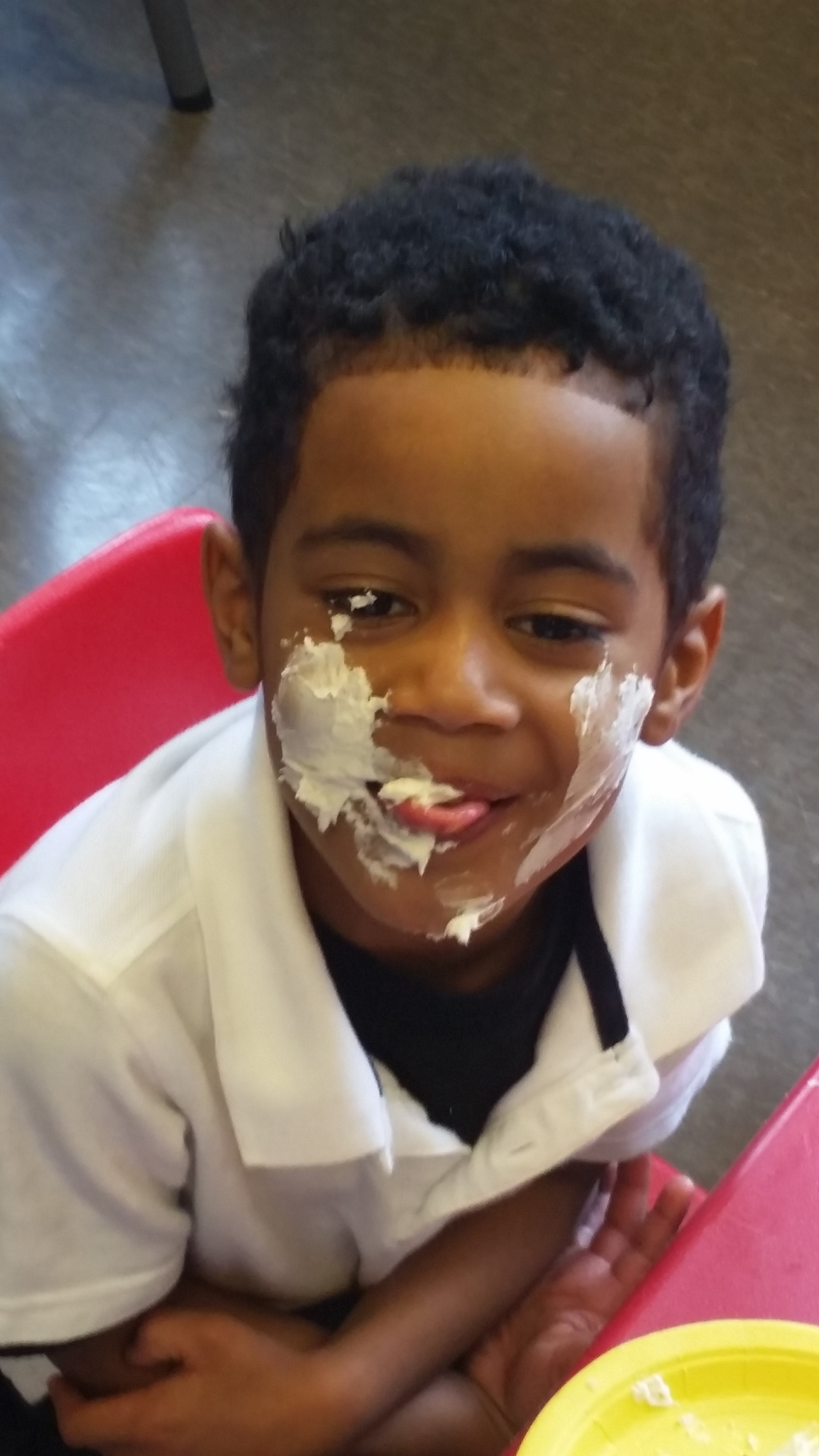
Dear Bryce,

I want you to know that you’ve been doing a great job at life. Watching you grow this year has been a lesson to me. You love to play. Your mother said once that you lived to play. That still fits.

But you are such a good student. You do all your homework and usually finish it quickly so that you can play. Your teachers and we your parents have some difficulty keeping you from all that play when nobody else is ready to play. Even with those, there’s part of me that never wants you to stop playing. I want you to find a way to keep playing, to live playfully.

Part of me wants to say, when we’re at the table about to eat, before we pray, that we must be reverent. And part of me wants to edit myself and find a way to explain to you that all of prayer is playful. That the two in the eyes of the Divine are the same. I want to tell you that if you can balance living and playing, then you’ve lived well. I want to tell you to be as responsible as possible, to be as strong and generous as possible, and to do all of those without compromising play. I want you to be able to consistently revile in life, to be about playing, and to do so without compromising all those other important things.

It is a succinct picture of Sabbath. It is a simple way of expressing joy. It is pure and honest and descriptive of your personality. It is, in a sense, who you are. That is both frightening for the stark clarity that is you and enlivening because it is a kind of complete integrity on display.

I want you to play. In some ways, son, that’s all I want you to do. Perhaps the best thing I can tell you is to find a way to always play. To get the other stuff done. To do the homework. To clean your room. To get all those things “out of the way” so that you can do what you love, do what you live to do.

Perhaps it’ll take me a few years to fine tune my message, to figure out how to present that lesson to you well. Right now, you’ve got the playing thing down. I hope you never lose it. I hope in my efforts to father you that I don’t hamper it. And I hope you keep teaching me this year and that I learn a bit more about play.


Cognitive Routes Toward Empathy

I learned about mirror neurons before I knew what they were. We didn’t discuss these little brain pieces in my psychology courses at U of I. At least, I don’t remember discussing them.

There was a long string of hormones and hemispheres and lobes and Wiernke this and Braca that. I recall little pictures of synapses and the corresponding discussions about firing them and the little joke I kept making from then on about how several people I knew did not have all their synapses firing when they should.

It may have been that mirror neurons were noted in Dr. Boch’s course. I’m sure if I emailed Dr. Zabradoff about it, she could pull up a syllabus or an outline or, back then, a slide from her overhead projector which would clearly explicate the difference between that neuron and some other notoriously-to-me-obscure cellular detail.

I was not a specialist in those subjects under cognitive psychology. I preferred the clinical emphases which gave me some tools to talk to people with varying levels of brain strength. I was the student looking to hear from people on a crisis line in the middle of the night whose synapses were firing too much, mental pictures blending together into a collage they’d try to explain three hours before I was to wake up and go to class.

Even then I knew there was such a thing as a mirror neuron. I talked about it most recently to my wife as the thing my boy sensed when he was a little baby, when one of us was anxious, which would make him anxious. When I started my residency in clinical pastoral education, I learned that my son’s mirror neurons were firing.

A mirror neuron is that tiny brain particle that enables us—in our heads and in the rest of us—to mirror the experience of another. It is part of an internal neural mechanism that provides “a cognitive route” for our brains to evaluate social systems and for our emotions to catch up and act accordingly.

Another way of saying it is that mirror neurons make empathy possible. They are the little tools in our heads that make us able to see a social situation and create an appropriate emotional, verbal, and social response. And we often gauge response by mirroring what we see in another person. So we see a person who’s anxious and we interpret the situation as anxiety-provoking. We judge for the best response. We either become a non-anxious or, better, a less-anxious presence, or we get swept into (i.e., we jump into) the anxiety itself.

Have you ever noticed that you yawn when someone else does, that you feel happy after being around a person who lifts your spirit a bit? Those are mirror neurons at work.

I wonder what it would be like for people to take that little piece of information and run with it. If we could agree in the world for a moment or in a congregation for a weekend to show forth some kind of joy in front of another, some type of resilience for another, in order that that person might mirror us. It feels like it’s worth doing.

What if we agreed to show our deepest wounds, to wear them across our faces, in order to reflect the real, already present vulnerability at the core our selves? We could do it with our mental illnesses, with a quieted grief processes, with our dashed hopes and our fledgling beliefs.

It feels like we might make the world a slightly deeper place, a place where we could be less ashamed of smiling or crying or sobbing because we wouldn’t be the only ones doing so.