Interview with Tara Conklin, Author of The House Girl

The House Girl Cover

The House Girl Book Cover

How did you come to this story?  Or how did it come to you?  The story definitely came to me.  About 7 years ago now, I was reading a biography of Virginia Woolf and came across the term “slave doctor”.  The words described one of Woolf’s long-gone relations and no further explanation or description of the man was given. I found myself wondering what kind of person would occupy what to me seemed an inherently conflicted role: to dedicate your life to healing and yet your patients were destined only for more and graver harm.  From that initial spark of curiosity I wrote the story of Caleb Harper, a doctor working for a slave catcher, and two women appeared in his story: Josephine Bell, an artist and enslaved woman living on a Virginia tobacco farm, and Dorothea Rounds, a young white woman active on the Underground Railroad. And I was off.

You draw from the perspectives of two very different women, but both Lina and Josephine were searching.  What connections do you see between these two women?  They are both very strong willed, smart and adept at hiding how they feel, both from others and from themselves.  Of course, the circumstances of their lives could not be more different; Lina enjoys all the privileges and freedoms that Josephine does not.  I see Lina and Josephine as vertically connected rather than horizontally, if that makes any sense.  Josephine is Lina’s predecessor, her mother, at least symbolically.  Dresser has a line about enslaved people “They were as much our founding mothers and fathers as the bewigged white man who lay a whip upon their backs.”  And that idea resonates with Lina, both historically and personally. She has very few memories of her own mother Grace and knows very little about her, but Josephine shares many of Grace’s characteristics: a talented artist, a disappearance, a lost child.  At the beginning of the novel, Lina is too afraid to really search for her own mother, and so she searches for Josephine instead.   Josephine gives Lina the inspiration that she needs to move forward with her life, the courage to confront her own past.  And of course in the process of finding Josephine, Lina finds herself.

Mansfield PlantationThe novel weaves compelling insights about slavery into Josephine’s personal decision to run.  What are some reasons slaves ran while others didn’t?  It’s more difficult, I think, to understand the decision not to run because most slave narratives were written by (or about) those who were able to escape.  But fear must have been a huge component – fear of capture and punishment. The cutting of the Achilles tendon (as happens to Nathan in the book) was commonly done to slaves who had tried to run and been recaptured. To escape also meant leaving family and friends behind, loved ones who in all likelihood you would never see again. At a time when families were routinely torn apart, to voluntarily leave one’s family must have been a very difficult decision to make.  Women ran much less frequently than men because they were more likely to be caring for young children, and fleeing with a child was much harder.  There were also the practical difficulties of not knowing where to go – certainly after the Fugitive Slave Law in 1850, the northern US no longer offered any real prospect of ‘freedom’ and the road to Canada was very long.

You do a lot with images and art in the book.  I wonder how, with the hard work behind The House Girl, you see images of slavery, historical and modern-day.  It’s requires a kind of resilience and courage to know the things you likely learned in your work on the story and keep at it.  Yes, there was a point at which I had to stop researching.  It became very overwhelming – the scope of tragedy, the individual horrors.  Antebellum art generally tended to depict idealized visions of peaceful plantation life – the myth of the benign master, the happy Negro. Many are very pretty pictures, but I couldn’t help seeing them as quite sinister given what they omit. More realistic images were created for the abolitionist movement, and these are generally horrifying.  Their intent was to provoke outrage and increase support for the abolitionist cause, and I presume they were very effective.  More contemporary artists have grappled with slavery in a variety of ways.  I’ve personally been most effected by the work of Kara Walker who makes intricate cut-paper silhouettes of antebellum life – shocking scenes of violence and sexual exploitation, but rendered simply, starkly, with black cut-outs against a white background.  They are very powerful.

Lina’s experience was peopled with men like her father, her legal mentor, and the potential lead plaintiff.  What characteristics equipped her to navigate such diverse relationships?  Lina is very independent and very driven.  She grew up in a single-parent, poor, urban household with a father who suffered from severe depression and has never been traditionally “responsible”.  As a result, she’s had to parent herself in many ways.  I think this self-sufficiency, learned at an early age, helps her to operate successfully in these diverse worlds – with her father and his artist friends, in the more conservative world of the law firm, and with Jasper Battle, a musician whom she finds both very foreign and also oddly familiar, given that his world is so similar to her father’s. The corporate law world and professional art world are very different of course, but they are both arenas traditionally dominated by white men, so I think growing up in one prepared Lina in unexpected ways to succeed in the other.

In a sentence, maybe two, imagine how Lina would explain her case to her mother, how Josephine would explain slavery to her son.  What a great (and really tough!) question.  First, Lina to her mother: “I’m working on a lawsuit that’s seeking to repair the damage done by slavery, at least in some symbolic way. And Mom, it’s more about memory than money.”  Josephine to Joseph: “We live in a world where some people own other people based on the color of their skin. But things won’t always be this way, and you don’t have to let it define you.”
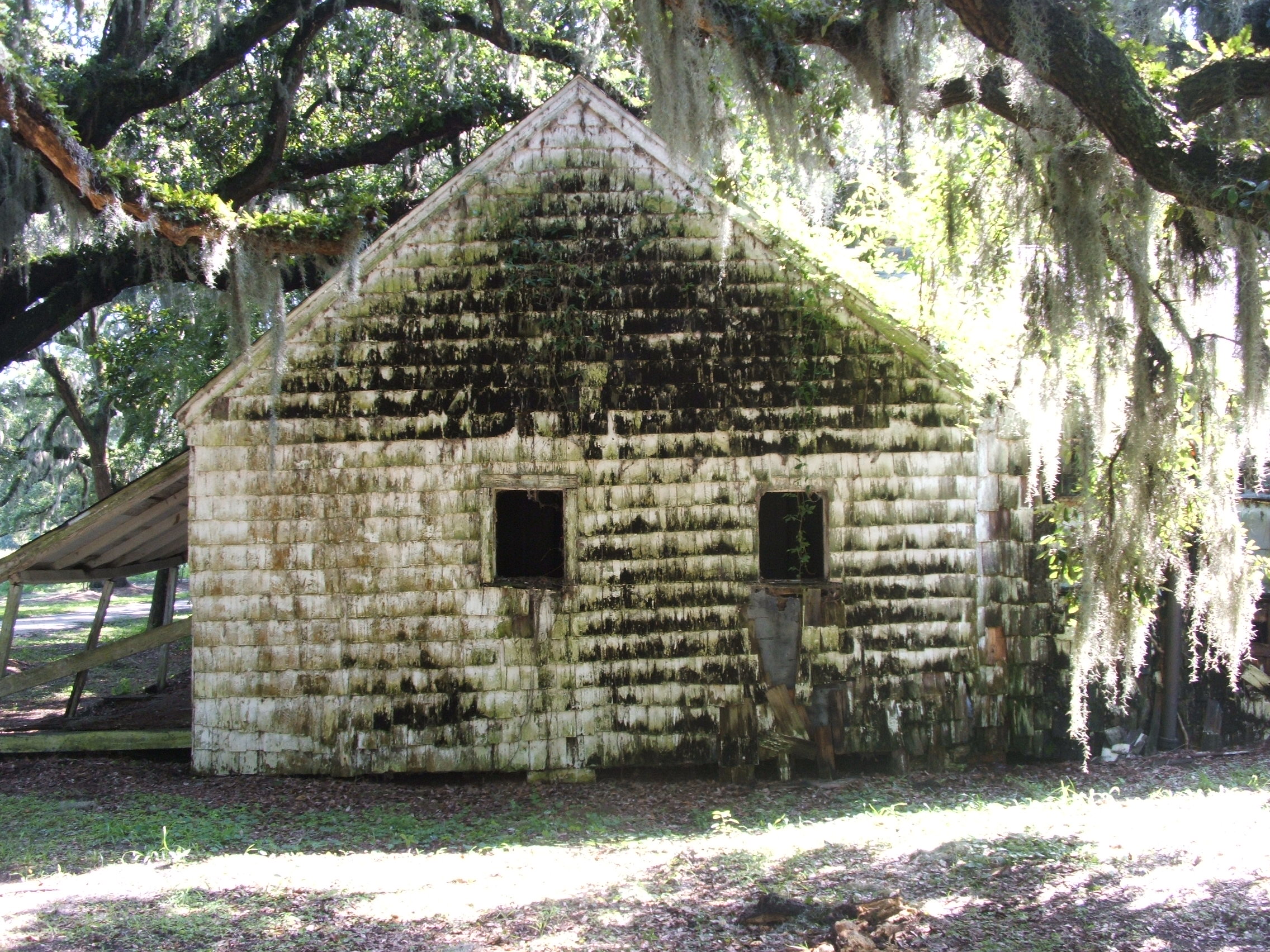
Slave Quarters

Slave Quarters

Your book made me think of the many ways people experience loss—of a hope, a relationship, an ideal, a role.  On the other hand, the story is one of motivated, resourceful people moving forward.  Is that a fair reflection?  Yes, very fair, and thank you for it. For me, the characteristic that binds all the characters together is their willingness to face and ultimately overcome their fears.  For Josephine, the fear of running, of leaving everyone and everything she knows. For Lina, the fear of discovering the truth about her mother and, by necessity, the truth about her father as well.  For Caleb, his fear of caring, of investing himself in another person; and Dorothea, fear of rebelling against her father and of once again putting her faith in something large than herself.  So they are all moving forward, as you say, trying to push past these fears as best they can.

There are two very striking things I’d love you to say more about.  First, the musical list of names in Lina’s index.  Second, the notion of celebrating and honoring slaves who have died in slavery.  The list was particular, poignant, thorough, and considerate.  The comment, a summation of the novel.  Say more about how those emerged.  Thank you for them.  The list was culled from the more than 2,000 names of some of the last surviving slaves whose testimonies were taken in the 1930s under the Federal Writers’ Project of the Works Progress Administration (WPA).  The testimonies are available on the Library of Congress website; it’s an amazing resource that I would encourage readers to explore.  I included the names for a couple of reasons. First, Josephine’s story is very circumscribed – one day in the life of one woman on one small farm in Virginia.   Her position as a house slave and the close relationship she has with her mistress, Lu Ann Bell, makes Josephine’s experience somewhat uncharacteristic, I believe.  Given Josephine’s exceptionalism, I thought I would be remiss in not acknowledging, at least to some degree, the vast scope of slavery’s tragedy.  I wanted the reader to be hit with the physical presence of those names – a solid page of text – and feel, for a moment, disoriented and overwhelmed.  And second, before I started researching in earnest, I believed that there was a national monument or a national museum dedicated to memorializing enslaved Americans.  I don’t know where this belief came from – I just assumed that such a thing must exist, and I was surprised to learn that it doesn’t. There is no national memorial or museum (although the National Museum of African American History and Culture is slated to open in 2015).  I was thinking of the power of naming and how important that is in honoring the victims of a particular tragedy – for example, the inscriptions on the Vietnam War Memorial, or the reading of names after 9/11.  I wanted Lina’s chart to serve as something similar, although of course on a much reduced scale.
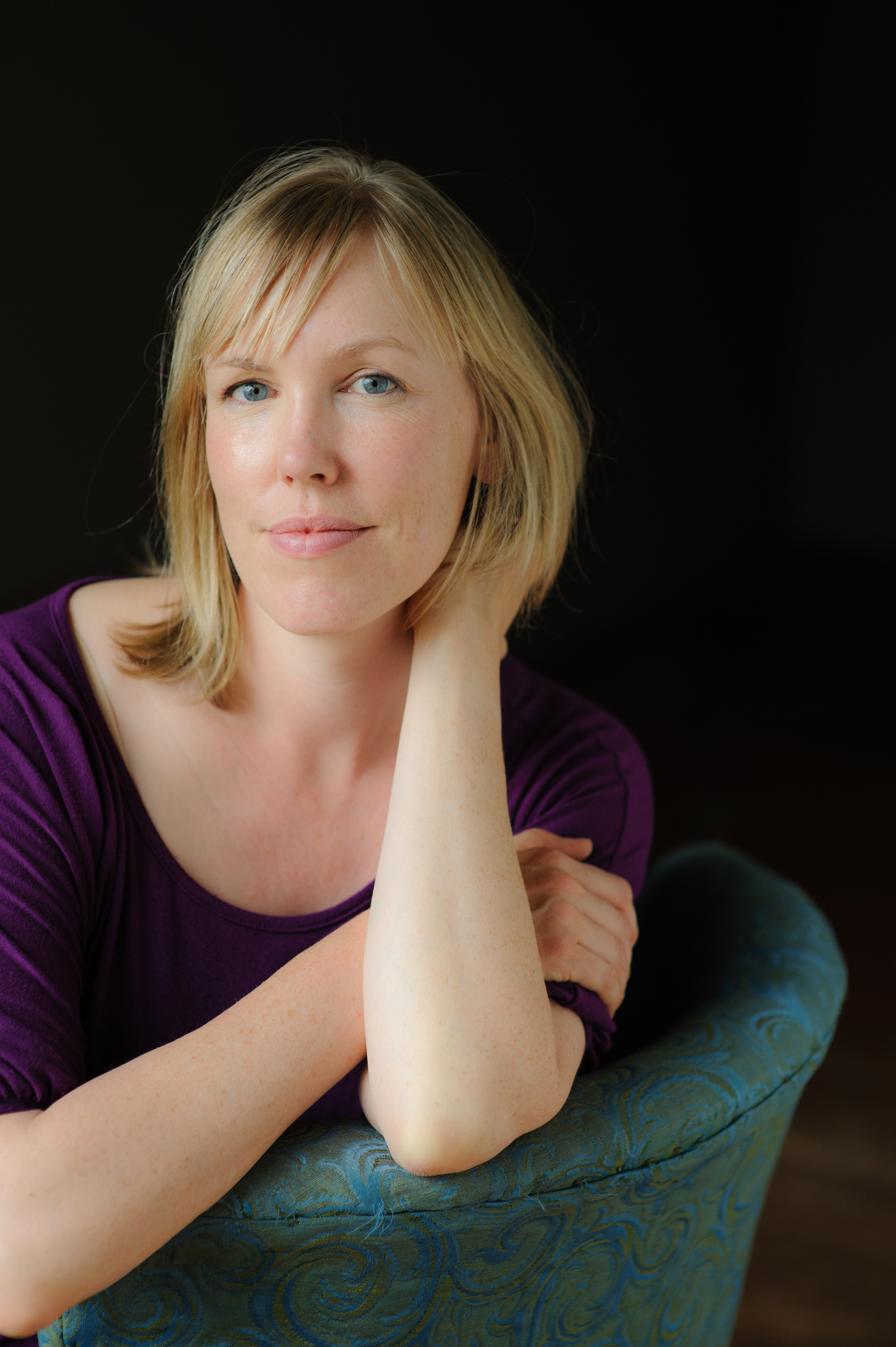
Tara Conklin What are you reading these days?  The pile beside my bed is groaning – I’ve got so many waiting in line. I just finished two wonderful novels: A Constellation of Vital Phenomena by Anthony Marra, which I loved and The Interestings by Meg Wolitzer, which I also loved.  Now I’m just about to dive into Americanah by Chimamanda Ngozi Adichie – I’ve been waiting for this one for awhile.  I still remember scenes from her Half of a Yellow Sun, which I read a good number of years ago.

How can readers follow you and support your work?  You can find me at www.taraconklin.com, on facebook and twitter @TEConklin.  I love to hear from readers and regularly participate in book club discussions via Skype or phone so feel free to get in touch.

Attending to the Details

When history is collapsed into myth, responsibilities become diffused, and repentance and reconciliation become impossible.  In the inflated realm of mythical oppression, villains are so villainous that no one sees themselves reflected on the image.  Few can trace accrued privileges to specific and intentional evil acts.  Similarly, victims become so quintessentially and epically victimized that all escape routes from the condition are sealed off by a maze of self-doubt, blaming, and low self-esteem.  The antidote to this phenomenon is to attend to the details, to understand the specific events, ancestors, life stories, causes of oppression, and avenues of social change.  Historical and spiritual specificity is salvific.  Then and only then can the movement toward moral flourishing begin.

Interview With Elaine Neil Orr, Author of A Different Sun

A Different SunThere was a good deal of work done in the novel—building, journeying, selling, making, cooking and so forth.  Is it fair to say that work was a central character, a natural character?  In what ways were some of the people deepened (or even made) by their work?

I love this question, in part because I did so much research about work and some did not make it into the novel!  I learned about shoeing a horse and had an entire chapter in which Henry and Jacob shoe Caesar (Henry’s horse) but I cut it—a digression.  People in the nineteenth century, especially an adventurer like Henry, enslaved people such as Uncle Eli and Mittie Ann, and even Emma, who was tutored in how to keep house—did a great deal of work, whether it was making a new dress or picking cotton or carving out a canoe or preparing for market, as the Iyalode (the female governor) does when Emma meets her in West Africa.  Not all of these forms of work were equally difficult or equally rewarded.  But there was a lot of what might be called “hand” work—not typing on keys as we do at computers, but making, growing, mending, clearing land, building houses, thatching roofs (in Africa).  There is so little for Emma and Henry to purchase.  Most of what they have they must manage to make.  Yoruba people (the clan in the area where my characters travel) were “makers” of cloth, art, metal works, jewelry, hair weaving!

Your insight is absolutely apropos.  Henry already is who he is (by the time he and Emma marry) because of what he has made, built, written, battled.  Enslaved Uncle Eli maintains his spirituality and some selfness because he can still create out of his own imagination.  Emma becomes who she is in her three African years because she learns African forms of work, including mixing mud for her house by kneading it with her feet.  In this way, Africa enters her and begins to reshape her imagination and her heart.

As a first-time novelist, I thought: these people have to DO something while I’m creating a scene.  And so they worked!Elaine at Home in Nigeria

The Bowmans were driven people.  The same can probably be said of many people in the novel.  For the couple, what pushed them?  What pulled them?

There are shorter and longer answers.  Henry is pushed by guilt and longing.  He feels guilty about his mother’s death (not because he caused it but because children internalize their parents’ pain).  He is guilty of killing Native Americans and Mexicans.  He was a womanizer as a young man.  He “wants to be shed of all that,” as a character in Huckleberry Finn might say.  He experiences a salvific moment on the road back to Georgia when a man brings him fish and water.  That scene was written so that the reader might imagine it as an angelic visitation.  Henry sees it that way.  He is “convicted,” in the language of Southern Baptists.  Going to Africa to “witness” about Jesus is his way of working through guilt.  It takes him a good while, as you know.

Emma is pulled and pushed by desire and by outrage.  Uncle Eli, the old African, plants a seed in her imagination from the time she is very young.  He “initiates” her into Yoruba numerology and Ifa divination in his use of the number 4.  He tells her stories that shape her mind and when she sees the globe on her father’s desk, she is drawn to Africa.  She doesn’t understand the connection, of course, but I hope readers begin to discern it.  Her African epiphany originates in Uncle Eli, who sends her on a mission that happens to be Christian (it is a mission of love) though his purposes are born out of his remembrance of African traditional religion.  She is pushed, of course, out of horror at what her father allows to happen to Uncle Eli.  She cannot stay in “bent” Georgia.  Its violence toward enslaved people is a fire she runs from.

Emma laments trading places with Uncle Eli.  How does her relationship with the elder slave tutor her in her life in Eli’s homeland?

As I’ve said, his influence is a driving force in her going to West Africa.  Once she arrives, and little by little, she opens herself to the mysteries and beauties of Yorubaland.  At first, of course, she is a bit horrified: by women whose clothing doesn’t cover their breasts, or men eating with their fingers.  But her mind is fertile.  She is curious.  I molded her as a girl to prefer the outdoors, to take risks (horseback riding, for example) and added to this her relation to the old man.  She wants to know things, in part because Uncle Eli was always doing things she wanted to understand.  He was her mystery and her guru.  So while she is not consciously aware of it, all through her African journeys, she is able to make the next leap (whether it’s eating fufu or wearing a more airy, African-like dress, or even entertaining the idea of an African diviner being of some use to her) because of her closeness to the old man.  She is multi-cultural before multi-cultural was in!  But this is American history.  Take Huckleberry Finn again as an example.  As much as Huck thinks he is superior to Jim, he is actually being tutored by Jim, in love especially, but in other practical matters of survival as well.  The way they eat and live on the raft and hide in the day and move at night, the stories Huck learns from Jim: all of that is Huck becoming “black”—or multi-cultural.Work In Progress

At any early point in the story the preacher tells his wife that she is a guest in Africa.  Does she believe him?  Does she begin to see things that way as she follows Eli’s counsel to “find a place”?  Does she see things differently as the story is told?

No and yes.  At first she cannot comprehend her own foreignness.  She thinks Africans are strange; they are the strangers.  She is “normal,” and her expectations are “normal.”  In her view, these folks should know better than to meddle with her laundry.  But she is, of course, meddling in their culture!  She is trying to change their religious views.  She is taking their handicrafts and decorating her house with them.  She is tutoring their children in English.  I do admire her (and her historical counter-part) for learning Yoruba and for recording the language.  Later missionaries did not always take such pains to learn the local language.  As we know, language is a primary way by which we learn to see the world.  The more she learns Yoruba, the more she comprehends what her neighbors know, what the Iyalode knows, for example.  So through this learning, she begins to comprehend differently.  There’s a scene with the Iya in which Emma thinks she is giving the woman a lesson in geography.  But as it turns out, the Iya is the one who understands Emma’s situation better than Emma does.  The Iyalode comprehends Emma’s pregnancy!  And Emma begins to see how she is seen.  This is a major moment in Emma’s development: beginning to see herself from an African’s point of view.  This seeing-herself-as-stranger culminates with Jacob.  She dallies a little with him and entertains romantic notions.  But she doesn’t really SEE him or herself-in-relation-to-him, from HIS point of view, until he rebuffs her.  Then she sees.  And then, of course, she sees her entire history, all the way back to Uncle Eli’s toes.

Your book is sweeping in its delivery of several characters whose pasts and lives are so different on the surface.  And they come together in the novel, often, to form or re-form one another’s faith.  Can you speak to that?

My vision is trans-Atlantic because I was born in Nigeria and grew up there, visiting the U.S. on occasion, until I came here to live permanently as a young adult.  Everything for me is about the cross-fertilization between the American South and West Africa.  This is the story I want to tell over and over, whether in a short memoir about hair (Nigerian girl’s hair, my hair) or crimes of history or personal redemption.  This novel is an orchestra composed out of the melodies and stories and tragedies of my life, my mother’s life, my people’s lives (whether those people are my Yoruba countrymen, my slave-owning ancestors, my missionary “family”).  The trans-Atlantic South is my homeland.Elaine's Family and Place

You have personal history so that your story and your life in Africa undoubtedly helped you frame some things.  Did your work on the novel enrich or change your views of missionary work?

Actually writing this novel constitutes “Stage 3” in my perspective on missionary life.  As a girl (Stage 1), I simply thought it was normal: all white people were missionaries and there were only a few of them and the world itself was black people.  I thought my parents were good people (they were good people; my mother an educator, my father a business man; my mother wrote a history of the Nigerian Baptist Convention—not the American Baptist Convention).  And yet as a graduate student and young professor studying post-colonialism and feminism, I became deeply skeptical about missions.  This was Stage 2.  I was embarrassed by my history.  Writing this novel, I came to see missionaries as human beings who struggle just as anyone struggles: with conscience, longing, desire, hope, guilt, despair.  Mission work in Africa is a mixed bag.  Perhaps it has been primarily negative.  I haven’t done enough research to be an authority on the entire continent.  But look here: Nelson Mandela is Methodist.  Am I going to tell him he has false consciousness because he doesn’t practice traditional African religion?  Perhaps he does in his own way.  All religions migrate just as cultures do.  There is good and bad in all of it.  The great crime of slavery was sometimes “covered” in the U.S. by appeal to the Bible!  My characters go to Africa trying to do something else.  They may be wrong-headed, but they are trying.  I think my mother and father did the same.  I won’t judge their lives.  How can I?

Can you comment on the connections between your life as a writer and as a teacher?  Do the two areas naturally feed one another?  Do you experience the roles in any particular way? 

I joke that teaching keeps me young.  I look out at the classroom and see myself in my students and think I’m still 23.  Ha!  But teaching does keep me young.  I try to stay abreast of what much younger folks are thinking about and talking about.  At least I get half way across the divide, which is farther than I would get if I weren’t teaching.  I keep being challenged and pushed when I teach, graduate students and undergraduates.  Teaching offers me an opportunity to pass-it-forward.  I can’t possibly repay all the teachers and mentors I have had in my life, including the Yoruba folks who took care of me when I was a girl.  Sometimes I would like to teach less (I carry a 2/2 load).  But N.C. State University offers great support for my writing.  Though I was hired to teach literature, I am given travel money and research support to go to Nigeria and spend a summer month at a writing residency and compose a novel over a six-year span.  University teaching is one of the greatest privileges a person can have in my view.

I wonder if you can talk a little about the writing box or about remembering.  There is a powerful thread in the story when the characters, particularly Emma Bowman, return to the question of what will be taken with them and what will be left behind.

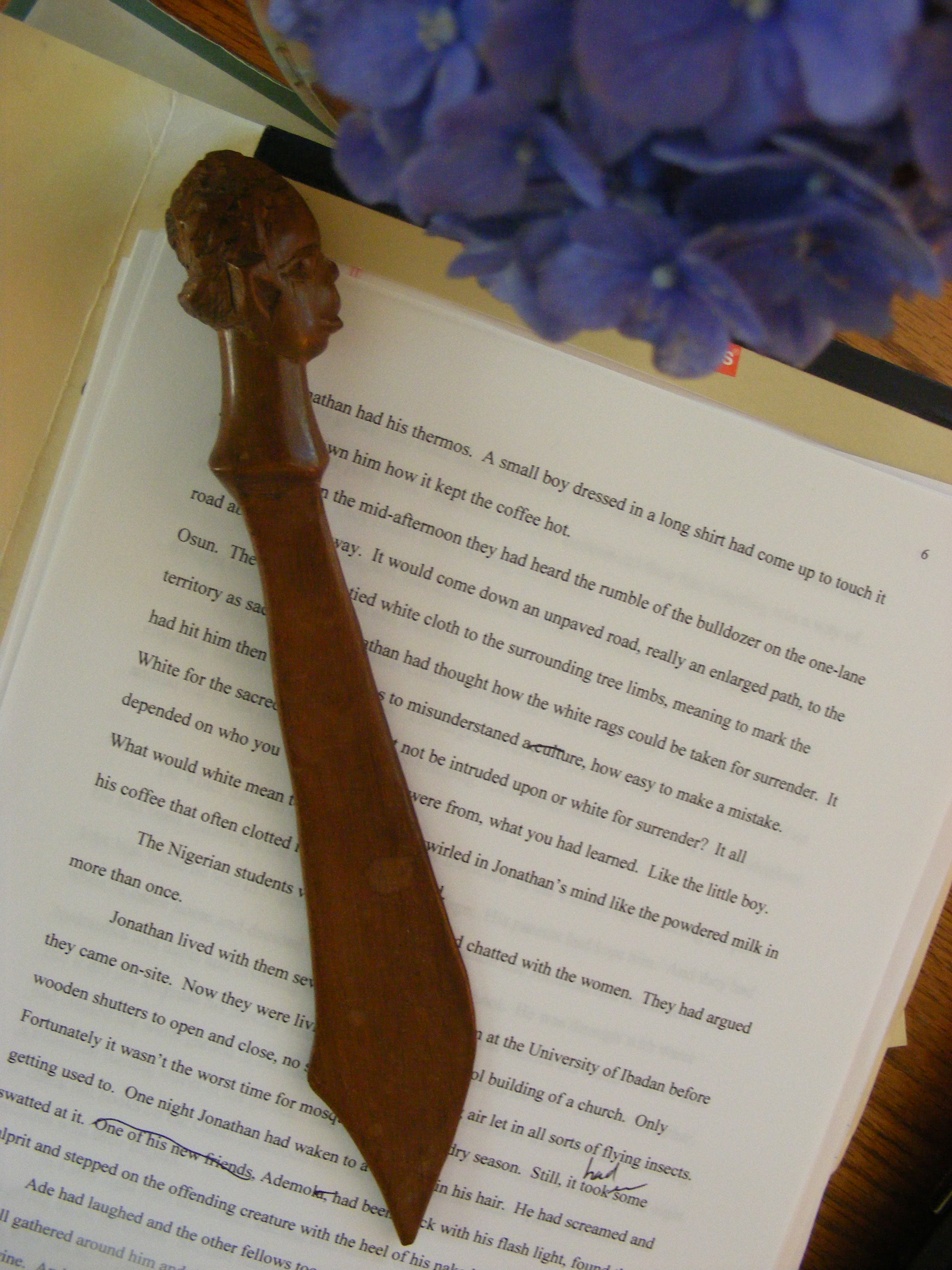
It’s interesting to me that you link these two: remembering and the writing box.  I love the way a reader can show a writer what she did!  Of course, Uncle Eli’s gift of the letter opener (his effigy) is linked with his admonition “remember; you find a place.”  This admonition haunts Emma even as the letter opener comforts her.  I intended that the reader understand that even as Emma is doing just what Uncle Eli asked, she doesn’t fully understand HOW she is following his instruction until the end of the novel when she understands his remembrance.  He was remembering his homeland, teaching her about it; she travels to his homeland, unaware, and finally comes to see–“as if face to face”–that the old man was from this very place.  So Uncle Eli’s memory is a force in the novel.  I believe that memory is essential to practicing peace and justice.  If we do not remember the past and honor it, how can we begin to establish a more just society in the present?  We must remember slavery, Jim Crow, the genocide of Native Americans.  I hope readers find a poetic irony in Emma’s bearing this memory; she is a daughter of white privilege.  But when she steps outside of her known world and becomes the foreigner, she is able to see the light she thought she was bearing.  And she was bearing it; she just didn’t fully comprehend it.  The box is Emma’s heart, of course: the vault of memory and desire.Elaine's Bookshelf

What are you reading these days?

I just read White Dog Fell from the Sky by Eleanor Morse, a wonderful novel about apartheid South Africa, and next on my list is Wash by Margaret Wrinkle, a novel about an enslaved man in Tennessee in the early 1800s who survives through a spiritual connection to his shamanic mother.  Margaret and I are going to be on a panel together at the Atlanta Journal Constitution/Decatur Book Fair over Labor Day.  You can see what I’m in to.

How can readers stay in touch with you and support what you’re putting in your own “writing box”?

My website is elaineneilorr.net

I love for readers to “friend” me either on my personal Facebook page or my author page; I like to see what they are doing.  I’m happy to Skype in to book clubs.  My email is on my website; it’s elaine@ncsu.edu

Poetry For the Weekend

Joyce Rupp’s Greedy for Too Many Things

ravenous for too many things,

even spiritual growth,

greedy to grow without effort,

to have it all, to sit back and bask,

luxuriating in what was never mine

in the first place.

greedy for more time in the day

when I already have

all the time I need.

greedy for companionship

while I ignore the One Companion

always near.

greedy for, oh, so much,

while I miss the chipmunk

chewing on the sunflower seed,

the sound of soft July wind

rustling cottonwood leaves,

the color of azure sky as the sun

rinses morning out of it.

Something of Worth

I find that intentionally easing the fast pace of my days is indispensable if a spirit of hope is to be sustained in tough times.  Being overly active and involved in the constant bombardment of social media or other stress-induced activities whittles away my ability to go to the deeper places of life.  Without daily attention to what lies beyond the outer world I can easily get mired in the non-essentials and miss the hidden movement leading to future maturity.

…There awaits something of worth even though I may feel emptied and forsaken, beaten or humbled by loss.

From Joyce Rupp’s My Soul Feels Lean (pg. 87).

LaValle on People We Idealize

Victor LaValle in an interview with Books and Culture, answering a question about how a meeting with Norman Mailer, how meeting other people whose wrote work people loved, changed the reading of them:

Everyone is going to disappoint you if you get to know them well enough. I don’t mean that in a dismissive way, but to say that it’s important to think about why we ask so much of the people we idolize. Why must they pass the test of perfection? Or even just amiability? This is certainly the case with artists, but it applies to my priest and my postman, too. I don’t know how I would’ve reacted if I’d known Mailer stabbed his wife before me and my friend showed up at his house. Would it have stopped us? I doubt it. Mailer sure wasn’t a wilting violet, but I’d hate to disqualify artists simply because their personalities were remarkable. Caravaggio was a scumbag and a street fighter, Flannery O’Connor a racist, and, from her letters, a bit of a pill. I love the work both produced though, without reservation. The saints weren’t even saints.

Read the full interview here.  It’s good.

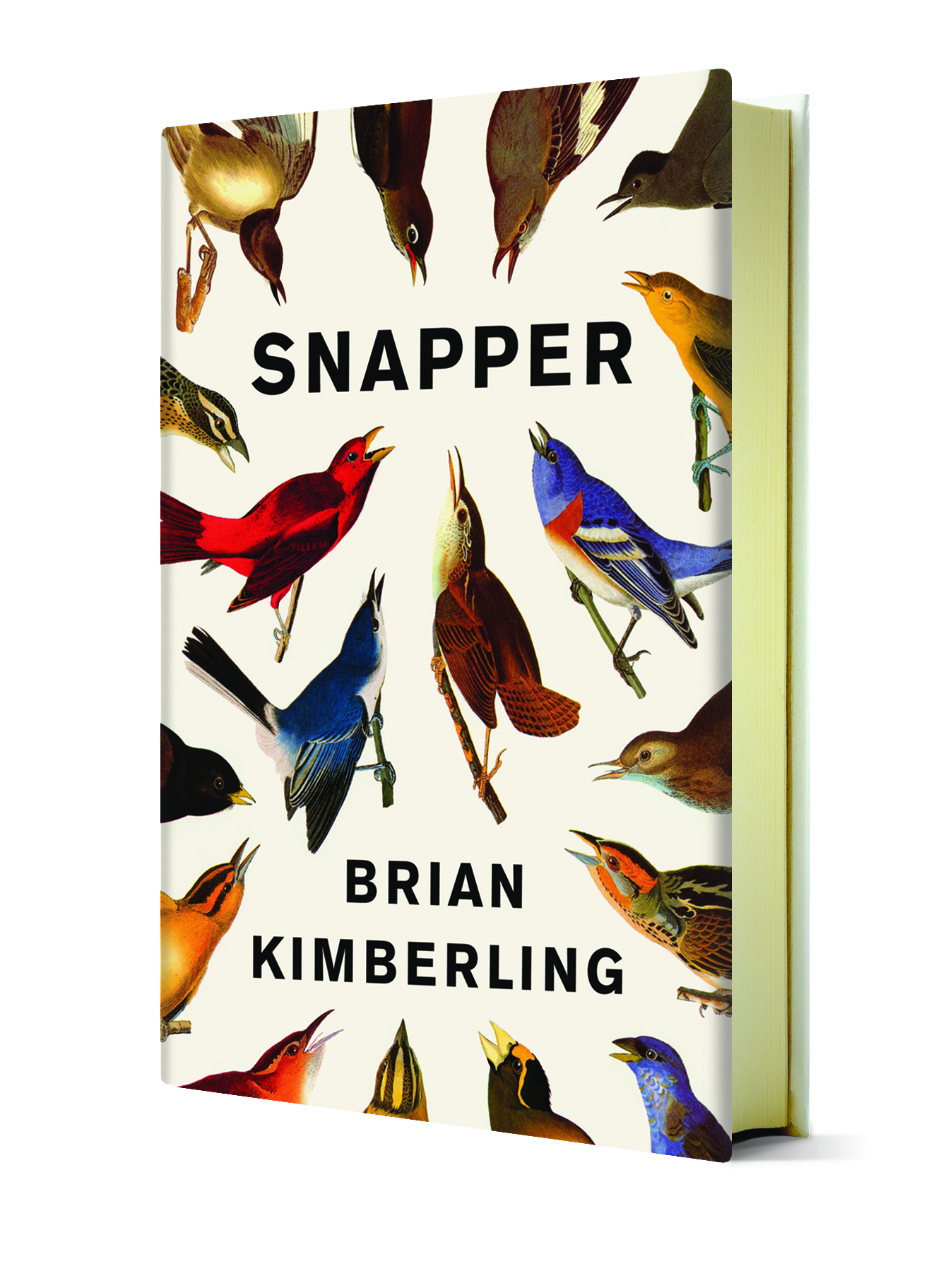
Interview With Brian Kimberling, Author of Snapper

Give us a view into your life as a novelist whose book was recently published. What type of work does the novel call forth from you on this side of publication? I did a ten-day, ten-city tour in the US in April. It was exhilarating and exhausting. Have had some events in England since then, I have loved all of it. Also now getting requests for comments and blurbs on two kinds of book: Midwestern memoirs and bird books. Enjoying the Midwestern memoirs much more than I expected to. Now that the tour is over and the events over here largely done, I should get back to work writing fiction. Well, I have. Intermittently. Publishing does take over your life for a while, though.
Brian Kimberling
Did you draw from your own experiences as a birdwatcher in writing your story, and if so, in what ways? For me it was a summer job I did as an undergraduate. Nathan, the narrator and protagonist of Snapper, makes a sort of eight-year career out of it. I embellished and exaggerated some of my own experiences, borrowed some others, and made other things up. I did not do much bird research — I tried to stick to what I was pretty sure of from experience.

Making fiction entertaining must take work. Making it funny must be either natural or laborious. How did you gauge your great humor’s effectiveness as you wrote? Actually took a lot of jokes out of the MS. Underneath Nathan’s irrepressible drollery some sad things are going on. I always tried to find a balance between the comical and the melancholic. One thing that helped was reading everything out loud. Some things that looked OK on the page didn’t quite sound right, so I struck them.

This novel is as much about Indiana as it is other things. How did you come to write about Indiana? It’s what I know. A few years ago (a bit pre-Snapper) I was there and someone asked what a certain plant was. I knew, and I knew various things about it, but I didn’t know how I knew or when or where I had learned what I knew. In England I can’t identify plants or birds or much of anything else. When I’ve written about England I’ve written less vividly. I could feel Indiana coming alive as I wrote, so I ran with it.

Indiana becomes visible geography for us readers. How have people began responding to learning about the state that by the main character’s perspective is overlooked or misunderstood? Have you heard from residents of my neighboring state? Nathan’s pretty savage about Indiana, but most readers as far as I can tell take him with a grain of salt. In general, responses have been very positive. (A number of British readers in particular have said they wanted to go to Indiana when they had finished the book). I’m sure there are or will be a few offended Hoosiers out there, though.

Nathan’s experiences are detailed with a researcher’s specificity. How did his appreciation and knowledge of his town and his work areas express his love, his devotion? He seemed to like his work. It is a pretty nostalgic book, underneath the jokes and the disparagements of Indiana. He details it not just specifically but lovingly, I think. He doesn’t quite appreciate just how free and fortunate he is at the time of doing the job — it is only in retrospect that he suspects he may have had it pretty good for a while.

Will you talk about your process of becoming a writer? Were you always a writer or did you become one? I’ve been writing since high school at least. Prior to Snapper I wrote and produced several plays at a theatre five minutes’ walk from my house in England. That was very helpful preparation for Snapper as I began to enjoy writing
dialogue, setting scene, et cetera.

What are you reading these days? Currently on Age of Innocence by Edith Wharton. Never read her before; glaring negligence on my part. I just finished The Distancers by Lee Sandlin and Leaving Rollingstone by Kevin Fenton — the Midwestern memoirs I mentioned above. I enjoyed them both very much.

How can readers stay aware of your work? I do have a website, briankimberling.com. It’s due for some changes. I’ll get around to that pretty soon.
Snapper Cover

What We Desire to Find

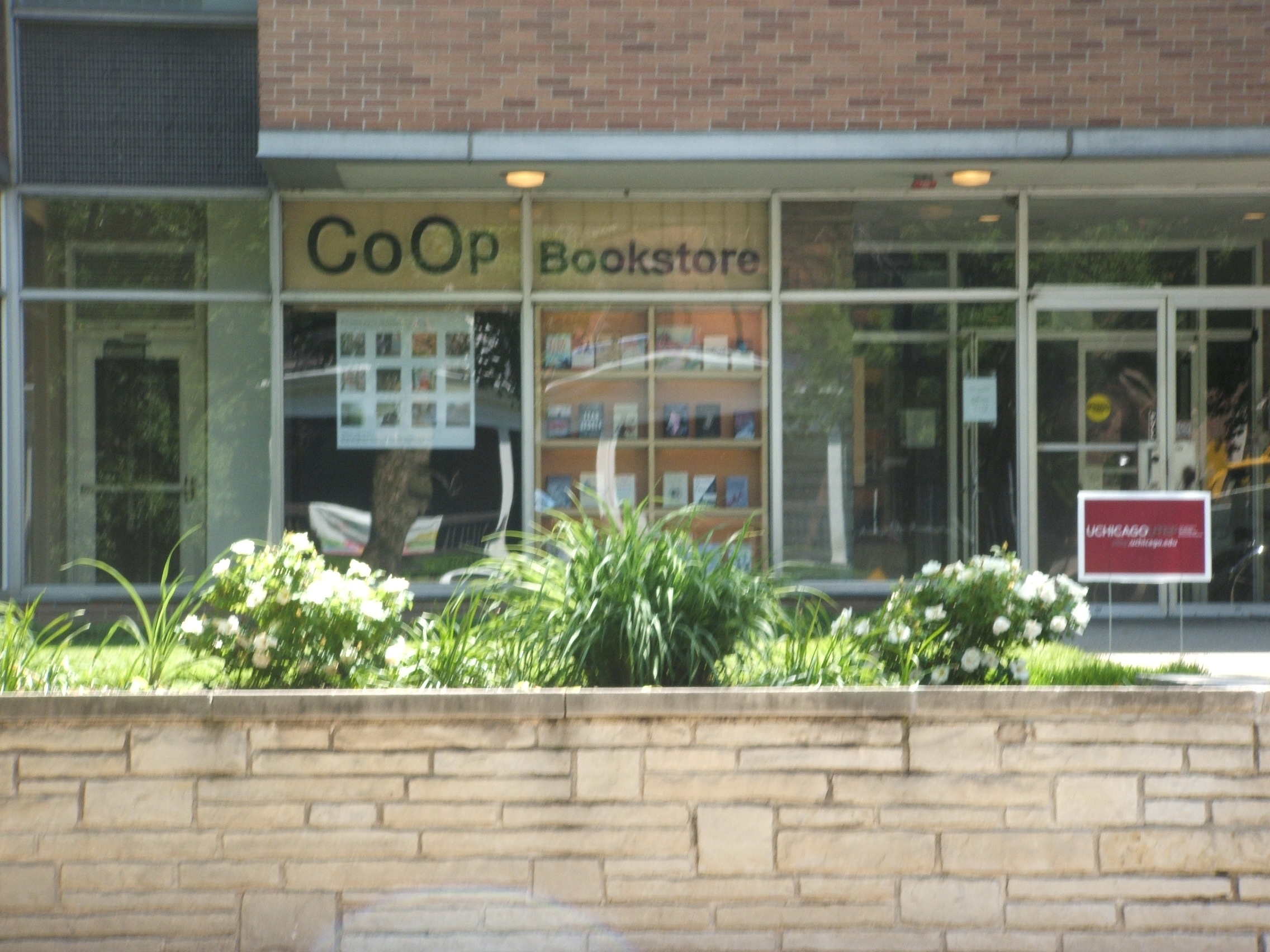
If you love books and stores selling them, you should meet the Seminary Co-op Bookstore, a place I’m pretty sure Ernest Johnson introduced me to when we were in high school.  That was back when we’d eat at the now defunct Cafe Florian and do other things I’ll leave unmentioned.

The Seminary Co-op held our futures in a curious way, pressing in me and in EJ a thirst for learning, a love for the mind, and an appeal to practice what we think we know.  And it held our presents because that basement was another world entirely, a place where time fell to the side of a stone step or ran through an alcove or up to a chapel and waited like an answer to prayer.

Here is a quote from an exchange of two friends talking about a visit to the new Co-op.  Newly owned by the University of Chicago, the old dark one is being gutted.  All our current affections must train to this new light-filled room, which is very worth savoring.Old Co-op

With books, too, we seek out what we desire to find, and soon enough we reflect what we have sought. The contrast between old and new Seminary Co-Ops could not be more apt— the old store with its nooks, corners, pipes, and warren of aisles did indeed exhibit the “disordered glory” of the first collection you described, while the new store, well, if it was not carefully color-coded and alphabetized – all professionalism and spacious tidiness – then it was surely close to that.

Like you, I’m not exactly complaining about the new setting. It’s just different, and will take some getting used to. I suspect it will be a pleasant enough adjustment as older memories give way to more recent ones, spaced out across multiple visits. Then, when we think of “Seminary Co-Op,” this new, big-windowed building with its lighter woods and airy spaces will happily come to mind. And let’s be grateful that the Seminary Co-Op, during these turbulent times for booksellers, has managed to keep its doors, or different doors, open.

–From the exchange of letters between Wesley Hill and Brett Foster, where Brett responds to Wes’s letter about the new Seminary Co-op bookstore in Hyde Park.  Read both full letters here.New Co-op

How to Read a Non-Fiction Book

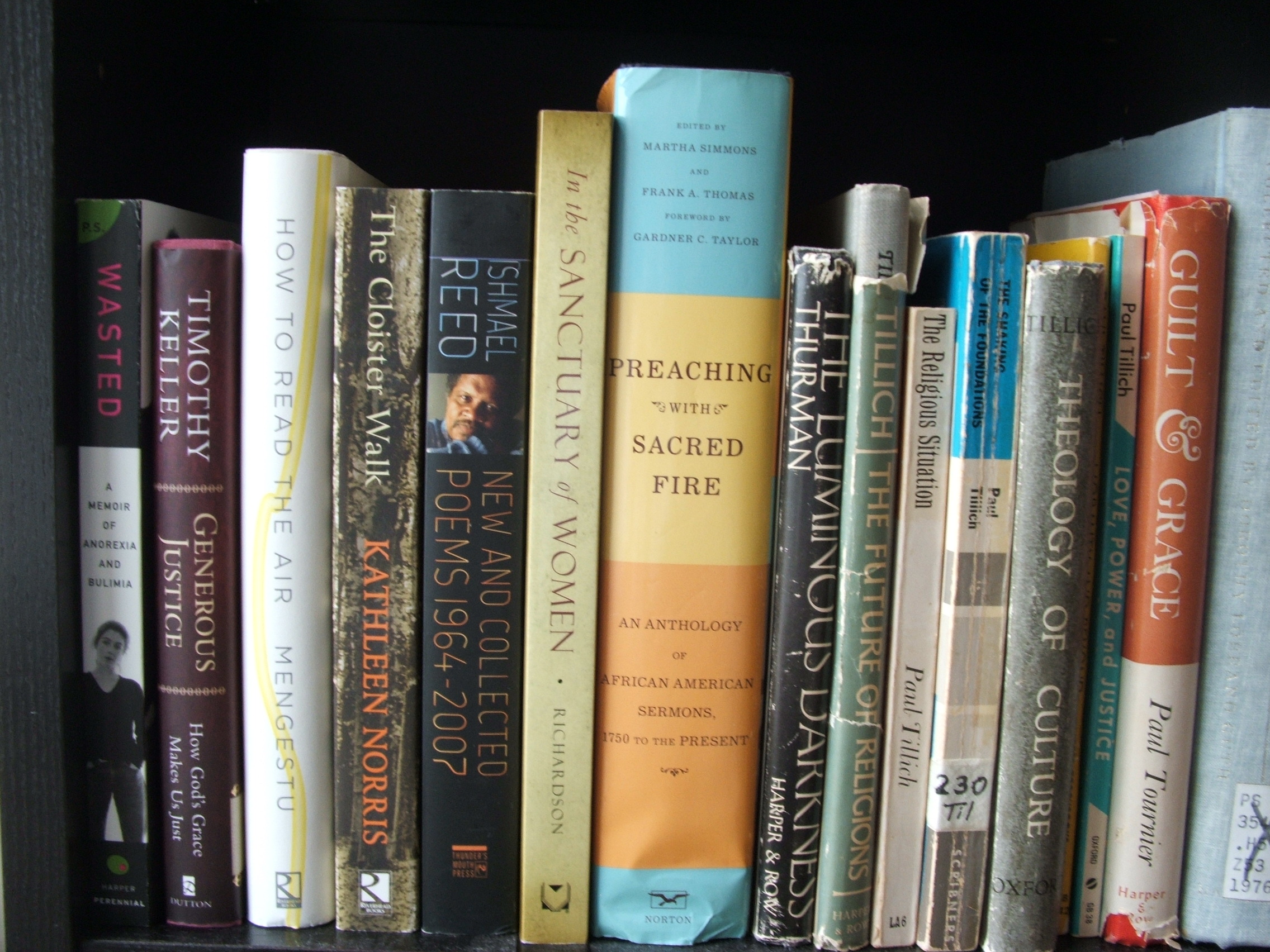
Michael Hyatt, a communications and leadership specialist, offers ten ways to read a book.  Stop by Michael’s site to see the full post and to keep up with his wisdom.Reading Materials

  1. Don’t feel that you need to finish.
  2. Start with the author bio.
  3. Read the table of contents.
  4. Quickly scan the whole book.
  5. Highlight important passages.
  6. Take notes in front or in the margin.
  7. Use a set of note-taking symbols.
  8. Dog-ear (or bookmark) pages you want to revisit.
  9. Review the book and transfer actions to a to-do list.
  10. Share the book’s message.