Nudge Toward Self-Scrutiny

I’m reading Pamela Cooper-White’s book, Shared Wisdom: The Use of Self in Pastoral Care and Counseling. It’s essentially a book about countertransference and it’s good use in the pastoral ministries of care, counseling, and psychotherapy. I grabbed the title as one-to-read at the beginning of my residency and mostly because my previous clinical supervisor in Urban CPE suggested that I continue to explore the notion and practice of “use of self” in my work.

I hadn’t read Cooper-White’s work before I heard that direction from my supervisor. When we started our residency, we were given the option to choose one book to read and review in place of one verbatim. So, I’m reading Shared Wisdom in order to relay what findings I’m seeing and how they relate to chaplaincy in particular and to pastoral ministry in general.

I’m not going to review the book here. I’m 90% through it, but I want to finish it before commenting deeply on its high significance, even for ministers without any real introduction to pastoral care literature, psychodynamic theory, or the variety of approaches to pastoral counseling. The book is a great introduction to all those in my view, though it doesn’t intend to be exhaustive in that introduction.

I want to pull one quote that I think will grab at the book theme and intention. It’s context-less, which I’m generally against, but it does stand on its own and communicates a few things about the total work (It’s from pgs. 173-174):

Not only is none of us immune to the occurrence of unanticipated enactment moments in deep therapeutic work, but I would venture that none of us is immune to at least occasional seductive desires to be the omnipotent healer. While this probably does not constitute an entrenched, predatory charaterological pattern in most practitioners, the very dynamics that often draw individuals to pursue caregiving professions virtually guarantee an intensification of unconscious impulses along a healer-healed axis. Grandiosity may not only appear in the guise of being the special healer of our patients. It may also appear in the form of overestimating our capacity to contain and analyze all the possible meanings that can arise when enactments do occur. As Arnold Goldberg has stated, many enactments may not in and of themselves constitute anything overtly unethical in the moral sense. However, we must acknowledge our limitations in being able adequately to process these enactments and to contain the energies they generate.

Cooper-White is doing a few things here worth capturing:

  1. She reminds us that enactments happen.
  2. She pushes us to question our self-understandings as leaders, particularly of the omnipotent sort.
  3. She says what most don’t know: certain kinds of people go into ministry and we generally have certain impulses.
  4. She uses the word grandiosity which in itself is a nudge (or a wall) worth lingering with.
  5. She writes about limitations and the notion is deeply theological, anthropological, and ethical.

Why Pastors Should Take CPE (1 of 2)

I’ve been writing this post in my head for more than a year. That doesn’t mean it’s good as much as it’s something I’ve been mulling over for a while.  I’m taking a series of units of clinical pastoral education (CPE) at a Chicago hospital.  I took a unit last year at a different site, Little Brothers, Friends of the Elderly. And my thoughts are coming out of those experiences as well as loving theft of smarter people who’ve said things about the same.

Here are some random thoughts about the early reasons to take a unit in CPE. My next post will comment on the content and group work in ways that keep the right confidences:

The requirements are minimal. You do need a theological background, so you have to be friends with graduate theological education. But if you’re in the work of that or if it’s behind or under you, the steps to enrolling in CPE are doable. Getting in tends to be an extremely hospitable process, one where you are lovingly and graciously asked significant questions that will in themselves be an education.

The requirements aren’t minimal. In a sense, just by going through the application process, you know that people around the table, in your peer group, have taken the decision to attend very seriously. It takes recommendations and essays and answers to fairly deep questions to get an interview for a site. But you know that everyone has answered, or been pushed to answer, the same strong questions.  Once you start serving in your site and doing group work, you’ve joined a group of people who are generally good at making and staying with commitments.

CPE is a continuing education. Most people are familiar with CPE as part of a seminary education, but because I was working at a church during seminary, I didn’t take a unit in CPE. I didn’t have the time. The beauty of CPE is that you can take it at any point. And pastors need structured continuing education in theological reflection, in pastoral arts, and in group dynamics. The education provides for those.

Choosing gets easier. You have to choose your site, where you want to “do your unit,” where you want to learn. Part of that choice is in your experience of the interview with the potential group leader/clinical supervisor. This person will become either a very poor influence in your life over the months you’re learning or someone you “esteem among rubies.” In my case, my clinical supervisor was a critical reason I kept going forward to get more units. Her way and expertise with teaching us and me were outstanding. You should pray to have a supervisor like Sister Barbara at Urban CPE.

Praying gets harder. If you’re lucky, you’ll sit in a group with people as different from you as a new morning. That alone might shock you into transformation, growth, and learning. All of you being ministers, all of you won’t come from the same ministerial background. Welcome that for what it’ll do to how you approach God. You should find yourself using a broader range of words for God, expanding beyond your well-crafted experience of God, and, thereby, deepening in the way you’ve created that range and that craft. But praying may take longer. You’ll integrate yourself in prayer, listen to feelings and how they make their own prayers, and you’ll be heard differently as you pray for others in the intimate homes of people unfamiliar with your way of doing ministry. You may become a bit more humble.

We need feedback. As a pastor, I spend time telling people what I think, and I spend time helping people reflect on what they think. I needed an education that would come alongside me post-seminary which would enable me to regularly reflect on my practice of ministry and, as importantly, give me feedback. My experience of the pastoral care part of leadership is that you don’t get feedback normally.  Building a vehicle for it was important. Once you go through a group or two, you expect feedback, learn how to hear people, and learn what it feels like to be heard.

Supervision is a gift. Clinical supervision is a weekly meeting with your supervisor, a pastoral educator who has had–by the time they sit with you–years of post-seminary training in listening, group work, paper writing, grief, chaplaincy, and teaching. She’s been to therapy in order to sit with you. He’s been through what you’ve been through at least half a dozen times. So, when you close the door of your meeting room and talk about what you’re learning as you serve in your clinical area, you’re receiving something precious.

The education is somewhat tailored. You develop your goals for CPE. There are common outcomes because the education is accredited through the ACPE. There are standards to meet, but you determine how and whether you meet them. The grading is first very interior because the focus, from application to post-unit evaluation, is on you and what you need. My interview at Northwestern was an inviting time of discernment last summer. The first question they asked me was, “What do you need from us today?” Blew me away.

Pastors doing process notes change. Ministers do a lot and we could even do more than we think. In other words, we could do what we do and not think. Process notes are an essential part of CPE where you write weekly reflections to 5-6 questions. You write out of your experience at your site, thinking through what you’re doing, interrogating your experience. Over time, you read your notes, see your growth, and you change. You add the language of the noted question to yourself and begin to monitor whether an interaction is illuminating. If your supervisor comments on your notes, it’s increases the amount of wisdom you’re gaining.

We start asking better questions. On my current process notes template, our supervisor has this question, “Where did you meet God this week?” Can you imagine answering that weekly for yourself? Before you lead a meeting or close the study door or leave for your Sabbath or give a benediction or counsel someone, knowing that that question is waiting for you is framing and powerful and internally shaping. When we asked good questions, it turns us into good questioners.

The Dumb Comfort of Your Presence

Hospital stays are one of the few times in adulthood when we have an excuse to drop all the busywork that normally preoccupies us and go to be with the people we love.  You simply spend time with them, without any social occasion for it–a wedding or anniversary, dinner or the theater.  You just sit there in the same room, making small talk or reading, offering the dumb comfort of your presence.  You are literally There for them.  When you’re a kid, this is one of dullest, most dehumanizing things you’re forced to do–being dressed up in a navy blazer or a sweater vest and dragged to family reunions to be fawned over like a photo in an album, your physical presence all that’s required of you.  But if you manage to make it to some semblance of adulthood, just showing up turns out to be one of the kindest, most selfless things you can do for someone.  And it isn’t only selfless.  At the beginning of my stay, my friend Lauren told me over the phone, “I know this seems like a drag, but someday, I promise you, you will look back and be grateful that you had this time…”

Tim Kreider, We Learn Nothing, pgs. 179-180

Averted Vision

Such a contemplative thing to say:

Perhaps the reason we so often experience happiness only in hindsight, and that any deliberate campaign to achieve it is so misguided, is that it isn’t an obtainable goal in itself but only an after-effect.  It’s the consequence of having lived in the way that we’re supposed to—by which I don’t mean ethically correctly but fully, consciously engaged in the business of living.  In this respect it resembles averted vision, a phenomenon familiar to backyard astronomers whereby, in order to pick out a very faint star, you have to let your gaze drift casually to the space just next to it; if you look directly at it, it vanishes.  And it’s also true, come to think of it, that the only stars we ever see are not the real stars, those blinding cataclysms in the present, but always only the light of the untouchable past.

From Tim Kreider’s We Learn Nothing, pg. 218

Author Interview with Courtney Miller Santo

Elders often go unnoticed.  In your book, the elders of Kidron (and around the world if the clippings and news items within the novel come to mind) are central.  How did you come to write a story underlining people who are generally so unrecognized?  I’ve been fortunate to be surrounded by elders for most of my life. One of the reasons I wrote this particular book is that none of the fiction families I read about had many of their grandparents, or great grandparents around and yet my experience growing up was one of being surrounded by people who not only had a few years on them, but were delightfully funny and interesting. Not that I’ve got anything against grandmothers who bake cookies or knit, but that wasn’t my experience.


Tell us about your research process, particularly how you developed multiple characters of varying ages.  Again, your characters weren’t exactly typical for contemporary fiction.  I was fortunate to have my own great-grandmother in my life until a few months after the book was published. She was 104 when she passed away and although in the book, Anna is a few years older, she is modeled very much on my own great-grandmother. The other women, who are older are also based on people in my family. If I needed to know what particular phrase an almost ninety year old woman would use, I just started a conversation with one of my relatives, or read their journals.

Courtney's Five Generations

The more difficult characters where those who were closer in age to my own mother. There’s always a barrier between mothers and daughters and the frankness that my grandmother’s talked to me isn’t the same. I also have an extraordinary group of women who I’ve come to know through my church community who were very valuable in that respect.  Are there elders, living or dead, who you believe we should remember?  Any notables for you?  I am fascinated by Jean Calment, who makes a brief appearance in the book and was in fact the oldest woman to have ever lived. But mostly when I visit with bookclubs and talk about this book, what I encourage people to do is to ask the elders in their lives to share their stories. Some people are lucky enough to still have grandparents and great grandparents living, but if that isn’t the case, look to your neighbors or your work community and start asking questions about their lives. I am particularly interested in stories beyond the typical where were you during a war, or a historical event. One question I find that always gets great (and sad stories) is who do you know who drowned. I believe that people live on through their stories. It is the way we echo through generations. Storytelling is vital to our identities.


You dealt with many things in your work, one of which was the way stories of our forebears are kept hidden, shared, remembered, rehearsed, or, in some cases, lost.  Choose one of the Keller women and give us a sense of something she’d want us to know.  What an amazing question! I always wanted Bets and her daughter Callie to have a conversation where they allowed themselves to be honest with each other. Bets in particular kept so much from her children—especially about their father and the type of relationship she had with him and that damaged Callie in ways I don’t think she understands. I always thought that those two in particular would have benefitted from an airing of grievances and secrets. I think that if Callie understood her parents and the secrets they had to keep that she’d have found love much sooner in her life and that might have changed what happened with Deb.


Courtney Miller SantoYou acknowledge the community of writers around you.  How did that community support you as you worked on your novel?  My writer’s group has to be some of the most insightful and encouraging people in the entire world. Throughout finishing this novel, we met monthly and each time I read a bit of the work, they found ways to push me to make it better. I also was lucky enough to have a fantastic mentor in Cary Holladay, whose own work I deeply admire. I always wanted to write so-called Southern fiction, which Cary does so well, but the rub of it is that because of my Western pedigree, all I could do was write bad imitations of southern stories. Cary helped me to find my own authentic voice. I also want to say that I have so many poets in my life who have helped me to learn the value of a single word among 100,000—in particular Heather Dobbins has been an incredible support to me.


What did you learn while writing?  What did you find out about families, aging, death, and life as you developed the book?  One of the biggest revelations that happened while I was writing this book is that I began to see my own mother as an individual. The more I spoke to my grandmother and great grandmother about their lives, the more I was able to see my mother as somebody other than my mother. I also have learned buckets about olive trees. They are incredible trees. I only wish I could figure out how to keep one alive. I’ve killed at least three. The other startling connection I made while researching this book is how many of mankind’s myths deal explicitly with aging and the idea of immortality. Every community has an idea of how to get past mortality—and yet scientifically we’ve sort of reached an end road of sorts.


Did you come across any notable remedies for aging?  There are more wives tales than remedies. Everybody ages, what you hope for is those genes that make you physically less old than your actual age. My great-grandmother could touch her toes until the day she died and yet for the last twenty years of her life, she had M&Ms and Mountain Dew for breakfast. That tells me it was mostly genetics that kept her flexible and the science backs that up. However there’s common sense nobody wants to hear it, but it’s true stuff that helps you if you don’t have extra long telomeres—basically keeping active and eating well.


What are you reading these days?  I’ve just started Rebecca Makkai’s The Hundred Year House, which I adore and since I just wrapped up vacation, I recently finished Wolf Hall, a fabulous nonfiction book that tells the history of Paris through biographical vignettes, called The Parisians, and I devoured my daughter’s copy of Divergent on the plane ride home. I’ll be going to my twentieth high school reunion in a few weeks and have bought the Hurricane Sisters for the plane ride there.


How can readers support you and are you working on words you can tell us about briefly?  My second novel, THREE STORY HOUSE, comes out on August 19 and I’d love for anyone who enjoyed THE ROOTS OF THE OLIVE TREE to check it out (Anna makes a special cameo in the book). Set in Memphis, the book delves into the relationship between cousins who find their lives coming apart as they work to renovate a spite house. There’s going to be a fun contest starting August 28 where readers are invited to post their own versions of my cover on my facebook page at www.facebook.com/courtneymsanto There will be prizes! I’d love to hear reader’s stories of their local spite houses.Olive Tree for CM Interview

Relationships of Accountability

I believe that anyone who has a responsibility for the spiritual guidance of others should be in a relationship of accountability with another for the sake of the people he or she guides, teaches, or preaches to.  Otherwise we are going to grow, if we grow at all, in a deformed shape that will be passed down to others.  I see such distortions frequently.  It is a biblical concept to be accountable to someone else.  Timothy was mentored by Paul, Paul by the disciples in Antioch.  Friedrich von Hügel, author and spiritual director, once wrote: “Behind every saint stands another saint.  That is the great tradition.  I never learnt anything myself by my old nose.”

From John Ackerman’s Listening to God (pg. 67).

Books That Speak For You: The Almighty Black P Stone Nation

I don’t remember who but I heard someone say how beneficial it was to read authors of one’s age, writers who grew up when you grew up.  Those writers saw some of the things you saw, began framing the world during the same time you did, and knew the language, phrases, monuments, and events you did.  I think of Jesmyn Ward’s work, especially Men We Reaped, and how it is the first book that says for me in her words what it meant to be born premature at six months (among too many other good reflections) and to be so mindful of those early days.  I came across another book I’m ashamed I didn’t learn of until 3 years after its publication that brought that statement to mind, The Almighty Black P Stone Nation.

Natalie Y. Moore and Lance Williams co-wrote this social history of Black Chicago.  Indeed it is as much as social history of Black Chicago as the city itself.  One never talks about a part of our city without, at the same time, talking about the whole.  In this book, Moore and Williams tell the story of Jeff Fort.  They use Fort’s life as a teen who emerges into a leader of one of the country’s strongest, most prominent gangs to discuss everything from identity, neighborhood development, politics, racism, poverty, and the relationship between religion and communities.

First Presbyterian Church, Early Meeting Place for Blackstone Rangers

First Presbyterian Church, Early Meeting Place for Blackstone Rangers

They trace Fort’s relationships and show how the charismatic but unlikely young man becomes a powerful, influential gang leader.  I learned about Jeff Fort’s life, how he started one of the most famous gangs in my adolescence, and connected the dots between his influence and the lives of gangsters back then and today.  Moore and Williams explain the various ways gangs have been talked about, employing pieces from the FBI, from pastors, and from law enforcement.  The authors also point to the roles prosecutors and journalists played in building a particular perspective (almost mythology) around Fort, Eugene Hairston (his co-leader of the BPSN), and similar people in the gang.

If you don’t like reminders of violence–or being able to sit in such reminders–this isn’t the book for you.  You won’t read a sugarcoated history of how good these gangsters were for the neighborhood.  But you will be surprised if you think gangs were/are all bad.

You’ll see up close how mixed and complex this gang was in relationship to Chicago; in relation to the black community which it saw itself as part of; in relation to other gangs which were their original enemy; and in relation to the dubious mayor (the one spoken of very poorly in my experience on the south side), old man Richard J. Daley.

If you’re interested in exploring the world of Black Chicago, what it meant for Black people to live in the city, for instance, between the Great Migration and the Civil Rights era, and the history of gangs in the country and in Chicago particularly, this is a great, accessible, easy-to-read primer.  But the book does more.

It acquaints you with some of the fundamental psychological reasons youth leaned toward gangs in the 80s and 90s, offering reminders of how youth are still youth with the same needs.  The writers also give a glimpse of how different gangs are these days and how much distance they see between the earlier gangs which developed in similar social conditions even if in a different political, national, and domestic environment.

There are some things which haven’t changed since Jeff Fort and Eugene Hairston met as teens in the Woodlawn neighborhood.  The federal government’s initiatives (i.e., wars) on poverty and drugs have hardly changed, though they have collected more cousins to join their ranks (Think of the current sentencing guidelines for drug possession of Blacks vs. Whites vis-a-vis the housing covenants of the 60s).  There are now wars on more things and in more places.  But the book opens up that earlier world when the wars started, if you will.

I am not satisfied with the book’s ending.  In some ways the book ends abruptly.  I think I wanted the authors to say more, to forecast more.  I remember thinking the same thing about Michelle Alexander’s troubling and moving and remarkable, The New Jim Crow.  For both books, in my still-naive hopefulness, I wanted the authors to paint a different picture, to suggest an alternative world (even historically), but of course, the writers were simply too good at telling their stories.  They were so good and precise, so truthful, that they left me aching for change.A City

I wasn’t in a gang.  So, in that way, The Almighty Black P Stone Nation doesn’t speak for me.  But what the book does is narrate portions of a journey I did negotiate.  It straddles the world of politics and religion and death and growing up, all of which were my life as a teen going from 103rd to 83rd, passing Julian on my way to Simeon to go to school, my Wednesdays and Saturdays going back and forth to rehearse and sing with the Soul Children.

It’s a book that helps me understand what it’s in my bones and what isn’t as I continue to find a home in Chicago.  It gives a glimpse of why Chicago is my city, my home, the place where (many of) my family resides.  I was not only born here.  I shared some of the experiences Moore and Williams recall with such clear, simple truth.

I hope they turn they gaze to some of our city’s other notables.  I can recommend a few subjects, but I think they already know who next can be subject to their collective intellect, care, wisdom, and words.

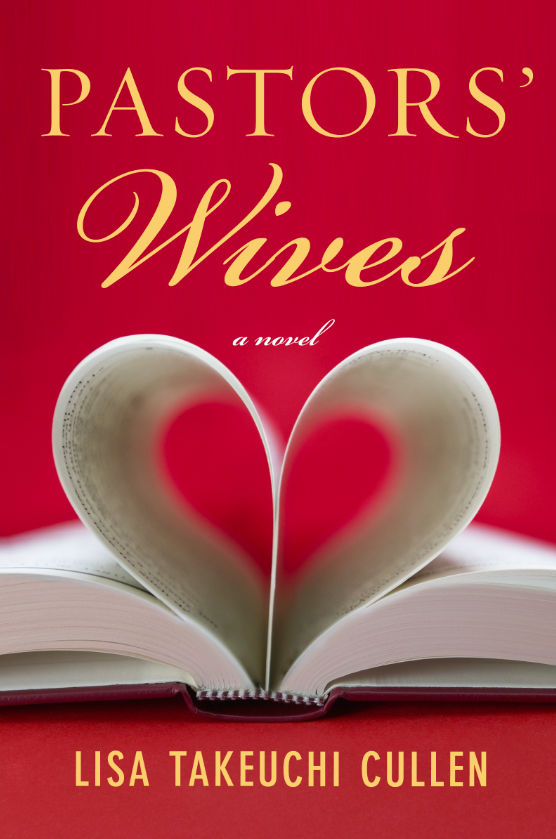
Interview with Lisa Takeuchi Cullen, Author of Pastors’ Wives

Lisa Takeuchi Cullen

Lisa Takeuchi Cullen

Before getting into things with your book, tell us who else you are.  A bit about you.  I used to be a journalist…now I make things up. I was a longtime staff writer at TIME magazine, where I wrote an article about pastors’ wives that led to this book (more on that below). I left TIME in 2009 to write fiction. “Pastors’ Wives” is my second book and first novel; my first book was called “Remember Me,” about the year I spent crashing weird and wonderful funerals (HarperCollins). To put food on my family’s table, I write TV pilots.

Your novel has an interesting origin.  How did Pastors’ Wives begin?  I was assigned to write a feature about pastors’ wives. Growing up Catholic, I knew nothing about the pastor’s wife, except that our pastor wasn’t allowed to have one. But whatever preconceptions I had about them were blown out of the water when I began meeting and interviewing these women. They were smart, funny, and not at all okay with being just the woman behind the man behind the pulpit. The article published in 2007, and the women somehow stayed in my mind. I first pitched it as a TV series, but when that ended in disaster my agent told me to just write it as a novel already.

You say that you prevailed upon many pastors’ wives in researching for this book.  What did you learn in your prevailing?  So much from each and every one. I learned what it’s like to be married to a man who’s already married to God. I learned about their faith and about my own. Something I learned from the lovely Becky Hunter of Northland Church in Florida became a mantra in my marriage: “Be nice to your husband on purpose.”

There is marriage and friendship and fear and a host of other relationship realities in your novel.  In what ways are the lives of pastors’ wives different from the wives of non-clergy?  The scrutiny they endure from the congregation, for one. Imagine your every choice picked apart by people who barely know you: your style of hair; your musical skills; your husband’s make of car. For another, these women have to accept—not always happily, mind you—that the church and God often come first for their husbands.

Pastors' Wives

Pastors’ Wives

You wrote about women married to clergy, women who had ministries of their own.  What does that mean for how you tell others about the book?  Do people assume it is Christian Fiction, which it isn’t?  Do they assume things about the story itself?  What should readers know going into their reading of Pastors’ Wives?  “Pastors’ Wives” is women’s commercial fiction—a page-turning story about marriage, faith, and what we do for love. Though it is set in a church and revolves around Christian characters, it is not strictly Christian fiction. Its publisher, Penguin/Plume, is secular, as am I. But I hope I told this story with the respect I felt so deeply for these women. I’m delighted to report that the vast majority of the many Christian reviews I received embraced the book. I’ve noticed that some Christian reviewers point out the use of some language, a bedroom scene (between a husband and wife), and the sordid history of one repentant character—so reader, beware!

Can you talk about the uniqueness of your novel’s development from an article to a book?  What did the “revisioning” and “reviewing” of your earliest conceptions do to you as a writer?  This is my first novel, but I spent almost 20 years as a journalist, interviewing people both ordinary and famous. So I found I relied a lot on my reporting skills to come up with dialogue and story lines. It’s really hard to make stuff up!

The stories of characters in the novel were interrelated.  Talk about why or how you chose to write the book that way.  It added a richness and a social engagement that could have been absent had it been written differently.  Thank you so much. I started out with two voices in my head, that of Ruthie, the reluctant and doubting pastor’s wife, and Candace, the ruthless, brilliant senior pastor’s wife. Then I started to hear Ginger, a more typical PW…except, of course, for her secret past. I wanted to give them equal weight, but this turned out to be difficult. I hope I did them each justice, as I loved them equally.

If your characters gathered at your home for dinner, who would bring what and why?  Ha! That’s a great question. I’m sure Candace would bring something elegant and absolutely perfect, like a beautiful cake and gifts for my children. Ruthie would bring wine. Ginger would bring homemade cookies that are burned but still delicious.

What are you reading these days or what good books would you recommend to new friends?  I read a lot for my other work as a writer of TV pilots. I’m always on the hunt for books to adapt into a drama. So I’ll ask your readers instead: if you’ve read any books you think would make for a great TV drama, please post it on my Facebook page!

How can readers support your work?  Please “like” my Facebook page (https://www.facebook.com/LisaTakeuchiCullen)! My website is www.lisacullen.com, where I blog about the daily indignities of writing TV pilots and novels. You can read there about my crazy experience filming my CBS pilot “The Ordained” with Sam Neill, Hope Davis and Audra McDonald, right down to its rejection for series in fall 2013. I am also working on a second novel, a legal thriller set in Okinawa, Japan. Thank you so much for your interest!

Interview with Dina Nayeri, Author of A Teaspoon of Earth and Sea

A Teaspoon of Earth and SeaWhat did it take from you to create A Teaspoon of Earth and Sea, and what are a couple things the creative process gave you?  In addition to an engaging book.  The process of writing this book gave me an entirely new perspective on my life and my purpose. I became a writer while creating this novel. I had other published projects before, but this was the first time I threw myself into a work completely, immersing myself in research, in my characters, and in the imagined world I wanted my readers to inhabit.  In some ways I lost myself in the process, spending days just listening to Iranian music, reading books on the region, watching videos.  I certainly let my personal life falter, and there were days when I barely did anything but work and drink espressos.  So this novel took a lot from me.  But it also made me who I am as a writer.  In addition, the process taught me to value rigor and brevity and detachment in my writing. It taught me to dig for the most important details and to present them concretely and imaginatively. These skills will always be valuable to me.

You describe yourself as an exile.  How has your exilic condition impacted your writing?  Mostly in the themes that capture my attention. I often write about home, about displacement, and fear. These are familiar topics for me because of my experiences as an exile. They are like obsessions. I can’t get away from them.

To quote Saba’s reflection, “This story is about fathers and daughters.”  As much as the novel is a large story between sisters and their mother, isn’t it as much about a father and daughter?  I think it’s even more about a father and daughter, because theirs is the only relationship that isn’t already dead. With the other members of her family, Saba has only memories and her imagination. She can turn those over in her mind, but she can’t have anything new.  With her father, she has a flesh and blood person who loves her and wants to be allowed into her world.

Part of my experience reading was in learning Saba’s opinions about the differences between American and Iranian men.  How might American fathers be different from Iranian fathers?  I think fathers are fathers. To love and protect your children are universal instincts. The cultural differences seem minor compared to that.

Talk about how Saba’s life became an echo of her twin sister’s.  Where did that come from in your writing process?  How did you connect with both Saba’s experience and Mahtab’s?  I consider their stories representations of the two ways that my own life might have gone.  I was raised in America and so the Mahtab stories mirror my own. But the Saba stories are the Iranian experiences I might have had, if I had stayed behind.  To parallel them seemed like a natural exercise, and something I took great pleasure in.

Where would Saba call “home”?  Cheshmeh, Iran

Dina NayeriThe novel returned to themes of desire, hunger, memory, and love.  Did you learn particular things about such themes in writing or revising?  Did you develop a love or appreciation, for instance, of your own family history?  Absolutely. The research alone gave me a great appreciation for the richness of my own history and roots.  But, obviously, I also used many of my own emotions and experiences in writing Saba and Mahtab’s stories. In doing so, I deepened my understanding of the themes you mention.

What are you reading these days?  “The Woman Destroyed” by Simone De Beauvoir.

How can readers connect with you and support your work?  You can like my Facebook fan page:  http://www.facebook.com/dinanayeri

And you can visit my website: http://www.dinanayeri.com

Defining Acts

This is from Hauerwas and Willimon’s book on the Ten Commandments.  It’s one of the things I’m turning over for tomorrow.  Before this quote, the chapter (on the third command regarding Sabbath) takes the reader through how, for the Christian, Sabbath is a reordering of time.  Sabbath observance is about actively remembering God.

One of us was raised in Texas, where there is a wonderful institution known as “Juneteenth.”  On June 19, news of the Emancipation Proclamation reached Texas.  June 19 became the day on which African Americans, with no legal recourse, simply refused to show up for work.  Whites might not have liked it, but there was nothing they could do about it.  They simply accepted “Juneteenth” as a holiday.

The Christian Sabbath is Juneteenth.  It is when Christians perform one of our most radical, countercultural, peculiarly defining acts—we simply refuse to show up for work.  It is how we put the world in its place.  It is how we take over the world’s time and help to make it God’s time.  It is how we get over our amnesia and recover our memory of how we got here, who we are, and in whose service we are called.