“What You Are Really Choosing”

Photo Thanks to Annie Spratt

Photo Thanks to Annie Spratt

No one creates your feelings. No one is to blame for your situation. You are the author of your condition. Whatever you have been doing is what you are really choosing, whether or not you consciously want it. The alternative is to see yourself as a victim of people or circumstances and real change becomes impossible. Taking responsibility always leads to a revelation of what your next step needs to be.

(From How to be an Adult, p. 24-25)

Friends vs. Strangers

Photo Thanks to Kevin Curtis

Photo Thanks to Kevin Curtis

In a day I spend time working with three people: participants in mission at church; patients in a hospital setting, usually in medically intensive situations; and students preparing for continued ministry. All of those people are experiencing some thing in life that is calling out to them, emerging within them.

In the church, we are hearing and speaking to one another around an old and almost common event, reflecting upon the life of Jesus and what that life means now. In the hospital we are generally responding to the crisis of the medical moment and the myriad of ways hospitalization matters to people. In the learning environment (and I’m in three of them in one way or another), we are inspecting the materials available to us for preparation, refinement, and formation.

All those settings are identity shaping settings. In each place, we question—and I do this as a leader or caregiver or teacher—what’s happening and how those happenings turn us into the people we are. Jaco Hamman said, “Many of us live most of the time as strangers to ourselves” (From Becoming a Pastor: Forming Self and Soul for Ministry, p. 10).

When I read Hamman’s words, they struck me because they were a reminder that most of the time, we can be distant from our selves, strangers to ourselves. We can be strangers to the things that shape us and to who we are as shaped, identified people.

How do we get to know who we are? Where are the places in life that reveal, construct, critique, reform, affirm, and embolden identity? I’m paying attention to how my working worlds are more than places I go; there are places I’m made. The same is true for home and circles of friendship. Those are the contexts where identity happens. When we sit in those places with open eyes, we get closer to ourselves. We become friends to ourselves.

Supervision Helps

She needed to turn aside and name what was unexamined and unfinished in her own life story as she continued in ministry to this woman. Were she simply to react to her as she had to her mother, she would have seen clearly neither her own story nor that of the patient, who was different from her mother in important ways. These parallels can be named and examined or referred for therapeutic work. Particular themes of grief or abandonment or abuse may provoke anxiety in the minister who has these themes as parts of his or her own history. Supervision helps the minister to learn to walk between the perils of overidentification and detached aloofness. Ministry in depth will always raise themes for the sensitive and reflective minister that are in need of attention in his or her own story. Recognizing these themes and remaining responsible in pastoral relationship are the goals of supervision that looks at life stories of parishioner and pastor.

(From Steere’s The Supervision of Pastoral Care, pg. 122)

Something I’m Thinking About

Photo Thanks to Tim Swaan

Photo Thanks to Tim Swaan

As I see one semester end (at seminary) and one unit end (in CPE) and one year end (at the church), I’m reading over a book that will likely find its way into one of my theory papers. It’s a book Dr. Scottie May introduced me to in grad school.

Parker Palmer is such a helpful teacher and guide. Here’s a taste about education but that can be said of preaching, speaking, parenting, and any other way of learning/educating:

If you want to understand our controlling conception of knowledge, do not ask for our best epistemological theories. Instead, observe the way we teach and look for the theory of knowledge implicit in those practices. That is the epistemology our students learn–no matter what our best contemporary theories may have to say.

…If this is the case, then as a teacher I can no longer take the easy way out, insisting that I am only responsible for conveying the facts of sociology or theology or whatever the subject may be. Instead, I must take responsibility for my mediator role, for the way my mode of teaching exerts a slow but steady formulative pressure on my students’ sense of self and world. I teach more than a body of knowledge or a set of skills. I teach a mode of relationship between the knower and the known, a way of being in the world. That way, reinforced in course after course, will remain with my students long after the facts have faded from their minds.

(From To Know As We Are Known, pg. 29, 30)

Living the Intersection

I appreciate that my training in clinical pastoral education is giving me reason to enter into a beautiful reading list. I’m covering by necessity pastoral arts, theology, history, and supervision. I’m spending my time becoming a better minister, a slower thinker, a deeper educator of servants, and hopefully a person more responsive to these gifts in a clinical encounter, whatever form it takes.

As I’ve mentioned on my blog, I’m reading, and in an effort to “keep more of what I’m reading,” this review is, in part, in order for me to see again some of the words of the writers I’m encountering. This book, Living the Intersection: Womanism and Afrocentrism in Theology is a book on theology, particularly womanist theology in contradistinction to afrocentricism.

The contributors draw upon their reading of Molefi Asante’s use of Afrocentrism. His conceptualization is widely read and has been a persistent critique to Christianity and Islam with regard to black people. The description of the concept is in the book, so I won’t completely summarize their rendering of Asante. Still, one of Asante’s basic assertions according to the editor of Living the Intersection is the mistaken notion that Christianity is a historically acceptable religious option for African Americans. His basic critique is the mismatchedness of the Christian faith and the better natural fit of, presumably, African Traditional Religions. His notion of Afrocentrism is in conversation in this book with thinkers from the womanist theological posture.

Womanist is a term from Alice Walker who in the novel The Temple of My Familiar “has taken some of her womanist ideas and tried to run them through narratively.” As Gilkes says in the collection, Walker gives writers a rich term to capture her own artistic attempts to debate humanity and reject racism in order to push “for a larger, relational, humanist vision.” Walker used a word (i.e., womanist) started something. Note that she was moving toward a vision. I think that’s an evocative theological motive: vision.

Photo Thanks to Esther Kang

Photo Thanks to Esther Kang

To be fair, most will tie Alice Walker’s literary genius to the conceptual offerings of others before her. Living the Intersection does the same. Deborah E. McDowell does this in her chapter on “Slavery as a Sacred Text.” McDowell reminds us of the tenuous relationship between black people and already-determined-and-already-decided-principles-of-somebody-else’s-interpretation, saying, that “Scripture is not sacred as an untamperable given; it is rather a set of texts to be questioned, negotiated with, and variously interpreted” (p. 82). Womanist interpretation is tied to the experience of a slave being told what to think and how long to think it relative to being “free in Christ.”

Youtha C. Hardman-Cromwell connects womanism to the wealth of poetic contributions written by black women. She decorates her chapter with pieces from Alice Walker, Gwendolyn Brooks, and Maya Angelou among others. She’s doing what the biblical psalmists did: pointing to the poetic, musical expression of a sister in order to underline some truth about life and God. Womanist theology comes out of poetry.

Given their nod to the historical connections leading to womanism, the contributors in Living the Intersection give much respect to Walker for snatching up the spirit of such fruitful work in Walker’s careful word choice. Edited by Cheryl J. Sanders, these writers are connecting language with spirituality and theological reflection in order to pursue a vision of beauty and wholeness. “We are here because we believe we have a story to tell to the nation, and our experience has something special to say to the world.” (p. 22) I wish that was on a t-shirt worn by all the people I love: I have something special to say to the world.

Living the Intersection is an anchoring text for those interested in listening to tones and songs of black women teaching foundational theology for the purpose of telling a story of faith which changes lives and builds people. This book, among those I’m reading as I study in CPE supervisory education, is about how we understand God, how we understand the lived experience of black women, and how we take cues from those two understandings for life.

Theology is God talk, language we use to express who we think God to be. It is necessarily risky. After all, theology is language about God. It relates to us, to those God has made, but it starts in relation to the One for whom words could forever be written and read. Eventually that linguistic effort ends in wholeness. Kelly Brown Douglas in the book delineates that wholeness is about triumph over oppression “so that the individual is whole even as she or he struggles for the community’s wholeness.” And “wholeness for a community indicates that it is not divided against itself and that is free, liberated from oppression.” (p. 68)
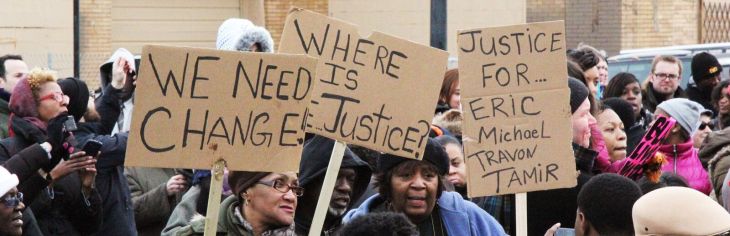
Photo Thanks to Esther Kang

Photo Thanks to Esther Kang

As students, we draw from our various sources to unearth, examine, and interrogate the ingredients of faith, to critique forms of faith, to inspire better uses and practices of faith. In the language of Sanders, our work is about the “survival and wholeness of an entire people” and about the “affirmation, assertiveness, and actualization of women.” The book says enough times for the reader to get that the affirmation of women is never akin to the diminution of men. There is a holistic vision that womanist theologians are pushing us toward, one that names the general and boldly wrong unnamededness of women. Encouraging the regular procurement of black women’s identity from themselves (Hardman-Cromwell), we are “moving the black community toward wholeness” (Douglas).

In this book, womanism stands next to afrocentrism, and the sister theologians–from a decidedly black, feminist, ethical, theological, and literary sphere–offer us an introduction to the foundational elements of womanism as a way of doing theology.

Doing theology is important. I can’t recall what I first meant when I started using that phrase, just after my seminary days. When I use the phrase now, I intend to mean that theology is immediately and always practiced. It is reflection with a purpose. It is considered and expressed language that is Spirit-empowered, generative, constructive, and prophetic. Theology is ethical because it meets the practice of our lives; it tutors us, trains us to be. We don’t simply write theology. We do it. We live it.

This beautiful book is full of my sisters and aunts and mothers, and they are all writing me into becoming…

Quotes & Small Group

My Monday night group is discussing Kelly Brown Douglas’s Stand Your Ground: Black Bodies and the Justice of God. The book is an indispensable theological response to black people’s corporate experience of violence and brutality, while also offering a historical narrative out of which such injustices emerge.

Our small group discussion has so far taken us through United States of American history as it relates to race, strong and illuminating conversations about how easy it is to be black and to not see one’s self spoken of or spoken to in the scriptures, detailed discussions about education and youth and poverty, and quiet but pronounced conversion happening among us.

Photo Thanks to Aaron Burden

Photo Thanks to Aaron Burden

Today’s chapter is “A Father’s Faith” and here are some of the quotes that I’m turning over in anticipation of seeing my friends this evening:

Faith is a response to God. Faith is possible only if God has acted and has initiated a relationship with human beings. Faith is the human response to God’s invitation to be in a relationship. Black faith represents a resounding yes to God’s offer. (p. 139)

Spirituals, essentially, reveal the foundation for a faith that will sustain black people through the paradox of being faithful in a society defined by the Anglo-Saxon myth. (p. 141)

According to the enslaved authors of the spirituals, the freedom of God concerned the very nature of God’s presence in their lives as well as God’s very nature. Theologically speaking, the freedom of God as expressed in the spirituals bore witness both to the economy of God (God’s movement in human history) and the aseity of God (who God is in God’s self). The spiritual’s testimony concerning the freedom of God suggested at least two interrelated things. First, God was by nature free, therefore, complete in God’s self and dependent on no other being or power for existence. Second, God’s movement in human history reflected God’s freedom. (p. 143)

…This African principle maintains that everything the Great High God creates has sacred value because it is intrinsically connected to God. It is the belief that undergirds an African worldview that all reality is sacred. (p. 150)

The freedom of God that the enslaved experienced became the adjudicating principle of their very faith claims. This has implications for the black faith tradition. (p. 162)

…Thus, if the norm of black faith is an understanding of a God who is freedom, then that also means there are certain stories within the Bible that cannot be given authority. If black faith means refusing to capitulate to or compromise with any situation that violates the very freedom of God, then this principle must be maintained even when it comes to the Bible. Therefore no story that compromises the freedom of God, and thus the freedom of those whom God created, can be given authority in the black faith tradition. (p. 163)

As for the black faithful, the best response is indeed a response of faith, which means being relentless in the fight to dismantle this culture of death. (p. 166)


Lessons from Exile

by Leeroy2Having been outside the mainstream for years, African American churches have learned valuable lessons that have given special meaning to spiritual practices and ideas. White Christians may be familiar with them in theory, but to know them from the underside, from the outside, and from the margins is an exercise in growing in new grace.

Silence is the anchor of speech

It’s easy for Christians to speak. We fill our ears, speak truths, and proclaim the gospel. We have good reason for our proclamation. But we hear less. It’s harder to be silent.

Silence is a corrective. For black and brown people, silence is a deepening, strengthening, and centering discipline. It is a discipline that was learned as black folks were taken from West African shores, unable to communicate in their native tongues, and pushed to find a way of hearing themselves, hearing their God, and, eventually, speaking about their pain.

It is learned still when life in the United States is unfair and unjust and when the rules for black and brown people are set to maintain injustice. In her book Joy Unspeakable, Barbara Holmes says that silence and contemplation bolster the interior life of a community, and ultimately sustains it.

Silence doesn’t remove the power of speech. It anchors it. The quiet is constructive because it narrows the focus on what needs to be said. It opens us to seeing what is real. It enables us to say what is wrong and, of course, what is right.

When we’re quiet, we have an opportunity to confront the pain of another. We learn to openly and realistically face our losses. We hear, reflect, and see what has set us apart from our Christian relatives.

The black church is instructed by the presence of God through other folks and notices in the silence those who are as concerned about speaking truth as we are.

I’m thankful to the folks at Leadership Journal for publishing my piece and for David Swanson’s earlier framing and partner essay. Read the full piece here.

The Reflective Practitioner

An epistemology is a way that we know. It is about how we know what we know. The Reflective Practitioner focuses on the ways in which professionals of varied sorts know and do. Schon is offering an alternative to the “traditional epistemology of practice.”

It’s worth pointing out that the language is a little distant, the examples stiff; the book was published in 1983. Still, his broad attempt to get “professionals” to think about how they think and how they perform is critical for anyone who wants to work well. His book opens by naming the “wavering confidence in professional expertise,” a seemingly dated observation now where the world is nearly if not entirely postmodern, where most work circles are touched, shaped, and impacted by millenials who always and already suspect things like professionalism however defined.

He puts forward reflective practice where professionals are aware of their “frames” for problems, their particular ways of viewing problems and, eventually, their unique theories (i.e., ways of seeing) for addressing those problems. A lot of what he says assumes that you can solve problems without knowing how you’re solving them. Your epistemological structures would be, in a word, weak. You’d be less reflective. He wants to suggest that there’s merit and strength in learning about our theories, in becoming aware of them, and in our making them public and, therefore, open to criticism.

He advocates for professionals turning their knowledge-in-practice into a public display of that practice. Knowledge that people go get in schools and specialized training programs, for him, becomes subject to inspection. Professionals become accountable in their openness to the public. They become more capable of expressing their “artful competence,” transitioning from not knowing how they do their work to examining how much they know, how they solve problems, and how they know what they’re doing.

Re-reading my sentence, I’m struck by the heady nature of those words. The book is somewhat heady; he explains the influence of “positivism” for example, a word that makes me question my own intellectual capacities. But the examples are concrete and helpful. His goal is entirely practical. The subtitle is “How Professionals Think in Action.”

He writes about action and response, thinking through a theory of response, a knowing-in-practice, which seems different from knowledge. He says that “A practitioner’s reflection can serve as a corrective to overlearning” (p. 61), and he works throughout the book to illuminate the gifts of appreciation, action, and re-appreciation, concepts that are at the bottom of clinical pastoral education, an environment I’m swimming in currently. I can definitely see why it’s a recommended text for the supervisory education students.

Photo Thanks to Szolkin

Photo Thanks to Szolkin

Back to the emphasis on practice–in CPE language, it’s action-reflection-action, Schon points to use of self in our work. One quote captures how Schon says our experience is worth our using in our work (p. 140):

It is our capacity to see unfamiliar situations as familiar ones, and to do in the former as we have done in the latter, that enables us to bring our past experience to bear on the unique case…

He lifts up the powerful way we inspect the “materials of a situation” and use the examples of others in order to grow, “thinking from exemplars.” He’s all about having reflective conversation with the situations we find ourselves in, a particularly striking way with words.

For those interested in language, he talks about the idea of generative metaphors and how they generate new perceptions, explanations, and inventions. He is pressing his reader to reflect. For those who “cannot easily make his assumptions public or subject” to public testing, he says, that that person’s “sense of vulnerability discourages reflection” (p. 229).

I kept thinking that I want to be the kind of person whose vulnerability doesn’t discourage me. I identified with him there, the resistance, the pain, the problem of vulnerability. I kept hearing the words of my clinical supervisor and my readiness committee as we discussed fragility which has been a guiding and problematic metaphor for my ministry lately.

Even while he presses his reader, his approach is invitational. He’s writing as a scholar and consultant more than an evangelist of his theory. He says that “An individual is more likely to feel internally committed to a freely made decision.” In his writing you sense his conviction to what he says and you sense softness.

Finally, he writes about theory, something I know I’ll come to appreciate in upcoming months as I think, draft, present, and revise my theories on theology, education, and personality. He says that “an overarching theory does not give a rule that can be applied to predict or control a particular event, but it supplies language from which to develop particular interpretations” (p. 273). I think about these words in terms of educational theory and teaching but also in terms of how we engage in the work of the church. How much of what we say is about giving a rule for predictive or controlling purposes? How much is about supplying people with language from which they can develop interpretations which may or may not mirror our own?

He says that bureaucracies and stable organizations resist reflective practice. My spiritual director said something like that to me years ago. We were talking about contemplation but the same principle applies. For Schon, reflection-in-action threatens stable systems. In church language that means that contemplatives and prophets are always on the periphery, usually subject to soul-torn isolation, and generally fighting against some solid resistance. “The freedom to reflect, invent, and differentiate would disrupt the institutional order of space and time” (p. 333). And it’s true; the order a system needs is completely threatened when the people in those systems consider.


Cecilia Galante to Writers

Photo Thanks to Markus Spiske

Photo Thanks to Markus Spiske

My writing is a selfish venture, because I do it for myself, to help me find my footing and secure my place in the world. Some people would consider a childhood filled with fear and loneliness to be a detriment, but I have come to value it because it has made me inordinately curious about the world and the people in it. What kind of things do we find ourselves thinking about, and why do we do what we do, and how do we live with the consequences of our actions? The ideas for my books stem from those kinds of questions after meeting certain people, or hearing about their own experiences and then taking them to the next level.

I used to be terrified to get what I was really thinking down on the page, sure that no one else had the same strange, convoluted, sometimes even dark thoughts that I did. But the longer I’m alive, the more I realize that we are all in the same boat, that none of us are all that much different than the next person. Our fears, anxieties, hopes, and dreams all come from the same place, a kind of sacred space that each of us, every single day, is trying to fill or strengthen or maybe just comprehend. I write to honor that sacred space, and in the process, to gain a better understanding of who I am today, tomorrow, and the next day too.

Read the full interview at Forbes here.

“…who live by faith.”

Thanks to Rowan Heuvel

Thanks to Rowan Heuvel

We have imaginations, intuitions, and moments of awakening that disturb us into awareness of dimensions of circumambient reality that we can only name, on our own, as “mystery.” And yet our feet mire in the clay of everyday toil–getting and giving, spending and being spent–in the struggle for survival and meaning. In the midst of contingency, suckled on uncertainty, we spend our blessed and threatened years becoming selves through relationships of trust and loyalty with others like us–persons and communities. We attach to one another in love; we struggle with one another in fidelity and infidelity. We share our visions of ultimate destiny and calling, our projections in hope, our moments of revelation in awe, and our fear in numbness or protest. We are language-related, symbol-borne, and story-sustained creatures. We do not live long or well without meaning.

That is to say, we are creatures who live by faith. We live by forming and being formed in images and dispositions toward the ultimate conditions of our existence.

From James W. Fowler’s Becoming Adult, Becoming Christian, pg 39.

Reasons I Read bell hooks

Thanks to Startup Stock Photos

Thanks to Startup Stock Photos

I have books by bell hooks on my shelves, and I try to read something of hers every year. This has been a habit of mine.

I’ve cradled her words about writing, savoring her observations back when I started writing curricula when I was finishing seminary.

I’ve read and listened to her about relationships, about being a man in a relation to women, about her criticism of culture and how culture misshapes us to believe bad things. Of course bell hooks doesn’t use the phrase bad things. You have to pick up her work to see her turns of phrase.

Nonetheless, I read her because I don’t think I can be a good pastor without her influence upon my life, my work, and my practice of being a man who is a husband to Dawn, a father to Bryce, a pastor to people, and friend to women and men.

I think bell hooks is a great teacher of men on how to be a man-in-relationship. She’s been a splendid, hard-hitting, loving addition to my collection of “teachers through text” for more than ten years.

I heard her speak at Hampton University when I started college. I heard her again at Northwestern when I was in seminary. I have no idea what she said during those speeches. I remember rooms full of black and white people–mostly black–and I remember feeling at home in the presence of this woman I was a stranger to.

Her readings are that way. I feel embraced and checked, loved and corrected, and that marks a good writer, a loving one, particularly when you’re reading about love in response to patriarchy, race, gender, and oppression.

I just finished one of her earlier books, Sisters of the Yam. It’s a book about black women and self-recovery. I should say that all of bell hooks’ books are about black women, and all of them are about all the rest of us too.

Her work is accessible and generous, and if you love black women and if you (want to) love yourself, you should get any of her work. She blends her experiences of being a woman/daughter/lover/writer/sister/teacher/truth-teller, and she offers us inestimable lessons on being.

I am blessed with many mentors. I was reminded of that when putting together materials for my current clinical pastoral education exploits. I’ve named those men and women and each time I revise those types of documents, I’m reminded of the treasure they bring me. And there’s a section in my writings where I name mentors through words, teachers through texts, and bell hooks is in there. She should be one of your teachers too.