Interview With Heidi Durrow & Book Giveaway

I’m pleased to give you an interview with Heidi Durrow, author of the New York Times Bestseller, The Girl Who Fell From The Sky.  Heidi shares stories with others in great ways, and she’s given thoughtful answers about her first published novel.

Also, I didn’t ask about this in the interview here, but Heidi created in 2008 and continues to offer the Mixed Roots Film & Literary Festival.  In addition to this interview, you can learn about Heidi’s work at her website by clicking here.

MW: Give us an idea of who you are.  That’s broad, but you’re an author and who else?

HD:  I’m a writer, and podcaster and festival producer and avid bendy-straw user, and Moleskine junkie, and storyteller.

MW: I think, in part, this story is about a well-loved girl growing up through pain.  Would you comment on the ways Rachel was offered love by people in her life?  How were those people part of her growth or development or healing?

HD:  Rachel is very loved and so differently by all the people in her life.  There’s her aunt who loves Rachel as if she’s a reflection of her young self and wants to get it right to give Rachel every possibility. There’s Grandma Doris who loves Rachel hard; she’s super-strict and believes that her strict rules express her love.  And there’s of course her mother whose love is about keeping her safe.  For Nella, loving her daughter means keeping her safe from every danger there is.

MW: What do you think your story says about memory and remembering?  Certainly it is a story that must simply be read, but if it says something about how we remember, what might that be?

HD:  It is very much a novel about the need for remembering.  The story begins with Rachel denying her own memories of her life before the tragedy in which her family perishes.  Forgetting–at least in Grandma’s mind–is the best way to move forward.  And yet, Rachel discovers that her memory of her mother and siblings will not be denied.  Essentially, she learns that it is only by acknowledging the truth of her past that she is able to move forward.  The line between her past and future isn’t that stark.

MW:  Writers draw from life, their own and those of others.  To what extent did you draw from your life’s details, and what was it like emotionally to pull from your story to write Rachel’s?

HD:  The things that happen to the characters in the book didn’t happen to me or people I know, but the emotional touchstone is very much a part of my own experience and that of those I know.  It was extremely difficult for me to write the book — there is a lot of pain and grief in the story and it was what I was feeling as I wrote it.  I’m in a different place now in my life and the new book I’m finding also has a very different emotional feel.

MW:  Several of your characters enable Rachel to live in response to being abandoned or left by some of her family.  Which character would you be most likely to tell a problem to and why?

HD:  I would definitely confide in Brick.  He’s so absolutely loving and non-judgmental.  Here’s a character who has only known abandonment and abuse and yet, he’s always open to love.  That’s his default even though it could be a horrible risk.  I don’t know if he would know how to solve every problem folks share with him because he is so young, but you certainly wouldn’t feel alone in a dilemma with Brick on your side.

MW:  You use multiple viewpoints effectively in the novel.  They enrich the work and help me see the story from several angles. What aided you in writing the novel that way?  How did you organize yourself while writing?

HD:  I started the novel with just Rachel’s voice.  I soon realized that she was an unreliable narrator and I needed add other voices in.  The voices entered the story quite organically as I needed them.

MW:  Talk about Roger.  We get powerful glimpses of him.  Why do you think he made some of the choices he did?  Do you think he loved his family, his daughter?

HD:  Roger loved his family and his daughter, but he just didn’t make the right choices.  He is an alcoholic and made some very bad choices under the influence.  But then even once he’s sober (after the tragedy) he still decides that the best way to be a father is to be absent.  I think that’s a coward’s choice.  I think Roger could have learned to be a good father–he was learning to be a better man.  Unfortunately, many fathers make the choice to be absent (or present only monetarily) and we as a society should address this head-on.

MW:  How has your novel encouraged or provoked language about race?  Have you been able to carry on, or participate in, conversations from the story, if I can say it that way?
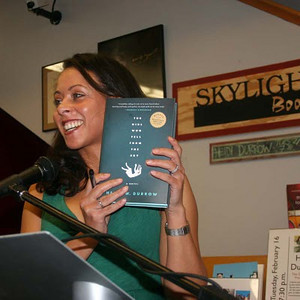
HD:  It’s been very exciting to talk to readers about the book and inevitably about race and culture and what it means to be American.  Having the story in their hand gives them a kind of permission to talk about these difficult issues and I think most people feel a great relief.  I’ve had some exciting conversations — no answers — but I think the first step is always trying to come up with new questions about the issues — then maybe we can have new thoughts.

MW:  What are you reading these days?

HD:  I’ve been doing a lot of non-fiction reading for the new book about the theory of sudden change, evolution, Victorian spiritualism and the Impressionists. You’d be surprised how much all of those subjects have something to do with each other.  It’s surprising me as I write.

MW:  Are you working on projects you can talk about?  How can readers keep connected to you?

HD:  I’m working on a new novel inspired by the life of a Victorian era mixed-race trapeze artist and strongwoman who was super-famous in her time but is unknown today.  (Degas did a portrait of her — one of his most famous.)  I love to hear from readers.  I will continue with more readings and speeches on the road in 2012.  My appearance schedule is on my website; if you join my mailing list you can get an update every 6 weeks.  And you can also find me on Facebook (http://www.facebook.com/author.heidi.durrow) and Twitter (@heididurrow).

Now for the giveaway.  Leave a comment about why you’d like to get Ms. Durrow’s book.  I’ll choose a winner from the comments after midnight, CST, Wednesday.  Maybe you can give a gift in the form of The Girl Who Fell From The Sky.  Either way do get your hands on this book.

Morrison On Love, Narrating, & Language

Take some time to watch this video.  It’s about 27 minutes long.  Any video with Toni Morrison is worth the time.  She’s always the writer, the architect of language, always the teacher of history.  I hope you enjoy her depth, her voice, and her articulation how her work is a work of love.  She’s discussing Love, one of her novels, but is just as much discussing love in general and how it relates to writing and telling story.

http://youtu.be/j5QnD_9YZD4

Sacrifice Something & Read

I made an unofficial goal to read a book a week.  That was two years ago.  I’m still building to it.  Who knew that making that goal would be incompatible with raising a child?  I thought about that goal when I read a post today.

As I’ve said before on Intersections, I read Michael Hyatt’s blog, and he consistently offers helpful posts in several areas, including leadership, publishing, and social media.  Yesterday he had a guest post by Robert Bruce who’s reading through Time magazine’s 100 top English-speaking novels.

Robert, a new father, who’s employed full-time and who trains for marathons, offers five way to make more time to read.  They are:

  1. Sacrifice something.
  2. Make a routine.
  3. Set a goal.
  4. Have fun.
  5. Mix it up.
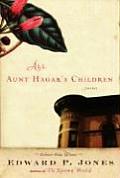
If you’d like to see the post, and it’s a quick one–after all, Robert has little time to blog because he’s readingtake a look here.  It’ll help you see a few ways you can actually find time to read.  I’m still reading stories once a week from All Hagar’s Children, a book at the office about emotional systems called How Your Church Family Works, and daily at home The Immortal Life of Henrietta Lacks.  What about you?  Reading anything these days?

Gardner and “…a dream in the reader’s mind.”

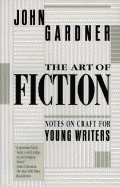
John Gardner in the Art of Fiction says a lot that writers should read.  For me his overall thrust is captured in a few helpful passages in his chapter on Basic Skills, Genre, and Fiction as Dream.  If you’re a writer of fiction and haven’t met this book, visit your nearest public library and thumb through it.

In any piece of fiction, the writer’s first job is to convince the reader that the events he recounts really happened, or to persuade the reader that they might have happened (given small changes in the laws of the universe), or else to engage the reader’s interest in the patent absurdity of the lie.  The realistic writer’s way of making events convincing is verisimilitude….

He must present, moment by moment, concrete images drawn from a careful observation of how people behave, and he must render the connections between moments, the exact gestures, facial expressions, or turns of speech that, within any given scene, move human beings from emotion to emotion, from one instant in time to the next….

…whatever the genre may be, fiction does its work by creating a dream in the reader’s mind.  We may observe, first, that if the effect of the dream is to be powerful, the dream must probably be vivid and continuous–vivid because if we are not quite clear about what it is that we’re dreaming, who and where the characters are, what it is that they’re doing or trying to do and why, our emotions and judgments must be confused, dissipated, or blocked; and continuous because a repeatedly interrupted flow of action must necessarily have less force than an action directly carried through from its beginning to its conclusion.

Is Marriage For White People

I have a scheduling conflict, but if you’re in or around the neighborhood tonight, Ralph Richard Banks, author of Is Marriage for White People?: How the African American Marriage Decline Affects Everyone, will be speaking with Steve Banks at Experimental Station.  The findings of Professor Banks’s book are being much discussed lately.  Learn more about tonight’s event at Experimental Station’s website here.  You can also visit Professor Banks’s site here.

If you go, maybe you can write a post for my blog.  Leave a comment if you can go.

Books In My Hands

My wife’s flipping pages in a film theory book, along with articles and essays and papers.  …The joy of graduate school as a student.  Ah!  Of course, she isn’t describing her readings in exactly the same way.

Are you reading anything interesting?  The books in my hands these days–for fun–and not class are

  • The New Jim Crow: Mass Incarceration in the Age of Colorblindness by Michelle Alexander
  • Pastoral Care by Gregory the Great
  • Unaccustomed Earth by Jhumpa Lahiri
  • All Aunt Hagar’s Children by Edward P. Jones

Marisel Vera, Author of If I Bring You Roses, 3 of 3

Marisel’s debut novel is available.  I’ve shown you a few pictures from her first book signing, which was last weekend.  I’m thankful she has given us these three posts about herself, her novel, and her experience as a writer seeking publishing.  If you’re available, come out and meet Marisel with other friends, fans, and readers on August 28, 2011 at 8 pm.  She’ll be at The Nervous Breakdown Reading Series co-sponsored by Sunday Salon Chicago.  The location is Katerina’s, 1929 W. Irving Park Rd., Chicago, IL.

This is the last of a three-part blog series featuring Marisel, and today she discusses her experience pursuing publishing…

What a writer needs most is Faith. I had a huge crisis of faith some years ago which I wrote about in a blog post Forgive Me, For I Have Doubted.  Your readers can read it on www.shewrites.com or www.mariselvera.com. It was the moment when I just had to say I am going to keep trying, even if I never get published, I am going to keep trying. From that point on, I never looked back.  That same year when I sent off my manuscript to an agent, I got an encouraging letter back.  That agent, Betsy Amster, is now my agent.  She didn’t take on my novel then but it fortified my determination to continue.  My husband has been financially and emotionally supportive throughout the whole process and our children became English geniuses so I’ve had the luxury of in-house editors for blog posts, etc. I have direct access to Puerto Ricans and especially to my mother and godmother who shared many details about growing up en el campo. I also conducted extensive research in all things Puerto Rican.

In addition to faith, I believe a writer needs to learn the craft of writing fiction.  An MFA is nice but if you can’t do that—I didn’t have that opportunity—then take writing classes, a writing workshop with a writer you admire (I did that with Jonis Agee and Cristina García), get some writing books, find a few fellow writers whom you trust and critique each other’s work in a constructive way.  Last but not least, the big D.  Discipline. Schedule time for writing and force yourself to do it.  It’s not easy in the beginning especially if you have a full-time job and/or small children.  When my children were little and I was living inOklahoma without my sisters to babysit, it was so hard!  One day I read about how Toni Morrison as a young writer was writing with her child on her hip and the child spit up on the page.  She didn’t want to lose her thought so she wrote around the spit-up before she cleaned up the child.  I found that so encouraging! I was a writer and I would write and I would do what I had to do to write and nothing would stop me.

Michael, I’d love to hear from your readers and especially book club groups. I’m open to meeting with book clubs especially in the Chicagoland area and having video or phone chats with others.  My website is www.mariselvera.com.

As I said, Marisel would enjoy meeting a few of you at the Series this Sunday.  And finally, if you’d like to see a dramatic reading of a chapter from If I Bring You Roses, it’s in the link below.

Marisel Vera, Author of If I Bring You Roses, 2 of 3

As I said in my last post, I met Marisel Vera at the Printers Row Literary Festival this year, where we connected briefly over her debut novel.  The book is available.  I’m very thankful to put her before you on my blog and suggest that you go and get If I Bring You Roses.  

In today’s post Marisel tells us a bit about who she’d like to pick the novel up along with some insights into her background and how she came to writing.  Below I mention how you can see her this weekend…

It’s true that I’ve had a few friends and relatives look at me a little differently after reading If I Bring You Roses but, so far, everyone is cool even my born-again Christian relatives.  A few weeks ago, I wrote about being nervous of the novel’s publication in a blog post for www.shewrites.com which I titled Taking My Clothes Off in Public. Mostly likely, the majority of my relatives won’t read my novel and if they do and make a comment, I’ll just shrug my shoulders and say, “It’s literature.”

I would love for If I Bring You Roses to be taught in Eng. Lit classes in Chicago public high schools especially Roberto Clemente High School, my alma mater.  That would make me SO happy.  Perhaps some of your readers are teachers and could choose it. (Hint.)  It thrills me to say that it will be taught in a Latino Studies class at Vanderbilt University next Spring. This October, If I Bring You Roses will be taught in four classes at the College of Lake County in Grayslake,IL.  I plan to go in one day and answer questions from students.  I’d love to go to Clemente or other inner-city schools and talk to students too.

I believe that one of the reasons that it took me so long to pursue my dream of writing a novel is that although I read voraciously since I was eight years old, I never read a book written by a Latina or Latino writer other than Down These Mean Streets so it never occurred to me to think of it as a possibility. All the books I read on my own or were assigned in my classes were written by Anglo writers. Any one who is the child of immigrants knows that while your parents might encourage education, they want you to get educated so that you can get a traditional job like a teacher or doctor or nurse. No one ever said to me, Marisel, you have talent. I think you could be a writer. I think it makes a big difference in the life of a kid from the ghetto or inner-city, for an adult to say, Marisel, you can do it!

And I want you to know that you can meet Marisel.  She will be meeting friends and readers, signing books if you have them on August 28, 2011 at 8 pm at The Nervous Breakdown Reading Series co-sponsored by Sunday Salon Chicago.  The location is Katerina’s, 1929 W. Irving Park Rd., Chicago, IL.

Marisel Vera, Author of If I Bring You Roses, 1 of 3

I met Marisel Vera at the Printers Row Literary Festival this year.  She and Tayari Jones were meeting readers after a panel discussion.  We connected briefly over Marisel’s debut novel, which has now been published.  I’m very thankful to put her before you on my blog and suggest that you go and get her novel, If I Bring You Roses.  And I want you to know that you can meet Marisel.  She will be meeting friends and readers, signing books if you have them on August 28, 2011 at 8 pm at The Nervous Breakdown Reading Series co-sponsored by Sunday Salon Chicago.  The location is Katerina’s, 1929 W. Irving Park Rd., Chicago, IL.

This is a three-part blog series featuring Marisel where she’ll be telling us about her novel, her experience publishing it, as well as a bit about her life as a writer…

When I was 13-years-old there were a rash of house fires in the Pilsen neighborhood over on Chicago’s South Side.  Families with children died in the fires because the victims couldn’t speak English and when they shouted “¡Ayuda!” the firefighters couldn’t understand that they meant “Help!” Community leaders called for the firefighters to learn Spanish, but that infuriated many Chicagoans. I remember an on-air editorial about how everyone should learn English. This was America!  People wrote letters to the Chicago papers saying how the victims were at fault because they should have learned English like their parents and grandparents.

I was shocked and disheartened particularly because I didn’t have a voice as a young Puerto Rican girl in my own family. To my young self, what mattered most was that innocent people had died. Wasn’t it a good thing to learn a few words in another language if that would help prevent a tragedy?  I determined that one day I would write something to help people see how we were all the same whatever race, whatever nationality.

My novel If I Bring You Roses is a story about two people who marry and move to Chicago in the 1950s and how things happen and how they deal with it. That the novel is set partly in Puerto Rico and the couple is Puerto Rican is juice of the pineapple, the sauce of the beans, the ajo en mofongo.  Having said that, some readers will read If I Bring You Roses as a straight story about a man and a woman and a marriage while others will notice how the United States presence and control over Puerto Rico had severe economic repercussions that resulted in events that led to the mass immigration of Puerto Ricans to the mainland. I tried to be historically accurate and also captivate the reader’s attention with my storytelling.

I wanted to tell the novel in two voices, both female and male, because the immigrant experience is different for Latin Americans depending on gender.  In If I Bring You Roses, Aníbal is always wishing to be a man like his father. Aníbal comes from a culture where the man is king but in America, he is disrespected in the workplace.  His feelings of powerlessness compromise his sense of manhood.  In turn, the humiliation that male immigrants experience creates a cycle of privilege and subordination that ultimately disrespects women.  For Felicidad, who was a second class citizen in Puerto Rico and in her own family, immigration is the best thing that ever happened to her.  She can be independent and speak up for herself and for others and she is respected for doing so. The status of immigrant women from Latin American tends to rise in the U.S. while men lose their privileged status.

If I Bring You Roses is set in Chicago because I wanted to write about the first wave of Puerto Ricans who came in the 1950s like my parents and my uncles. I am a fan of multi-cultural literature and there is very little of Puerto Ricans in Chicago.  The closest I had to any literature about Puerto Ricans when I was growing up was Piri Thomas’ Down These Mean Streets and that was non-fiction and set in NYC.  Being Puerto Rican in NYC is not the same as being Puerto Rican in Chicago and as we Chicagoans know, New York City is not Chicago.

It was very liberating to write from Aníbal’s perspective. Loved it, loved it, loved it.  I do have to admit to a slight concern about how people who know me will think of me once they read how Aníbal thinks about sex. But not for a moment did I think of silencing him. I had to be true to him and Aníbal is a very sexual guy.  Sex is how he expresses how he feels. I found Felicidad’s character more difficult to write.  I thought a lot about her and what made her the woman she became and that helped me to understand her and to empathize and love her.

Conflicted With The Help

Have you read Kathryn Stockett’s The Help?  I haven’t.  I told my close friend, Maggie, last year when she was reading it that I had my challenges coming to the work.  I asked if she was enjoying it and was happy she said that she was.  She resonated with much of the novel because of her background and because of her experience growing up a white woman in the South.  I celebrated the book.  I loved that she could find the portrayal in it credible when gauged by her own personal story.  But I was off center.

I told Maggie and David and Dawn (we were all together at the time) that my conflict with the novel was with my desire to support and celebrate books in general and fiction in particular with my learned-over-the-years suspicion that my story–that story that I own collectively with all other black folks in this country–can so readily be accepted, supported, purchased, and promoted when it’s written by non-black folks.  I continue to experience that conflict as the movie is now being promoted.

I’m careful not to take these conflicts too far on this blog.  But my conflict is my conflict.  In fact, I’m very thankful for the humility Ms. Stockett exhibits on her website when responding to the question, “Were you nervous that some people might take affront to you…writing in the voice of two African American maids?”  She says,

…I was very worried about what I’d written and the line I’d crossed. And the truth is, I’m still nervous. I’ll never know what it really felt like to be in the shoes of those black women who worked in the white homes of the South during the 1960s and I hope that no one thinks I presume to know that. But I had to try. I wanted the story to be told. I hope I got some of it right.

Having not read the novel, conflicted man that I am still, I appreciate the author’s hope.  I share it.  And I also hope that the success of her novel continues to grow in relation to her posture around the issue of telling someone else’s story.  Indeed, novelists always tell another character’s story.  I hope she’s done that well.

That said, the other day I read the comments from Rosetta Ross, a religious studies scholar at Spelman, over at Religion Dispatches.  I share some of her biographical experiences, reactions to The Help, and sentiments about the acceptance of African American culture when its ushered to the wider world through the pen and hands and submission processes of white publishing professionals in this case.  Now, to be clear, I love white folks.  Some of you all are white, and I hope you know I love you.  And I hope you have a comment or two about this, especially if you’ve read the novel or seen the screening.  And still, I’m intrigued by how often and constant black authors or, more pointedly, African American authors, try to tell stories that cannot be accepted and embraced as cultural stories, as stories for the wider reading public.

Dr. Ross identifies three messages from the embrace of The Help.  Three reasons she won’t see the movie.  She says,

The first false message says: The real agents of the world are white….This message is false because black women, from a variety of stations in life, have voices and live and demonstrate to the world fulfilled lives every day—without the assistance or interference of white people.

The second false message is this: The really important point of all cultural production and activity is for white agency and dignity to be actualized. The overarching plot of this book presents the narrative of a young white woman finding herself and her voice amidst cliches, circumscriptions, traditions of the South during the 1960s. Against this background, the black women are instrumental in Skeeter’s journey into adulthood. Skeeter’s journey is the more prominent message of the book, and, I suspect, of the film as well. I will not go to see the movie The Help because I do not wish to view yet another production that tells me, a black woman, it is all about whiteness.

…the third, and most detrimental false message: Black persons—perhaps people of color, generally—exist primarily to serve of enhance the lives of white people….A predominant element of the Western imaginary, the idea that black persons ultimately exist as servants for white life, has long been supported by rhetorical constructions of Christianity. The most obvious examples, of course, were rituals such as catechisms about the necessity for [black] servants to obey [white] masters…

What do you think about Professor Ross’s comments?  Have you noticed some of the biases and patterns she speaks of, some of the messages she’s read and heard in the buzz around the novel and the film?  What experience have you had around hearing your story told through someone else’s lips?

Finally, I hope you read the novel.  One day I may.  I’ve read many representations of black people written under the hand of non-blacks, and this novel may join that shelf.  And, again, my conflicts aside, I can support the work of an author reaching the world with a good story–and upon the great experience my good friend had of the work.  I can easily separate my experience of the novel (or my perspective of the novel as I approach it from a distance) from my hearty suggestion that it should be read by others.

By the way, if you’d like to see Professor Ross’s full essay at RD, click here.

Closing Books

Last week I went to Borders with my son, and it was sad and exhilarating at the same time.  We strolled into the store, me refusing to press the silver button with  the blue chair in the middle, Bryce trying to help.  He’s into opening and closing doors these days.  Somebody waited for us to pass into the store.  The second door was propped open so customers could come and go easily.

The place was packed.  I had the sense that it would be full of people all day.  It was around 2:30 in the afternoon.  I scanned the place.  I had never been to Borders on State.  We had one in the neighborhood which we frequented before it met the same fate dressed in yellow with bold black block letters.  Bryce was immediately captivated.  He’d glance up at me and then to the shoppers.  He looked from left to right, nervous and a little thrilled that we were there.  People scanned titles.  They hoisted novels, stacking them in their hands and holding them in a line over their bellies.  One lady called somebody and read the back cover copy over the phone.  She asked, “Have you heard of this author before?”  I pressed ahead into aisle and ignored the conversation after that.  It felt like people were looting, excited over the broken glass of ten thousand authors’ dreams.

Before we left, the boy gave me the signal that he was ready for a snack.  He, like me, tired at the scene and needed nourishment.  I couldn’t blame him.  The writer in me, the reader in me, wanted something to eat after that.  I wanted something to sustain me after seeing another bookstore close.  Books are the things that have built me and built many of the people that I love.  Books have taught me and us.  We should buy them, in stores large and small.  We should rent them from our public libraries.  We should.

I thought of my usual places to buy books.  I thought of Azzizzi Books in Lincoln Mall and Powells in Hyde Park.  I recalled my last visit to the Seminary Co-Op and to it’s relative, 57th Street Books.  All of sudden, pushing the boy back toward the bridge we’d cross to get to our car, I felt like the closing of Borders was, in part, my fault.  I was like those readers, those scavengers in that store.  I, too, looked for the best price for a book when I shopped.  I chose and do choose to buy most books for a discount because my book budget comes mostly when I get an honorarium of sorts that I don’t expect.  I’ve changed that over the last four or five years as I’ve learned how to buy an author’s work for the toil that’s seen and unseen.  I don’t mind–in fact, I enjoy–buying a book for retail or from an author directly since it comes under a habit I think the world is poorer without.

I’m not into e-readers.  I’ll protest them as much as possible.  I will take my books, open, and read them.  I will crave and consume the spines and jackets and covers be they soft or hard.  I will smell the pages and rub my fingers over the corners, turning that page slightly when my eyes are half way down.  I will flip the page or pages to see how long it is until the chapter is finished.  I may scribble a note to the author, continuing what feels like a conversation between us.  I’ll move my bookmark to the page I want to stop at for the night, never counting and only judging by whether I’ve started at 11:30pm or 1:00am or by how far I think that night’s insomnia will take me.  I will laugh and squint and sigh and hold my breath.  I will sit my book on my table by that glider or in my bag or on the desk.

I’m sad for the funerals happening for all the Borders stores across the country.  I’m sad for the careers that have been upset and altered and forever changed because another company has failed.  But I will keep reading and renting and buying books.  You should too.

Pick Reading Carefully

I read a piece over at No Rules, a favorite spot of mine by the insightful and productive writer, Jane Friedman.  She hosted Todd Henry who wrote about how we might go about choosing our inputs, choosing what we read.

While our minds are unparalleled in their capacity to experience and assimilate information, they also have a limited bandwidth for doing so. As a matter of survival, they tend to weed out information that is deemed irrelevant to our immediate needs.

However, our minds are also capable of taking random bits of input and forging brilliant connections that are not apparent on the surface. This is essentially how the creative process works—it’s the connection of multiple preexisting patterns into new solutions.

If you’re interested in reading the full piece, click here.  Any insights on how you go about choosing reading or how to make connections across diverse readings?