Possibilities of Fiction

Robert Alford’s article at Pop Matters is a conversation with Jennifer Egan.  He asks several questions that are worth asking and gets responses worth reading.  Here’s one question, about the form of fiction, to whet your interest in the interview:

You use a variety of narrative perspectives, shifting tenses, styles and even a power point presentation to present the stories in A Visit from the Goon Squad. Is the book in some way a comment on the aesthetic form of fiction itself and all of the various things that it can accomplish?

I didn’t think of it that way. The way I imagined it was just — if I’m writing this in parts, why not get the maximum advantage from that that I can? In other words, why not create a much bigger range of experience than I could possibly get away with in a more centrally oriented novel? Maybe I’m saying the same thing in a different way though, because in some ways it is a celebration of all these possibilities, and I do feel that way about fiction. One of the things that’s so great about it is its flexibility. That’s why I sometimes do feel impatient with the question of whether it’s a novel or a story collection. I feel like, who cares about those names? Aren’t they only there to serve us, and if they’re not doing that job, then let’s put them to the side for a moment. I do feel energized by the many things that fiction can do and has done from the very beginning. If you look at the early novels, they’re these really exciting, elastic grab bags of possibilities.

To finish reading Robert’s article, click here.

“Everything You Need”

My friend, Patrick Shaffer wrote this letter to a young man when his mother and member of Patrick’s church asked him to participate in her son’s school assignment.  Patrick’s response is an essay of proverbs, written from a place of compassion and wisdom.  His letter reaches to distill everything you’d want a young man to know.

I’ve been turning over Too Short’s instructions to young boys in the last week; if you are unaware of it, don’t worry over it because it isn’t worth worry.  I started writing a post in response.  I haven’t finished.  Then, yesterday, I saw my comrade’s Advice at the Huffington Post.  Pastor Patrick’s words are a kind corrective to that musical nonsense that had so many people alarmed.

Of course, I don’t agree with everything Patrick says here; I never agree with everything Patrick says, so I shouldn’t start now, right?  Nonetheless, he’s got some powerful stuff in this lovely letter to a single mother’s son.

Hey, I hope you are well. I wanted to share some things with you about life and all of the above. Forgive me if they seem scattered but I think what I have might help.

You should be awakening to new ideas of freedom, an expanded world and optimism about your future. The substratum or foundation of all of those things, though, is responsibility. Great responsibility is placed on your shoulders. Responsibility perhaps that you would rather not have and don’t think it strange if you vacillate between your childish tendencies and being a young adult. It happens. I still wrestle with the kid in me, and it never leaves. You must master that little boy in you who says “this is too hard” or “I don’t feel like this.” Giving in to those voices will lead you to be fruitless in your life. You must hear those voices and push yourself pass them to be who you are — the world is waiting. Being a man is a hard and thankless enterprise, being an African American man is harder.

Your mother loves you and did her absolute best to raise you. As you get older you will see her in a different light and humanize her in ways you couldn’t when you were younger. That should make you appreciate her and love her all the more. You may have had to piece together the meaning of what a man is from your father and different male figures in your life. Some of us have failed you, some of us will fail you but use our lives always as a class. Learn from our failures; hear our wisdom and they will serve as the tapestry of the man you will become. But really it’s not up to us anymore; it’s all up to you. We are here for you but the training wheels of life are coming off now — time for you to peddle and ride the bike yourself. We will be watching and be right there when you fall.

You will have unbelievable standards to live up to from the world at large and even from your own people. Our president is a black man — who can live up to that? Your world and your very meaning in the world is ever changing at a seismic rate. Sometimes it will be hard to keep up.

You will look over your shoulder and know that there are peers who aren’t smarter, haven’t worked as hard as you, who will get all the breaks in life and you will wonder “why is this so hard for me?” But that question means that you are conscious of your growth, your progress and what you have achieved. Remember son, you are not in competition with anyone but that kid on the inside of you. If you can grow him up, without being weighed down by what someone else has achieved, you will be just fine. If you can understand that that little kid on the inside of you is there for counter balance, when things in life are stressful and sometimes way too serious for you. When you master the moments of knowing when it’s time to play and when it’s time to work, you will be just fine.

The world has expectations of you. Your mother has expectations of you. I have expectations of you but really, we don’t matter — it only matters what you expect from yourself. I hope you expect great things; you will achieve what you want when you master working smart and not hard.

I admonish you to stay in school, finish everything you start. You will be pressured to make money, for this reason and that reason. The reasons may be legitimate but stay in school anyway. Even if you’re broke, have to sleep on the floor in a friend’s apartment, finish the degree. Education is the key — go to school and work part time if you have to. I wish I could tell you that getting an undergraduate degree is enough, but it’s not. Don’t take a break, stay in and go to graduate school. The economy will turn, more jobs will be available one day, and your education will prepare you for your future career, your future life. You don’t want to work a job, you want to have a fulfilling career and there are no shortcuts to the life you want. If you want it go after it, stay after it. Don’t quit, you will be sorry you did.

To finish reading pastor Patrick’s letter, click here.

A Long Choosing

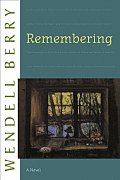
I am reading Wendell Berry’s Remembering.  A friend quotes some of Berry’s stuff from time to time.  A writer suggested him to me a few years ago in a complimentary way.  This passage from the novel strikes me.  I’m mulling it over; it’s from page 50 of this slim beautifully poetic story.  It connects with something I’ve been considering, the choices made before me which, in some ways, made choices for me.

I’ve been thinking of my abilities as a father, as a husband, as a man, and as a son.  The abilities and the work, toil, and prayer behind them.  I often feel like I’m making it up as I go along, fumbling through a mist, and looking for the best route through these roles.  I envy my brothers and friends who wear the wraps of these worlds with apparent comfort or ease, and that’s knowing that the apparent is not always the truth.  I love and hate the complexity of my own choices, even the good ones, because those are just as hard as the poor ones.  Berry is helping me love and hate with poetry.  He’s a skilled writer.

On the verge of his journey, he is thinking about choice and chance, about the disappearance of change into choice, though the choice be as blind as chance.  That he is who he is and no one else is the result of a long choosing, chosen and chosen again.  He thinks of the long dance of men and women behind him, most of whom he never knew, some he knew, two he yet knows, who, choosing one another, chose him.  He thinks of the choices, too, by which he chose himself as he now is.  How many choices, how much chance, how much error, how much hope have made that place and people that, in turn, made him?  He does not know.  He knows that some who might have left chose to stay, and that some who did leave chose to return, and he is one of them.  Those choices have formed in time and place the pattern of a membership that chose him, yet left him free until he should choose it, which he did once, and now has done again.

A Glaring Representation of Decline

I read this last week and it struck chords in me.  Though I can’t relate to the specificity of Derek Martin’s words, I can see my experience as a son and son-in-law in the shadows of this poignant reflection.

My father is a list maker.

As such, I was raised in a household of lists and apprenticed in the practice of this venerable organizational tool.

I am my father’s son and grew up secure in the belief that any item affecting my life, from the mundane to the grand, could be safely and effectively contained within a list.

It was no surprise then when Dad’s approach to retirement planning followed this well-established practice:

When to vacate the high-maintenance lake house.

Where to move next.

What to take and what to discard.

From the number of moving boxes needed, to powers of attorney and medical directives, all found their place on The List. And with that list, all was right in the world.

Until my father developed dementia.

The initial shock of Dad’s rapid decline was followed immediately by the action you would expect from our family: Consult The List. Surely there would be one for this situation.

Maybe not dementia in particular but certainly for an occurrence of similar nature and magnitude. And there was.

Good news, right? Problem solved.

But not so fast. For the first time in our family’s existence, The List failed us. In two ways.

The first failure was not that The List wasn’t complete or inclusive enough. It was, scrupulously so.

It was something else entirely and that was this:

There was a completely new and foreign world lurking beneath the lines on those neatly ruled pages, a world into which we were plunged when we actually carried out the listed items.

To finish reading Derek Martin’s post, click here.

Writing, Revision, and Sufficient Surgery

I saw a post by Kelly Kleiman at wbez and had a few connections to writing and revising.  The post is about theater, but I think you’ll see how it applies to writing as well.  Here are a few quotes–consider them writing prompts–without context but easily applicable even standing apart from Kelly’s paragraphs:

The plays often seem unfinished, like sketches rather than full-fledged pieces.

The betrayals and counter-betrayals come so rapidly, and to such an abrupt end, that I was left wondering what actually happened and why.   It’s fine to take a scalpel to one’s work, but simple amputation is rarely sufficient surgery.

Even Conor McPherson, perhaps the premiere English-language playwright of this generation, falls into the trap of declaring a play finished when it’s merely through its second draft.

Again: This may be the inevitable consequence of contemporary theater economics, a system which also frequently dictates the choice of two- or three-character plays rather than the crowds required by Miller or Shakespeare. But let’s try to figure out a way for playwrights to incubate their works a bit longer.

To read Kelly’s post, click here.  Happy writing.  Happier revision.

Father Wounds

The following post, written by Sylvia Klauser,  is a profound and elegant reminder about the impact of fathers, and I pulled it from the Mennonite Weekly Review.

I read about Whitney Houston’s death while at a conference in Washington, D.C. A friend and I had been at dinner and heard that famous I wanna dance with somebody. Today I have the time to sit and watch the tribute morning shows, listening to song after favorite song. I will always love you stands out for its message of a love that transcends racial boundaries and fears of the others. Even more tragic is that Whitney Houston died on the eve of the Grammy awards — a singer’s celebration of their greatest achievement.

Born with an incredible talent, she came to fame by way of the church. An instant, well-meaning audience provided her with a training ground for that incredible voice. It certainly helps to have the Godmother of soul as your real Godmother. However, talent is a free gift that can easily be squandered.

It is so sad to hear about Whitney’s struggle with drugs and alcohol. Is it a result of the fame, or a cause of it? While I listen to song after song, it seems that they all have a common theme. Who will love me? How will I know that you are honest? I will always love you. I’m every woman. Can I trust you, and so on. The themes are the same: Whitney felt empty without love. She, like every woman (and man) in this world, feels incomplete without the other. But what kind of love are we looking for? And what happens to us when that hole is not filled?

In his book From Wild Man to Wise Man, Richard Rohr writes about the “father hunger” that becomes a “father wound” for those of us who have never been touched and trusted by our fathers. It seems that the father wound oozes from each of Whitney’s songs. Rohr writes, “we lack self-confidence, the ability to do, to carry through, to trust ourselves, because we were never trusted and touched by him.” Whitney’s life is marked by “earned worth,” a constant striving to get more in order to fill this hole where Dad’s trust and touch is missing.

What fills the hole? Well, the story is out all over the tabloids now. It’s not only Whitney or other famous folk who died of this father wound lately. Drugs, alcohol, mind and sense numbing substances only increase feelings of worthlessness and loneliness when the high wears off. I am saddened by Whitney’s line where she names herself the devil in a 2002 Dianne Sawyer interview; but she is dead-on with her assessment. It is our own responsibility to figure out the father wound and then work on fixing it — whether we can meet with our fathers and attempt reconciliation, or whether we have to learn to live with the hole for the rest of our lives.

To heal the father wound is our most intimate, personal and spiritual work, maybe the only work of our lifetimes. No one can do it for us, not fame or drugs or even world-class therapists. We must reconcile with the fact that even our fathers have father wounds. They tried the best they knew how, but the lack of trust and touch is an evil root that stealthily hurts us until we root it out. May peace be with Whitney.

I was born in the same year as Whitney, and I too, sang in church. I was touched deeply by her songs of searching, wanting and needing. I also have to do my own father work so that the rest of my life is not a running after all the things that fall short of that primal need to be loved and trusted and touched.

Sylvia Klauser works in the education and spiritual care department of The Methodist Hospital System in Houston.

From Standing Free

Dear Lyle,

I deeply enjoy and benefit from this journey that we are on together.  I feel the profundity.  It anchors me and sets me free.  From humor to tragedy, to love to exercise and repose, from standing free to flying free.

Love,

Tommy

This letter is from Thomas Harris to his brother, Lyle Harris and was written while they collaborated on a show at the Corcoran Gallery of Art in 1998; it’s presented with a wide collection of beautiful communications in Pamela Newkirk’s Letters From Black America.

The 11 Commandments For Writers

I found this list of Henry Miller’s Commandments compiled here by Gretchen Rubin, and I think they’re worth considering, keeping, struggling with.  Do you follow these in your writing?  Do you break any?  Would you change any or add something?

1. Work on one thing at a time until finished.

2. Start no more new books, add no more new material to “Black Spring.”

3. Don’t be nervous. Work calmly, joyously, recklessly on whatever is in hand.

4. Work according to Program and not according to mood. Stop at the appointed time!

5. When you can’t create you can work.

6. Cement a little every day, rather than add new fertilizers.

7. Keep human! See people, go places, drink if you feel like it.

8. Don’t be a draught-horse! Work with pleasure only.

9. Discard the Program when you feel like it–but go back to it the next day. Concentrate. Narrow down. Exclude.

10. Forget the books you want to write. Think only of the book you arewriting.

11. Write first and always. Painting, music, friends, cinema, all these come afterwards.

The Story I Want To Tell

I’ve snatched the following from a recent post by Rachel Held Evans.  It’s by a father named Justin Bowers, whom I don’t know but whose words I enjoy.

Justin is responding to a question Rachel poses on her blog about a particular topic.  I’m taking part of his response, not to fall into that comment stream as much as to share his perspective raising daughters.  I think Justin is a pastor, if I read the earlier part of this comment correctly.  Whether you can relate to his faith-filled words, I imagine you have a story you want to tell the daughters and sons in your lives.

The story I want my daughters to live is the one that begins in Genesis.

The story where it is “not good” for the man to be alone.

The story where Eve is taken from Adam’s side–a place of companionship and equality, not to walk behind.

The story where, prior to sin entering the world, the relationship of the man and woman was a mirror of the unity of the Triune Creator–equal and submissive to each other because of love.

The story where the gospels open on amazingly godly women, Mary and Elizabeth, through whom the Kingdom invasion began.

The story where Paul writes, ‘There is neither Jew nor Gentile, slave nor free, male nor female, for you are all one in Christ Jesus.’

The story where the body of Christ–the Church–is at its fullest breathing capacity when its members function in their fullest giftedness regardless of any barrier.