Raising a Son Knowing Such Sobering Statistics

I read a few articles this morning that made me think of my son, of my raising him, and of all the other parents raising sons in particular.  These are quotes from the next issue of my denomination’s magazine, the Covenant Companion.  These statements are disheartening and motivating on a lot of levels.

Debbie Blue talked about compassion, mercy, and justice as a necessary response to mass incarceration.  She gave the following details:

On any given day, nearly 87,000 juvenile offenders are not living in their homes but are held in residential placement (e.g., juvenile detention facilities, corrections facilities, group homes, or shelters).

Every day, nearly 25,000 youth are detained in America.

An estimated 200,000 youth are tried, sentenced, or incarcerated as adults every year across the United States.

On any given day, nearly 7,500 young people are locked up in adult jails.

On any given day, more than 3,600 young people are locked up in adult prisons.

Nekima Levy-Pounds discussed the war on drugs and gave background on the still legal disparities between people of color and white people in the country before saying:

…Since 90 to 95 percent of criminal cases end in guilty pleas, it is not surprising that women who are peripherally involved in drug trafficking may wind up serving decades behind bars.

…About 2.7 million children have at least one incarcerated parent, and African American children are nine times more likely than white children to have a parent who is incarcerated.

…According to a report by the Children’s Defense Fund, a black boy born in 2001 has a one in three chance of going to prison in his lifetime.

…Our faith in God and his kingdom should compel us to ask the tough questions, seek the not-so-obvious answers, and look beyond the surface to discover what is really happening and why.  We are poised with the resources, the voices, and the courage to take a stand for justice and to put our faith to action to help end this human suffering and misery and fix our criminal justice system.

Open Letter We All Need to Consider

This is a letter from Maria Lloyd to Judge Marvin Aspen who sentenced her father to 15 life sentences for her father’s first nonviolent offense.  This matter, matters like them, and all the “legal” issues related therein, are becoming matters of faith for me.  I’d love to know what you think.  I’d love, simply, to have you thinking of this as I am.

Dear Judge Marvin E. Aspen:

It took me some time to address you because I didn’t know you were the source of my anger until recently. In case you care to know who I am, I’m Maria Lloyd- the daughter of Mario Lloyd, the non-violent, first-time offender from Chicago. You sentenced him to 15 life sentences without parole on May 11, 1989. He has been incarcerated since I was the age of two. In addition to sending my father to prison, you also sentenced my grandmother, my aunt, and my uncle.  You basically incarcerated my entire family.

I’m not one to make excuses for anyone’s poor decisions, including those of my own family. They broke the law, so they deserved punishment. I get it.  I also get the point you were proving in punishing them: Drug trafficking is not tolerated in the state of Illinois. It’s quite obvious you were taking a very personal stand against the War on Drugs. Well, as you can imagine, I have too, but I’m sure our views differ.

Even if one argues that my family deserved to go to prison for the distribution of drugs, does my father deserve to be incarcerated for life? Do you really think he deserves to die in prison? My four siblings and I have literally faced hell because of our father’s incarceration. I truly believe my eldest brother, who is now deceased, wouldn’t have diedat the hands of violence if my father wasn’t incarcerated.

You have no idea how much embarrassment, confusion, and heartache a child faces when handed an Emergency Contact Form requesting contact information for mom and dad. For years, I’d write my father’s name and ask my mom if I could write the prison’s information on the lines requesting his address and phone number. “Daddy-Daughter” socials were the worst. Instead of enjoying the festivities, I would stay home in shame because of my father’s incarceration. I’m still haunted by those experiences to this very day, and I have yet to recover emotionally.

I can’t believe the word “Honorable” is placed before your name and title. What’s honorable about your work? Nothing. Because of you, I haven’t recited the Pledge of Allegiance in years. Liberty and justice aren’t for “all”, it’s reserved exclusively for the wealthy which are generally of European descent.

I know my dad deserved to be punished for his crimes- I accept that.  But, for a non-violent, first time offense, 15 life sentences is far too harsh.  By giving a life sentence to my father, you also sentenced me to a lifetime of misery that comes from losing the man I’ve loved since birth.   My father has spent 23 years of my life in prison.  Now, I pray that men like you will never be allowed to ruin a family again. To be honest, I don’t wish hardship upon you but I definitely don’t wish you well.

Sincerely,

Maria Lloyd

I found the letter here.

An Open Letter To All Parents From A Nonparent

I just finished babysitting your baby today.

I have salmon stuck on my neck and in the crease under my left breast.

My eardrum is damaged due to high frequency screaming.

I had to hold her while I was peeing because from her perspective it seemed like Satan himself would rape and kill her slowly if I put her down thus I did not get the chance to wipe myself properly…

…no matter though as I am covered in a thick layer of sweat from pushing the stroller up the hill so a bit more wet between the legs even things out.

I washed my hair this morning but all of a sudden it looks like a stringy bag of shit pile.

I haven’t had a chance to eat anything except snatching a few cold peas from her snack pack and my head is pounding.

I watched her draw on her vulva with sidewalk chalk and I didn’t bother to read the ingredients to see if it was non-toxic.

I fed her a pizza crust to keep her occupied and I know you want her to be gluten-free.

I felt her shit herself and then I left her in her shitty diaper for when you get home.

My entire body is an exhausted heap of jangled muscles and burnt out nerves.

You were only gone for 3 hours.

I am sorry.

For judging you because your style went down the tubes.

For being annoyed when you forget to call me back.

For thinking you are not being a very good friend anymore.

For saying “I’ll lose all my baby weight, I’ll make the time.”

For telling my partner “we’ll be much sooooooo more relaxed about parenting than they are.”

For wondering why you don’t mind leaving the house looking like a drunk homeless 10-year-old.

For assuming you must be a hoarder now with your piles of clothes and teetering books and dirty plates

and gummed on toys strewn all over the house.

For calling your life chaotic.

For thinking that I will do it better and it will be easier.

For secretly considering your parenting techniques to be kinda’ weird.

Keep reading Emelia’s post at Trying To Be Good by clicking here.

Jeff Johnson Writing For the Children

I know that many of you heard the story yesterday about the custody battle between Halle Berry and Gabriel Aubry for their  four-year-old daughter. Media reports state: “a custody evaluator — a psychologist — wrote the report after extensive interviews with the family and others. The report raised issues not about Gabriel’s ability to love but to care for Nahla, in part because of personal issues.  A judge will decide the custody arrangement later this month, and whether Halle gets to move to Paris with Nahla — something Gabriel opposes.”

Now, before we begin to take sides, which countless numbers of people have via social media, we need to look at the bigger picture. It is the very process of taking sides that is a reflection of the challenge that many of us who are trying to co-parent face daily. The challenge where one question is lifted over that of the very welfare of the children we claim to want to love and develop. That question is who is more right.

As the country faces increased divorce rates and more children, especially in our community, are being raised in single parent homes, the notion of co-parenting becomes more and more important. Co-parenting; or separated/divorced parents finding ways to collectively and cooperatively raise children they have brought into the world, is for many more difficult than trekking Mt. Kilimanjaro backwards with a blindfold. We carry as men and women so much pain, anger, shame and regret (did I say anger?) as a result of failed relationships that we can often never see beyond it in the name of providing a healthy space for our children.

Children are like beautiful flowers. They need ideal conditions in order to properly grow, bloom, and mature. What I see so often is parents attempting to fight for the position of greatest provider of light and water. “I can provide for them better than you” or “you can’t love them or address their emotional needs the way I can”. And what we fail to realize is that no matter how true either or any of the statements you can come up with to describe how great you are at parenting, it is secondary to the environment in with the parenting is done. By that I mean you could provide the greatest light since the sun to your babies, and provide care like spring rain, but if the soil that your babies are in is contaminated, all that great light and water still can’t stop the flowers from being infected.

And my beloved family, so many of us are further contaminating the soil even in our well doing.

To finish Jeff’s article, visit Black America Web by clicking here.

Should I Write A Book?

Greg Hurwitz wrote a response to a friend who asked him his opinion about that friend writing a book.  Greg posted his answer for the rest of us.

Strung together journal entries won’t work. They might make for a blog, but not a book. To write a book you have to write a book that is clearly a book and adheres to all the conventions and requirements of being a book. This is a shit-ton of work and will take drafts and time and sweat and blood until it’s either good enough to submit or you give up. As one of my writer buddies says: One of these will happen first.

Helpful to think about it, isn’t it?  You should take a look at the entire post here.

My Father’s Face

Over his fastidious hands

his voice breaks,

and because he had executed

the bequest

(typing the book lists

sermons in manuscript

& unlisted artifacts)

on his son’s birthday

in the Brooklyn brownstone,

this is a double loss,

unbeknownst, even to him,

at this late date

in the March snow,

how much the past costs;

how much the health

of one’s nation

as neighborhood,

is stored in the family,

the archives,

the handwriting

of our saints & sinners,

and the forgiveness

of sin’s remembering.

(As for the saints)

For now the ancient folders

are enough for the sorrow,

which is grief over my mother’s

life, and the grand thematics

of a little girl,

polishing her jacks

on her grandfather’s marble

steps, too close, even for him,

to the Germantown governors

who account for the meal

and his till.

We are here on the edge

of another parade,

a huge mural

as a gate,

east and west,

in honor of Nat Cole’s walk,

as if his majesty

on the keyboard,

the lilt of his Montgomery

voice,

was a memorial to running water,

to stone, and the masonry

of singing on the stone,

which was his pledge,

which was his right.

This is the penmanship

of song; we are journalists

for the race this Saturday,

in honor of Saturday’s child,

a sacred seat with the father.

A poem by Michael S. Harper

Why We Have So Much Art

I knew I’d lose people with the approach, but I was going to lose people anyway. That’s the nature of fiction: despite all our lofty claims of universality, no piece of art is for everyone—which is why we have so much art, so that everyone has a chance of finding something that moves them. I figured some people somewhere might connect with the tale even in second person.

Read more of Junot Diaz’s Q&A at the New Yorker by clicking here.

Fathers Know Best #7

Please read other interviews here if you haven’t.  Thanks to Tim for participating.

FF: Describe your family.

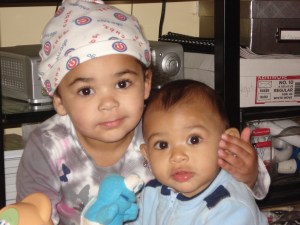
TW:  I have a beautiful wife (Kristi) of almost 8 years. I have two wonderful children, Kayla and BJ. Kayla will be 4 and BJ is 2.

FF: How has fatherhood changed you?

TW: Fatherhood has given me a greater understanding of how God loves and disciplines His people. I love and care for my kids, even though they don’t always appreciate it. I still feed them and clean up their bodily waste, even when they protest cleaning up their toys. Fatherhood has given me a greater appreciation for and understanding of how my parents raised me.

FF: What mistakes have you made as a dad? Name at least one and talk about what it meant to you.

TW: Since my children are at home with mommy all day, they are always screaming for mommy. When I come home from work, I enjoy brief celebrity status, then all attention switches back to mommy. So, at times, it was easy to distance myself emotionally, given that they didn’t seem to need me for anything. They are young and that’s usually how it works, but I would sometimes allow the pain of that to become an excuse to just let Kristi bear the burden of meeting their needs, instead of taking initiative. This was a big mistake that I used to make. I have progressed beyond that, and even forced them to come talk to me about something. I’m pretty confident that many fathers deal with this same issue.

FF: What’s the most helpful advice you heard when you were becoming a father or advice you’ve gained since you’ve been a father?

TW: My dad always taught me how important it is for Kristi and I to be in agreement and to keep our love for each other strong. When children come into the picture, it’s easy to put all the focus on them and neglect each other.

FF: How do you attend to your relationship with your wife outside of your being parents, and has parenting changed your marriage?

TW: Kristi and I always try to maintain some sort of a date night, even if we are just at home. Now that we are living in the city, we have greater access to babysitters. This has allowed us to go out more frequently than ever. Of course, parenting has changed our marriage. It’s forced us to be more creative and intentional with our time together. It’s something that we always need to balance.

FF: What are some of the things you’ve struggled with as a father?  What are some of the things that have given you the most joy?

TW: As for struggles, I mentioned one earlier. That’s been the main one. It’s very discouraging when they choose to get attitudes and disobey. What gives me the most joy is to watch their personalities develop as they mimic what Kristi and I do and say. I love watching them as they play and converse with each other.
FF: Describe adding a second child to the household.  Does having two children feel differently than one?

TW: Adding a second child presented new excitement and new challenges. Having two feels very different because these are two little human beings with very different personalities, issues, joys, needs, etc. It’s definitely more work. They both require individual attention in different ways. Different things make them upset or frustrated. So as we teach them, they are also teaching us.

FF: What surprises are there along the way for parents? What do you wish you were told to expect?

TW: Children have extremely different personalities. It’s also interesting to see them do and say things that remind you of yourself, or other family members. I wish there was an entire book in the Bible or at least a few chapters that were completely dedicated to raising children and what to expect. When we experience the challenges of parenting, I jokingly say to Kristi, “The Bible doesn’t say anything about this.” I love the word of God, I just wish that God would have put a lot more content regarding the “spiritual gift of parenting.”

FF: What is one recent memory you made with your child?

TW: We are currently potty-training BJ. One moment, we are congratulating him on going pee pee in the toilet. The next moment, we are reminding him that we go pee pee in the toilet, just after he has an “uh oh” moment. Sometimes we’ll ask him if he needs to go pee pee, and he will say “no”. The next minute, what does he do? He pees in his underwear. It’s been a fun and challenging experience. We’ve only been at this for the past 2 weeks. I think he’s getting it, slowly but surely.

These Are Fantasies

Children are unable to provide for themselves.  Not unlike travelers in the ancient world, who often depended on the kindness of strangers for meals and shelter, children are born into the world naked and hungry and dependent for their very lives upon being taken in and fed and clothed and otherwise nurtured by people they have never met before, namely, their parents.  They depend, in other words, on hospitality.

Hospitality does not require perfection on the part of those who offer it nor those who receive it.  It can be tempting to believe that it does.  The perfect host or hostess, we imagine, is one whose house is immaculate, whose table is beautiful, whose food is elegant, and whose parties always come off without a hitch.  The perfect guest, in turn, is well dressed and well behaved, a charming and witty conversationalist who always pleases and never annoys and goes home promptly at the end of the evening.

And so we are sometimes inclined to believe concerning parents and children.  A good parent, we suppose, is a perfect parent.  Good parents know all of the answers and never make any mistakes.  They are endlessly patient, endlessly nurturing, endlessly loving.  And good children are perfect too.  They are beautiful and healthy and intelligent and obedient.  They never demand more from their parents than the parents are prepared to give, and they always reflect well on the families of which they are a part.

Of course these are fantasies.  We all know that real life is not like this.  But powerful currents at work in our society encourage us to believe that it ought to be…

(From Are You Waiting for “The One”?, pg. 168)