God’s Better Recollection

The other night I was ending a pastoral education group. We had spent three hours doing quality work together but part of the discussion was tense with grief, unsettled surprise, and familiar but contested aching.

Discussion took us from foundational theorists in Womanist theology to Black Psychology to striking encounters that hadn’t yet left the students’ minds. It was wonderful and, as before, reminded me of how much I enjoy this part of my life.

A part of the discussion was around ministry to families experiencing baby loss, and I always get very tender and spacious around those conversations. I have my own reasons. Most people in chaplaincy are moved for their own reasons.

As we finished, I asked everyone to consider a caring image of God that they were carrying with them. I invited them to spend a few intentional minutes with the image, to see what it had for them, to see how God was comforting them.

Personally, it wasn’t enough time for me to connect with my image. I was facilitating and that was fine. I wanted to ensure that my students were enabled to open their hearts. I was bracketing my own feelings from the night and rough day, and I knew I’d need more time. I always seem to need more time. I have a timing thing.

A few years ago I told a confidant that transitional moments are times when God wakes me at strange hours. I knew it when I said it but it was the kind of knowing that I needed to hear myself articulate. It’s really true then, when I say it. So, I’ve learned to wrestle less when the seasons emerge.

Early this year was a similar season. Right now seems to be as well. They are not entirely surprising because the air smells when the season shifts. A lifelong Chicagoan, I don’t always know when winter is finished, but I’ve learned to rely on some indicators. My eyes are growing sensitive to slight changes in light, my skin grateful for less abrasive winds. So, this season is, again, one of those which God startles me at dark quiet times and, usually, Spirit sits.

It used to be that Spirit spoke but I’ve witnessed that change over the last decade too. I remember when I used to sense God speaking in unique ways but, fortunately and unfortunately, that speech has turned into a different communication. Silence and sitting are much more common now. It’s strange to accept that God speaks while sitting, while being silent, and while stretching out into a stiffness that is uniquely God’s posture in my life. I don’t like it. It’s deeply disorienting because something in me reaches back for easier “conversations,” but the conversations just get more challenging.

It’s sad to my earlier self that was so used to hearing. He returns sometimes and cries with me that silence is the new speech. But he fades and lets the current me get used to what is. The earlier me waves at the current me who is learning to sit instead of speech, who is learning to watch a still God and not only listen for a speaking One.

The next morning, after the pastoral group, I woke at a time when I’m getting used to waking. I woke to my image and it was one from a months-plus moment that I cannot remember. It’s a part of premature birth story. I was alone for nearly two months in a NICU at Mercy. That’s what I usually say to myself. I was alone in the NICU. This time, though, God reminded me that I was not alone, that I was certainly not as alone as I tell myself.

I think God was sarcastic because it felt like I was being told, in a snarky tone, “You weren’t really there anyway. And how can you remember? Memory structures aren’t formed for years. My memory of those weeks is much better than yours.”

The image of God’s attendance helped because it is working on me now. For years, I’ve told myself something about a basic aloneness that was negatively lonely, a basic experience that was almost disabling, and in the course of my work and life, I woke to something different. I am still waking to it, becoming alert to the realness of Spirit being where I don’t hear God speaking. Whether in a hospital or in my home.

And it connected to learnings from years of therapy, spiritual direction, and clinical supervision. Basic aloneness is not unwelcome but is starkly and clearly human. It is the potential bridge to what humans need: divine proximity. Further, loneliness is not uninhabitable terrain but something, if we’re lucky, we get to have, remember, and have recalled by God’s loving re-memory. There are many who do not know this good, basic aloneness, many who run from it and don’t open empty hands to it.

It is true that my weaknesses and gaps from those early days haunt me sometimes. My best friend has heard me weep my fears around this as have mentors and servants in my life. The hauntings and the weaknesses from whence they come are not always welcome. But the hauntings are in question. They are, in other words, contestable, given the image of God who knows more.

The Spirit remembers better than I do, has a better recollection of my experiences than I do. And that same Spirit is.

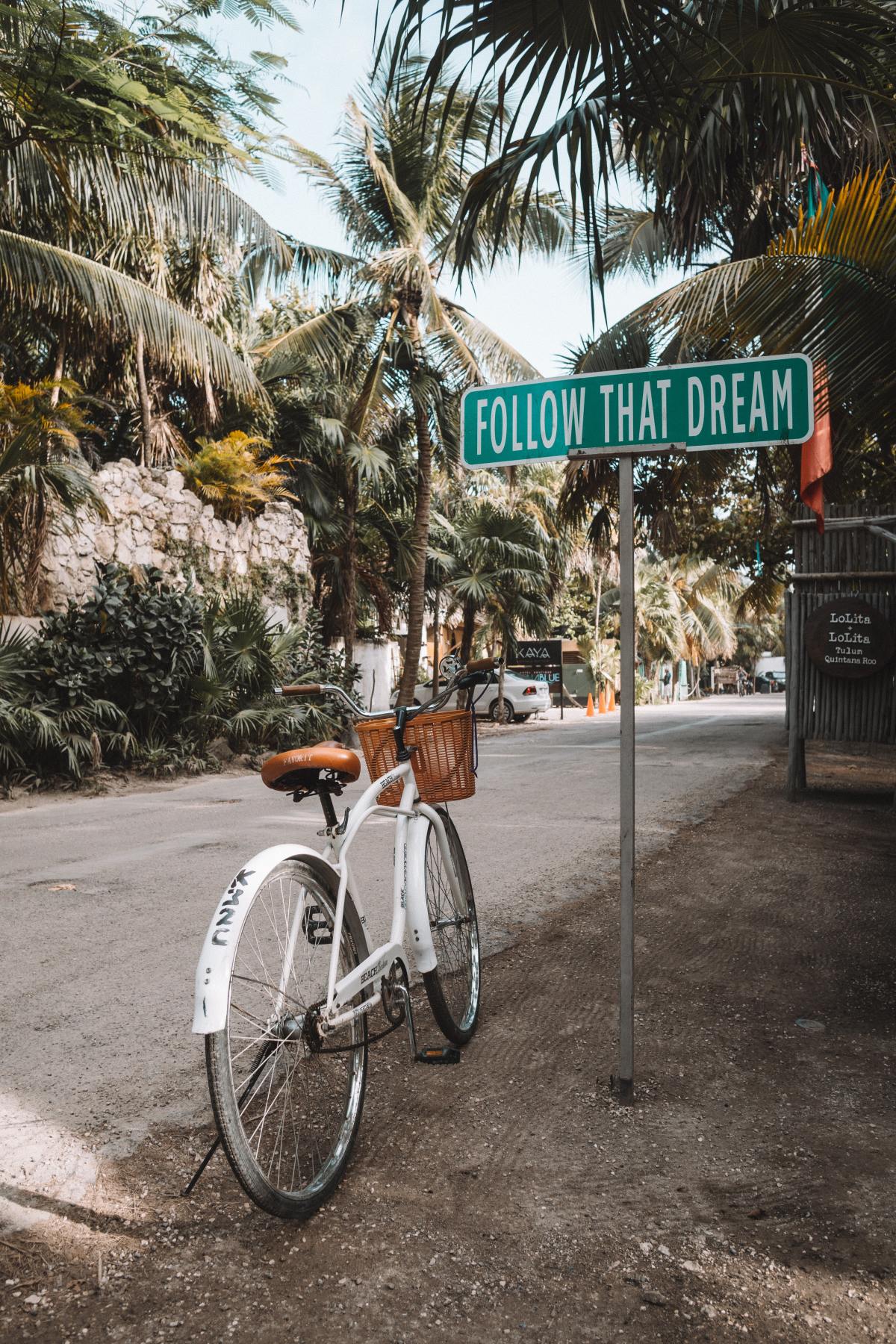
Host Your Dreams

I have been thinking about dreams, at least, since I listened to Dr. Sam Chand talk about himself as a dream releaser when he consulted with us at Sweet Holy Spirit almost twenty years ago.

I was very new and just as young while serving the church. Almost daily, I confirmed in my mind that I was not equipped to serve as an executive pastor. With my degrees, with my history growing up at the church, with my spiritual sonship threading through my life there, with occasional phone calls on random days from Grandfather Ellis to calm me down.

Sometimes, the work is more convincing than the dreams. Sometimes, the reality is that you cannot do what your dreams tell you that you can. Sometimes, we live in the real world so long that we believe the world of our dreams is not how God pulls us together, nightly, fixes our brain breaks, and inspires us to do what our ancestors and our communities need.

Even though I knew the church, it was my home, like the back of my head, I did not know all that it needed. As a part of the church staff, we needed a person to come and stoke the dreams of the church, of the pastor, of the staff.

Among the things Dr. Chand did was listen to the dreams of our leadership. He talked, listened, considered. Something about his ministry vitalized me. He was, among other things, hosting our dreams.

He did more than that, but in those first gestures, as an experienced leader, he was modeling for me how to host the dreams of others.

Everyone needs dreams. Everyone needs to pursue dreams. Everyone, in order to pursue dreams, needs people to host those dreams.

There is a place for challenging them and certainly a place for practically weighing the costs of pursuit, for considering the routes to their fulfillment. But it starts with locating the hosts of what’s so close.

You need a host for your dreams–and one that isn’t only you and that isn’t only God. You may not unroll all the dreams to one person, but the act of sharing even pieces of your dream is an act of becoming whole.

Ask God to send you hosts for what you’ve held, capable hosts for what’s deep within. You don’t have to carry your dreams alone, even during seasons of particular loneliness. You don’t have to go after or fulfill them alone either. May you have the company you need.

A Message from Bishop Jakes

There is so much in this message. I saw it yesterday and decided I wanted to chronicle it as much for myself as for blog readers. It isn’t my habit to share sermons but there’s rich material about shame-based theology we must confront, truth about process addictions to social media, interpersonal relationship possibilities, rest, creativity, liberative self-determination, and grace for all the backgrounds that limit us.

While you will find disagreements–you should in every communication if you’re critically engaged–you will find something good and worth meditating upon. Listen to what’s for you.

Trauma, Disparities, & the Exercise of Needed Distrust

I’m thinking about Dr. Susan Moore, a Black physician who recently died after battling for her own quality medical care and against Covid 19. And I’m thinking about a mother named Mary from a long time ago who was unmarried and who spoke sonnets about her experience of getting impregnated and carrying a baby whose existence was misunderstood from mystical beginnings.

Trauma, a word coming out of an early surgical model for discussing injury, has come to encompass a full set of pains. Trauma is an injury, a bewildering injury or set of injuries.

A trauma can occur to a person or a people. A lot of people from many disciplines are talking about trauma these days, how it happens, what it means to be trauma-informed, etc. From anthropologists to neuro-scientists, chaplains and therapists, and social workers and teachers, lots of folk are discussing and working to respond to traumas in people.

There is language in these discourses about how a trauma is a discrete event in many cases. It happens; it ends. There is a healthy discussion on when and if that’s always true. Some traumas do end. Some are protracted and are, in a real sense, unending. I won’t get so much into that but I want to write a little about the way trauma can return.

After occurring and “ending,” it/they can revisit persons in seen and unseen ways, through known and recognized forms, as well as through insidious and unacknowledged means. Sometimes we see the re-visitation coming. We anticipate it. When we do, we can prepare and draw upon resources to help through the revisited pains. When we don’t see them coming, we are likely more reactive, doing anything in response to the unexpected-but-somehow-still-known.

Disparities in healthcare and medical treatment can be a means of trauma recurrence. Unfairness and mistreatment become a mechanism whereby trauma returns. Now, you’d have to accept a cultural transmission of trauma to appreciate this reality where earlier experiences are translated and handed over to subsequent persons related to those who have experienced trauma. In other words, what happened in prior times affects these times. There is another post somewhere in this direction that combines cultural trauma (at least that type of trauma) with attachment theory to explain this transmission and the patterns and connections making this possible.

Still, interacting with a disparity in the emotional neighborhood of a prior trauma is an uneasy psychological experience. I’m thinking about healthcare but this is true in other places. Whenever a person meets the reminders of prior pain, the body recalls and sends all its resources to preserve life. Emotional life. Spiritual life. Physical life. You don’t want to be hurt. You never do. So if you’ve been hurt, if your people have been hurt, you consciously or unconsciously respond to the disparity, the trauma, at least because of deep memory.

This is evidence of what, in The Inward Journey, Howard Thurman called a “strange quality of renewal.” The response to the disparity is to, in some way, resist it as a means of death. Resistance is a sign, a strange one perhaps, of life. Thurman says, “this is the way of life.” When you’ve experienced traumas and bruising pains, and when those are revisited among you, your reactions are little signs that life is present.

The exercise of distrust by Black people, then, is a needed one. It is needed because that distrust is evidentiary of a different trust, a trust in life. I call it everlasting life. Black distrust of the traumatic opens the world to the actual agitating presence of the God of life, the Source of life. Distrust of one system illuminates abiding trust in another. Distrust of medical science or research practices, say, points toward the life bonds elsewhere. Isn’t the question, “how do I find the life here?” Or “What does trust look like then?”

Take it from there. Look for the next sign of life. But name that life force. Relish the presence of Spirit. Moving against the brokenness and the flagrant disregard of life is a spiritual resistance that itself is being visited in the world through your own act of resistance.

Listen to the Spirit. Act with the Spirit to preserve life, to vanquish non-life. Do what will counter the forces of death and what will make right – or righter – what was wrong the first place.

Dr. Carla Hayden’s Swearing In

This happened last month, and there are so many things I love about this. To see Dr. Carla Hayden in this beautiful space, to imagine her walking through the long underground passageway, to know that she’ll be inspiring and leading us to read… This is a tad long but you need to see Dr. Hayden’s video explaining her vision even while you hear the words of every other person in the ceremony. Paul Ryan even discusses Jefferson’s way of cataloging his library, which is a treat to visit in the LOC if you can visit.

National Museum of African American History & Culture

Also, see a related interview by Anita Little at Religious Dispatch on Religion and Resistance. She speaks with the DC curator of the Center for the Study of African American Religion, Rev. Yolanda Pierce. That new center is housed in the NMAAHC. My favorite part of the interview is here–all this lovely stuff about the ancestors and symbolism–when Rev. Pierce discusses President Obama’s part in ringing a 500-pound church bell. This is fascinating to see this wonderful treasure open:

As a gesture, as a symbol, it is so powerful. The bell is tangible, it’s this huge thing that’s traveled to the seat of power, Washington, D.C. It came from this community of enslaved people who could have never imagined in their lifetime an African American president or an African American museum in our nation’s capital. It’s no small thing, we are at the evening of President Obama’s presidency.

A lot of the people coming on opening day are coming partially to say goodbye to President Obama in what will be one of his last public acts as president.

For me personally, it makes me think of the spirits of the ancestors, all the men and women who never lived to see this moment, all of our ancestors who died en route to the United States and whose bones now litter the Atlantic Ocean. The resounding clang of that bell as it reaches the heavens will remind me of those who could not be present.

The RD piece is here.

Social Media Authenticity

Dawn is over here doing her thing, blogging with a collective of mothers, thinking through and reflecting upon the mixed and wonderful life that is theirs and ours. Here’s her latest post, emerging out of both our stubborn insistence to learn how to see.

dawnmwashington's avatar

“If people are going to see me on social media, I want people to see my real life, the good, bad, and ugly of it all because human perfection is not beautiful, it’s a lie.”

powder-1343709_1280

I gotta give it to Alicia Keys.  It takes character to decide to ditch make up in an industry as shallow as the music and television industry.  Keys has essentially kicked off another wave of media authenticity with the #NoMakeUpMovement (Jamie Lee Curtis shook the industry with her exposition of photoshopping among celebrity images).  Now that another form of natural beauty is trending these days with  Alicia Keys, Sanaa Lathan,  Kendall Jenner, and others  who have committed to natural looks in their public lives, it will be interesting to see if the movement will go beyond trend and revolutionize how we understand beauty as a culture.

Many of us were already on…

View original post 829 more words