Unknown's avatar

Posts by Michael

I am a husband, father, minister, and writer.

In Case You’re Considering Seminary

I posted this three years ago. A conversation and the start of another academic year brings these ideas back to me.

Michael's avatarIntersections

One of my favorite writers said that everyone is a theologian.  Not necessarily a professional theologian or an academic theologian, but a theologian still.  We all, in his thought, have an understanding of God and a way of communicating (i.e., speech to communicate) that understanding to others.  For people who spend a lot of time talking about God, there’s seminary.

Before going further, you should know this bit of biography since it anchors what I’ll say–people formed in other places, at other times, may have different wisdom.  I went to graduate school at Wheaton College, completed a program in theological studies and didn’t get enough.  I enjoyed what I was learning.  I signed up for more at Garrett-Evangelical Theological Seminary and enrolled in the MDiv program while I was serving at Sweet Holy Spirit, my home church.  I came to serve New Community, a multi-ethnic congregation in 2006.  I started teaching…

View original post 749 more words

A Picture I Couldn’t Take

The three of us—you, your mother, and me—doing what you love and what we generally don’t.  On the road, with me behind the wheel—was it I-55?—we listened to the soul satellite station, we skipped through other stations, with you choosing by the first sounds you heard, and we danced.

You in your car seat, leaning to the side, tucking your head just a bit, holding your fists and turning your arms to the music, kicking your legs.  And your mother and me, in our lovely, remembered-to-us way joined in.

Tremble for Our World

From Martin Luther King Jr.’s Where Do We Go From Here?, the chapter entitled, “The World House”:Lorraine Motel

So when in this day I see the leaders of nations again talking peace while preparing for war, I take fearful pause.  When I see our country today intervening in what is basically a civil war, mutilating hundreds of thousands of Vietnamese children with napalm, burning villages and rice fields at random, painting the valleys of that small Asian country red with human blood, leaving broken bodies in countless ditches and sending home half-men, mutilated mentally and physically; when I see the unwillingness of our government to create the atmosphere for a negotiated settlement of this awful conflict by halting bombings in the North and agreeing unequivocally to talk with the Vietcong–and all this in the name of pursuing the goal of peace–I tremble for our world.  I do so not only from dire recall of the nightmares wreaked in the wars of yesterday, but also from dreadful realization of today’s possible nuclear  destructiveness and tomorrow’s even more calamitous prospects.

Before it is too late, we must narrow the gaping chasm between our proclamations of peace and our lowly deeds which precipitate and perpetuate war.  We are called upon to look up from the quagmire of military programs and defense commitments and read the warnings on history’s signposts.

One day we must come to see that peace is not merely a distant goal that we seek but a means by which we arrive at that goal.  We must pursue peaceful end through peaceful means.

Sounds of Sunday

A congregation of three in a room of many more, tapping feet making circles and their own harmonies.  They hummed and yipped and yayyed, and then one of them, mine I think, started repeating the leader’s words.  It was as if he had just heard what the rest of us of had, or as if he just accepted that what we were doing and what the little congregation of three were doing were twin gestures.

I wondered if it was the children and not the adults who were in worship, who were at play in the Presence.  I heard Kelly, the leader, her voice light with grace and heavy with gratitude, and when the adults did not quickly reply to her with a response, the children did, with Bryce brave to begin.  Hallelujah is what he said.

I was struck when I heard the mumbling coming up from him because I knew the formation of those words from years into my past.  I knew them as a boy of size and ever since.  But it was my son saying them with the worship leader and not me.  The boy who has trouble listening to his parents.  The boy who has difficulty hearing instructions when he’s playing or when distracted from too much joy.

PracticingAnd then the three of them sang the old song that Christians have included in their weekly and daily lives of praise.  In the corner were Eliot and Bryce and the daughter of Jason and Courtney Bilbrey whose name I don’t know.  I was smiling, refraining myself from disrupting their joy, explaining to myself that they were the leaders, the ones with the Light spreading throughout the space.

They were the ones worth following.  Kelly was with them.  They were in front.  I was halted from my own involvement while I watched them, eventually corrected by the silly, untimed, and melodious participation.  They were creating the sounds of Sunday, and for a moment I believed that their play was the essence of the Christian Sabbath.

Gwendolyn Brooks on “Life for my child…”

Life for my child is simple, and is good.

He knows his wish.  Yes, but that is not all.

Because I know mine too.

And we both want joy of undeep and unabiding things,

Like kicking over a chair or throwing blocks out of a window

Or tipping over an ice box pan

Or snatching down curtains or fingering an electric outlet

Or a journey or a friend or an illegal kiss.

No.  There is more to it than that.

It is that he has never been afraid.

Rather, he reaches out and lo the chair falls with a beautiful crash,

And the blocks fall, down on the people’s heads,

And the water comes slooshing sloppily out across the floor.

And so forth.

Not that success, for him, is sure, infalliable.

But never has he been afraid to reach.

His lesions are legion.

But reaching is his rule.

Defining Acts

This is from Hauerwas and Willimon’s book on the Ten Commandments.  It’s one of the things I’m turning over for tomorrow.  Before this quote, the chapter (on the third command regarding Sabbath) takes the reader through how, for the Christian, Sabbath is a reordering of time.  Sabbath observance is about actively remembering God.

One of us was raised in Texas, where there is a wonderful institution known as “Juneteenth.”  On June 19, news of the Emancipation Proclamation reached Texas.  June 19 became the day on which African Americans, with no legal recourse, simply refused to show up for work.  Whites might not have liked it, but there was nothing they could do about it.  They simply accepted “Juneteenth” as a holiday.

The Christian Sabbath is Juneteenth.  It is when Christians perform one of our most radical, countercultural, peculiarly defining acts—we simply refuse to show up for work.  It is how we put the world in its place.  It is how we take over the world’s time and help to make it God’s time.  It is how we get over our amnesia and recover our memory of how we got here, who we are, and in whose service we are called.


Interview with Tara Conklin, Author of The House Girl

The House Girl Cover

The House Girl Book Cover

How did you come to this story?  Or how did it come to you?  The story definitely came to me.  About 7 years ago now, I was reading a biography of Virginia Woolf and came across the term “slave doctor”.  The words described one of Woolf’s long-gone relations and no further explanation or description of the man was given. I found myself wondering what kind of person would occupy what to me seemed an inherently conflicted role: to dedicate your life to healing and yet your patients were destined only for more and graver harm.  From that initial spark of curiosity I wrote the story of Caleb Harper, a doctor working for a slave catcher, and two women appeared in his story: Josephine Bell, an artist and enslaved woman living on a Virginia tobacco farm, and Dorothea Rounds, a young white woman active on the Underground Railroad. And I was off.

You draw from the perspectives of two very different women, but both Lina and Josephine were searching.  What connections do you see between these two women?  They are both very strong willed, smart and adept at hiding how they feel, both from others and from themselves.  Of course, the circumstances of their lives could not be more different; Lina enjoys all the privileges and freedoms that Josephine does not.  I see Lina and Josephine as vertically connected rather than horizontally, if that makes any sense.  Josephine is Lina’s predecessor, her mother, at least symbolically.  Dresser has a line about enslaved people “They were as much our founding mothers and fathers as the bewigged white man who lay a whip upon their backs.”  And that idea resonates with Lina, both historically and personally. She has very few memories of her own mother Grace and knows very little about her, but Josephine shares many of Grace’s characteristics: a talented artist, a disappearance, a lost child.  At the beginning of the novel, Lina is too afraid to really search for her own mother, and so she searches for Josephine instead.   Josephine gives Lina the inspiration that she needs to move forward with her life, the courage to confront her own past.  And of course in the process of finding Josephine, Lina finds herself.

Mansfield PlantationThe novel weaves compelling insights about slavery into Josephine’s personal decision to run.  What are some reasons slaves ran while others didn’t?  It’s more difficult, I think, to understand the decision not to run because most slave narratives were written by (or about) those who were able to escape.  But fear must have been a huge component – fear of capture and punishment. The cutting of the Achilles tendon (as happens to Nathan in the book) was commonly done to slaves who had tried to run and been recaptured. To escape also meant leaving family and friends behind, loved ones who in all likelihood you would never see again. At a time when families were routinely torn apart, to voluntarily leave one’s family must have been a very difficult decision to make.  Women ran much less frequently than men because they were more likely to be caring for young children, and fleeing with a child was much harder.  There were also the practical difficulties of not knowing where to go – certainly after the Fugitive Slave Law in 1850, the northern US no longer offered any real prospect of ‘freedom’ and the road to Canada was very long.

You do a lot with images and art in the book.  I wonder how, with the hard work behind The House Girl, you see images of slavery, historical and modern-day.  It’s requires a kind of resilience and courage to know the things you likely learned in your work on the story and keep at it.  Yes, there was a point at which I had to stop researching.  It became very overwhelming – the scope of tragedy, the individual horrors.  Antebellum art generally tended to depict idealized visions of peaceful plantation life – the myth of the benign master, the happy Negro. Many are very pretty pictures, but I couldn’t help seeing them as quite sinister given what they omit. More realistic images were created for the abolitionist movement, and these are generally horrifying.  Their intent was to provoke outrage and increase support for the abolitionist cause, and I presume they were very effective.  More contemporary artists have grappled with slavery in a variety of ways.  I’ve personally been most effected by the work of Kara Walker who makes intricate cut-paper silhouettes of antebellum life – shocking scenes of violence and sexual exploitation, but rendered simply, starkly, with black cut-outs against a white background.  They are very powerful.

Lina’s experience was peopled with men like her father, her legal mentor, and the potential lead plaintiff.  What characteristics equipped her to navigate such diverse relationships?  Lina is very independent and very driven.  She grew up in a single-parent, poor, urban household with a father who suffered from severe depression and has never been traditionally “responsible”.  As a result, she’s had to parent herself in many ways.  I think this self-sufficiency, learned at an early age, helps her to operate successfully in these diverse worlds – with her father and his artist friends, in the more conservative world of the law firm, and with Jasper Battle, a musician whom she finds both very foreign and also oddly familiar, given that his world is so similar to her father’s. The corporate law world and professional art world are very different of course, but they are both arenas traditionally dominated by white men, so I think growing up in one prepared Lina in unexpected ways to succeed in the other.

In a sentence, maybe two, imagine how Lina would explain her case to her mother, how Josephine would explain slavery to her son.  What a great (and really tough!) question.  First, Lina to her mother: “I’m working on a lawsuit that’s seeking to repair the damage done by slavery, at least in some symbolic way. And Mom, it’s more about memory than money.”  Josephine to Joseph: “We live in a world where some people own other people based on the color of their skin. But things won’t always be this way, and you don’t have to let it define you.”

Slave Quarters

Slave Quarters

Your book made me think of the many ways people experience loss—of a hope, a relationship, an ideal, a role.  On the other hand, the story is one of motivated, resourceful people moving forward.  Is that a fair reflection?  Yes, very fair, and thank you for it. For me, the characteristic that binds all the characters together is their willingness to face and ultimately overcome their fears.  For Josephine, the fear of running, of leaving everyone and everything she knows. For Lina, the fear of discovering the truth about her mother and, by necessity, the truth about her father as well.  For Caleb, his fear of caring, of investing himself in another person; and Dorothea, fear of rebelling against her father and of once again putting her faith in something large than herself.  So they are all moving forward, as you say, trying to push past these fears as best they can.

There are two very striking things I’d love you to say more about.  First, the musical list of names in Lina’s index.  Second, the notion of celebrating and honoring slaves who have died in slavery.  The list was particular, poignant, thorough, and considerate.  The comment, a summation of the novel.  Say more about how those emerged.  Thank you for them.  The list was culled from the more than 2,000 names of some of the last surviving slaves whose testimonies were taken in the 1930s under the Federal Writers’ Project of the Works Progress Administration (WPA).  The testimonies are available on the Library of Congress website; it’s an amazing resource that I would encourage readers to explore.  I included the names for a couple of reasons. First, Josephine’s story is very circumscribed – one day in the life of one woman on one small farm in Virginia.   Her position as a house slave and the close relationship she has with her mistress, Lu Ann Bell, makes Josephine’s experience somewhat uncharacteristic, I believe.  Given Josephine’s exceptionalism, I thought I would be remiss in not acknowledging, at least to some degree, the vast scope of slavery’s tragedy.  I wanted the reader to be hit with the physical presence of those names – a solid page of text – and feel, for a moment, disoriented and overwhelmed.  And second, before I started researching in earnest, I believed that there was a national monument or a national museum dedicated to memorializing enslaved Americans.  I don’t know where this belief came from – I just assumed that such a thing must exist, and I was surprised to learn that it doesn’t. There is no national memorial or museum (although the National Museum of African American History and Culture is slated to open in 2015).  I was thinking of the power of naming and how important that is in honoring the victims of a particular tragedy – for example, the inscriptions on the Vietnam War Memorial, or the reading of names after 9/11.  I wanted Lina’s chart to serve as something similar, although of course on a much reduced scale.
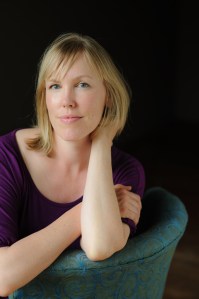
Tara Conklin What are you reading these days?  The pile beside my bed is groaning – I’ve got so many waiting in line. I just finished two wonderful novels: A Constellation of Vital Phenomena by Anthony Marra, which I loved and The Interestings by Meg Wolitzer, which I also loved.  Now I’m just about to dive into Americanah by Chimamanda Ngozi Adichie – I’ve been waiting for this one for awhile.  I still remember scenes from her Half of a Yellow Sun, which I read a good number of years ago.

How can readers follow you and support your work?  You can find me at www.taraconklin.com, on facebook and twitter @TEConklin.  I love to hear from readers and regularly participate in book club discussions via Skype or phone so feel free to get in touch.

Attending to the Details

When history is collapsed into myth, responsibilities become diffused, and repentance and reconciliation become impossible.  In the inflated realm of mythical oppression, villains are so villainous that no one sees themselves reflected on the image.  Few can trace accrued privileges to specific and intentional evil acts.  Similarly, victims become so quintessentially and epically victimized that all escape routes from the condition are sealed off by a maze of self-doubt, blaming, and low self-esteem.  The antidote to this phenomenon is to attend to the details, to understand the specific events, ancestors, life stories, causes of oppression, and avenues of social change.  Historical and spiritual specificity is salvific.  Then and only then can the movement toward moral flourishing begin.

A Memory I Want to Love

You came around the corner groggy and sleepy-eyed, and the image of you made me think of me, because we’re alike when we haven’t finished resting.  We’re ready for nothing, especially people and noise and light and whatever else the world is doing without us.  We are fine with relinquishing movement to other abnormal souls, at normal hours, as they move about while we find the fleeing dreams and the soft snores.

But there, in Mama’s kitchen, you inched over, making up your mind whether to be happy or intruded upon.  I hadn’t seen you in I can’t remember how long.  And you gave me a gift, and smiled.  The look of it was like a long holiday season.

In front of me was the girl, and you will always fortunately and unfortunately be a girl to me, who had become my niece on an early June day so long ago.  And just like that you had become a grown woman.

And you joined us in our kitchen conversation: me, Mama, and you.  It was a gift that I want to keep, a memory I want to love.

Hearing You

Hearing you scuffle with your sheets, with some germ, with all that irritation finding you in night’s rest, it’s unsettling and stilling to pick you up and hold you in my arms and sit with the length of you, cradling, eyes closing, breath breathing, finally resting.

I was hoping that you would sleep, that you wouldn’t wake frustrated because of last night’s deprivation, that you would be your normal bubbly self, the self that yaps and taps til I roll over, awake and not, ready to comb your hair, finalize your clothes, locate your socks, say no when asked to play.

And it was you, wavering over me with all that light piercing the curtains, persisting to reintroduce yourself as the playful one, telling me to do this or that, and waiting until I moved to act.

It was you and you had slept well.

Monday Considerations, Pastoral Routines, & Soul Junk

Monday has been my off day for years, ever since I started working in a church, with the long exception of having to be on-call at Sweet Holy Spirit for administrative matters.  Back then, it wasn’t strange to get a minutes long call from our accountant or from a co-worker that changed the direction of the week.  Those Mondays are distant, though I hardly forget them.

Usually by Monday, since Sunday is traditionally a longer work day for pastors, I’ve lived through the equivalent of a work week with the compressed emotions of half a second one.  There has been the previous week itself.  It will bring with it conversations that stop me, meetings that unsettle me, group chats where someone is inevitably struggling with faith, offered counsel that helps or hurts people, conflicts left open for too long.  There are projections about the future of the church, potential partnerships or courses of action.  Quiet is seldom found without effort.  There is the loneliness that feels like a heavy blanket in summer.  There is the balancing of my own soul.

By Monday, my sleep has been disturbed for a few days in a row, dealing both with the expectation of Sunday and all that it brings and the throbbing exhaustion that comes afterward.  Sleep will catch up to me by the next day usually, but when Monday comes, I’m somewhere in the middle of looking at the day for the deep breath it will bring and planning for the week, even though I’m trying not to plan.  The busy tapping of my phone tells me that there is an email or a text.  I check it, only to see if it’s from someone whose text I actually read on Mondays, a tiny list of loved ones whose requests are of a slightly different order.

On Mondays I do much less.  Sometimes I fall into the mode of catching up with things at my address.  There are errands to run for myself.  Things Dawn has asked me to do.  There is laundry and dishes and remnants from the previous night’s dinner, and all the things in everyone else’s home.  There is the smell of urine that comes from the place where my son tossed his pajamas that morning, and the sneaky feeling that I’ll never stop cleaning the tile and washing the sheets, that I’ll go to work smelling of my boy’s liquids.  I remember the conversation about reintroducing pull ups for the overnight shift, and I feel that aching familiar feeling of failure that never totally leaves.  It’s one of those reminders in my life that I need grace.

For a long time I think about meaningful moments from the previous week.  And I try to think about nothing at all.  But I’m not successful.  There is the crammed calendar and the list of things.  This week there is one more sermon in the current series.  There are the big anchors of the upcoming message rolling around in my head and falling to my feet.  There is the nagging persistence that what I preach matters and doesn’t.  There is the slow, night-time work of an assignment due before the end of next week.  There is the upward and onward motion of not wanting to stop and the competing better desire to quit for a bit.

Quitting for a bit is the point of Monday.  But it is hard to do.  Leaving my moleskin at home and walking.  Picking up a book of poems and heading to the Point.  Exercising with no thought or nobody’s question or open conversation rattling for resolution.  Eating a recreative-for-me meal that someone has prepared.  Laughing with my friends or someone who for a moment is in my life for that sole purpose.

The anticipation of tomorrow is brutal on the soul.  Not just mine.  Not just a minister’s.  But everyone’s soul.  Thinking ahead into the next day, into the next post-Sabbath, into the second day of the week, is theft.  Planning ahead is robbery.  It’s sinister because we both believe it must be done and are so good at it.  Good at leaving now for later.  Good at staying nowhere for long.  Never being present.  Never reaching future.

It seems to me that it’s underneath most of the layers of our junk.  Yet it’s also over the basic simplicity of our souls this movement ahead.  But there are springs that come up through the layers.  Springs: those people who ask a simple question and wait for a response.  Springs are those messages that come from the lips of angels, the ones that stop your breath for a moment and help you appreciate the moment because it almost took you.  These are the things I need to consider on Mondays.  God, help me, especially since it’s Tuesday and the next Monday feels like a year away.