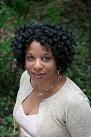
 I am grateful to have Tayari Jones, author of Silver Sparrow, for an interview. If you’re interested in getting a free copy of the novel, those instructions are below. I’ve been following this writing professor’s blog for a few years, learning about the writing life, reading her critical analysis of events, and enjoying how she presents publishing and life as a woman of color. I’m a student and fan. I think you should be too, which is why I’m commending Silver Sparrow.
I think you should go buy this novel from the closest bookstore or rent it from you local public library. I’ve made several recommendations like these in the author’s interviews, suggestions I hope you’re considering.
Here’s the interview:
MW: Congratulations on the multiple-weeks tour promoting Silver Sparrow. How are you holding up during your book tour?
TJ: I’m holding up, but I have to say that I am tired. 40 cities is a lot of traveling, but I love connecting with readers to actually talk. It’s really inspiring.
MW: You had an interesting and maybe horrifying experience with the title. Will you mention how you came to it?
TJ: Well, the short version is that my original title, SILVER GIRL, was already in use. Another book with the very same title was just published. I had about a week to come up with a new title. Everyone in my life jumped in. I was just cleaning out emails and found some potential titles from brainstorming sessions. It’s funny, but it wasn’t funny at the time. And then a friend mentioned the hymn, “His Eye Is On The Sparrow,” and I knew that I had found my title. It was a real blessing. A gift.
MW: Your novels detail girlhood, picture femininity, and in my wife’s words describing Leaving Atlanta, “take me back to my childhood.” How do you continually offer such real, honest, strong, brilliant characters? How do you replenish yourself to keep seeing women for who they are rather than what’s often popular and visible if that makes sense?
TJ: First off, thank you to your wife for that compliment because that really was my goal with Leaving Atlanta–to remind people what it was like to grow up in the 1970s, to record our history. To make a record that we were there. I think the key to writing solid characters is to be a loving but honest observer. When I write I think of real people, not people I have seen on TV or in movies–or even other books. I want to make close replicas of actual human beings. I don’t want to make a replica of a replica, getting further and further away from real and you can see how looking the way society wants you to look is like having a part-time job. I think we really squander our resources chasing down that ideal–trying to be show ponies. But at the same time, we deserve the right to enjoy our bodies, our faces, our hair. I wrestle a lot with keeping balance.
MW: You dedicate the book to your parents. If this isn’t too personal–and I can’t recall whether you’ve blogged about this–how did your father respond to the story?
TJ: My dad emailed yesterday saying that he loved the book but he thought that James Witherspoon got off too easy. My dad is my biggest cheerleader. He is proud of me, not just for the text of the book, but for being brave enough to go my own way. I feel like I should say, for the record that he’s not a bigamist!
MW: The women in this novel seek love. They give it and seek it. The ways the daughters sought their father’s love jumped out to me. How was it writing two daughters with such competitive experiences?
TJ: Everyone in the novel is seeking love. This is a book about how far people will go to keep their families in tact. Even James, the bigamist. Everyone in this book makes bad decisions for the right reasons. The key to writing it was not to take sides–to write with as much affection for Laverne, the lawfully wedded wife as for Gwen the mistress “wife.” The same goes for the daughters. Everyone wants to be loved. You can’t blame them for that.
MW: Are there any intersections between your life as writer and as professor?
TJ: I teach creative writing, so I feel like I am helping shape the literature of tomorrow. I love watching a young writer grow. It’s really inspiring.
MW: Among the many entertaining things about this story was the use of lies and the movement toward truth. I imagine writing a story cloaked in deception was fun and challenging. Any reflections on that?
TJ: There was so much pain in this story and I had to really keep my eyes open as I wrote it. The stakes were so high for all the characters that none of them could compromise, and as a result, everyone was compromised. I didn’t take pleasure in watching the lies unravel. I feel really attached to my characters. I knew that at least one of the characters would lose everything and everyone they loved.
But I think that the pleasure in this story comes in the pleasure of reading a difficult story on a difficult topic. There is a sort of joy that comes from facing the truth, and looking it in the face.
MW: If you had to keep one of your characters with you on your book tour, who would it be and why?
TJ: I would chose Dana’s running buddy Ronalda. I like that girl. She’s funny and she knows how to keep a cool head.
MW: How can readers keep in touch with you, learn about other works in progress when they come, and support the growing reception ofSilver Sparrow?
TJ: I would love for folks to come out and say hello to me when I’m on book tour. You can see my whole schedule here http://www.tayarijones.com/appearances.
If you’d like to enter my contest for a free autographed copy of Silver Sparrow, leave a comment with a book title and the author’s name that you recently enjoyed or one that simply stays with you. I’d love to know what about the work stuck with or struck you, though that’s not required for the randomly selected winner to be chosen. Post the comment by midnight, CST, June 13, 2011.


 Michael Washington