Good Memories, pt 2

We stood in the large hallway at the depot, both of us carrying a piece of luggage.  I wore a backpack.  Dawn had a strap hanging over her shoulder with a bag bulging at her thigh.  The bag squeaks every time she takes a step, and it reminds me of a hinge pleading for oil or grease or to be thrown to the ground.

The room looked like the check-in at an airport.  There was a line which snaked from the “enter” sign and ended with a dozen agents dressed in short sleeve white shirts.  Some of them wore ties or silk scarves, but most of them had their collars open as if they were welcoming the long lines of passengers and all the heat from outdoor Barcelona.  They wore pleasure on their faces, and I wondered whether they kept those smiles all day or if they painted them on their lips right before coming to their posts.

While we waited, we wondered to each other about the sanity of our fellow cruisers, particularly the ones who brought their children.  There was a family with a daughter.  There was a family with several daughters.  There were kids who were already making noises no one but their parents could appreciate or interpret.  Me and Dawn communicated in our party language, the way we talk to each other without words so that people can’t understand our gestures.  I’m not going to give them away, but I will tell you that there was a fair amount of glancing and nodding and shaking of the heads.  We saw a couple with a child in a stroller, and I’m sure it made Dawn think about the boy back home.  Me, well, I thought about all it took to get that kid in that line, all that money that those parents were willing to pay for a kid who couldn’t stand up in a long line with its own bags and who could only complain and who probably couldn’t say a full sentence yet.

At the counter they took my credit card, made me sign things, and told us we were welcome to board.  We turned toward the exit, still smiling; we made it.  My brother Mark being a great driver to get us to Terminal 5.  Leaving the boy with his Grannie and finding out, by the time we got to O’hare, that she had already altered his daily routine.  Stretching and walking up and down the length of a plane.  All those hours and in-flight movies.  Watching Dawn fall asleep in green chair in Amsterdam while we sagged through that first layover.  Words in Spanish that we both read with about 40% accuracy.  We made it.  Listless, limp, and faltering.  Passports and sail-n-sign cards in hand.

Outside the room with the white-shirted attendants, there was another short line of people.  The Carnival photographers were snapping pictures.  Dawn shook her head.  No pictures, she said.  I asked her, You don’t want to take a picture of this moment?  She didn’t.

This is a security photo, the nice man said.

They snapped our heads so they could prove we were who we were when we exited and re-entered the ship at the ports of call.

Then there was the embarkation photo, the one Dawn refused to take.  She took my arm, pulled her sunglasses down, and we walked by.  There was an orange background with yellow and red columns consuming a ten foot high spot.  I presumed it was evocative of Spain.  We walked by the photographer without posing, seeing the flash from the two umbrellas and muttering about those who were stopping.  They looked terrible but they didn’t care.  They were happy.  They were in Barcelona.  We were happy, too, but we had dignity.  At least the wife did.  She knew that taking pictures after flying and waiting and removing shoes and being spoken to in languages we didn’t understand and eating something in Amsterdam that hardly passed for Thai at a horribly early hour because I was starving was not wise.

But I wanted to take that first photo because I’m learning how to take pictures.  I’m learning to take them that is.

Early on in our relationship I had a thing about not taking pictures.  I didn’t care to.  I still don’t care to, but a couple years ago I made an inside promise to take more pictures.  It was something Pam Sheppard said to me, something I can’t remember.  It was probably something about the need to take them, the wisdom in keeping snapshots or something.  Pam is a brilliant and caring person.  She’s a clinician so she had to be.  As I said, whatever she said left me with the increasing impression that I should take pictures.

She probably said that one day I was going to die and when it came time for my funeral my family would have to choose that picture from seventh-grade when I wore my favorite white sweatshirt.  I was wearing Bugle Boy jeans, though you can’t see them because the shot’s a headshot.  That picture looks no different from my wedding picture because when we got married I looked like the same seventh-grader except that I was in a white jacket and not a white sweatshirt.

Even though Pam told me that I should take pictures, and even though I told her I would, and even though I do, in fact, take more pictures, I didn’t push the issue with Dawn about that first cruise shot.  After all, you have to choose which pictures to take when you’re married.  You have to choose which decisions you’ll make and resist unmaking.  You have to choose which moments you’ll capture and hold to tightly and which ones you’ll let fall into a body of water so large that you’ll never see the same wave again the way you first saw it.

Me and Dawn brought up the topic of pictures while we snapped our own shots of random strangers on the streets in Palma de Mallorca or when we took pictures of dead people in the Vatican.  I told her I was getting into collages this year, that I was going to unearth those pictures from all those envelopes in that drawer next to the glider at home.  I told her I was going to find a few ways to keep the places we’ve been and the things we’ve done before us.  I think I’m getting old or sentimental or soft or, maybe, smart.  Because it’s easy to forget where you’ve been with a person you go everywhere with, isn’t it?  No, me and the wife don’t go everywhere, but we go places together.  We share life, and we, like everybody, forget about the small, mostly ugly moments, like the ones when we’re sweaty and tired and grouchy and lagged by planes and everything else.  Remembering, taking pictures–mental or otherwise–might be the only way to prove it.

Good Memories, pt 1

As I said yesterday, these posts will focus on my scrambled thoughts as I remember good memories from our vacation.  I’m writing toward a new practice, a habit of paying attention to good things rather than my most natural tendency to hold to the bad.  Most of these memories will be good, though there are a few not-so-pleasant moments littered through the last two weeks.

The point of the post today, for you who like points to posts, is to plan a vacation.  Or a getaway.  Or a break.  Or a series of dates.  Or a significant time away from normal life.  The getaway, break, or vacation will give you an opportunity to nurture your marriage.  Of course, you could do this with a friendship or a significant relationship with some modification too.

I’m somewhat of a planner.  And traveling is important to me.  I like to do it.  You could say that I value it.  We started planning this last vacation a couple years back.

Before we had a baby, before Dawn got pregnant, we talked about how we wanted to celebrate our tenth year anniversary.  We wanted to do something big.  We wanted to stretch ourselves, save up, and have a grand time.  We couldn’t do what we really wanted which was to copy some friends who a few years ago spent a month on a different continent.  But we could stretch.  So we talked about what we wanted to do, and even though a little boy got made and delivered since those first conversations, we committed to acknowledge, in some way, that we were a we.  That we existed as a married couple.  That we were together.  To be honest, we had our challenges conceiving, and affirming who we were outside of the parenting thing nourished us in ways that we haven’t always seen.  So we determined to go on a cruise.

We’ve cruised before, done what I call the local cruises, the popular one to the Caribbean.  We cruised the year I graduated from seminary, too, because that was my gift to myself after getting another masters degree!  We also decided, in planning this last vacation, that we wanted to return to an early desire to see Italy.  I had a dream when we were engaged at 22 years-old that we’d honeymoon in Italy.  I was young.  I was, in a word, foolish, on many fronts.  I thought about a lot of things for us, but I didn’t think that going to Italy at 23 years-old when you had a mortgage and a construction project called a fixer upper was impossible.  It didn’t become possible in those early years either really.  So we took smaller trips.  We saw family.  We drove to many places.  We went on those ships that I mentioned and saw the Caribbean and parts of Mexico.  I used honorariums from speaking engagements and payments from work-for-hire contracts to make sure we were traveling together.  One reason why we got married young was so we could see the world together, so we saw what we could.

When we planned this time, it was a similar experience.  I started saving money, even though we couldn’t really afford it.  We were blessed.  I cut up portions of my second and third incomes–income that I never count until I have a contract–because my primary income is restricted to relatively fixed expenses and giving.  We agreed on an itinerary, a mix of France and mostly Italy with enough Spain to keep us interested.

Dawn started looking into logistics.  We struggled, waiting for the best time slot.  Back then, Dawn was considering school.  I had a small frame between my supervisor’s sabbatical and the start of my next calendar year in the VFCL program at GETS.  We waited as late as we could because my coworker’s decision wasn’t exactly made.  I knew when my teaching responsibilities would start.  We really could only go at a particular time because of both calendars.  Dawn looked at flight plans after I came up with a window of dates.  She reserved and purchased our tickets.

We decided easily that the boy was staying when the cruise line said he would cost the same amount of money we would.  We thought they were joking.  They weren’t.  We struggled with the matter of leaving him–for about two minutes.  I mean, we are a couple and this was our anniversary celebration.  We are not alone as a couple anymore so we were thinking that including the boy wouldn’t be all wrong.  And yet there was this voice of wisdom speaking.  Why not find a way, if it was possible, to leave the kid.  To leave him and to remember that we were separate from him.  To say our goodbyes and to have that be some shared meaning between me and the wife.  Of course, we are parents and that reality is hard to get away from.  But we are something else, a reality that’s easier to lose sight of as a couple.  Everyday we attend to him, naturally and necessarily, but there is this other thing called a relationship which needs attention too.

We met with our mothers about staying at our home one week apiece, and I texted a few people to secure supplemental childcare.  The week before we left, I went grocery shopping.  I picked up enough apple sauce and wipes and diapers to last for a month.  Just in case, you know, we couldn’t get back.  In case we decided not to come back.  I washed all the clothes in the house.  Dawn bought her textbook and read her first week’s readings.  I finished two contracts so I wouldn’t have them hanging over my head.  I looked over the syllabus for the fall semester and thought through what September would be like.  I did as much work as I could at the church to leave things well and in the hands of my colleagues.  I had a few more meetings than I thought wise.

We talked to friends about Barcelona and France and Italy.  Alan told us about the architecture in Barcelona, leaving me mad that we weren’t just going there.  His eyes widened when he spoke, and he relived days where he ate bread and salami while sitting in a park in front of some building.  I imagined him drooling while he ate in that park, though he wasn’t drooling exactly as he told his stories.  We ate with Libby and Omar who helped us figure out what to see if we only had so much time, which was true, because it was a cruise and not a land-based trip.  Libby wrote up a three-page cheat sheet and sent it to Dawn.  She gave us more direction than any guidebook.  She gave us guidebooks too!  Omar told me to wear a fanny pack to keep our euros hidden from people pick-pocketing.  I refused.  I told Dawn that I’d simply wear my I-grew-up-on-the-south-side-of-Chicago face.  It seemed to worked.

I wrote up the first draft of the cheat sheet we intended to leave our grandmothers and to our friends.  We left explicit instructions to call us only when the boy was hospitalized since calls to the ship would be $10/minute.  We had full confidence that Bryce would cooperate and not injure himself.  We packed.  We dreamed.  We talked about what we wanted to see, where we wanted to go.  We did something that a counselor I worked with during the early years in our marriage called “planning a future together.”

It’s a powerful thing to plan and map out your future.  Of course, you make vows to a spouse about a vague future, but planning it is a second strategic step.  It adds to the vow or the pledge the particular means and the specific steps.  We were doing very romantic and relationship-strengthening work: looking at those next tomorrows and saying how we, together, would face them.  Before us was a delightful series of dates.  They included easy travels, long lines which we greeted with smiles and gladness, and a lot of words we didn’t understand.  Those tomorrows included sumptuous meals and great servers and questionable taxi drivers.  It would be wonderful, a little messy, slightly nerve-wrecking, and glorious.

Good Memories, Good Marriages

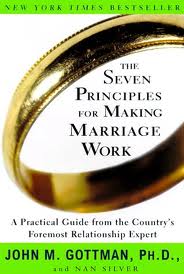
I’m rereading John Gottman’s Seven Principles For Making Marriage Work.  I started reading it again before going on holiday for a week and a half and I’ll be picking it back up now that I’m home.  To be honest, I’m biased to Dr. Gottman’s findings.  His career and research in couples work is grand and phenomenal.  He’s a trusted, clinical, scientific, and thoughtful voice in the area of marital relationships.  As he talks about in this and other books, he’s able to predict divorce with compelling accuracy, something like 93%.

In one part of the book he discusses the signs of marriage going bad.  One of them is the presence of bad memories.  He talks about how the persistent retelling of negative stories from before are an indicator of a relationship’s spiraling downward.  Having bad memories, and revisiting those memories, put a relationship at risk.

A couple quotes from the book capture what I mean.

But when a marriage is not going well, history gets rewritten–for the worse.

Another sad sign is when you find the past difficult to remember–it has become so unimportant or painful that you’ve let it fade away.

His language is helpful to me.  Helpful again, I should say.  I’m thinking a lot about how my long emotional memory impacts my life and work and relationships.  I can remember a lot of things.  Sometimes my memory is selective.  Well, of course, it’s always selective.  But that emotional portion leans toward the negative.  It’s hard work for me to relinquish bad memories and maybe just as hard to create good memories that have as much weight as the bad ones.  I think my proclivity is a posture that affects how well I do in my relationships.  It influences how much work is ahead of me in my marriage and in the other relationships I cherish.

In the next few posts, I’m going to shift from focusing on writing per se in order to look at the relationships dimension of the blog.  I’m going to reflect on a few memories, drawing from my “holiday” with Dawn.  It’s an effort to remember well, to capture memories, or, in the words from another blogger, to “catch days.”

Whether or not memory, good or bad, is something you think about, consider for a moment whether you can articulate a few positive memories from your significant relationships.  Do you “go to” the bad memories naturally?  Is your first impulse to remember something great about a relative?  With Gottman, I think that the ability to cultivate good memories is only helpful for a relationship.  Whether for a single mother who is recalling her last conversation with her child’s father; whether for a husband who’s tired of arguing about the same thing with his wife.

How do you make good memories in your relationships?  How do you balance the negative memories you actually have with the work of creating good, alternative memories?